
Someone behaves in a way that bothers you, but you give them a reassuring explanation: perhaps they are joking, going through a difficult time, or unaware that they have crossed a boundary. Then it happens again, and objecting becomes harder after the earlier behavior passed without confrontation.
The following films find their tension in this space. The characters remain in their situations for different reasons: fear of embarrassing a host, trust in old friends, the need for work, or an attempt to satisfy an authority that appears entitled to issue orders.
Our selection criterion is that this hesitation directly contributes to the escalation of danger. We present the films without ranking them, comparing the reasons refusal becomes complicated in each story without revealing what the invitations and smiles conceal.
Speak No Evil (2022): A Guest Trying Not to Offend the Host

A Danish family meets a Dutch family while on vacation, then accepts an invitation to spend a weekend at their country home. The visit begins as a chance to renew the friendship before the hosts' behavior confronts their guests with increasingly uncomfortable situations.
We recommend the original 2022 version here. It is the list's clearest example of connecting hospitality with surrendering boundaries. Each transgression presents the guest with a decision: object and risk ruining the visit, or treat it as a difference that can be tolerated?
What makes this construction effective is the accumulation of incidents. The guests spend time trying to understand whether their discomfort is justified while the hosts continue imposing their own ways. We think the film benefits from the gap between feeling uneasy and being ready to act on that feeling.
It suits viewers who enjoy psychological horror and tension arising from social relationships. It is a harsh choice, however, with violence and deeply disturbing situations, so we recommend it to those willing to accept a heavy experience rather than a light evening of horror.
The Invitation (2015): A Shared Past Makes Doubt Harder

Will attends a dinner hosted by his former wife Eden and her new husband, among people with whom he shares some history. Eden and some of her guests behave strangely to him, leading him to question the reason for the invitation.
The Invitation adds the problem of familiarity to our theme. Being among people we know gives a gathering a reserve of trust, but it can also make objecting embarrassing. The painful past between Will and Eden further complicates matters, influencing how he interprets what he sees.
We find the film's appeal in keeping doubt within an existing social relationship. Will must understand the situation while the others need to decide whether to take his concerns seriously. The group's response therefore gains weight in building tension alongside the hosts' behavior.
This is a good choice for viewers who enjoy gradually mounting suspense and gatherings whose meaning changes as new information arrives. We mean Karyn Kusama's 2015 film, and it is best approached knowing little about the evening's details.
Creep (2014): A Job Whose Boundaries Are Difficult to Maintain
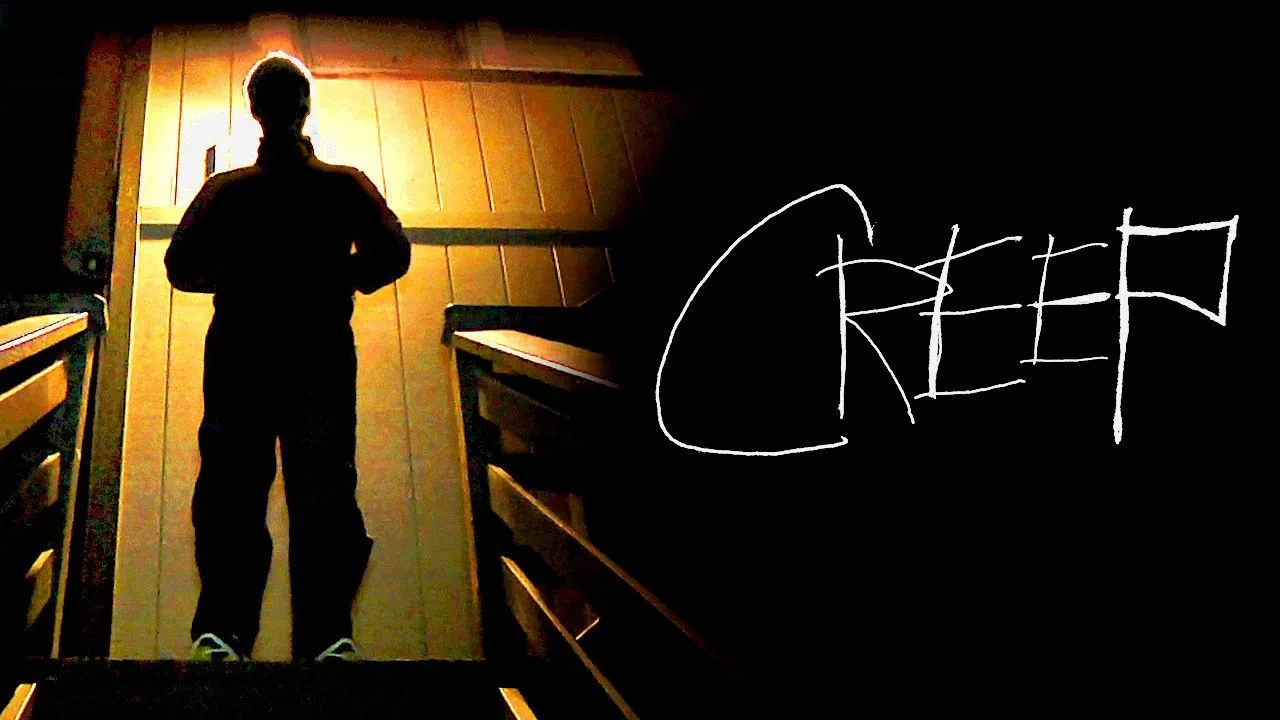
A videographer in need of work answers an advertisement for a one-day job. The client wants to record personal material for his unborn son, but dealing with him becomes more unsettling as time passes.
This opening gives us a reason to choose Creep: the relationship begins with a professional agreement before becoming entangled with sympathy and personal closeness. The videographer needs to complete the job while facing behavior that makes continuing an uncomfortable decision.
The found footage approach serves this predicament. We follow events through the videographer's camera, the tool that justifies his presence and proximity to the client. What his work asks him to document also becomes what he has to deal with, intertwining the task of recording with the attempt to understand the person in front of the lens.
We recommend it to viewers who enjoy horror built on behavior, dialogue and being with someone whose actions are difficult to predict. It is a suitable entry point for those wanting a focused story about a relationship between two people, and who accept an image that looks like a recording of events.
Compliance (2012): When a Voice Grants Itself Authority

Sandra, a fast food restaurant manager, receives a call from a man who identifies himself as a police officer. He accuses an employee, Becky, of stealing money from a customer and asks the manager to follow his instructions to investigate her.
Compliance moves the list toward obedience in the workplace. The caller presents himself with a status that lends weight to his words, while the manager holds authority over the employee. The instructions pass through this relationship, and trust in the person giving the order influences how someone else is treated.
We choose it because the escalation depends on carrying out one request followed by another that is more intrusive. As the call continues, questioning what is happening becomes increasingly important while the characters push themselves to continue what they started. Its harshness comes from watching people participate in a harmful situation while persuading themselves that they are doing what is required.
We recommend it to viewers able to tolerate bleak, realistic suspense and interested in the abuse of authority. It deals with coercion, humiliation and sexual assault, elements central to deciding whether it is suitable for a viewer.
Get Out (2017): Wanting the Visit to Work Offers a Reassuring Explanation for Behavior

Chris, a young Black man, visits the home of his white girlfriend's family. He encounters exaggerated warmth, initially interpreting it as awkwardness about their daughter's relationship with someone from a different background, before the things that worry him begin to multiply.
We think Get Out adds a distinctive reason for hesitation: Chris is trying to understand the family of someone he loves and make a meeting important to their relationship succeed. Interpreting their behavior therefore carries emotional weight, making it hard to separate his impression of the family from his desire to give the visit a chance.
The racial dimension also gives the dialogue and everyday interactions additional meaning. The apparent interest in Chris can make him feel he is being examined while the meeting is presented as friendly and assumes a polite response from him.
This is our choice for viewers who want horror combining mystery and social satire. This particular angle suits it because the suspense grows from a character trying to interpret an environment that seems to welcome him while he continues to feel that something about it is uncomfortable.
Who Invited Them (2022): Homeowners Who Hesitate to End the Evening

Adam and Margo hold a housewarming party. The invited guests leave, but a couple remains and introduces themselves as wealthy neighbors. Conversation and drinks continue, and the homeowners begin to doubt the people they have welcomed.
We finish the selection with Who Invited Them because it considers embarrassment from the host's side. Adam and Margo are in their own home, yet how to end the gathering becomes part of the problem. Continuing the conversation gives the visitors more time and space somewhere whose owners do not know enough about them.
Its combination of comedy and horror allows us to follow the difference between the evening's outward appearance and its changing meaning. The conversation remains part of a social gathering while doubts grow about who these two people are and why they are staying.
We recommend it to viewers who enjoy dark comedy and uncomfortable conversations that stretch out within a confined setting. Comparing it with Speak No Evil offers a clear benefit: there we follow the embarrassment of leaving someone else's home; here we follow the embarrassment of asking them to leave ours.
What Kind of Tension Are You Looking For?
We suggest Get Out as a starting point for viewers who want mystery, horror and social satire together. For those who prefer gradually growing doubt within a group gathering, The Invitation suits that mood, while Creep focuses attention on dealing with a single person.
If social incongruities draw you in most, turn to Who Invited Them. We leave Speak No Evil and Compliance for a time when you can accept a harsher experience: the first follows the surrender of boundaries during a visit, while the second reveals the effect of orders when those carrying them out grant them trust beyond what they know about their source.
All lists and recommendations