
Some shows end and we remember their events; others stay with us because afterward we pay closer attention to people: to what they say when they want to hide something, to the image they create of themselves, and to the distance between their desires and their actions.
This list brings together different kinds of television, from psychological drama, comedy and romance to reality TV. We chose them for their characters, conflicts and approaches worth discovering, explaining the kind of enjoyment each offers and whom we recommend it to.
The numbers organize the reading; this list is in no order of preference.
Viewing guidance: This list is intended for adults aged 18 and over; the nature of the content varies between titles.
1. Succession
When a father's approval becomes part of the struggle for power
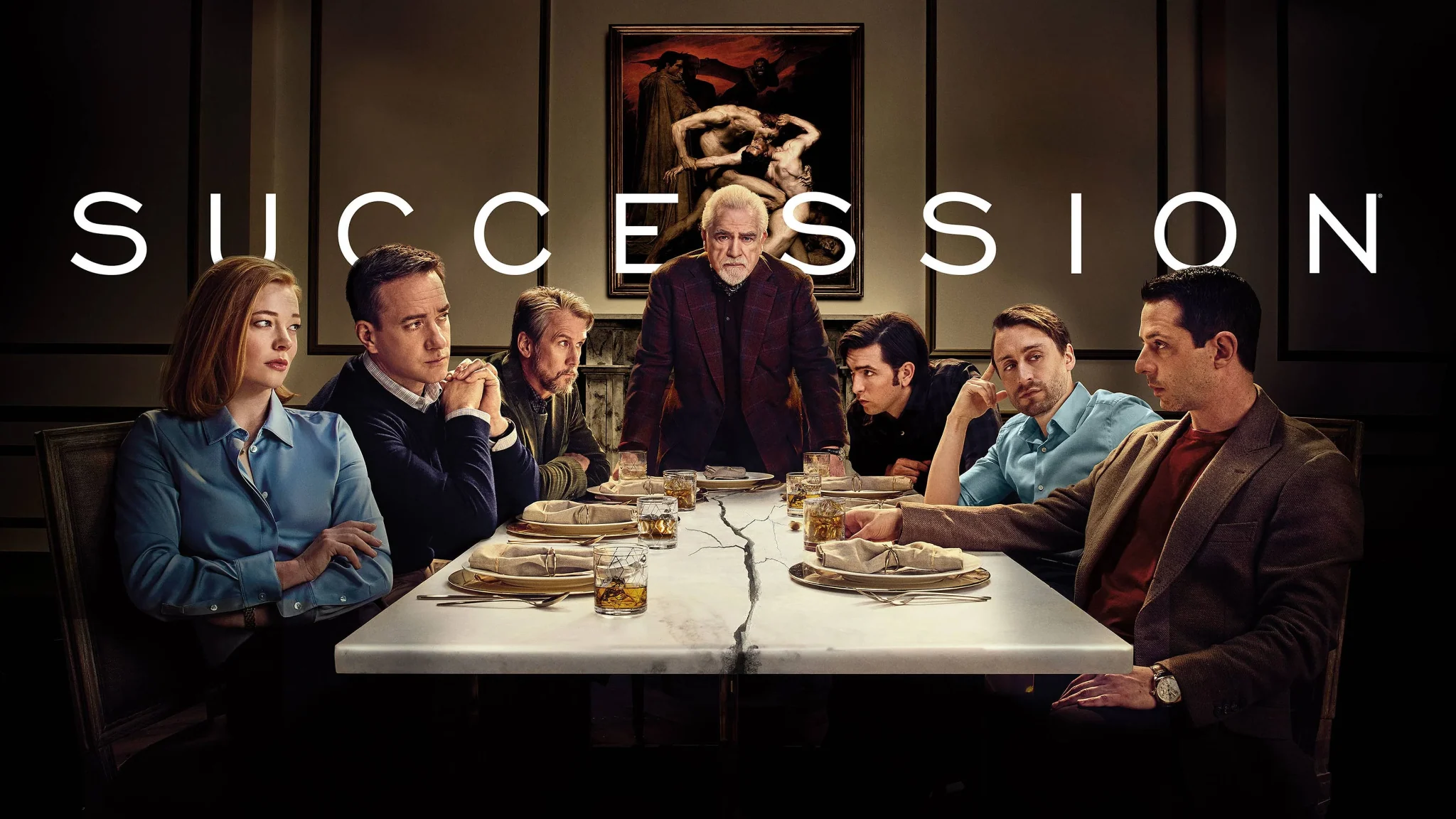
The Roy family owns a media empire, yet its children remain unable to secure a stable place within it. The company's future is tied to their father's will, and every move toward leadership opens a new front in the rivalry between the siblings.
What makes Succession worth watching is the overlap between professional self-interest and emotional need. A conversation may seem to concern a deal or a position, while beneath it lies an attempt to gain recognition, avoid humiliation, or prove that the speaker deserves to stay.
The writing gives these conflicts room to emerge through evasion, interruption and sarcasm. The characters talk a great deal, but they are constantly trying to control what others understand about them. Following the way they speak therefore becomes part of following the action itself.
We recommend it to anyone who enjoys charged dialogue, power struggles and characters who are difficult to trust. Its cruelty and satire are essential to the experience, as is its ability to make a meeting feel like a family test from which nobody can emerge unscathed.
2. Mad Men
The people who sell others an image of the life they want

Mad Men enters the world of American advertising in the 1960s, where Don Draper crafts messages that give products meaning beyond their function. Around him, other characters try to build a place for themselves in an environment that distributes opportunity and power according to strict social rules.
Our reason for recommending it is the relationship between profession and identity. Advertising requires understanding what people want to own or become, while the characters themselves live under the pressure of images they hope to realize. Professional success may give them status, but it leaves their personal questions open.
The strength of this structure emerges when advancement at work is linked to changes in how people relate to themselves and others. Ambition, marriage, class and discrimination intersect in decisions that can seem small before their effects accumulate.
This is a suitable experience for anyone who likes drama that gives its characters time to reveal themselves. Its measured pace allows us to read the details and follow changes that cannot easily be reduced to a major event or a single confrontation.
3. The Curse
Doing good as a project in image-making

A married couple tries to make a television show about renovating homes, bringing with them an image of themselves as people who help improve others' lives. But the desire to look good places their relationship with the community and with each other under growing pressure.
We believe The Curse is worth watching for the question it places inside a project that looks appealing from the outside: what happens when feeling like a good person depends on other people continuing to admire you?
Having a camera built into the premise heightens that tension. Any action can become a performance, and anyone being helped may find themselves part of a story the program's creators want to tell about themselves. This produces comedy accompanied by a persistent sense of discomfort.
We recommend it to anyone who enjoys harsh social satire and embarrassment that leaves room for thought. Emma Stone's and Nathan Fielder's performances are central to an experience that makes watching an attempt to control impressions as exhausting as it is intriguing.
4. Big Little Lies
Carefully ordered lives, and relationships that disturb them

In an affluent coastal community in California, a group of women's lives intersect through their children, school, friendships and disagreements. A crime gives these relationships a suspenseful framework, while the story reveals the pressures at work inside and outside their homes.
We recommend Big Little Lies for its ability to turn social appearances into a source of tension. The peaceful image of a home, relationship or family raises the cost of admitting there is a problem; the characters sometimes defend the shape their lives have settled into even when it hurts them.
Actors such as Reese Witherspoon, Nicole Kidman and Laura Dern give these contradictions a clear presence. Anger, fear and the desire to maintain control can coexist within the same situation, giving everyday disagreements weight beyond their immediate causes.
We recommend it to fans of relationship-driven mystery and anyone who prefers a crime to lead them toward understanding the characters. The show addresses violence within relationships, an element that shapes both its psychological character and the decision to watch it.
5. Sharp Objects
Returning to a place that knows how to hurt you

Journalist Camille Preaker returns to her hometown to cover crimes against girls, finding herself forced to deal with her family and her past while doing her job. The place where she is supposed to gather information knows more about her than she wants to reveal.
For us, the strength of Sharp Objects comes from the overlap between the investigation and the experience of returning. Camille moves through an environment she cannot observe from a comfortable distance; old relationships affect her questions, other people's responses and her ability to endure what she faces.
Amy Adams gives the character a weight that suits this situation. Our interest extends to what Camille cannot say or move beyond, while her relationships with her mother and sister add tension that makes the home itself part of the difficulty of the assignment.
We recommend it to anyone who enjoys heavy psychological drama and mystery shaped through atmosphere and relationships. The show deals with self-harm, and its pace requires a willingness to immerse yourself in a suffocating experience; it suits a time when you want to give the details your full attention.
6. Twin Peaks
A town whose secrets grow the closer we get

Detective Dale Cooper arrives in the town of Twin Peaks to investigate Laura Palmer's murder. The case leads him into a community of intertwined relationships and secrets, where everyday life exists alongside things that resist familiar logic.
This recommendation concerns the two original seasons broadcast in 1990 and 1991, the starting point for discovering the characters and their world.
What makes Twin Peaks an experience worth discovering is the way it expands the viewer's sense of mystery. The question of the crime leads us toward questions about the town and its residents, and then the way things, sounds and places appear becomes part of the unease the story creates.
We believe watching the show becomes richer when we allow its strangeness to affect us before trying to explain it completely. Part of its appeal lies in the feeling that something unstable is hiding within familiar details.
We recommend it to anyone who likes mysteries, dreamlike atmospheres and a mixture of humor and disquiet. Accepting its shifts in tone helps you enter the experience, especially if you are used to investigations that follow a clearer sequence of steps.
7. I May Destroy You
Regaining the ability to tell what happened

The story centers on Arabella, a writer trying to rebuild her life after a sexual assault. Her attempt to understand what happened intersects with work, friendship and social visibility, so her life remains larger than the event that changed it.
We recommend I May Destroy You for the space it gives to the complexity of recovery, the boundaries of consent, and the relationship between memory and self-understanding. The character needs to recover a sense of agency while continuing to deal with other people's expectations and her own conflicting needs.
The writing allows humor, impulsiveness and mistakes to exist alongside pain. This breadth makes Arabella a character with desires and a life of her own, giving the human experience around her details that are difficult to contain within a single description.
Michaela Coel writes the show and plays its lead, and its distinctive character emerges through the questions it asks and its willingness to leave certain situations complicated.
We recommend it to anyone seeking drama that prompts reflection on boundaries, responsibility and the way we judge experiences. Sexual assault is a central subject, and watching may be emotionally taxing.
8. Girls
When self-knowledge lags behind confidence in having the answers

Hannah Horvath and her friends try to find their place in New York, navigating work, relationships, money and ambition. They have grand ideas about what each of them deserves, while their daily behavior reveals how much they still need to learn.
We recommend Girls for its interest in the gap between the image the characters have of themselves and the way they treat others. Wanting to become someone special can coexist with selfishness, while a fear of failure can take the form of arrogance or a bad decision.
That gap produces awkward comedy and relatable drama. We can understand a character's need for sympathy, then feel frustrated by the way she asks for it. This friction gives the relationships their tension and makes growing up an uneven process.
The show suits viewers who prefer flawed characters and enjoy reading contradictions more than finding someone whose every decision they can support. Some of its characters may be irritating, a quality connected to the experience it offers of youth, ambition and self-absorption.
9. Sex and the City
Friendship keeping pace with changing desires and choices

The story follows four friends in New York, each with a different idea of love, work, independence and her relationship with her body. Romantic experiences change, while friendship remains a space for conversation, comparison and disagreement.
What makes Sex and the City worth discovering is that the differences between its characters give the same question more than one answer. What feels like a compromise to one may seem like the right choice to another, and what gives one woman a sense of security may trouble her friend.
We see this space as the basis of its lasting appeal. The viewer follows the relationships, but also the changing language the characters use to understand their needs and justify their decisions. Fashion, the city and the dialogue give each character a readily recognizable presence.
We recommend it to anyone who enjoys social comedy and frank conversations about relationships and sex. Watching it in the context of its time helps us read its ideas about class, success and commitment, noticing what remains close to everyday experience and what has changed.
10. Pride and Prejudice
A first impression confronted by deeper knowledge

The 1995 adaptation of Pride and Prejudice gives Elizabeth Bennet and Mr. Darcy's relationship room to develop across six episodes. Their encounters take place within a society where status, wealth and family shape marriage prospects and the judgments people make about one another.
We recommend this adaptation because its romance grows within a continuous process of observation and reassessment. A single action can be understood in different ways, and an early impression can influence the reading of everything that follows.
The television format gives these changes the time they need. Visits, dances and polite conversations carry tensions concerning the future and social acceptance, while the intervals between encounters allow anticipation and curiosity to accumulate.
Jennifer Ehle and Colin Firth give this structure a presence that suits its measured nature.
We recommend it to anyone who prefers romance that develops through conversation and changing understanding, and enjoys social satire and attention to detail. It is a suitable choice when you want a story that gives emotional closeness time to grow.
11. Spaced
Ordinary life expressed through an imagination full of cinema

Tim and Daisy share a flat in London and try to manage their lives amid problems with work, relationships and instability. This everyday starting point gives Spaced familiar ground, before its characters and cultural references add a distinctive way of looking at what happens.
We recommend it for the relationship between the simplicity of a situation and the breadth of imagination surrounding it. A small experience can become funny because the characters understand it through what they love, what they fear and what they remember from other stories.
Edgar Wright's directorial vision helps shape this comedy, alongside Simon Pegg and Jessica Hynes' writing and performances. The references form part of the show's character and comic rhythm, offering extra enjoyment to those who recognize them.
We recommend it to fans of British comedy and cinema, and anyone who enjoys characters trying to move forward while remaining attached to their habits and fantasies. It also carries distinct details of its time, giving everyday life within it a particular texture.
12. The Real Housewives of New York City
Relationships whose public image becomes part of their conflict

Our recommendation specifically concerns the program's first twelve seasons, which follow a group of affluent women's relationships in New York through friendships, disagreements and personal changes spanning years.
It belongs on this list for the different kind of enjoyment reality television offers in following relationships before the camera. A person tries to explain herself and defend her position while facing other accounts of what she did or intended. As time accumulates, the viewer's knowledge of a relationship's history becomes part of understanding any new disagreement.
It is important to approach this experience with an awareness that what reaches the screen has been selected and edited. The arrangement of situations and reactions helps shape the image we form of the participants and their conflicts.
We recommend it to anyone who enjoys social comedy, confrontations and shifting alliances. Repetition, friction and continuity are central to its nature, so it suits viewers who enjoy watching a pattern in a relationship and the different forms in which it returns.
Choose the starting point that suits you
If you lean toward power struggles, begin with Succession or Mad Men. For psychological mystery, Sharp Objects offers a focused, heavy experience, while Twin Peaks takes you somewhere stranger.
Pride and Prejudice suits a time when you want a measured romance, while Spaced offers an entry into comedy with a clear visual imagination. An interest in relationships may lead you to Girls, Sex and the City or the specified seasons of The Real Housewives of New York City, depending on how much drama, awkwardness or noise you are looking for.
The value of these choices lies in their differences. Each gives you another way to understand what a television story can do with its characters and with the time we spend in their company.
All lists and recommendations