
The review
Two road incidents reveal the difference between two worlds
One of the cleverest details in Beef's construction is the way it uses simple traffic encounters to reveal its characters' natures.
In season one, Danny and Amy's confrontation begins with a dispute in a parking lot. Both are experiencing personal pressures the other knows nothing about, yet a moment of anger becomes a chase and then a long sequence of revenge attempts. The irony is that the original incident does not warrant any of these consequences, but gives both characters an excuse to release feelings suppressed for a long time.


Season two presents a different encounter involving Austin, Ashley and another driver. Both sides apologize and try to let the other pass until excessive courtesy itself becomes comically confusing. Although this incident is not the season's main dramatic trigger, it offers a striking comparison with the earlier beginning.
Where direct anger was Danny and Amy's language, courtesy and an attempt to avoid confrontation become part of the image Austin and Ashley present to the world.
The series later reveals, however, that outward calm does not mean an absence of conflict. Someone may be able to apologize to a stranger while remaining unable to tell the truth to the people closest to them.
This difference establishes a clear thematic relationship between the seasons without bringing back the same characters. The first examines anger that erupts in front of strangers; the second explores tension accumulating within intimate relationships, where acknowledging a problem becomes harder than concealing it.
Danny and Amy: two different people carrying the same anger
Season one introduces Danny, played by Steven Yeun, as a contractor trying to overcome financial difficulties and help his family. Repeated failure weighs on him, and he feels that his efforts are not bringing the stability he seeks. His relationship with his brother Paul and his problems with his cousin Isaac intensify the feeling that he is responsible for crises beyond his ability to resolve.
Amy, played by Ali Wong, leads a life that appears successful from the outside. A businesswoman trying to complete an important deal, she lives comfortably with her husband George and their daughter, yet professional success has not brought the peace of mind she expects. Work and family pressures surround her, along with the feeling that she must constantly appear in control of her life.
The writing's skill lies in allowing a profound psychological resemblance despite their class difference. Danny sees the world as a place that denies him the opportunities he deserves; Amy feels that she has achieved a great deal without escaping her inner emptiness.

More significantly, both conceal their frustration behind different social images. Danny tries to reassure his family, while Amy maintains an appearance of success and composure. At times even their smiles become masks concealing entirely opposing feelings.
Once the rivalry begins, each finally finds someone toward whom they can direct anger without acknowledging its true source.
Revenge is no longer merely a desire to punish someone else: it becomes an escape from confronting oneself. The harder each tries to prove superiority, the more attached they become to the person they supposedly want to be rid of.

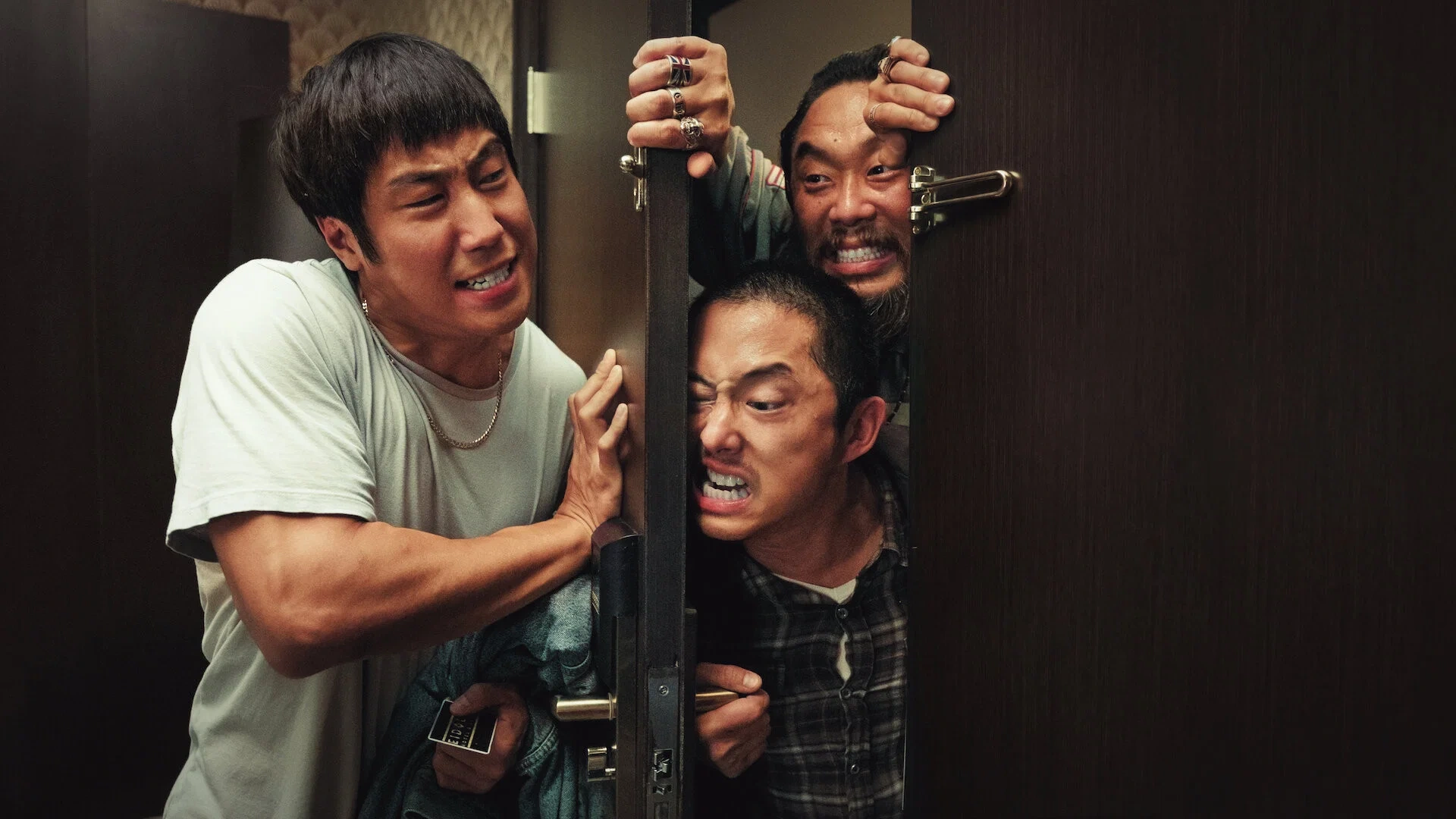
Season one therefore succeeds in making us empathize with two people whose actions are difficult to justify. It does not ask us to endorse their decisions, but gives us enough understanding of what drives them. There is a fundamental difference between writing complex characters and trying to make their mistakes acceptable.
Romantic relationships: when love becomes a battleground
While season one focuses on two people joined by rivalry despite their different lives, season two shifts the tension toward characters already connected through romantic and professional relationships who do not know how to address the problems within them.
We meet Josh, played by Oscar Isaac, and his wife Lindsay, played by Carey Mulligan. Josh manages a luxurious country club, while his wife works in interior design. Their lives look stable from the outside, but behind that image are accumulated financial and emotional disagreements and shared dreams they have failed to realize.

When an argument becomes a fierce confrontation, Austin and Ashley, two young employees at the club, witness and record part of it. Ashley later uses the recording as leverage to improve her professional position, setting off a series of maneuvers between the two sides.
The value of this conflict lies beyond the blackmail, in the relationships within the couples themselves. Josh and Lindsay have reached a stage where feelings mingle with resentment and disappointment, while Austin and Ashley initially appear as a young couple who still believe love can overcome difficulties.

As events develop, we discover that the second relationship is not immune to the problems affecting the first. Ashley fears losing opportunities that could change her future, while Austin faces questions about his ambitions, position and feelings. New people entering their lives make these contradictions more apparent.
The series raises one of its most significant ideas here: two people may sincerely love each other and still fail to communicate because each fears admitting what they really want or what they feel they have lost.

This shift gives the second story a real distinction. The problem is no longer how to deal with a stranger, but how difficult it is to face the truth with the person who is supposed to be closest to us.
Money and power: everyone wants to escape their position
Class differences add another level to the conflict, particularly within the luxurious club where season two takes place.
Josh appears influential to others, but in reality works to please the club's members and owners while trying to preserve his professional standing. Ashley and Austin see the opportunities available in this world as a possible route to a more stable life.
The picture expands with the arrival of Chairwoman Park, the billionaire who takes ownership of the club and whose presence becomes a new source of pressure for most characters. She possesses authority Josh lacks, even as he exercises authority over employees below him.
The setting becomes a model of interdependent relationships between people with different levels of power. Someone issuing orders today may have to accept orders from a more influential person tomorrow.
The series goes beyond the idea that money gives people control over others, revealing how fear of losing money or status can control people themselves.
This becomes clear in Josh and Lindsay's relationship, where past financial decisions remain a source of tension, and in Ashley and Austin's, where romantic dreams become tied to work, income and the ability to build a shared future.
Notably, the series does not present wealth as a solution to every problem. Even those at the highest levels of authority face emotional and family crises money cannot resolve.


For us, this expansion gives season two additional value by connecting the failure of individual relationships to the environment in which the characters operate. It may be less focused than its predecessor, but offers a broader network of interests and contradictions.
Performances that make the characters more human
It is impossible to discuss Beef without considering its performances, one of the clearest reasons for its success across both seasons.
In season one, Steven Yeun gives a convincing performance as Danny, particularly in combining anger, exhaustion and a sense of defeat. He does not always seem like an aggressive man who enjoys hurting others, but someone who keeps making mistakes because he cannot stop trying to prove himself.
Ali Wong matches him with an equally strong performance as Amy. She shows the distance between the woman trying to control every detail of her life and the person gradually losing that control. The contradiction between her social smile and suppressed emotions becomes an important part of understanding her character.

In season two, Oscar Isaac plays Josh through the tension hidden behind constant smiles and courtesy. He tries to please everyone as his ability to confront his own crises diminishes.
Carey Mulligan gives Lindsay a powerful presence through precise emotional expression and sharp exchanges, while Cailee Spaeny combines Ashley's fear, ambition and willingness to make harsh decisions when her future feels threatened.

Charles Melton brings Austin an innocence and confusion that make his mistakes affecting, even when some are clearly comic.
Youn Yuh-jung also deserves praise as Chairwoman Park, giving her a calmness that carries power and menace, while Song Kang-ho adds an important presence to the complicated relationships surrounding her.
The differences between the two casts serve their respective stories. Season one relies primarily on the strength of a confrontation between two central characters; season two draws much of its impact from the interaction of a wider ensemble.
Dark comedy that turns into real tension
One of Beef's most distinctive qualities is its ability to move between comedy, drama and suspense without fixed boundaries separating them.
A scene may begin with a ridiculous situation that makes us laugh at irrational behavior before its consequences become painful or dangerous. These constant tonal shifts make events less predictable, because the series does not protect its characters merely because we laugh at their mistakes.
The direction and editing serve this idea, especially in season one, by contrasting the comfortable life surrounding Amy with Danny's financial pressures. The different environments do more than establish class distinctions: they reveal how two people can experience similar psychological distress despite different circumstances.
Season two uses the luxurious club and its orderly appearance to place the characters' emotional chaos within an environment built around maintaining a perfect image for others.
The escalation broadens as the story moves toward its climax involving Korea, where personal maneuvers intersect with financial influence and family relationships.

This ambition brings problems. In some later passages, season one reaches relatively violent and exaggerated events, weakening the connection between sudden developments and the precise psychological decisions on which its beginning was built.
Season two, meanwhile, sometimes suffers from an excess of information. Some dialogue, particularly near the end, explains characters' motives and relationships more directly than viewers need.
Some confrontations also reuse the reciprocal revenge that season one explored in depth without always making an equivalent contribution.
Nevertheless, the dramatic construction remains engaging because events depend on more than surprises. They generally arise from characters' mistakes, fears and desire for control.
Two different endings reveal the heart of the story
Season one ends with Danny and Amy growing psychologically closer after a long journey of hostility. Once their persistent attempts at defending themselves fall away, each can see something of their own suffering in the other.
This gives the conflict meaning beyond winners and losers. The two people who treated each other as the cause of their unhappiness reach a point where understanding the other becomes connected to understanding themselves.
Season two chooses an ending more pessimistic about relationships and social standing. Josh's imprisonment after taking responsibility for an embezzlement case sets his life on an unexpected path, while developments involving Ashley and Austin suggest they are nearing a repetition of the patterns whose effects they witnessed in the older couple.
At the same time, financial power cannot protect Chairwoman Park's marriage from collapse.
The second ending is therefore less inclined toward reconciliation and more interested in a cycle that can repeat among different people as long as fear, possessiveness and the pursuit of success determine how they treat others.
We find the first ending more emotionally powerful because it gives the central relationship a clear psychological culmination. The second has a broader thematic scope, but does not give every character the same depth or impact.
Even so, the different endings serve the series' unity rather than contradicting it. Each tests the possibility of escaping conflict and arrives at a different answer.
Final verdict
Final verdict: a series about people unable to confront themselves
Ultimately, we think Beef succeeds in offering a distinctive dramatic experience, drawing strength from imperfect characters, dialogue and situations that combine satire with pain, and performances that give even the most reckless decisions understandable human motives. Season one excels in psychological focus and its ability to make a feud between strangers a reflection of their inner crises. Season two expands the idea to include marriages, class differences and the effects of financial interests on trust and love. The series has dramatic exaggerations and moments that explain too much. The density of characters and storylines in the second story also sometimes comes at the expense of the depth that distinguished the first. These reservations do not erase its success in delivering its vision or its ability to combine entertainment with psychological and social analysis without reducing its characters to idealized examples or villains who are easy to judge. We therefore consider it worth watching, especially for viewers who enjoy psychological drama, dark comedy and complicated characters who make wrong decisions for understandable reasons. Our rating for the first two seasons of Beef: 8 out of 10.
Your turn
The question we leave with you: did the feuds in Beef result from what others actually did, or were the characters looking from the beginning for someone to blame for their unhappiness?
AUDIENCE VOTE
Do you agree with the MB rating?
Choose once from this browser. You can change your answer at any time.