The review
Parallel paths finally receive room
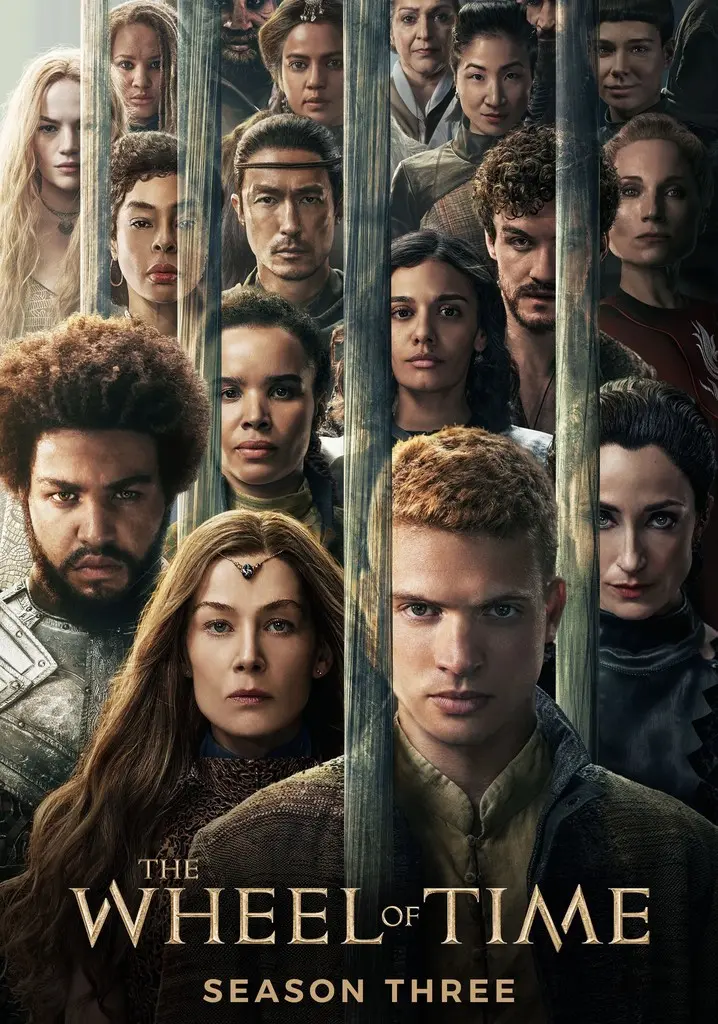
The screenplay advances through Rand's journey into the Aiel Waste, Perrin's return to the Two Rivers and the White Tower crisis after the Black Ajah is exposed. Instead of cutting compulsively between them, it sometimes devotes almost an entire episode to one path.
The fourth episode's immersion in Aiel culture and the seventh episode's focus on the Two Rivers show the value of concentration. Emotional and dramatic pressure accumulates in ways crowded episodes cannot achieve.
The finale turns strength into hurry
The same separated structure works against the finale, which must rapidly reunite many strands. Events that deserved culmination begin to feel summarized, and the final hour moves from one major decision to another without allowing each one its full consequence.
Several beloved-character deaths and political reversals inside the Tower therefore lose emotional weight. The problem is not the boldness of those choices, but the limited preparation and aftermath around them.
What does it mean to be the chosen one?
The season's plot matures beyond the mystery of the Dragon's identity. Rand is no longer a naive boy, but someone divided between prophecy, fear of madness and the need to control his own fate.
Prophecy is linked to psychological consequence rather than treated as information. Discoveries about the Aiel past and their division destroy certainty, while the changing appearance of Rand's power suggests that the chosen role may consume the person carrying it.
Perrin and the battle of the Two Rivers
Perrin's speech before the Two Rivers battle is one of the writing's strongest moments. It is humane and measured rather than inflated, giving the subsequent fight emotional meaning before spectacle.
The battle that follows is among the series' best because preparation, geography and personal stakes are clear. It proves that action becomes memorable when it concludes character development rather than interrupting it.
Rand's power becomes morally frightening
Rand's attempt to revive a child is a disturbing high point, combining awe with moral instability and foreshadowing the madness ahead. It is not presented as a triumphant display, but as power crossing a boundary its owner cannot fully perceive.
His declaration as Car'a'carn is visually magnificent, though it depends more on presentation than on extended dramatic preparation. The image lands; the emotional inevitability behind it is less complete.
Moiraine, Lanfear and the edge of melodrama
The confrontation between Moiraine and Lanfear carries genuine emotional force, particularly in the use of love after Siuan's death. The concept fits the characters, but the presentation occasionally approaches melodrama at the moment the season most needs precision.
The season also intelligently prepares conflict among the Forsaken, especially through Moghedien, while the White Tower loses its claim to moral authority and becomes an openly violent political arena.
A bolder adaptation with a human cost
The writing is more willing to depart from expectations and allow episodes their own identity. Rand and Perrin in particular mature substantially, and the strongest focused chapters rank among the series' best.
The cost of its enormous cast is weaker emotional connection to several characters. Big changes can feel like shock for its own sake when the series lacks time to prepare them. Ambition is present everywhere; proportion is not.
Final verdict
Final verdict
The third season proves that The Wheel of Time can reach remarkable heights when it stops fearing decisive adaptation. It is the series' most mature and confident season, with powerful focused episodes and richer versions of Rand and Perrin. Its rushed finale remains a serious weakness, reminding us that the end of a journey requires as much control as the journey itself.
AUDIENCE VOTE
Do you agree with the MB rating?
Choose once from this browser. You can change your answer at any time.