
The review
Screenplay and Dialogue: When Success Becomes Part of the Predicament
Maria works in a classroom repeatedly thrown into chaos by Danny’s aggressive behavior. She asks for help, but does not receive enough support to deal with him, while the school’s assessment approaches and her fear of failure grows.

The film gives this pressure a clear form through events. Danny disrupts the school trip, hurts his classmate Pauline, and makes keeping a lesson going a daily challenge. We understand Maria’s exhaustion and see that the problem exceeds her ability to contain it alone.
An encounter outside school then escalates into Danny’s captivity in her home, and the real slide begins when she discovers the results of his disappearance.
The classroom improves, positive feedback increases, and the teacher finds room to work in a way that previously seemed impossible. This success gives the crime an incentive to continue and makes every step toward confession harder.


We find that the satire here strikes at the assessment criteria themselves. The institution can quickly notice calm and improving results, while the child’s needs and what is happening to him remain outside the picture it celebrates.
Jess O’Kane’s writing uses this contradiction to move events forward. Maria faces more than the fear of her actions being exposed; she must also give up a life that has begun to look better because of them. The reward thus becomes part of the predicament, and returning to responsible behavior seems increasingly costly to her as time passes.
Saoirse Ronan Gives Relief an Unsettling Face
Saoirse Ronan’s performance is the film’s strongest element, giving Maria an internal logic we can follow even when her decisions become unacceptable.
At first, the character carries her exhaustion in the way she speaks, her brief smile, and her attempt to maintain control. She worries that she is not doing her job well and finds little in the administration to give her sufficient confidence.
After Danny’s confinement, the change begins to show in her face and posture. She looks less exhausted and more energetic, and that improvement itself becomes a source of comedy and anxiety. We see a woman receiving genuine relief from a disastrous situation of her own making.

Ronan makes Maria aware of the strangeness of what is happening, yet she continues to treat it as a problem she can manage. This awareness gives the performance an important lightness: the character tries to convince herself that she can stay in control, while the viewer knows that each new arrangement deepens her involvement.
Her private life adds another dimension to her relationship with Danny. Her loneliness after the end of her relationship with Sam means that the presence of someone who needs her attention also carries needs of her own.


For us, this is one of the character’s most disturbing areas. The care she gives the child mixes with control and her need to feel competent and accompanied. The performance preserves this ambiguity through small changes, letting us notice how much Maria personally gains from the situation continuing.
Danny Needs a Life Beyond His Effect on Maria
Eddie Waller gives Danny a forceful aggressive energy. His impulsiveness in the classroom helps us understand how one child can drain the teacher’s attention and disrupt everyone else’s day.
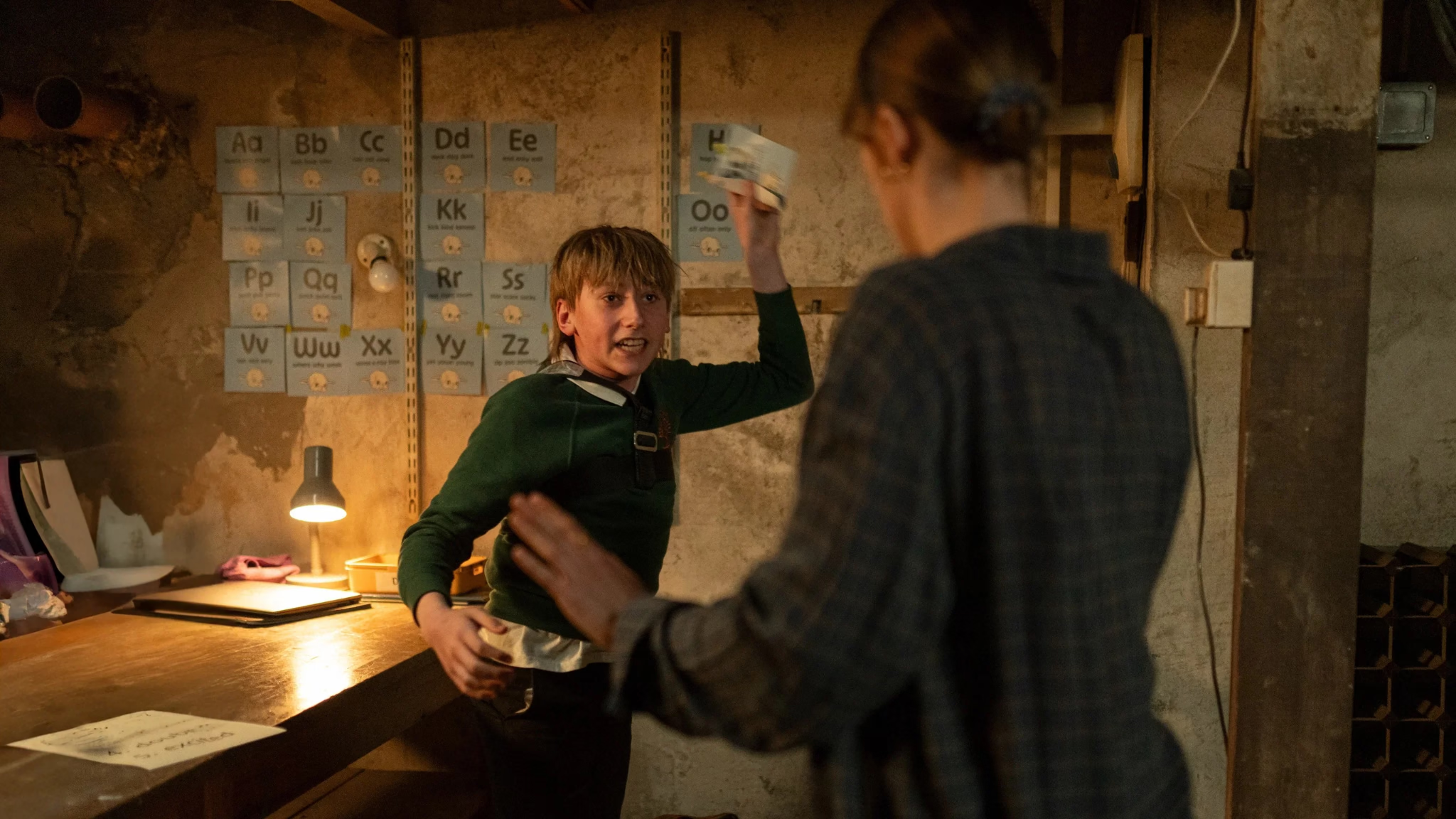
But the film faces an important test here: after making us feel how difficult he is to deal with, it needs to give him an inner life that extends beyond his effect on Maria.
The scenes revealing his need for reading support help achieve this. Some of his anger begins to acquire context, and we see a child facing a difficulty he does not know how to handle, his response emerging as harm and disorder.
Maria’s attempt to teach him individually also opens useful critical ground. Focused attention reveals needs that found no place in the classroom, but it happens in a situation where she controls a child who cannot leave.
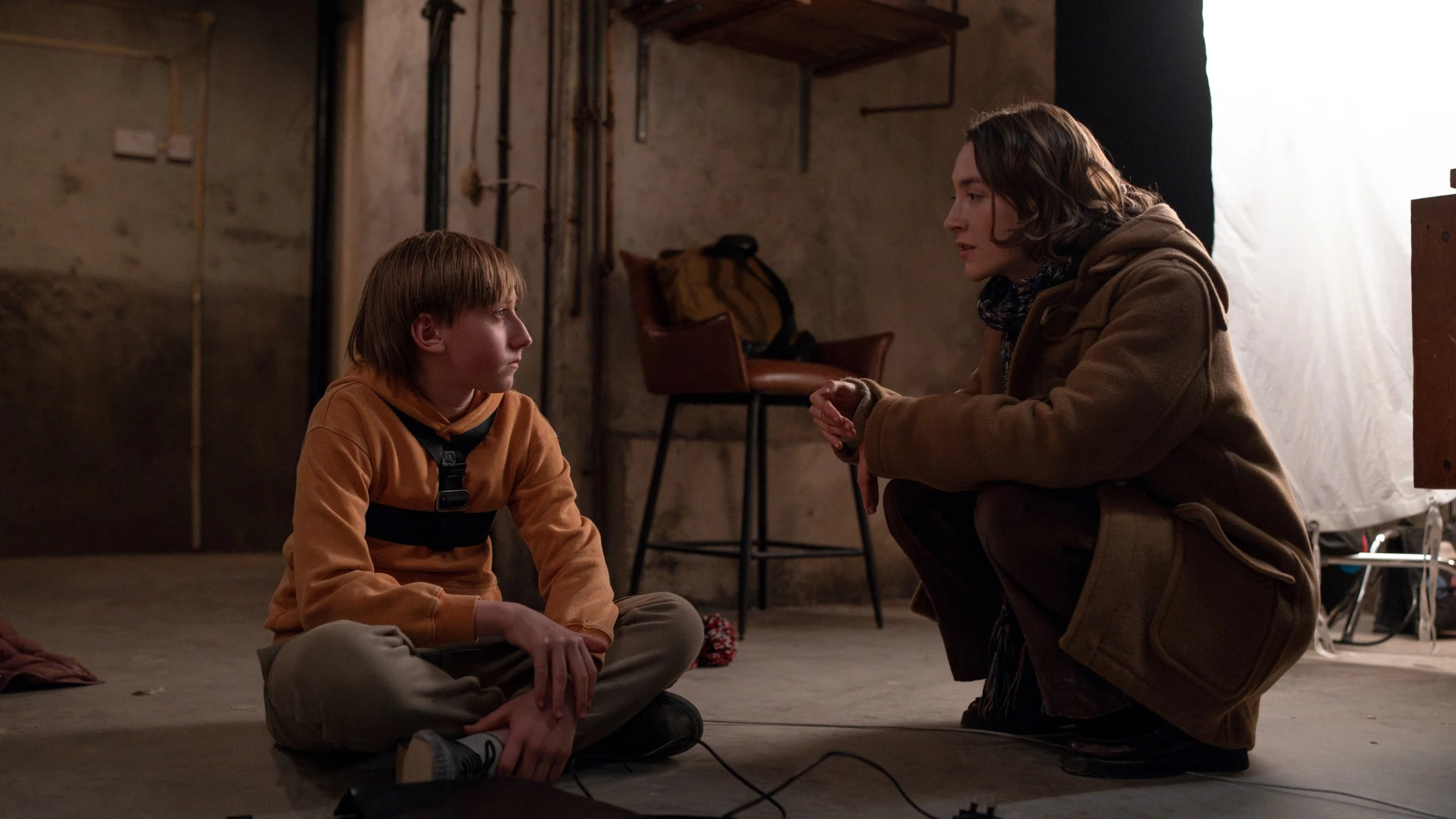
We see this contradiction as preventing the relationship from becoming a comforting story about a teacher who has discovered the right teaching method. Any closeness between them remains shaped by what she has done and by how difficult it is for him to trust her while she holds him captive.
Even so, Danny receives less space than we need. Anger has a broad presence, while his vulnerability appears in shorter stretches. Deepening his experience would have made the conflict more balanced.
His father Josh’s storyline helps broaden the picture. Exhausting work, the search, the posters, and waiting by the phone give his earlier absence from the details of his son’s life a human dimension, reminding us of the life Maria’s decision disrupted beyond the classroom.

Pauline Learns to Turn Knowledge into Power
Pauline is one of the film’s best surprises, because her role changes as she acquires knowledge she can use.
At first, she seeks Maria’s approval and watches her closely. What she hears in the teacher’s home then becomes leverage, and the relationship between child and adult changes in a way that opens a new door to black comedy.
Nia Brown gives these shifts great clarity. Her face sometimes anticipates the action, and her constant observation makes the negotiation understandable even before it becomes explicit.
We see Pauline’s importance as extending beyond the threat that she might expose the secret. She learns that information grants influence and that an adult’s confusion can be turned into privileges in the classroom.
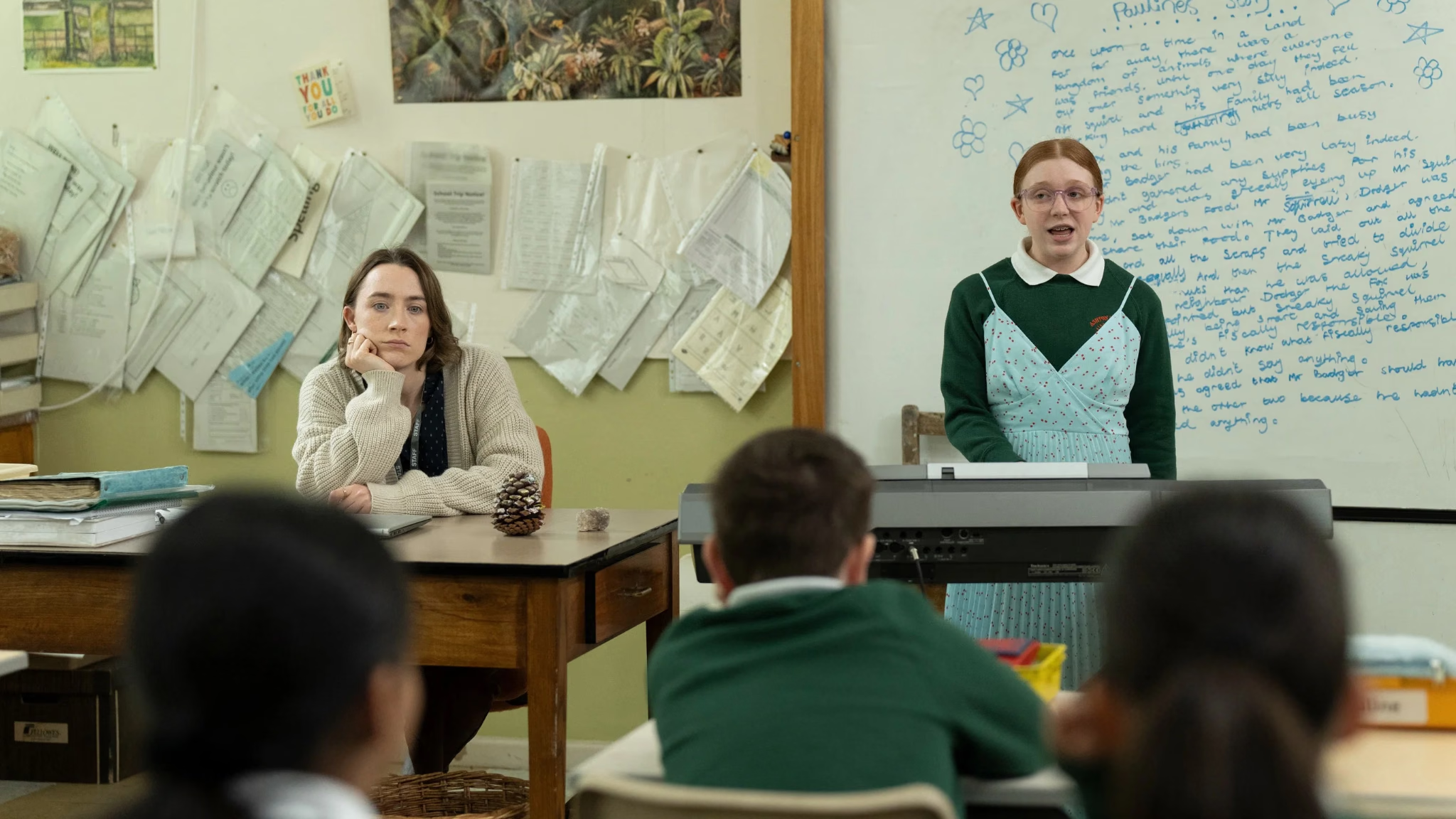
This tests again the idea of the system Maria thought she had repaired. Danny’s disappearance reduces one kind of disorder, then the concessions she makes to Pauline create another imbalance. The teacher who tried to impose control must now please a child who knows her weakness.
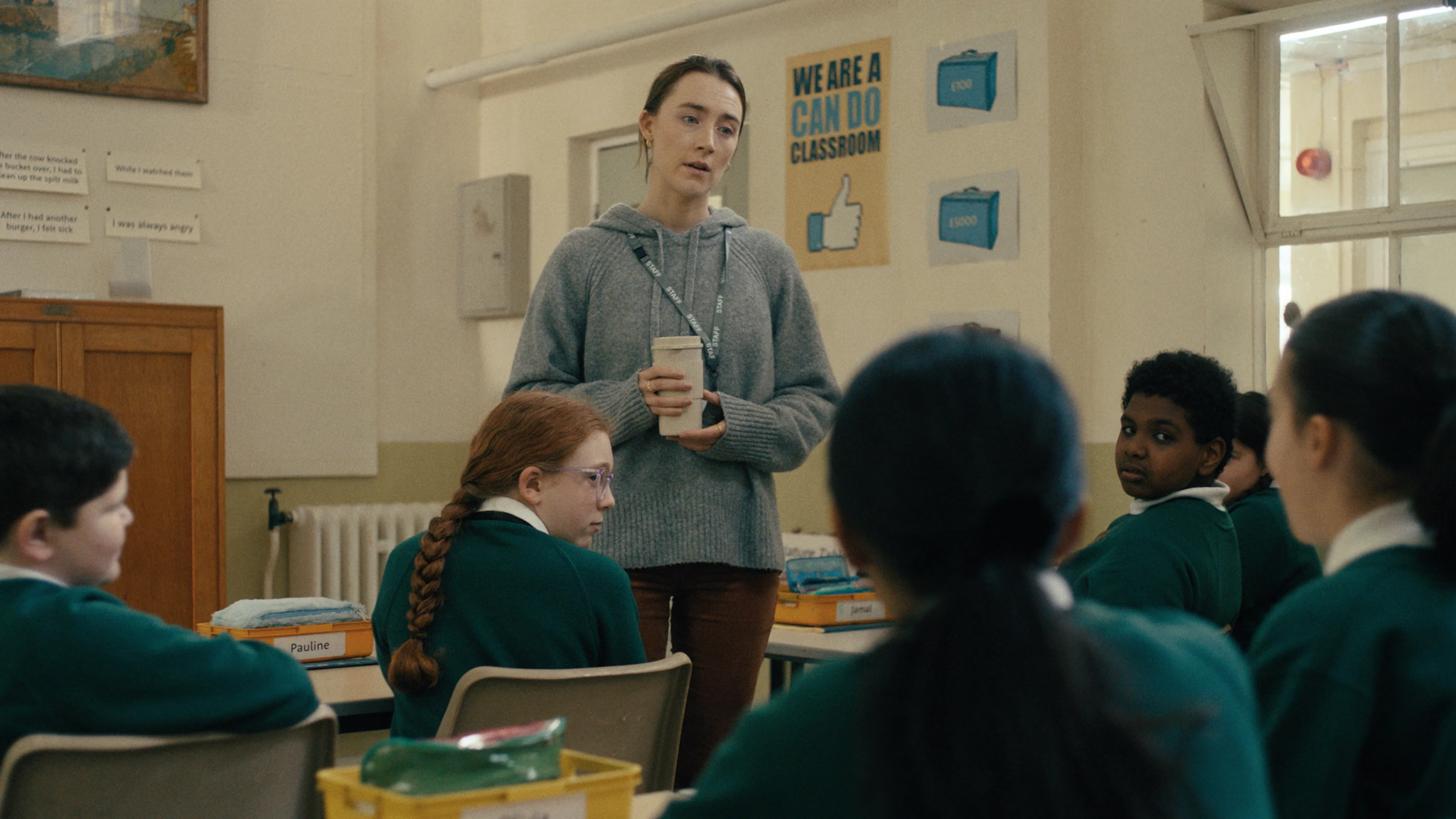
The song at the parents’ meeting is one of the most successful expressions of this relationship. It begins as a charming performance, then its very length becomes a bargaining tool. Each extension of the song deepens the predicament and traps the adults in politeness.
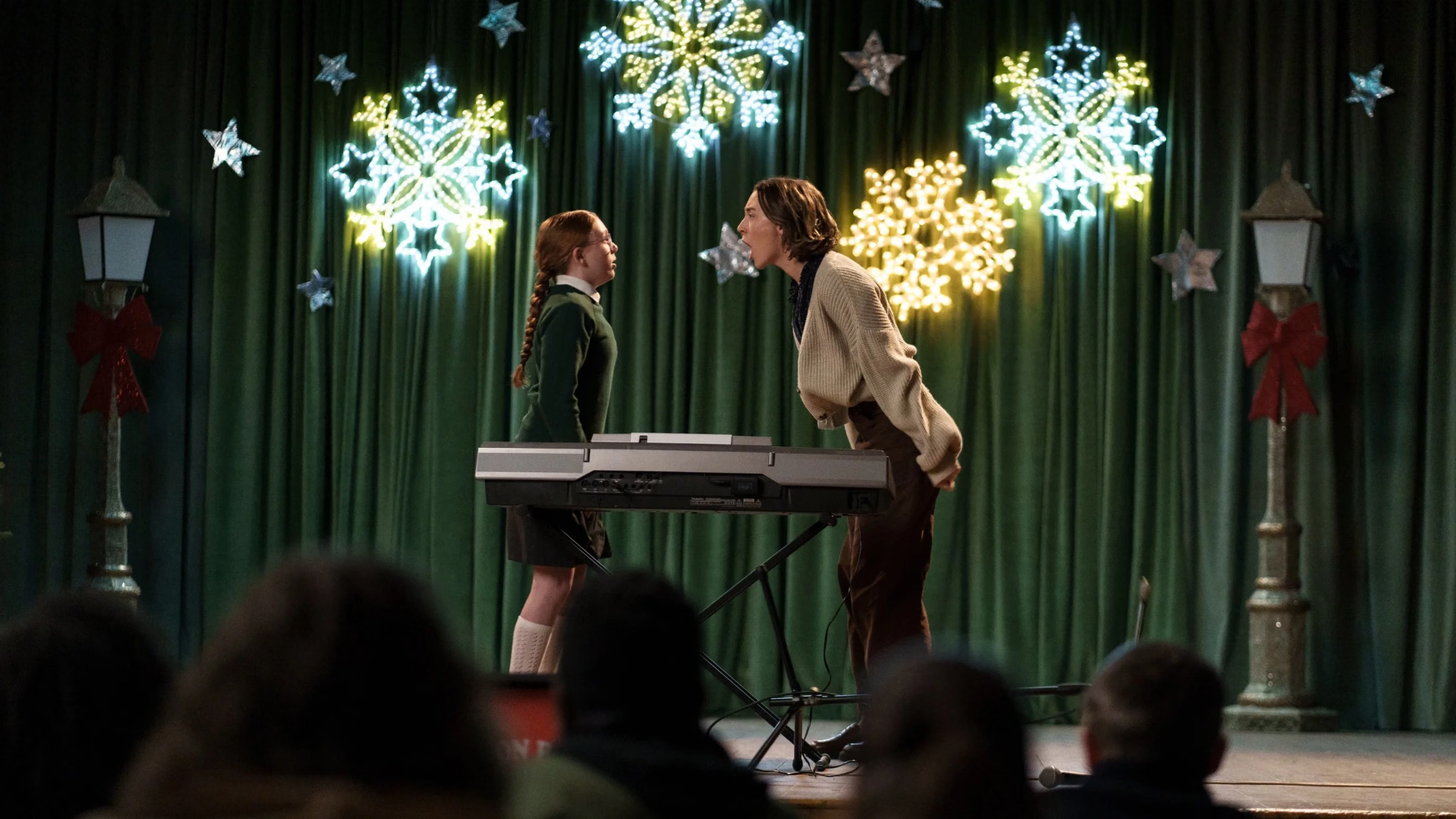
The scene is funny because it uses familiar social behavior to reveal who really has the power to control the situation, giving Brown room that she uses confidently.
Direction, Image, and Sound: A Crime Within the Routine
The director handles the film effectively, moving us between embarrassment and anxiety through clear situations and pacing that knows when to prolong the wait.
Danny’s shoe on the conveyor belt among the apples at the beginning provides an apt satirical image. Something alien enters a system that is supposed to run in an orderly way and disrupts its clean image. The story then returns to the attempt to identify which element should be removed to keep the system going.
The cinematography makes use of the orderly lines of corridors and staff rooms, while the compositions at home place Maria at corners and thresholds. Her daily life becomes tied to doors and to what can be shown or hidden behind them.
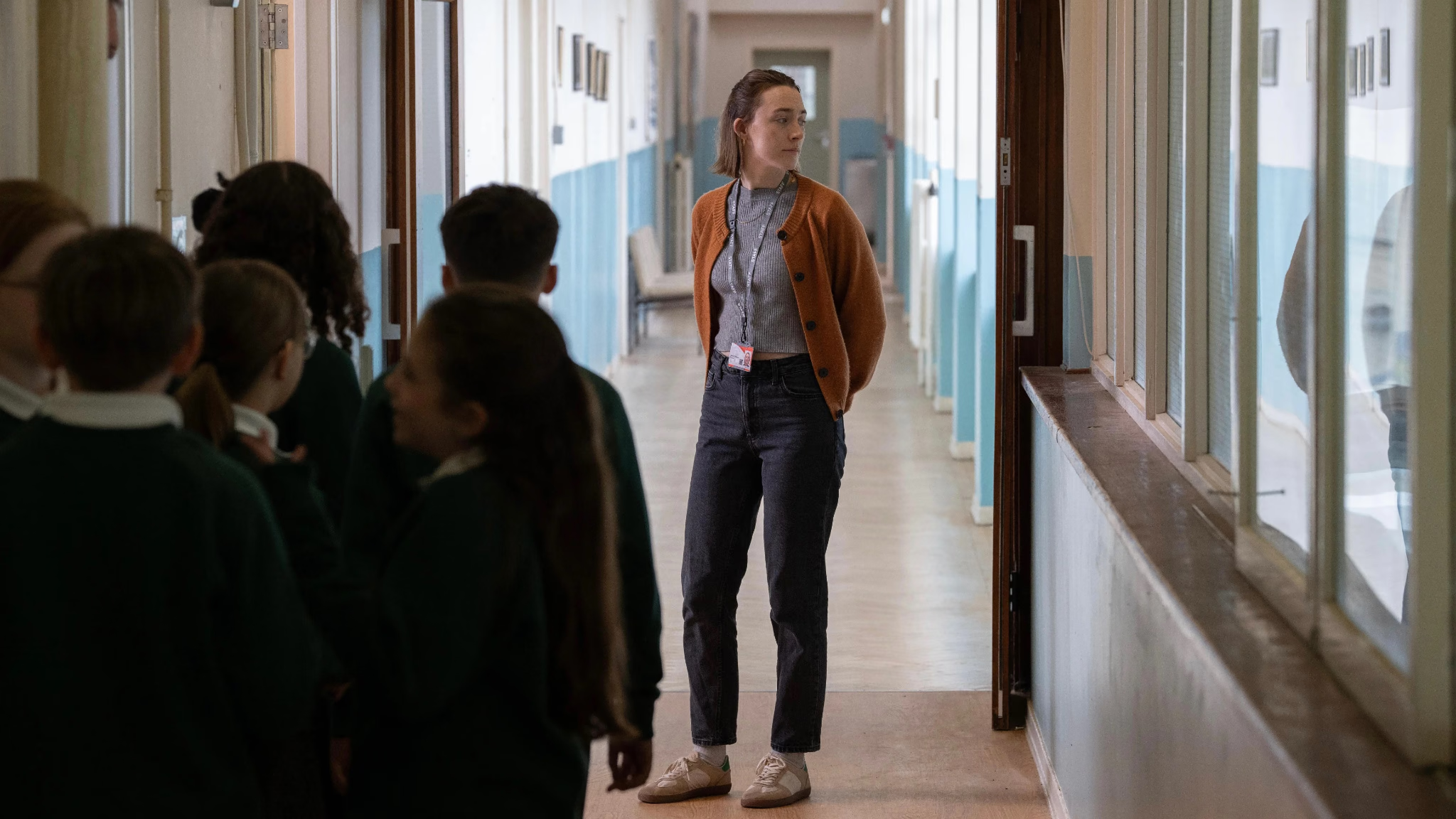
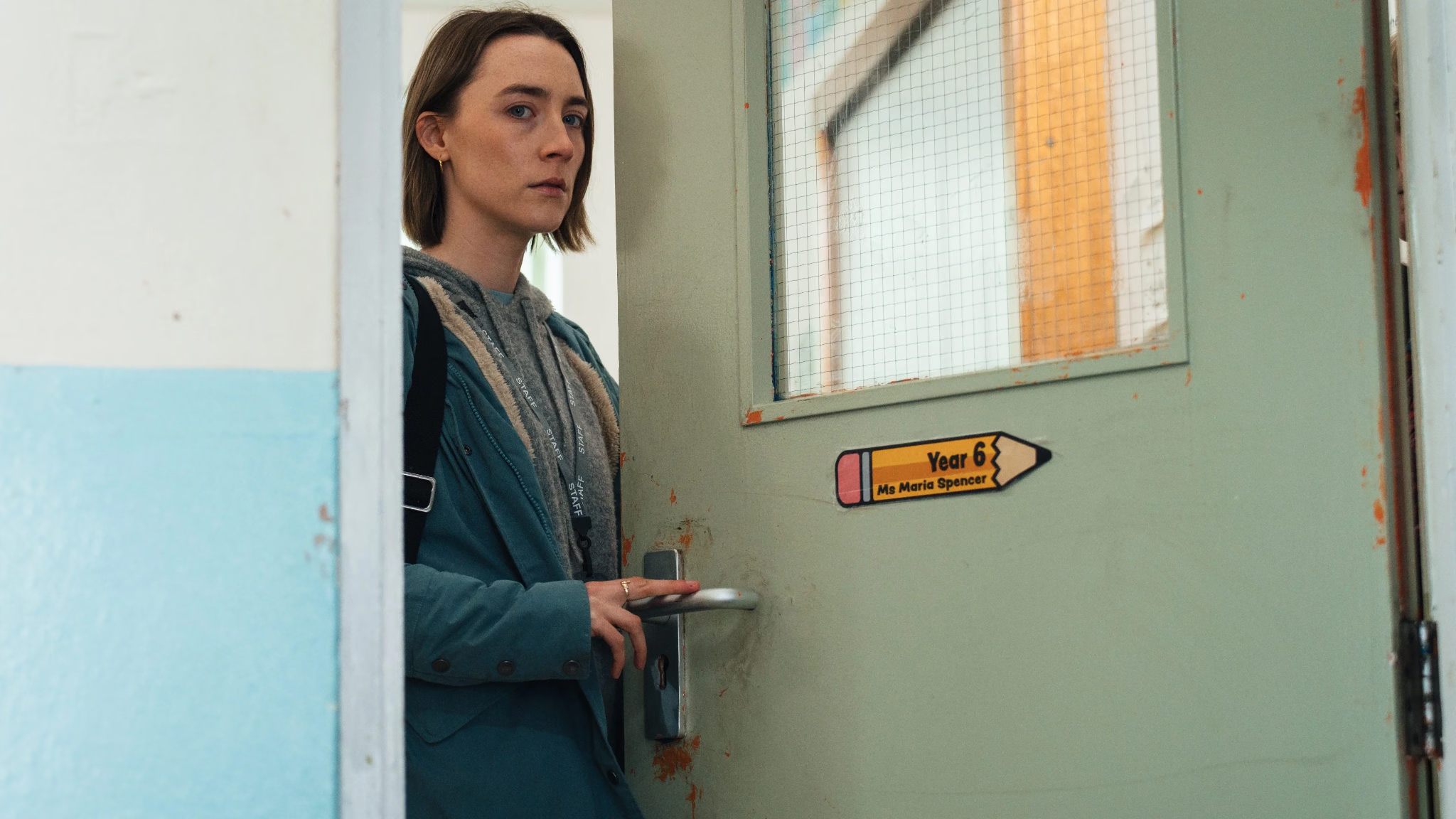
Cool daylight gives many situations a calm surface, making what happens within them stranger. We can watch a routine that looks orderly while knowing the extent of the danger on which it rests.
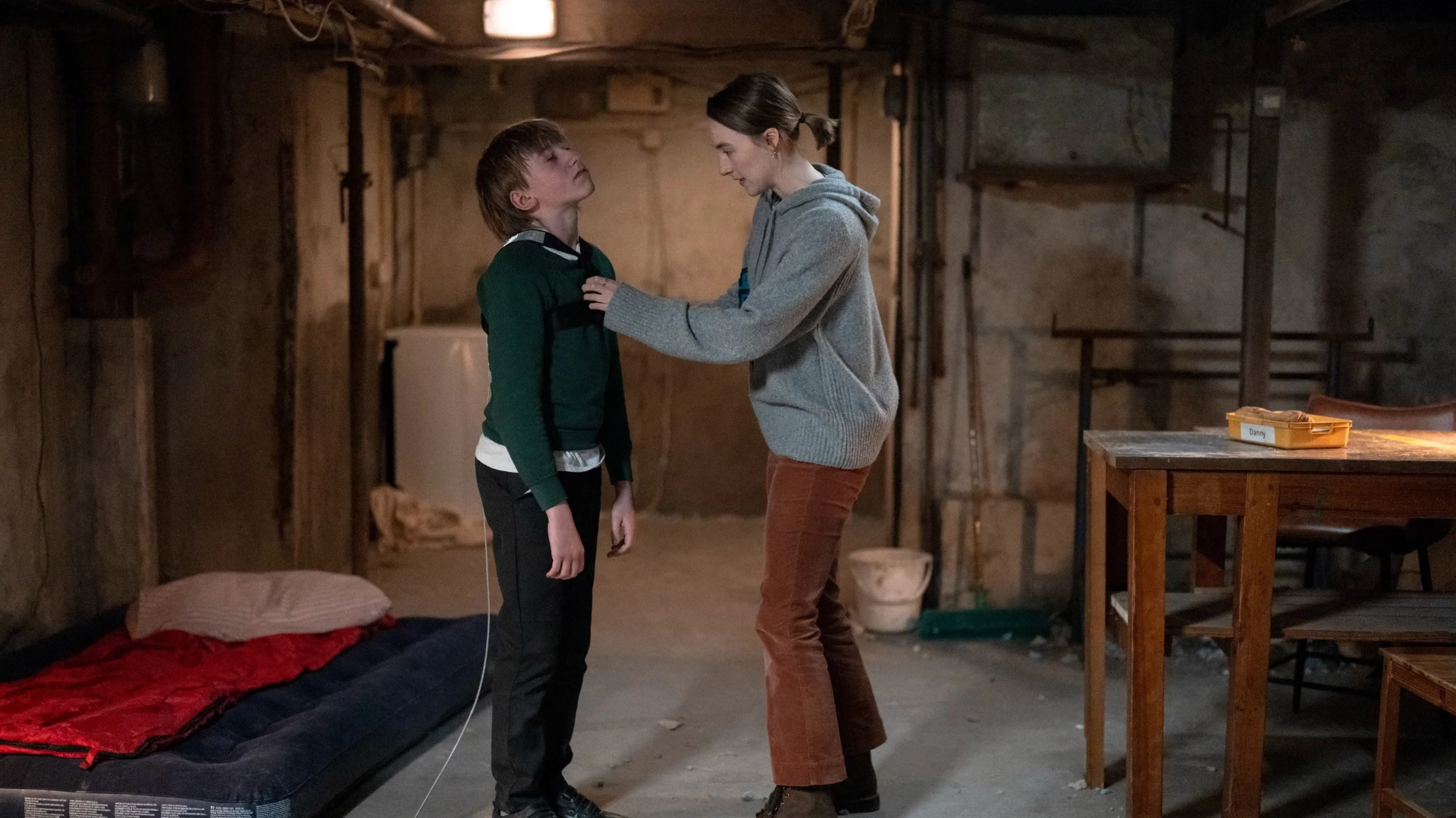
The repeated trips to the basement, serving food, and watching the front door also make tension part of a daily routine. The crime acquires familiar steps, and its continuation depends on small domestic details.
Sound contributes to this construction, especially when Pauline’s cheerful song becomes pressure on Maria. But the score intervenes heavily in places, emphasizing the tone more than scenes need when the performances already supply enough embarrassment and anxiety.
Even so, the film usually maintains a balance that makes you laugh, then notice the disturbing reason the situation became possible.
Escalation Expands the Predicament and Tests Its Logic
As the story progresses, the consequences Maria must deal with expand, and keeping the secret requires riskier decisions.
This escalation gives the film good energy and opens up unexpected situations. The parents’ meeting also preserves the connection between the personal predicament and the school setting, keeping the satire tied to the world that established the story.
But some developments in the final act ask for a greater suspension of disbelief. Some motives become less clear, and the practical details become less tightly constructed than the idea driving them.
We find the film strongest when we can follow the small step that makes the next decision possible. Pressure, then fear, then the reward of success form an understandable and convincing chain. When the leaps accelerate, the satirical construction becomes more apparent than the psychological or practical logic of some actions.
Some characters within the school also remain underdeveloped, serving a function in the institutional critique more than gaining an independent existence.

The ending maintains its coolly satirical tone and leaves a disturbing impression of benefiting from the situation and the silence around it, but does not give every question the same degree of satisfaction.
These reservations limit the experience’s completeness, particularly given Danny’s limited space, but do not weaken the central irony the film successfully builds: a system that rewards visible results can encourage people to ignore their hidden cost.
Final verdict
Final verdict
A strong, thought-provoking black comedy, led by Saoirse Ronan in a performance that combines exhaustion, confusion, and unsettling relief. Nia Brown also makes a striking impression, while Eddie Waller gives Danny a forceful presence within the scenes. The film’s chief successes are turning the classroom’s improvement into an incentive for the crime to continue, linking comedy to imbalances of power, and using school and domestic routines to build tension. On the other hand, Danny needs more space, and some final-act developments stretch beyond what logic can sustain, with motives becoming less clear and music sometimes adding too much emphasis. The result is a bold and mostly entertaining film that knows how to make apparent success itself a source of anxiety. It leaves an impression because we can understand Maria’s pressure while watching her learn to benefit from a decision that should have made her stop. My rating for the film: 8 out of 10.
Your turn
What do you think: does the title Bad Apples refer to Danny, or to the adults who learned to benefit from his absence?
AUDIENCE VOTE
Do you agree with the MB rating?
Choose once from this browser. You can change your answer at any time.