The review
Revenge as external road and internal prison
The screenplay gives Mizu a clear destination while continually complicating the person walking toward it. Every enemy advances the hunt, but alliances and recovered memories expose the cost of reducing a life to vengeance. Her conflict is not whether revenge is difficult; it is whether any human self can remain after revenge becomes the only identity allowed.
Plot turns and unexpected reversals maintain suspense without abandoning character. Supporting figures carry competing ideas of honor, survival, freedom and social position, ensuring that Mizu's isolation is challenged from several directions rather than by one simple romance or friendship.
Dialogue, identity and moral contradiction
Dialogue gives each figure a sharply recognizable intention and uses restraint to make withheld feeling as important as speech. Mizu can be fearless and wounded in the same exchange, while antagonists receive motives that keep the world politically and morally unstable. The writing invites empathy without demanding innocence.
A hybrid visual language with a director's eye
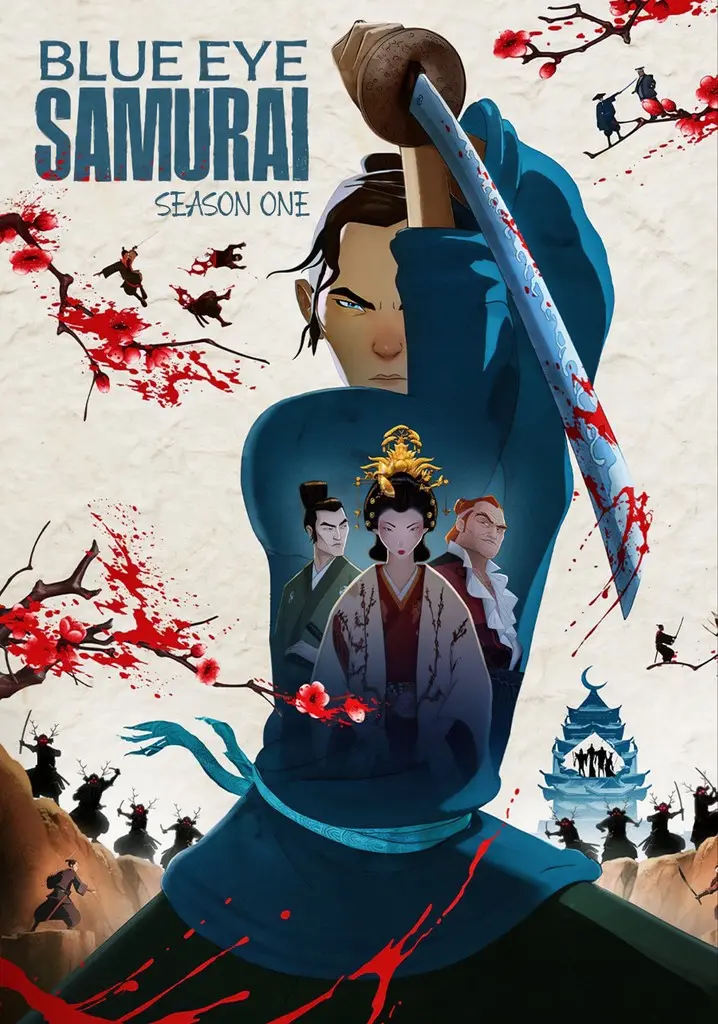
The series blends two-dimensional design principles with three-dimensional animation to create depth without losing painterly composition. Storyboards emphasize silhouette, controlled color and the physical geography of a duel. Lighting changes with the characters' emotional position, and framing turns architecture, weather and empty space into active dramatic forces.
Combat is fluid, legible and frequently brutal, but its violence is narratively motivated. Editing keeps sequences urgent without hiding choreography, making each wound feel like consequence rather than decoration. The production's visual confidence gives the Edo setting texture while retaining the freedom of animation.
Voices and music completing the blade
Maya Erskine's vocal performance holds strength and grief in the same controlled register, making Mizu's smallest changes meaningful. The ensemble gives allies and enemies distinct emotional temperature, and the score moves from percussive action to mournful stillness without reducing Japanese influence to ornament.
Final verdict
Final verdict
Blue Eye Samurai is a rare adult animated series whose violence, beauty and psychology belong to the same design. Its revenge structure pays tribute to classic samurai cinema while the hybrid visual language and emotionally layered heroine make the result distinctly modern. Season one feels complete enough to satisfy and open enough to make the renewed journey irresistible.
AUDIENCE VOTE
Do you agree with the MB rating?
Choose once from this browser. You can change your answer at any time.