The review
A remake that changes the moral ground
The season's most important decision is refusing to copy the previous films exactly. The core remains: a man released from prison seeks revenge against the family he holds responsible for losing his life. What changes is the Bowdens' direct responsibility for Max Cady's tragedy. Anna was his lawyer, Tom was the prosecutor and the couple began their relationship after the case. More importantly, Max served seventeen years for a crime he did not commit.
Max therefore does not enter as evil from nowhere. A real injustice was committed against him, immediately making the conflict more complicated than an innocent family besieged by a madman. The series then drives him toward such extremes that sympathy becomes almost impossible. That creates the season's central uncertainty: are we supposed to understand Max, fear him or do both? At its best, the show achieves both. At its weakest, it uses his history merely as fuel for new chaos.
Javier Bardem turns unpredictability into danger
Javier Bardem is the main reason the season remains watchable whenever its writing becomes unconvincing. This Max Cady is neither quietly menacing at every moment nor another Anton Chigurh. Bardem makes him explosive, theatrical and occasionally funny in a disturbing way. He can enter an ordinary conversation and leave us waiting for the second in which it turns.
The danger does not come from violence alone. Max manipulates people, enters their private lives, identifies weaknesses and exploits technology, media and relationships. He does not merely want the Bowdens dead; he wants to destroy the idea that they possess a safe space. Phones, social media, digital deception, AI-generated manipulation, video smears and online relationships all become weapons. In the present, a person need not enter your house to enter your life. Access to the phone may be enough.
The problem is escalation. As the season progresses, the screenplay requires Max to do something more extreme than before. Psychological horror gradually becomes performance. At first, he is frightening because his limits are unknown. Once the limits appear nonexistent and he can do almost anything the plot needs, some tension disappears. We may not know the next act, but we know it will be designed as the most shocking act available.
Anna is both victim and participant
Amy Adams plays one of the season's best characters because Anna is not written as an innocent mother whose life is suddenly invaded by a monster. She carries real responsibility for the past, and the show does not let her hide comfortably inside victimhood. She knows Max was wronged and knows her decisions helped place him there, while also seeing what he became after release.
That contradiction gives Adams rich material: fear, guilt, the drive to protect her family and a continuing desire to control the truth. Her relationship with Natalie connects to the season's largest secret: the possibility that Max is Natalie's biological father. Anna fears not only that he will hurt her daughter but that he will reveal a truth capable of changing the family's identity. Adams is especially strong when Anna does not explain herself. A glance or hesitation can carry more than the dialogue, and her confrontations with Bardem are the series' real heart. This is not good facing evil but two people holding information that can be weaponized against the other.
Max exploits cracks that already existed
Patrick Wilson also performs strongly, but Tom's dramatic function matters more than any single scene. The Bowdens were not an ideal family before Max returned. They already had secrets, marital tension, problems with the children, bad ethical choices and Tom's own contemplation of betrayal. Max does not create every crack. He finds the existing fractures and applies pressure.
That is more interesting than a villain destroying a happy life because it raises an implicit question: if Max had never appeared, could this family have continued unchanged? Wilson is strongest when Tom feels powerless. He wants to perform the role of the man who can protect everyone, but events continually expose how limited his imagined control is. His best scenes with Bardem are not always violent; sometimes the two men only need to share a room for the threat to exist.
Natalie chooses family over a biological answer
The children are not kept outside the conflict. Natalie and Zack pay for decisions they never made, especially Natalie, whose identity becomes part of the war between Anna and Max. The possibility that Max is her father could receive a definite answer, but the season deliberately refuses one. Natalie obtains the DNA result and chooses not to open it.
The choice matters more than the result. After everything that happened, she refuses to allow biology alone to define her family. Anna, Tom and Zack are her family because she lived with them and because they remained together through the chaos. Yet she does not destroy the envelope. That is a smart detail. The truth remains physically present even if she currently chooses not to know it.
Nevaeh creates a different kind of instability
Nevaeh Valentine is one of the season's surprises. Malia Pyles takes a role that could have been another plot device and turns it into one of the least stable presences in the story. With Max, we know we are facing danger. With Nevaeh, the inability to predict what she will do is the danger itself.
Her entry into Natalie and Zack's lives and her ability to manipulate them create a threat that does not depend on physical strength. She also represents the season's recurring excess: the screenplay often adds a new layer of madness before the previous one has enough time to develop. Even Max gains someone pursuing him as the game keeps expanding. It is entertaining, but not always controlled.
The screenplay loves shock too much
This is my largest reservation. Cape Fear is enjoyable and often plainly implausible. There is a difference between accepting a degree of exaggeration and feeling that a show is testing the audience's ability to believe it. Early reversals work because each episode changes our understanding of the characters. Eventually the pattern becomes visible: every period of stability triggers a new revelation, every apparent truth receives another correction and every peak of conflict is followed by a higher one.
This structure is undeniably addictive, but it weakens dramatic moments. A good surprise is not simply one I failed to predict. After it occurs, it must also feel logical inside the story, and that does not always happen. The season can produce excellent psychological scenes, which is why I often wished it trusted them instead of trying to end each stage with a new explosion.
Savannah looks beautiful and unsafe
Visually, the production is much stronger. Teal-blue tones, water, cold light and surrounding trees give the image a clear identity. Savannah is more than a beautiful background. The city is attractive and subtly uncomfortable, as if danger were concealed within the atmosphere itself.
Black-and-white passages, inverted negative images and abrupt visual choices reflect the characters' instability. The series sometimes knows it is stylish too well, and certain symbols become so direct that the production seems determined to confirm we noticed them. Even so, the direction succeeds in maintaining a sense that danger is close even when nothing openly threatening occurs.
Luke may be Max's son, but the series does not prove it
The finale takes the season's madness to its limit. After Crystal, Luke and Robert are killed, Anna introduces a brutal possibility: Luke may actually be the son of Max and Melissa. She uses a birth certificate and the information available to break Max psychologically, suggesting that Crystal took Melissa's child after her death and raised him as Luke.
If true, the irony is savage. Max spends the season mourning the family stolen from him, then unknowingly kills his own son. The series never confirms it. There is no DNA test, Crystal is dead and Anna's claim remains a hypothesis. Presenting it as fact would be a mistake. The only certainty is that Anna found the one possibility capable of shattering Max in that moment.
Refusing to kill Max protects the Bowdens from becoming him
Anna and Tom's decision not to kill Max works better than I expected. After everything he has done, Tom's desire to end him is easy to understand. Anna looks at Natalie and Zack and recognizes the final boundary. If they murder Max in front of their children, what remains of anything they have said about law or justice?
It is not mercy for Max. It is one final effort to stop him from transforming the family into another version of himself. The Bowdens have already made serious mistakes, but killing a man before their children would cross an irreversible line. Here, for once, the moral conflict is more powerful than the shock.
Final verdict
Final verdict
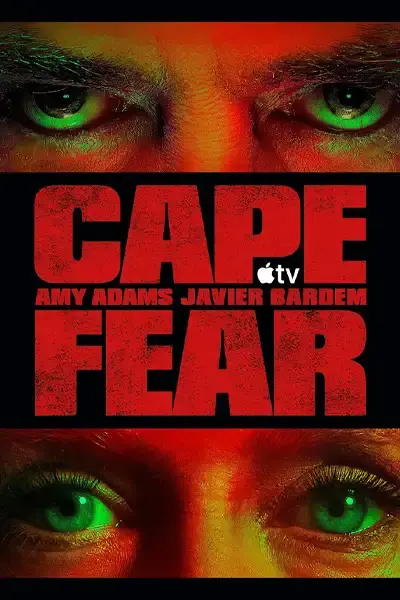
Cape Fear is a compulsively watchable season supported by excellent performances, a modern understanding of intrusion and a vivid visual identity. Javier Bardem makes Max Cady magnetic and frightening, Amy Adams gives Anna guilt and agency, and Patrick Wilson turns Tom's failing sense of control into useful drama. The series is most interesting when Max exposes fractures that already existed and when law, family and biological truth collide. It is least convincing when its need for escalation overwhelms plausibility and every revelation demands an even larger one. The result is stylish, tense and entertaining, but emotionally less controlled than its best scenes suggest.
AUDIENCE VOTE
Do you agree with the MB rating?
Choose once from this browser. You can change your answer at any time.