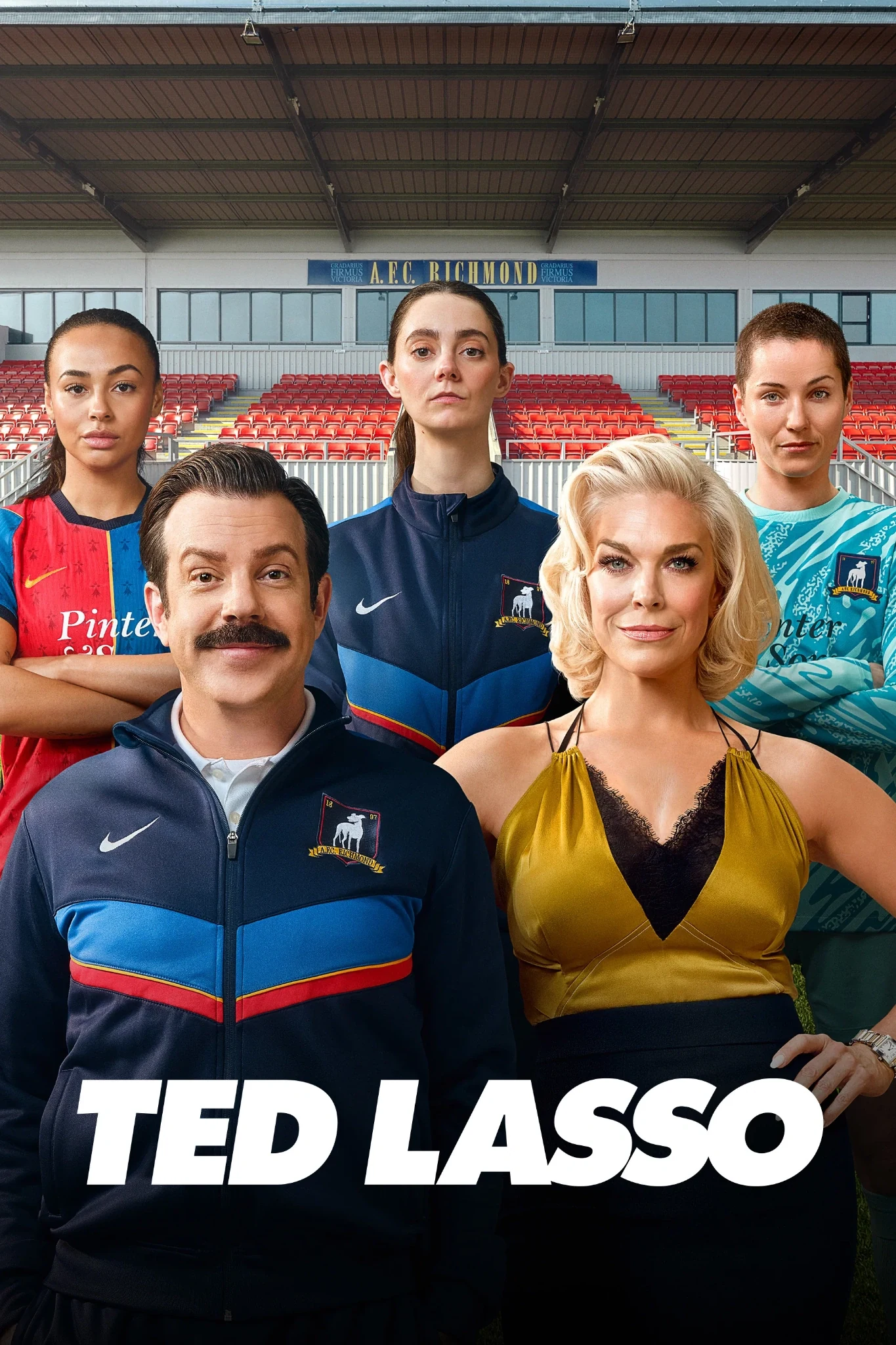
The review
Six weeks that changed Richmond’s position
The episode jumps forward roughly six weeks after Gemma’s injury. This is a suitable choice: we do not need to watch every match the team lost to understand the scale of the crisis. The result is clear. Gemma’s absence has seriously weakened the attack, and although the team keeps fighting, it is not getting the results it needs. Its position in the table begins to slip.
For me, this storyline works because it gives the matches a real purpose again. Football is no longer merely a backdrop to the characters’ stories. The Bristol match matters. The team needs a result, and the players themselves feel that pressure. This is something I sometimes miss when Ted Lasso becomes too occupied with its romantic and administrative storylines.
Gemma returns… but the real development is not her goal
Gemma returns to the team, but she has not received full clearance to play from the outset. Naturally, she wants to come back immediately. That is understandable, especially after her earlier decision to take football seriously rather than follow the other professional path available to her. Alice, however, refuses to risk her before she is ready.
For me, the important thing is not simply Gemma’s return. It is the change in her relationship with Alice. Previously, Gemma could see Alice’s strictness as an obstacle or excessive pressure. Now she begins to understand that it is about protecting her, rather than holding her back. This development becomes clear when she enters the Bristol match.
Gemma wins a penalty and scores, but her knee begins bothering her again after the heavy challenge. This is where we see her maturity. She agrees to come off. She does not try to be the hero who finishes the match injured, or treat the substitution as an insult. She understands that staying on without being able to perform at her best could hurt the team more than help it.
For me, that matters more than the goal itself.
Alice becomes a mentor, not just a strict coach
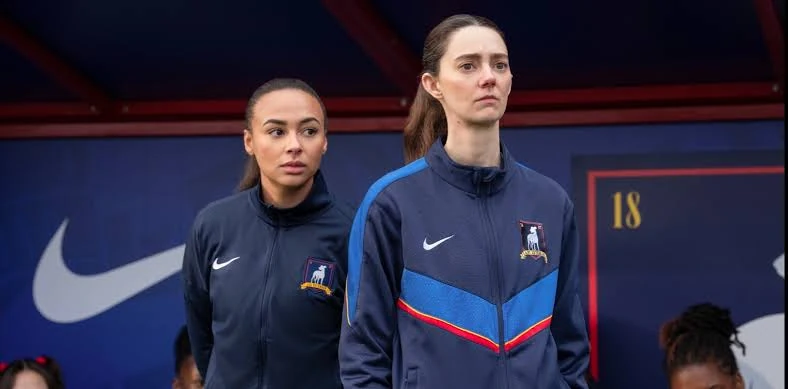
Alice benefits considerably from this episode. She is still firm, but the way she communicates has changed, and that is a very important difference. The series does not suggest that her earlier concern for Gemma was wrong. Instead, it implies that the problem sometimes lay in how that concern reached the player.
There is now greater mutual trust. We also see this in her treatment of Shannon. Alice notices her progress in training and understands that her main problem is not a lack of skill, but excessive nerves when the real opportunity arrives. The Bristol match therefore becomes a test for both player and coach.
Shannon: the episode’s best sporting payoff
For me, the episode’s most successful football storyline belongs to Shannon Stone. The series has spent time establishing that she has talent, but when given a chance she overthinks it until the moment slips away. This time she enters because Gemma comes off. Importantly, she does not immediately score as though all her problems have disappeared.
The whole team begins improving. The comeback arrives, then the lead. Finally, Shannon gets her own moment, makes the most of her run and seals the match with her goal. This is one of those moments Ted Lasso knows how to deliver. We can almost see it coming, but that does not stop it from working.
Its value is not in the surprise. It matters because we have watched this character fail more than once before reaching it.
The match recaptures the old Ted Lasso spirit
The Bristol match may be one of the episode’s closest echoes of the show’s early seasons. The start is poor, and the team falls behind. Gemma returns to offer hope, then comes off, creating an opportunity for other players. The final result does not come from one star rescuing everyone; the entire team improves as the match progresses.
Even the smaller details support that idea: the twins improve their ability to play together instead of constantly clashing, and Boots accepts the advice to use gloves after insisting on her unusual approach. The series returns to its favorite idea. A team improves through more than tactical training. It improves because the people themselves have begun learning to listen to one another.

Mae on the bus: more than a charming moment
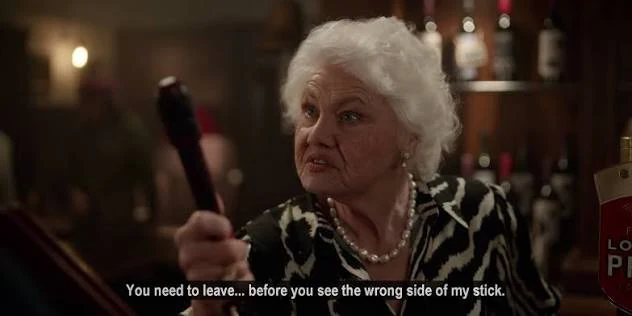
Inviting Mae to travel with the team to Bristol is more than a treat for longtime viewers. It connects directly with what she represents. Mae is one of the characters most closely tied to Richmond’s history. She is not a player, coach or owner, but the club is part of her life. When she boards the bus and shares the journey, it feels like the series is formally acknowledging that supporters belong to the team too.
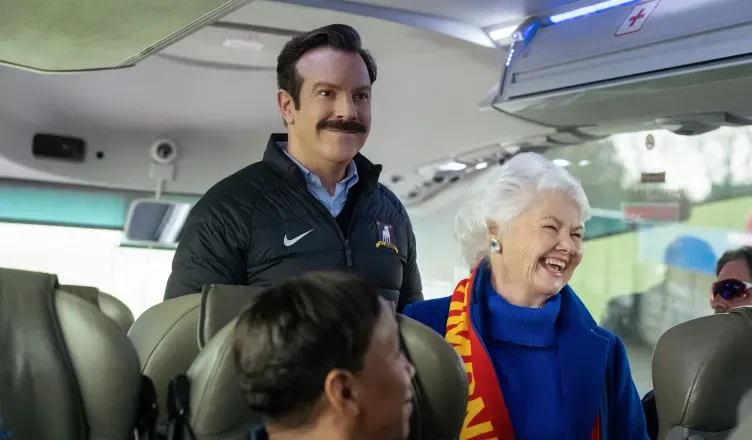
Ted then gives her a chance to address the players before the match. The speech works because it does not come from a coach explaining tactics. It comes from a woman who has spent her life seeing football as a dream she could not access in the same way these players can today.
Her presence makes the episode’s title entirely appropriate. The ending, however, gives that title more weight than we expected.
Keeley and Roy: happy news at an unexpected time
Elsewhere, we have Roy and Keeley. Roughly six weeks have passed since their reunion, and the relationship is going well. Keeley then faints during one of Richmond’s matches. Initially, the concern is her blood pressure, particularly given her family history, but she begins to suspect another possibility. Tests confirm that she is pregnant.
I will be clear here: pregnancy is not the most inventive way to move a recently reunited couple forward. This development is largely predictable. What makes the storyline work for me, however, is the performance.
Juno Temple makes Keeley’s anxiety convincing
Keeley is happy about the news, but her happiness is not uncomplicated. There is fear too. She has only recently reunited with Roy, and her career has reached an important stage. Suddenly, a decision appears that will affect all these things at once. That makes her hesitation to tell him understandable, rather than necessarily meaning she believes he will leave.
Everything is finally going well, and she fears that such a major change could disturb the balance they have recovered. Juno Temple is very good here because she presents the situation as neither a tragedy nor a straightforward celebration. Joy and anxiety exist at the same time. That feels more honest.

Rebecca and Keeley: still one of the show’s finest relationships
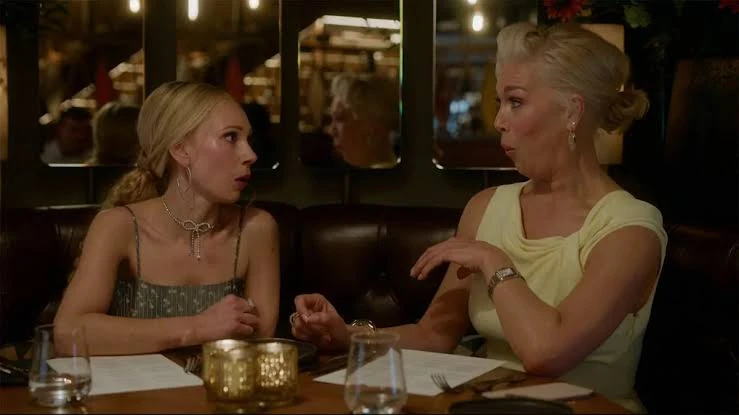
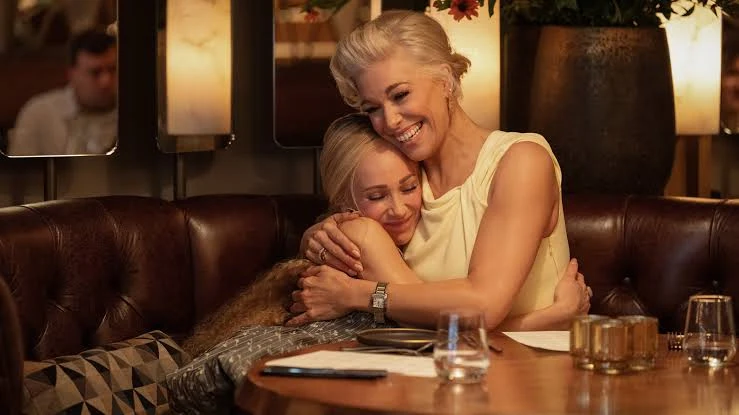
The first person Keeley tells is Rebecca, a completely natural choice after everything they have been through. Rebecca is delighted, but what matters more is the room she gives Keeley to admit what frightens her. This kind of scene has always been one of Ted Lasso’s strengths.
These friendships do not exist only when the script needs a piece of information; they stretch across seasons. In an episode full of matches and administrative threats, this small conversation gives the storyline room to breathe.
Roy proves he has changed
Roy gets some of his best moments when he decides to protect Keeley from the stress of the match. He will not even let her watch it live. Knowing she cannot simply ignore it, however, he begins acting out what happens for her at home. It is sweet and funny, but it also serves his character.
The old Roy could turn concern into orders and anger. He is still sharp, but now he knows how to transform his fear for her into something tender. Keeley then tells him about the pregnancy, and his response is immediate and happy. For me, the scene works because the episode does not manufacture a crisis between them.
It would have been easy to make Roy panic or withdraw to generate extra drama before the finale. Instead, the series chooses something more mature: the relationship is doing well, and the news does not need to destroy it to matter.
Is the pregnancy storyline predictable? Yes… but it works
This deserves attention. As a writing choice, pregnancy may be the most predictable development for Roy and Keeley after their reunion. Predictability does not always make an idea bad, however. What matters is the execution, and this storyline relies heavily on the established chemistry between Brett Goldstein and Juno Temple.
We know the characters’ history and why they separated. Seeing the relationship reach this stage therefore carries weight. I would simply prefer the finale not to become a race toward a quick wedding as well, because that could make everything feel more neatly arranged than necessary.
Zelda Southport: the mask finally falls
The biggest revelation in the administrative storyline concerns Zelda Southport. Since her arrival, she has been extremely useful to Rebecca and Keeley: offering help, asking little in return, and gradually entering their inner circle. The episode finally reveals that she is the person buying the club’s shares, changing the meaning of her presence throughout the season.
She did not enter Rebecca’s life because she wanted to be her friend. She moved closer to the center of power because she wants the club itself.
A good idea… but the finale must deliver
An opponent trying to take Richmond from within is a suitable idea for this season, particularly after Rebecca’s years of defending the club against people who wanted to use it for their own purposes. I have a reservation about Zelda’s storyline so far, however: the series keeps far too much of her intention hidden until the penultimate episode.
The finale must now do a great deal in very little time. We need to understand her motives, how she planned all this, what she actually wants from Richmond, and how Rebecca can stop a process that has already become dangerous. Simply revealing that Zelda is the villain is not enough. The final episode must make the revelation worth the earlier build-up.
Rupert was the perfect decoy
One of the good choices in this storyline is Rebecca and Higgins believing that Rupert is the mysterious buyer. From their perspective, this makes complete sense: he has the history, motive and ability. When the purchases stop after they contact his lawyer, the suspicion seems almost confirmed. That is precisely what lets Zelda remain beside Rebecca while still being regarded as an ally.
This makes the betrayal more personal. The danger was not someone outside the room. It was inside the room all along.
The threat to control of Richmond
The episode makes clear that this is no longer a battle over a few shares. If the party working for Zelda acquires the required stake from the remaining shareholders, Rebecca’s ownership itself could be threatened. This gives the finale an entirely different conflict from a football match.
Richmond could be enjoying its finest sporting moments while the club itself is about to pass into someone else’s hands. That is an effective contradiction: as the team grows stronger, the institution behind it becomes more fragile.
The ending: news we never hear
After the win and the celebrations, a member of the stadium staff approaches Rebecca and tells her something. Her face changes, and she goes to tell Ted. The episode does not let us hear the news. I need to be precise here: I suspect this concerns Mae, possibly a serious health crisis during the celebration.
The episode itself does not explicitly confirm that to the audience. I therefore do not want to state that Mae has died as though it were established fact. We do not see her death or hear the news. All we see is the reaction.
Has Mae actually died?
It is a strong possibility. The episode carries her name, gives her more attention than usual, and emphasizes her age and the importance of this journey to her. Bad news then arrives moments after the win. These choices make the connection to Mae very plausible. There is still a possibility, however, that she has suffered a serious crisis and will remain alive.
For me, it is better to wait for the finale before declaring her fate. This also improves the ending: it does not depend on showing a death directly, but on the shock on Rebecca and Ted’s faces while everyone else continues celebrating.
The best choice is letting the celebration continue
There is a small moment in the ending that I particularly liked. Rebecca sees the team celebrating and chooses to tell Ted alone rather than walk in and immediately destroy their moment. It is a simple but human detail. Seconds earlier, these players achieved one of the season’s most important results, and Rebecca cannot turn back time.
The bad news will not become any less bad if it waits another minute. She chooses to bear its weight with Ted first. This is exactly the tone the series handles well at its best: happiness and sadness exist together, rather than each waiting for a separate turn.
Pacing: almost three episodes inside one
The episode moves between three very different kinds of story: sporting drama, a romance between Roy and Keeley, and a plot to take over the club. The ending adds the possibility of a crisis involving Mae. That is a lot. Strangely, most of these parts work individually, but the transitions can make the episode feel crowded.
The Bristol match is the most complete storyline. Zelda is clearly preparation for the finale, and the news about Mae is deliberately left incomplete as well. We therefore feel that the episode resolves the match while leaving much of the rest open.
What makes the match work?
The football does not need to be entirely realistic to work. The decisions need to connect with the characters. Gemma knows when to come off. Shannon finally learns how to play without defeating herself by overthinking. Boots listens to advice. The team that struggled after the injury finds solutions beyond the return of a single player.
This is very important. If Gemma had returned, scored four goals and won the match for Richmond, the storyline would have been weak. Instead, the injury forces the team to grow, giving the win greater meaning.
The performances
Jason Sudeikis does not necessarily have the episode’s largest personal storyline, but that is appropriate. Ted is the point around which the stories move: he invites Mae, manages the match and receives the final news. Brett Goldstein and Juno Temple draw on Roy and Keeley’s long history, making a traditional development such as pregnancy warmer than it might look on paper.
The episode also gives Annette Badland special importance as Mae. This is not only about a major speech. It is the feeling that a character who has lived alongside the club for years finally has a chance to become a direct part of the team’s journey.

Strengths and weaknesses
The episode’s strongest elements are the Bristol match and Shannon and Gemma’s development, Roy and Keeley’s relationship progressing without an artificial crisis, and Mae representing the connection between Richmond and its supporters. The Zelda revelation also reframes parts of the season and gives the finale a clear threat to the club’s future.
Its main weaknesses are the predictability of Keeley’s pregnancy, the long wait before Zelda’s revelation, and the number of issues left for the finale. The ambiguity of the ending works as suspense, but it will mean little if the next episode reverses it too easily.
Final verdict
Final verdict
For me, Mae Rides the Bus succeeds because it puts the sporting side back at the center of the experience at the right time. The Bristol match delivers one of those endings Ted Lasso knows how to create: the team starts poorly, the player whose return we have been waiting for cannot save everyone alone, and the opportunity finally reaches a character who has been waiting for it. Roy and Keeley’s storyline is simple and predictable, but warm. The performances make the news feel like a natural extension of their relationship rather than just a dramatic trick. The Zelda revelation is good, but the real test comes in the finale. Her character now needs motives and a resolution that justify all this preparation. Then there is Mae. The episode ends without an explicit answer, so I will not consider her fate settled yet. If the news really does concern her, placing one of Richmond’s happiest days beside the loss of one of its oldest supporters would be painful and appropriate to the show’s idea that football is more than the match itself. It is also the people who stay around a club year after year.
Your turn
Do you think the news Rebecca gives Ted really means Mae has been lost, or is the series deliberately misleading us before the finale? Has Zelda become a convincing enough threat to be the season’s final opponent?
AUDIENCE VOTE
Do you agree with the MB rating?
Choose once from this browser. You can change your answer at any time.