The review
This time, the players' lives off the pitch matter more than football
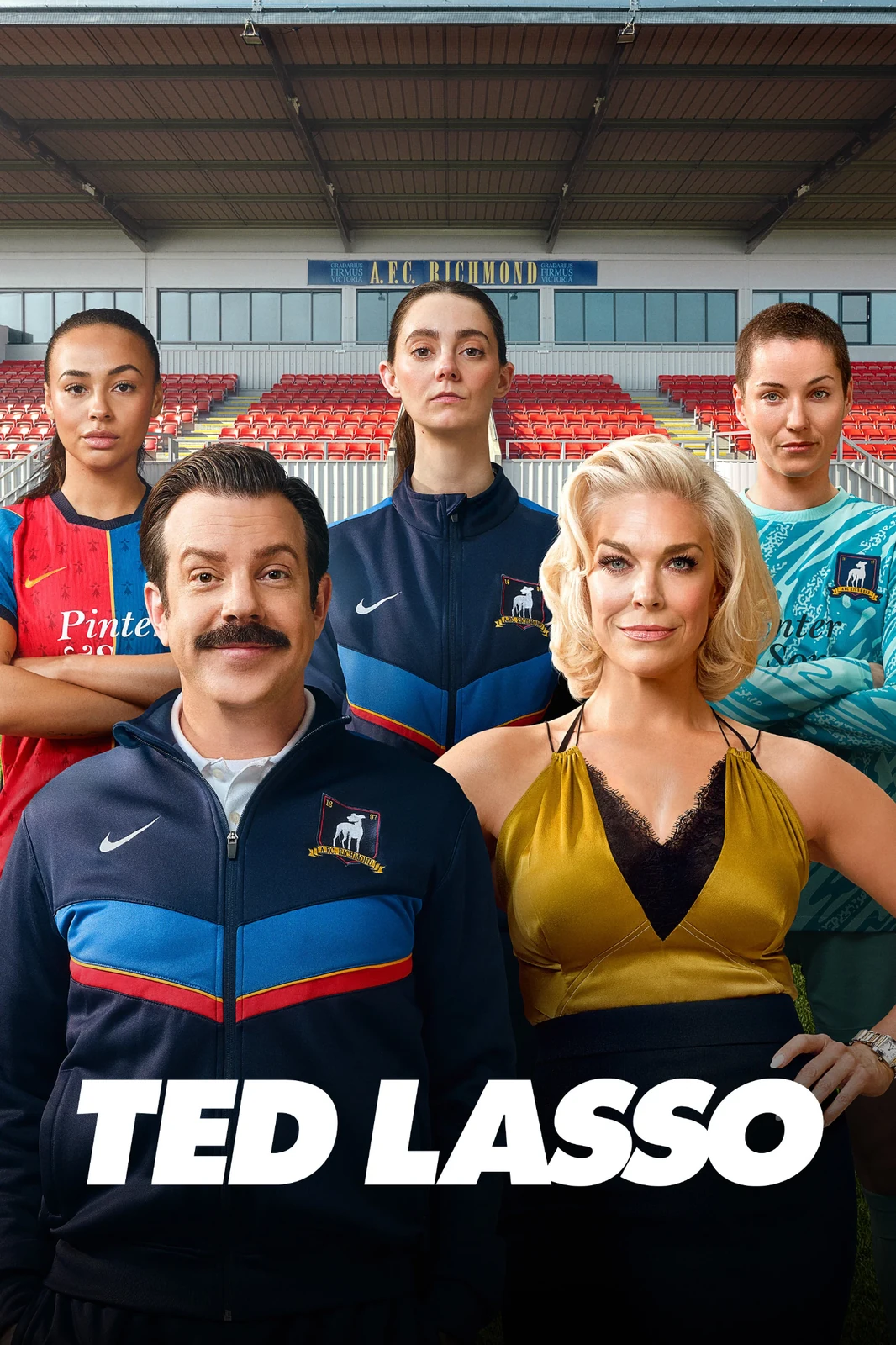
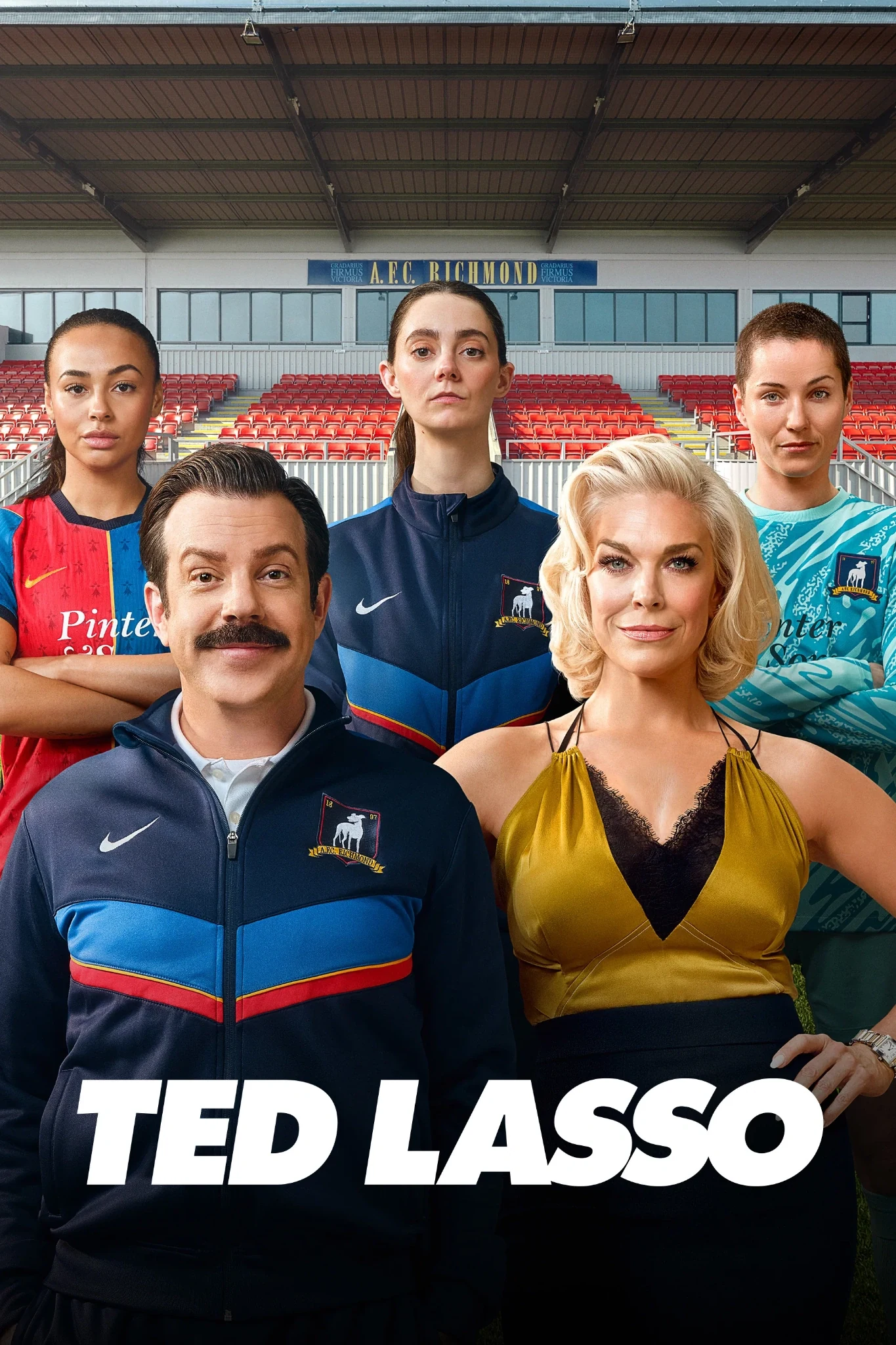
The best decision at the beginning of the episode is that it does not present Richmond's women's team simply as a group of footballers.
Each of them has a whole life outside the pitch.
Lizzie has a problem with her children's father, who does not turn up when he is supposed to.
Gemma has an important career opportunity, but it will mean sacrificing part of her training.
Niamh and Siobhan are facing another rent increase.
Shannon still delivers pizza, despite now playing for a professional team.
And Boots is having trouble with her car.
Even Maddie and Margie, after deciding to take a break from their relationship, comically end up matching with each other on a dating app.
These details may seem small, but they address one of the problems I had with the earlier episodes.
The season kept saying that this team was the heart of the new story, but we did not know the players well enough.
Here, almost for the first time, I feel that the series is beginning to understand that building a team means more than showing training sessions and matches.
It means knowing why each woman comes to training tired, angry or distracted.
Alice Chilton... the best character in the episode
For me, this episode belongs to Alice Chilton more than anyone else.
Ever since her introduction, Alice has been sarcastic, sometimes harsh, and completely different from Ted.
That is what made her a successful addition.
But episode seven begins with her trying to change herself.
She listens to self-help material and decides to say yes to almost everything.
At first, the idea seems positive.
Lizzie needs to bring her child to training? Yes.
Gemma will be late because of a job interview? Yes.
Then the requests become stranger, and Alice keeps agreeing to them.
The comedy works, but what I liked more is that the episode does not offer a naive message along the lines of: say yes to everything and your life will improve.
Quite the opposite.
Ted and Beard explain to her that agreement alone is not a solution.
That is where the idea of “yes, and...” comes in.

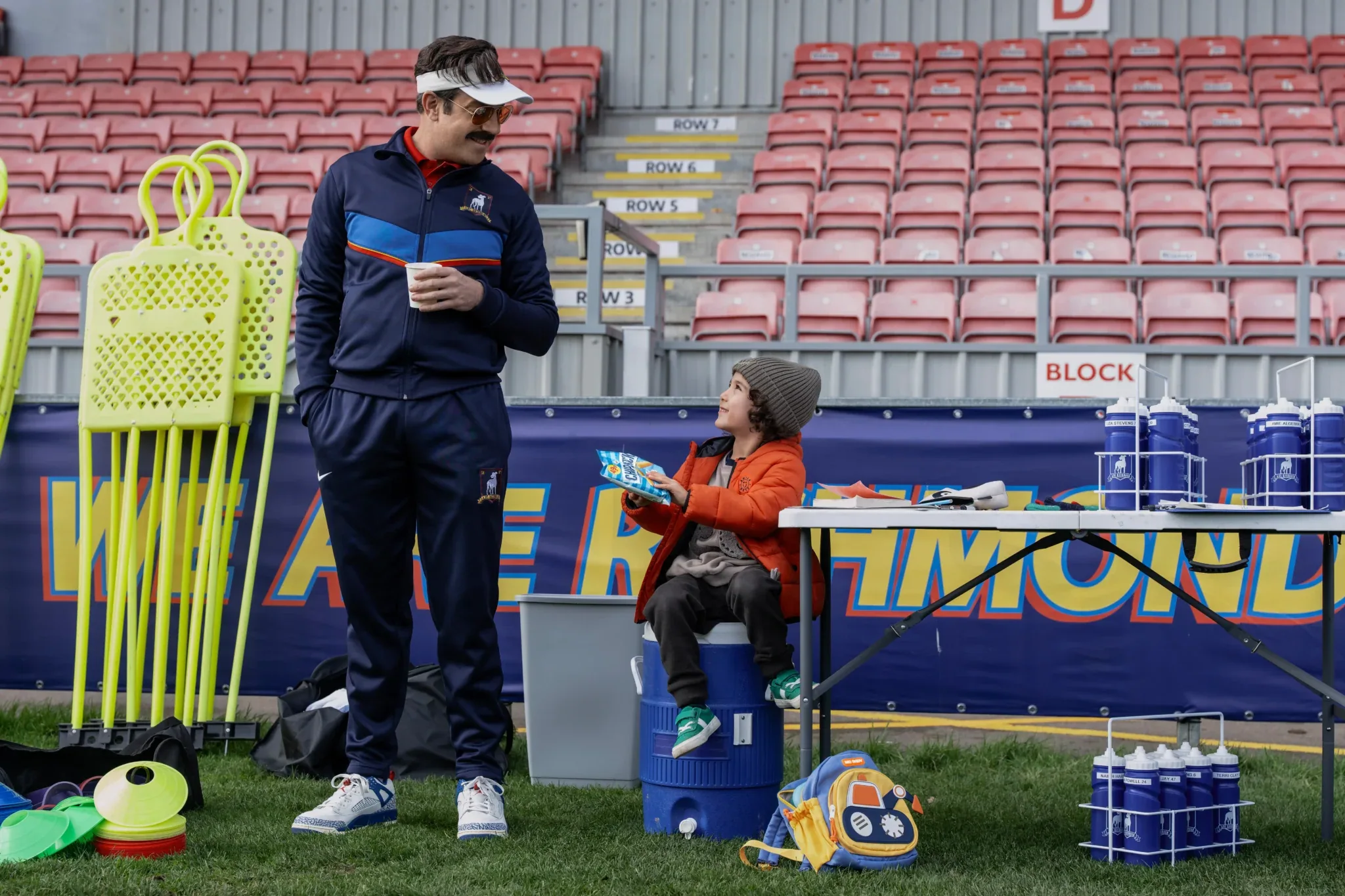
“Yes, and...” instead of empty optimism
This simple idea sums up almost the entire episode.
You do not just agree to what is in front of you; you add something that helps the person take the next step.
That is exactly what Alice does with Shannon.
Shannon wants to train with the main group.
Alice agrees.
But she adds an important condition: stop overthinking and just play.
The result is an excellent performance from Shannon.


For me, this is a very important moment for Alice.
She is beginning to understand that coaching is not simply a matter of identifying a player's mistakes.
You can be completely right in your assessment of a problem, but if you do not know how to help the player overcome it, what good is that knowledge?
Here, Ted's influence on her begins to show without her becoming a copy of him.
That is a very important point.
I do not want Alice to become someone who smiles all the time and behaves like Ted.
I want her to remain Alice, but become a better coach.
That is what the episode does.
Believe returns... but in a better way
One of the things I liked most in this episode was the return of the Believe sign.
That word has become part of the series' identity.
But if season four had brought it back in the same way, it would have felt like nothing more than an attempt to stir up nostalgia.
The episode cleverly avoids that.
Alice moves the sign into the women's changing room.
But the players do not respond in the expected way.
Their problem is not that they do not believe in themselves.
They already do.
But belief will not pay the rent.
It will not fix the car.
It will not make an absent father take responsibility.
And it will not suddenly give women's football the same resources as men's football.
So Alice adds two small words:
And Win.
“Believe... and win.”
The sign becomes something that truly belongs to this team, rather than a copy of the men's team's past.

For me, this is one of season four's best moments so far.
It uses an old symbol but gives it new meaning instead of living on nostalgia alone.
Ted tries to admit that he wants love
Meanwhile, Ted himself faces a completely different problem.
After his conversation with Michelle in the previous episode, he seems ready at least to consider entering a new relationship.
So he begins creating a profile on Bantr.
The first problem seems very simple:
describe yourself in three words.
For Ted, however, it is not simple.
He is excellent at seeing the best in other people.
But he finds it very difficult when asked to speak about himself in the same way.
It makes perfect sense, then, that he goes to Keeley for help.
“I am lovable”
The scene between Ted and Keeley is one of the episode's loveliest moments for me.
As they build his profile, Ted begins answering questions, and the process gradually turns from a comic situation about a dating app into a small confrontation with himself.
When he thinks about the words that describe him, he says:
optimistic.
Resilient.
Kind.
But he is actually saying these words about Keeley, not himself.
Eventually, he reaches the most important sentence:
I am lovable.
“I am worthy of love.”
The scene is very simple, but it matters to Ted.
He has spent years giving people support and encouragement while struggling to give himself the same things.
This feels less like returning to an old problem than taking a new step.
Ted can now acknowledge that he deserves to start his life again.

Ted's romantic attempt... and its realistic ending
What is good is that the episode does not immediately reward him.
After finishing his profile, he decides to delete it and go in person to see the theater director with whom there had previously been a clear attraction.
This moment suits his character very well.
Ted prefers a real connection to hiding behind a screen.
But when he asks her on a date, she tells him that she has already started seeing someone else.
Amusingly, she met him through a dating app.
She makes it clear that she would have said yes if she were single, but the timing is simply bad.
I like that the episode does not turn the situation into a tragedy.
Ted feels disappointed, which is natural.
But he tried.
That matters much more than whether the date itself works out.
Even the final joke—that he still does not know her name—keeps the scene light instead of letting it become an overly heavy emotional moment.
Roy admits the truth without meaning to
While Ted is beginning to understand what he wants emotionally, Roy finally reaches the truth that almost everyone has known for some time.
He still loves Keeley.
Erin understands this before Roy fully admits it to himself.
Their scene is well written because it does not turn Erin into a villainous obstacle between Roy and Keeley.
She is a mature person.
She hears him talk about Keeley constantly and simply understands that she is in a relationship with a man whose heart is somewhere else.
So she ends the relationship calmly.
That is far better than manufacturing infidelity or a contrived argument.
Roy is not trying to hurt Erin.
He entered the relationship because he thought Keeley's advice to date other women might help him get over her.
But the opposite happened.
The experience made him realize that his feelings had not disappeared.
Is Roy and Keeley's reunion getting too close, too quickly?
It is now very clear where this storyline is heading.
Erin herself tells Roy that he loves Keeley.
And in the previous episode, he called her Keeley while talking to her.
There is almost no ambiguity left.
I do not mind Roy and Keeley getting back together.
On the contrary, their chemistry is one of the series' best elements.
But I have one condition:
I do not want the reunion to happen simply because the season has decided that audiences want it.
If they are going to reunite, we need to see why the relationship will work this time when it failed before.
Their problem was not a lack of love.
The love was always there.
The problem was how each of them dealt with themselves and with the other person.
If the series resolves that, the reunion will feel earned.
A kiss at the end merely because they still love each other will not be enough for me.
Zelda officially joins... is this where the real problem begins?
The character I still feel uneasy about is Zelda Southport.
This time, the episode gives her a real job at the club.
Dani Rojas's agent tries to pressure Rebecca and Higgins by claiming that an offer from Newcastle exists, using it to improve the terms for his player and Roy.
Zelda steps in and quickly solves the problem.
Rebecca and Higgins discover that the offer does not exist at all and that the agent is using it as a bargaining tactic.
In practical terms, Zelda is useful.
She is intelligent.
She knows how to handle people.
And she is not afraid of confrontation.
That makes Rebecca's decision to appoint her as a special adviser logical.
But ever since Zelda appeared, the series has deliberately made her presence feel slightly uncomfortable.
So instead of feeling relieved when she got the position, I felt the opposite.
Now she has official access to Richmond.
That means her influence over Rebecca, Keeley and the club will grow.
I do not think the series has built all this unease around her for no reason.

Rebecca and the idea of “building a bridge”
There is a small moment between Rebecca and Zelda that I liked very much.
Zelda uses the analogy of the scorpion and the frog, speaking of men as the scorpions.
But Rebecca simply rejects the idea.
She does not want to carry anyone on her back.
She would rather build a bridge.
The line beautifully sums up Rebecca's development.
The early seasons were about a woman so deeply affected by a bad relationship that she wanted to destroy the thing her former husband loved.
Now she wants neither revenge nor a life spent expecting everyone to betray her.
Here, too, the difference between her and Zelda becomes clear.
That difference may later matter more than the appointment itself.
The comedy returns to its natural place
Episode seven is also funnier than some of the earlier episodes.
Beard with his new look and blue contact lenses.
Alice trying to say yes to everything.
Ted's conversation with Keeley about the dating app.
The absurd plan to expose the agent's lie.
And even Beard reading Charlotte's Web to Lizzie's child in an overly theatrical way.
What matters is that this time the jokes do not feel separate from the story.
The comedy itself reveals something about the characters.
That has always been the way Ted Lasso works best.
Why is episode seven better than some of the earlier episodes?
For me, the reason is focus.
The episode has many storylines, but almost all of them connect to one idea:
how do you deal with your life when it does not go the way you want?
The players have problems football cannot fix.
Alice is trying to change her personality in an exaggerated way.
Ted wants to enter the dating world but is afraid to define himself.
Roy tried to move on from Keeley and failed.
And Rebecca brings Zelda further into her professional life, even though she remains someone we cannot fully understand.
Every character says yes to something.
But the question is: what comes next?
That makes the title Yes & Baby a very good fit for the spirit of the episode.
Strengths and weaknesses
For me, the strongest part of the episode is Alice.
Her change does not happen suddenly, and she does not lose her sarcastic, harsh personality, but we see her learning something real about coaching and leadership.
The use of the Believe sign is also excellent, because it draws on the series' history without repeating the past.
Ted's romantic storyline is simple and honest, and Roy and Erin get a respectful ending instead of cheap drama.
The episode also finally gives the players more personal detail, something the season badly needed.
The main weakness is that some storylines still feel crowded.
Beard, for example, is here more for comedy this time than for a real storyline of his own.
And Zelda remains so mysterious that I sometimes feel the series is simply delaying the reveal it wants to give us about her.
But these are small problems compared with what the episode achieves.
Final verdict
Final verdict
For me, episode seven, Yes & Baby, is one of the best episodes of season four so far. Not because it contains a huge match or a major surprise, but because it brings the series back to what it does better than anything else: characters trying to become a little better without ceasing to be imperfect people. Alice gets her best development yet, Ted takes an important step in his romantic life, and Roy finally stops running from the truth about his feelings for Keeley. At the same time, the women's team finally starts to feel like a group of people with problems and lives outside the pitch, rather than simply a new project for Ted. Zelda remains the biggest question. Her getting an official position at the club feels less like solving a problem than beginning a new one. My rating for episode seven: 7.5 out of 10.
Your turn
Do you think appointing Zelda as an adviser to Richmond will prove successful, or has the episode brought her inside the club now precisely because she will cause its biggest crisis before the season ends?
AUDIENCE VOTE
Do you agree with the MB rating?
Choose once from this browser. You can change your answer at any time.