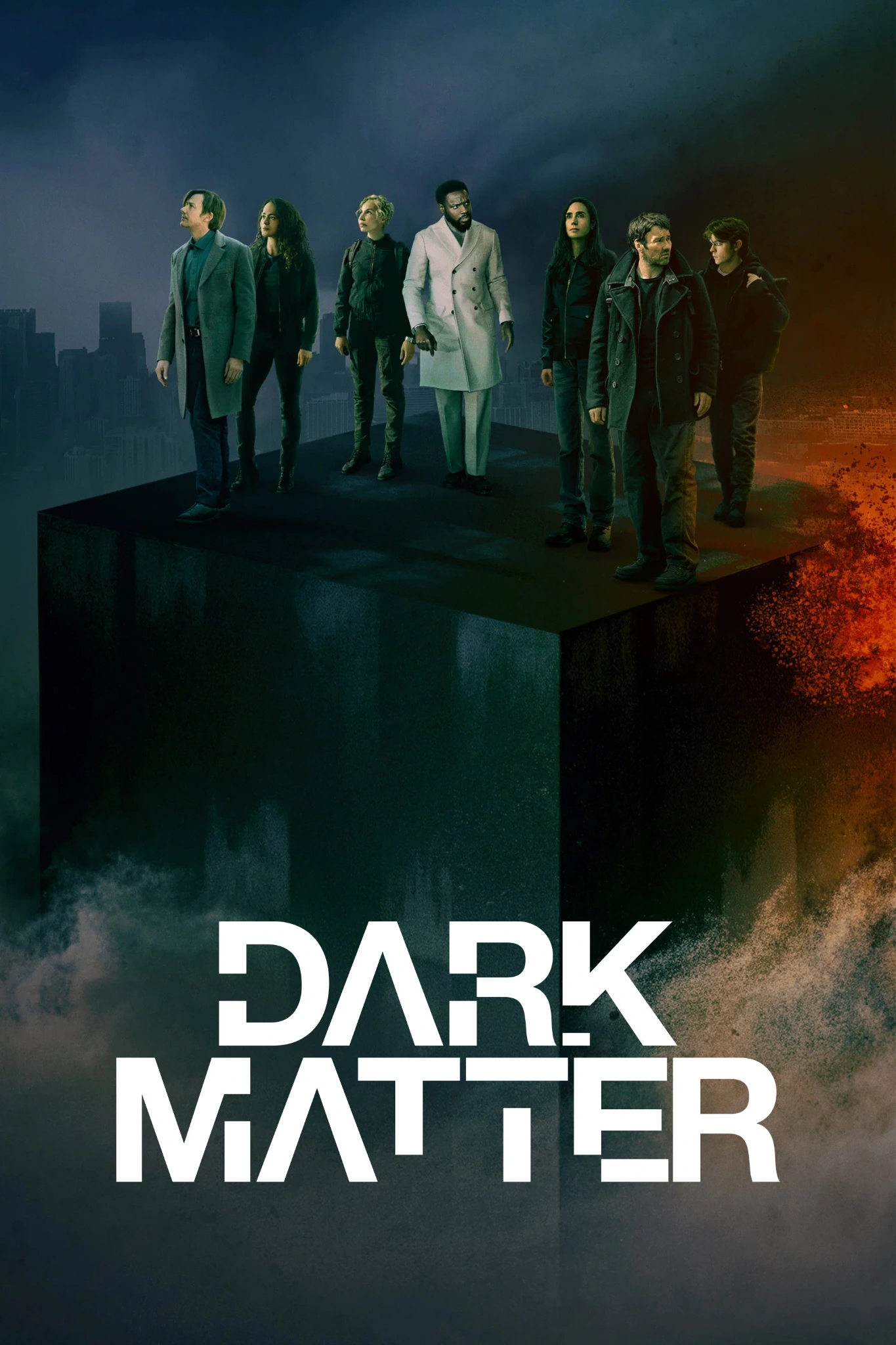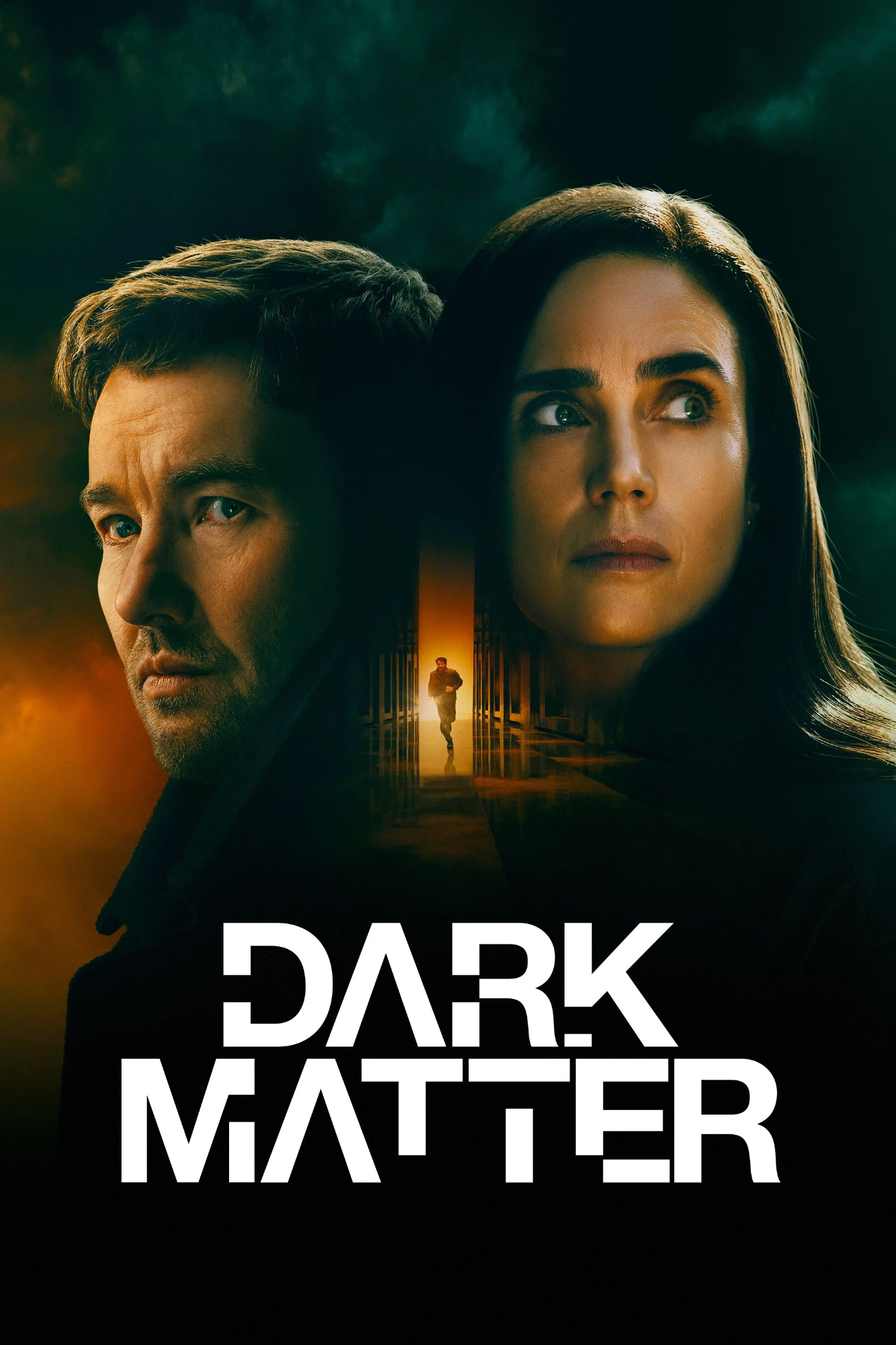
The review
An Encounter Does Not Confer the Right to Possess
Daniela begins her journey toward Charlie with help from another version of Jason. This version is neither her husband nor the Jason who invented the Box and previously took over his counterpart’s life. Establishing this distinction is essential because the value of his position comes from the choice he makes despite sharing the other versions’ longing for the family.
He helps her reach her destination by recalling a memory involving Charlie and Max, then refrains from accompanying her. He wants to see both children, but understands that his appearance could confuse Charlie and add new pain. Love is given a practical boundary here: he can help and accept that the reunion will happen without him.
Daniela continues the same test when she meets the Max who survived and grew up in that world. The encounter gives her something she cannot recover in her own life, but does not lead her to claim this son or treat his existence as compensation she can possess. The meeting acknowledges the value of what she lost and the independence of the life that developed away from her.
Jennifer Connelly’s performance is strong in holding joy and pain together. Max’s presence allows Daniela to see him while reminding her of the years she did not share with him. The encounter is therefore moving even before the plot imposes a new danger.
Her conversation with her other self about the attack on their childhood home opens up related emotional territory. Facing a woman who can look at a shared experience without the same judgment of herself gives her a chance to reconsider the guilt she has carried.
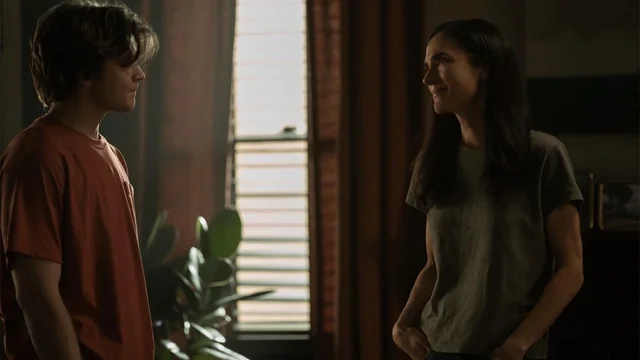
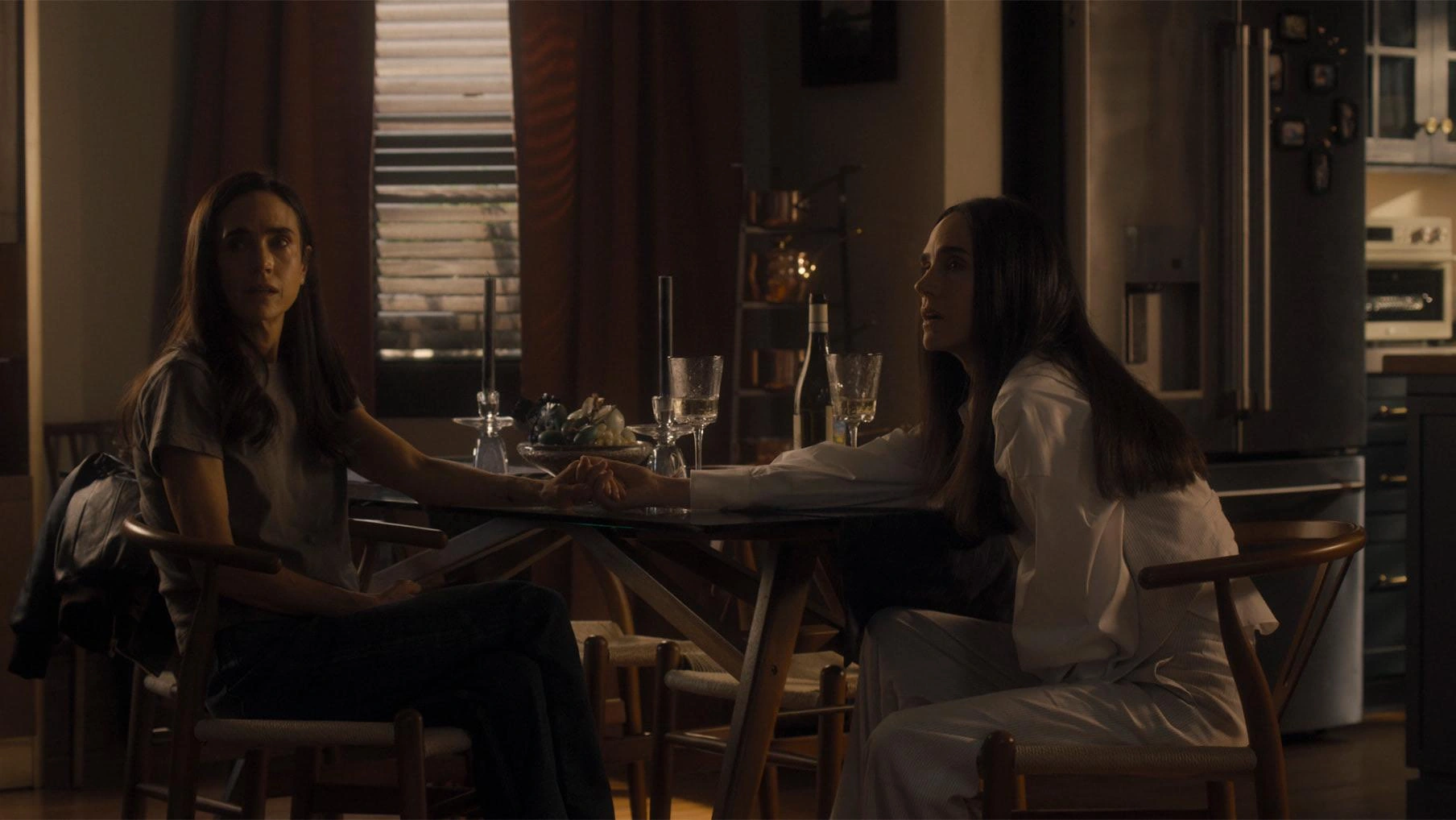
The people in this world do accept the appearance of their counterparts more quickly and comfortably than we might expect. This is a clear convenience, but it permits scenes that give the characters new knowledge of themselves. Charlie’s desire to return becomes convincing because meeting Max has satisfied a particular need: he can leave the world after recognizing the value of the relationship, instead of continuing to pursue what he lacks.
Leighton and Oluko Face an Uncomfortable Mirror
In Leighton’s storyline, knowledge of other versions produces a different effect. He returns from his journeys after confronting the results of disastrous interventions: plants brought from another world spreading at the expense of crops, and a treatment monopolized by wealth while others were left to die.
These events connect an expansion of power with a narrowness of judgment. Moving a successful solution from one reality to another does not guarantee that it will remain a solution, and access to a treatment does not mean that it will be distributed fairly. Leighton’s retreat from the Pyramid project thus follows an experience that has shaken his confidence in his fitness to make decisions on this scale.
Knowing that another version of himself could put money ahead of millions of lives does not prove that he will do the same. It does make him more willing to examine his justifications, particularly when he sees that their similarity prevents him from dismissing the other man as a monster with no connection to himself.
Oluko, by contrast, uses the comparison to measure what he believes he has lost. He too comes from privilege and wealth, but his different path and losses make his counterpart’s success a source of bitterness. To him, the shutdown looks like the confiscation of a new opportunity, and the disagreement turns into violence that ends with his killing Leighton.
This contrast is one of the episode’s most coherent ideas. One man allows comparison to restrain his impulses; the other uses it to justify a new transgression. Oluko does not become guilty because of what another version did: his own act determines his moral position.
The irony becomes harsher because Leighton, who returned afraid of the harm his counterpart could cause, dies at the hands of another counterpart. The knowledge that led him to reconsider his authority does not protect him from someone who wants to seize it.
The Cure Makes the Shutdown More Complicated
Meanwhile, Jason, Daniela’s husband, and Blair try to disable the original Box, while Amanda and Ryan take the cure to a world ravaged by the epidemic. The plan accounts for their return before the Boxes stop working, because the shutdown will leave every traveler in whichever reality they occupy.
The mission to deliver the cure is essential to understanding the decision’s scale. The technology whose use for travel helped spread the catastrophe also provides access to knowledge that saves the infected. It therefore cannot be judged solely by what it has done to Jason’s family: some people’s chances depend on medicine crossing from one world to another.
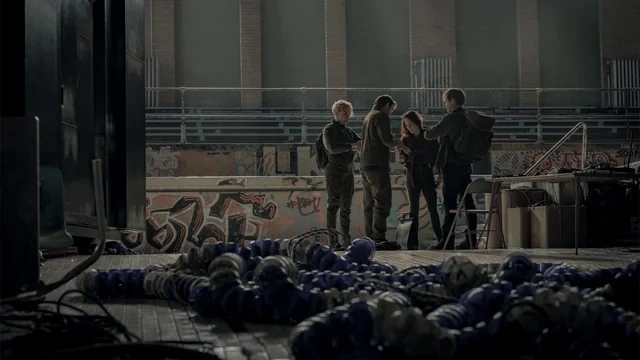
Jason does not disregard this mission. He coordinates with his companions and includes their return in his calculations, making his later error more specific: he tries to take real precautions, but the information available to him does not include everyone his decision will affect.
Amanda and Ryan’s journey benefits from the rule that the Box responds to a person’s mental state. Their need to hurry increases their anxiety, and that anxiety makes reaching the destination more difficult. The countdown becomes a factor that disrupts the very ability they need to survive, generating pressure from the nature of the machine itself. Compared with Daniela’s recollection of her memories at the beginning, the same rule serves two functions: one feeling helps identify the destination, while another interferes with reaching it.
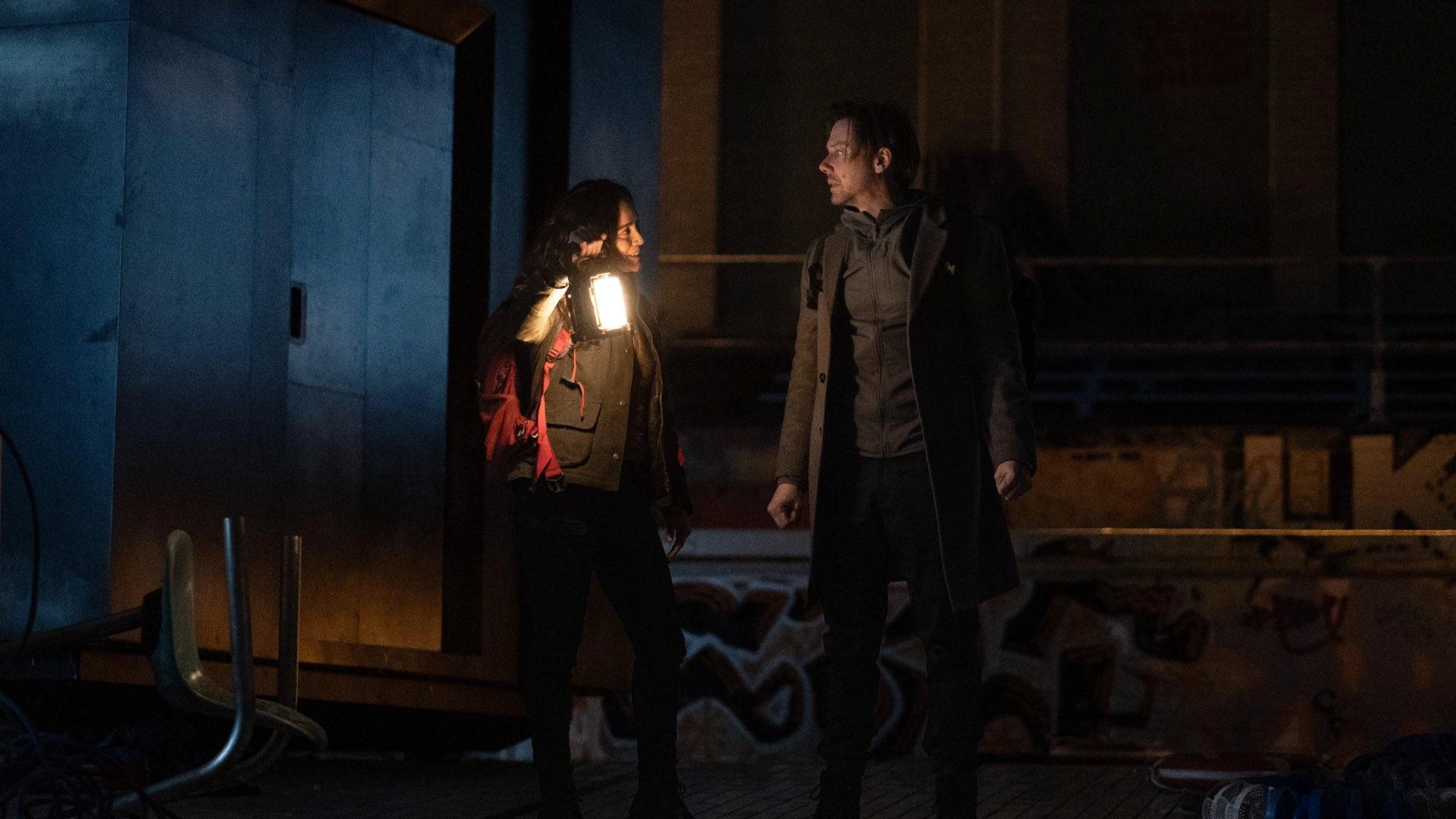
When they succeed in delivering the cure, another version of Leighton helps them withdraw. His participation matters alongside what we have seen of his other versions: a shared identity does not erase differences in choices or reduce people to a single moral fate.
A Pursuit That Changes the Rules of Place
Oluko sends Sandra to stop Jason and Blair from completing the shutdown, taking the confrontation through worlds whose conditions they cannot control. A world at war, followed by one undergoing collapse, makes travel itself a source of danger even when it offers an escape from an immediate threat.
This is one of the episode’s most energetic passages because the setting helps create the obstacle. Opening the door does not guarantee an improvement, and the next environment may be more dangerous than the pursuer. The confrontation without gravity gives the action different conditions before the pursuit ends with Sandra’s death.
There is a noticeable turn toward action, which may feel louder than the reflective passages preceding the confrontation. It serves a clear function, however: it embodies the difficulty of reaching the original Box and consumes time on which the safety of the rest of the plan depends.
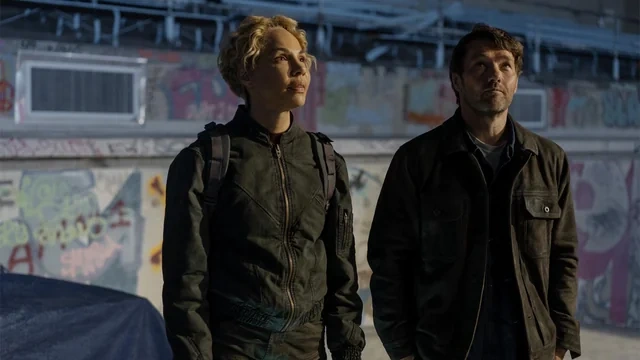
Security obstacles after the shutdown timer has been set then add further pressure to Jason and Blair’s escape. These barriers effectively keep the viewing tense, although the accumulation of delays sometimes comes close to arranging every step so that it succeeds at the last possible moment.
The parallel construction preserves the episode’s unity. As one team tries to save a world, another tries to end the means of travel, while Daniela and Charlie search for a way home. Each local success can change the other storylines’ chances, so the pursuit never feels entirely detached from the emotional stakes.
The Plan’s Success Exposes the Limits of Knowledge
The Boxes stop working, Amanda and Ryan return, and Jason and Blair make it back. Within the information the team possesses, the mission appears successful. But the audience knows that Daniela and Charlie are still trying to return, turning the anticipated success into a source of fear.
This irony is the foundation of the ending. Jason makes his decision believing he is closing the door to danger for his family, while that very decision cuts off their route back to him. The catastrophe comes from the gap between the reach of his action and the reach of his knowledge: he can affect every Box, but does not know that the two people closest to him are using them.
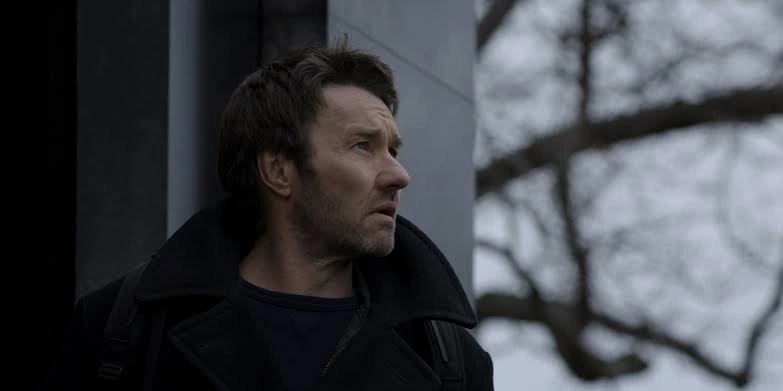
He discovers Daniela’s message while returning to collect his research and prepare to dispose of it. The detail links his attempt to close the chapter of his life connected to the Box with the revelation of something that will make letting go of it harder than ever.
Emotionally, this is a powerful blow because it arrives after the family members have come to want a reunion. Charlie is ready to return, Daniela can leave Max’s world, and Jason thinks he is preparing for a safer life. Their desires draw closer as the means that could bring them together is severed.
The construction nevertheless depends heavily on the delayed reading of the message and on the shutdown occurring at the cruelest possible time. This can be understood as an embodiment of failed communication, yet the arrangement of coincidences remains visible. The dramatic idea is stronger than some of the devices that brought us to it.
Daniela and Charlie’s location remains unknown: the episode does not reveal the nature of the place they face in the final scene. Nothing confirms that they have returned to Max’s world, reached a safe world, or become trapped in a void. What is certain is that the usual route home has stopped working while they remain separated from Jason.
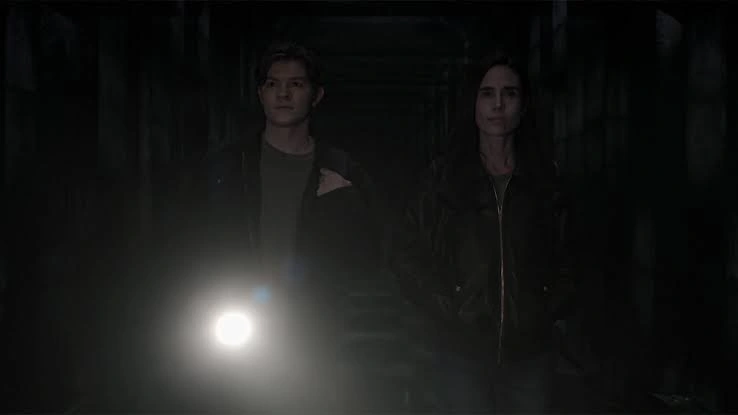
The Pyramid Leaves a Question Without Providing a Solution
In the parallel storyline, the Jason who invented the Box agrees with Leighton to halt the Pyramid project. This gives the character a step different from his earlier takeover of his counterpart’s life: he has come to see the need to limit a power he helped unleash.
But Oluko enters the Pyramid and disappears before Jason can retrieve him. Turning the device off afterward neither undoes what has already happened nor clarifies, on its own, whether it can be used later.
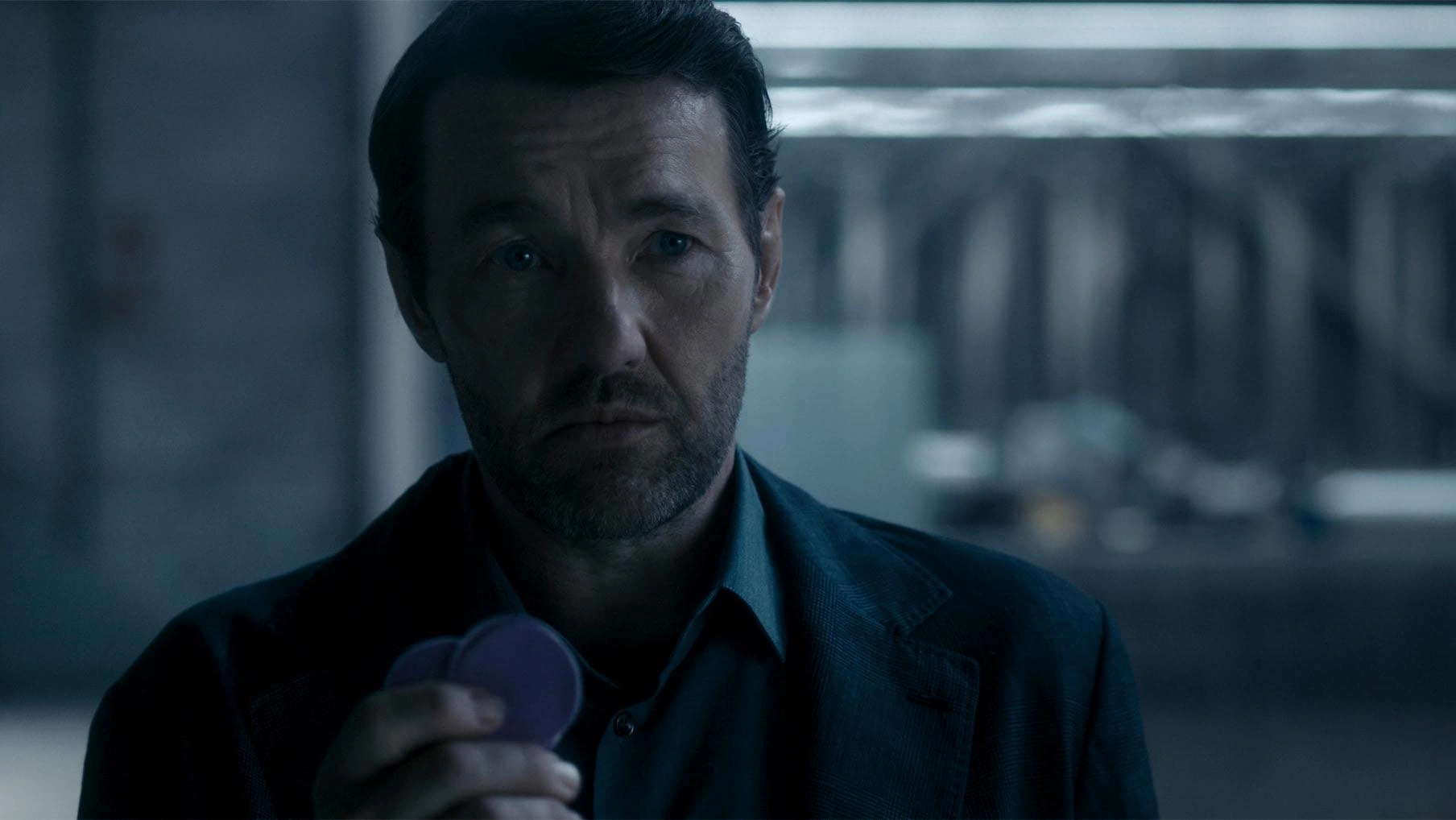
The scene thus leaves a narrative opening for continuation, but does not provide a confirmed means of rescue. The ending settles neither Oluko’s location nor the system’s condition sufficiently to establish its ability to find Daniela and Charlie. Retaining an alternative technology could nevertheless lessen the shutdown’s weight if it later becomes an easy escape. The ending’s strength for now comes from the fact that this possibility has not become a solution available to the characters.
The Pyramid’s existence also adds unease to the successful shutdown: closing the Boxes does not erase the knowledge that produced them or the desires that drove the characters beyond the limits of their worlds. The possibility of seeking another door remains part of the conflict, even after the door we knew has stopped working.
Final verdict
Final Verdict
Episode 10 delivers a finale with a strong emotional impact and less precision in some of its logical arrangements. Daniela’s meeting with Max, Leighton’s reconsideration of his position, and the tension of the mission to deliver the cure give us several reasons to care about the characters’ fates. The pursuit adds energy that helps the episode sustain its multiple storylines. On the other hand, acceptance of encounters between counterparts remains easy at times, and the ending’s reliance on delayed information and precise timing is apparent. These are consequential reservations, but they do not erase the way the episode makes the plan’s outcome an extension of the characters’ predicament, instead of settling for a surprise detached from it. The finale closes a phase of using the Boxes as we have known them and leaves the human question more urgent: how will Jason bear the consequences of a decision he made to protect his family? This is why the ending works well as a season finale that opens a new crisis, even if it leaves some details of the world needing clearer definition. My rating for the final episode of Season 2: 7.5 out of 10.
Your turn
If Jason finds a way to travel again, would trying to rescue Daniela and Charlie justify putting other worlds at risk once more?
AUDIENCE VOTE
Do you agree with the MB rating?
Choose once from this browser. You can change your answer at any time.