The review
Episodes 1–3: preparing the impossible
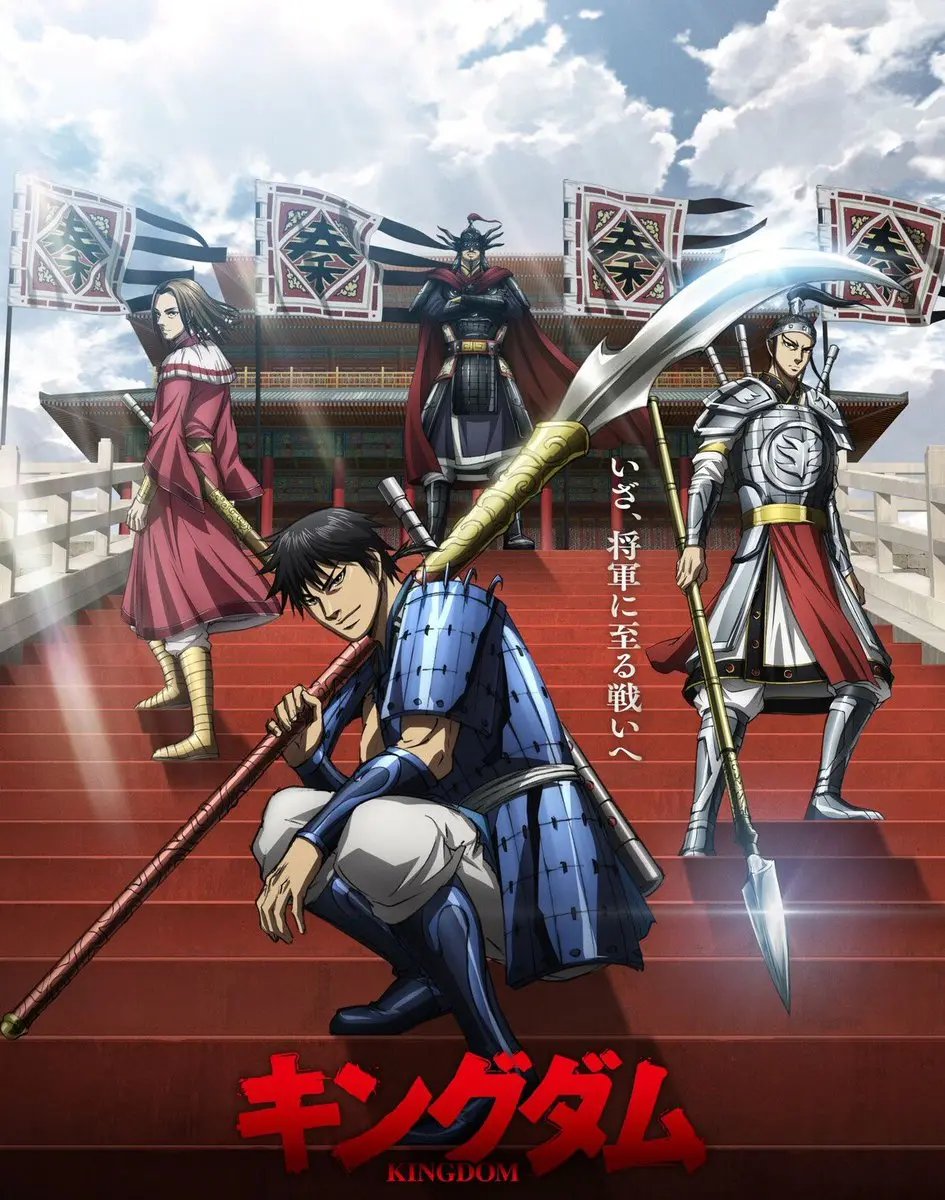
The season begins immediately after the previous campaign. Shin's Hi Shin Unit joins an enormous Qin coalition while Riboku measures the risks from the other side. The rapid movement through names, armies and objectives demands attention, but it also creates the feeling of history accelerating toward an unavoidable collision.
Episodes 4–8: war becomes a system
When the assault on Gyou begins, combat is never only a collection of duels. Alliances, troop placement, morale, supply and the reputations of commanders determine what a sword strike means. The series makes every loss feel connected to a wider calculation, and the younger fighters' courage gains value because it operates inside plans larger than any of them.
Episodes 9–13: pressure without closure
Wang Ben faces mounting pressure while Shin and other young officers accept sensitive side missions. The closer the campaign moves toward collision, the clearer it becomes that Qin may not fully understand the cost ahead. The open stopping point is frustrating as a season ending, yet honest to the scale of a campaign whose decisive answers are still far away.
Direction, animation and the scale of armies
The direction frames battles as connected tableaux rather than repetitive skirmishes, moving between strategic dialogue and collective action with welcome clarity. Compared with the early series, facial work and hand-drawn 2D combat are markedly stronger. Large crowds still reveal uneven CGI whose mechanical movement can break the illusion.
Compression is the larger production cost. A very long manga arc is packed into thirteen episodes, so some decisions arrive before their emotional weight has fully settled. Strong voice acting and heroic music help restore that scale, giving orders, doubt and responsibility an urgency the animation cannot always supply.
Final verdict
Final verdict
Season 6's first part is heavy, tense and deliberately unfinished. It prefers planning and attrition to easy victories, and despite compression and uneven crowd animation, it preserves Kingdom's greatest strength: making war feel like thought, labor and sacrifice on a continental scale. This is not an ending; it is the opening movement of a much larger reckoning.
AUDIENCE VOTE
Do you agree with the MB rating?
Choose once from this browser. You can change your answer at any time.