The review
A land we waited decades to visit
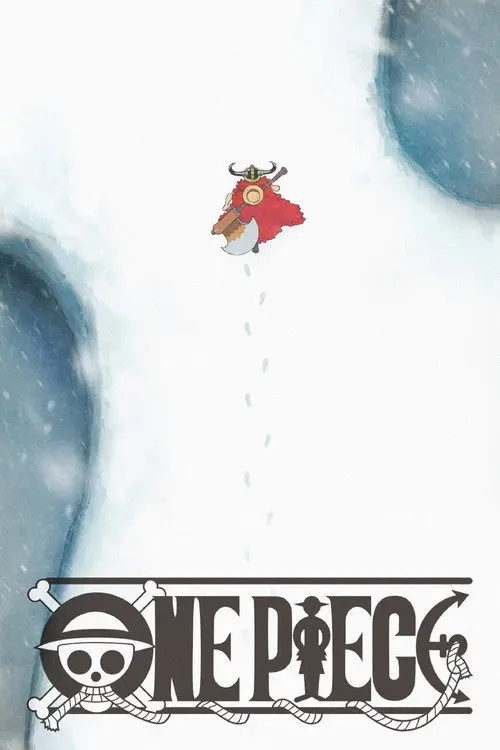
Elbaph is not treated as an oversized island occupied by giants. Its immense trees, bridges, layered spaces, Owl Library, schools and warrior history make it feel like a culture with a past and a possible future. The people we knew through Dorry and Brogy have changed; the place is much more than a battlefield.
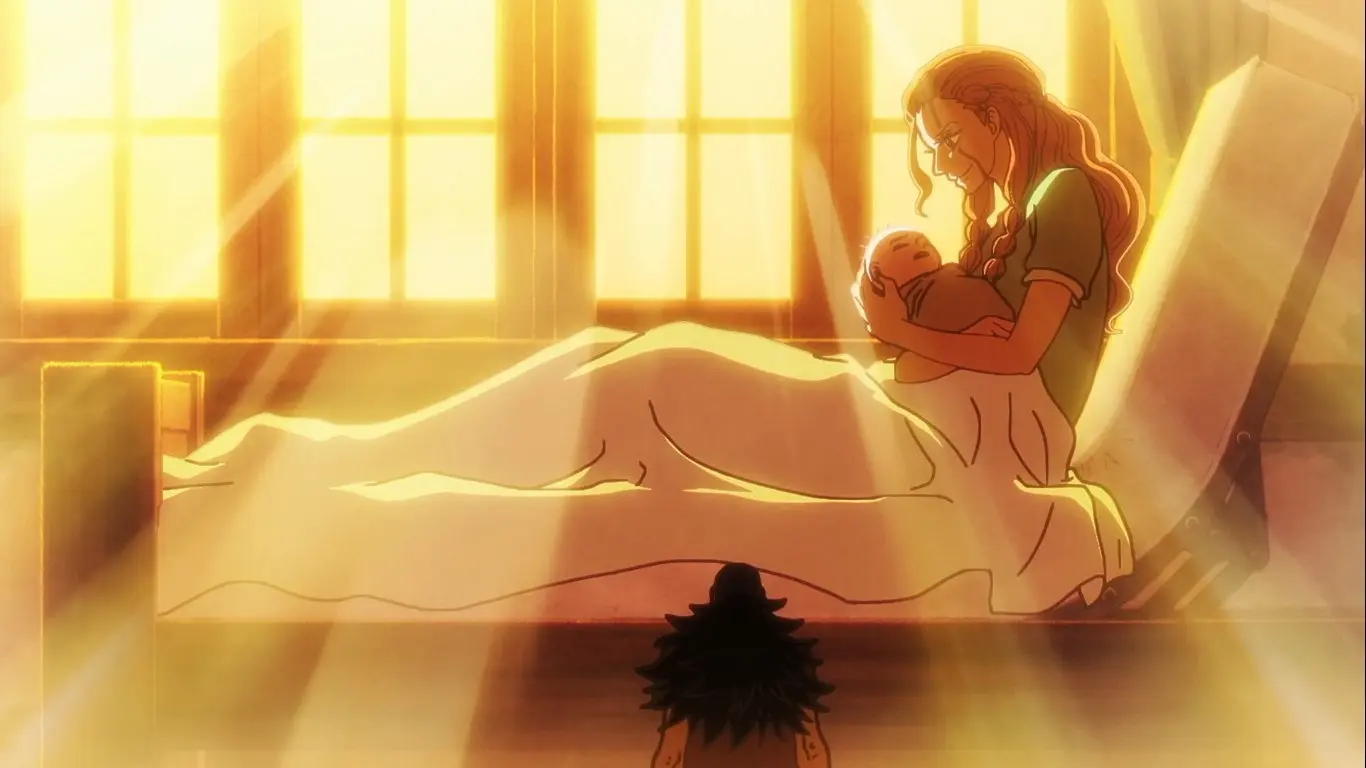
The contrast interests me most: the land associated with strength and battle is trying to leave part of that legacy behind. Children are being educated rather than prepared only for war, and books now matter as much as weapons once did. When the Knights of God target children and knowledge, they attack the island's identity, not simply its defenses.
Robin and Saul: the past is not finished
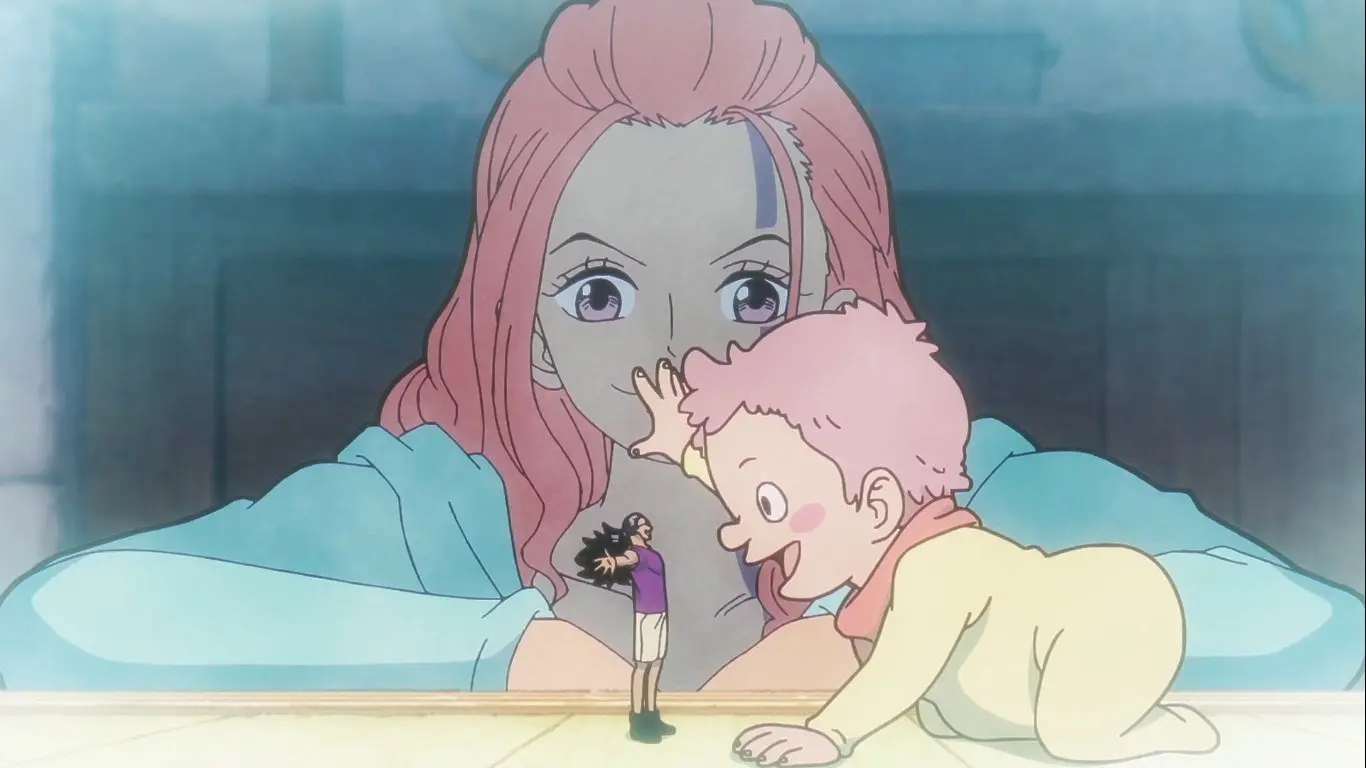
Robin's reunion with Saul needs no battle or surprise to become one of Elbaph's most affecting moments. We know what happened at Ohara and how the child who escaped it spent much of her life believing that everything connecting her to home had vanished.
Seeing Saul again restores something that was taken from her. The story does not have to demand our tears; decades of accumulated history give the scene its force. For me, it is one of the most successful emotional beats in this stretch of One Piece.
Scopper Gaban becomes more than a legendary name
Scopper Gaban spent years at the edge of Roger's story. Elbaph finally gives him an active role, but wisely refuses to define him only through how hard he can fight. His experience matters as much as his strength.
His most revealing moment for me is not the clash with Sommers but the choice between fighting and protecting Colon. A legend briefly becomes a person with something to lose. That human pressure saves his return from being mere fan service.
Loki: the season's best unresolved mystery
Everything said about Loki warns us away: a cursed prince, accused of killing his father, feared by his people and restrained deep beneath the island. Yet what we see does not always fit that reputation, and Luffy's response to him differs from the crowd's. Mentioning Shanks makes their connection still more intriguing.
What happened with Harald? What is the truth about the legendary fruit? What does Loki know about the past? Each answer seems to open two more questions. He is one of Elbaph's strongest characters because his presence remains uncertain even without a defining fight; his story is not finished, just like the arc itself.
The Knights of God raise the stakes
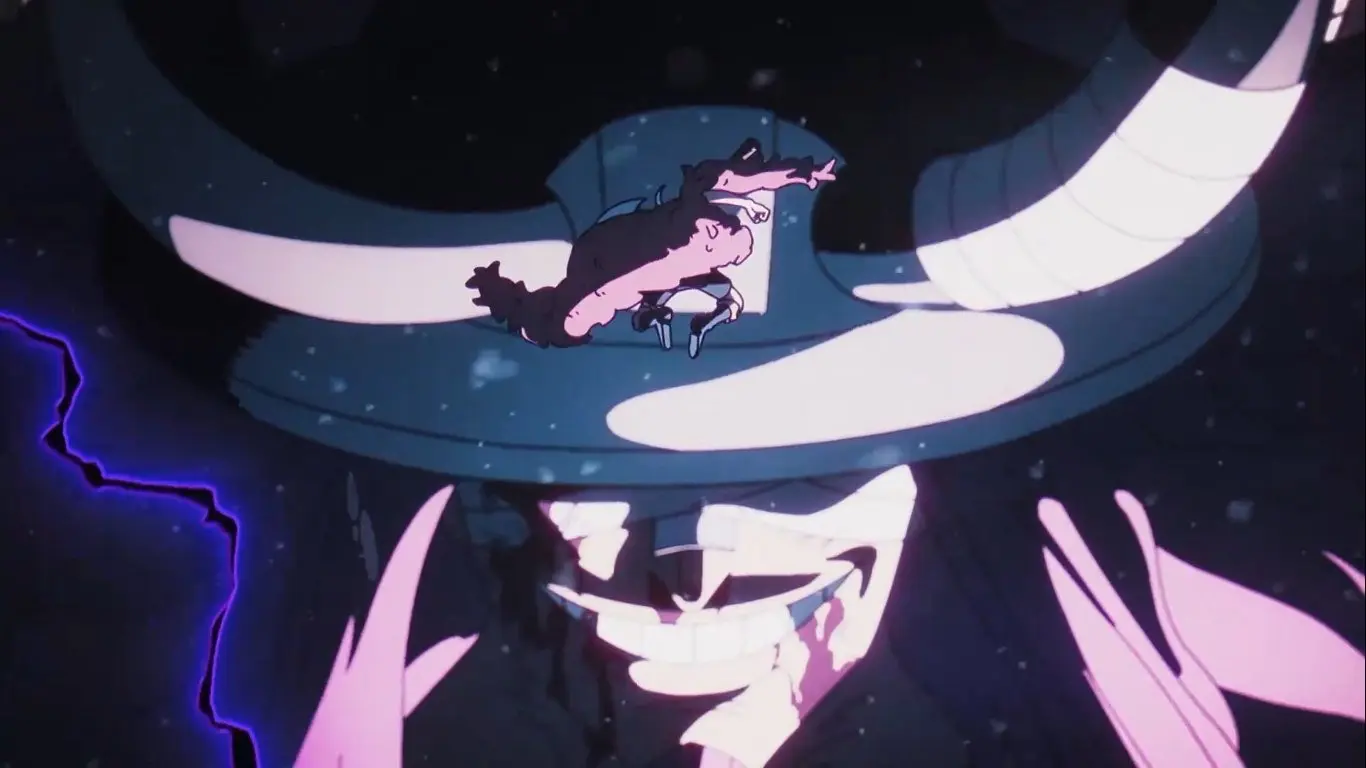
At first the Knights of God appear to be another tier of powerful fighters serving the World Government. Gunko, Sommers, Killingham and Shamrock gradually make that description feel too small: each brings a different danger. Sommers is unsettling not only because of his strength but because he enjoys forcing others to choose between terrible outcomes.
They are more than the crew's next set of opponents. Their actions turn the conflict over children, memory and history into a direct confrontation with the system the whole saga has been moving toward.
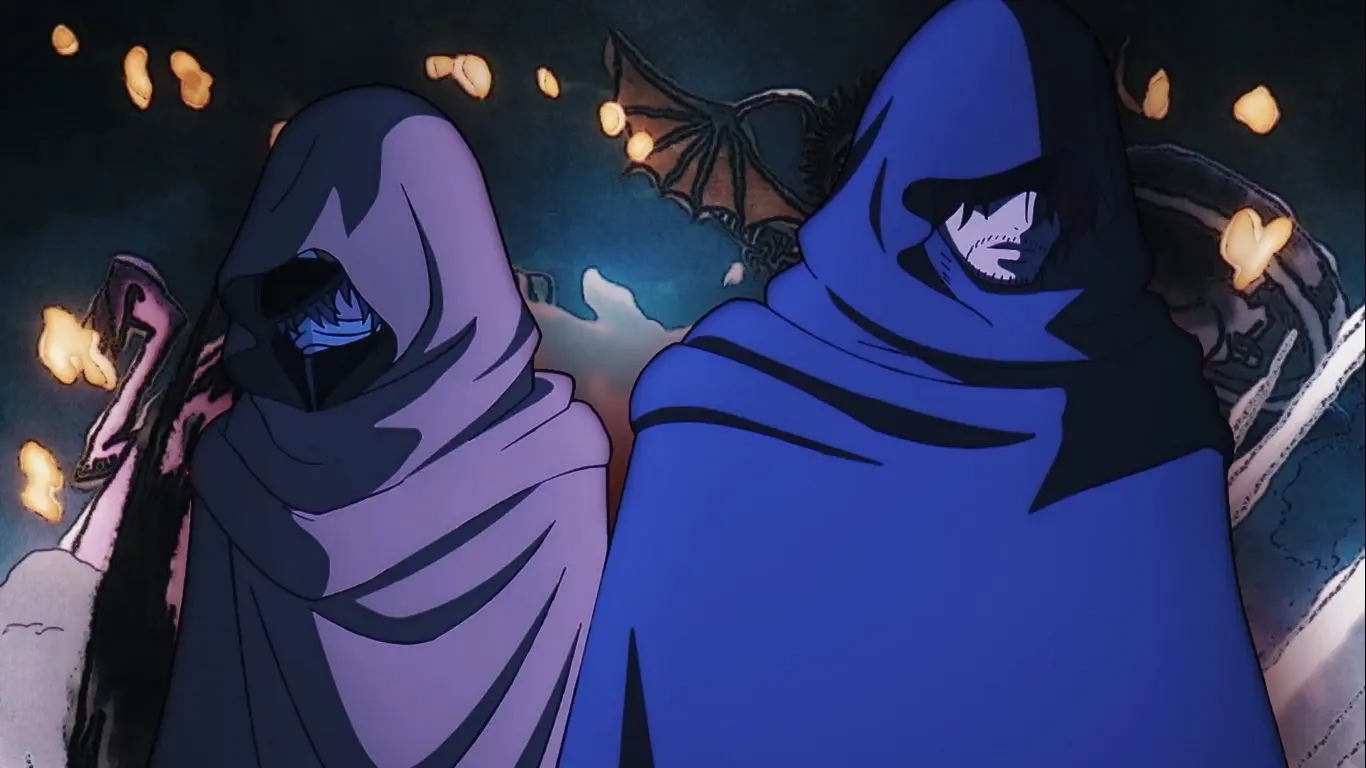
Gunko and Brook: a small clue with a long shadow
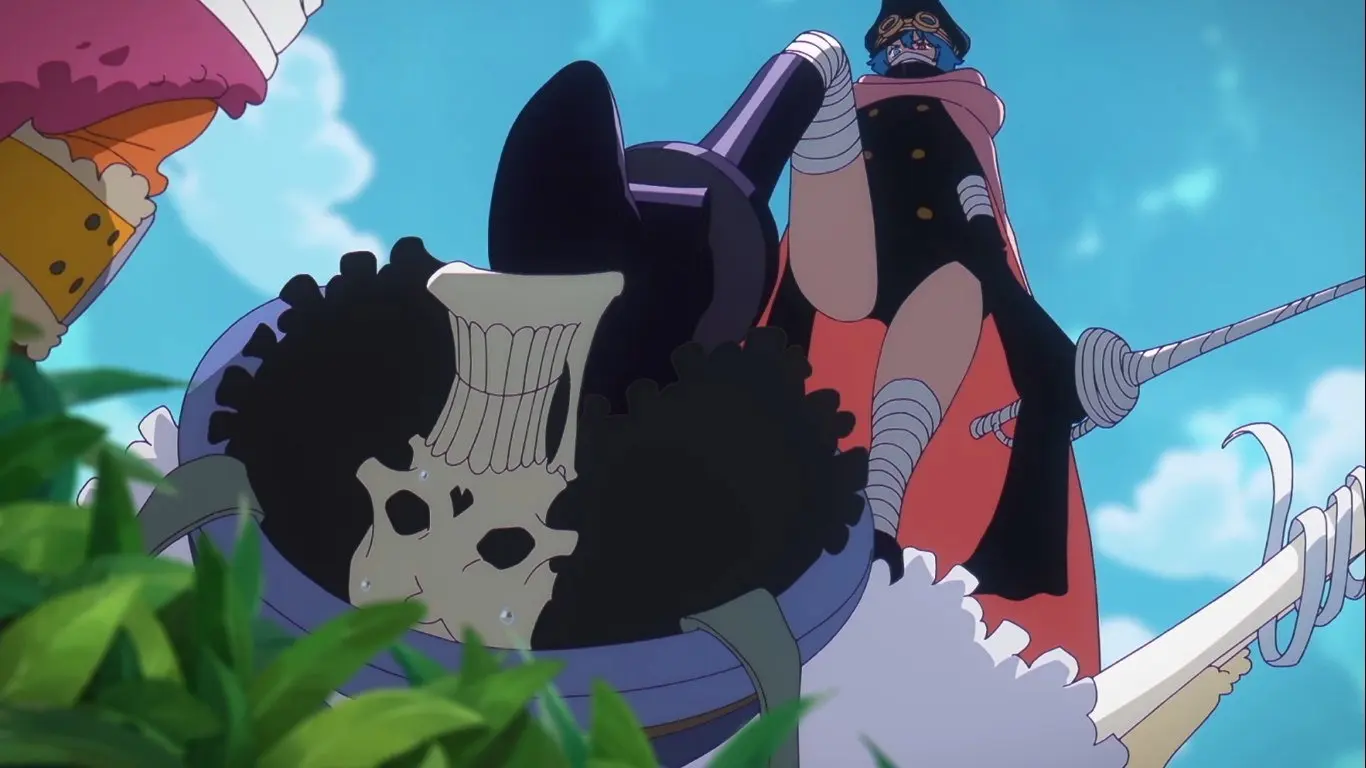
Gunko initially seems cold and remote, until Brook appears and something in her response changes. A flicker of memory suggests a person inside her who does not match the identity she presents. Before that thought can settle, Imu's intervention interrupts it.
I like that the story refuses to explain the connection yet. It might turn out to be a small personal detail or reach back decades into Brook's life. Either way, the hint works because the season knows when to stop speaking and leave us wanting an answer.
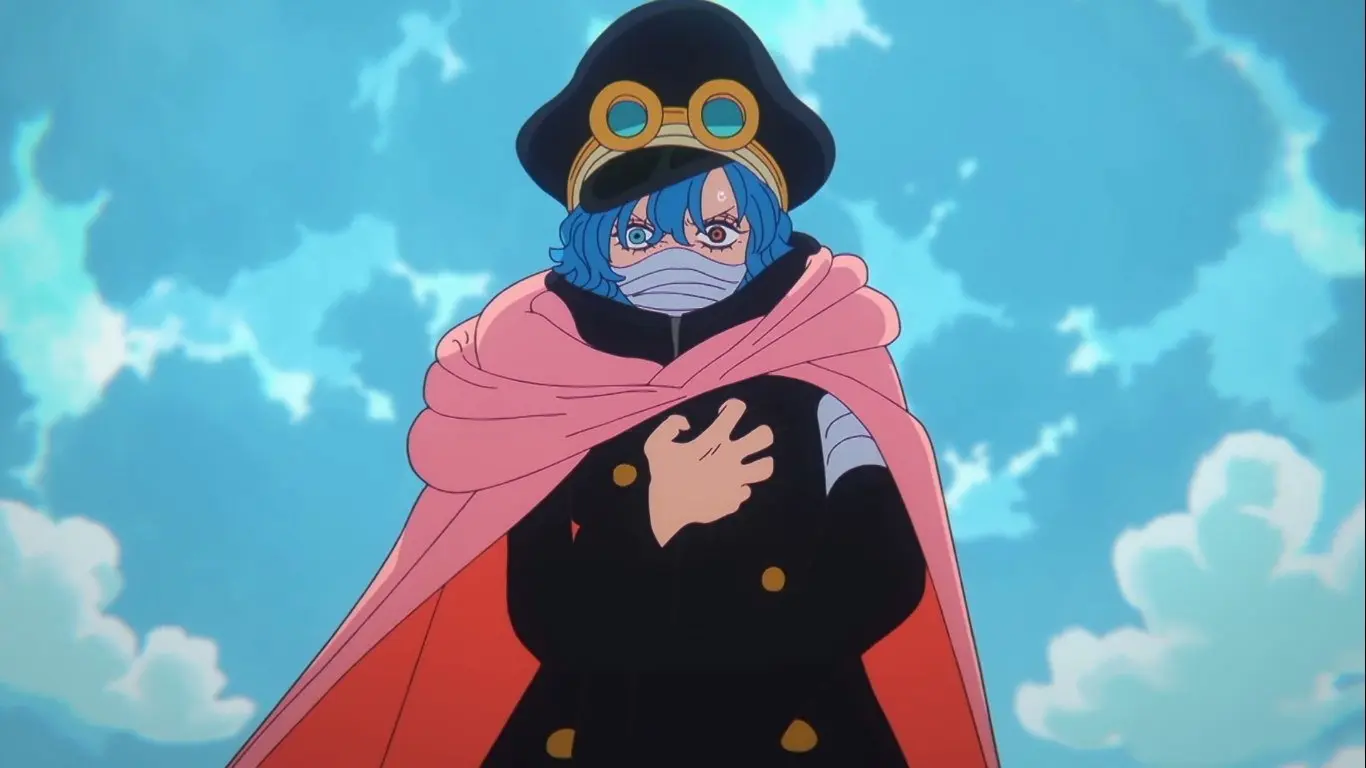
Imu reaches Elbaph
Imu is no longer merely a distant name above the world. The threat reaches Elbaph, and Domi Reversi brings a disturbing new scale to the conflict. Turning the giants' strength against their own people fits a power built on control rather than a fair fight.
The point is not simply to defeat a body but to break a will. That is why the Knights of God feel like an extension of a far larger order, and why the island's local struggle suddenly matters to the future of the entire world.
Shamrock opens another door into Shanks's history
The man who looks like Shanks is not a copy or a trick: Figarland Shamrock is his older twin brother and leads the Knights of God. The discovery matters for more than the surprise of a sibling. It gives a character who has long stood at the edge of the story a visible link to the highest levels of the world order.
What does Shanks know? What happened within the Figarland family? What does it mean for two nearly identical brothers to stand on opposite sides of the world? Shamrock is not only a twist; he opens a new part of the larger Shanks mystery.
Harley brings the world's mysteries together
For me, Harley is a more consequential revelation than Shamrock. Its ancient texts and images bring Nika, the lost century, old civilizations and past catastrophes into the outline of a larger story. Mysteries that once seemed scattered begin to speak to one another.
That does not mean every line should be read as literal history. Are we seeing a record, a faith, a prophecy or an inherited and distorted memory? The distance between truth and myth is precisely what makes these scenes compelling. Watching Robin read while images of the past appear is the moment Elbaph becomes more than another arc.
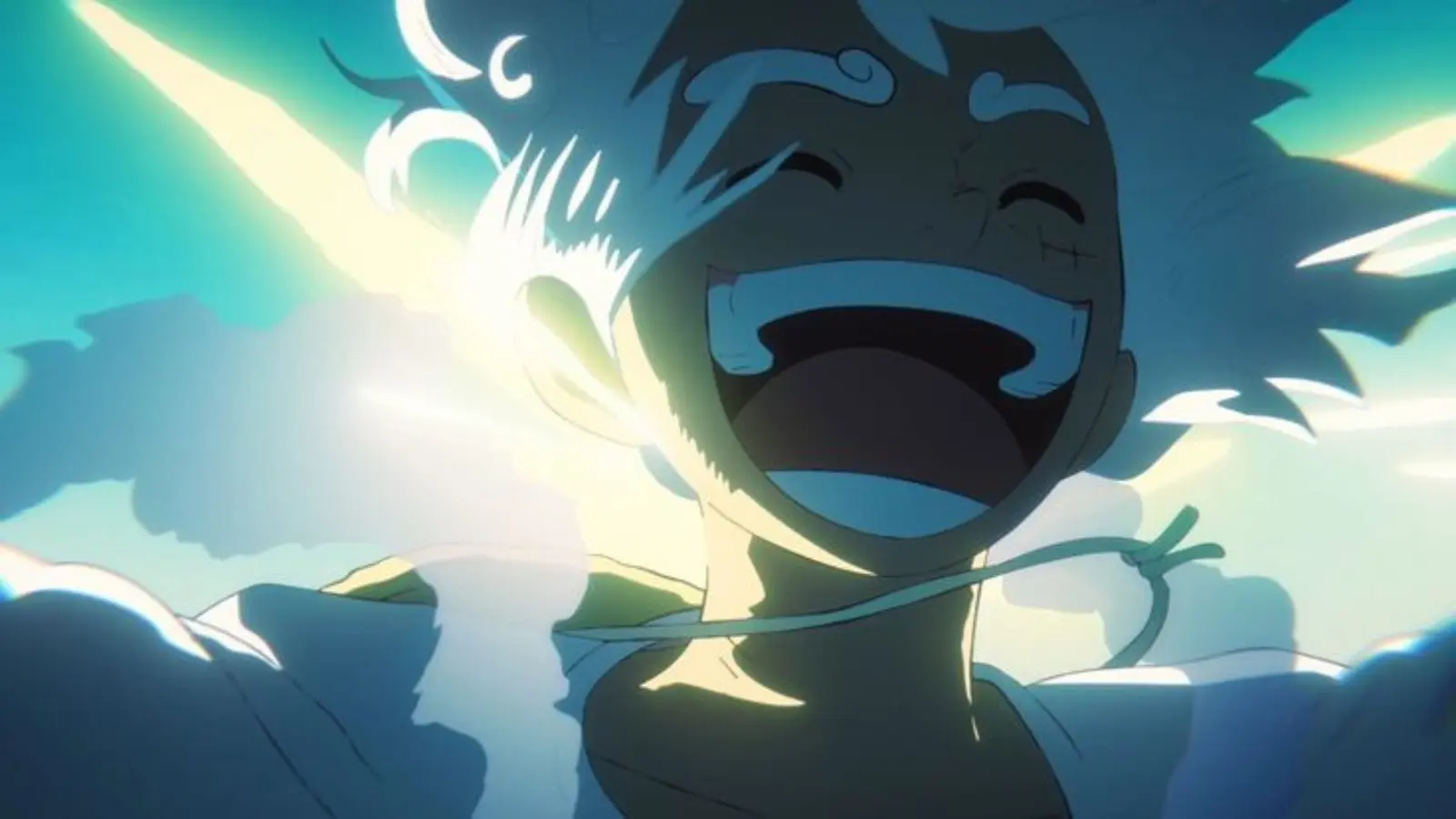
Robin protects what Ohara could not
The season does not limit Robin to reading old texts. When knowledge itself comes under threat, she enters the struggle. Ohara is no longer just a memory: the learning the world tried to destroy has reached Elbaph, and she is not the powerless child who once had to watch it burn.
Her resistance to Sommers carries more dramatic weight than a routine action scene. She can now try to protect history rather than witness its destruction. The series does not have to spell that parallel out for it to resonate.
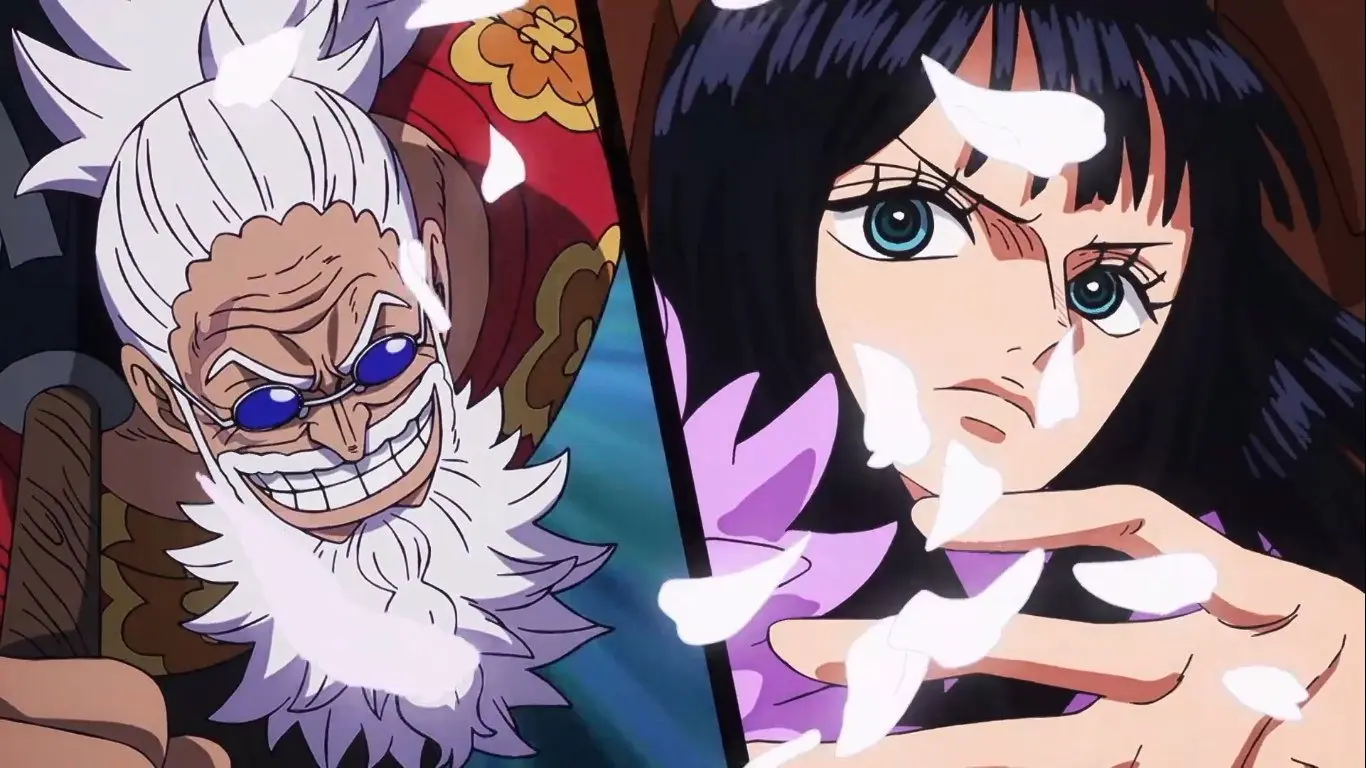
A bright adventure turns uneasy
Elbaph's visual identity is striking without requiring constant showpiece animation. Its vivid colors, enormous scale and varied spaces make the Straw Hats feel small in a mythic landscape. The Rainbow Bridge is one expression of the pleasure of discovering the island.
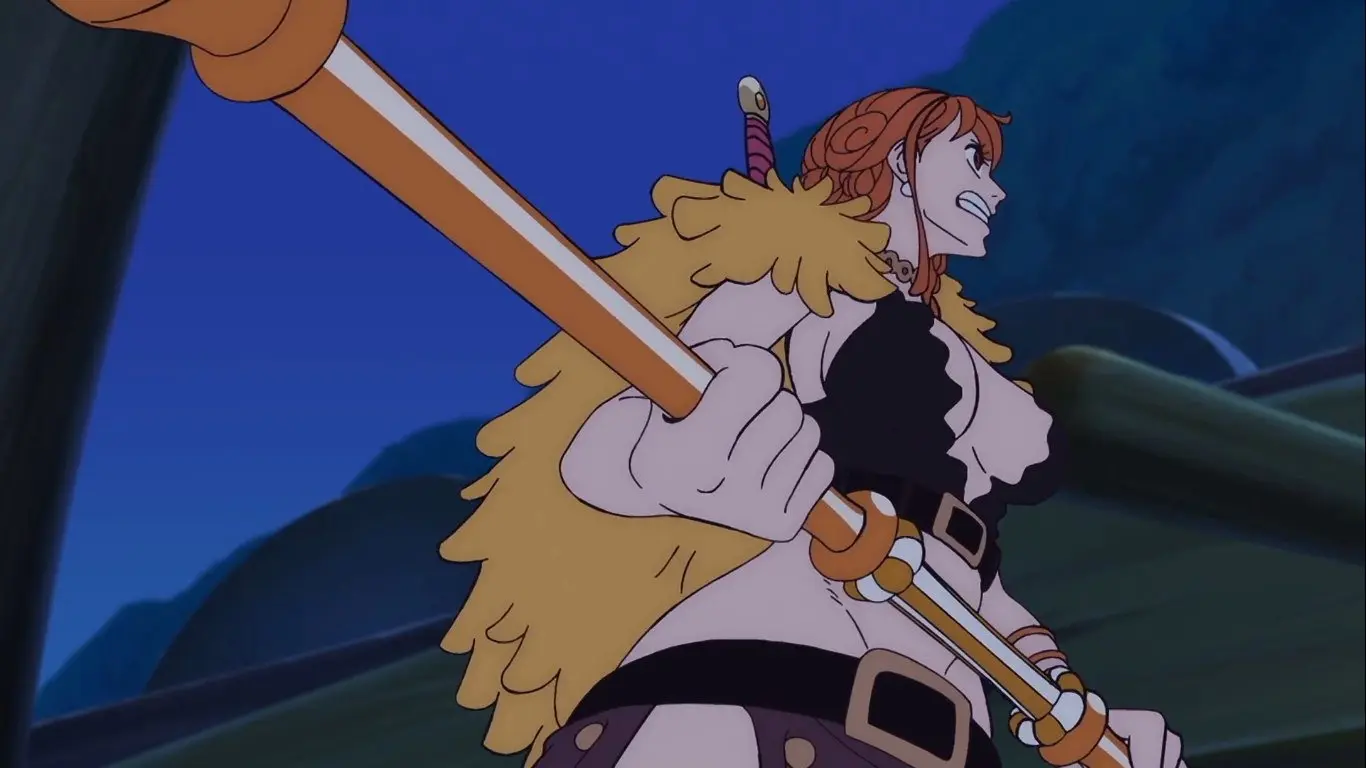
The atmosphere changes with the arrival of the Knights of God: deeper shadows, nightmares, fire and children caught in danger. The images shift from fantasy adventure toward something close to horror. The late fights involving Gunko, Robin, Gaban and Sommers have more weight through movement, lighting and music, although the quality is not equally high in every episode.
Did the new production model solve the pacing?
Moving away from year-round weekly production has given the anime more room to make episodes look and feel complete. The drawing is steadier, direction has more visible care and there is less sense of rushing simply to fill the next week. The improvement is especially apparent in the later episodes.
But fewer episodes have not erased the old pacing problem. The Block Kingdom stretch feels longer than it needs to; some dialogue repeats and certain shots remain on screen too long. Even good episodes include recap or extension that could be trimmed. The difference is that Elbaph sometimes spends its extra time on acting, atmosphere and movement rather than only repeated reactions.
Usopp: the missed opportunity so far
Elbaph has been tied to Usopp's dream for a very long time. This is the land of the warriors he admired, so I expected its arrival to mark a more personal step in his growth. He has warm moments and meaningful connections with the giants, but through episode 1180 I still do not see the major turn I was hoping for.
The arc itself is not over, so this is not a final judgment on him. It is a criticism of this particular run of episodes: a character who should feel central to this setting has not yet received the dramatic space it promises him.
Luffy does not need every scene
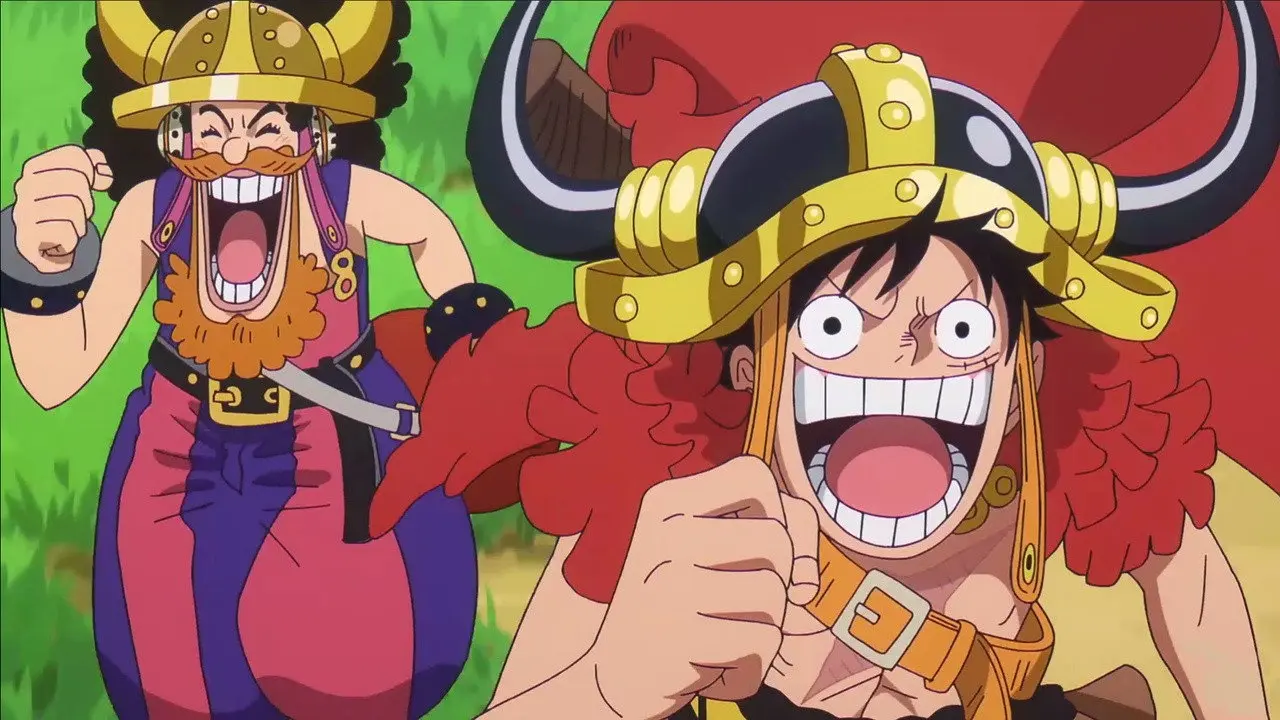
Luffy remains the center of One Piece, but he is not necessarily the most prominent presence in Elbaph's best passages. I think that is the right choice. With so many threads in play, it would be easy to make every scene a wait for his arrival and solution.
Instead, Robin, Gaban, Loki, Brook and the giants carry large parts of the drama. Luffy can stay central to the whole journey without being the center of every frame. That trust in the ensemble is a sign of how much the story's final saga has grown.
What works, and what still needs time
Elbaph's greatest strength is its world-building: this is a place with history, identity and internal change, not just a fresh combat arena. Saul, Gaban, Loki, Shamrock and Gunko each contribute something different, while the season lets its mysteries accumulate without becoming a continuous lecture. The general production improvement gives that ambition a stronger visual foundation.
The weaknesses are real: uneven pacing, a crowded cast that sidelines parts of the crew, an underused Usopp and an ending that stops in the middle of the larger Elbaph conflict rather than resolving it. Not every Knight of God is equally compelling. None of that ruins the experience, but it limits how fully this batch of episodes can satisfy on its own.
Final verdict
Final verdict
Elbaph 2026 is not the very best One Piece I have watched, but it is among its most consequential runs. Ohara, Roger, Shanks, Nika, Imu and the World Government no longer feel like unrelated pieces waiting for another day. The visuals are often beautiful, the secrets compelling and the later episodes especially strong. The pacing and Usopp's limited development still bother me, and the wider arc remains unfinished. Even so, the direction is unmistakable: One Piece is no longer merely preparing for its end; it is moving toward it. My rating for episodes 1156–1180 is 8/10.
Your turn
Which thread are you most eager to see continued in Elbaph: Loki's past, Shanks and Shamrock, Brook and Gunko, or Usopp's long-awaited moment?
AUDIENCE VOTE
Do you agree with the MB rating?
Choose once from this browser. You can change your answer at any time.