The review
Three characters, three kinds of power
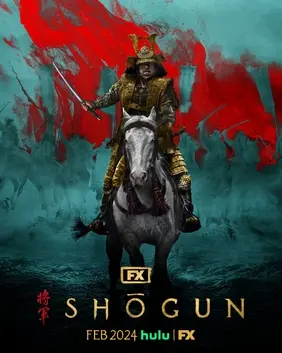
Blackthorne enters as an outsider whose ignorance lets the audience discover the world, but the story does not make Japan merely his adventure. Toranaga is the center of political calculation, while Mariko becomes the essential bridge through which language, faith and duty acquire dramatic force.
Their arcs operate on different scales (cultural survival, national power and personal honor) but continually reshape one another. This layered construction keeps the political drama human without simplifying its institutions.
Translation is an instrument of power
The use of Japanese, Portuguese and English creates more than historical texture. Meaning changes according to who translates, what is omitted and which social rule controls the conversation. Interpretation becomes a form of authorship over reality.
Mariko's smallest choices can protect, soften or weaponize a sentence. The screenplay trusts implication, allowing characters who cannot state their feelings directly to communicate through formality, hesitation and strategic silence.
Politics built from intimate decisions
Toranaga's struggle is shaped by alliances, hostages, marriages, ritual and reputation as much as by armies. The series understands that power in this world is produced before a battle begins, often in rooms where no sword is drawn.
Personal motives do not weaken the history; they animate it. Honor, faith, love and the desire to survive give political choices a psychological cost that broad spectacle alone could never provide.
Ritual, space and visual storytelling
Wide frames display architecture, coastlines and armies with controlled grandeur, while close-ups search for emotion hidden beneath etiquette. The camera treats distance between bodies as part of the dialogue.
Tea ceremonies, clothing, weapons and domestic spaces are not decorative evidence of research. They define hierarchy, discipline and identity. Soft natural light in ceremonial scenes makes their stillness feel as consequential as open violence.
Performances governed by restraint
Anna Sawai gives Mariko extraordinary emotional complexity, expressing duty and private resistance without breaking the character's disciplined surface. Hiroyuki Sanada makes Toranaga's patience feel active and dangerous rather than passive.
Cosmo Jarvis uses Blackthorne's physical confusion and gradual adaptation to create a convincing outsider. The ensemble surrounding them ensures that even brief appearances feel connected to a larger political order.
An epic that knows the value of stillness
The editing moves smoothly between strategic conversation, private grief and sudden violence. The score supplies epic scale without crowding the quiet scenes, and the production's historical detail gives every decision material weight.
Comparisons with Game of Thrones are understandable because of the intrigue, but they do not define the series. Shōgun's identity lies in its attention to Japanese culture, translation and the pressure of duty, elements that make its violence feel like the last expression of conflicts already fought in silence.
Final verdict
Final verdict
Shōgun is a complete historical drama of exceptional craft and emotional intelligence. It combines political precision, cultural authenticity and intimate tragedy without surrendering to hurried spectacle. The result is not simply a story about ruling Japan, but a meditation on honor, identity and the price of being understood.
AUDIENCE VOTE
Do you agree with the MB rating?
Choose once from this browser. You can change your answer at any time.