The review
Modesta refuses the life assigned to her
Born into deprivation and violence, Modesta never accepts that suffering must be her destiny. She wants knowledge, love, authority and, above all, ownership of her own life. She is capable of selfishness, cruelty and shock, but she never feels false. Her decisions arise from character rather than from a writer's need for provocation.
Freedom here is not the comforting, romantic word often used in inspirational stories. Modesta wants freedom from poverty, from religion when it becomes control, from a class system that forbids aspiration, from patriarchal authority and even from conventional morality when it appears designed to protect the powerful. The series does not endorse her every action, but it fiercely defends her right to choose the road.
The convent as a school of power
After the event that changes her life, the convent appears to offer safety. In reality, it becomes a test of power. Modesta discovers that observation, patience and intelligence can take her further than direct force. Sanctuary and confinement become almost indistinguishable.
Her bond with Mother Leonora moves through admiration, desire, domination and need without settling into one convenient label. That refusal to simplify is what makes it effective. The relationship is not a subplot added to provoke; it is a confused human connection in which intimacy and hierarchy are constantly fighting for control.
Villa Brandiforti: from chess piece to player
At Villa Brandiforti, the series exposes its second layer. The estate is not merely a palace but a complete social organism: every room keeps a secret, every person presents a second face, and every relationship conceals a contest over desire, inheritance or authority.
Modesta enters as a piece others believe they can move and gradually becomes the person arranging the board. That evolution never feels like an uncomplicated victory. To gain agency within a corrupt system, she learns to exploit its secrets, and risks reproducing the same forms of control she once resisted.
Beatrice and the possibility of tenderness
Modesta's relationship with Beatrice is the one place where she seems less interested in conquest than in simply being herself. Beatrice offers her something she has rarely known: peace. Their intimacy is essential not because it courts controversy but because it reveals a version of Modesta that power alone cannot reach.
Through Beatrice, Modesta begins to understand that love might be participation rather than possession, and that vulnerability is not always defeat. That discovery is especially meaningful in a series where nearly every other bond contains an exchange of leverage.
A woman beyond good and evil
Is Modesta evil? No, but she is not its simple opposite either. She lies, manipulates, exploits and may commit crimes, convinced that she is reclaiming a life stolen in childhood. The series asks whether we judge a person by acts alone or also by the conditions that made those acts imaginable, then wisely refuses to answer for us.
Although Modesta drives the story, Italian society is its larger protagonist. Poverty, religion, aristocracy, sexuality, class and politics enter the narrative without turning it into a lecture. A whole era is mapped through one woman's refusal to remain in the place assigned to her.
Tecla Insolia owns the frame
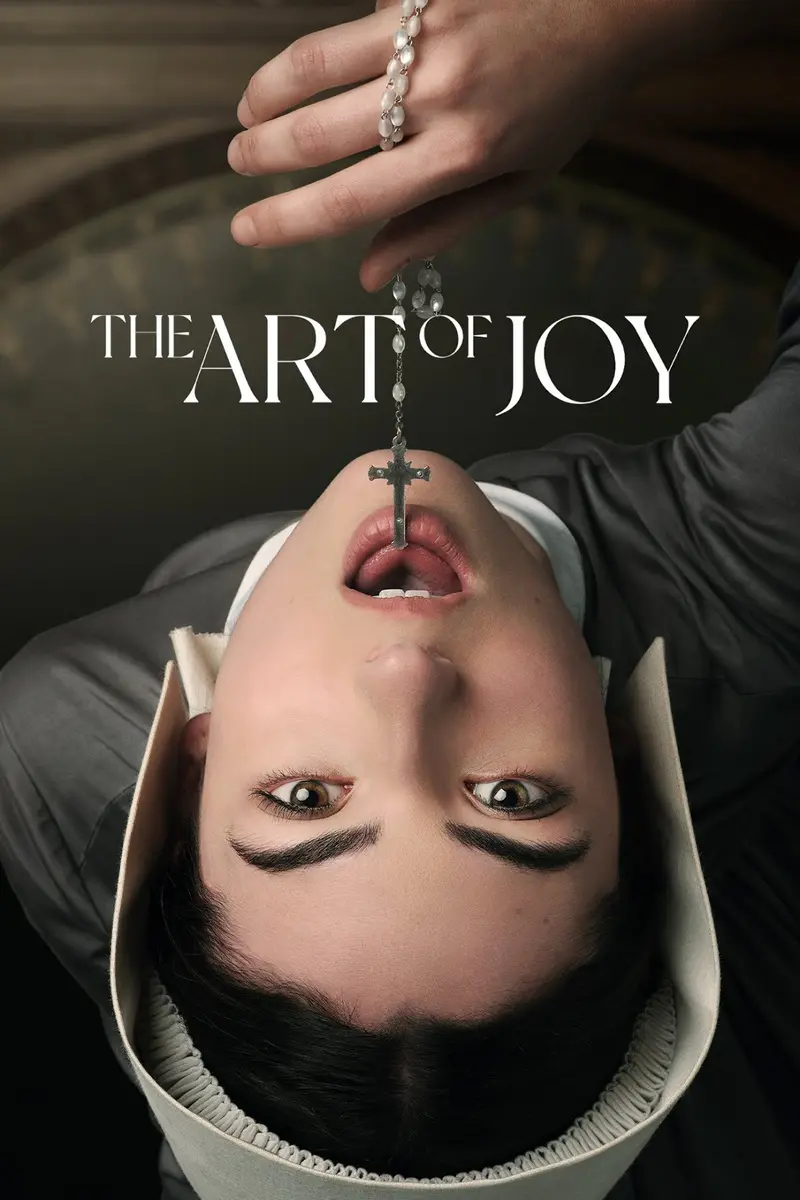
If there is one reason to recommend the series, it is Tecla Insolia. Her eyes often tell half the story. She moves from innocence to severity, desire to fear and fragility to command without making the transitions feel manufactured. Whatever Modesta does, Insolia makes her impossible to ignore.
Barbara Ronchi's Mother Leonora and Valeria Bruni Tedeschi's Princess Gaia add their own layers of threat and ambiguity. The direction matches them with images that serve psychology rather than decoration: convents are cold and suffocating, palaces luxurious yet imprisoning, and the Sicilian countryside free yet merciless. Even the closing hymns carry both sorrow and awe.
A rich season that deliberately remains unfinished
The series rarely allows the audience to settle. Every apparent stability gives way to another transformation, and each character reveals a new face. That constant renewal keeps the narrative alive, though the reflective pace can slow enough to challenge viewers who expect every episode to push plot at the same speed.
Some supporting characters deserved more space, particularly in the second half. And because this adaptation covers only the first part of the novel, several dramatic lines end just as they begin to open. The incompleteness is partly structural rather than a failure of writing, but it remains part of the viewing experience.
Final verdict
Final verdict
The Art of Joy is not merely a period drama or a story about a woman rebelling against society. It is about a human being deciding to author her own life, whatever the price. You may disagree with Modesta, resent her or reject her choices, but her presence is difficult to escape. Bold, intelligent and visually assured, the series approaches the darkest corners of desire and power without demanding that its heroine be loved. Its greatest victory is simpler and braver: it makes her real.
AUDIENCE VOTE
Do you agree with the MB rating?
Choose once from this browser. You can change your answer at any time.