The review
The story resumes without protection
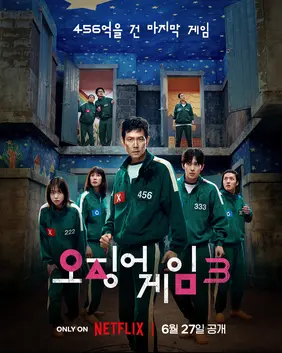
The season begins exactly where the second ended, almost as if its opening episode were chapter eight of the previous run. The choice creates immediate momentum and respects the urgency of the failed rebellion, although it leaves little room to rebuild emotional context before the next catastrophe.
The short six-episode structure makes every installment consequential. There is almost no decorative movement: each game removes possibilities, exposes a character or pushes Gi-hun deeper into the moral darkness he once believed he could oppose from outside.
Four paths toward the same moral collapse
The screenplay moves between Gi-hun inside the arena, Jun-ho's investigation at sea, the Front Man behind the system and the private conflicts of the contestants. The lines do not carry equal power, but together they reveal the game as an institution rather than an isolated room of violence.
The central question changes from who will survive to what could make a person worthy of survival. Childhood games become cruel moral equations, turning memories of innocence into instruments that measure fear, selfishness and sacrifice.
Gi-hun at the edge of becoming his enemy
Lee Jung-jae presents a version of Gi-hun in which hope has been almost completely burned away. His anger remains morally understandable, yet the season repeatedly asks whether hatred of the system can reproduce the system's logic inside the person resisting it.
The writing is strongest when it trusts a still face or an unfinished sentence. Gi-hun's collapse does not need speeches; the accumulated knowledge in his eyes is more persuasive than any declaration of despair.
Games as physical and philosophical traps
The direction uses tight compositions to create bodily confinement, then widens the frame to expose how small each person is inside the architecture of the game. Bright childhood colors no longer promise play; they make death look organized, cheerful and therefore more obscene.
Hwang Dong-hyuk controls the alternation between violence and reflection with confidence. The editing links separate destinies without losing clarity, while the score becomes darker and more abstract, often withdrawing completely so the human reaction can fill the space.
A powerful cast with uneven material
Lee Byung-hun gives the Front Man new fragility beneath his control. Kang Ae-shim delivers one of the season's most painful human moments, while Jo Yu-ri makes Jun-hee's conflict immediate and intimate. The supporting ensemble carries the finale with impressive emotional range.
Not every new player receives sufficient development, and the English dialogue written for the VIPs remains blunt and artificial. Those weaknesses stand out precisely because the Korean-language scenes communicate so much through restraint.
A final season that refuses comfort
The production design preserves the series' defining contradiction: playgrounds built as spaces of industrial punishment. New arenas add visual variety, but every staircase, platform and painted wall continues to serve the same message about systems that turn desperation into spectacle.
The conclusion is harsh because mercy would betray the logic established from the beginning. It leaves the audience with loss rather than catharsis and completes a story that has always treated survival as a debt, never a reward.
Final verdict
Final verdict
Season three is a merciless and memorable farewell. It pushes the physical game to its limit while keeping the deepest violence inside choice, guilt and sacrifice. The ending fits an iconic beginning and closes the story with a bloody full stop that offers no easy escape.
AUDIENCE VOTE
Do you agree with the MB rating?
Choose once from this browser. You can change your answer at any time.