
The review
A getaway that begins with a small lie
Paul arrives at the Malibu house before Leah and leaves her a message saying a problem with his car's tire will delay him. In fact, he is waiting with a cake and wants to surprise her. The lie seems harmless here, setting up an affectionate moment between two people who have known each other for a long time.
We then discover that both are married to other people, and that Leah is also a mother. They were high school sweethearts and are now continuing a secret affair, using business trips as cover for their meetings. At this point, the opening takes on a different meaning: the lying initially presented as part of a lovely surprise is also what makes the entire getaway possible.

This revelation adds tension to the comfortable atmosphere. Calls from their other lives remind us that their time together is temporary, and that people outside the house do not know what is really happening.
The opening succeeds in making us reconsider the closeness we have witnessed. Their meeting is now tied to lies that affect people beyond the house as well. We therefore wait for the moment when the beauty of the setting will no longer be enough to isolate the two characters from the rest of their lives.
The past explains the attraction, but not everything
Knowing that Paul and Leah were high school sweethearts helps make their familiarity convincing. They do not have to get to know each other from scratch; their history makes physical closeness, conversation, and laughter feel natural. This is a strength, because the relationship seems to rest on more than a passing attraction.
But their shared past sometimes becomes a ready answer to questions that require detail. We understand why their meeting carries nostalgia, without learning enough about how either reached this stage of life, or why continuing the secret relationship has become so important.
It helps to distinguish between believing in the attraction and understanding the choice. The actors convince us that Paul and Leah want to stay together during the getaway. What that means once they return, and what each is prepared to lose, remain less clear.


Limiting the film to a single weekend allows it to stay focused, but does not prevent it from giving the characters revealing details. More specific dialogue about a past experience or a recurring disagreement could have clarified their needs without turning the story into a lengthy account of their lives.
Jeffrey Ruggles's writing shows sincere interest in feelings, but that interest does not always reach their causes. We may therefore respond to a sad or intimate moment, then struggle to connect it to a deeper understanding of the characters.
Jealousy that reveals too little
The getaway moves through a romantic dinner, intimate moments, and a night of drinking and dancing. A moment of jealousy then prompts Leah to leave and stay in a hotel. The mood changes, and the connection that initially seemed so easy becomes less stable.

Jealousy within a secret relationship is an idea worth exploring. There is a desire for closeness and exclusivity, even though both know that each has another partner. That contradiction could reveal what each expects from a relationship they do not acknowledge publicly in the first place.
But the disagreement does not develop into a confrontation that reveals enough about those expectations. We see the tension and its immediate effects, while the relationship's central questions remain unresolved. Leah's move to the hotel changes her location, but does not by itself give us sufficient new insight into what she needs or refuses to accept.
This also creates a problem of predictability. Once the secret affair is revealed, the arrival of jealousy, distress, and separation feels familiar. For these developments to have greater impact, they need details specific to Paul and Leah, making it harder to replace them with two other characters in a similar story.
That is what some situations lack: a specificity that makes the conflict a clear result of their personalities, and makes us consider what it has revealed about them.
The actors make the closeness convincing
Emmanuelle Chriqui and Hayes MacArthur are the main reasons the film sustains our interest. Their chemistry is evident and helps us believe that this relationship predates the moment we are watching. They are comfortable together, even as their feelings begin to change.
MacArthur gives Paul a degree of charm and vulnerability, then allows anger, resentment, and behavior bordering on violence to emerge. The man becomes less likable over time, but the actor preserves the connection between his different states. The shift does not feel like a sudden attempt to manufacture a problem.
That makes his performance stronger than some of the situations written for him. We can follow Paul's changes in the moment and feel his mounting distress, even when the story does not provide enough to explain its roots.
Chriqui, meanwhile, gives Leah a calmness that allows her hesitation between desire and what she knows is difficult to achieve to show through. Her presence makes the character approachable and keeps us interested in her when the relationship becomes exhausting.


The moment when Leah hungrily eats a burger after a difficult night also works. It is a simple detail, but it returns her to an ordinary, immediate need and gives the scene an appealing lightness. Such moments make the character more specific than general talk about love and confusion does.
The performances do not solve every problem in the writing, but they keep the emotions from feeling artificial. We believe what happens between the characters within a scene, even when we wish that scene would bring a greater change to the story.
A beautiful house sharpens the contradiction
John Asher and cinematographer Graham Futerfas make good use of the oceanfront house. White spaces, broad windows, and natural light create a setting that feels comfortable and open, while the two people inside it sustain a relationship built on concealing the truth.
Shooting through glass helps maintain some distance between us and them. We see the house from outside, then look out from it, keeping windows and reflections present in the frame. We can feel close to the characters while also feeling that we are observing a private space.

The softness of the image also gives some moments a dreamlike quality. This suits a getaway in which Paul and Leah try to suspend their responsibilities temporarily and spend time together that their ordinary lives do not permit.
The bar scene offers a clear visual change. Wood, darker colors, and more fluid movement replace the house's stillness and open light as the tension rises.
These choices serve the film and keep the beauty of the setting from becoming mere decoration. Sarah Trevino's score and the selected songs help move between lightness, intimacy, and distress without overwhelming the actors.
But the image can clarify the contradiction more readily than it can explain it. We sense that the comfort created by the setting is unstable, then need writing that gives this feeling more specific causes and developments.
Understanding the characters is not enough
The film sees Paul and Leah as people with real feelings who make harmful choices. This perspective gives us a chance to understand what draws them together and allows us to care about them despite knowing who may be hurt by their relationship.
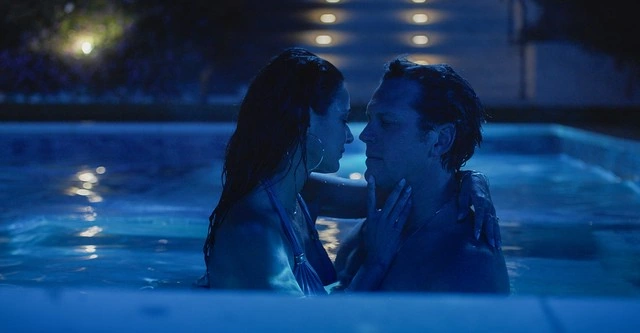
It is good that the story does not stop at passing judgment on them. But the consequences also need a clear place in it. The phone calls, the existence of two other partners, and Leah's responsibility as a mother make the risk understandable, while its effect on their lives beyond the getaway remains less present than we would like.
Here we encounter the film's limit. It can depict desire and temporary comfort, and is good at capturing tension as it creeps into them, but it is less able to follow what these moments reveal about the characters' willingness to bear the consequences of their choices.
Ambiguity can give the viewer room to think, but a lack of detail sometimes leaves us asking the same questions again. For us, the film needed a more precise confrontation between what Paul and Leah want and what they can actually offer, so that their continuing uncertainty would be as affecting as intended.
Final verdict
The verdict on the film
A Love Like This has two actors with chemistry, beautiful cinematography that knows how to use its setting, and several intimate, human moments that connect easily. MacArthur in particular brings changes to Paul that make his presence more complex than the romantic opening suggests. But the character writing does not make enough of these elements. The past provides a general explanation for their attraction, the conflicts follow familiar directions, and motives and consequences remain less clear than the feelings the actors convey. We therefore see it as an average film with elements worth noticing, but one that does not give its story the depth it needs. It convinces us that Paul and Leah feel something important, without convincing us to the same degree that the film has discovered enough about that feeling. My rating for the film: 5 out of 10.
Your turn
Was the chemistry between the actors enough for you to believe in the relationship and care about it, or did you need to know more about their lives beyond this getaway?
AUDIENCE VOTE
Do you agree with the MB rating?
Choose once from this browser. You can change your answer at any time.