The review
Screenplay and dialogue: leaving adolescence amid strained relationships
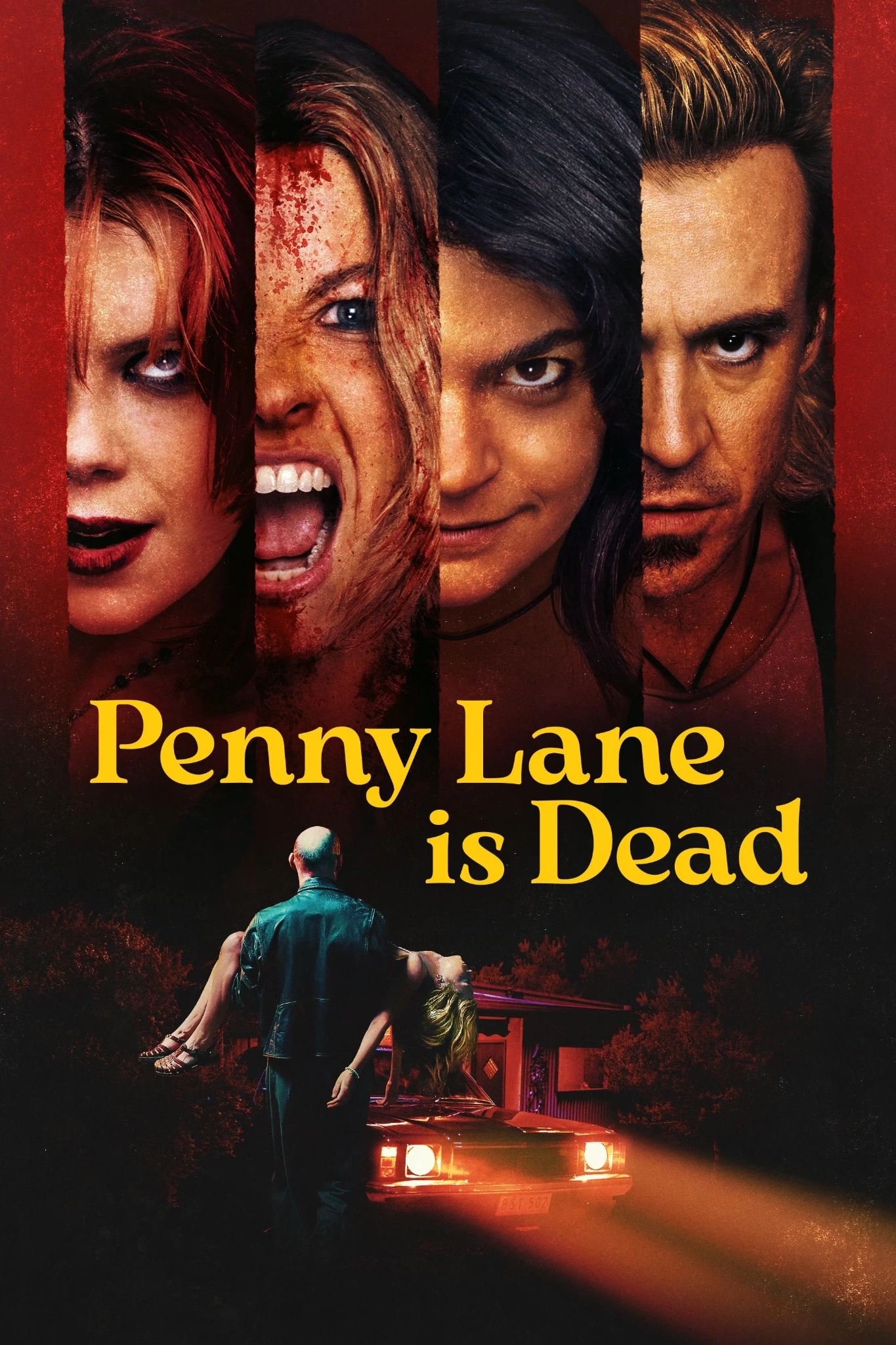
Set in 1986, the story unfolds at a beach house where Penny joins her friends Toni and Amy as they prepare to leave adolescence behind and begin college life.
Although the location seems suited to celebration and final memories, the relationships are less straightforward than the occasion suggests.
Penny and Toni have begun a romantic relationship they have not yet disclosed to Amy. Amy appears more vulnerable, relying on small sources of reassurance, such as the stuffed toy she keeps with her.
These details suggest young women standing at the threshold of a new stage, discovering their identities and dealing with changing relationships.
The presence of Kat, Penny's relative who bears an old hostility toward her, reveals that the household is less harmonious than it appears.
Photographs of Penny throughout the house suggest her favored position in the family, while Kat feels she is constantly living in the shadow of someone more accepted and successful.
That feeling becomes openly hostile when Kat offers small cakes bearing insulting words aimed at the women, putting crushed pills in Penny's cake to render her unconscious.
This is more than a cruel joke that gets out of hand. It is a deliberate attempt at humiliation, revealing that the conflict begins before the men arrive to turn the night into a tragedy.
The opening establishes a social tension that could have developed into an interesting study of jealousy, belonging and rejection.
The screenplay gives these relationships too little time before rushing toward violence. Some promising details become brief backgrounds for characters whose survival will become our main concern.
Kat: missing recognition and the character's limits
Kat is the film's most contradictory character.
She behaves aggressively from her first appearance and tries to ruin the occasion. At the same time, she seems desperate for recognition, even from people who offer her no real respect.
Her relationship with Angus reveals an important aspect of this contradiction.
When the others reject her behavior, she calls in a man whose aggression she knows, as though seeking an outside force through which she can impose her presence on the group.
The decision gives her none of the control she imagines. Instead, it opens the door to violence extending beyond her personal disagreements.
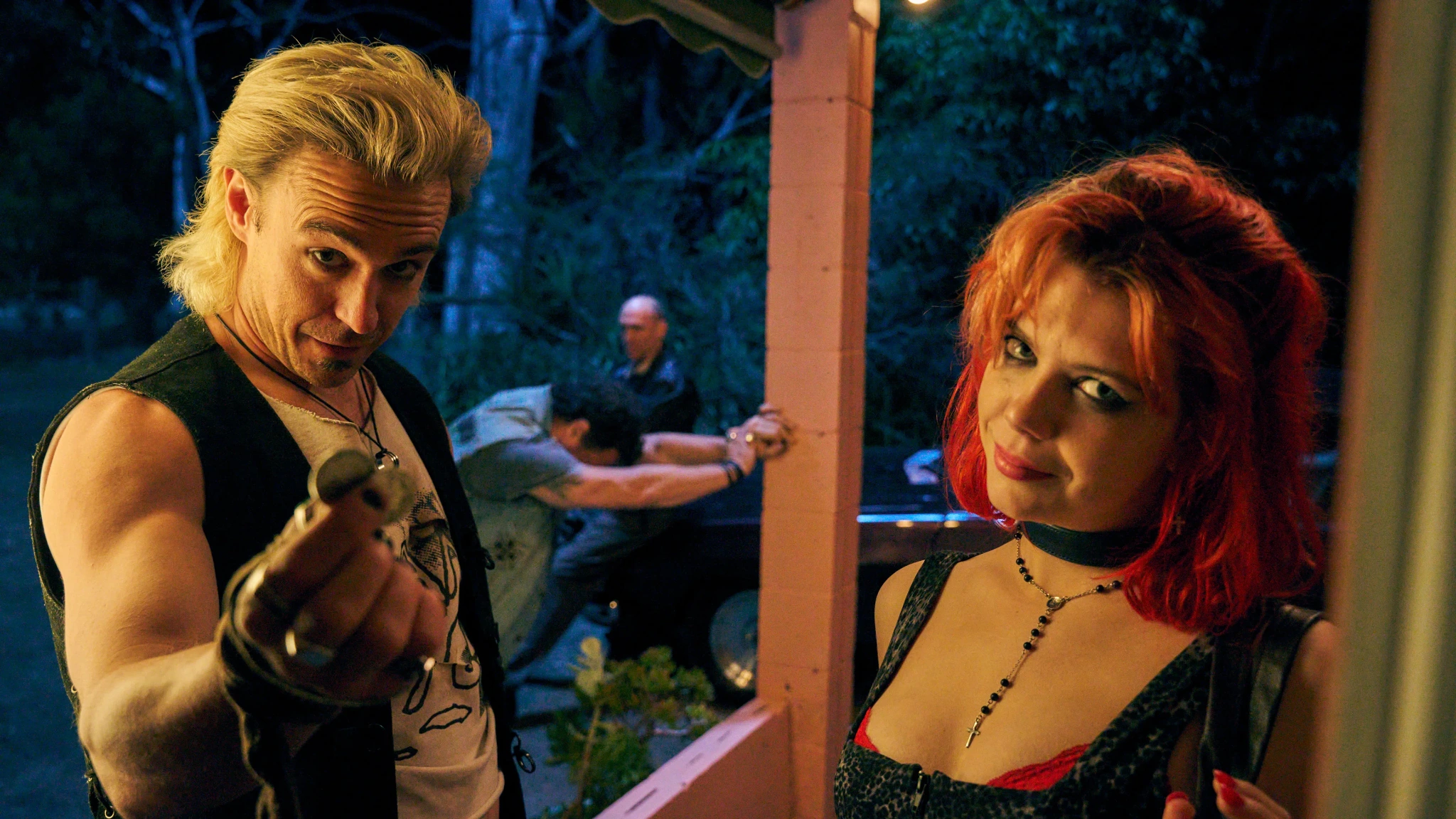
Sophia Wright Mendelsohn makes Kat difficult to predict. Moving between provocation, shouting and intense emotion, she gives the direct confrontations with Toni a clear energy.
Their conflict relies on more than physical strength, involving words, insults and each character's attempts to break the other's will.
The strong performance also exposes the writing's limits.
As events progress, the layers that could have made Kat more complex recede. Her behavior becomes increasingly based on resentment and a desire to hurt others.
Not every villain needs a lengthy psychological explanation. The film itself, however, begins by offering social and emotional motivations, then makes insufficient use of them.
More troublingly, Kat sometimes becomes the center around which responsibility for the disaster gathers, although the men entering the house commit more directly brutal violence.
If the film wants to explore anger between women and its relationship to the violence around them, reducing Kat to someone motivated by evil alone weakens rather than deepens that reading.
Toni, Amy and Penny: resistance, vulnerability and lost agency
Toni offers a different side of the story. She sees danger as more than something to escape, showing a willingness to confront it and protect those she cares about.
Tahlee Fereday gives her a physical presence suited to this role, especially in confrontations requiring toughness and anger.
Her performance becomes more convincing when that toughness connects to her relationship with Penny.
Their romance initially belongs to a private life they have not fully shared with others. It becomes a motive giving her resistance human weight.
We follow more than someone trying to survive: she is trying to preserve a person important to her life.
Amy, played by Alexandra Jensen, represents a different degree of vulnerability. Her need for her stuffed toy and childlike sense of safety make her presence in this violent environment more disturbing.
The film does not give every character the same level of development.
Some are introduced through clear psychological traits before their primary function becomes receiving more assaults and trauma.
Even Penny, whose name the story carries, loses much of her initiative after becoming unconscious. This choice serves the outbreak of the crisis but limits our ability to understand her through her own decisions.
This exposes one weakness: we understand why we should fear for these young women, but are not always given enough time to know them deeply enough for each loss or confrontation to feel distinct.
Home invasion and brutality becoming predictable
With the arrival of Angus and his companions Merrick and Rudowski, the story moves from personal tension into home invasion horror.
Ben O'Toole plays Angus with exaggerated aggression, fitting a man who acknowledges no boundaries and seems ready to turn any minor friction into a serious threat.
Fletcher Humphrys also gives Rudowski a repellent presence through mocking expressions and provocative behavior.
Initially, this introduction creates the feeling that the women have lost control of the house and cannot deal with these unwanted guests through ordinary reason.
The difficulty begins when this behavior becomes almost the only note governing the villains.
Angus and his companions need neither noble motives nor tragic pasts to be convincing. Their continuing aggression at the same level, however, gradually reduces their ability to surprise us.
After a certain point, the question is no longer how these men will behave, but how far the story will allow them to continue.
This is an important distinction in creating suspense.
A frightening antagonist is not necessarily the person committing the greatest number of brutal acts. It is someone whose presence makes every decision harder for the other characters.
Once brutality becomes predictable, the film needs other ways of developing the conflict to sustain its impact.
Does the film condemn violence or turn it into visual pleasure?
This is the point that determines our position on the film.
It treats violence against women, including sexual assaults, within a framework combining harsh horror and black comedy.
The combination is not inherently a problem. Many horror films have used the contrast between laughter and fear to expose evil's absurdity or make viewers uncomfortable with what they are watching.
Its success depends on how our attention is directed toward the victims and what the violent scenes add to our understanding of the conflict.
In Penny Lane Is Dead, it sometimes becomes difficult to identify the distance between depicting cruelty and criticizing it.
The film presents some painful moments with clear seriousness, then returns to a mocking or showy tone, as though asking the viewer to move quickly from sympathy to enjoying the chaos.
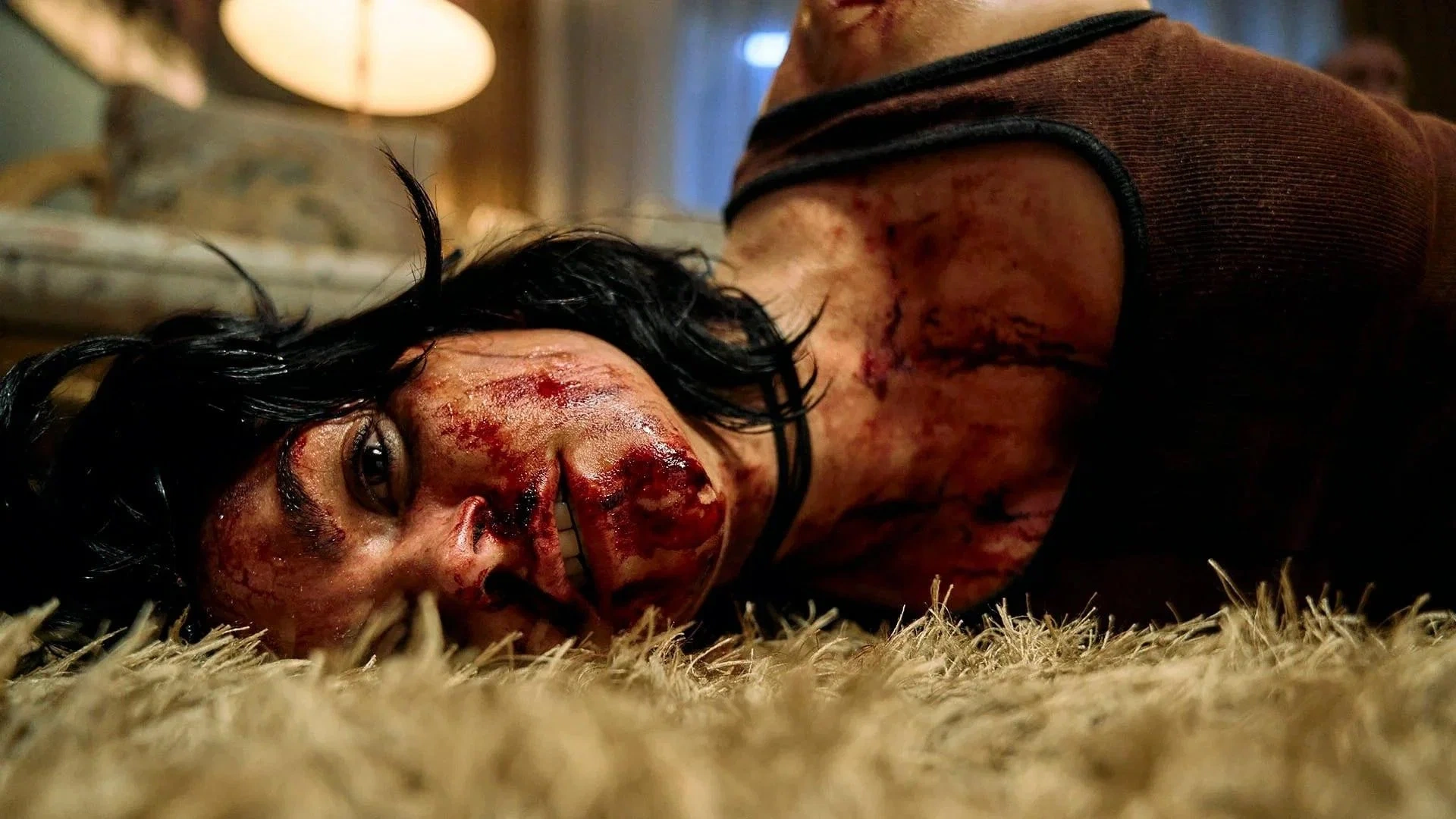
As these shifts recur, pain begins to lose its specificity.
Each assault no longer reveals something new about a character, relationship or threat. It becomes part of a continuing escalation that must exceed what came before in intensity.
The problem is not simply the explicitness of the content.
Exploitation horror does not need to offer a moral sermon to succeed, nor must it leave its audience comfortable.
But when a film draws on domination, humiliation and sexual violence, it is legitimate to ask what it does with them within its dramatic structure.
Does it help us understand violence's effect on the characters? Does it change our view of the authority the attackers exercise? Or does it merely shock us?
We find that the film achieves the first in some moments, but increasingly favors the third.
The cruelty that could have given it depth sometimes becomes the very thing obscuring that depth.
Practical effects, sound and an eighties identity
If the writing struggles to control the escalation of violence, the practical execution of those scenes is one of the film's main achievements.
Effects supervised by Luke Polti give injuries and wounds a material presence that is difficult to ignore.
The blood does not seem like a separate visual addition to the actors' bodies. It belongs to the scenes' texture, making the assaults feel rough and close.
This is especially apparent in injuries focusing on sensitive areas such as the foot and ankle. Our perception of pain depends more on imagining movement and injury than on seeing prolonged detail.
Mia Kate Russell uses these possibilities to create horror scenes eliciting an immediate physical response from viewers.
The sound design adds an important layer to the sense of grime and chaos.
Small sounds, such as Angus's leather clothes rubbing or the sounds of tools and liquids inside the house, make the environment uncomfortable and supply sensory details beyond screaming and loud effects.
Australian rock and punk songs from the eighties also help establish the film's period identity.
The choice of 1986 is more than a decorative background: costumes, musical taste and the contrast between Penny's more conventional appearance and Kat's rebellious look clarify differences between the characters.
However clear an identity may be, it cannot compensate on its own for insufficient dramatic treatment.
Practical effects make violence visually convincing, but do not necessarily determine whether its use is convincing within the story.
Paradoxically, some of the film's most technically accomplished scenes provoke our strongest reservations about its narrative choices.
The revenge ending: confrontation and the cost of exhaustion
The final act gives resistance more room after keeping the characters under almost continuous threat for a long time.
The final confrontations arrive with a brutally aggressive rhythm, using tools and direct physical encounters to offer the audience some relief as the attackers face consequences.
These moments have an understandable impact because the story has built considerable anger toward its villains.
The feeling of revenge does not automatically become dramatic satisfaction.
After so much cruelty, the price the characters have paid matters more than the amount of violence they can direct toward their opponents.
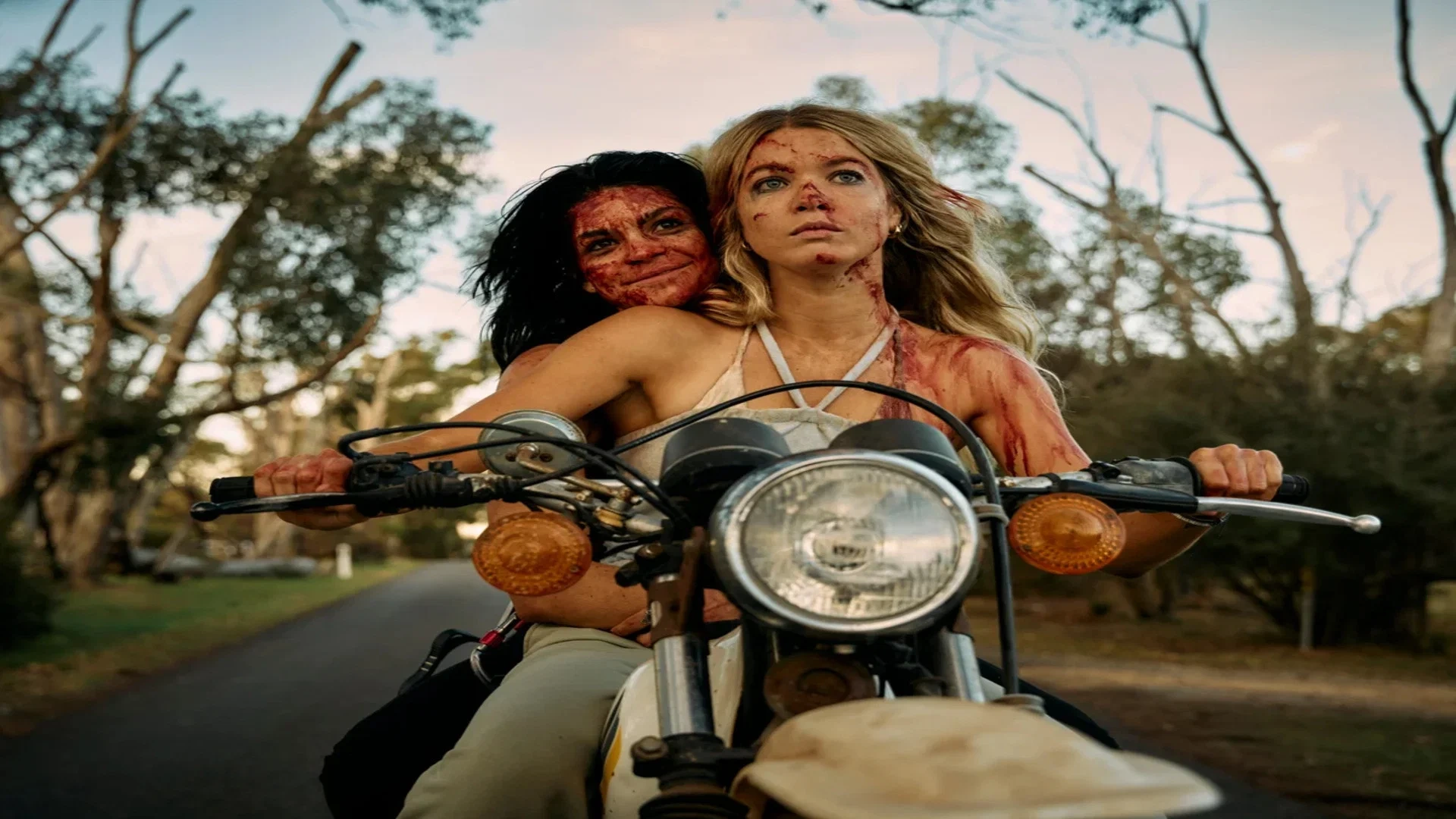
The ending is stronger when it draws on our wish to see resistance. It is less effective when it returns to the same competition governing earlier passages: which encounter will be more brutal?
Uneven transitions and characters entering or leaving without every change receiving equal weight compound the problem.
The film has considerable energy, but does not always distribute it so tension can rise, settle and return in a different form.
Instead, escalation sometimes continues until viewers become exhausted and respond less to each new shock.
The ending could have left a deeper impression if the screenplay had given more room to the consequences of what happened rather than relying primarily on the final confrontation's immediate force.
Final verdict
Final verdict
The film has clear technical qualities worth appreciating: direction that can create shocking scenes, good practical effects, an identity evoking the eighties, and balanced performances, particularly in the confrontations between Kat and Toni. These elements operate within a screenplay that gives some characters insufficient depth, relies heavily on escalating brutality, and hesitates to define the distance between criticizing violence and enjoying its display. The result is a film with audacity and energy that does not consistently turn them into a coherent dramatic experience. It can disturb viewers and perhaps impress them with the craft of some bloody scenes. It is less capable of turning that discomfort into a psychological impact lasting beyond the viewing. Its visual strength cannot overcome the exhaustion caused by repeated cruelty and the weak development of some characters. It may attract fans of extremely violent horror, but lacks the dramatic coherence that would make its technical boldness sufficient to earn a higher rating.
Your turn
Now the question is yours: did the escalating violence make the revenge ending more effective, or did the number of cruel scenes erode your sympathy for the characters before you reached it?
AUDIENCE VOTE
Do you agree with the MB rating?
Choose once from this browser. You can change your answer at any time.