
The review
Screenplay and Dialogue
The disparity between Lowen and Verity begins with their relationships with an audience. Lowen’s bookstore reading attracts little interest, while Verity appears in media interviews that establish her fame. The offer to continue the series therefore represents more than a writing opportunity: it brings Lowen closer to the recognition she lacks and the financial stability she needs.
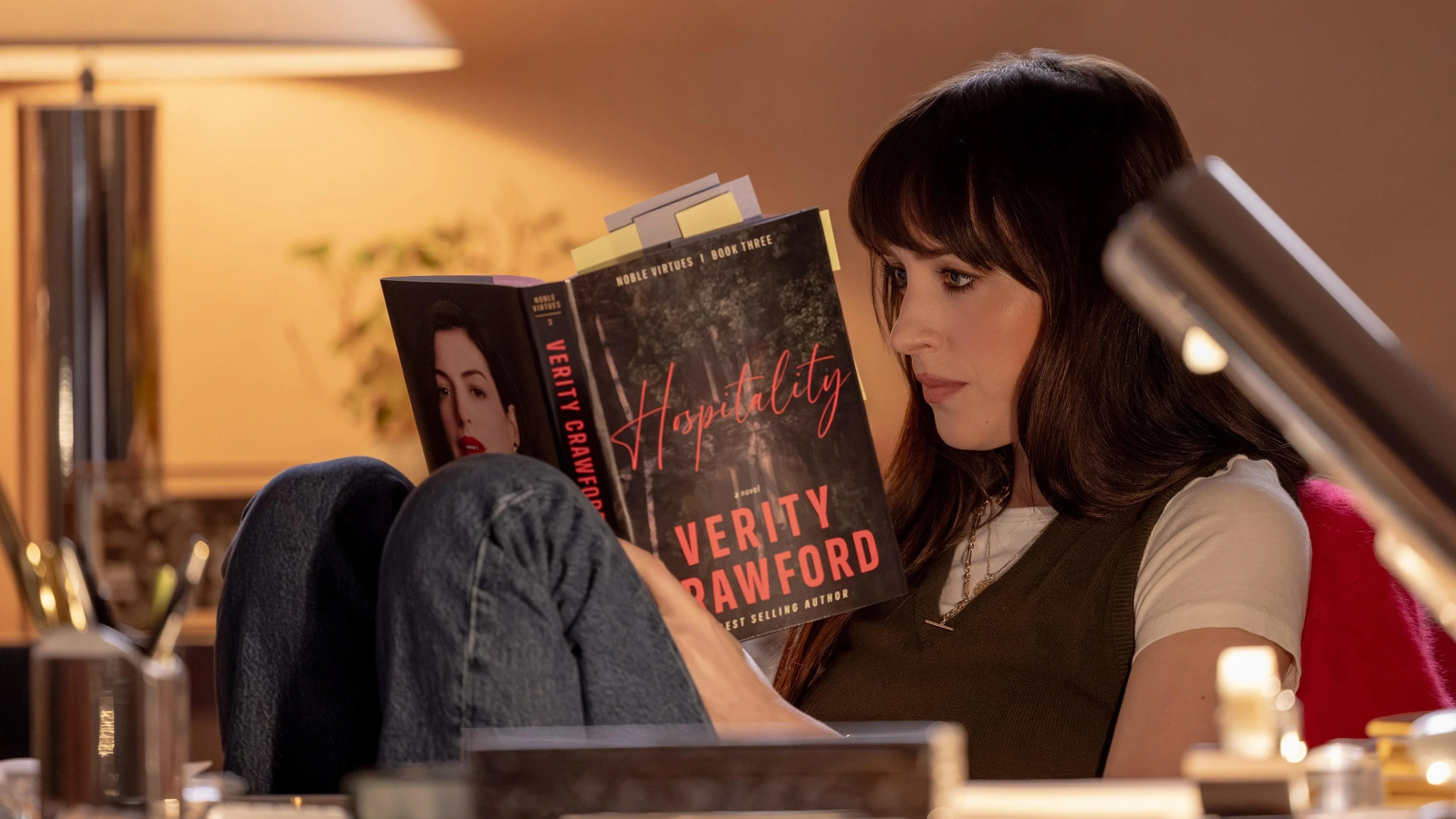
From the publisher’s perspective, the books can continue even without their author’s participation. This reveals how a successful name can become detached from the person who bears it. But Lowen’s move into the family home complicates that separation: the original writer is there in front of her, silent and still, while the newcomer is given space to work, live, and grow close to the family.
Lowen’s loss of her home matters here. Staying is not a neutral choice from which she can easily withdraw. The house offers a practical solution to her life, then adds an emotional temptation. Questioning this place becomes costly for her, giving her hesitation more meaning than mere curiosity leading a heroine into a mysterious house.
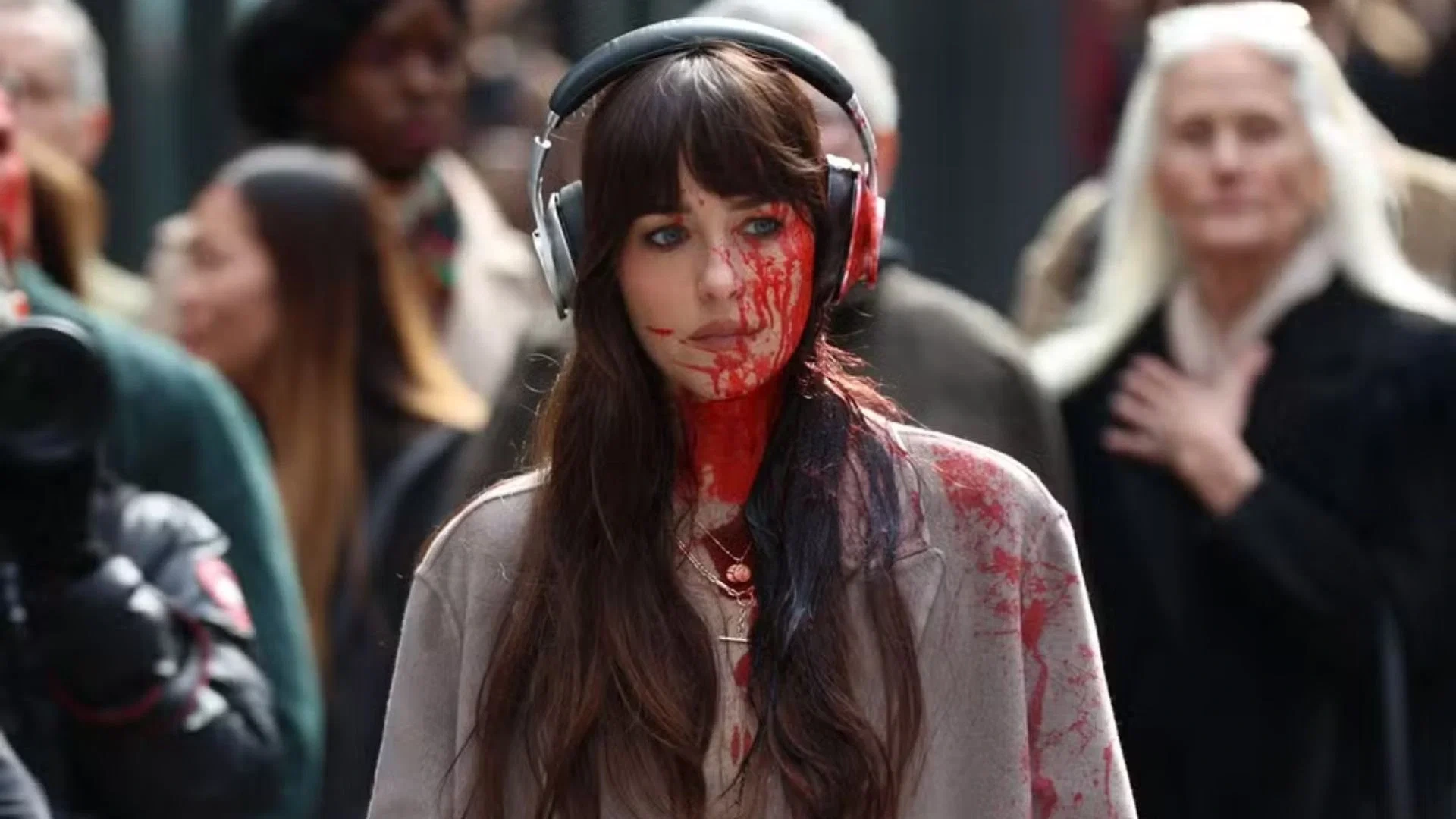
The film could have explored this dependence more deeply. At times, however, it settles for reminding us of her financial difficulties and her mother’s death, then lets her attraction to Jeremy carry most of her development. The beginning suggests a character with overlapping needs, while some later scenes narrow that possibility.
The Manuscript Between Confession and the Power of Images
Finding the manuscript changes Lowen’s position from someone searching for a style to a reader of what appears to be a personal confession. The text describes Verity’s attachment to Jeremy and her resentment of the two children competing for his attention, and attributes Harper’s drowning to her actions. These are allegations contained in the writing, and their truth is the question that remains open.
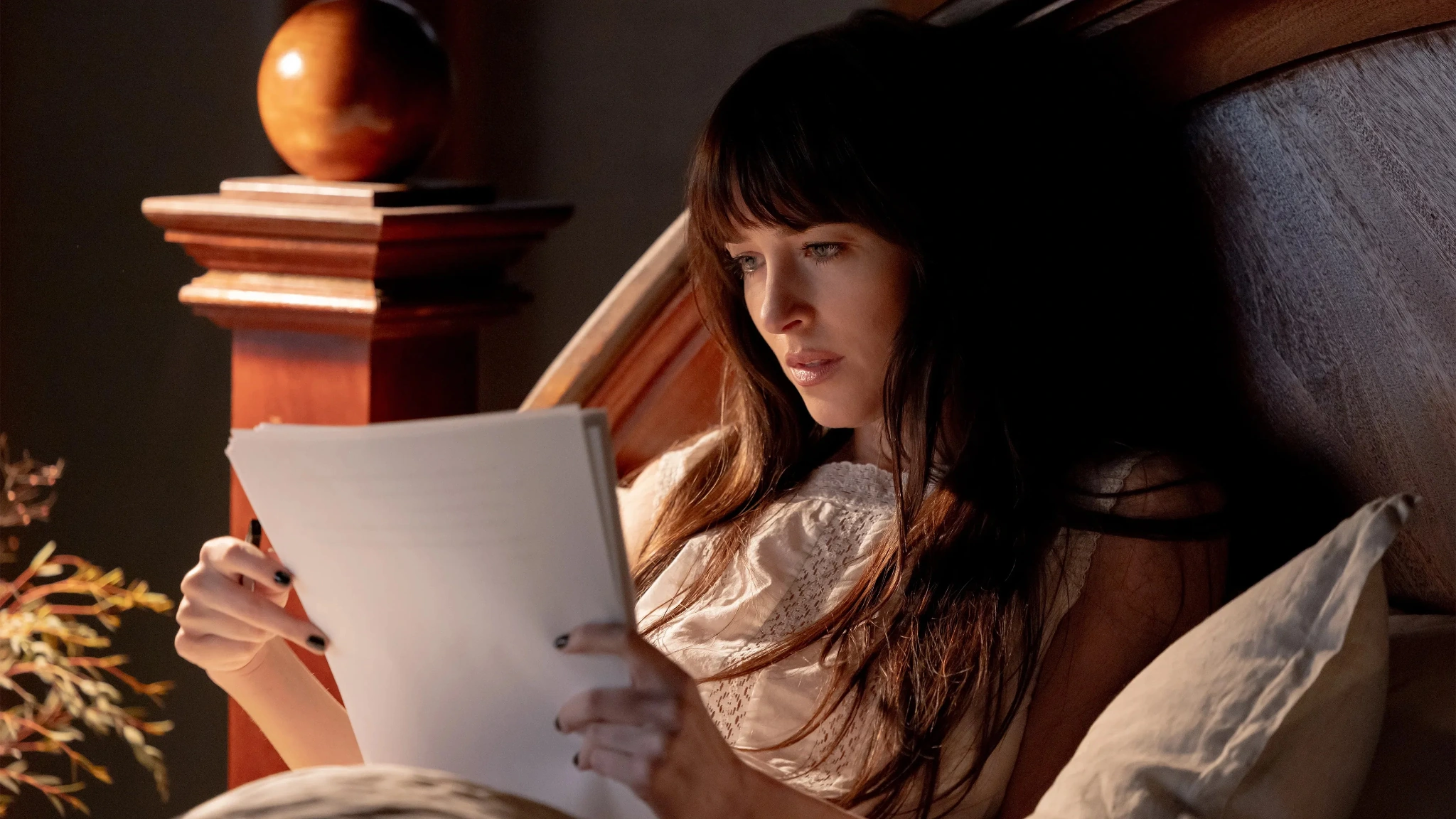
The artistic problem begins with the way the film gives them a presence. Hearing an account of an event leaves a distance between it and the audience; turning it into reconstructed scenes gives a stronger impression that it happened as we see it. In terms of the story’s origin, we remain within Verity’s account, but the image provokes our response before we pause to test its truth.
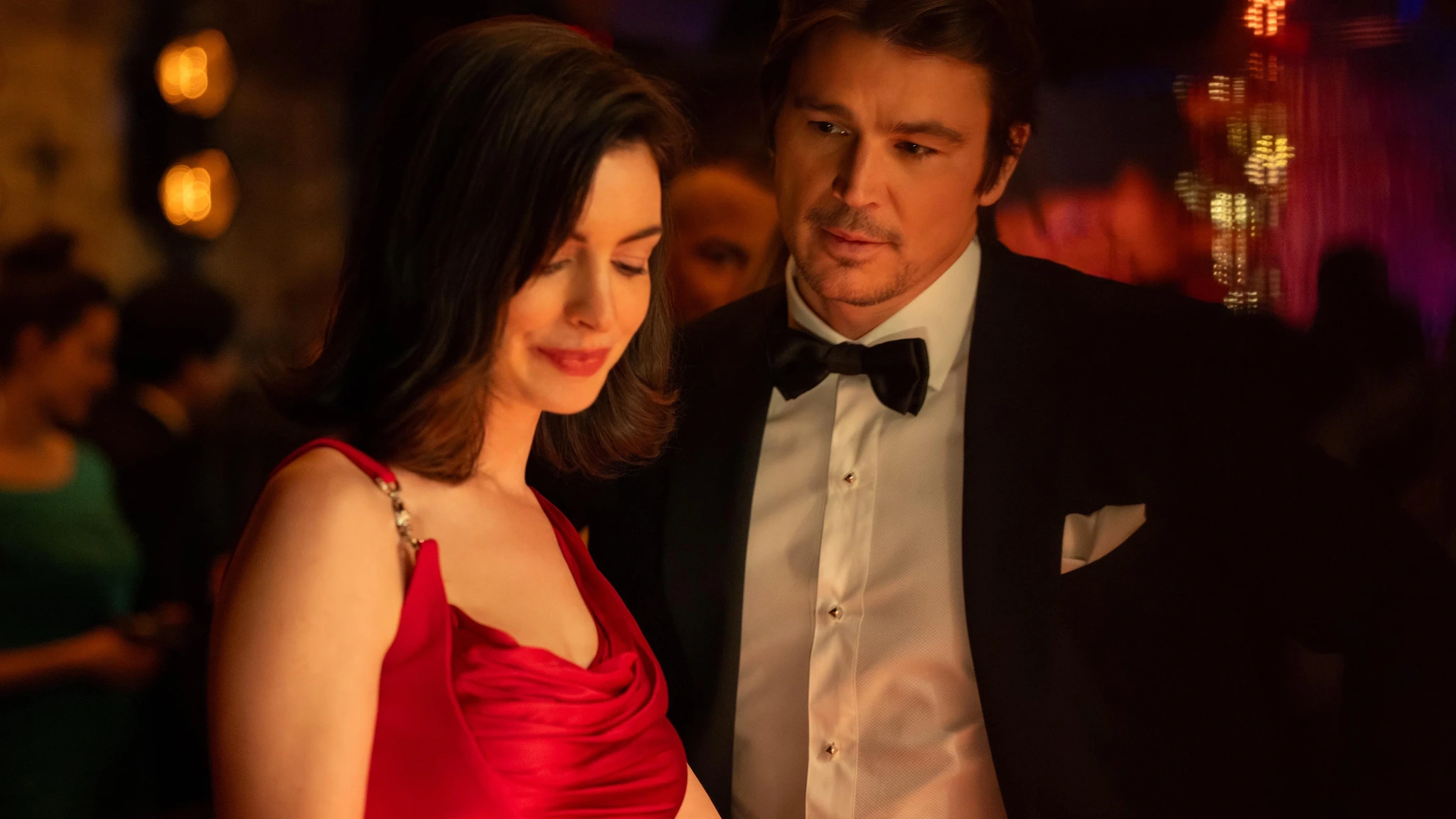
Anne Hathaway adds a useful complication. Her presence in the narration and reconstructed scenes is more forceful and expressive than her motionless body in the present. This gap makes us search the silent face for the woman whose voice we hear and whom we see in the written past.
The exaggeration in her performance carries two possibilities: it may give the confession a shocking cruelty, or suggest a character crafting an effect and overstating her own presentation. Knowing that Verity writes from villains’ perspectives also provides an early basis for questioning whether her written voice corresponds to who she really is.


The final reversal therefore cannot be considered entirely unprepared. The more precise reservation is that the film gives the accusation extensive emotional and visual space while leaving the examination of its credibility less developed. The possibility of deception remains, but it does not sufficiently become a gradually developing conflict between pieces of evidence that can be weighed.
Lowen and Jeremy: Desire and Care
Lowen becomes attached to Jeremy and Crew, and that attachment is difficult to reduce to a single motive. Her concern for the child gives her anxiety a human basis, and the manuscript’s contents are enough to make her fear for him. At the same time, believing the most damning picture of Verity makes her growing closeness to the husband easier to justify.
This overlap is the strongest element in Lowen’s characterization. She can want to protect the child and also want the life that has come within her reach. The more she believes Verity threatens the family, the more taking a place within it can seem like helping. Desire becomes intertwined with care to the point that they are difficult to separate.
Her wearing one of Verity’s dresses at dinner gives this shift a direct visual form. She is no longer merely borrowing the writer’s voice to complete an assignment; she has begun using something personal belonging to the woman she is reading about and judging. The detail’s strength lies in its connection to tangible behavior, without requiring Lowen to announce that she wants to take her place.
Dakota Johnson helps keep the motives unresolved. Her restraint and watchful reactions allow sympathy for Lowen and suspicion of her to coexist. But the performance’s quietness loses some of its effectiveness when the mounting pressure does not register in proportion to the seriousness of what she discovers. Ambiguity is useful; a fixed emotional register makes parts of the journey less affecting.

Josh Hartnett plays an important role in building trust in Jeremy. His helping Lowen after the street incident and giving her a clean shirt offer a practical kindness that is easy to believe. Her attraction to him becomes understandable because the film shows him responding to her needs before the rest of his relationship with the house is revealed.
This success in the performance makes the character unsettling later. The kindness we have seen remains part of him, but it is not enough to judge everything he is capable of doing. Hartnett retains an appeal that serves the melodrama and prevents suspicion from erasing the reason Lowen became close to him in the first place.
The House, Suspense, and Pacing
The house surrounded by snow, with its geometric composition and orderly surfaces, has a distinct visual presence. There is a fitting contrast between the order of the setting and the turmoil of the relationships within it. Yet this contrast does not always become a sustained feeling that living there is itself putting pressure on the characters.
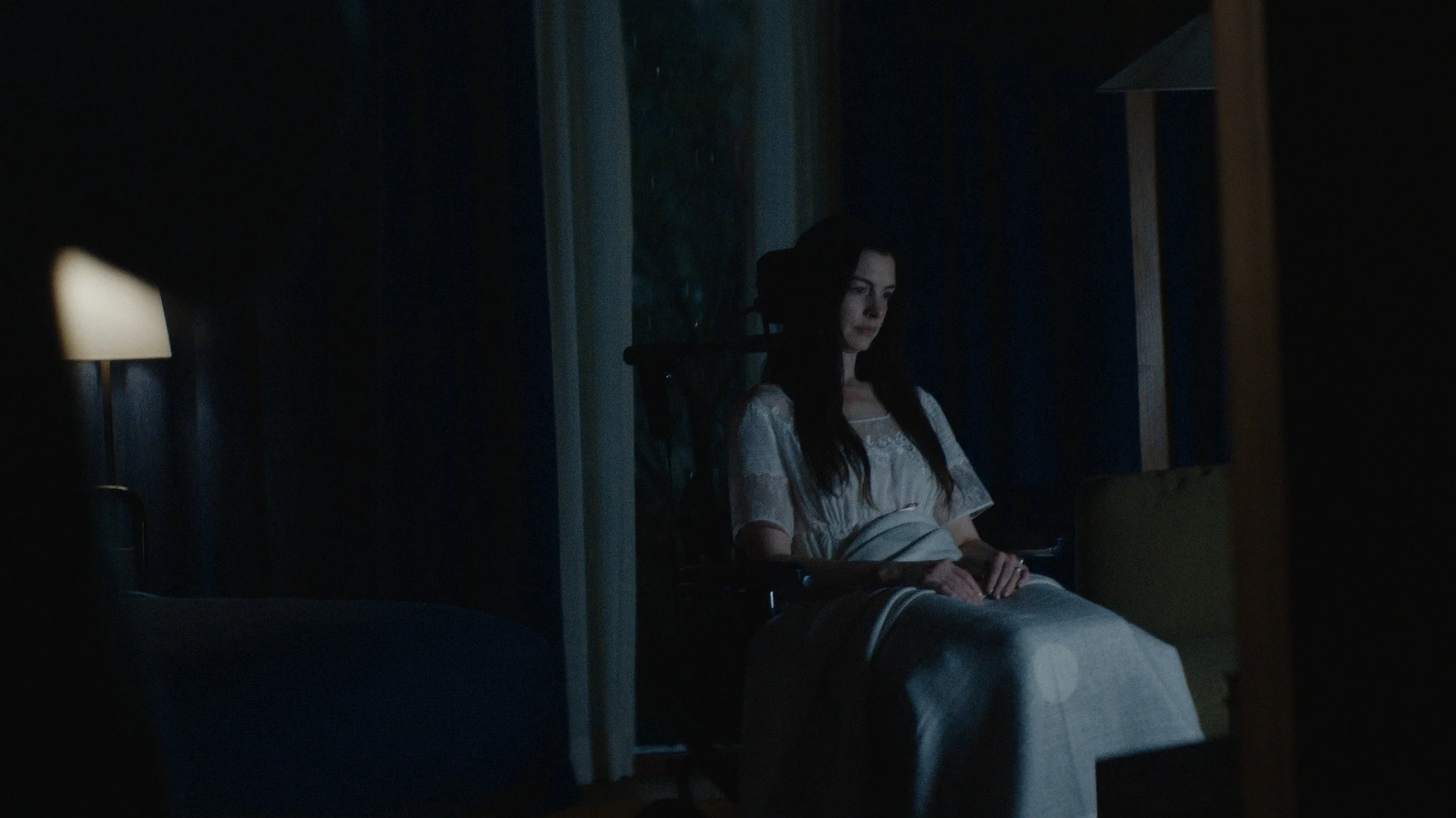
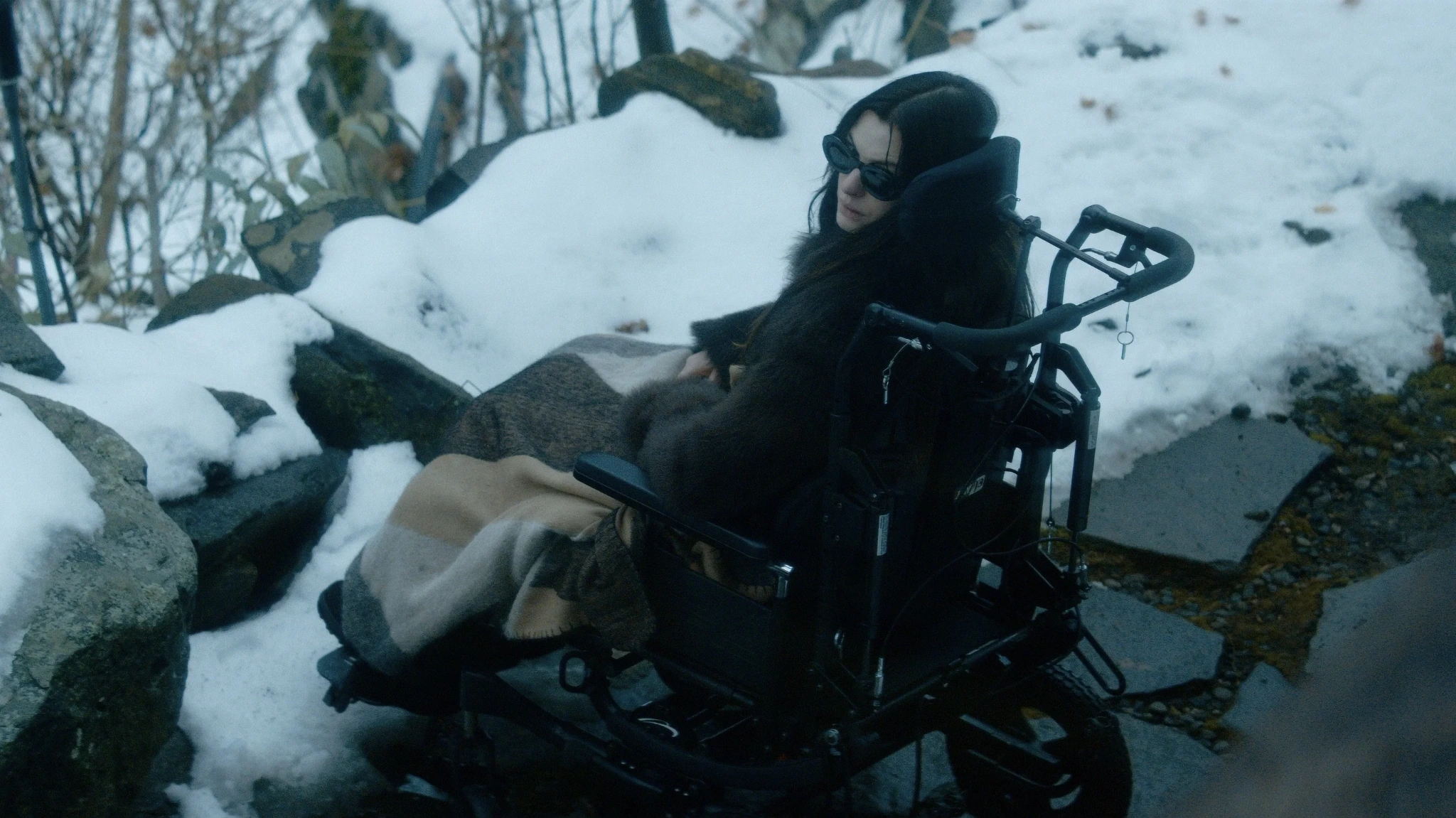
The threatening scenes rely heavily on Lowen believing she has seen Verity move or look at her, on dark string music, and on sudden appearances. These devices can deliver a fright, but their effect diminishes when the romance returns to its course without sufficient change in the scene’s emotional temperature or its participants’ behavior.
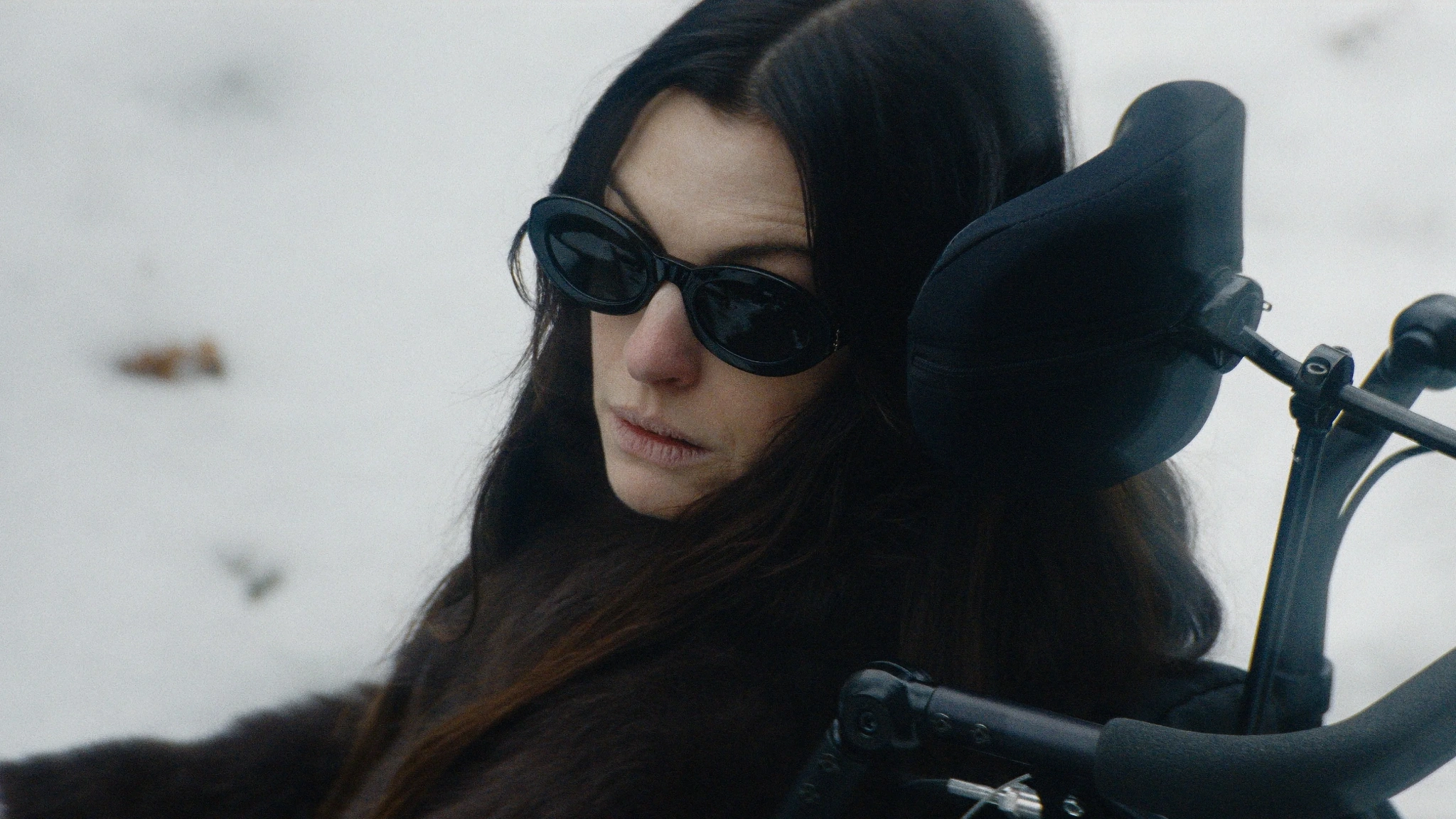
Sometimes the return to the motionless Verity between moments of intimacy feels more like an awkward interruption than an escalation of horror. Her presence should change the meaning of what happens in the house, yet at certain points the film uses her to postpone the attraction and then resume it.
This also affects the pacing. Reading, reconstructed scenes, and growing closer to Jeremy recur before the story moves into faster turns. Slowness here does not always produce new knowledge of the characters; it often reestablishes the same suspicion and attraction. When the revelations follow one another later, the story’s speed seems tied more to the scheduling of surprises than to a gradual increase in pressure.
From Interpreting the Manuscript to Participating in a Crime
This weakness reaches its most important point when Lowen shows Jeremy the manuscript and Verity’s ability to move and speak is exposed. One specific issue is settled: her apparent condition did not reflect her actual capabilities. But this does not automatically establish that what she wrote about Harper’s death was a true confession.
The distinction is essential because Lowen and Jeremy treat the manuscript’s allegations as sufficient grounds to condemn her. Exposing the deception may make the other allegations easier to believe, particularly under the influence of anger and fear. It nevertheless remains a move from evidence of one event to a judgment about others.
The danger of this move becomes apparent in Lowen’s participation in the decision. She objects to Jeremy’s impulsiveness because his imprisonment would leave Crew alone, then suggests presenting Verity’s death as an accident before Jeremy kills her. Protecting the child becomes a justification accompanying an act of extreme cruelty.
This moment takes Lowen from interpreting another person’s life to helping end it. Her professional assignment reaches its furthest extension: she began by continuing Verity’s books and ended by helping remove her from the family she works within. The connection between the two stages gives the transformation meaning, but does not excuse the screenplay from building its steps convincingly.
Here the writing seems more hurried than it should. The move to a crime, followed by the success of the story concealing it, needs more dramatic weight than simply pushing the narrative toward one final revelation. The act is enormous, while the treatment quickly moves on to the life it has produced.
The Letter and the Cost of Believing
Seven months later, after publishing her contribution to the series and becoming pregnant while living with Jeremy and Crew, Lowen finds the hidden letter. The timing matters because the new account arrives after she has acquired much that she could lose by believing it.
According to the letter, the manuscript was an exercise suggested by the publisher, based on writing an evil version of oneself that contradicted one’s real identity. Verity attributes the car accident to Jeremy after he read the text as a confession, and explains concealing her ability to move as an attempt to survive and escape with Crew.
This is an opposing account, not independent testimony proving Verity’s innocence. It makes earlier events open to reinterpretation, but also comes from the character whose credibility has remained in question. The film gives us no definitive basis for choosing either document as the complete truth.

What is more revealing is Lowen’s different treatment of the two. The manuscript condemning the woman who stands between her and Jeremy reaches the husband, while the letter threatening her new life remains hidden from him. The cost of believing becomes part of her decision about what to reveal.
Fear of Jeremy is also a reasonable explanation for her silence if she takes the letter’s allegations seriously. Her decision therefore need not be reduced to protecting her gains alone: fear, guilt, and personal interests can work together. This moral territory is richer than simply choosing the more truthful document.
But a wealth of interpretation does not mean the construction is equally solid. At the end, the film gives us a new text that rearranges the possibilities more than it gives us the outcome of a confrontation in which the evidence has developed gradually. The question remains intriguing, while the route toward it seems governed by the need to change our judgment once again.
Final verdict
In Closing
The film has a good idea about the overlap between reading, desire, and power. Hathaway gives it a striking expressive presence, Hartnett a convincing kindness, and Johnson space for Lowen’s multiple motives. Its best moments let these motives intersect within an action we can see, rather than within a new explanation of the past. But intermittent tension, repeated stages of reading and intimacy, and rushed major turns limit its effect. The reliance on two contradictory documents creates a discussion about truth without giving all its possibilities equally substantial dramatic development. Fans of melodrama and romantic mystery may find something engaging here, but the strength of the idea exceeds the precision of its execution. It leaves us with legitimate doubts about Verity’s account and firmer knowledge of Lowen and Jeremy’s choices under the influence of what they believed or wanted to believe. My rating for the film: 5 out of 10.
Your turn
What do you think matters more in Lowen’s decision to hide the letter: her fear of Jeremy, or her attachment to the life she now has?
AUDIENCE VOTE
Do you agree with the MB rating?
Choose once from this browser. You can change your answer at any time.