The review
A cumulative structure reaches detonation
Season two moves from the quiet consequences of the first season through escalating political and emotional fractures, then into three episodes where almost every storyline collides. The final act feels enormous because its violence has been accumulating inside relationships rather than merely inside armies.
The density occasionally compresses transitions that deserved more time, yet the screenplay preserves the emotional logic connecting each sacrifice to earlier choices. The finale is not a separate spectacle; it is the physical form of wounds carried since the beginning.
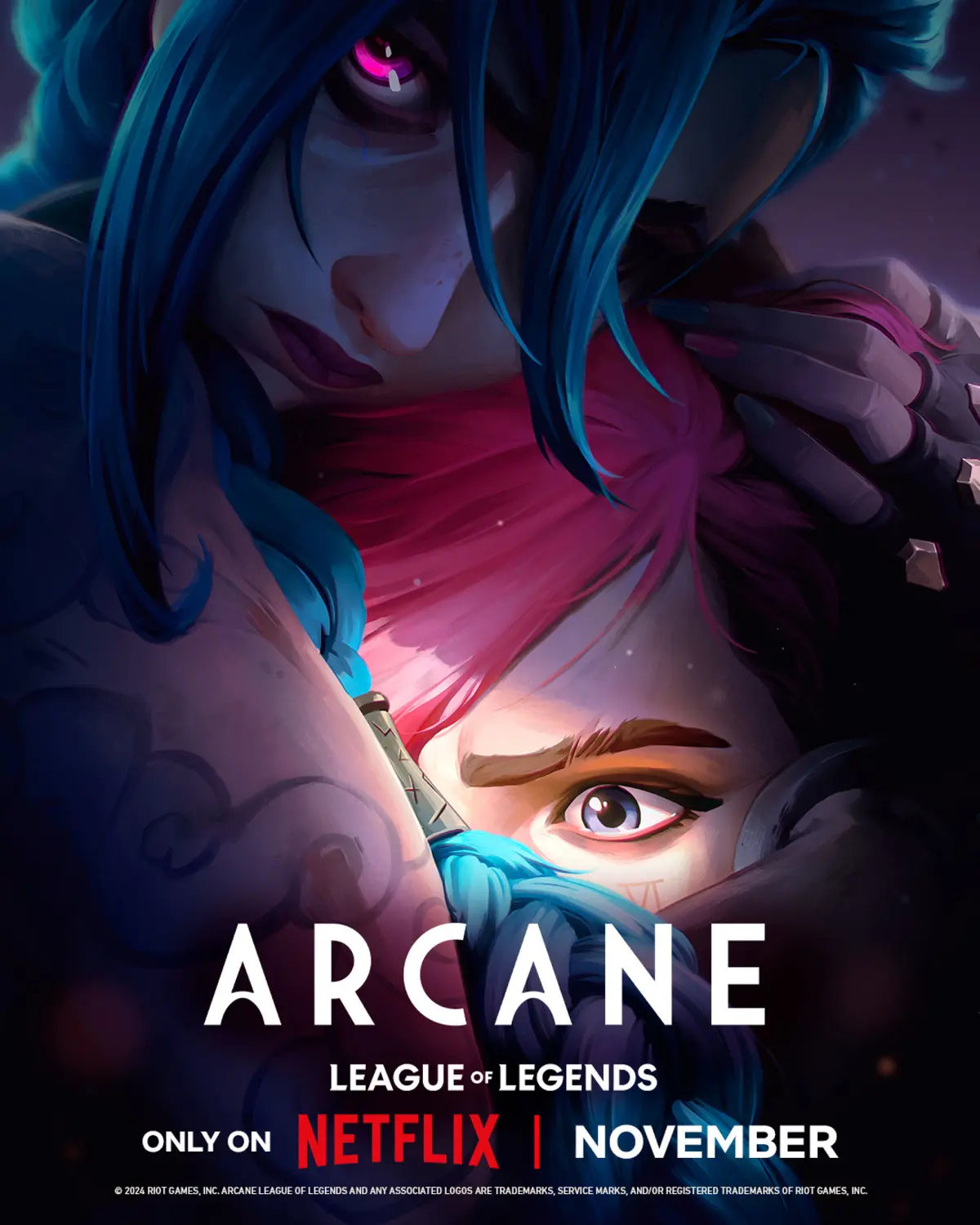
Vi and Jinx remain the emotional spine
Their bond is built from love, betrayal, guilt and incompatible memories of the same childhood. Vi represents the determination to keep reaching for what remains, while Jinx embodies the fear that the past has already made restoration impossible.
The final confrontation with Warwick (the ruined body of Vander) turns the family tragedy into action. Jinx's apparent sacrifice is devastating because she chooses to end a cycle she once seemed condemned to repeat.
Did Jinx really die?
The series gives grief the shape of certainty, then quietly inserts doubt. Caitlyn's discovery of hidden Hexgate cooling passages suggests a possible route of escape before the explosion, while the final visual signature preserves Jinx's mischievous presence.
The ambiguity does not cheapen the sacrifice. Whether she survived physically or only as an unresolved possibility, the scene completes her emotional decision to protect Vi rather than ask Vi to keep saving her.
Jayce and Viktor disappear into their idea
Their story asks what happens when progress stops serving people and begins redesigning them. Viktor's promised perfection threatens to erase contradiction, pain and freedom: the very imperfections through which Arcane defines humanity.
Jayce's final attempt to reach Viktor transforms opposition into recognition. Their disappearance can be read as death, transformation or ascension, but the emotional conclusion is clear: neither can solve the future without confronting what their shared dream became.
Loss gives the battle its meaning
Heimerdinger's sacrifice to return Ekko, Maddie's death after betrayal and Ambessa's final defeat are not interchangeable casualties. Each closes a different argument about knowledge, loyalty and power.
Ekko again embodies the value of a future built from care rather than domination. His presence reminds the finale that technological imagination is not itself the enemy; the question is whether invention protects human possibility or replaces it.
Every frame carries story
Arcane's animation continues to blur painting, graphic design, performance and cinematic camera language. Zaun's darkness and Piltover's engineered beauty are no longer simple opposites; both spaces fracture as their identities and technologies collide.
Music and editing become emotional architecture. Songs do not interrupt the story but reorganize time, memory and movement, while the voice cast carries grief with a precision that makes stylized faces feel entirely human.
An ending that opens other worlds
The second season is the official end of Arcane, but not necessarily of this animated universe. Hints toward regions such as Noxus preserve the possibility of other stories without turning the finale into an advertisement for them.
A few character outcomes remain deliberately uncertain, and the speed of the last episodes may frustrate viewers who wanted complete closure. Yet the ambiguity fits a series always interested in transformation more than final labels.
Final verdict
Final verdict
Arcane fulfills its promise. It ends as a human epic about love, loss, class and the dangerous hope of remaking the world. Some mysteries remain, but the emotional destination is complete, and the visual language is likely to influence animation for years.
AUDIENCE VOTE
Do you agree with the MB rating?
Choose once from this browser. You can change your answer at any time.