The review
An old tragedy shapes a new generation’s life
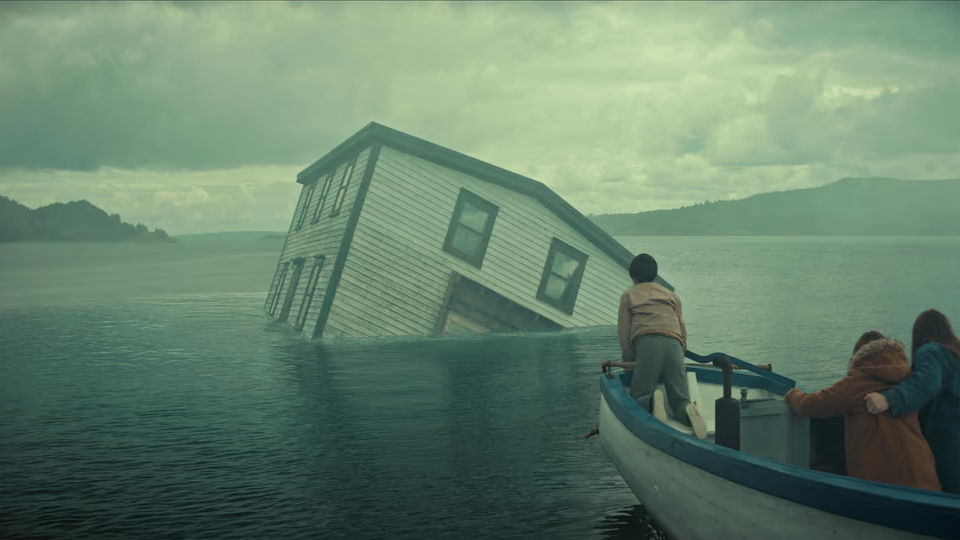
The series opens with the accident in which Calvin lost his father while the family home was being moved across the water, as residents relocated from isolated fishing communities to larger towns.
Losing both a father and a home in the same event gives it considerable force. What was supposed to carry the family into another life sinks with them, leaving Calvin with an image he has never been able to explain or move beyond.
Forty years later, that experience shapes his relationship with his son Wade. He tries to keep him away from fishing trips because, for Calvin, the sea remains a place capable of taking someone he loves in an instant.
We find this one of the writing’s most successful causal connections. Calvin’s fear is understandable, but it becomes a restriction on a son living under the influence of a tragedy that happened before he was born. The effects of loss pass from one generation to the next through behaviour that feels protective to the person practising it.
Josh Hartnett brings the character a warmth that helps us understand this contradiction. Calvin is a man weighed down by experience, expressing his love through a vigilance that can exhaust those on the receiving end.
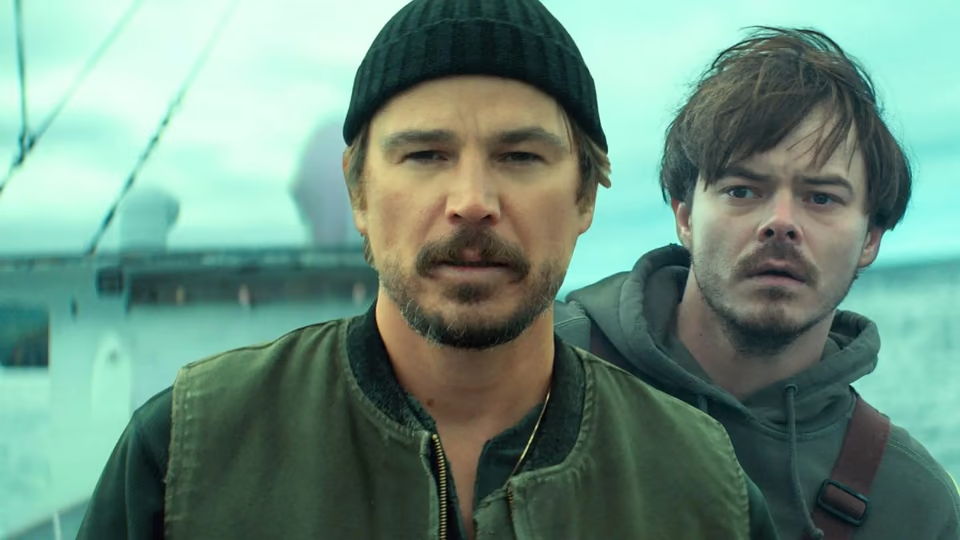
As Wade faces danger and changes associated with his condition emerge, their relationship becomes more closely connected to the central mystery. The father wants to save his son, but he must also confront what is happening before him rather than remain captive to the image that has followed him since childhood.
A family gives the danger faces we care about
Below benefits considerably from having a family whose problems exist before the threat arrives.
Jay returns owing money to dangerous people, Mary arrives with Noah, who is considering a commitment to her, and Ruth remains preoccupied with her life in town and the possibility of leaving. These threads give the family reunion sources of tension that do not all depend on the creature.
For us, this matters because the danger enters lives already in progress. The characters have obligations, plans and mistakes, and what happens rearranges their priorities and relationships.
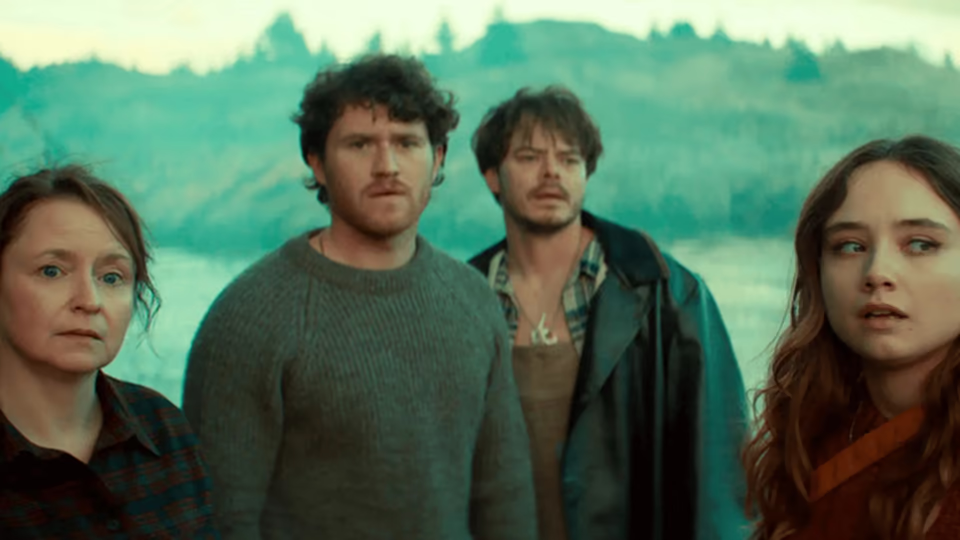
Rohan Campbell gives Jay a useful comic energy, particularly in the confusion surrounding his financial trouble. His storyline initially seems distant from the maritime mystery, before the intersection of the two threats becomes one of the story’s pleasures.
The other characters also help create the sense that returning home means returning to old relationships and mutual expectations. We see affection and tension within the family, giving us reasons to care about who will face danger and how that will affect everyone else.
These threads are not developed equally, however. Some gain clear value when they enter the main conflict, while others remain closer to background that gives the family life before receiving a more hurried treatment than they need.
The ensemble compensates for some of this unevenness. The familiarity between the characters makes their company enjoyable, even when the outcome of a storyline is weaker than its beginning.
Fonda and Calvin approach the sea in different ways
Marine researcher Fonda Howander brings an essential perspective to the story. She looks for evidence that can be examined, while Calvin carries inherited knowledge of the place and a personal memory he finds difficult to separate from the present danger.
Their partnership allows knowledge to be exchanged. Calvin knows the sea through work and experience, while Fonda tries to understand the phenomena and connect them to what she can observe scientifically.
We think the series makes good use of this difference when it gives each a reason to listen to the other. Local experience contains knowledge that cannot easily be replaced, but it remains affected by the fears of the person holding it. Scientific research needs accurate information about the place and its people to approach an explanation of what is happening.
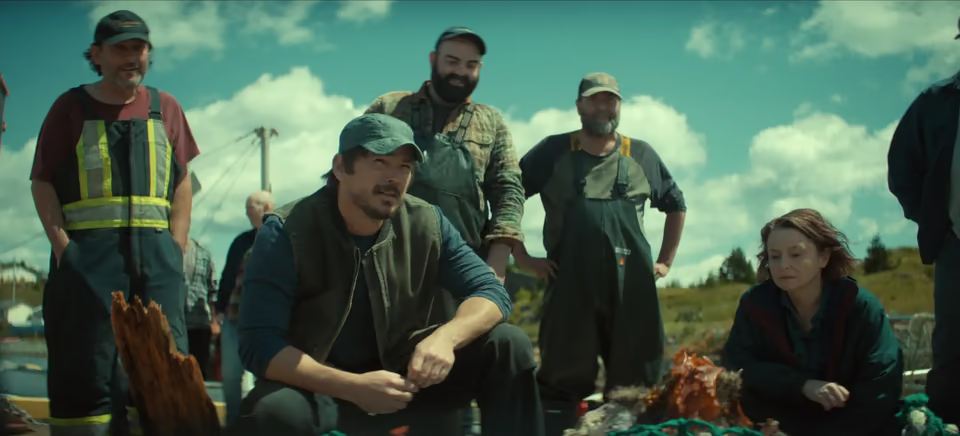
Mackenzie Davis gives Fonda a measured presence, helping to keep her role connected to situations and characters. She is an important source of understanding, but her value also comes from how she enters this community and responds to its crisis.
The emphasis on cooperation gives their relationship a productive direction. We follow how their readings of events change and how new information can force them to reconsider an earlier assumption.
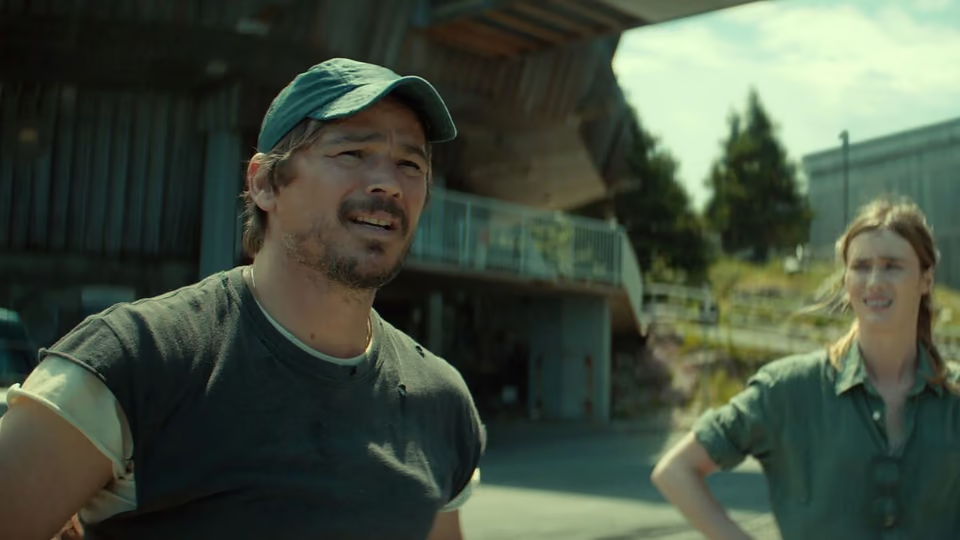
This is one of the elements that maintains the series’ balance between mystery and drama. At its best, explanation emerges from the interaction of two people with motives and limitations, becoming part of the conflict we are following.
Newfoundland gives the story its identity
The setting is one of Below’s strongest assets. The isolated Newfoundland fishing community gives events a distinct texture and makes the sea a presence in work, relationships and the very decision to stay.
The vast landscape and scattered settlements create the feeling that getting help or moving away from the problem will not be easy. When danger begins, the characters are tied to the very source threatening them: their daily lives depend on it.
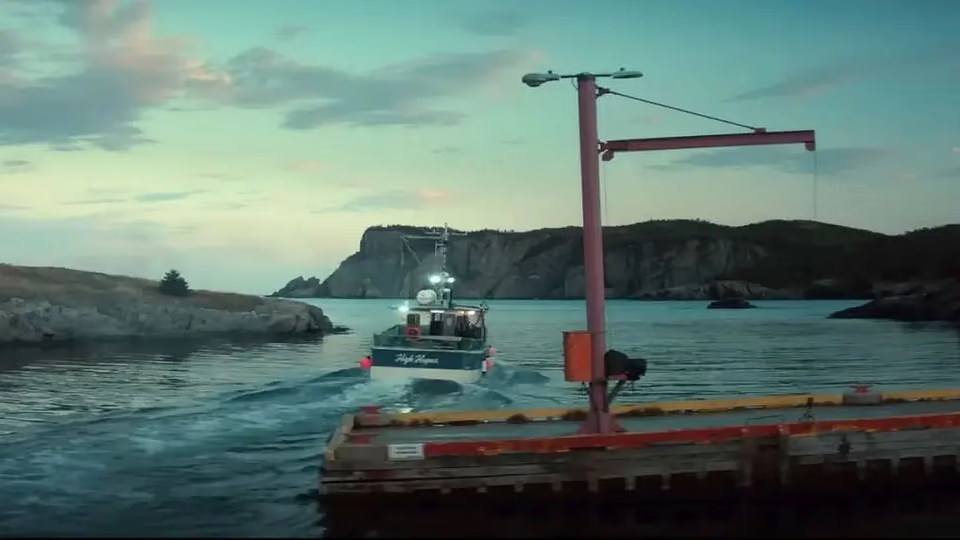
Resettlement and departure also enter the story’s meaning. There is a history of relocation and lost connections to place, and leaving remains a possibility for some residents. Attachment to the town therefore goes beyond personal comfort, becoming tied to a way of life its people fear will disappear.
The colour treatment supports this sense of isolation and gives the environment a coherent visual character. The location remains beautiful, but it also carries a desolation that makes the anxiety about what lies nearby and beneath its waters convincing.
The accents contribute to the local identity. Hartnett and Campbell’s commitment to them gives the performances an entertaining flavour, although the emphasis can occasionally draw attention to itself, and the degree of ease varies between actors.
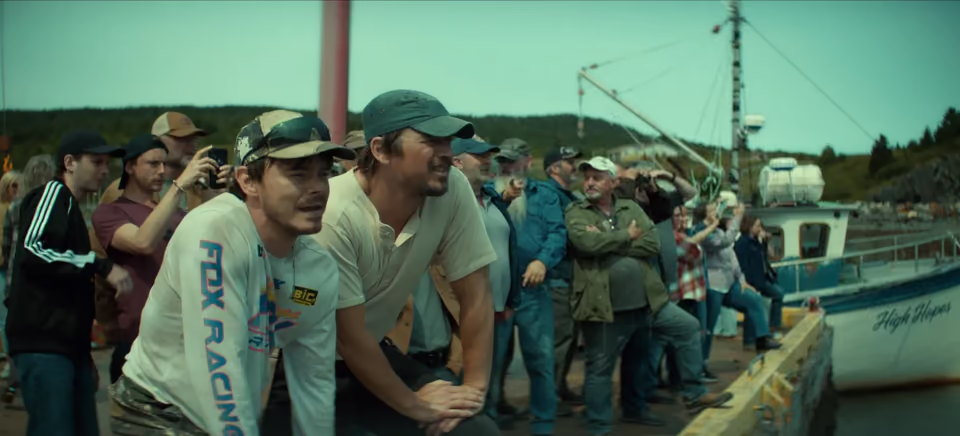
Interests that put profit before safety add a clear environmental dimension. The idea is familiar, but its connection to residents’ livelihoods makes it an appropriate part of the conflict and places human actions among the reasons the danger worsens.
The mystery works best when it leaves the viewer room
The opening episodes distribute information in a way that encourages continued viewing. The iceberg’s appearance, unnatural incidents and details that are difficult to explain open possibilities without supplying a complete answer too early.
Calvin’s memory of the enormous eye he saw before the disaster gives this construction an emotional anchor. We are following a possible clue while also understanding why he has never been able to leave the past behind.
As unusual thirst, hallucinations and physical signs emerge, the threat extends into the characters’ bodies and their perception of events. The question concerns what the danger changes within them as well as where it is located.
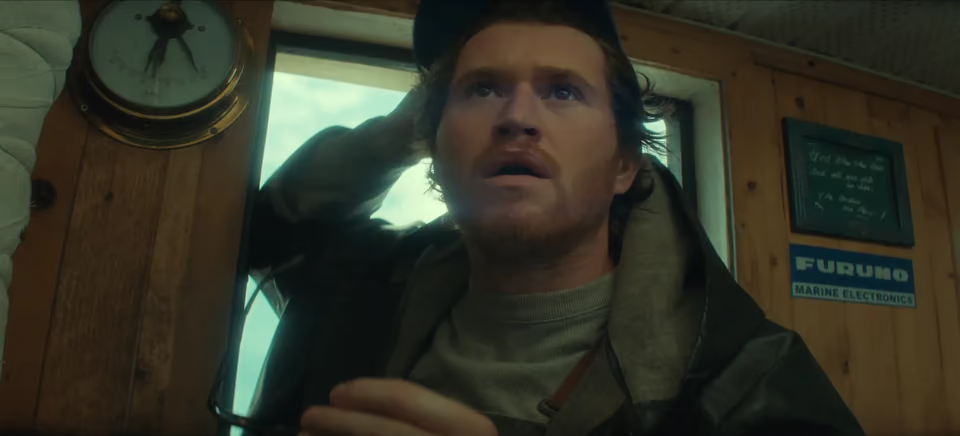
We consider this one of the series’ strongest phases because each piece of information can alter our understanding without closing off anxiety. There is progress, with room for anticipation still remaining.
The second half, however, becomes increasingly occupied with explaining the mechanism behind the phenomena. Some answers help draw the story together, while others give the danger clearer boundaries than the opening’s sense of dread benefits from.
Nor does every detail receive an equally satisfying payoff. The series introduces ideas and then explains them quickly, leaving too large a gap between their promise and the time devoted to their resolution. This does not prevent the show from being watchable, but it limits the mystery’s precision when considered as a whole.
The creature generates more anticipation than confrontation
Revealing a giant squid gives the series a clear maritime threat, whose effectiveness remains tied to how the show manages its presence.
At first, partial concealment serves the horror well. We see traces, incidents and glimpses sufficient to guide the imagination, while the expanse of water lets us feel a danger whose location is difficult to identify.
Maintaining this strategy raises our expectations of the moment when the encounter will become direct. As the season progresses, we need the creature’s presence to develop and to receive a payoff commensurate with the long preparation.
Here, Below is less convincing than it was at building atmosphere. There are gripping moments of danger, but the creature’s limited presence makes the escalation more subdued than the opening promised.
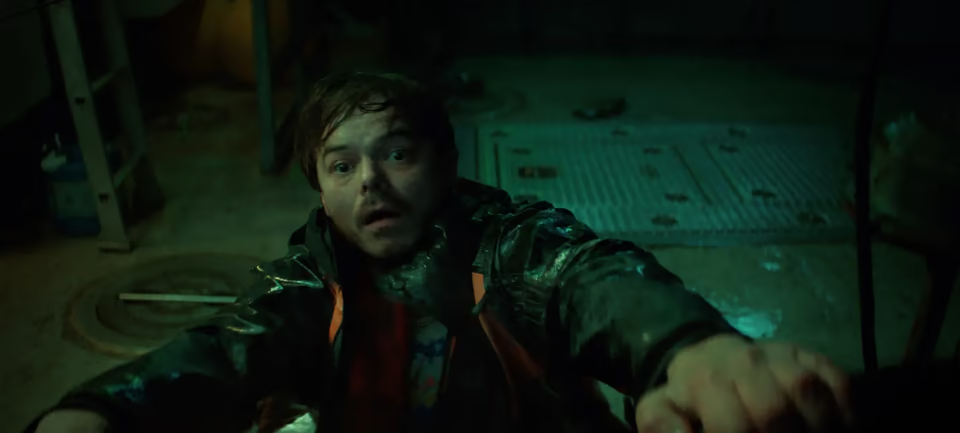
The digital effects are conspicuous in places, slightly weakening our sense that the creature exists within the environment. This unevenness stands out because the natural setting and the rest of the visual presentation do a good job of drawing us in.
For us, the series is stronger at making us fear a possibility than at delivering a confrontation. That can be accepted as a choice in a work combining horror with drama, but the balance would have been better had the threat itself received more powerful moments in the latter half.
Six episodes keep the story focused, with an ending quieter than its setup
The choice of six episodes benefits Below by preventing the mystery from stretching into exhausting territory and allowing a steady movement between information and developing relationships.
Even when the storylines vary in importance, there is usually something to draw us into the next episode. The family gives us an emotional reason to continue, and the mystery supplies fresh questions, keeping the viewing experience easy to enter and become absorbed in.
Even so, a change in the kind of momentum becomes noticeable near the end. There is less reliance on dread of the unknown, while explanations and consequences for the family come to the foreground.
We think the ending gives the story enough closure to be treated as a self-contained experience. Yet it does not deliver the strongest horror climax, and the resolutions of its threads do not match the anticipation preceding them.
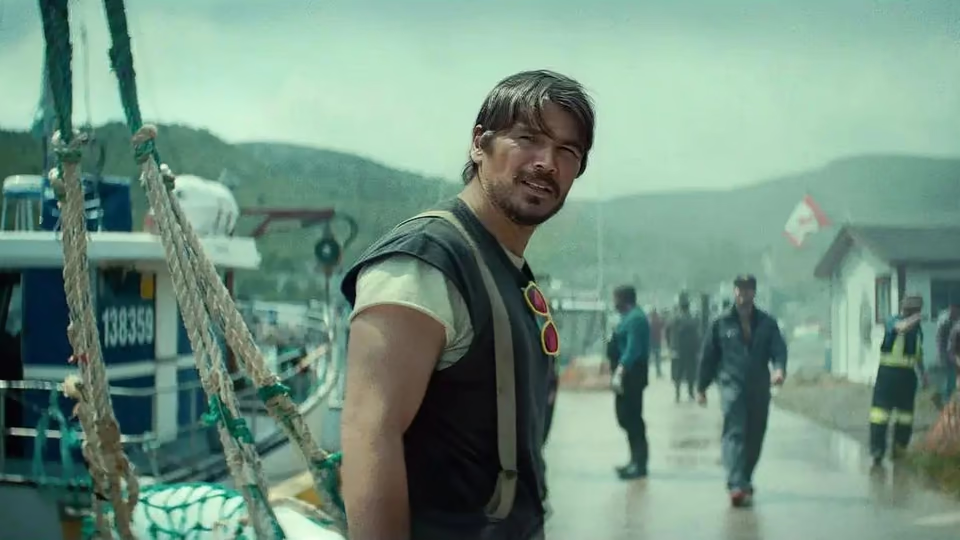
That explains the mixed impression the series leaves. Viewers attached to the family and their world may find enough in the outcome, while those awaiting a greater escalation in the encounter with the creature may feel that the ending falls short of their expectations.
For us, the destination remains reasonably satisfying, but it needed a moment combining mystery, danger and emotion with the same strength the beginning possessed.
Final verdict
Final verdict
We think Below offers an enjoyable and mostly cohesive experience, thanks to a family that is easy to care about, good performances from Josh Hartnett, Mackenzie Davis and the surrounding ensemble, and a setting that gives the story a clear identity. Its chief successes are Calvin’s relationship with Wade, the atmosphere of the opening episodes, and the connection between the sea and the residents’ livelihoods and memories. Its relative brevity also helps sustain enthusiasm. On the other hand, explanation increases at the expense of some of the dread, the payoffs of the supporting storylines vary, and the creature’s presence and the final rewards remain less powerful than the setup promises. We recommend it to viewers who enjoy mystery and family drama in an unsettling maritime atmosphere. It makes caring about its people an essential part of the pleasure, even when its horror does not reach the anticipated peak.
Your turn
Was your attachment to the Penney family enough to make up for the creature’s limited presence, or were you expecting more horror from it?
AUDIENCE VOTE
Do you agree with the MB rating?
Choose once from this browser. You can change your answer at any time.