
The review
Pamela Gives the Story a Centre Worth Following
The series' most important decision is to give Pamela Voorhees enough space for us to understand her before anger settles within her and reshapes her relationships with the world.
Linda Cardellini carries this decision through a performance combining tenderness, fear and the capacity for violence. We believe her attachment to her son and understand how much they need each other, while aspects gradually emerge that make sympathising with her uncomfortable.
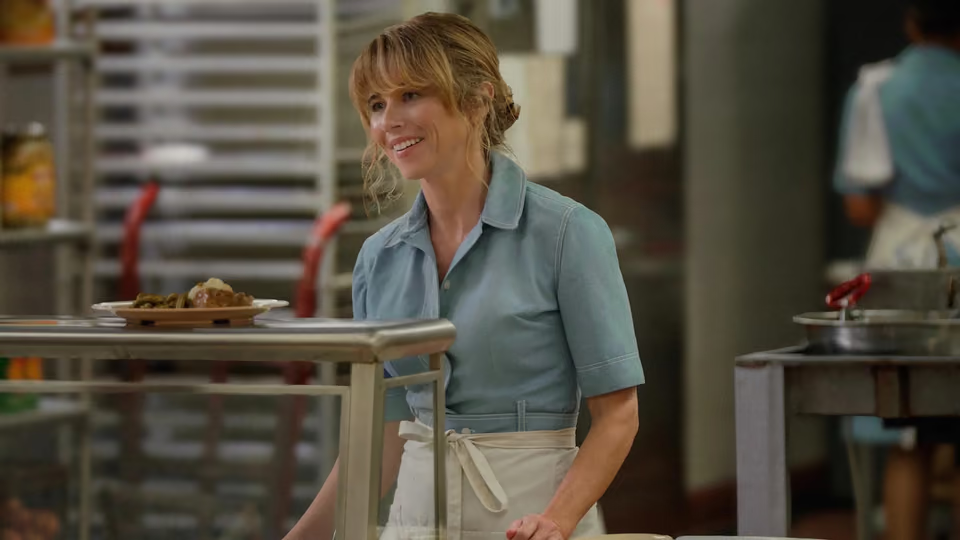
The performance's strength lies in keeping these aspects connected. The woman who cares for her child and tries to protect him can treat others with extreme cruelty and use her love to justify crossing boundaries. As events escalate, the question of what she might do in the name of this love begins to drive the scenes.
Her mysterious past also gives her an existence preceding the tragedy we know. Pamela arrives in town carrying fears and experiences, so her descent seems connected to a long accumulation that losing Jason accelerates and sends in a more destructive direction.
We find Cardellini particularly effective when sincere need becomes difficult to separate from manipulation. We may feel that she is seeking safety, then discover that obtaining it requires putting someone else in danger.

This complexity makes Pamela the season's strongest point of focus. The closer the writing stays to her choices and their consequences, the more distinctive and coherent the series becomes.
Jason as a Child Changes the Legend's Impact
Introducing Jason at eleven gives the story an important opportunity to rebuild our relationship with him.
Callum Vinson plays a child with interests and curiosity, seeking acceptance amid repeated bullying because of his physical difference. These details give him a life we can imagine continuing, so his absence has an impact beyond being a familiar event that must happen to set the story in motion.
His relationship with Pamela helps considerably. Their moments of affection make her attachment understandable and give the loss emotional weight when it begins to change her behaviour.

His friendship with Grace also adds a moving perspective. In the lake incident, his attempt to retrieve the ball is tied to his wish to keep her out of trouble. The action reveals the child's kindness and connects the incident to a human relationship whose effects will continue after his disappearance.

For us, this addition works because it changes the event's meaning through the character's motives. We remember that Jason was trying to do something for a friend, and that someone besides his mother cared about him.
Works of this kind nevertheless need to avoid turning every small detail into a signpost towards the future. The series is most affecting when it lets Jason inhabit a scene as a child and allows our prior knowledge to create the pain on its own. Vinson's performance achieves an important part of this balance, giving his relatively brief presence a lasting effect.
Grace Makes Protection an Ambiguous Relationship
Grace is one of the season's most important additions because her relationship with Pamela gives motherhood a new direction after Jason's absence.
The girl comes from an abusive home and clearly needs someone to protect her. Pamela, in turn, needs to continue being a mother. Their growing closeness is understandable, but what each needs does not guarantee that the relationship will be safe.
The violent intervention that ends with Grace losing her mother places this ambiguity at the story's centre. Pamela can remove her from danger while also pushing her into another experience of loss and binding the girl to her in a more complicated way.
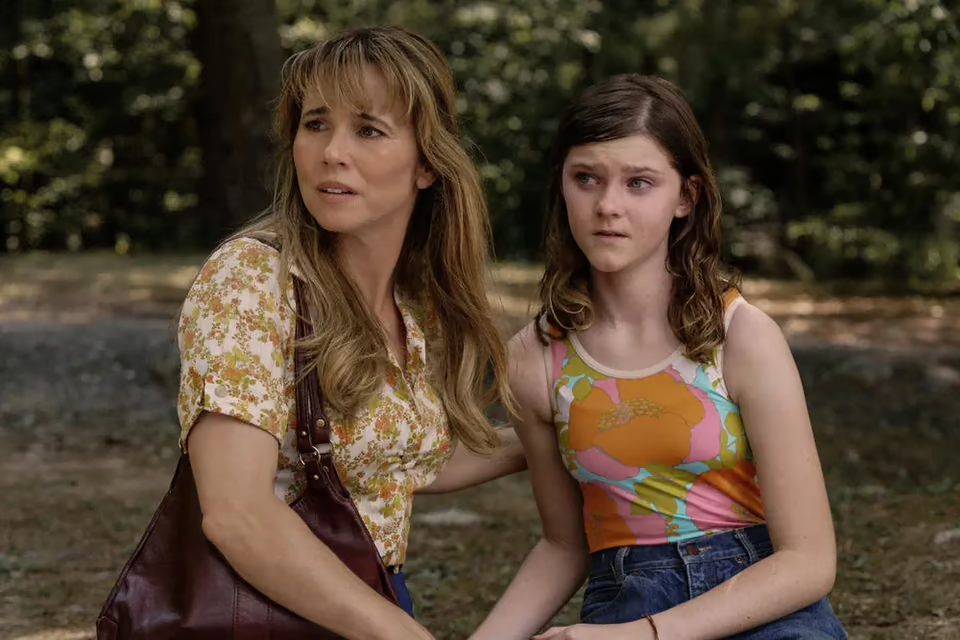
We see the series posing one of its best questions here: what happens when protecting a child means bringing them into their protector's world, with all the anger and violence it contains?
Grace is influenced by Pamela and learns to resist, but the strength she gains also carries the possibility of becoming implicated. Her movement from fear to action becomes a path worth watching, especially when her need to belong intertwines with the difficulty of questioning the actions of the person who gave her that belonging.
Her presence also connects Jason's story to what follows, rather than leaving his loss as an isolated event. She carries the effects of their friendship and later helps reshape his mother's relationship with others. Gwendolyn Sundstrom therefore gives her a significance beyond the function of a supporting character.
The Town Expands as Its People's Contradictions Emerge
An eight episode season needs a world capable of supporting everything around Pamela, and the series builds that world with varying success.
One of its strongest elements is Sheriff Levon Brooks, whom William Catlett gives a presence combining responsibility, empathy and a past he would prefer to keep at a distance. His relationship with Pamela opens a productive space between trust and suspicion, allowing the actors to create scenes in which it is difficult to determine everything either person feels.
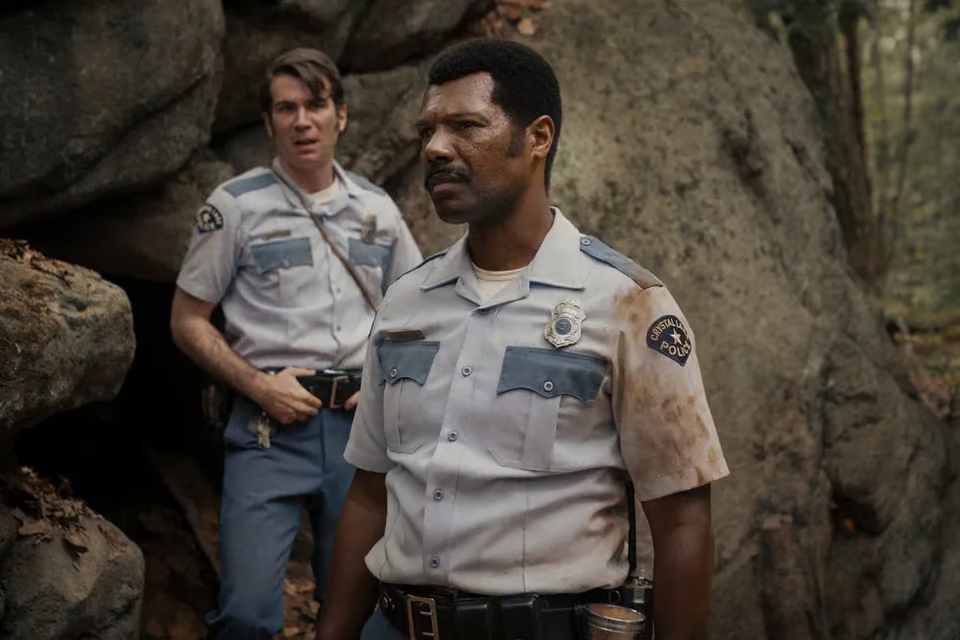
We believe genuine closeness is possible, while Pamela's need for protection remains present. She benefits from his position without the performances giving us an easy answer about the limits of her interest in him.
Levon's position within a racist environment also creates an obstacle to his work. He must deal with crime and challenges to his leadership at the same time, making his insistence on holding his place within the law part of the conflict.
Ralph benefits from being given a past connected to war and its effects. His warnings and behaviour acquire a background that helps us understand him, rather than leaving us only with the image others construct of him.
Some townspeople, however, remain closer to familiar television types. Characters given more detail, such as Claudette, benefit from misunderstandings and contradictions between intention and outcome. The less developed characters fulfil a plot function and then become difficult to remember as independent people.
Violence Sustains Horror's Energy and Tests the Tone
The season is clear about its desire to present shocking violence, giving most episodes a confrontation or a prominent bloody moment.
What makes these scenes effective is their occasional ability to move between fear and ironic exaggeration. The early confrontation in the first episode announces that the series will retain the genre's energy even as it adds a heavier emotional background to its characters.

Practical effects give many moments an immediate impact, though the level of conviction is not entirely consistent. Some scenes benefit from shock and brevity, while others expose their limitations when they linger on the result.
One of the season's most successful choices is to return to familiar events from the original film and reconsider the characters' positions within them. Grace's connection to these events gives them a different meaning because we carry the history of her relationships with Pamela and Jason with us.

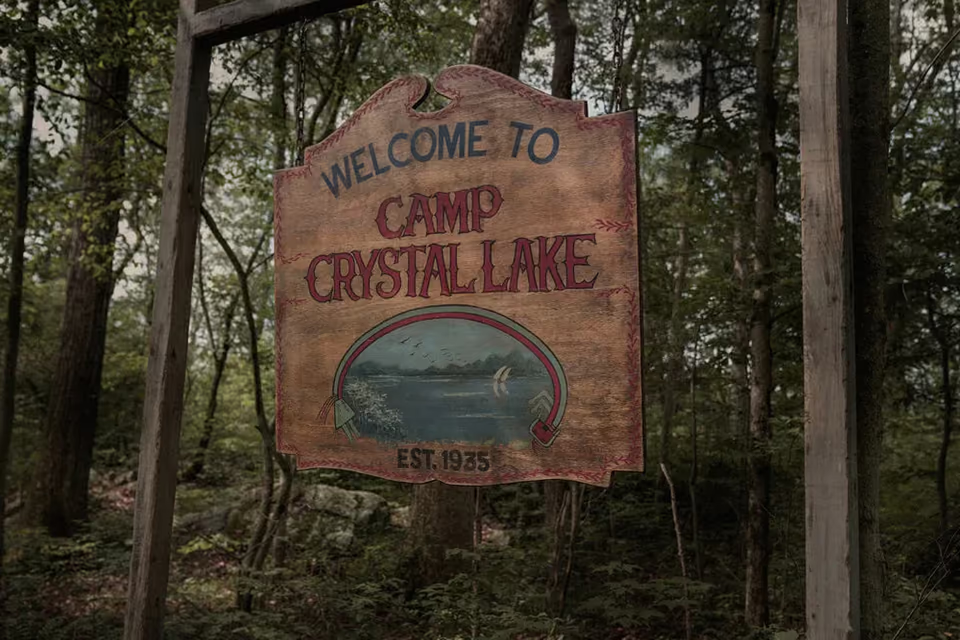
The construction of the location also helps the horror cohere. The green landscape and roads leading to the camp give the area memorable features, and the characters' presence within it becomes part of the experience.
We find the greatest success when violence affects a relationship or a character's path. The scene then stays with us beyond its initial shock. Exaggeration alone offers a momentary pleasure less affecting than passages that combine fear with loss or involvement.
The Pacing Falters When the Central Conflict Recedes
The season does not consistently sustain the strength of its opening. After the concentrated beginning, some episodes slow down as they expand the past and introduce the town's relationships.
These spaces are necessary to build a television world, but some need to be tighter. The second episode, for example, contains information and relationships with room to develop, yet their distribution creates the impression that dramatic movement has receded before an equally strong alternative has settled into place.
The problem returns near the end, when considerable space is devoted to revisiting the past. Explanation matters, but its timing interrupts momentum that needed to continue, especially once the characters face immediate dangers.
We can appreciate the formal choices accompanying this return, including a different aspect ratio, while remaining reserved about how much time it takes.
For us, the measure of a successful expansion is what it changes in the present. When the past reveals a reason that makes us read Pamela's decision differently, we feel its value. When it merely fills in the background, it becomes closer to an explanation that could be shortened.
This makes the episodes closest to Pamela's relationship with Grace and the consequences of violence within the camp feel more coherent. Information, relationship and danger develop together, revealing what this project can achieve when its elements gather around a clear conflict.
Secret Experiments Expand the Story and Reduce Some of Its Mystery
The season's biggest risk is connecting Pamela and Jason's past to secret experiments, Elias and the organisation he works with.
This addition explains an old fear and connects the mother and son's escape to a danger capable of reaching them again. It also helps bring pieces of their background into a single thread.
It also pushes the series towards a familiar conspiracy, and viewers may feel they have moved from family horror and a local tragedy into a system requiring considerable explanation.
We see Jason's power within this story as having always been connected to what cannot be fully grasped. Each additional answer offers understanding but takes away some of the unease produced by mystery.
The issue becomes more sensitive when these explanations sit alongside Pamela's relationship with her son. The season leaves her sense of his presence open between the effects of grief and the possibility of a deeper connection, a useful space worth preserving.
The risk is therefore interesting, but less successful than the human relationships. Pamela, Grace and Jason give the events their particular character, while the explanatory side needs greater selectivity to preserve that distinction.
The Ending Rewards the Mother and Son's Bond but Leaves Gaps Around It
Jason's return alive, with different strength and size, gives the season a moment the audience has been waiting for and restores his relationship with Pamela to the ending's centre.
His intervention against Elias and his men connects past and present, making the son able to protect the mother who has spent the season attached to his absence. This exchange gives their encounter emotional value, despite its brevity and its ending with Jason leaving again.

We find that the ending succeeds in leaving the relationship open and painful. Finding Jason does not restore their former life, and his appearance cannot simply erase what Pamela has endured.
The surrounding threads do not receive the same closure. Levon and Briana's paths deserve a clearer pause after their role in helping Pamela, while Grace's earlier presence seems stronger than the space she receives in the final reckoning.
The final confrontation lasts long enough to feel like conventional action suspense at times, whereas the season had built a more distinctive horror through its relationships.
These reservations limit the ending's completeness without cancelling what has accumulated before it. Pamela and Jason's encounter remains moving because the series gave us a reason to care about them beyond the images we already knew.

Final verdict
Final verdict
We see the first season of Crystal Lake as justifying a return to this story through Linda Cardellini's performance, its human presentation of Jason and the complex relationship between Pamela and Grace. It also retains the energy of bloody horror and gives the town and its characters room to add to the world. The pacing varies, however, some explanations weigh on the story, and not every thread receives an ending suited to what it contributed. The additions to the legend's origins are more debatable than the series' success in building its main characters. The result is a strong, suspenseful season whose best moments turn love, loss and the need for protection into sources of danger. This gives violence an effect beyond shock and makes Pamela a character who deserves this extended space.
Your turn
In your view, did the secret experiments deepen Pamela and Jason's story, or reduce the mystery that gives it its power?
AUDIENCE VOTE
Do you agree with the MB rating?
Choose once from this browser. You can change your answer at any time.