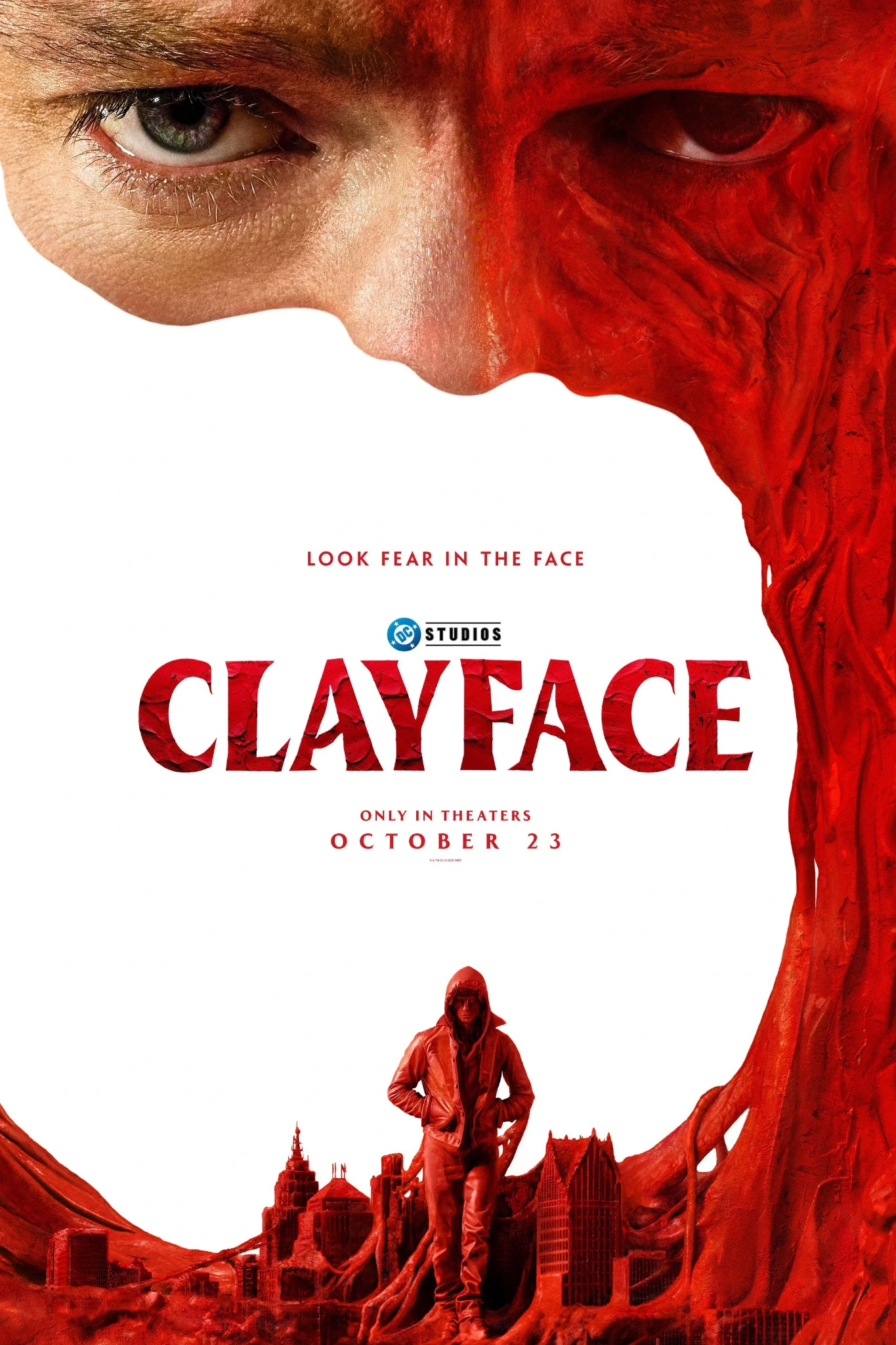
The review
Screenplay and dialogue: the face as identity and livelihood
The film introduces Matt Hagen at a striking moment of professional ascent. An actor who has earned an Oscar nomination, he now has opportunities he could never have imagined during his modest beginnings.
Everything collapses after gangster Marcus Szabo brutally attacks him because of his relationship with Mia, who is involved with Szabo.
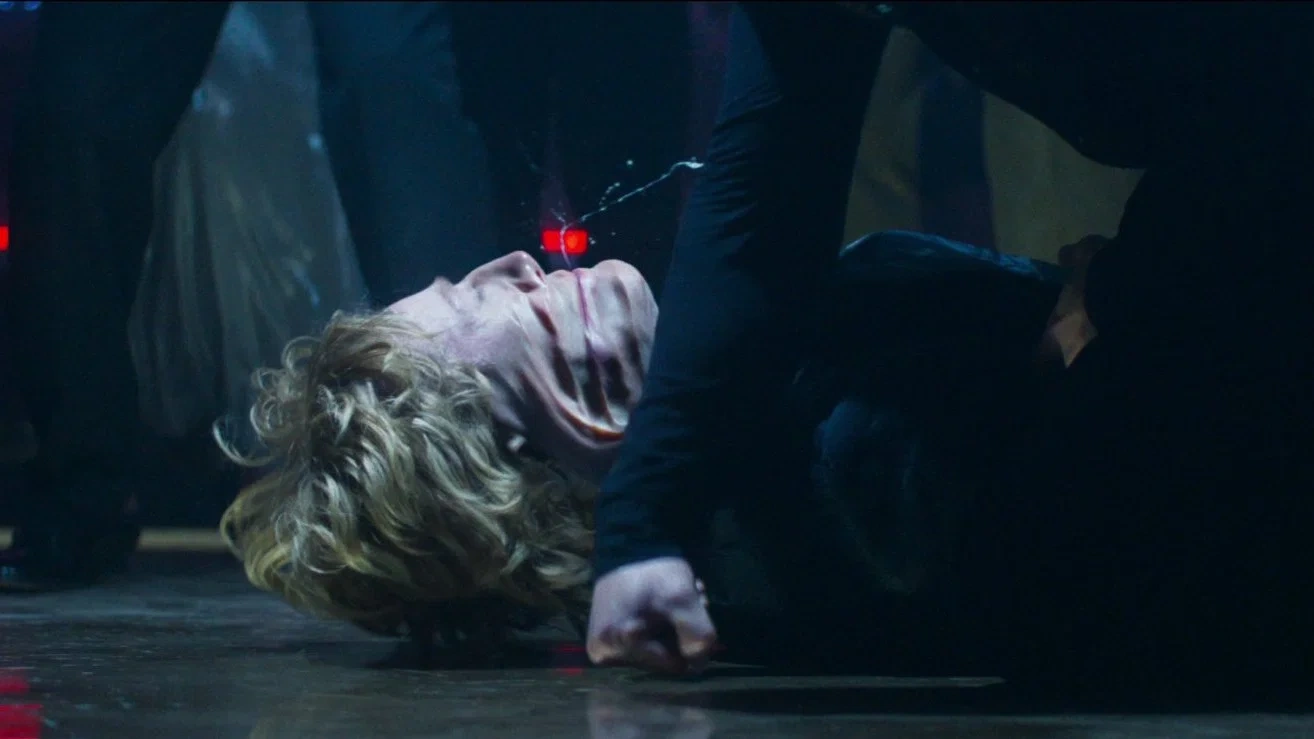
The opening's cruelty lies not only in the assault, but in what follows.
Matt loses more than his features: he loses his roles, money and social position. People who shared his success abandon him, surgical attempts fail to repair the damage, and the judicial system does not provide the justice he expects.
Gotham becomes more than a corrupt city. It is the environment exposing how much more fragile the conditions supporting Matt's career were than he had imagined.
His talent did not disappear when his face was disfigured, nor did his acting experience become worthless overnight. Yet those around him behave as though his ability to work has ended completely.
This gives his determination to recover his appearance a meaning beyond vanity.
We can recognize narcissism in his attachment to his old face. At the same time, he is trying to recover his livelihood and place in a society that offers him no chance to continue with his new appearance.
This becomes clearer when he returns to the red carpet after the initial treatment succeeds. He chooses no private place to celebrate his recovery, but returns to the environment that rejected him, as though he must prove his right to exist before the very people who excluded him.
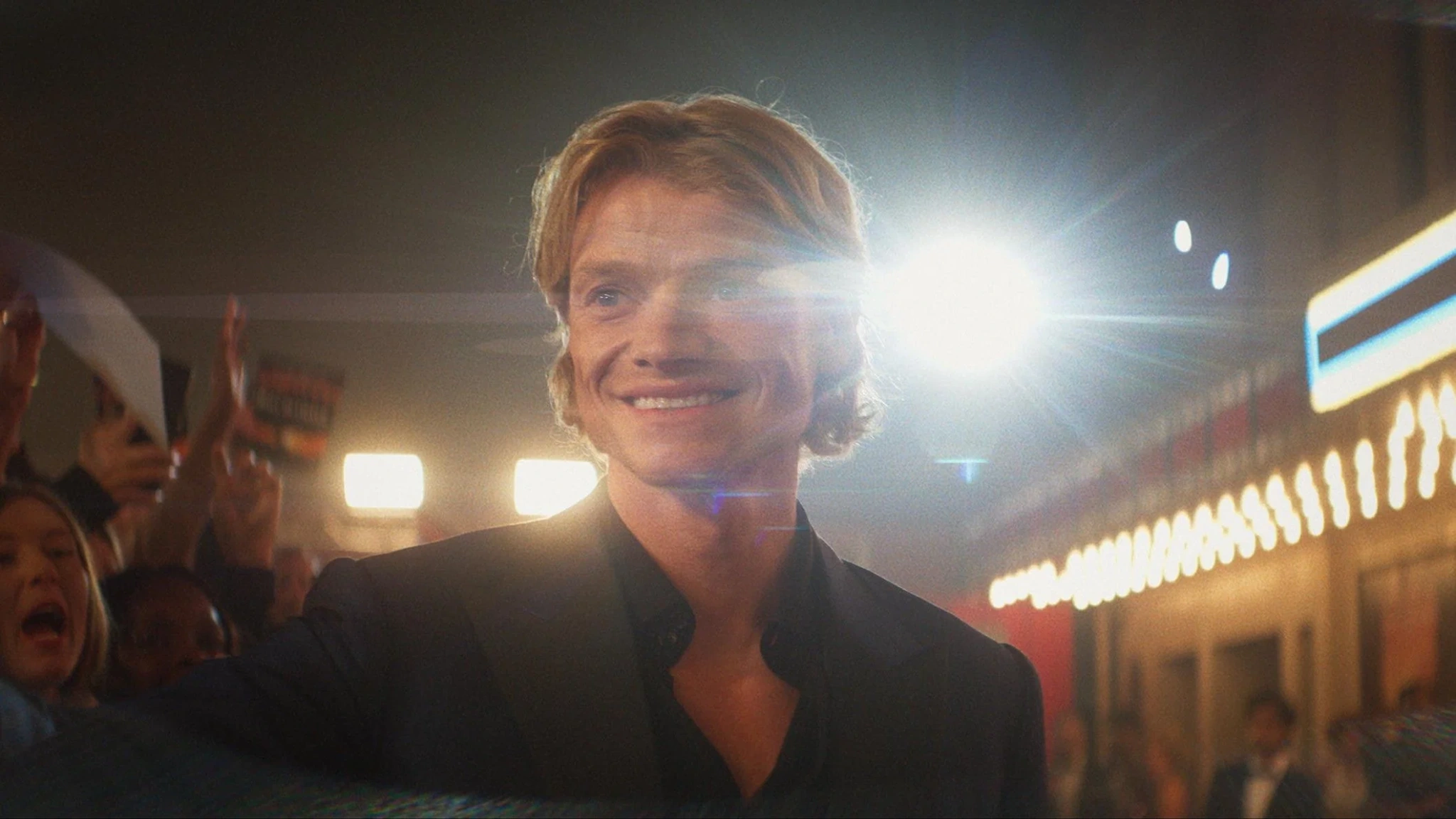

Mike Flanagan and Hossein Amini's screenplay thus establishes real sympathy for the character, even when we recognize that Matt himself is not without fault.
The film does not need to make him a perfect person for what happened to him to be tragic.
Caitlin and the experiment: mutual need and ethical responsibility
Dr. Caitlin enters Matt's life as an opportunity to recover what he has lost.
She is developing a technology that uses microscopic particles to repair tissue and nerves. Her research, however, has not received the recognition or support it deserves after financiers appropriated the fruits of her work.
This background gives her decision to help Matt an important complexity.
On one hand, a doctor faces someone in genuine despair whose life her experiment could change. On the other, she knows the technology is not ready for human trials and that its success could restore the scientific recognition she has lost.
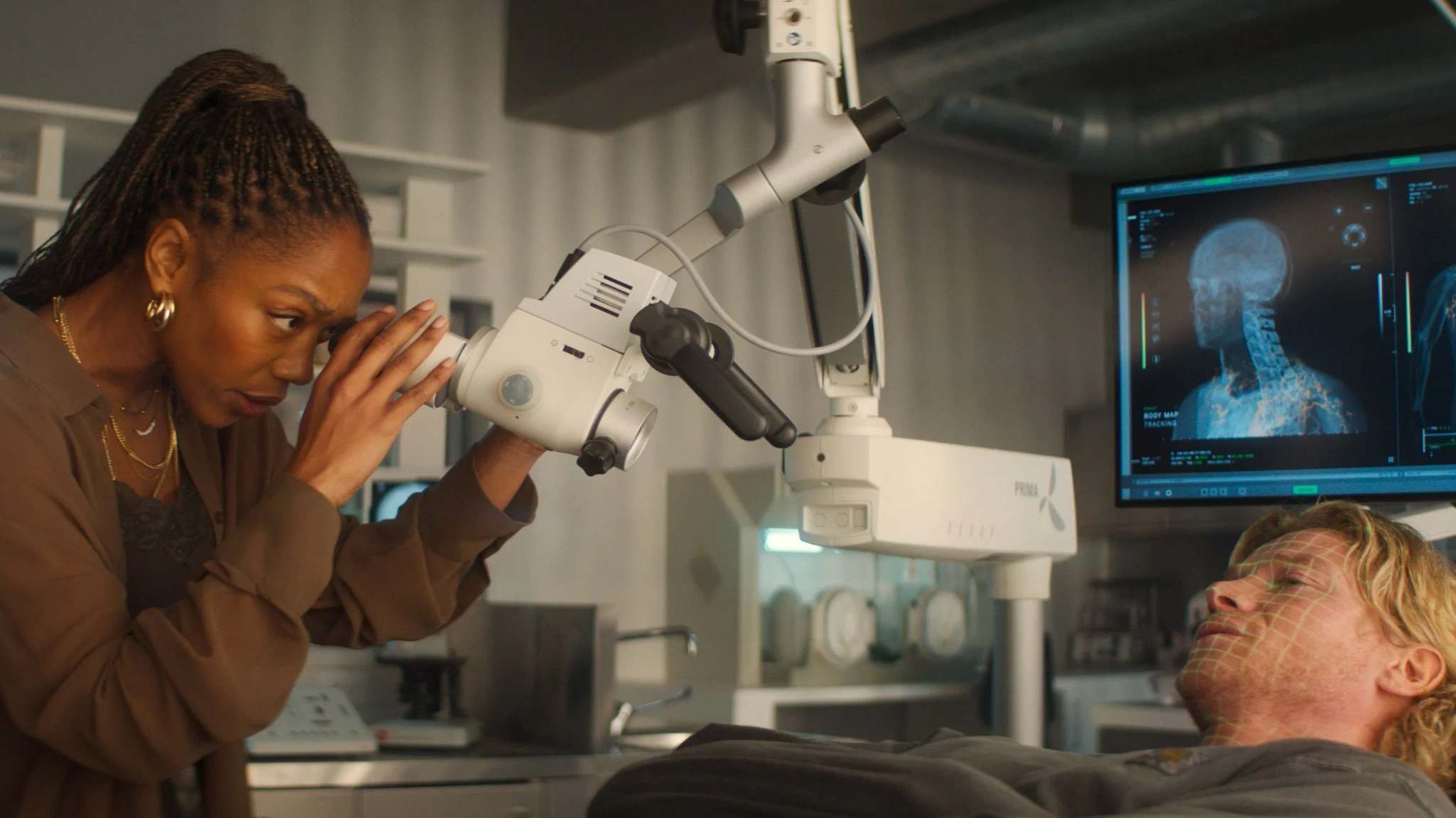

Matt is therefore not the only one awaiting something from the treatment. Caitlin also sees in it a chance to save her professional project.
This relationship between mutual need and ambition makes the science more interesting than a simple mechanism for giving the character superpowers.
The ethical problem concerns more than Matt's consent to the experiment. It also involves the circumstances making him willing to accept its risks. A man who has lost almost everything may regard an uncertain treatment as his last chance, even if he cannot fully assess its consequences.
Naomi Ackie's performance gives Caitlin a human presence suited to this dilemma. She is neither a mad scientist trying to invent a monster nor a rescuer motivated only by compassion. She is trying to do something useful while her personal motives overlap with her professional responsibilities.
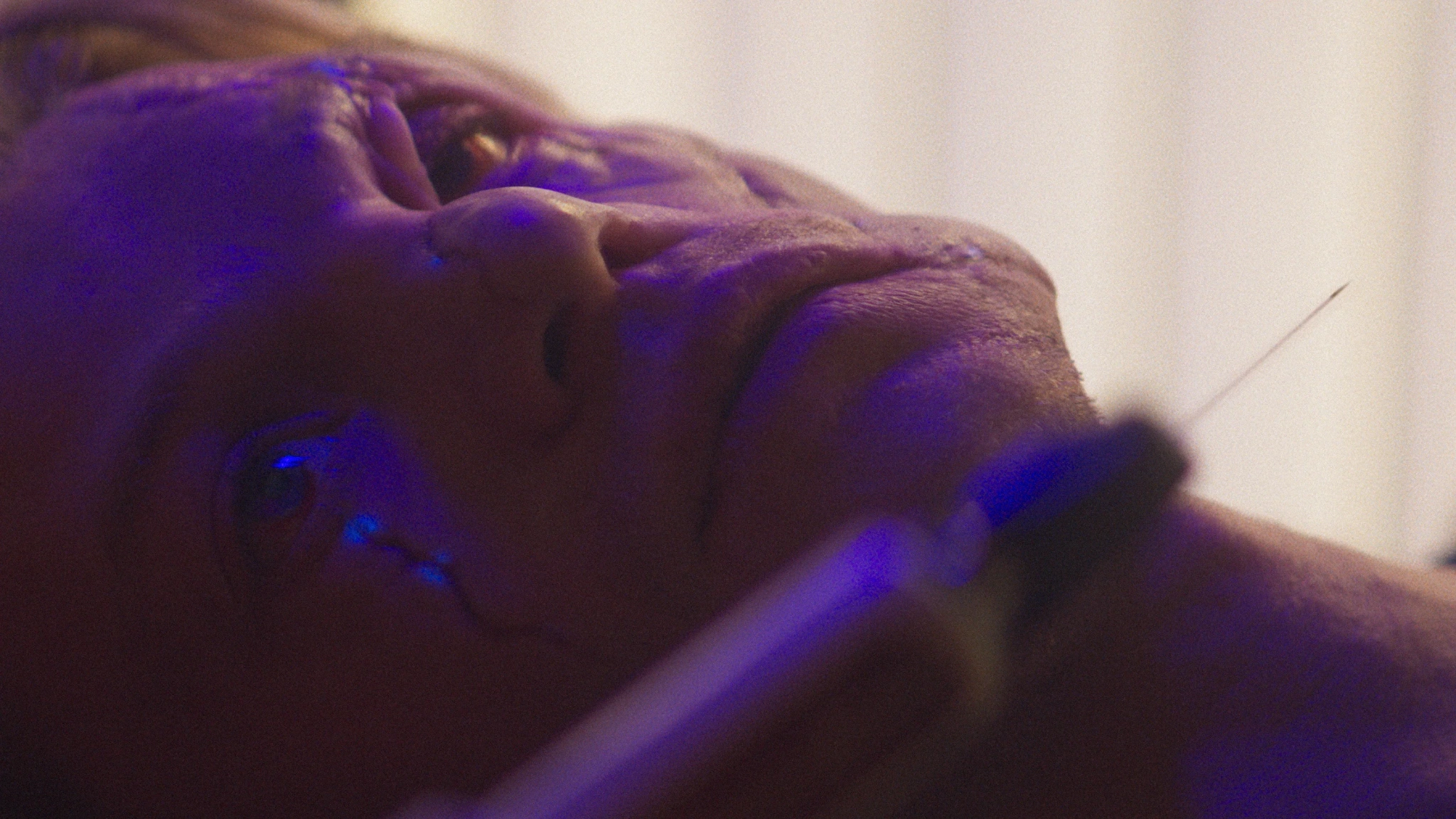
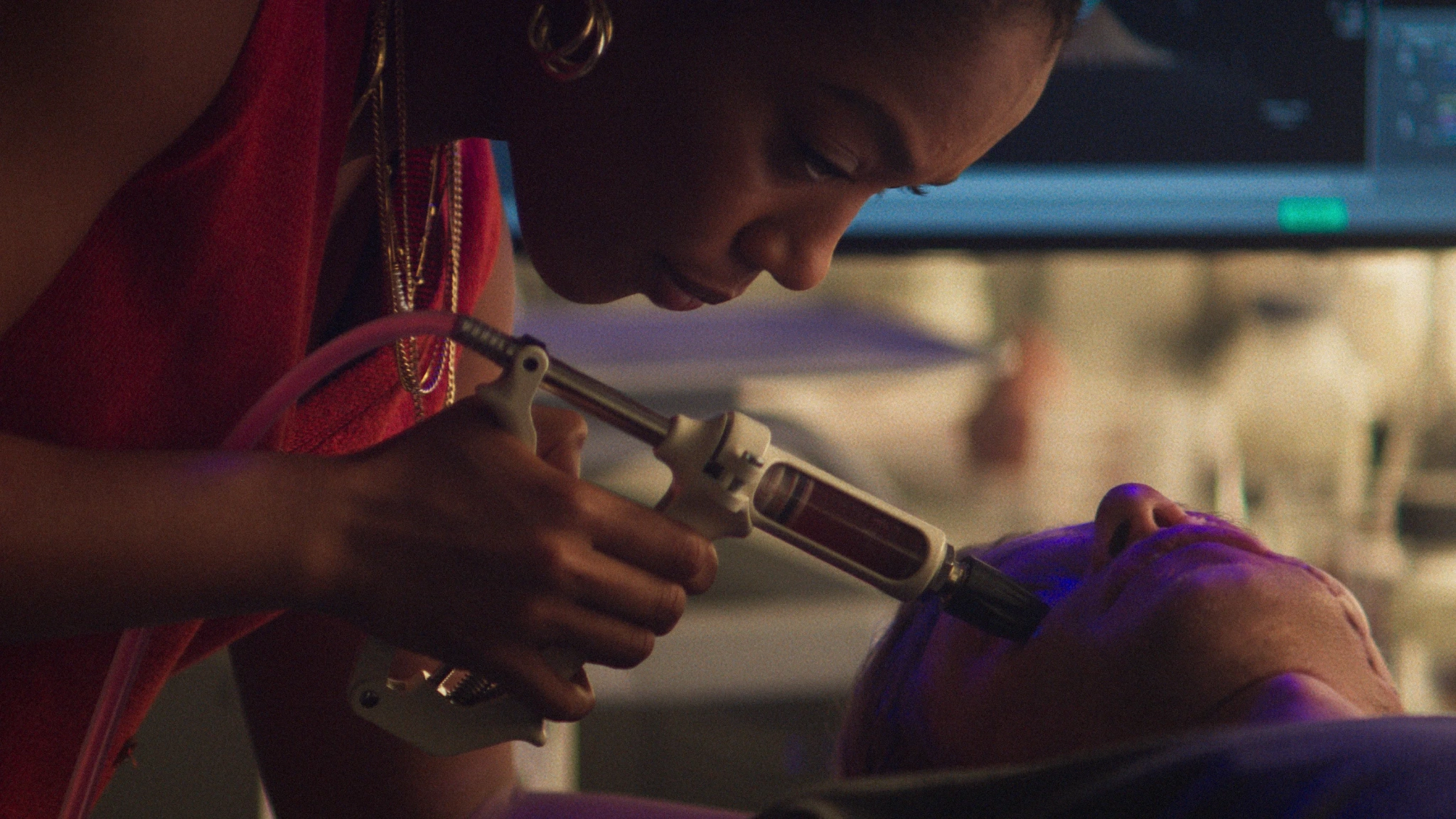
The film does not explore this relationship with the same depth throughout, however.
Matt and Caitlin's growing closeness has clear emotional and psychological possibilities, particularly once she becomes the person he turns to when others abandon him. Yet his attachment sometimes develops faster than the screenplay can make convincing.

Caitlin's relationship with Detective John, who later investigates the crimes connected to Matt, makes matters more complicated.
This connection serves the plot and efficiently brings the characters' paths together, but it sometimes makes the romantic relationship feel more like a device for advancing events than a fully developed human conflict.
Body horror: when regeneration becomes a source of helplessness
If the film poses its most interesting questions through its characters, it delivers its best moments when it makes the experiment's consequences tangible.
The horror comes not only from the disfigured body's appearance, but from a person losing control of functions they used to perform naturally.
The airplane scene expresses this idea particularly well.
As tissue begins growing over Matt's eyes, he finds himself unable to see and tries to use small scissors to remove what is obstructing his sight. The plane's movements make the attempt more difficult and dangerous.
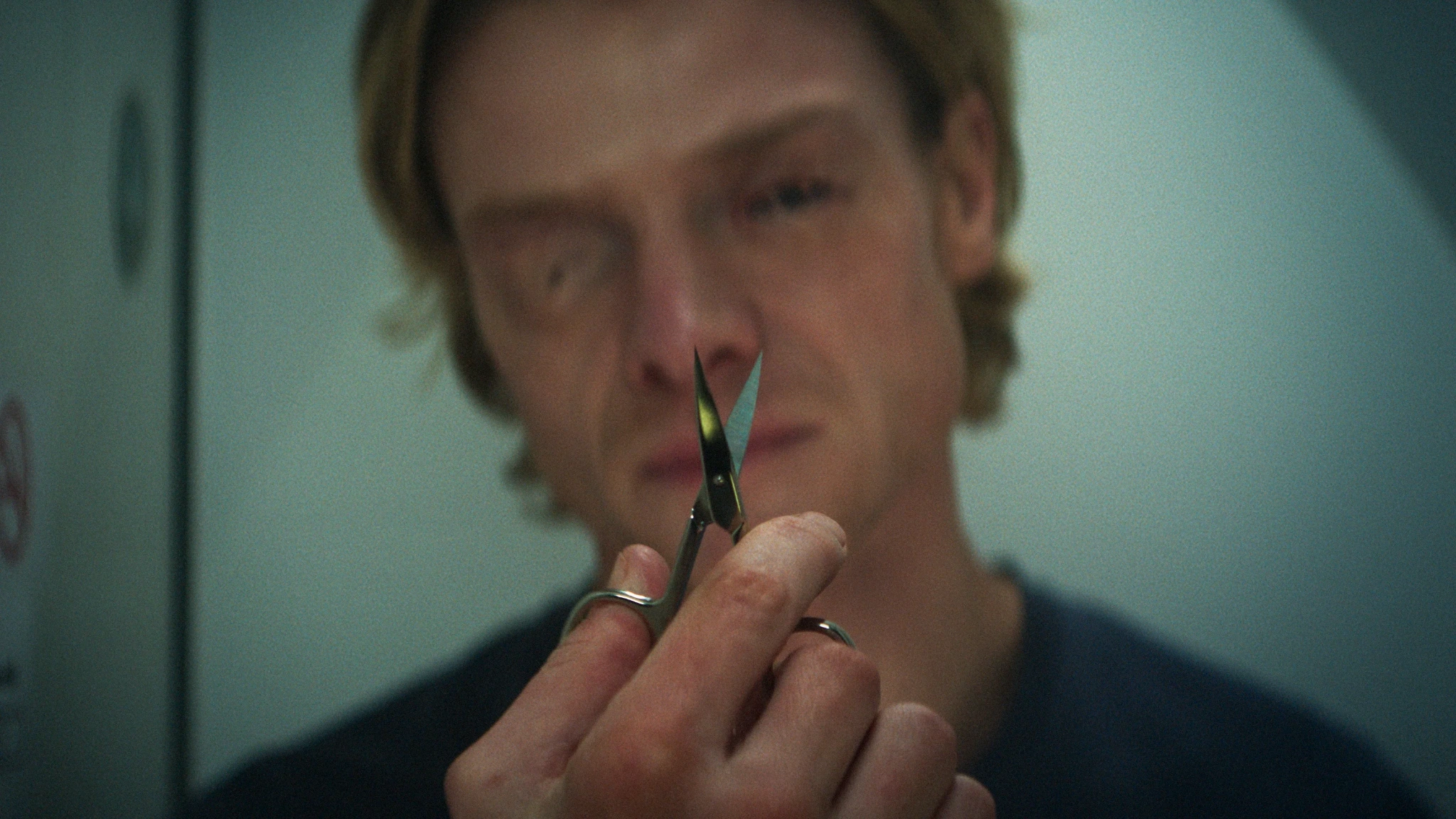
The scene relies on a clear set of obstacles: confined space, disappearing vision, a sharp instrument requiring great precision, and a body that continues changing without its owner's permission.
Watkins needs no lengthy scientific explanation to make the danger understandable.
We need only imagine being unable to perform something as simple as opening our eyes, while an attempt to fix the problem could inflict greater damage.
This is one of the film's main strengths: it makes physical regeneration, usually associated with strength and healing, a source of pain and helplessness.
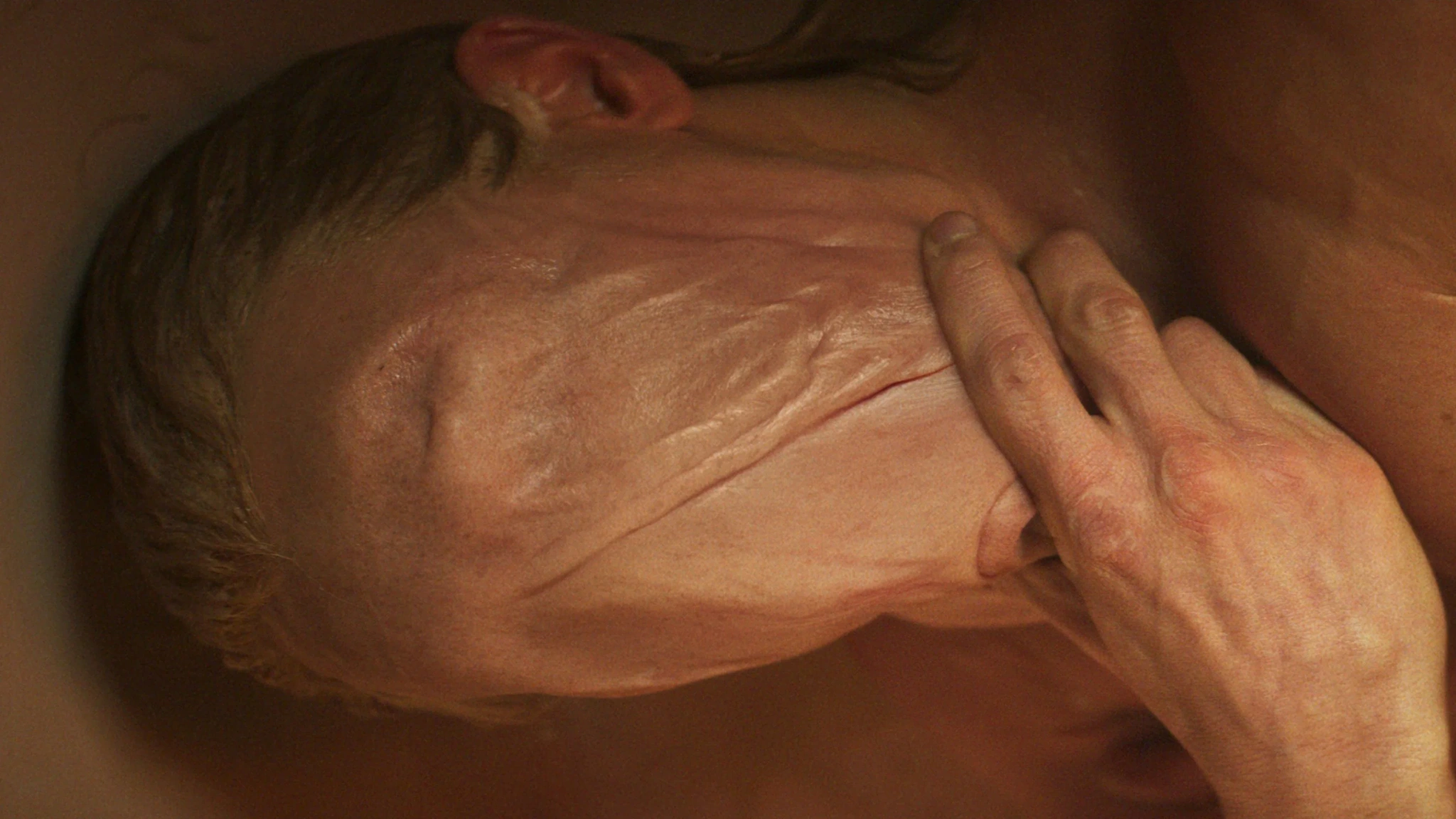
The cells keep doing their work, but in a way that threatens the person they are supposed to benefit.
The same approach extends to the surgeries and attempts to repair the face, and to moments when emotion causes the features to collapse.
The visual concentration on skin, wounds and organic changes gives the experience an unsettling material quality. Horror comes from what happens inside the body rather than what attacks it from outside.
Above all, the effects are more than a display of repellent shapes. At their best, they help us understand Matt's psychological condition: he no longer knows whether his body will obey his wishes or reveal his emotions in a way he cannot stop.
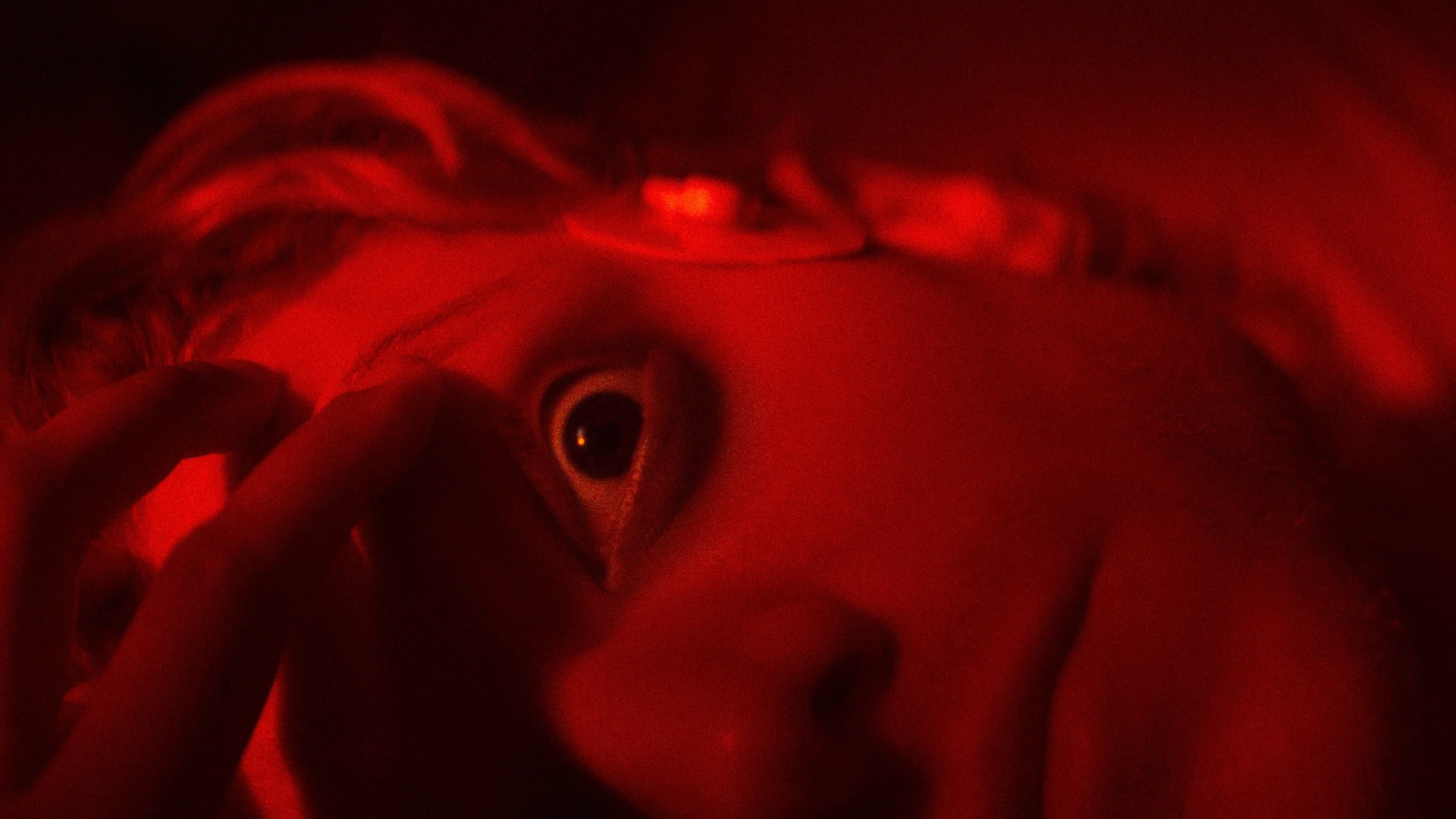
This is why we find Watkins more successful at directing body horror than at staging some of the quieter dialogue scenes.
He knows how to turn a simple idea into a situation of intense tension and make the body's own boundaries the source of threat.
From anger to murder and the limits of new power
The screenplay's most important test comes after Matt acquires his new abilities.
Initially, his anger is understandable. He has been assaulted, lost his future, and discovered that people he trusted helped exploit him or protect the person responsible for his tragedy.
Understanding the reasons for anger, however, is different from accepting the path the angry person takes.
When he confronts Frank, the encounter becomes a killing connected to his body's loss of control and its unexpected ability to stretch. We can still see someone who does not understand his new power or know how to prevent it from causing a catastrophe.
His encounter with Cory reveals a more dangerous transition.
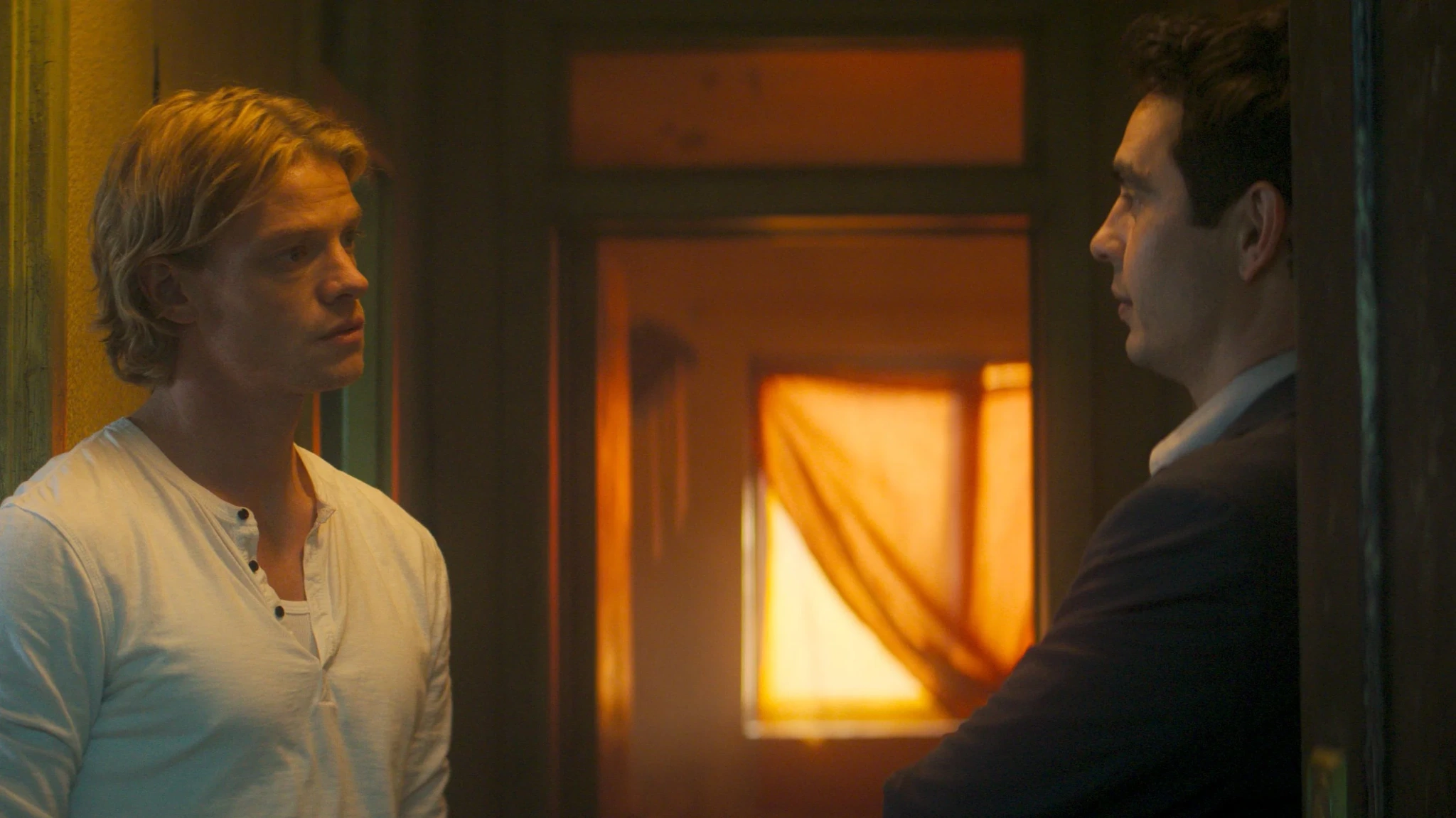
After learning his friend's role in manipulating the case, Matt does more than lose control in a burst of emotion. He deliberately uses his body to end the life of someone who was close to him.
This distinction is essential to understanding his transformation.
Moving from a tragic accident to a conscious choice to kill requires psychological development showing how the character's moral boundaries change and revenge becomes more important than any other chance at life.
The film sometimes compresses this distance.
We see his anger, betrayal and expanding abilities, but the relationship between them does not always develop enough to explain his most extreme decisions.
The problem grows as his powers increase.
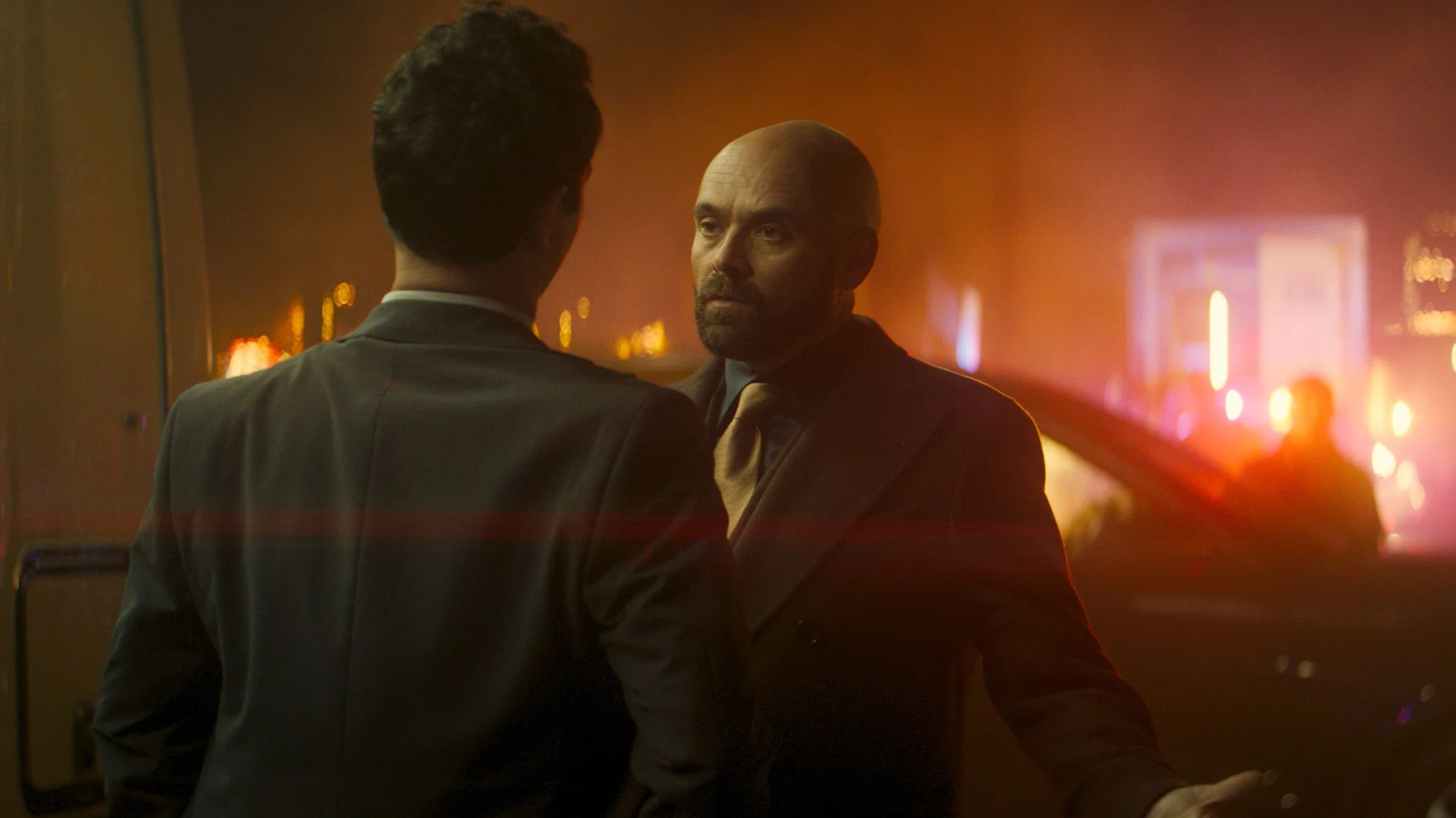
At first, his body's changes are uncontrollable and a constant source of weakness. Then he becomes able to alter his features, impersonate others and use his body as a weapon in many situations.
These possibilities give the action clear variety, but they raise a question about the rules governing danger: what can actually stop Matt?
When a character's powers keep expanding without clear limits, surprise can become a ready solution to every obstacle.
Suspense loses some of its force, not because Matt has become too powerful, but because we no longer always know what he can and cannot do.
The screenplay gives convincing reasons for the beginning of his downfall, but is less precise in explaining the stages that make it irreversible.
Performance and borrowing other people's faces
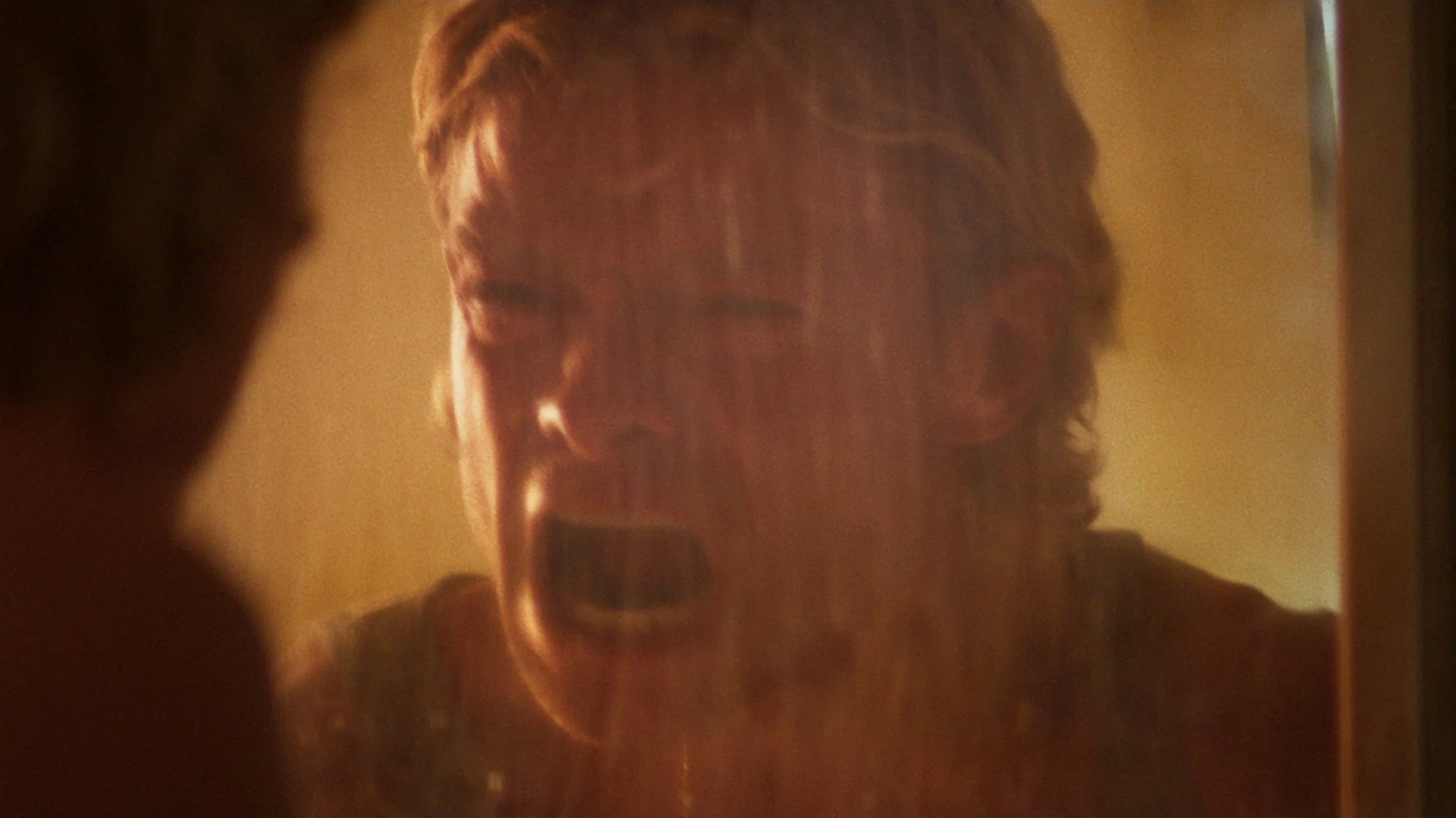
Tom Rhys Harries is one of the film's main strengths. He must play a character whose outward appearance constantly changes while keeping his pain and fear recognizable.
His presence is especially strong when Matt tries to reclaim his life and when he realizes that the treatment has begun to become a new danger.
The character needs enough appeal to make his loss matter and enough vulnerability for us to understand his desperation, even when we reject his actions.

Harries succeeds in providing this through a substantial part of the film.
The character's nature creates another acting challenge once Matt begins borrowing other people's faces.
The actors playing those characters effectively have to perform them as though Matt were impersonating them.
This is an enjoyable idea because it turns disguise from a visual trick into an extension of the protagonist's original profession.
Matt once tried to convince an audience that he was someone else within a film. He now does the same in the real world, but to deceive, escape and kill.
Naomi Ackie, meanwhile, tries to maintain a degree of human balance in the face of his escalating transformation.
The writing nevertheless gives Matt more psychological space than the people around him, even if it does not fully use that space.
John, for example, has an important function in the investigation and romantic conflict, but lacks the depth that would make his fate as affecting as it should be.
Supporting characters therefore sometimes seem like carefully arranged tools within the plot rather than people with independent lives.
Club Vesuvius: a pursuit through faces and masks
Matt's powers find their most cinematically vivid application during the confrontation inside Club Vesuvius.
The crowded location offers an ideal place to hide among others, while changing faces becomes a means of attack, evasion and disorientation.
What works particularly well is how directly this use of power connects to the character's nature.
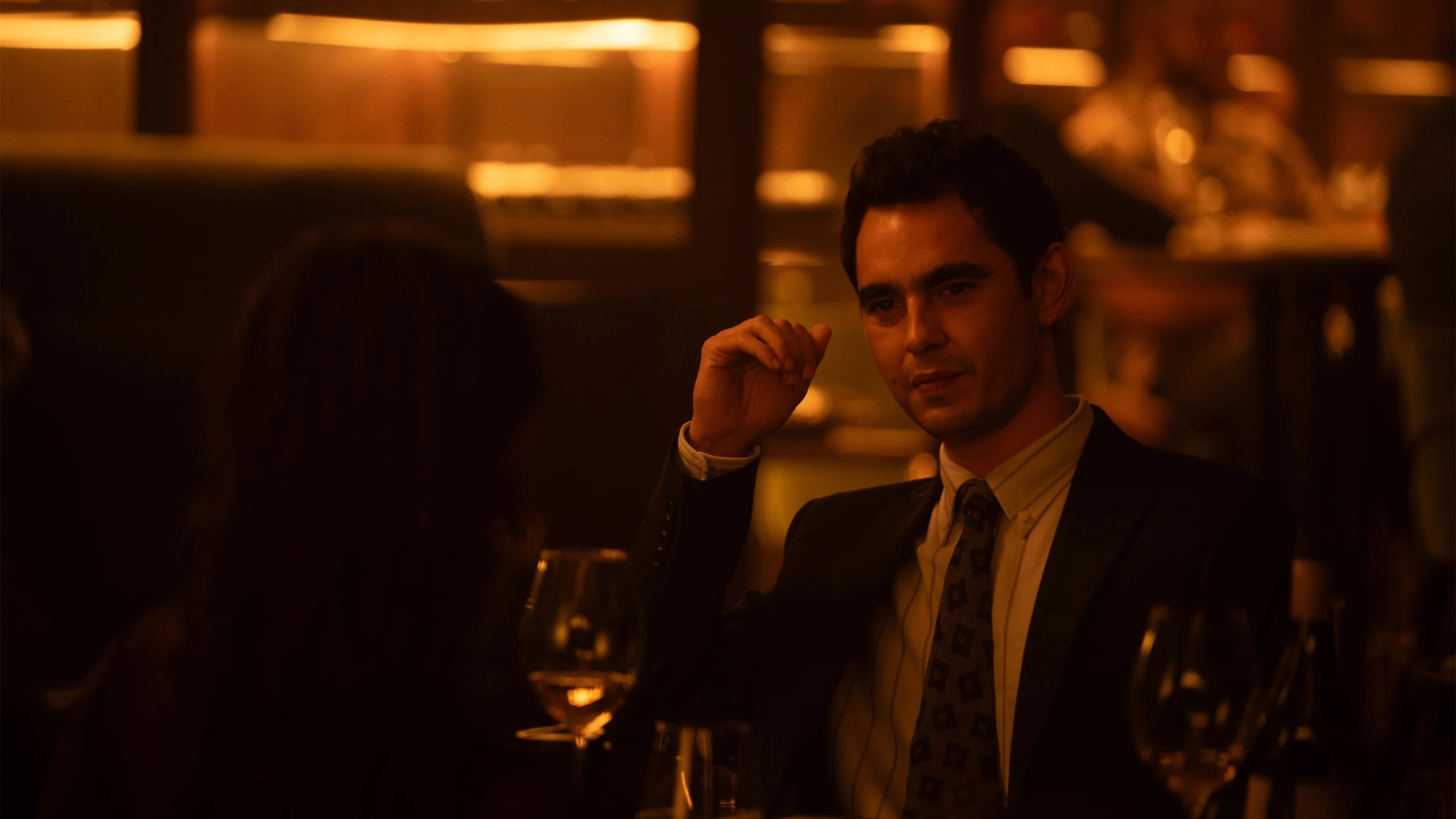
Matt does more than change shape to become physically stronger. He uses an ability whose value he knows from his previous life: convincing people that the person before them is not who they think.
The confrontation becomes a continuous game of recognizing faces.
Who is Matt now? Which person before us is merely a new mask? Can his opponents identify the source of danger before it changes shape again?

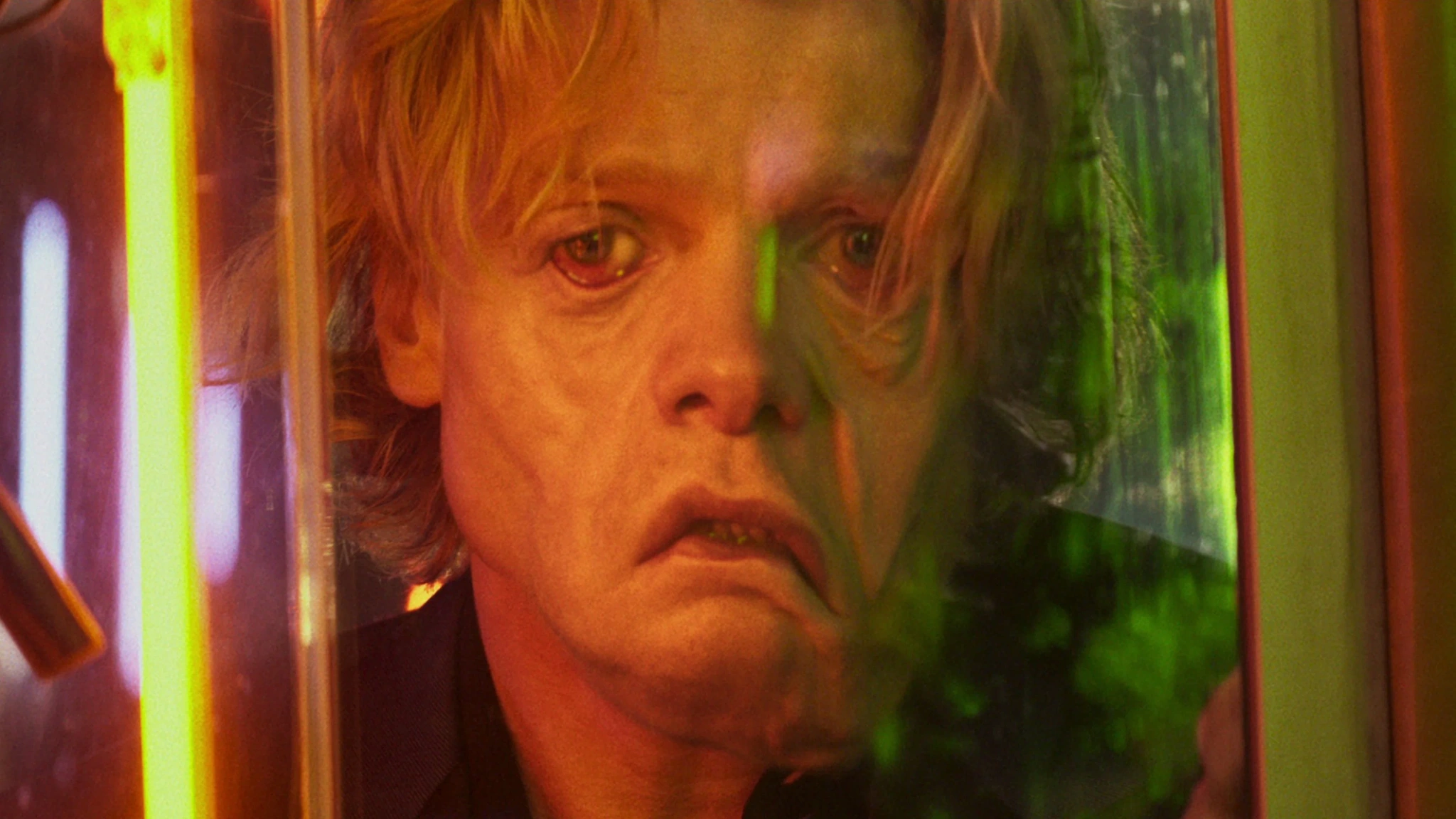
These questions give the scene a rhythm different from familiar superhero battles. They allow the director to vary the action through visual surprises and shifts between characters.
The scene also exposes another narrative limitation.
As we concentrate on identifying the face Matt is wearing, our attention moves a little further from the person making the violent decisions.
The mechanics of the pursuit occupy us more than the killer's motives.
Even so, Watkins delivers one of the film's most energetic and inventive sequences, using the crowd and the ability to transform to create a confrontation with an identity of its own.
This may also be one advantage of presenting the film as a standalone horror story within the DC universe.
Batman's absence leaves the space entirely to Matt instead of making his story a prelude to a clash with a more famous hero. References to the wider world remain surrounding details that require no prior knowledge to understand the tragedy.
The ending: reproducing a face without recovering a person
Matt's tragedy reaches its peak when he moves beyond revenge on those who destroyed his life and tries to control the one person he believed could still save him.
Killing John and impersonating him to approach Caitlin makes his moral transformation too clear for all his actions to be explained as mere responses to the injustice he suffered.
Caitlin decides to shut down the technology despite the danger this may pose to his life.
Matt's disappearance into the sewers is not the actual end of his existence, however.
The later revelation that he survived, and of the distorted form his body has settled into, gives the transformation into Clayface its final image.
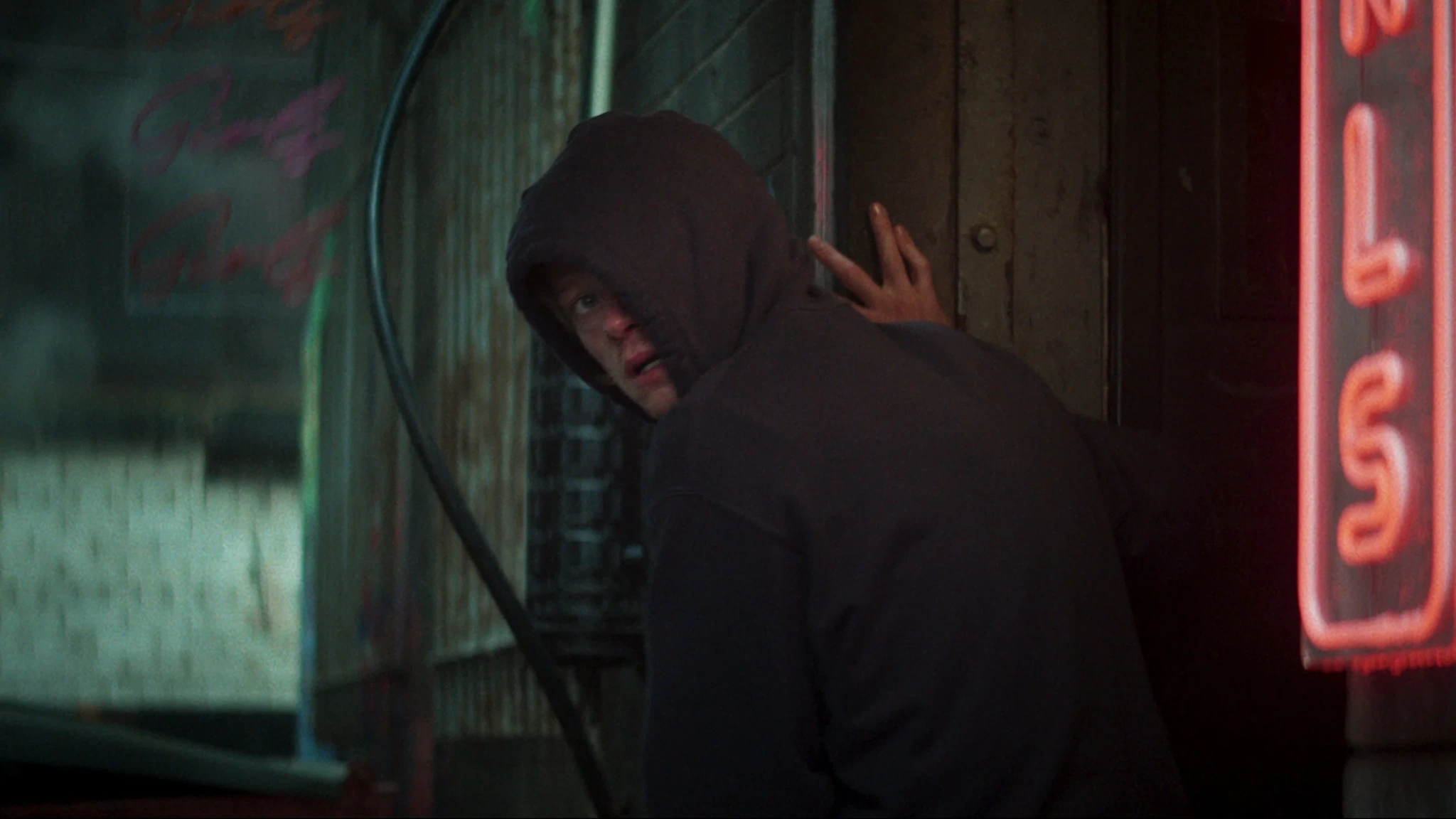
The most important detail is Caitlin appearing before him as though she has chosen to stay, before we discover that her presence is not real but an image his body can now produce.
This moment returns the film to its opening question in a harsher form.
The man who needed his face for others to acknowledge him can now reproduce their faces, and even the image of the person he wants beside him.
Yet this ability cannot create a real relationship, recover his former life or simply return him to the person he used to be.
The ending is visually and intellectually strong, fitting a story founded on the fear of losing identity. It does not erase reservations about the psychological journey preceding it: the final image of collapse is sometimes more coherent than the explanations for every decision that brought him there.
DC references and tributes to horror
One of Clayface's distinguishing features is that it does more than introduce a new character to the DC universe: it also establishes Gotham before Batman himself appears. Although it offers an independent story with a bloody horror tone, it includes numerous references to comics and earlier works. Some are obvious; others require attention to discover.
Notably, director Mike Flanagan drew his idea from one of the most famous stories in Batman: The Animated Series. The film includes references beyond Batman and his enemies, with details connected to horror films and other DC works. These are the references worth examining.
Clear inspiration from Batman: The Animated Series
Since the film's announcement, Mike Flanagan has explained that his idea was inspired by the two episodes titled Feat of Clay in Batman: The Animated Series.
The resemblance extends beyond the name to the character's details. The film combines Matt Hagen's name, associated with the second Clayface in the comics, with the acting background of Basil Karlo, the original version of the character.
It also revisits ideas from the animated series, including the character's gradual descent into villainy, difficulty controlling his powers and deteriorating relationship with another actor. Even Imperial Pictures, the studio Matt reaches at the film's beginning, comes from that work.
Bruce Wayne is present despite Batman's absence
Although Batman does not appear and his whereabouts during the events remain unknown, his existence leaves a clear mark on Gotham.
When Dr. Caitlin watches a video of Matt Hagen speaking to young actors in the Narrows, we notice that the building is named Wayne Community Center, a direct reference to the Wayne family.
It may seem a small detail, but it reminds us that Batman's world is present in the background even when the hero himself is absent from the screen.
Fictional films carrying famous Batman stories
One clever detail is the presence of fictional film titles directly connected to familiar Batman stories.
One is called No Man's Land, the title of the comic story set after a devastating earthquake isolates Gotham from the rest of the DC universe and leaves the city facing chaos. The Dark Knight Rises drew some ideas from this story.
The second title is One Bad Day, referencing the famous phrase associated with the Joker in Batman: The Killing Joke. The idea is that a single bad day can drive someone mad and change their life completely.
The reference does more than honor the original story. It connects to Matt Hagen's path, as a brutal experience leads him toward becoming a villain. One Bad Day is also the name of a standalone comics series published in 2022 and 2023, with each story devoted to a Batman enemy, including Clayface.
The Narrows returns to the foreground
The film establishes that Matt Hagen grew up in Gotham's Narrows, an area suffering from poverty and crime.
This location has appeared in several Batman works, most prominently Christopher Nolan's Batman Begins, which presented it as a poor, crime ridden Gotham district. It subsequently appeared in modern comics and the series Gotham.
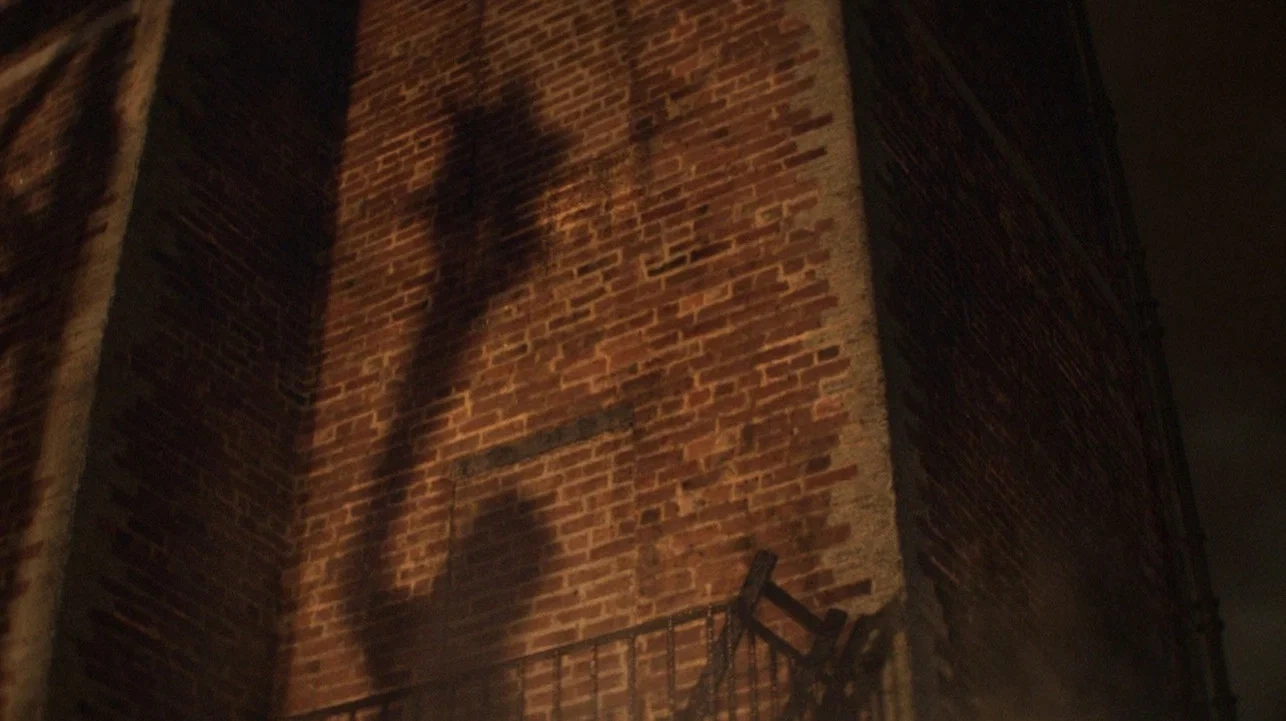
Choosing the Narrows therefore does more than identify where the protagonist grew up. It contributes to the dark image associated with Batman's world, where the surrounding environment can shape characters' lives and paths.
The Gotham Gazette invites comparison between two worlds
At the film's end, Dr. Caitlin buys a copy of The Gotham Gazette, a newspaper that first appeared in Batman comics in 1941.
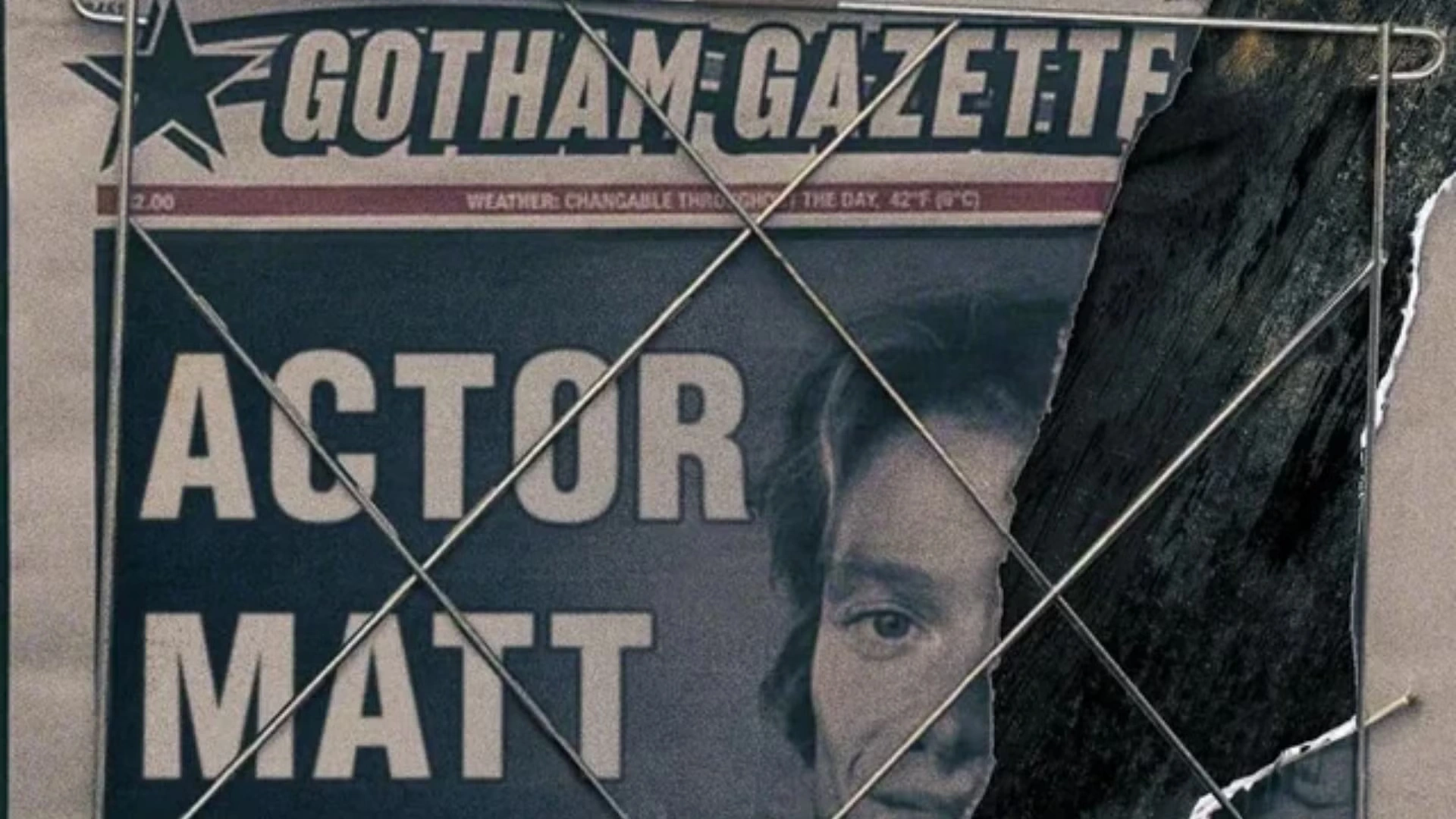
The same newspaper has also appeared in The Batman and The Penguin, works belonging to Matt Reeves's Batman universe.
Its appearance, together with Matt Reeves's involvement as an executive producer, has led some viewers to wonder whether the film belongs to his universe or whether DC plans to merge Robert Pattinson's Batman world with the new DC cinematic universe.
The newspaper's existence in both does not necessarily make them one world, however. It may simply be a shared detail in two different universes.
Coast City in place of Los Angeles
The film presents Coast City as the center of filmmaking in the DC universe, recalling Los Angeles's position in our world.

The city has particular significance in the comics as the home of Hal Jordan, one of the most famous people to wear a Green Lantern ring. It first appeared in a comic published in 1959.
The new DC cinematic universe's version of the city has already appeared in Lanterns' first episode. Its presence in Clayface therefore does more than identify Matt Hagen's destination: it connects the film to another work's events within the same world.
Ferris Air connects the film to Green Lantern's world
Another reference to Lanterns appears when Matt Hagen returns from Coast City to Gotham on a Ferris Air flight.
In DC comics, the company operates in aviation and spacecraft and is owned by Carol Ferris, who has a long relationship with Hal Jordan and also carries the Star Sapphire identity.
The reference gains significance through Carol Ferris's appearance in Lanterns, played by Amy Mackenzie. The film adds another detail confirming the breadth of its world without needing Green Lantern himself to appear.
A red bathroom evokes The Shining
Clayface's references extend beyond superheroes to horror films.
When Matt Hagen enters Szabo's Club Vesuvius disguised as a gang member, one of the men notices that his face has begun to melt. Matt takes him into a red bathroom and kills him in one of the stalls.
The bathroom's design immediately recalls the famous bathroom at the Overlook Hotel in Stanley Kubrick's The Shining. More intriguingly, the same bathroom appeared in Doctor Sleep, directed by Mike Flanagan, whose horror experience also stands behind Clayface.
The reference thus appears to be a clear tribute to a famous horror film and an extension of Flanagan's relationship with this cinematic world.
The Joker leaves his mark on Clayface
Although the Joker occupies little space in the film's events, his presence appears through several details associated with him.
Most notably, Marcus Szabo cuts the side of Matt Hagen's mouth, leaving a wide wound resembling the famous bloody smile of Heath Ledger's Joker in The Dark Knight. The image also recalls Vince in Joker: Folie à Deux, after he creates a similar wound in his mouth.
Another reference comes when Matt, disguised as Dr. Caitlin, passes an illuminated Amusement Mile sign. This abandoned Gotham entertainment district has appeared in the comics since 1999 and has repeatedly been associated with the Joker's locations and hideouts.
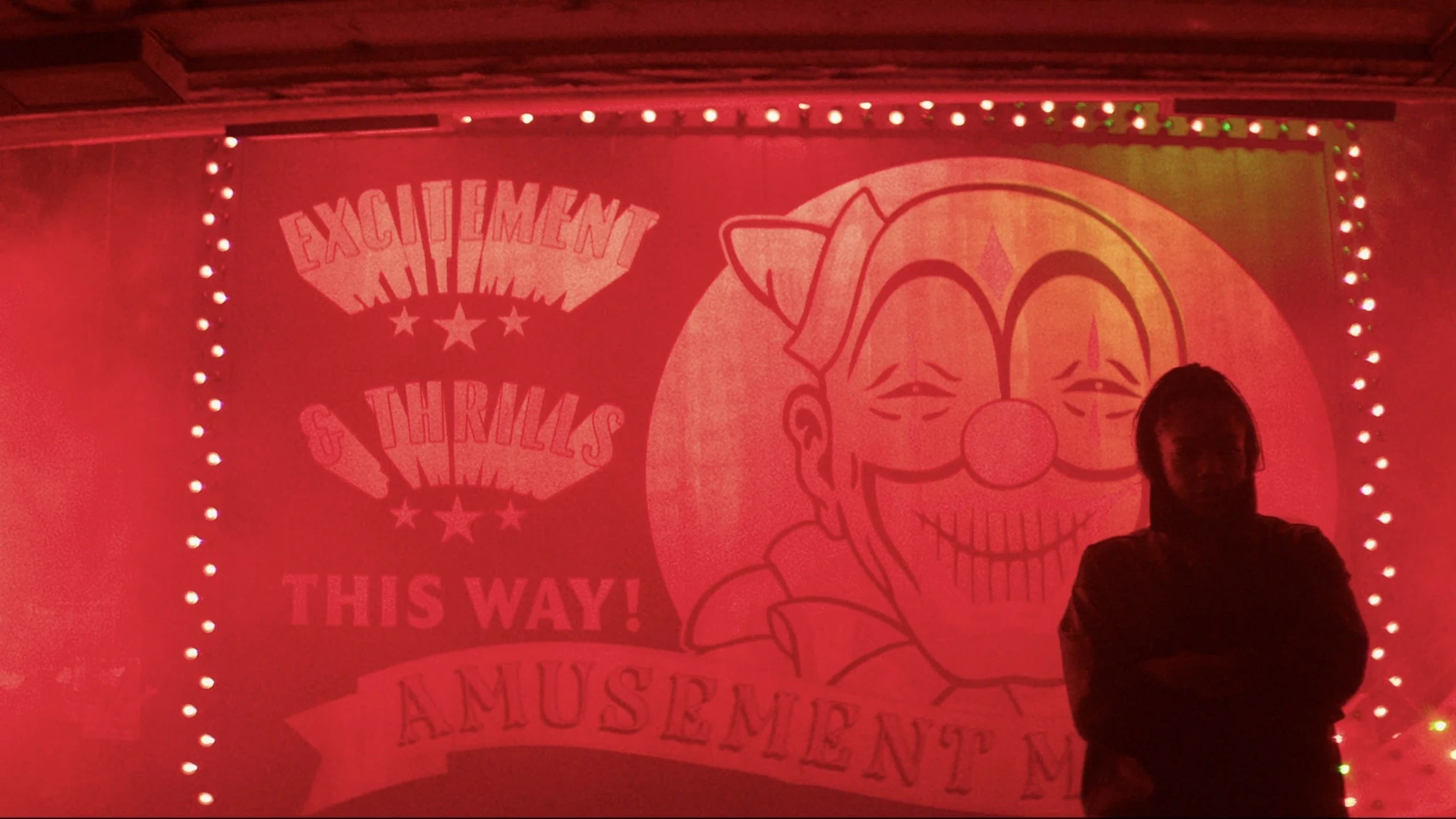
The district also appeared in Birds of Prey, making this another connection between Clayface and the history of Batman's enemies.
Aaron Paul's appearance raises an unanswered question
One of the film's most mysterious details is the participation of Aaron Paul, known for Breaking Bad, as Matt Hagen's father.
During the final confrontation in Szabo's club, Clayface briefly takes his father's form, recognized by a gang member. Through this scene, we discover that Matt's father abused him.
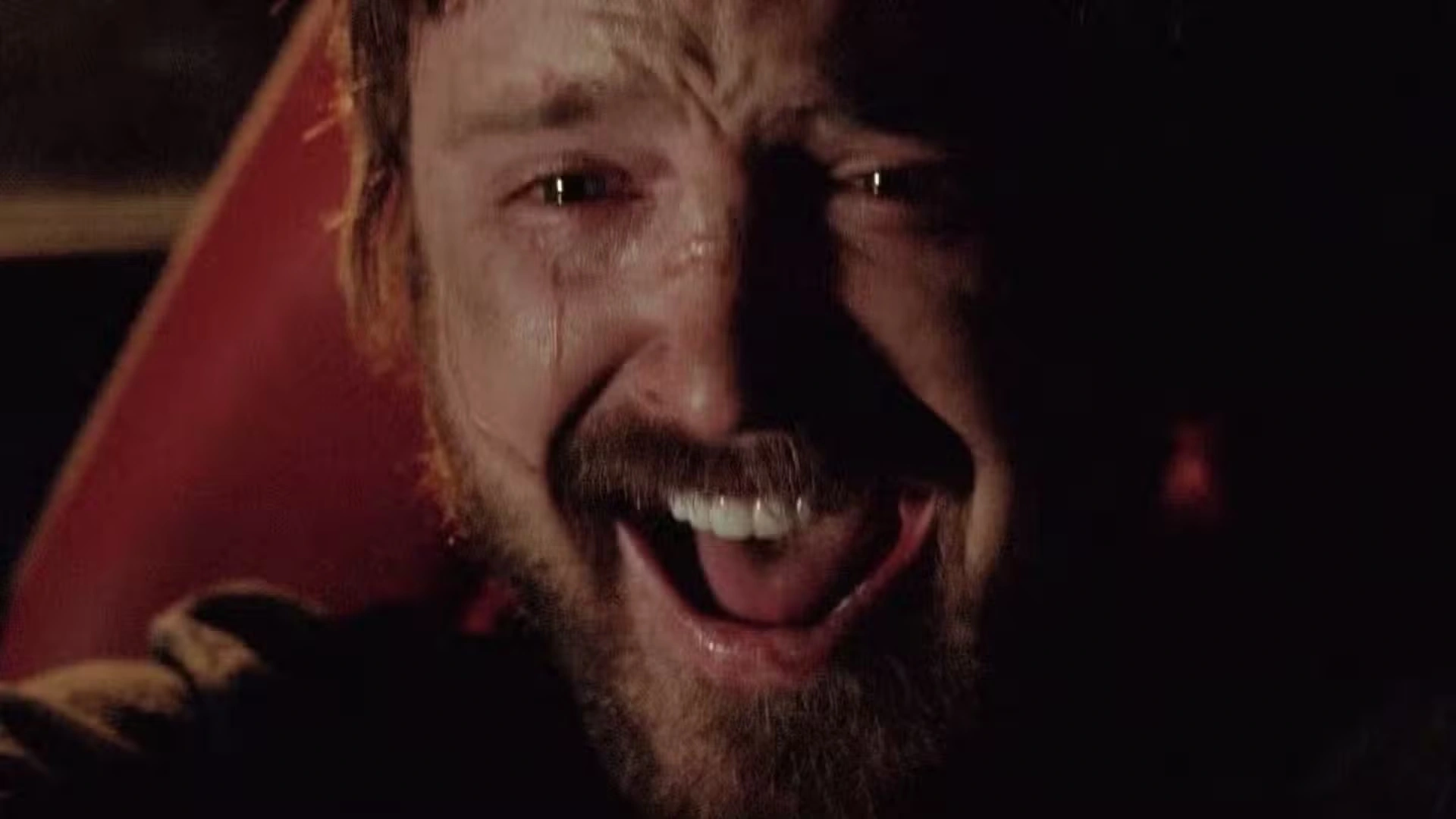
Strangely, the character appears nowhere else in the film and receives no clear dialogue despite the casting of a well known actor. His brief appearance raises questions about whether the role was once larger, before scenes connected to Matt Hagen's childhood were removed.
This possibility is supported by the absence of clear childhood flashbacks despite another actor being listed to play young Matt. The film does not confirm that Aaron Paul's scenes were actually cut, however, so this remains only a possibility.
Amusingly, Aaron Paul is not the first prominent Breaking Bad actor connected to Batman's world: Bryan Cranston previously voiced Jim Gordon in the animated film Batman: Year One.
A wider world and the limits of a reference
Ultimately, these references give Clayface a broader place within the DC universe by connecting Matt Hagen's story to Batman and the Joker's history, recalling characters, locations and earlier works, and offering clear tributes to horror films. Some details do more than please comics fans: they connect to the character's past and transformation. Others remain enjoyable hints, while some open questions the film does not conclusively answer.
Final verdict
Final verdict
The film delivers a strong body horror experience with unsettling, inventive direction. It benefits from Tom Rhys Harries's presence and from the relationship between acting and the protagonist's ability to change identity. Focusing on a DC villain without relying on a superhero's appearance also gives the film room to develop its own identity. The screenplay, however, falters in developing some relationships and explaining the transition from despair to murder. The expanding powers sometimes weaken the clarity of the dangers facing the character. These problems do not erase what the film achieves. The body horror scenes are more than shocking additions: they are fundamental to expressing the tragedy of a man who has lost control of his image and body. Ultimately, we find Clayface more successful as a horror film about the collapse of body and identity than as a complete psychological study of a person's descent into evil. It is particularly worth watching for fans of body horror and works approaching comic book characters from different angles, provided they can accept explicit visual violence and uneven writing.
Your turn
Now the question is yours: did the film convince you that Matt Hagen became a monster because of the injustice he suffered, or did his choices reveal a darkness that had been within him from the beginning?
AUDIENCE VOTE
Do you agree with the MB rating?
Choose once from this browser. You can change your answer at any time.