02 / The review
7 CHAPTERSSimon… extremism begins with the need for an explanation
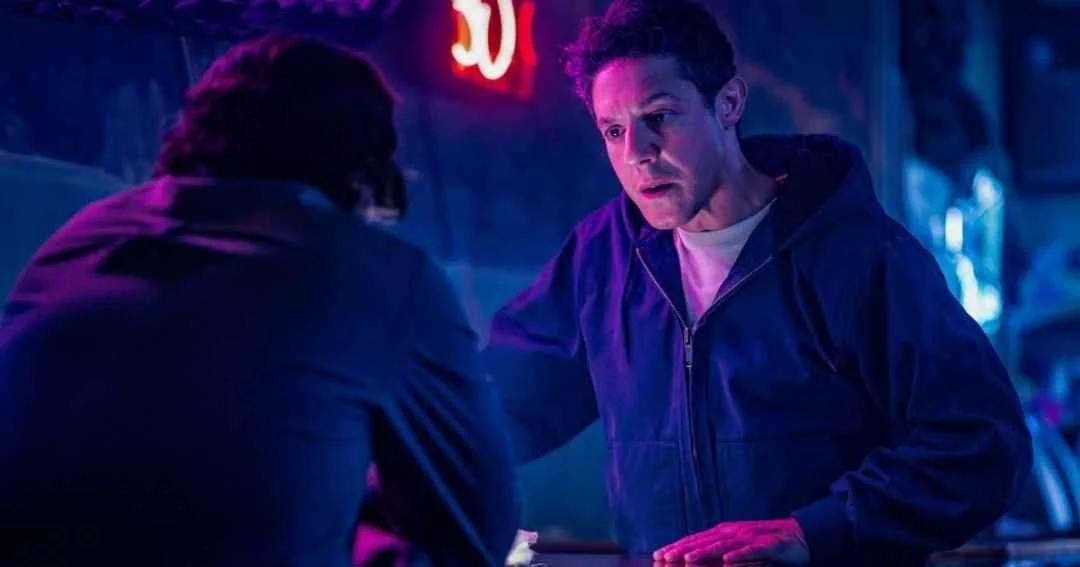
The film's most important achievement is building Simon in a way that brings him close to the viewer before his real descent begins. He is a working-class man living a very ordinary life: he goes to work, spends time with his friend Gary and lives with his girlfriend Rebecca, who wants to marry him.
Nothing initially makes him seem extremist or violent, and that is an important part of the characterization. The film does not suggest that Simon was waiting for an opportunity to become violent. Instead, it subjects him to successive pressures that deepen his frustration, before Dalton Kirby's voice offers him a ready-made explanation for everything happening around him.
The home invasion becomes more than a robbery. His problems at work become more than bad circumstances. Losing someone close becomes further evidence that, from his perspective, the world is working against him. That is where the real change begins.
Simon is not only looking for someone to blame; he is looking for meaning that explains why these things are happening. This is one of the film's strongest ideas: extremism here does not begin with the idea of violence, but with the need for an explanation.
Dalton Kirby… a voice that takes up residence in the mind
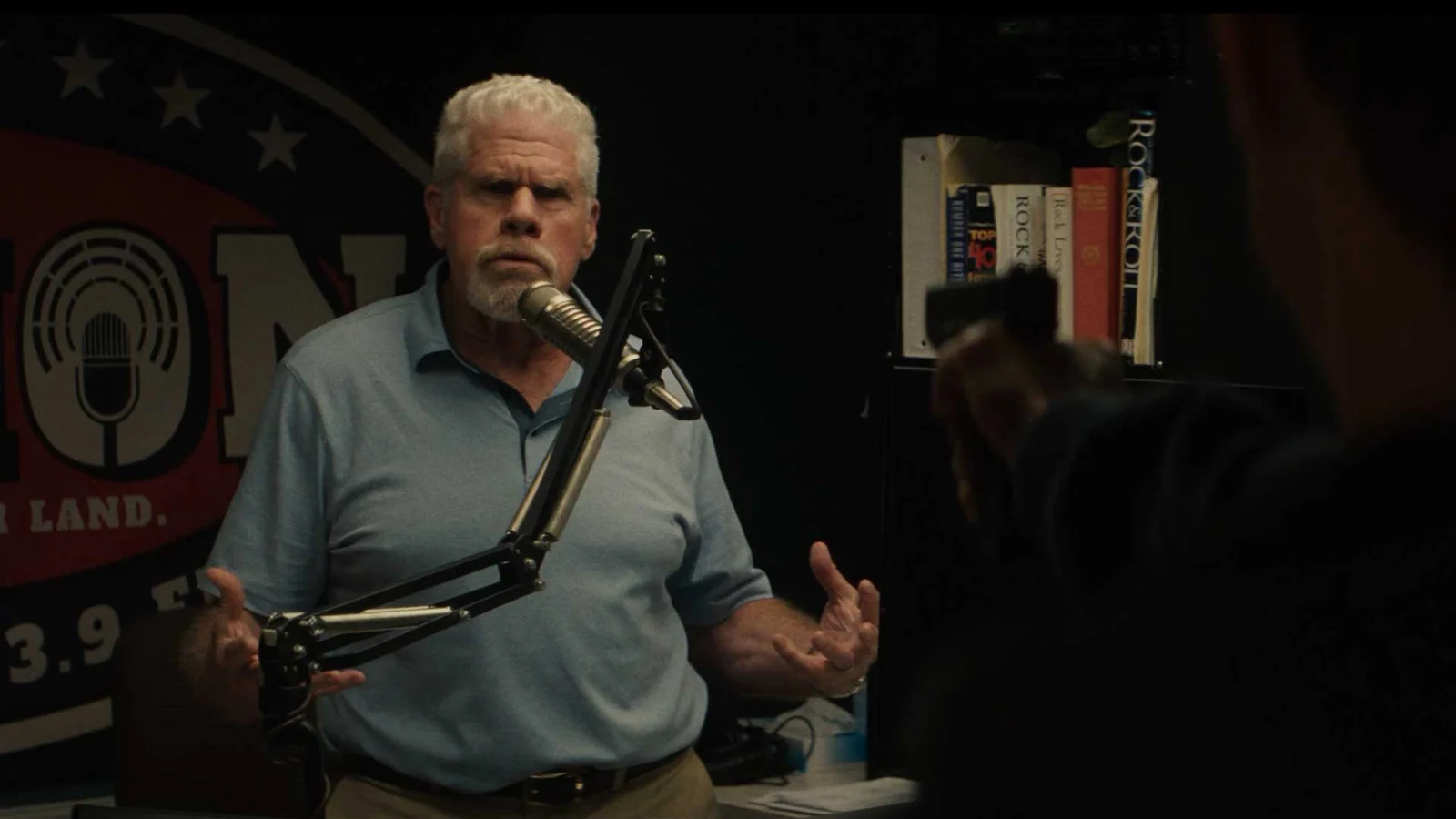
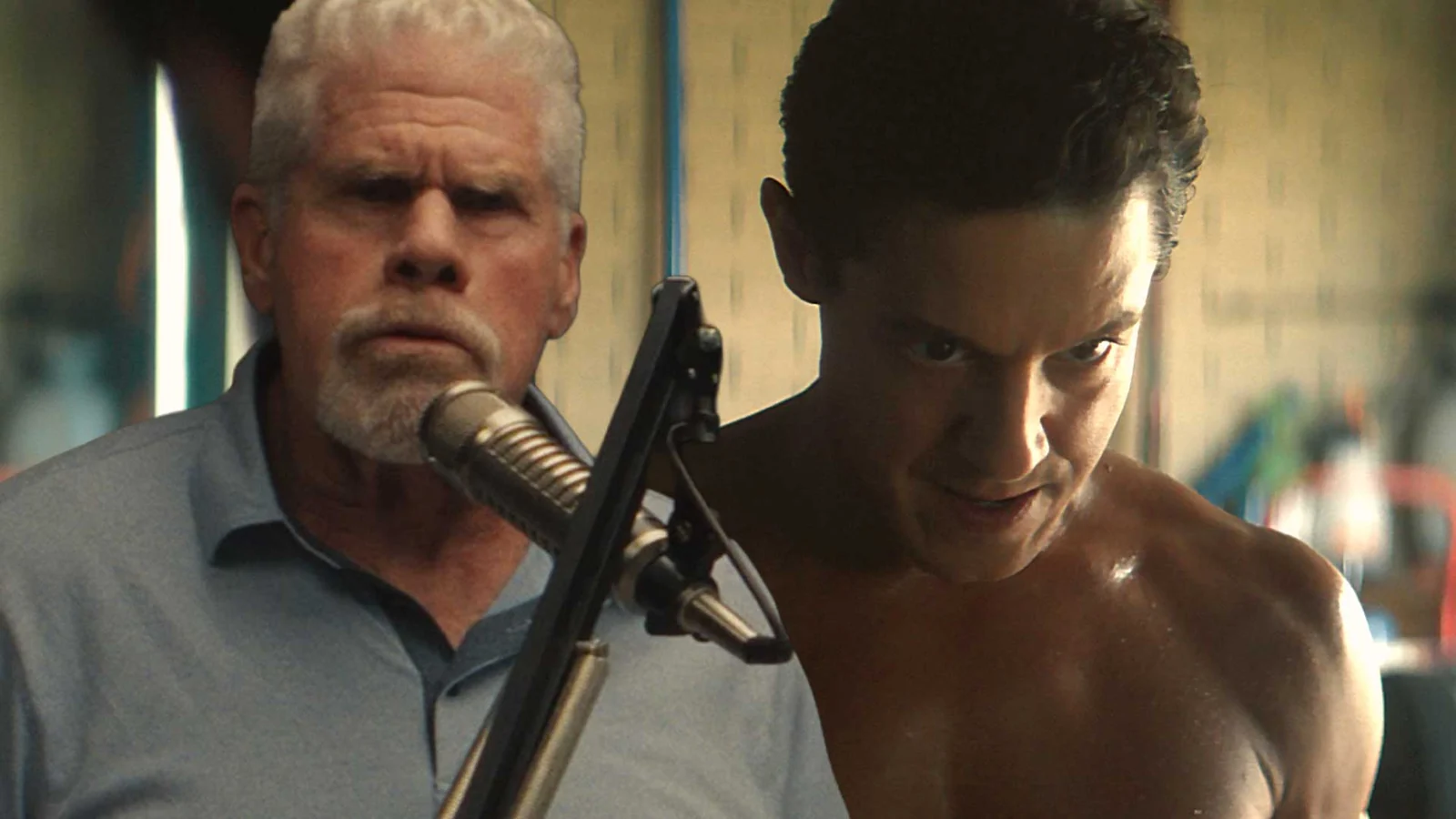
Ron Perlman plays Dalton Kirby very intelligently, but the film handles the character even more intelligently. For much of the running time, we hear Kirby's voice before we see him. That choice matters because, at first, Kirby is not someone standing in front of Simon and directly asking him to do something.
He is simply a voice in the background: on the way to work, during exercise or throughout everyday life. Gradually, that voice turns from mere noise into something that takes up residence inside Simon's mind. The use of Perlman's voice becomes one of the film's best tools.
His voice is calm and confident, and he does not need to shout to make an impact. This is more dangerous than presenting an exaggerated, loudly extremist character, because Kirby does not initially seem to be trying to control anyone. He speaks as though he has the answer, which is exactly what Simon needs at this stage of his life.
Feeling like a victim… from frustration to anger
The film focuses not only on extremism, but on the persistent feeling that you are a victim. Simon begins to see himself as someone who has been wronged, then looks for someone to hold responsible. That changes how he interprets events.
The problem is not just that Kirby gives him extremist ideas; he gives him an entire framework for understanding his life. Everything has an explanation. Every loss has an enemy. Every frustration has a cause. And every feeling of powerlessness can be turned into anger.
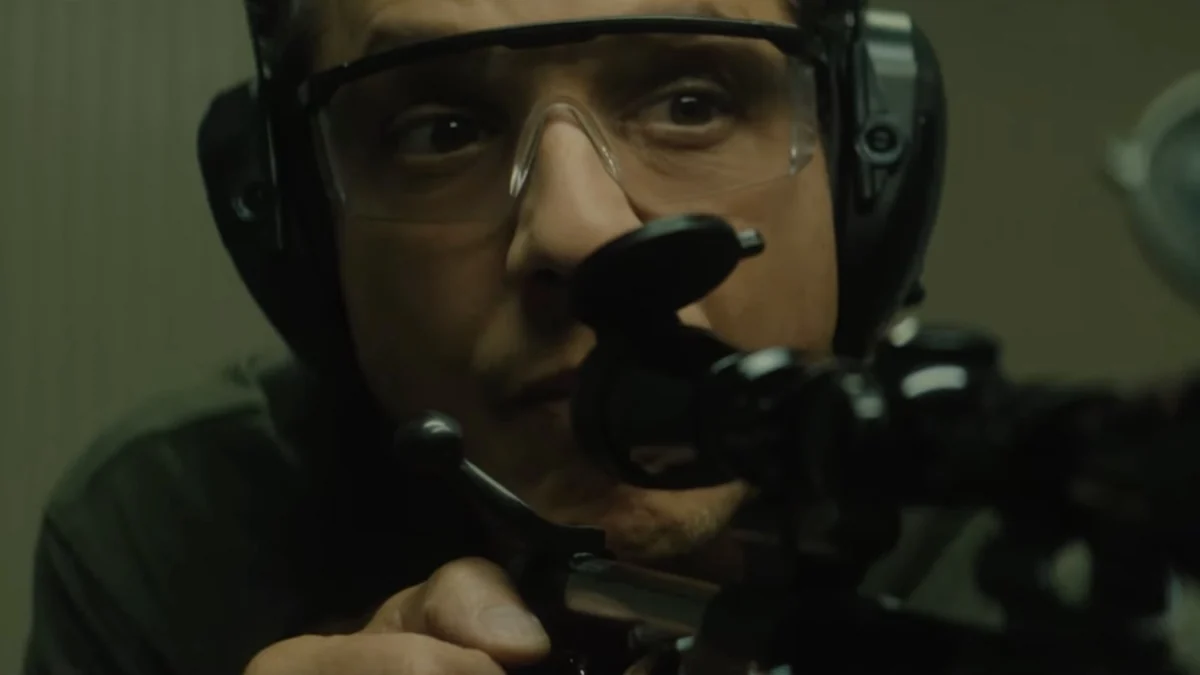
That makes Simon's journey more convincing than if the film had turned him into a violent person overnight. Even his transition from a man who has never fired a gun to someone who spends long hours at the shooting range and begins collecting weapons is part of this gradual change. The film does not need a lengthy explanation; we see the change in the character's behavior.
The performances… understanding Simon without excusing him
Theo Rossi is the essential element that makes this transformation believable. If Simon had been presented as constantly angry, his journey would have been highly predictable. Instead, Rossi plays him as exhausted, frustrated and confused, trying to find something to hold on to. That difference matters.
The viewer does not sympathize with Simon's violence, but can understand the psychological state that led him there. That is exactly what a good performance should achieve in a story like this. The film does not ask you to justify his actions; it places you inside his head long enough to understand how he reached this point.
As for Ron Perlman, the decision to let the voice arrive before his physical appearance gives Kirby a presence greater than his actual time on screen. It is one of the film's best artistic decisions.
The screenplay and pacing… a journey longer than it needs to be
The screenplay knows what it wants to say. Its central idea is clear, and the main character moves in a logical direction. The problem lies not in the overall structure, but in the length of the journey to the ending.
At around one hour and fifty minutes, the film could have been a stronger experience if it had shortened some moments that contribute little to Simon's development. The idea reaches the viewer early: we know Simon is changing, that Kirby's voice has begun to influence him, and that his life is pushing him toward isolation.
When the film keeps reinforcing the same point, some of the buildup becomes unnecessary. That is unfortunate, because it is much more effective when it reaches its most tense stages.
Does the film justify Simon's extremism?
No. I think this is something the film handles well. It tries to understand how someone reaches this stage without presenting violence as a natural or justified consequence of suffering. Simon has reasons to be angry, but the film makes a distinction between understanding that anger and justifying what a person does because of it.
That moral distance is important. The easiest choice would have been to present Simon as a monster from the start and then ask the viewer to condemn him. The film takes a harder path: it lets you see the human being first, then shows how that person begins to lose himself.
Direction… tension that builds slowly
The director approaches the film as a slow-burn thriller rather than a conventional thriller, allowing tension to build in its own time. There is no constant desire to introduce major events simply to maintain the viewer's interest. Instead, we watch Simon's life become increasingly confined and isolated.
The direction succeeds when it turns that everyday life into a source of tension. There is a persistent feeling that something is changing even when nothing obvious happens on screen. That suits a story built around psychological transformation.
Yet this same approach becomes a weakness in parts of the film. Harvey sometimes holds on to stillness longer than the scene requires. Some long, silent shots express Simon's isolation effectively, but their repetition slows the pace too much. At that point, slowness stops being a tool for building tension and becomes a burden on the film.
03 / Final verdict
Final verdict
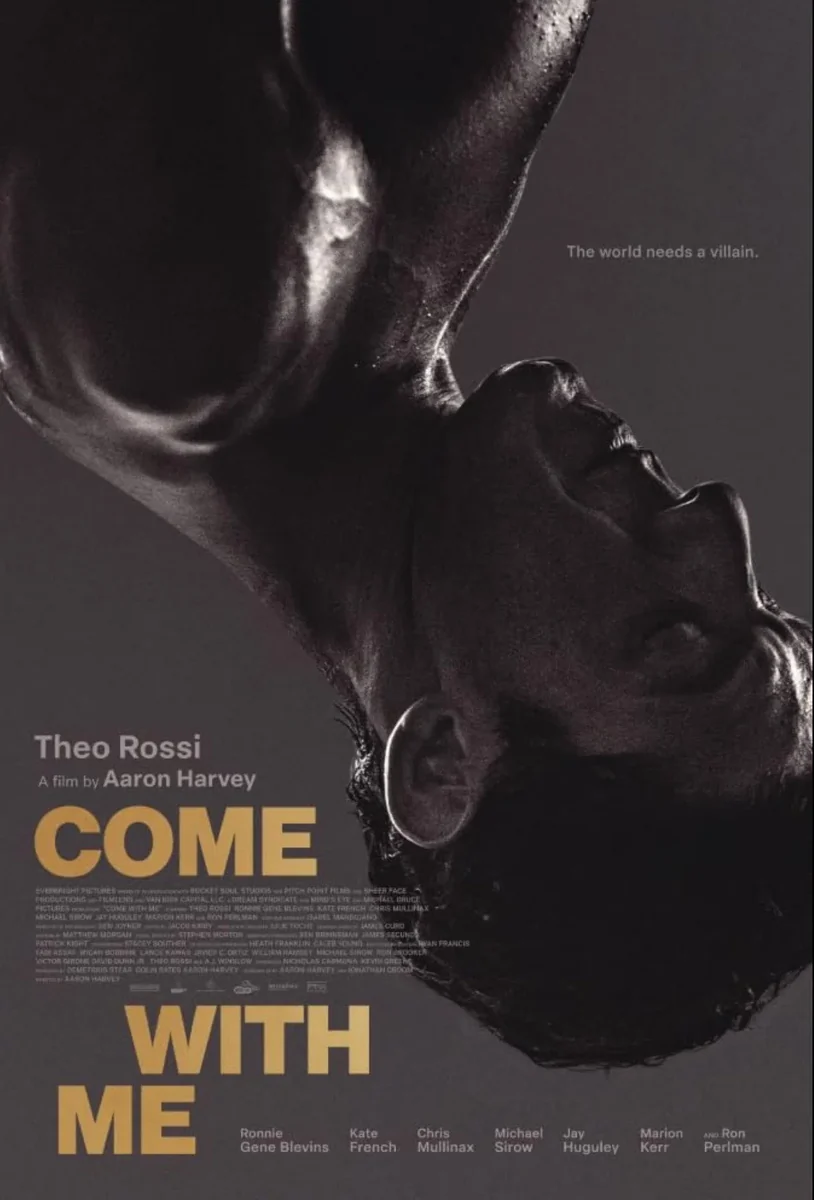
Come with Me is a psychological thriller more interested in its character's internal transformation than in delivering thrills for their own sake. Its strongest elements are Theo Rossi, Ron Perlman's vocal performance and a directorial vision that lets us experience Simon's isolation instead of merely explaining it. Its weakest elements are the slow pacing in places and scenes that could have been shortened without losing the film's essence. But when it brings character, idea and tension together, it becomes genuinely affecting, especially because it does not treat extremism as something that appears suddenly. It presents a long journey through frustration, isolation and the search for someone offering a ready-made answer.
Your turn
Do you think the film succeeds in explaining how an ordinary person can slip into extremism, or does its slow pace make the idea more obvious and more drawn out than it needs to be?
AUDIENCE VOTE
Do you agree with the MB rating?
Choose once from this browser. You can change your answer at any time.