The review
Screenplay and dialogue: freedom before it is taken away
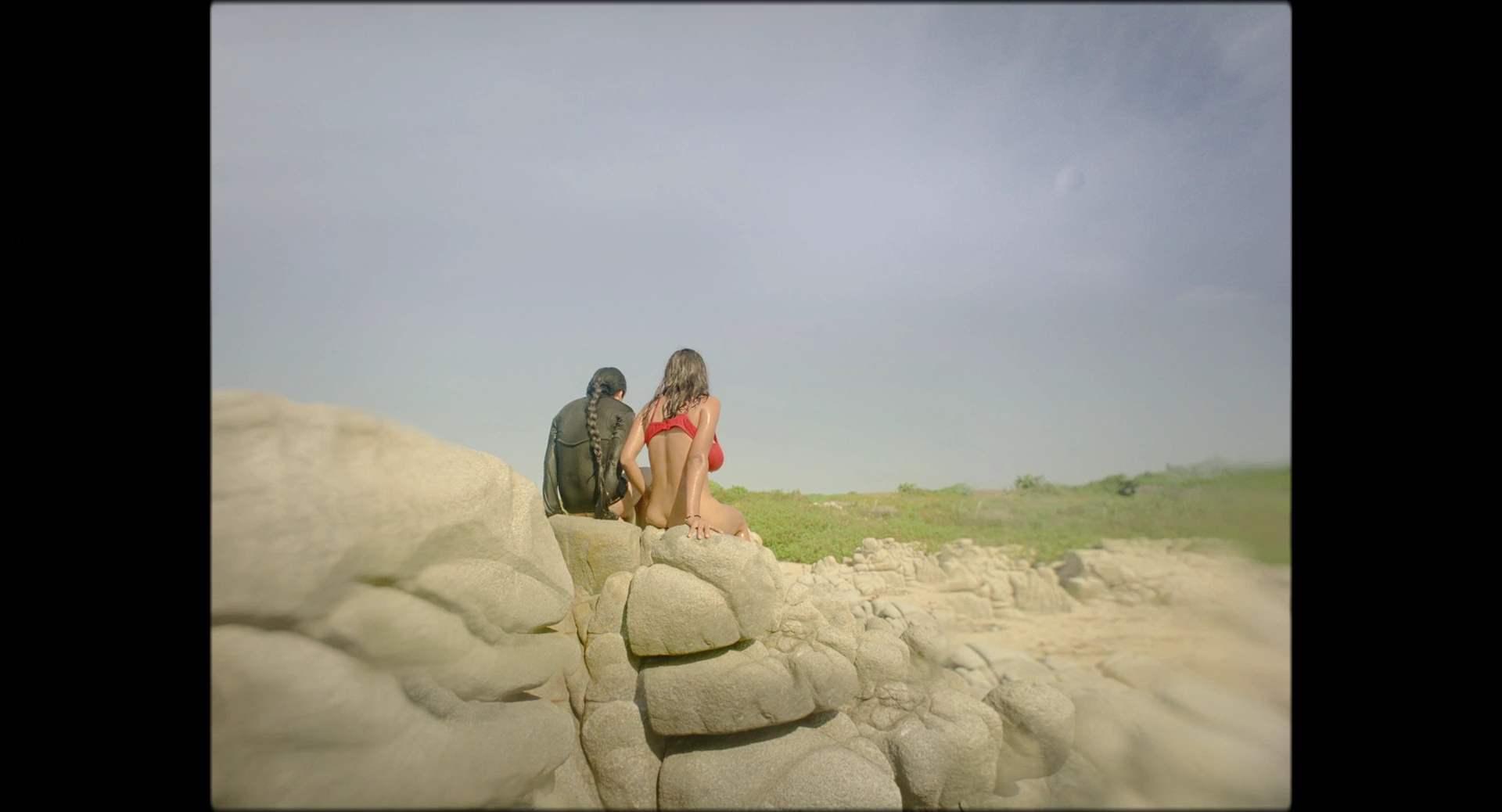
Reygadas begins his film far from the usual introduction of characters. We encounter the sea, waves, rocks and the sounds of nature in extended shots that establish the place's presence before human beings appear.
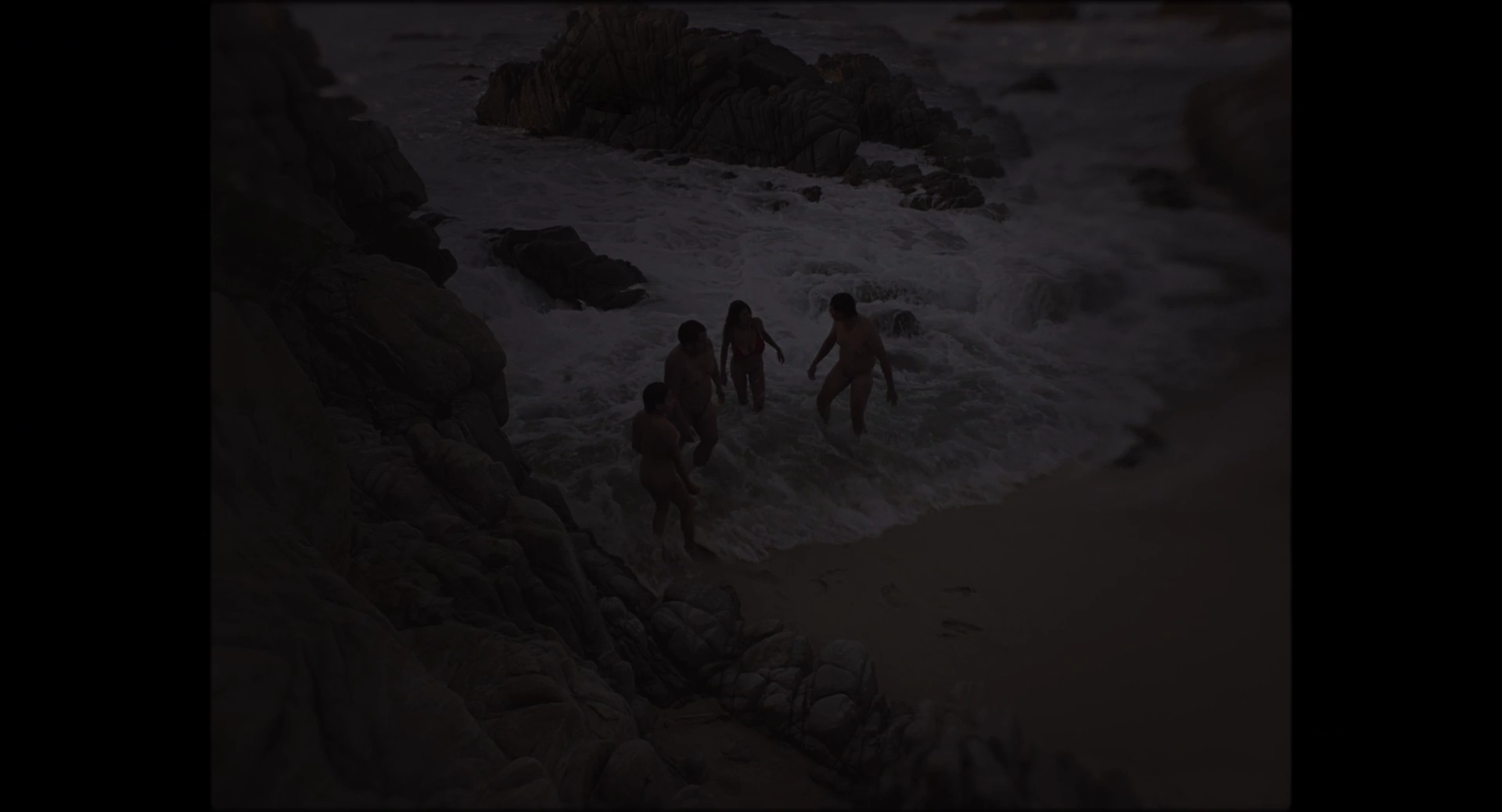
Nature does not seem merely a beautiful backdrop to events, but an independent world that does not require a human presence to acquire significance.
Then the four characters appear: Lina, Tzina, Milo and Saeed, within an open space where bodily movement mingles with water and human closeness.
One small detail between Milo and Saeed becomes more expressive than many of the more forceful scenes that follow. When Milo hesitates at Saeed's approach before gradually responding, a simple movement gives us a sense of trust developing between two people without coercion.
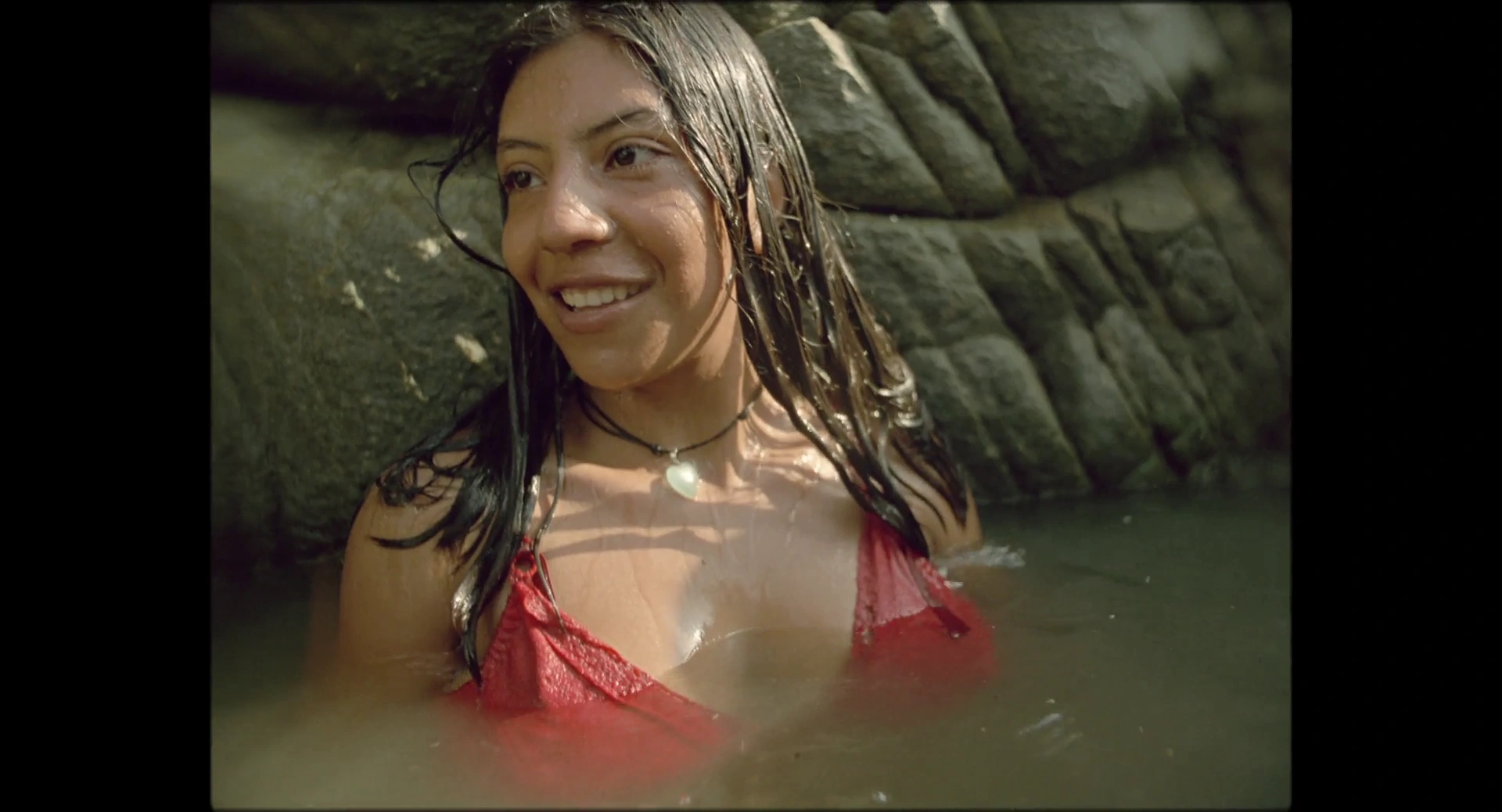
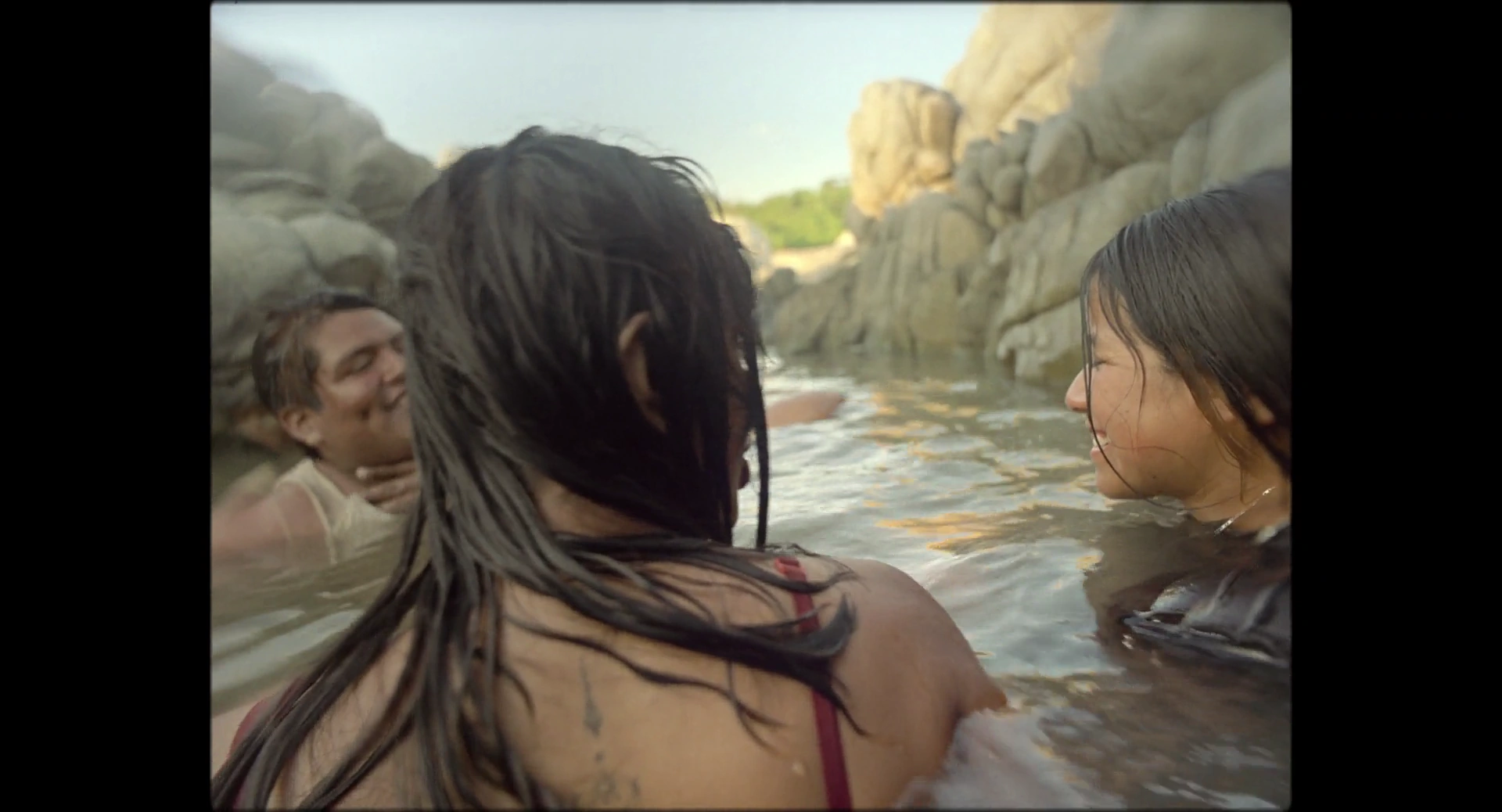
This moment matters because the film presents freedom as an experience founded on choice and mutual response, rather than an abstract slogan.
Their closeness needs neither an authority to legitimize it nor an institution to decide the nature of their relationships on their behalf.
The idea continues inside the cave lit by fire, where collective movement and intimacy belong to a world in which bodies interact beyond institutional surveillance.
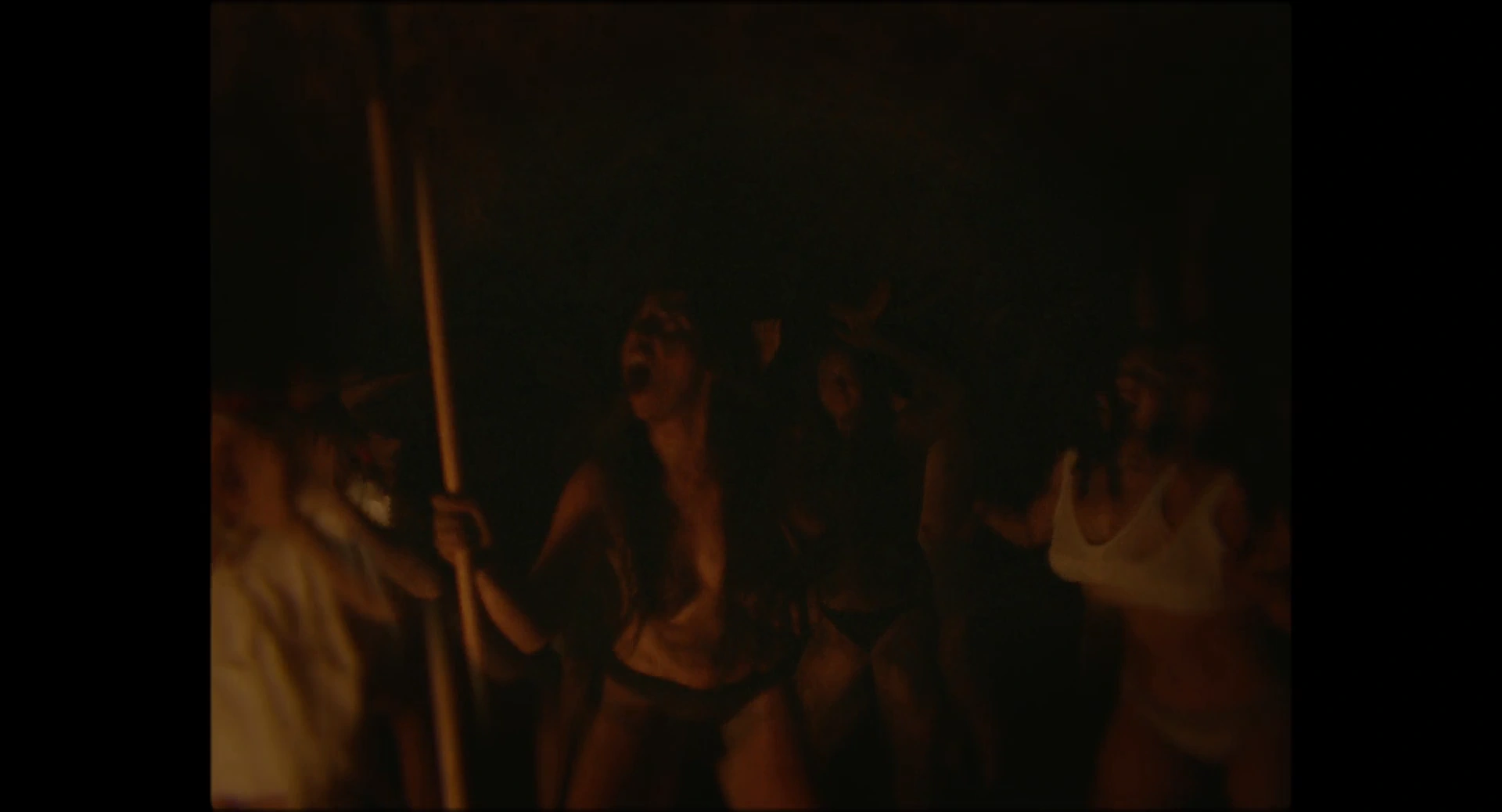
These scenes also reveal the nature of Reygadas's style. He gives images a great deal of time, asking viewers to inhabit their rhythm instead of awaiting direct dramatic development.
This succeeds when the human details are clear, as in Milo's hesitation and changing response. But when the bodily display continues without adding anything new, the experience begins to test our patience more than expand our understanding of the characters.
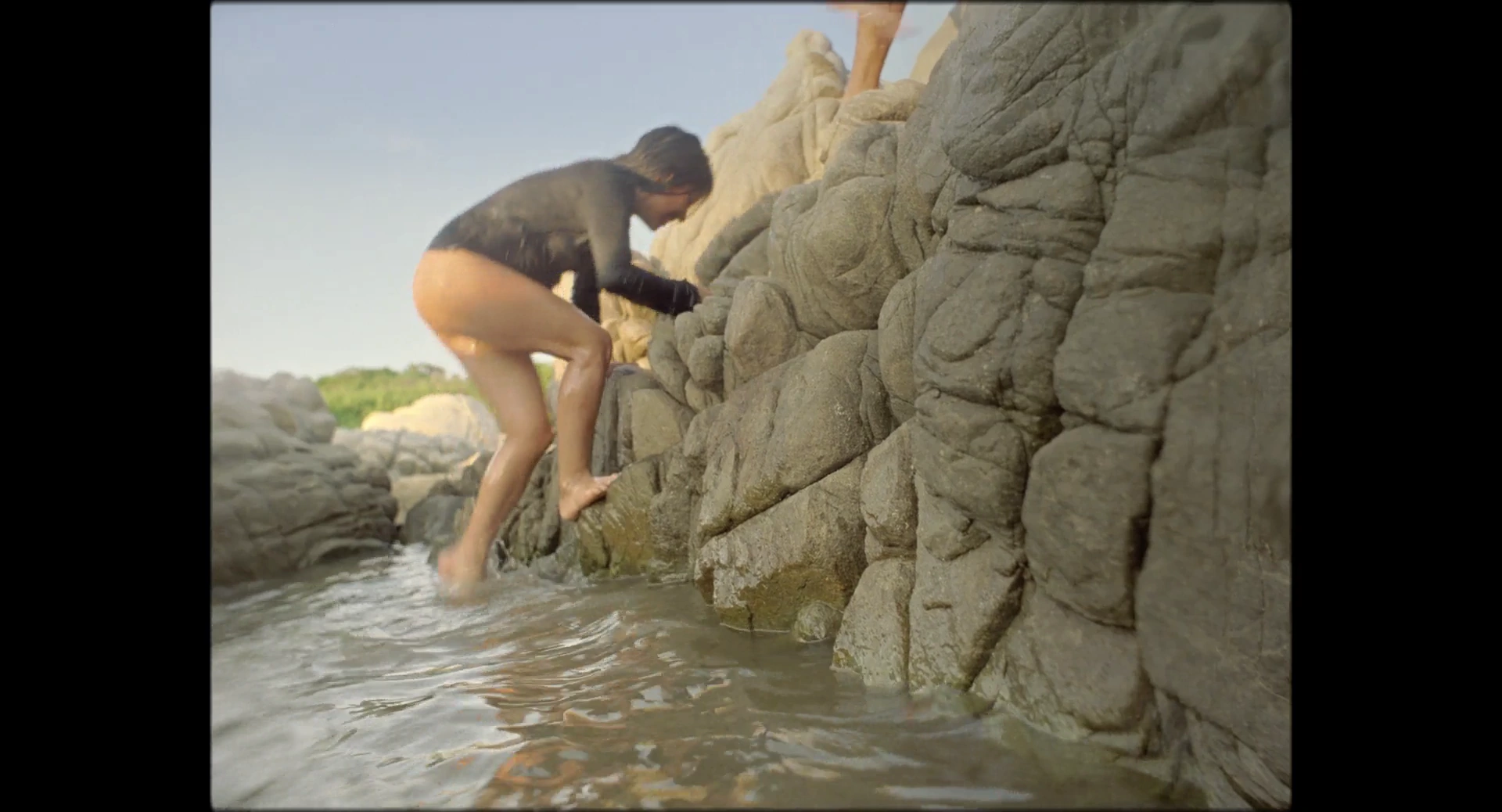
Nevertheless, this opening remains essential to understanding the conflict that will emerge later, because the film first gives us an image of what freedom means before revealing how it can be taken away.
Nature, the body and the limits of the camera's approach
The film's visual distinctiveness emerges in the way Reygadas photographs nature and bodies.
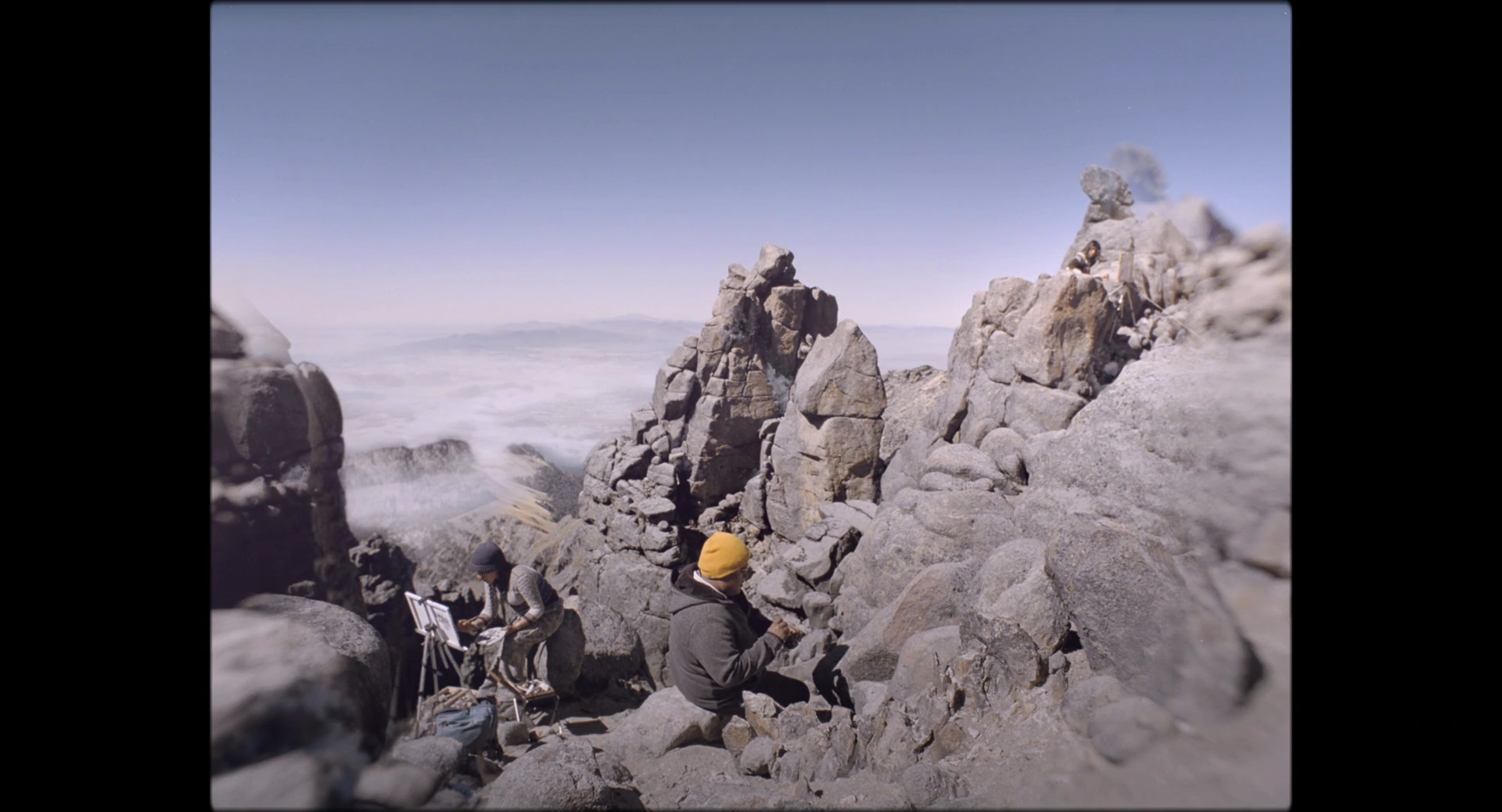
The nearly square frame, wide angle lenses and distortions at the image's edges all make the world seem familiar and strange at the same time.
Waves sometimes appear confined within an unnatural visual composition, geometric forms appear above the rocks, and some compositions suggest that mountains have features or that the place itself is breathing.
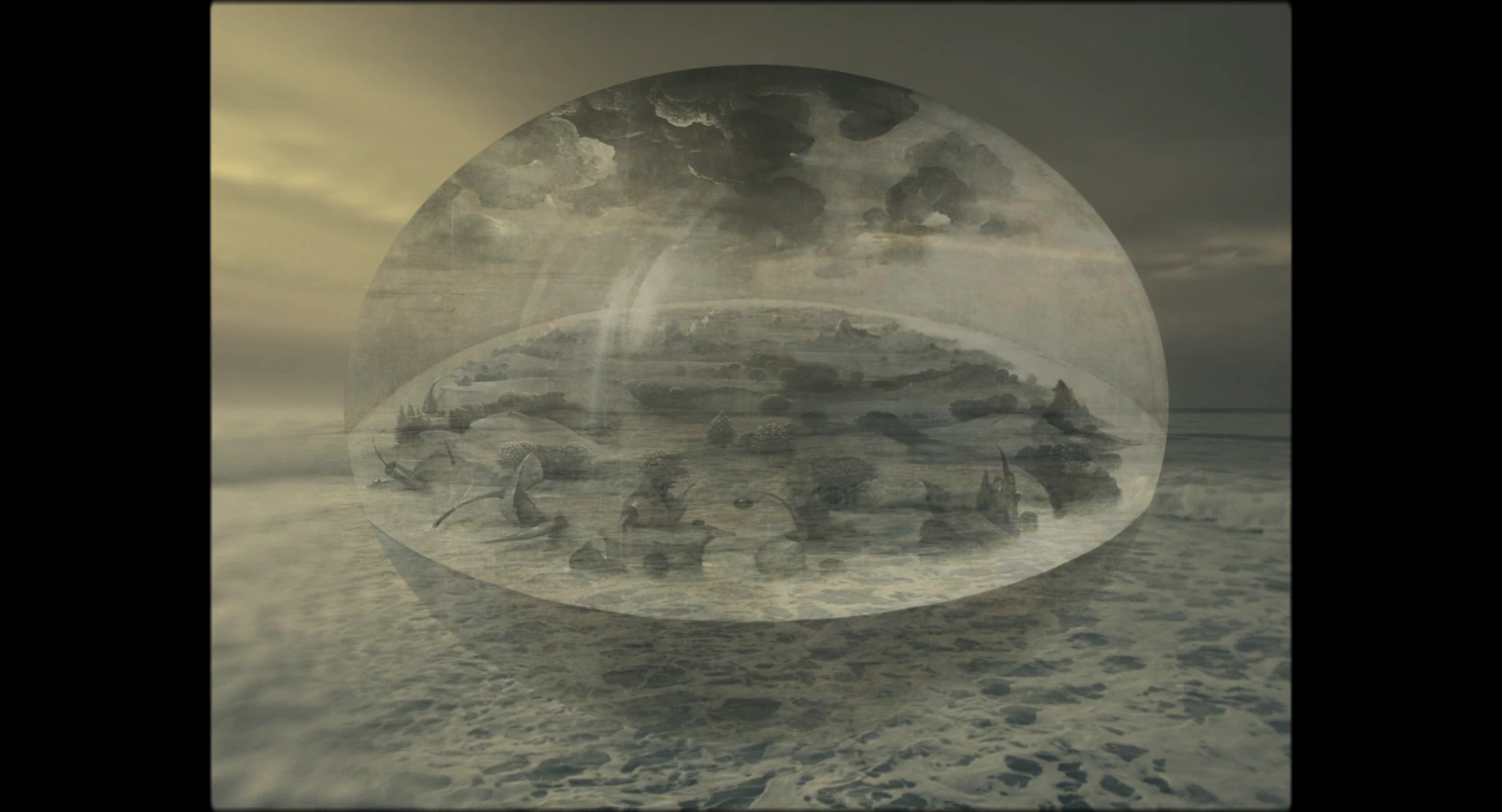
The film does not clearly confirm the presence of supernatural beings within these images; instead, it destabilizes our perception of nature.
Here we find one of its directorial strengths. Reygadas does not always rely on dialogue to create mystery; he changes how we see things, making the camera itself a reason to feel that the world does not obey familiar laws.
But this approach becomes more provocative in the shot where the camera moves anatomically inside the human body, as though its journey toward the person were no longer satisfied with the outer surface.
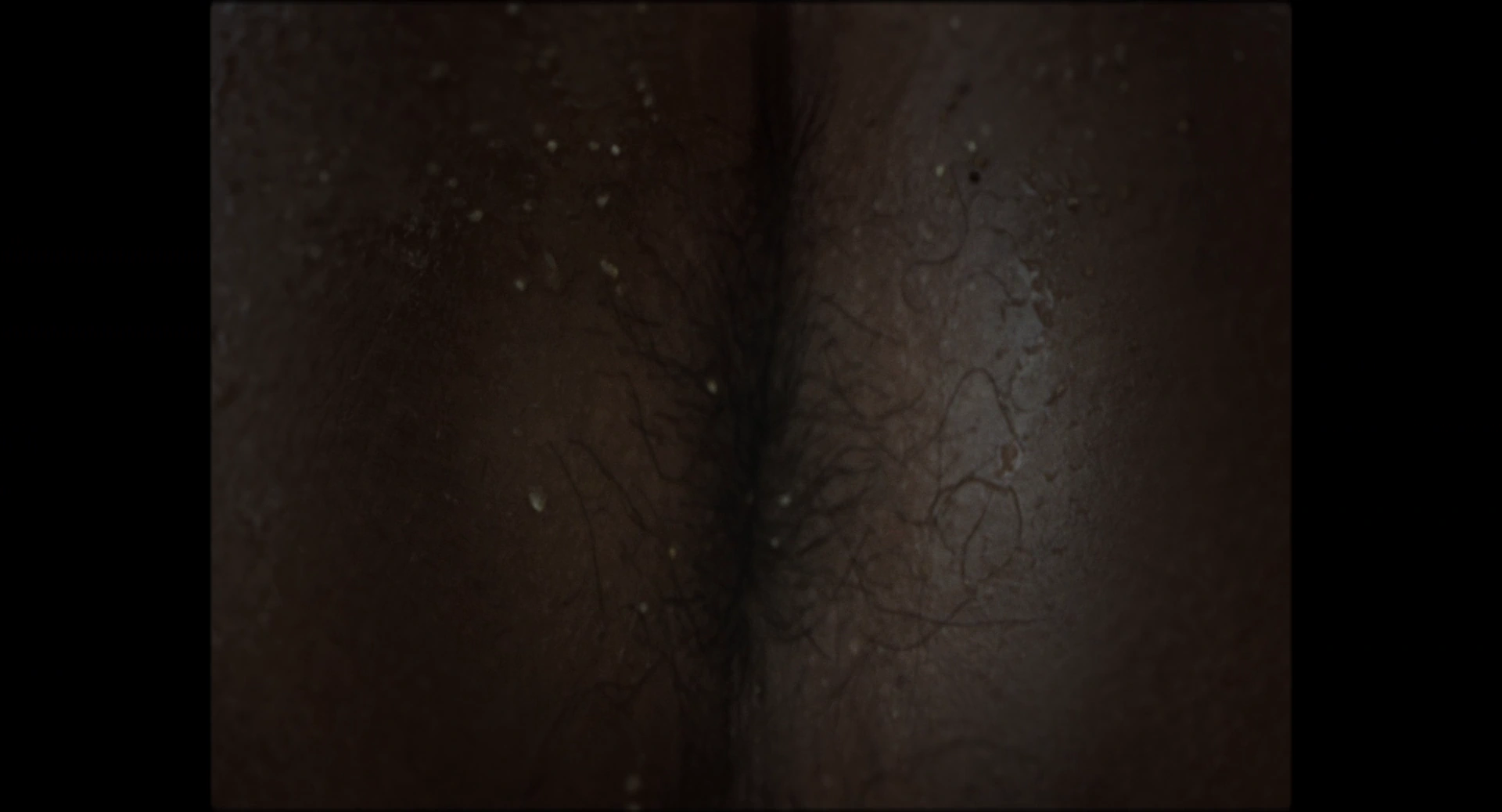
The shot can be seen as an attempt to change the world's scale before us, moving from a highly private bodily space into a broader visual experience.
It also raises a question about the boundaries the camera can cross.
Not every approach to the body expresses freedom, and not every visual revelation gives viewers a deeper understanding of the character.
At times, the director seems more fascinated by his ability to penetrate the image than concerned with what this penetration adds to its meaning.
Some of his visual experiments therefore succeed in arousing curiosity, while others become provocations that are difficult to connect sufficiently to the human conflict.
The police camera: when the image becomes an instrument of power
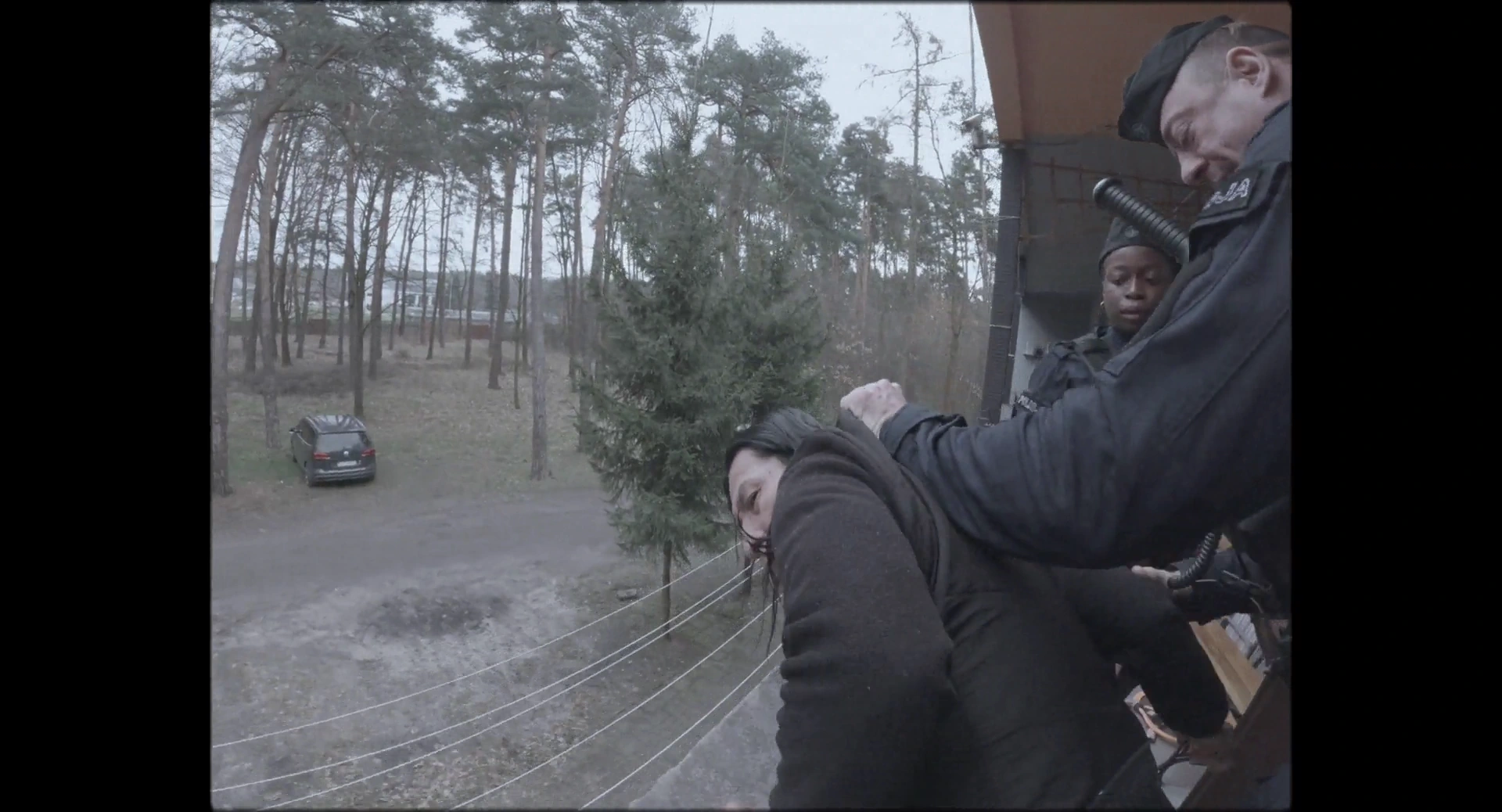
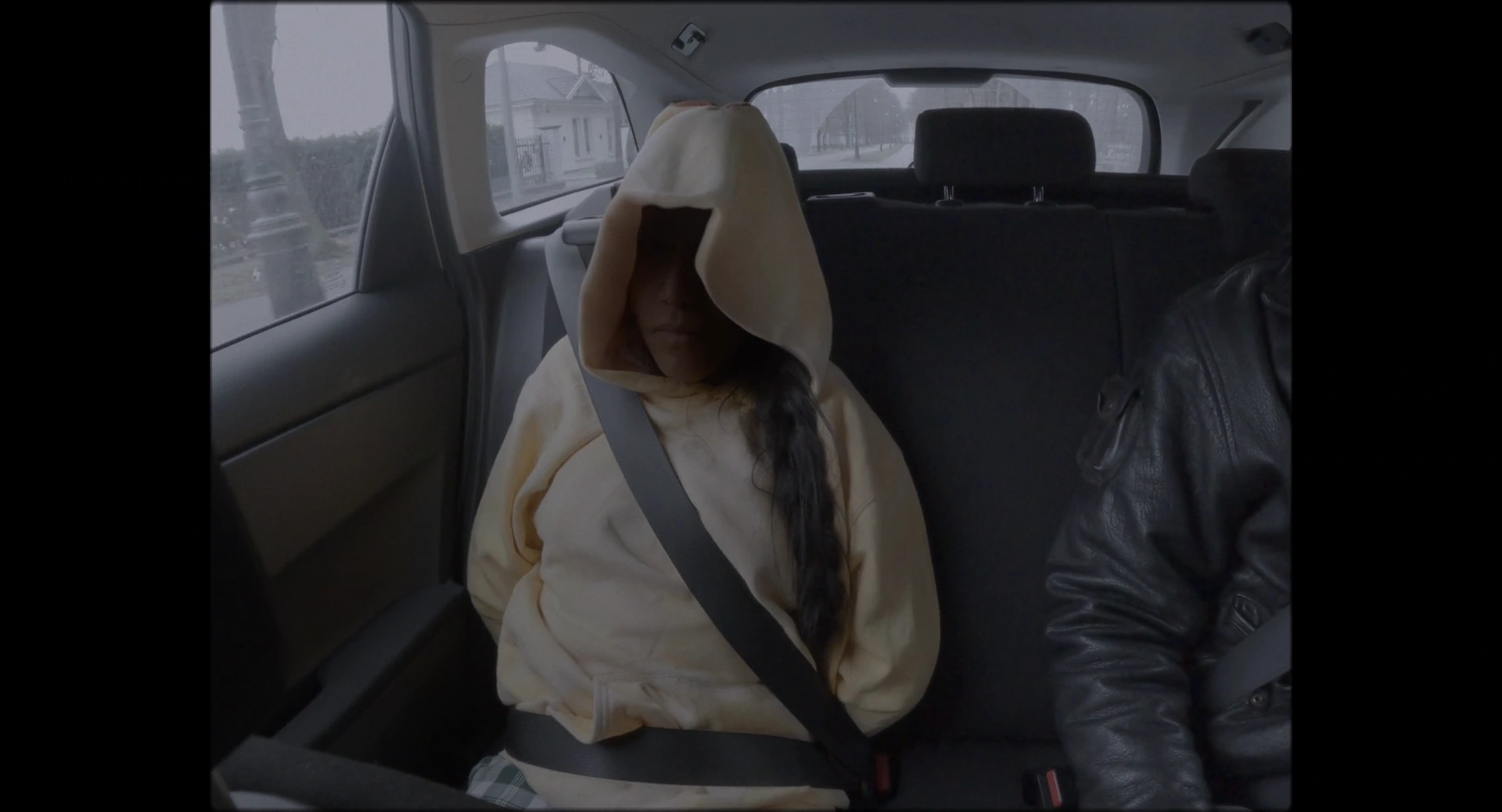
The meaning of the image changes radically when the film moves to a raid on an immigrant family's home in a wintry European setting.
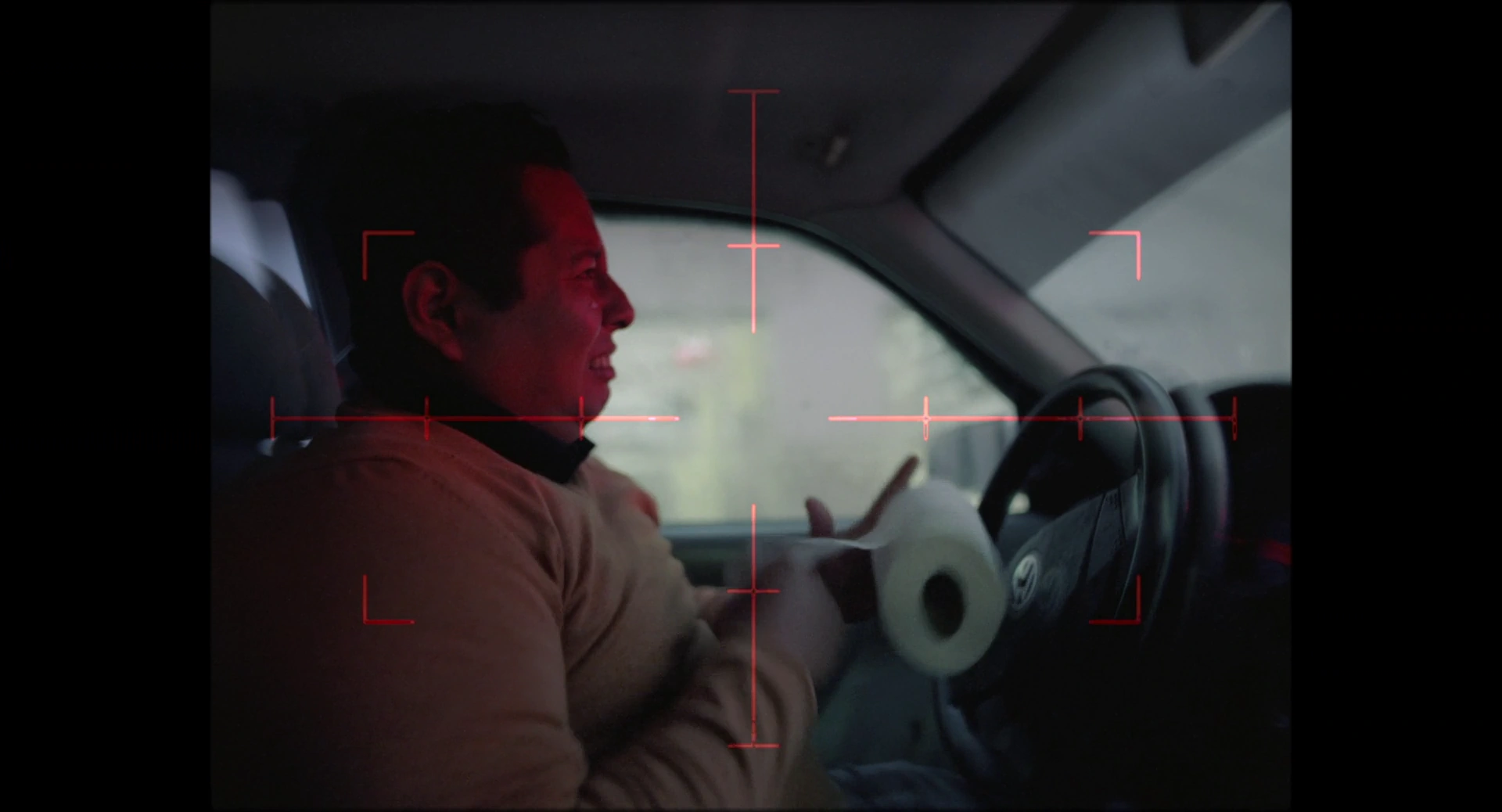
We do not watch the intrusion from the viewpoint of an observer standing at a distance, but through a camera attached to one of the police officers.
This decision gives the scene a particular tension, because the viewer is confined within the field of vision of the force entering the house.
We see what the officer can reach, and the image's movement prevents us from maintaining the usual safe distance between spectator and event.
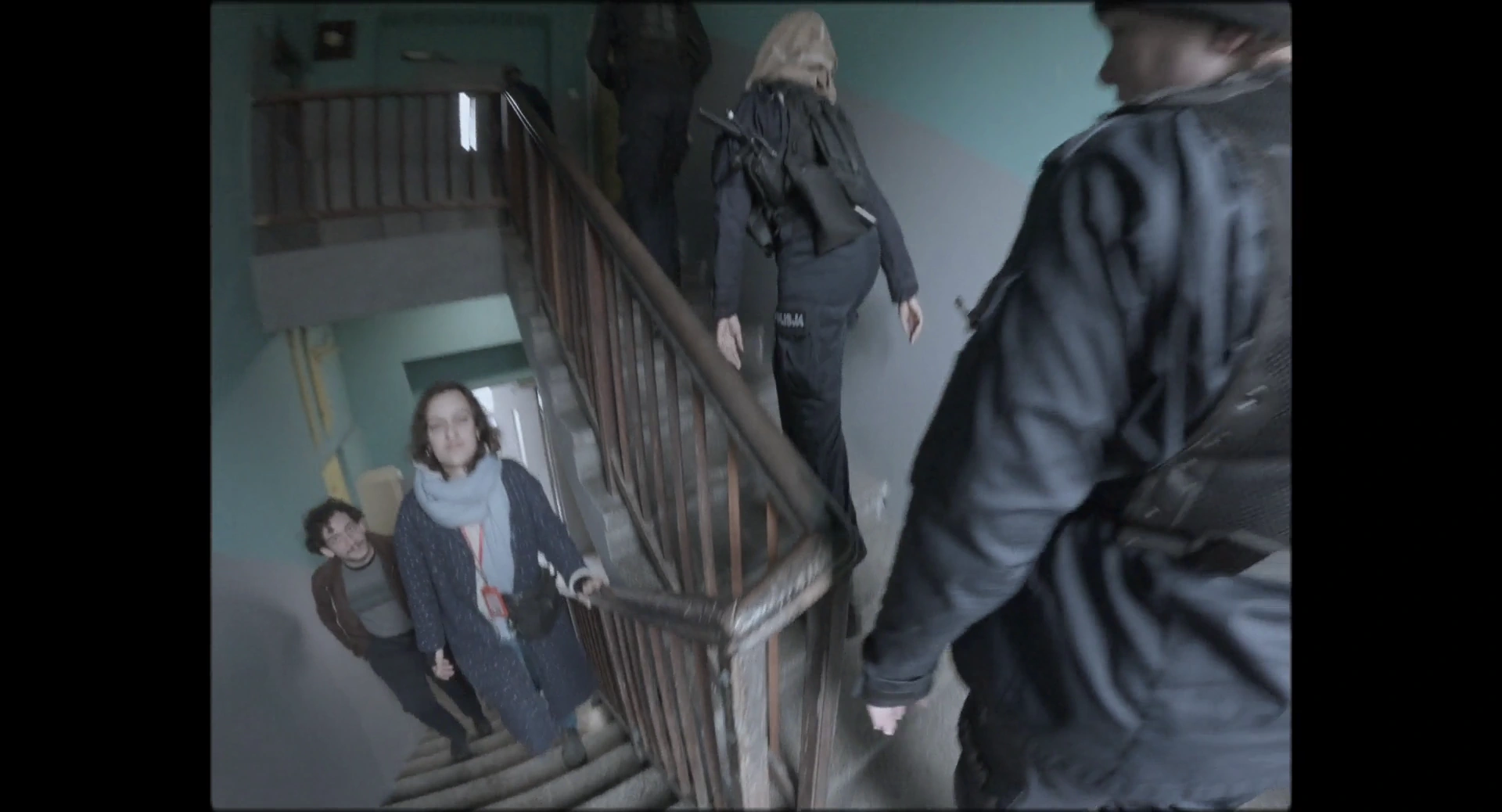
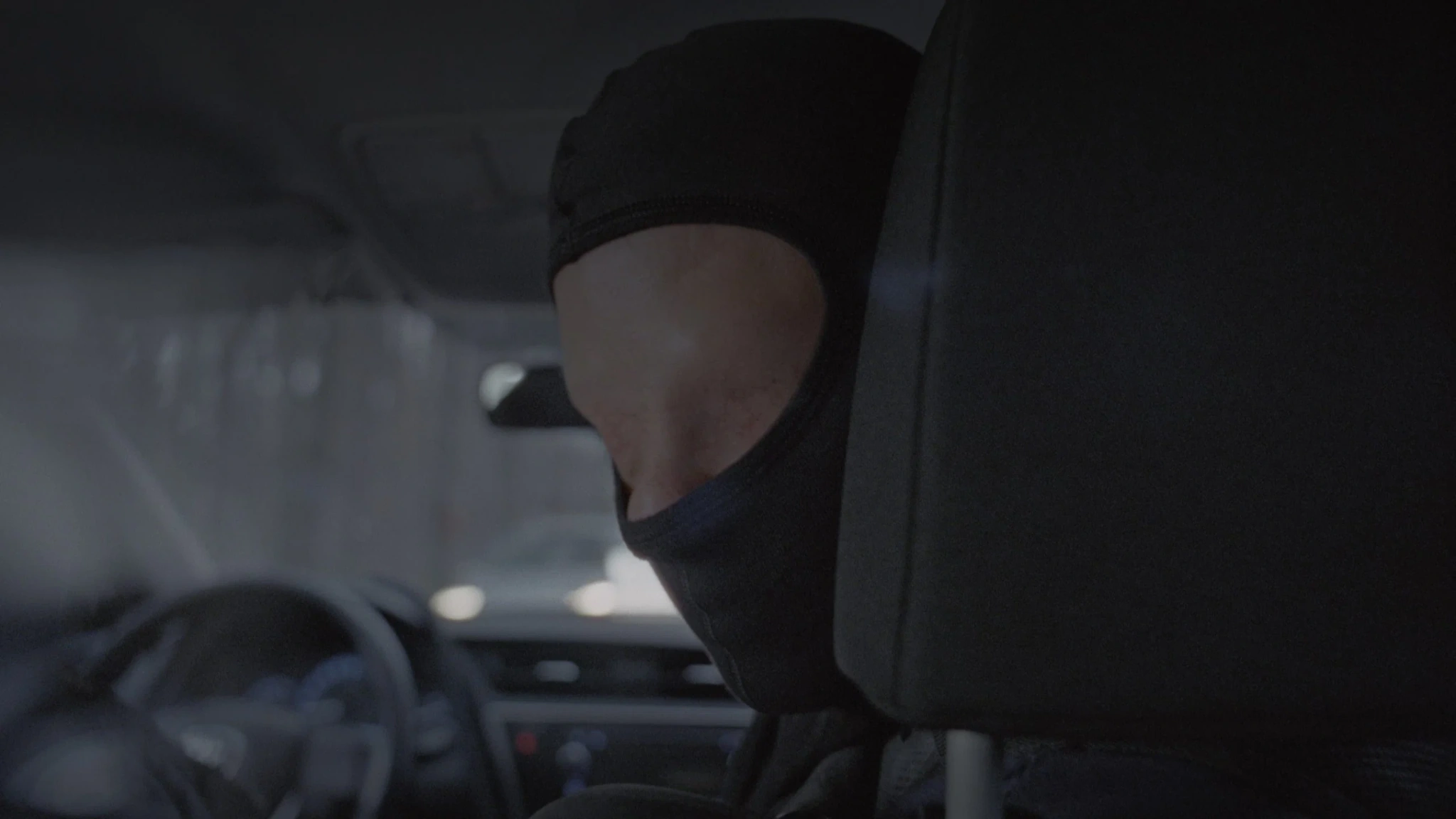
The choice matters beyond the immediate sense of danger.
The image here is not neutral; it is connected to an institution with the power to enter, search and detain.
Where the camera in the sea scenes approached bodies moving freely, it now approaches people who do not have the same ability to refuse its presence.
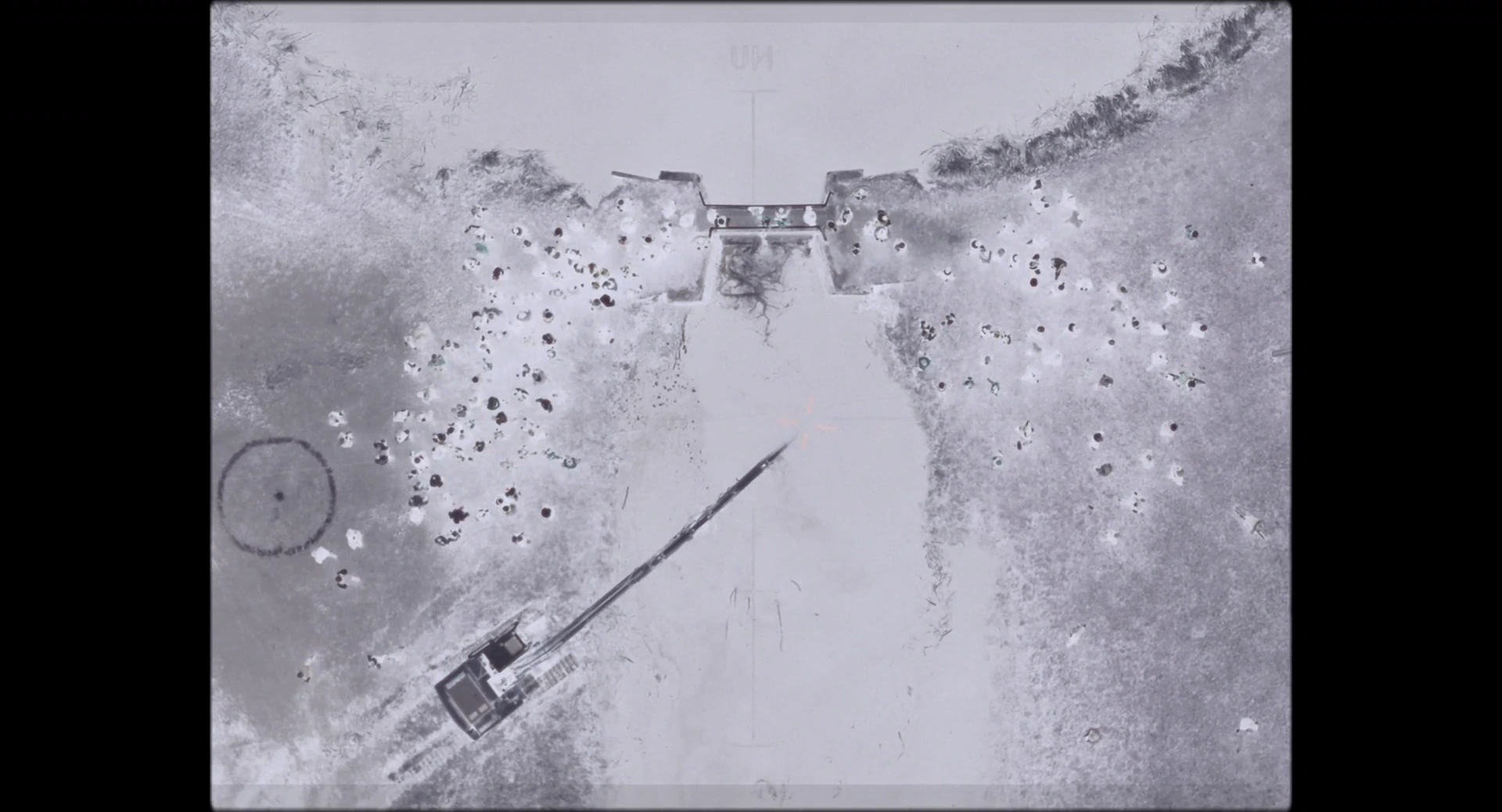
This transformation becomes harsher with Tzina's arrest, followed by the public punishment scene in which modern excavation equipment lowers her into the water while a crowd celebrates what is happening.
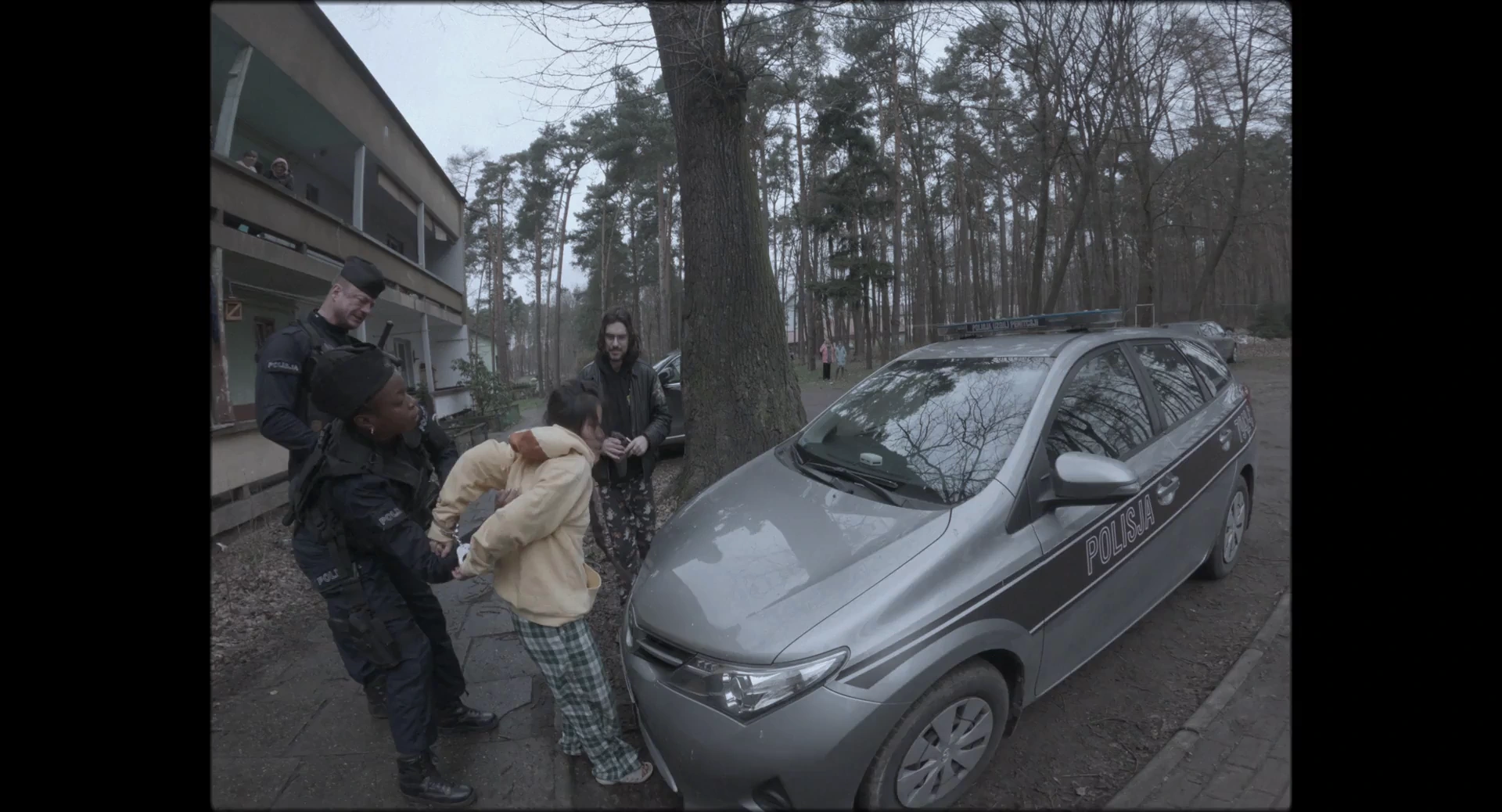
The combination of contemporary machinery and a punishment recalling witch hunts creates a horrifying paradox: technological progress does not necessarily mean progress in how human beings are treated.
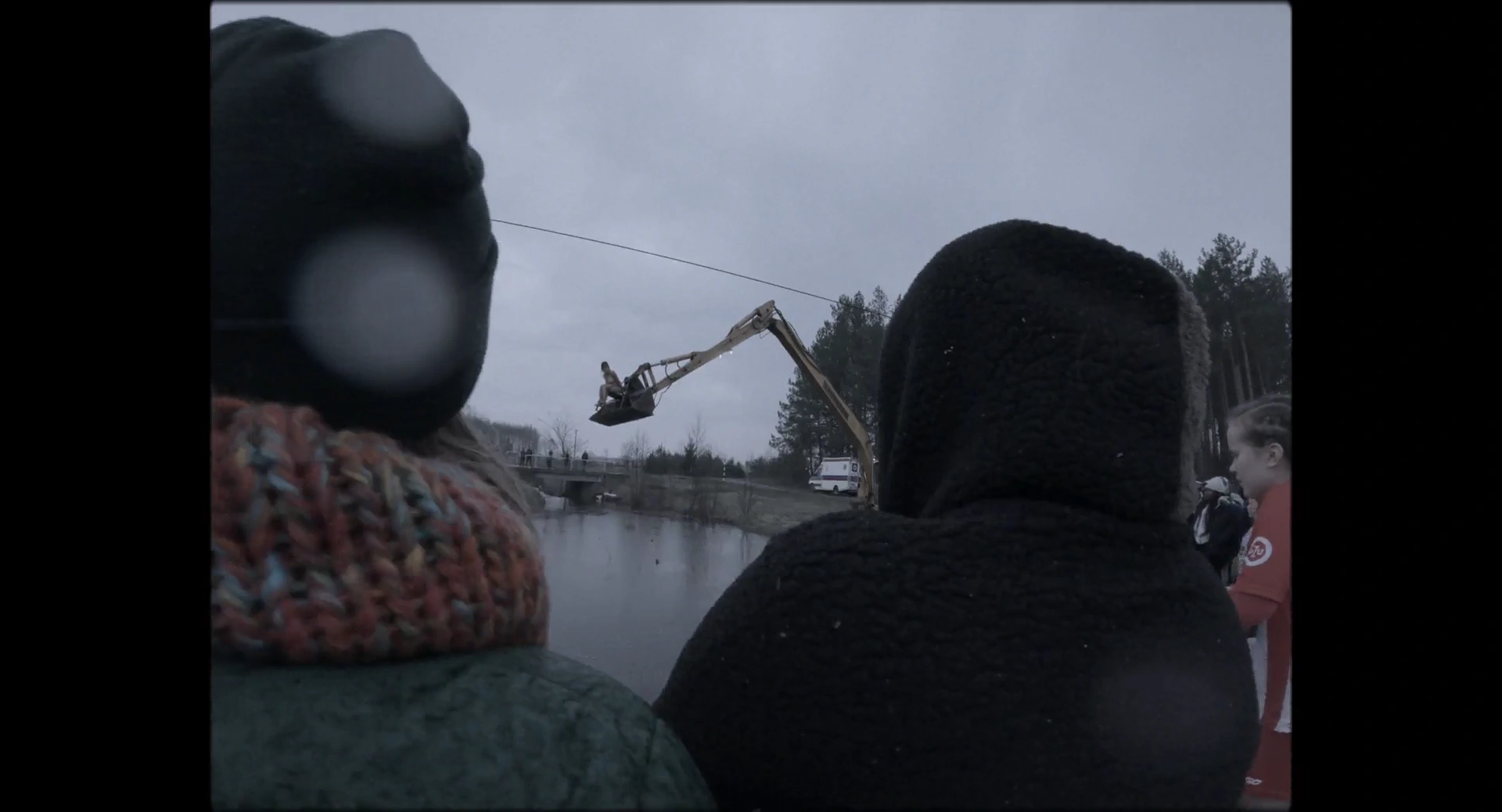
The tools have changed, but the logic of exclusion and punishment remains.
More disturbing still is the crowd watching and endorsing the event, turning violence from a decision made by a single authority into a social spectacle with people willing to celebrate it.
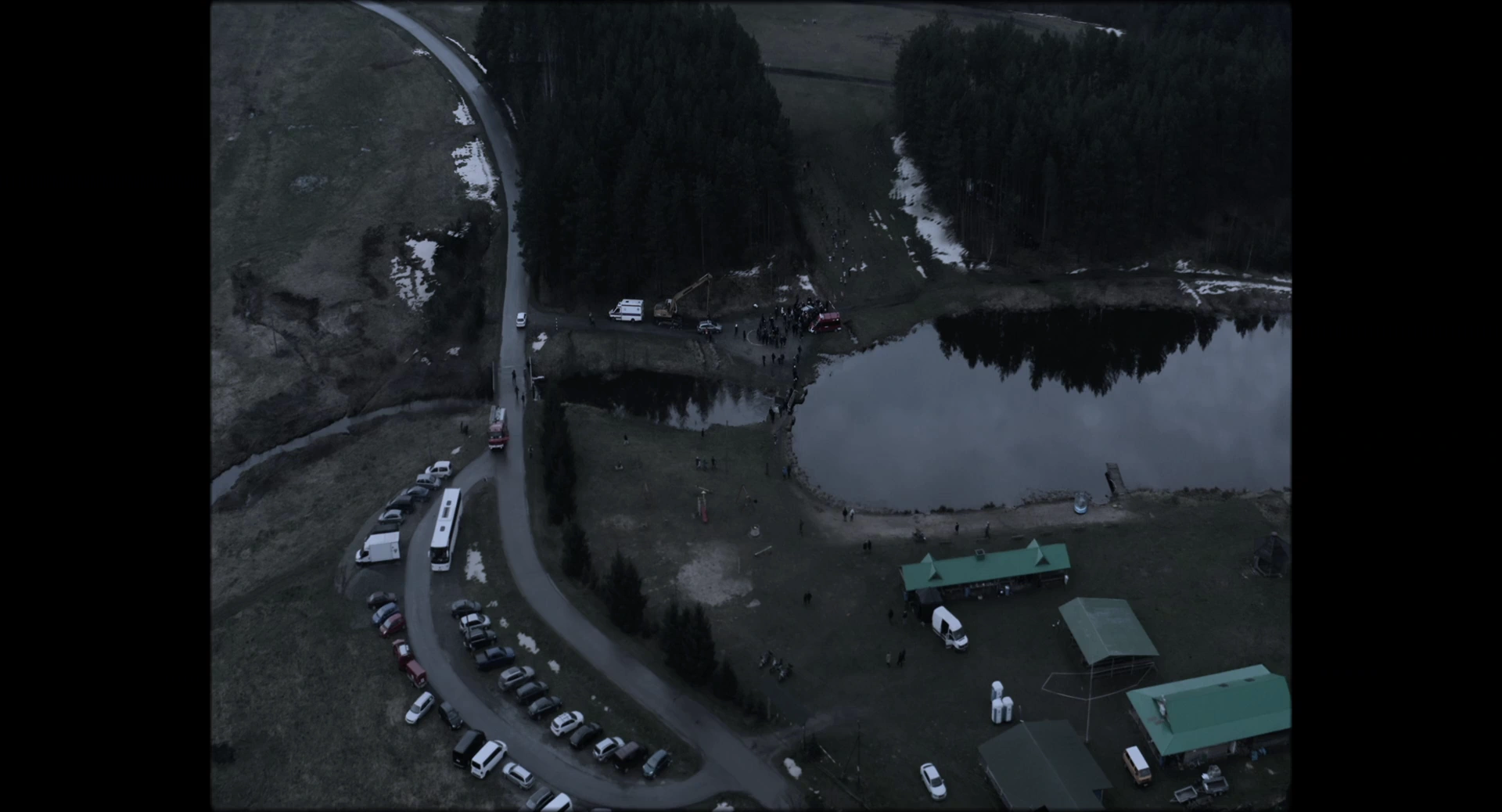
Here the director successfully makes the camera part of the event rather than merely a means of recording it, prompting us to question our own position as spectators watching another person's humiliation.
Invented language and the broad image of persecution
One of the film's strangest decisions is the use of an invented language for much of its dialogue.
Language usually helps us identify characters, their social environment and the place they belong to. Reygadas abandons these markers, making communication seem detached from familiar geography.
This choice gives the film's world an abstract quality, as though the characters inhabit a reality that cannot be connected to a single country or a particular culture.
Yet the presence of Spanish in parts of the trial restores some sense of a more specific place.
Strikingly, understanding the accusations does not make them more logical.
We may comprehend the words used by authority, but this gives its procedures neither justice nor acceptable justification.
Here Tzina's case in Europe connects with what Lina experiences before the Mexican authorities, when she faces accusations concerning witchcraft and forbidden intimate practices.
The film uses the two cases to reveal a shared logic: an institution possesses power, defines what it considers acceptable behavior, then punishes those who cross the boundaries it has established.
This comparison gives the film considerable scope, but also exposes one of its intellectual problems.
The persecution of immigrants within a European society is not necessarily identical to persecution involving private life and the body within a different Mexican context.
When the film brings these experiences together under a general image of cruelty, it risks weakening the particular circumstances that produced each case.
The problem is not the search for similarities between different injustices, but that those similarities need an awareness of their differences to become more persuasive.
We find that the invented language gives the film an unusual artistic identity, but sometimes helps strip the characters of their social roots so thoroughly that persecution becomes a broad idea rather than a specific human experience.
The body between care and reduction to material
The film offers some of its most affecting scenes when it moves from institutional violence to a quieter relationship between one person and another.
This appears in Mrs. Trueba's medical consultation, when she discusses earlier operations and her wish to undergo another surgical procedure.
The scene begins in a medical environment devoted to examining and studying the body, but develops into an embrace that gives the relationship between doctor and patient a warmer meaning.
What matters here is not the medical procedure itself, but the space the moment gives a character to express her wish to change her body.
Care does not necessarily eliminate differences in power or knowledge between the two people, but it differs radically from an examination imposed on someone without their choice.
This makes the scene more human than many of the provocative images surrounding it.
The film then offers almost the opposite inside a factory processing parts of human bodies, where tissue becomes material passing through mechanical procedures that do not acknowledge the person it once belonged to.
The comparison between the two scenes makes a clear point: the body can receive care, or it can be treated as nothing more than material.
The extreme close views of a piglet's birth add another perspective on bodily life and the boundaries separating human beings from other creatures.
Yet the abundance of these images also exposes a problem in the film's construction.
Birth, treatment, intimacy and destruction are not identical experiences; each carries a different meaning.
When all are presented through a heightened degree of bodily proximity and shock, the differences between them can become less clear.
The embrace therefore seems more affecting than some of the violent shots, because it gives us a human relationship we can understand, rather than merely a powerful image to react to for a few moments.
The film is more persuasive when it uses the body to reveal the experience of the person living within it, rather than making it a constant object of visual astonishment.
The extended trial: surveillance and the limits of pacing
The film's biggest problems become clear in the extended trial occupying a substantial portion of its later section.
Here Reygadas uses multiple recorded images from inside the courtroom, dividing our field of vision into adjacent shots, as though the judicial institution had acquired an enormous number of eyes watching everything.
The visual idea is highly appropriate to the film's concerns.
All these cameras produce neither better justice nor a more persuasive basis for the accusations. Increased surveillance instead becomes another means of imposing authority.
The problem is that the scene continues long after its function has become clear.
Accusations repeat and the scope of recording expands, but not every new extension brings a meaningful change in our understanding of the characters or the nature of the trial.
The intention may be to make viewers feel the confinement and exhaustion the institution imposes on the accused, but conveying that sensation does not relieve the film of the need to control its pace.
Not every experience of boredom serves an artistic meaning, even when the story concerns repression and detention.
Nevertheless, the trial regains some of its force when the threat extends to other people, including Milo and Saeed.
The moments of closeness we witnessed at the beginning now acquire a different meaning: what expressed trust can become material for surveillance and accusation.
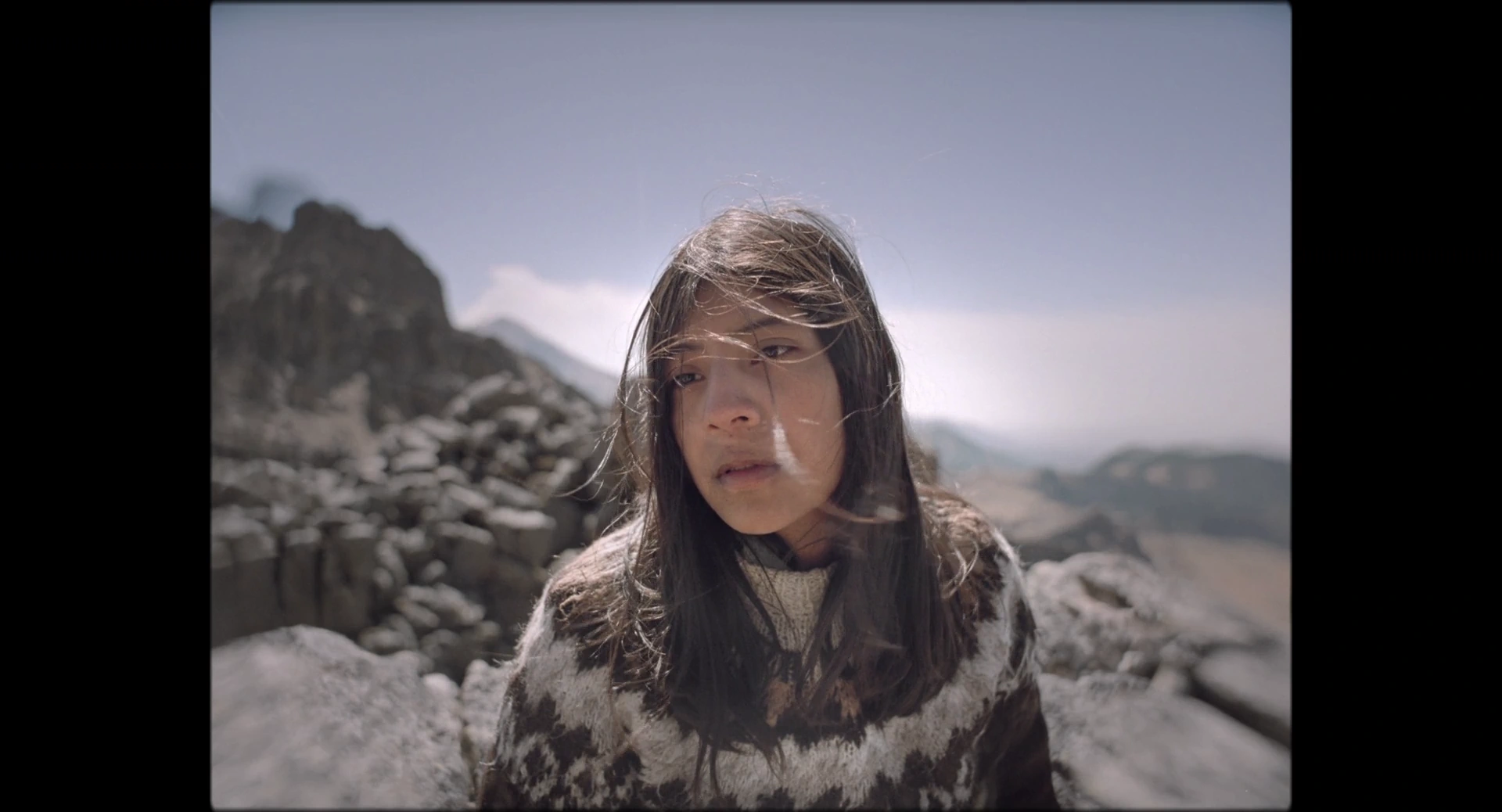
This is real dramatic development, because it does more than reaffirm the existence of persecution; it changes our understanding of what is now at stake.
The characters no longer face punishment concerning the past alone, but the possibility that their future behavior will be governed by fear of a watching eye.
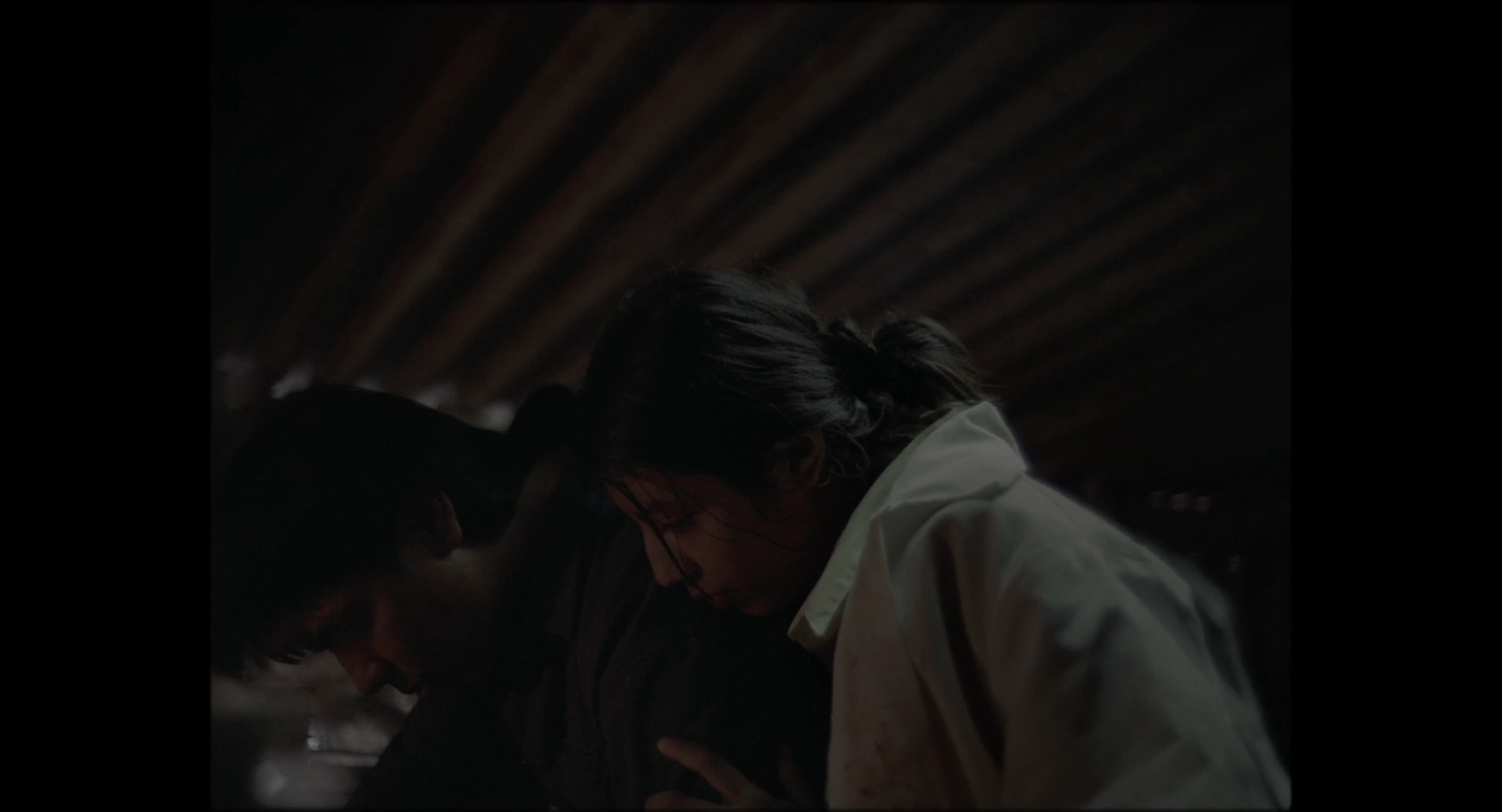
This addition does not erase the problem of the overall running time.
Across 158 minutes, the film relies heavily on accumulating images and ideas without always ensuring that every extension of time adds another level of meaning.
We therefore believe that shortening it could have given the experience greater focus, especially where the court repeats a position that has already become clear.
Sound and symbols: beauty alongside threat
The experience of Heil Jupiter! does not depend on images alone; sound design plays an essential role in creating its sense of mystery.
Waves, wind and natural sounds mingle with stranger sonic layers, while choral and operatic passages give some scenes a sense of scale exceeding the people and places we see.
Music is not necessarily used to steer viewers toward a particular emotional response, but to widen the distance between what they can understand and what they feel.
This is clear in the scenes involving fighter aircraft attempting to track a mysterious sound emerging from the ground.
The film brings together a military force equipped with advanced technology and a phenomenon that this technology cannot seem to explain easily.
The paradox is compelling because it makes an institution usually associated with control confront something beyond the boundaries of its knowledge.
The fires spreading across mountains at night also create a dual sensation of beauty and threat; an image can be majestic and disturbing at the same time.
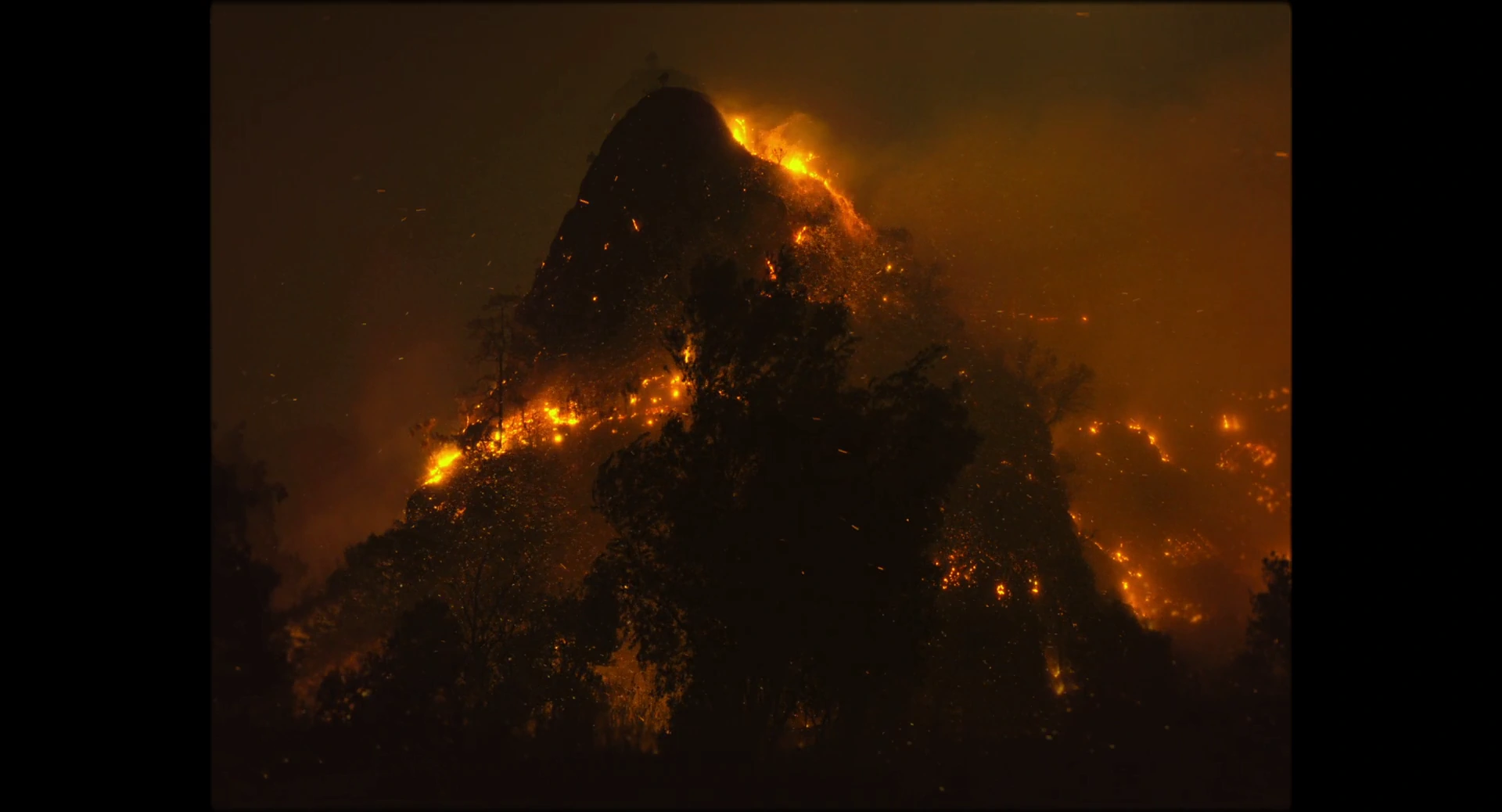
These scenes do not need a definitive explanation for every symbol to achieve their effect.
One of their strengths comes from retaining some mystery without asking us to treat every image as a riddle with a single answer.
This does not mean ambiguity alone guarantees quality.
There is a considerable difference between a scene opening several possibilities for interpretation and one that gives us too little to construct any clear reading.
When image and sound work together to change our sense of place, power and danger, Reygadas's mystery becomes intriguing. When symbols accumulate without creating a new relationship, their impact begins to diminish.
Final verdict
Final verdict
The film offers a visually and sonically daring experience, affirming Carlos Reygadas's ability to create a world unlike the conventional construction of narrative cinema. The sea scenes successfully give freedom a tangible human image, while the police camera changes the viewer's position from an observer of events to someone seeing the world from inside an instrument of authority. Some quieter encounters also give the film a sensitivity that extends beyond its provocative nature. These strengths encounter two clear problems: an excessive accumulation of shocking bodily images, and a length that makes some ideas repeat instead of develop. The film's reach across different cultures and places also does not always give it an equal ability to understand the particular nature of persecution within each society. For us, Heil Jupiter! succeeds more as a sensory experience that challenges the act of watching than as a dramatic and intellectual structure that remains coherent throughout its running time. It contains moments that are difficult to forget and deserves the attention of experimental cinema viewers who accept ambiguity, explicit bodily and sexual scenes, and disturbing violence. Yet it is not an easy experience, and its artistic daring does not place it beyond criticism. Ultimately, its strongest moments remain those that help us understand the person behind the image, rather than those that merely astonish us with what the camera can reveal.
Your turn
The question for you: did the shocking bodily scenes in Heil Jupiter! help you understand its idea of freedom and persecution, or did their abundance weaken that idea's impact over time?
AUDIENCE VOTE
Do you agree with the MB rating?
Choose once from this browser. You can change your answer at any time.