The review
The screenplay and dialogue: an ordinary assignment begins the doubt
The strongest aspect of the opening is that the characters' reason for visiting the cursed location is connected to their work, rather than curiosity or a desire for adventure.
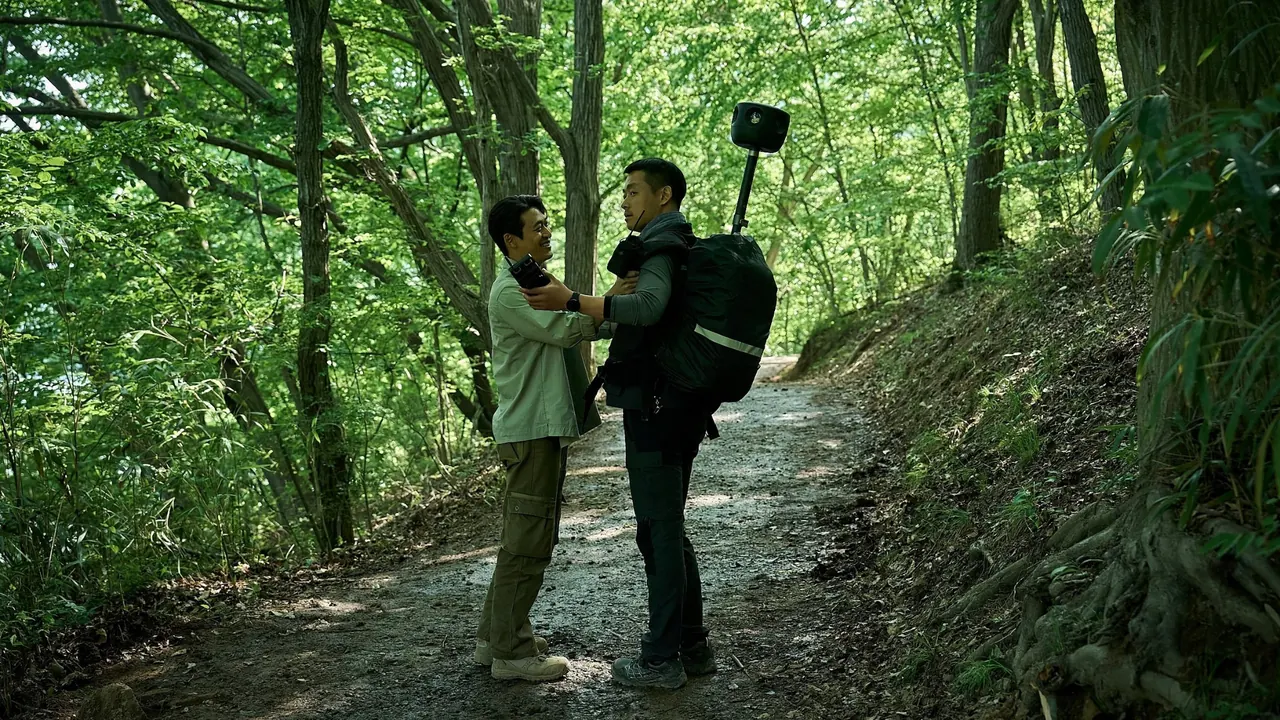
Han Su In works for a company responsible for filming locations and supplying panoramic images for digital maps.
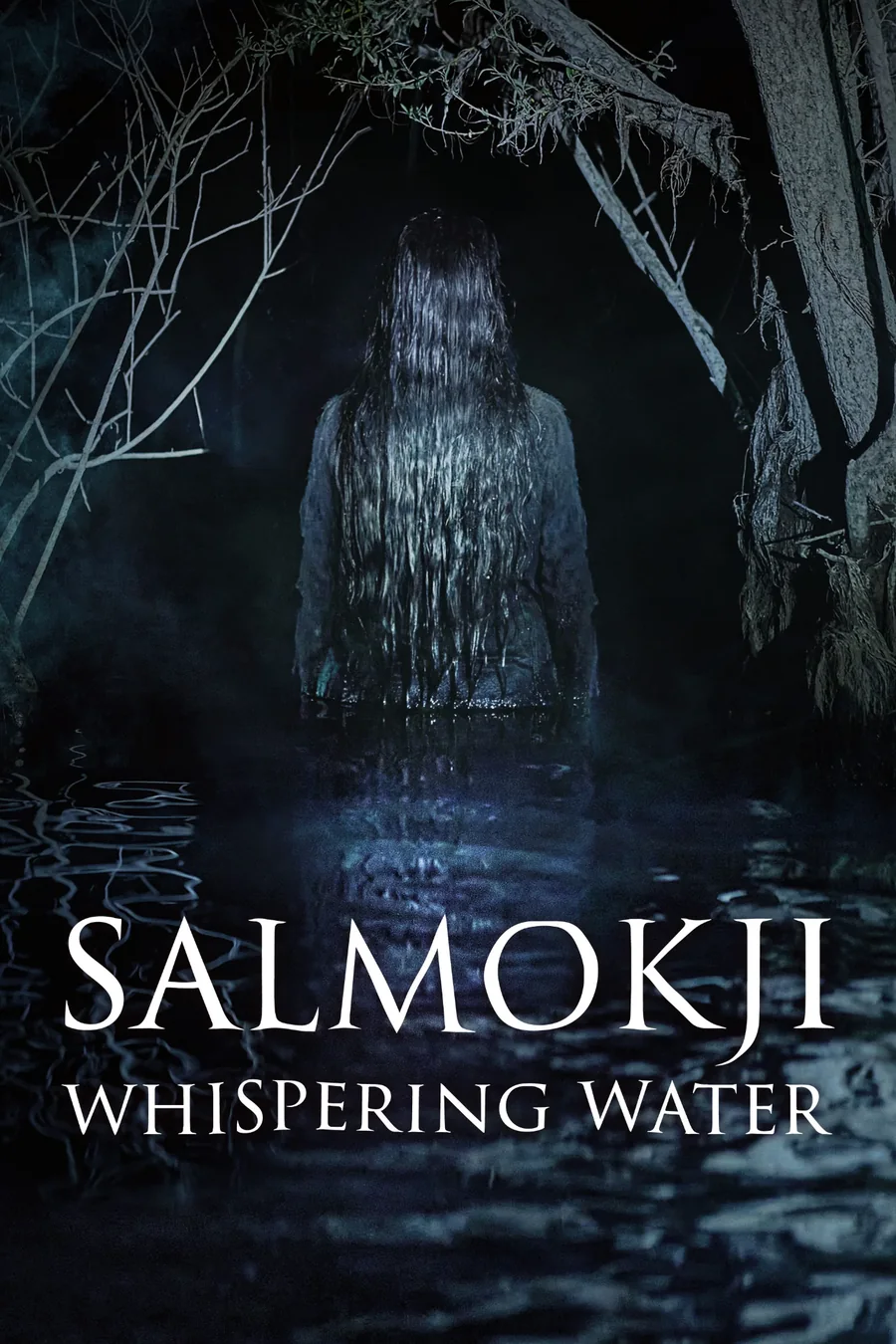
When a strange image appears near the Salmokji reservoir, apparently showing something resembling a woman's ghost at the water's surface, local residents begin complaining. They do not want the location's frightening reputation to grow.
The company sees a very simple solution: send a crew to film the location again and replace the image.
This is a good premise because it gives the characters an understandable reason to visit somewhere nobody wants to approach.
More importantly, it makes the means of discovering the horror part of the story itself.
The camera, supposedly a tool for recording reality, becomes the reason for questioning that reality.
Did it capture something that actually exists?
Or is there an ordinary explanation for the image?
The film begins building doubt before presenting the danger directly.
I think this choice gives the opening a useful measure of credibility, especially because the characters do not arrive as a group of ghost hunters.
They are a working crew, and some of them do not take the warnings seriously.
Even so, the initial motivation remains slightly limited.
Simply photographing an isolated location again is not a dramatic idea strong enough to carry an entire film.
The opening's success therefore depends on how quickly the director can turn an ordinary assignment into an unfamiliar experience.
This is where the film really begins offering its strongest material.
The reservoir: the place is the central character
The most affecting character is neither Su In nor anyone else on the team.
It is the reservoir itself.
The place seems uncomfortably quiet.
There are isolated roads, trees surrounding the water and wide spaces that give us no way of knowing what might be hidden behind them.
The best part is that the film does not need to change the location's appearance excessively to make it frightening.
It makes use of the place's existing nature.
The reservoir really exists in South Korea and is associated with local stories about water spirits. This gives the story a background that helps build a sense of danger.
Within the film, the story suggests that the location was an old cemetery before the water submerged it.
What I like more than that background is the way the spirits' nature becomes a central rule of the horror.
These entities are tied to water. They cannot simply chase people across dry land as creatures do in many conventional horror films.
They therefore have to draw their victims toward the water.
The threat changes completely.
Instead of fearing a creature running behind them, the characters face danger in things that might lead them to approach the wrong place.
A familiar voice.
Someone who seems to need help.
Or a sudden feeling that entering the water is the only logical choice.
This idea makes the reservoir resemble a trap waiting for its victim to take the final step alone.
I find that more effective than continuous chases, because it sometimes lets the viewer recognize the danger before the character does.
Even small details associated with the location, such as stacked stones and the mysterious woman who appears early in the visit, create a feeling that the team has entered a space governed by rules it does not understand.
The film is at its best when it lets us observe that space and wait for something to happen, rather than placing the ghost directly before us.
Sound design: fear beyond the frame
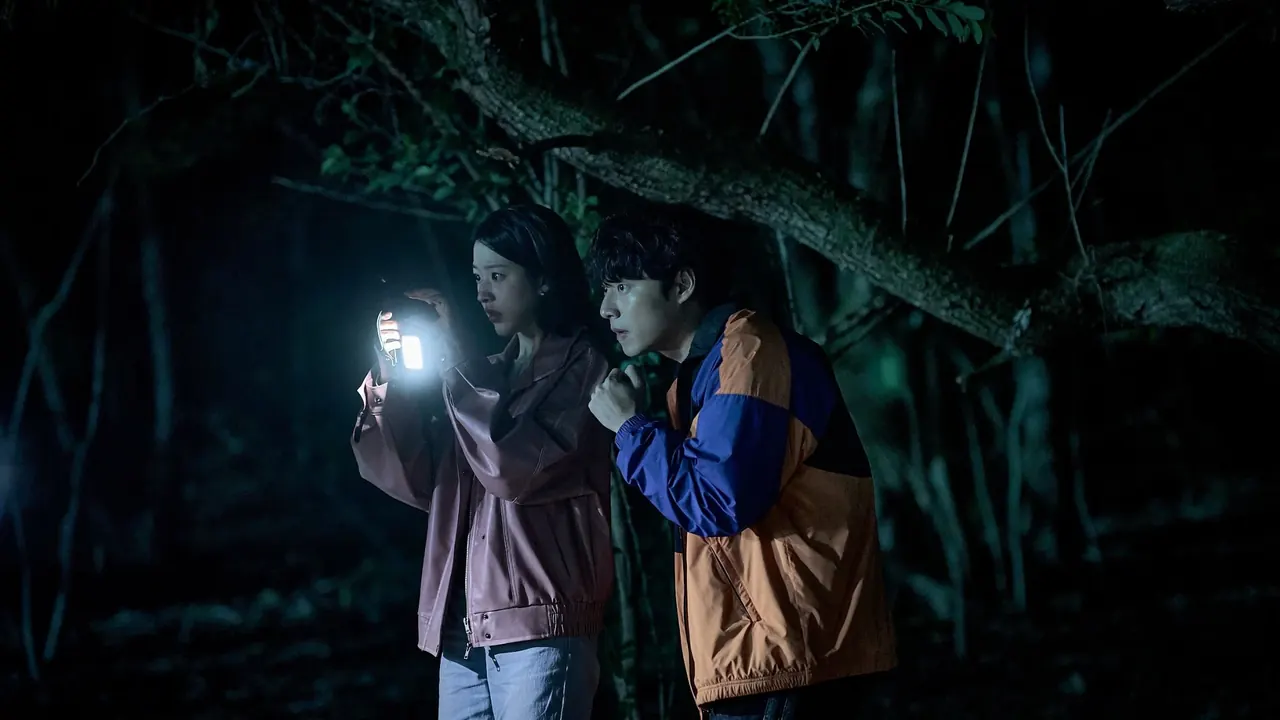
If one element deserves the greatest credit for the horror in Salmokji: Whispering Water, I think it is the sound design.
The film understands that a sound does not always need to be loud to be frightening.
Sometimes the strongest effect comes from a small noise whose source we cannot identify.
Stones scraping together.
A slight movement in the water.
The sound of something falling far away.
Or a sudden disturbance somewhere that seems completely still.
These details make us start observing the scene differently.
Instead of concentrating only on what appears before the camera, we become preoccupied with what is happening beyond the frame.
That is one of the most effective uses of sound in horror.
The viewer begins anticipating danger even when there is no visual indication of it.
One idea I particularly liked involves the sound of a stone moving across the water's surface. A very simple action becomes a signal that something unnatural is taking place.
More importantly, the film does not constantly rely on music to impose fear on us.
Some scenes give natural sounds enough room to build tension gradually.
When that happens, silence itself becomes disturbing.
We cannot tell whether it means the danger has ended or become so close that we can no longer hear it.
Director Lee Sang Min and the sound team deserve credit for this.
The aural experience is more than an extra element placed over the image. It is one of the primary forces driving the horror.
I think the film succeeds in making the viewer more sensitive to any sound coming from the water, even after the nature of the threat becomes clear.
Filming equipment: seeing does not mean being able to intervene
One of the film's smartest directorial ideas is using the recording equipment itself to create tension.
We are not simply following characters carrying ordinary cameras.
There are panoramic cameras, wide lenses and equipment that makes it possible to observe the location from several angles.
The film uses an approach close to footage recorded by the characters themselves, without committing to it entirely.
We see events directly, but we also see what the equipment within the story records.
This combination suits the premise very well.
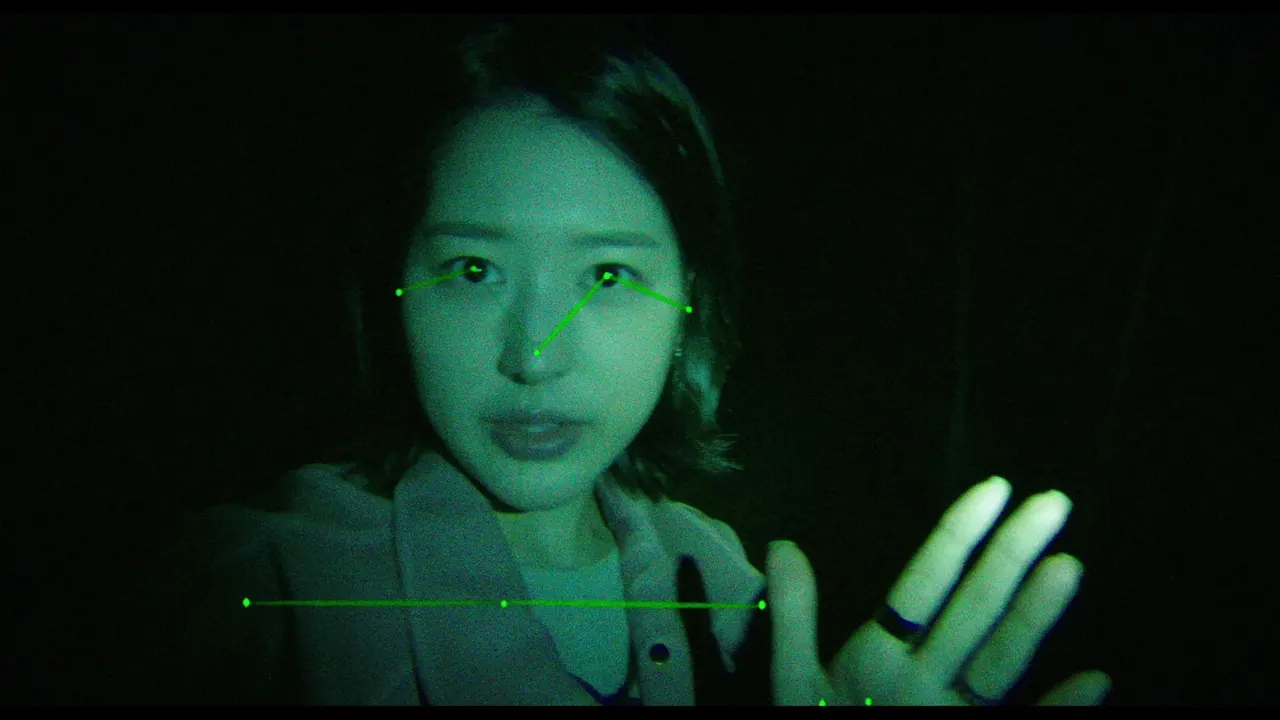
That is particularly true when one crew member is sent to photograph an isolated road while Su In monitors the images and remotely controls the direction of the view.
The scene creates a different kind of fear.
The person before the camera cannot necessarily see what we can see. The person watching from a distance cannot intervene easily if something happens.
The gap between seeing and being able to act becomes the source of tension.
Wide lenses and image distortions also make the setting look unfamiliar at times, even when nothing clearly supernatural is taking place.
But I do not think the film achieves a perfect balance in every scene.
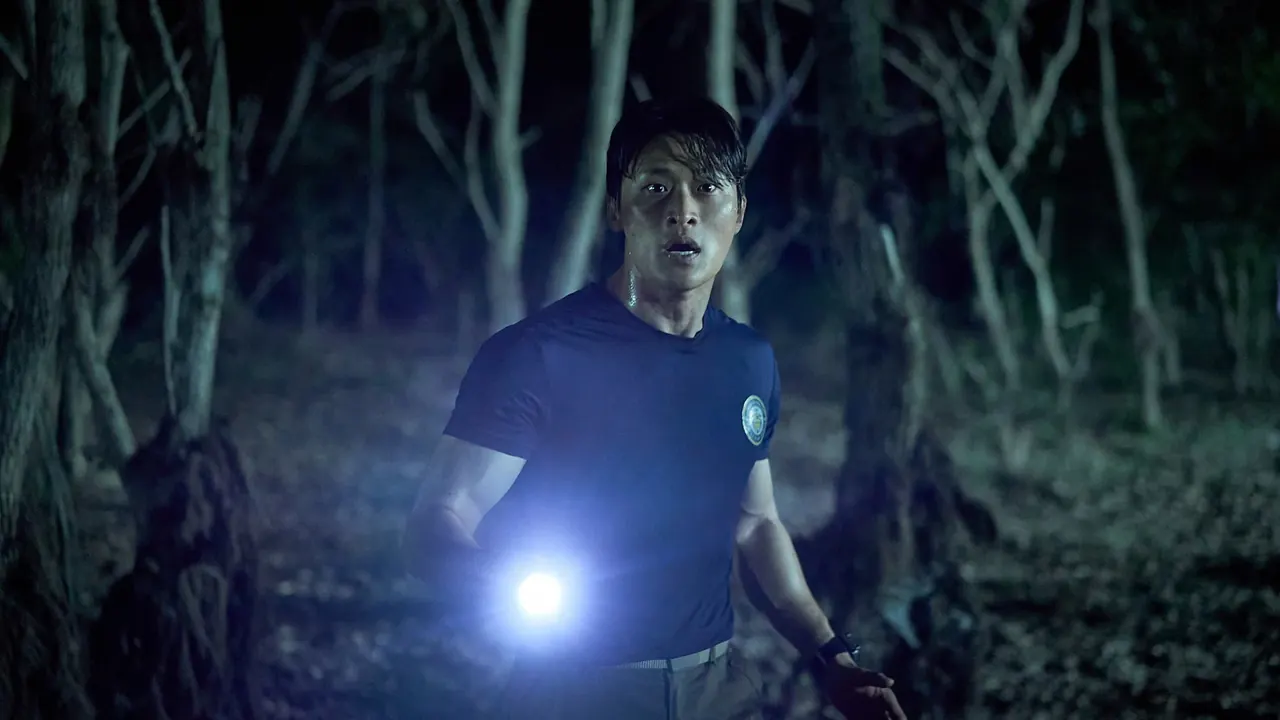
Extreme darkness makes some moments harder to follow than they should be.
There is a difference between hiding something from viewers to frighten them and making an image so unclear that they cannot understand what happened.
The film approaches the second problem in some scenes.
Even so, integrating the filming approach into the characters' profession is one of the choices that gives the film a distinct visual personality.
Spirits and imitation: who is standing before you?
One especially interesting aspect of the spirits is their ability to imitate others.
This lets the film move from horror associated with a location to doubt within the relationships themselves.
If the entity confronting you can appear as someone you know or imitate their presence, how can you be certain that the person you see is actually who they seem to be?
The crew member who reached the reservoir before the others and disappeared for a while becomes a troubling element.
His return does not feel entirely reassuring, particularly because something about his behavior is strange and difficult to explain.
The film benefits from this ambiguity rather than providing a direct answer.
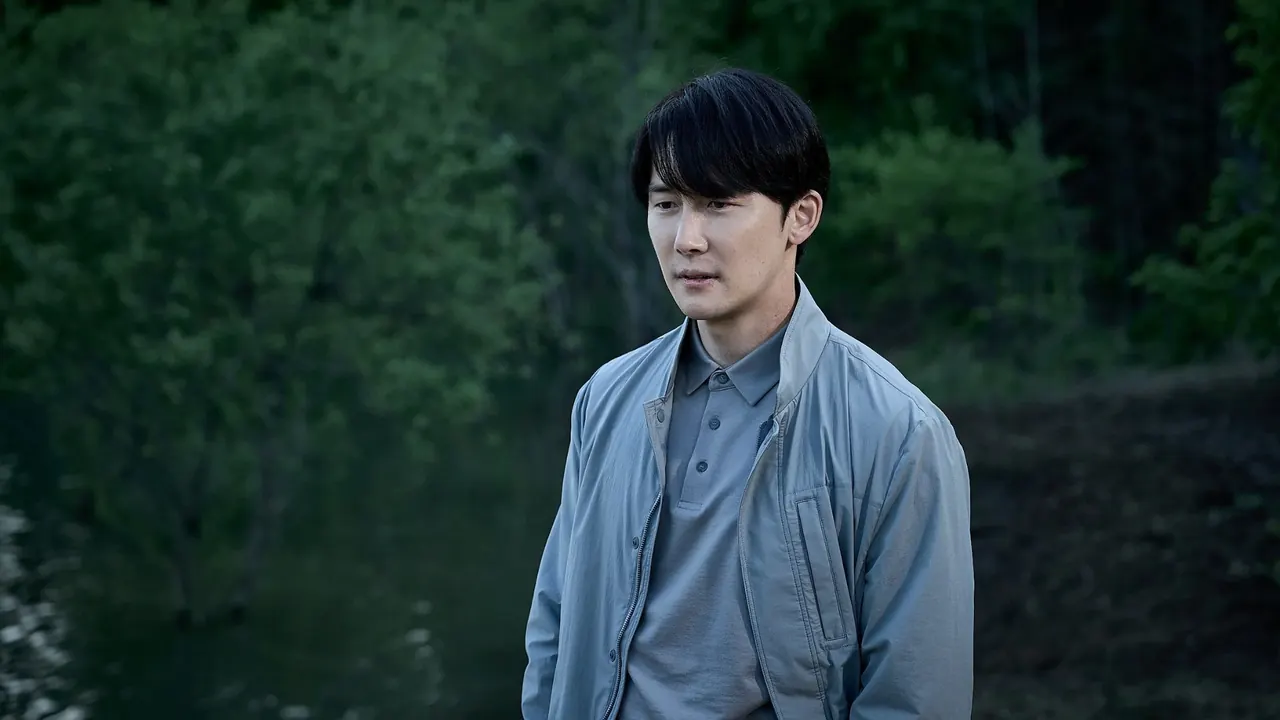
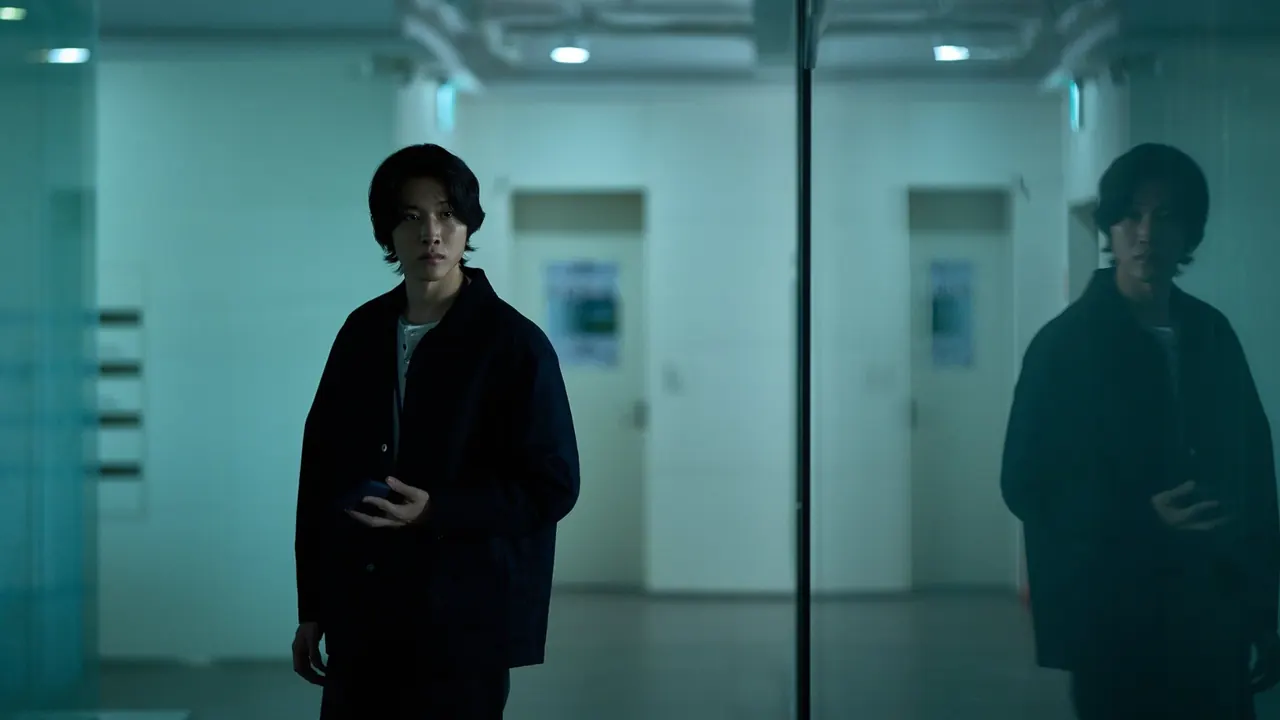
The spirits' abilities also make certain scenes more tense, because we begin wondering whether the characters are acting of their own free will or being lured by something else.
This is an important distinction.
The fear is not only about death or being attacked. It also concerns losing the ability to distinguish what is real from what is deceptive.
I like the way the director uses this idea to bring the characters and the audience closer to discovering the truth at the same time.
But I wish he had explored it further. It could have created more complex psychological horror than some of the direct surprises the film later relies on.
Kim Hye Yoon: a performance stronger than the character writing
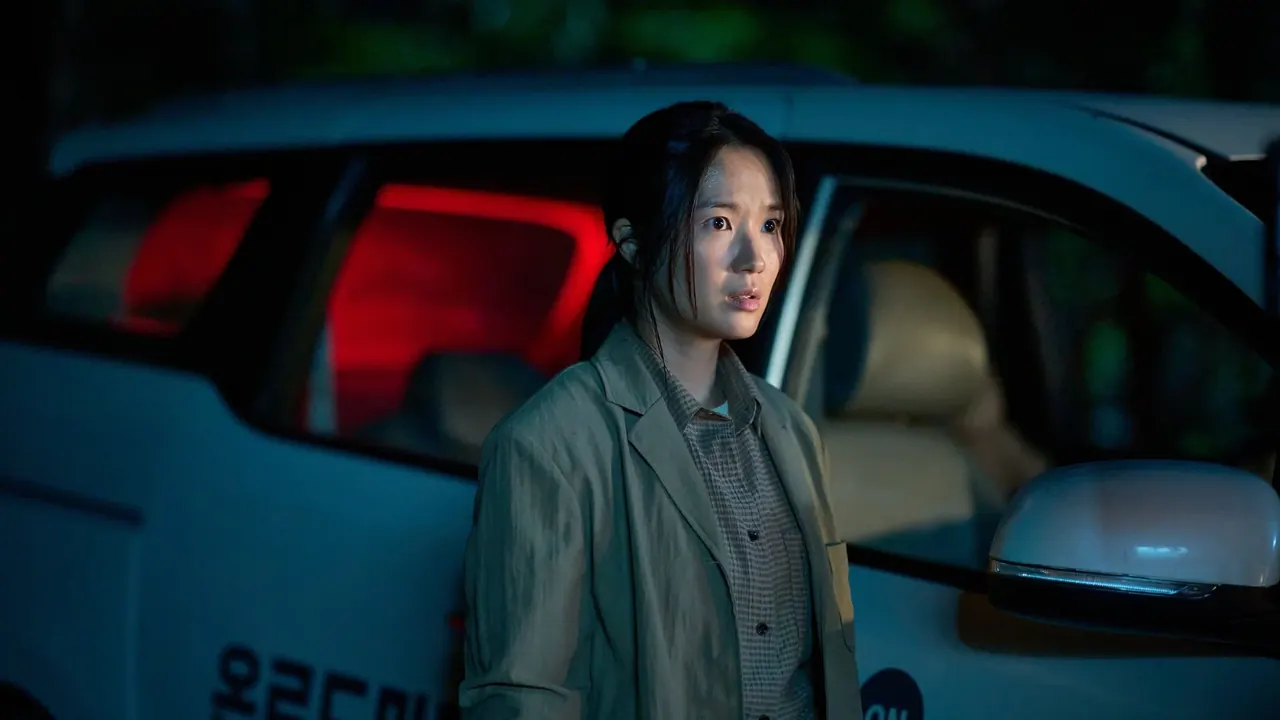
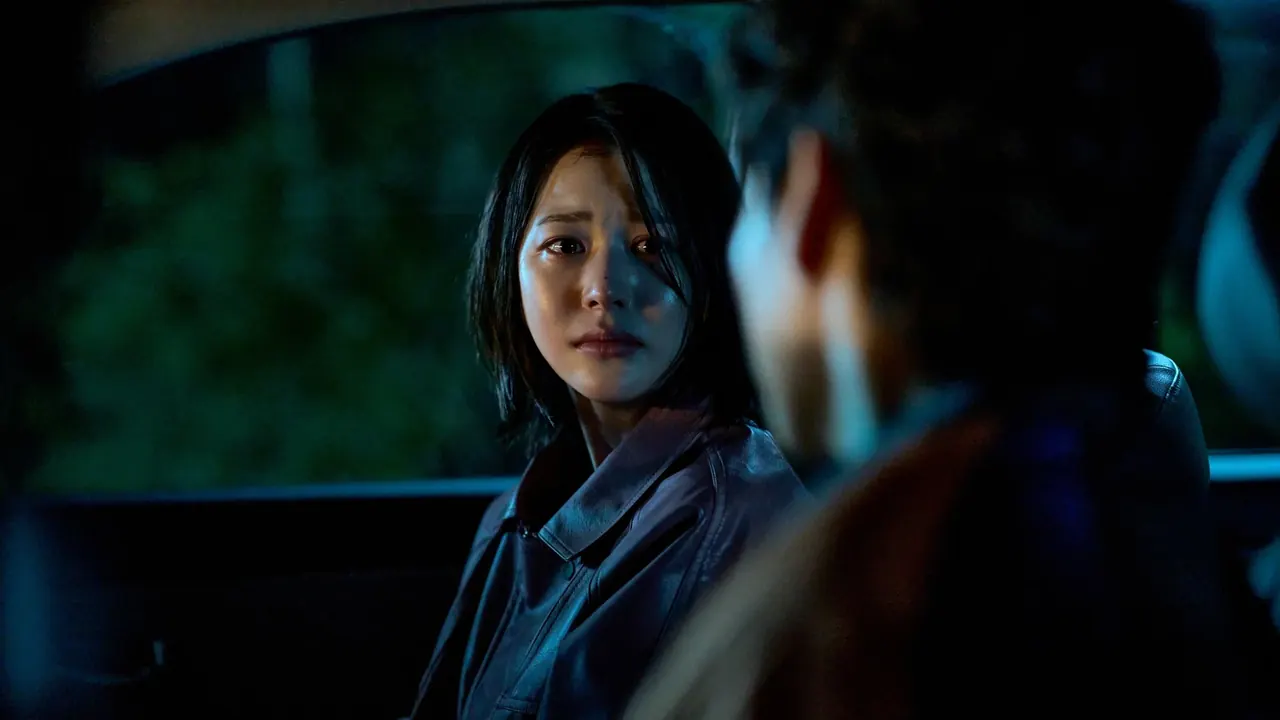
Kim Hye Yoon as Han Su In is the film's most consistent human element.
Su In is serious and treats the assignment as a professional responsibility. Some colleagues see the trip as an opportunity for entertainment or recording extra content.
That difference makes her irritation understandable from the beginning.
As the assignment turns into a real danger, she becomes the character through whom we try to follow events.
Kim Hye Yoon is particularly good at expressions built around suppressed fear and the attempt to keep control of the situation.
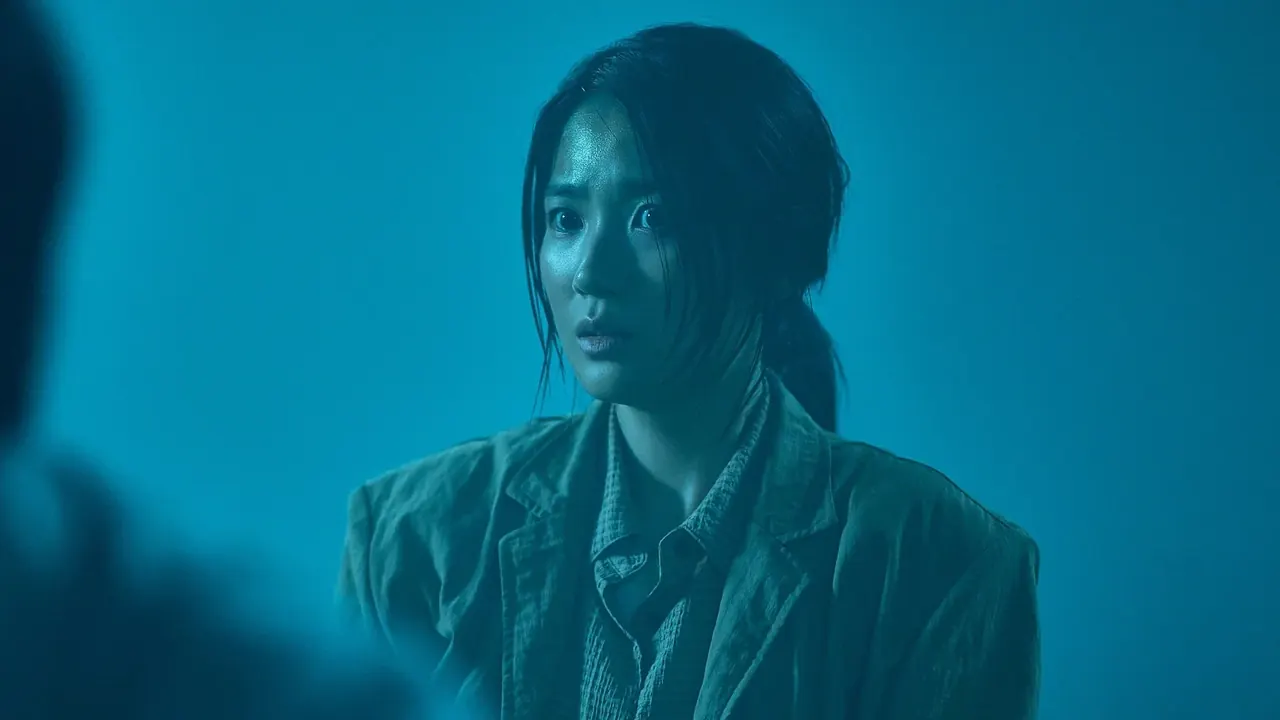
She does not need excessive screaming to make us feel her tension.
The problem is that her performance is stronger than the material written for the character.
We know how Su In behaves during the crisis, but we know little about her outside it.
There are hints of earlier relationships and professional or personal tension with certain colleagues. These are not developed enough to become truly affecting.
This weakens the impact of some later developments.
The film asks us to care about what happens to these relationships without giving us enough time to understand them.
I think giving Su In more space to reveal her personality would have made the danger more affecting, particularly because she carries most of the events.
The crew: characters need reasons for us to want them to survive
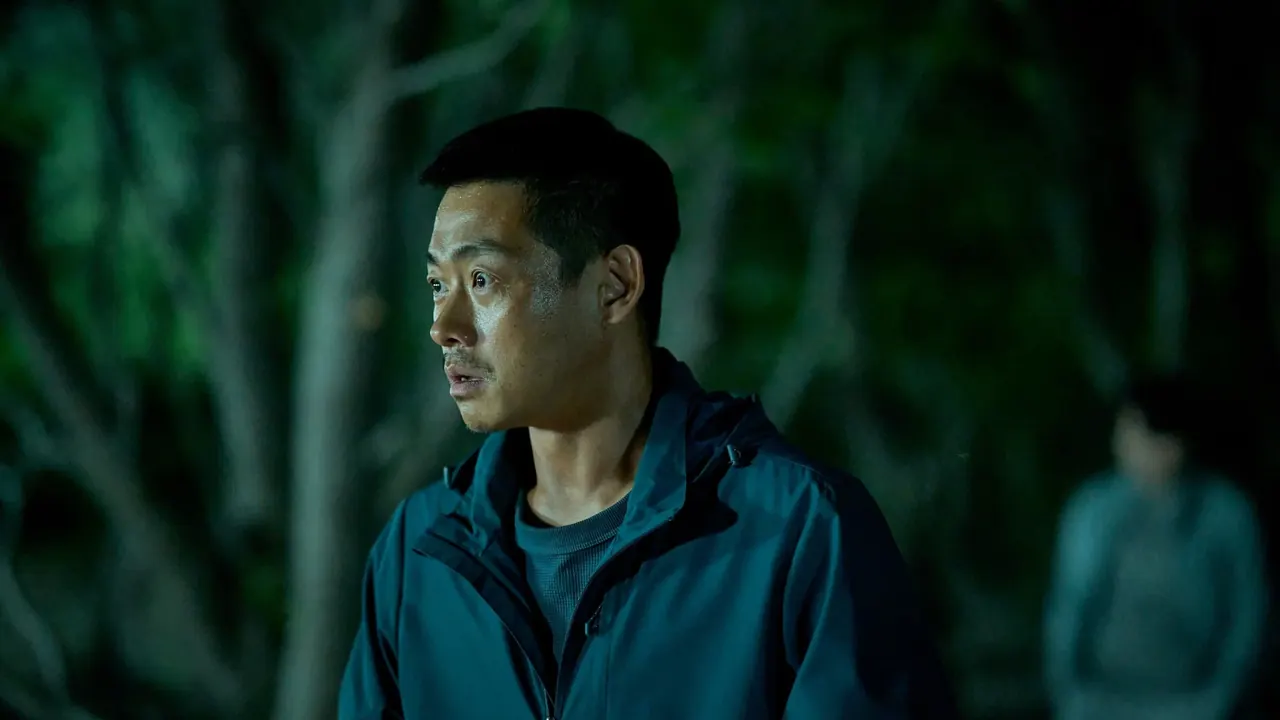
Choosing a filming crew to visit the location is a good decision, but the writing of the individual members is not equally strong.
Some characters doubt the local stories, others do not take the assignment seriously enough, and one wants to record content for a horror channel on YouTube.
These differences give their professional relationships some realism.
A working team does not necessarily have to get along, particularly when its members are required to complete an assignment on a day off.
But several of them remain confined to a limited set of traits.
The sarcastic person.
The reckless person.
The person who thinks they can handle any situation.
As events progress, their main function becomes separating from the group or getting into danger.
This reduces the impact of what happens to them.
I do not need a complete history for every character in a horror film with a limited runtime. I do need a reason to care about their survival.
The film does not always provide one.
Perhaps that is why some scenes made me tense because of how they were executed, rather than because I truly feared for the character within them.
Pacing and the ending: more conventional horror
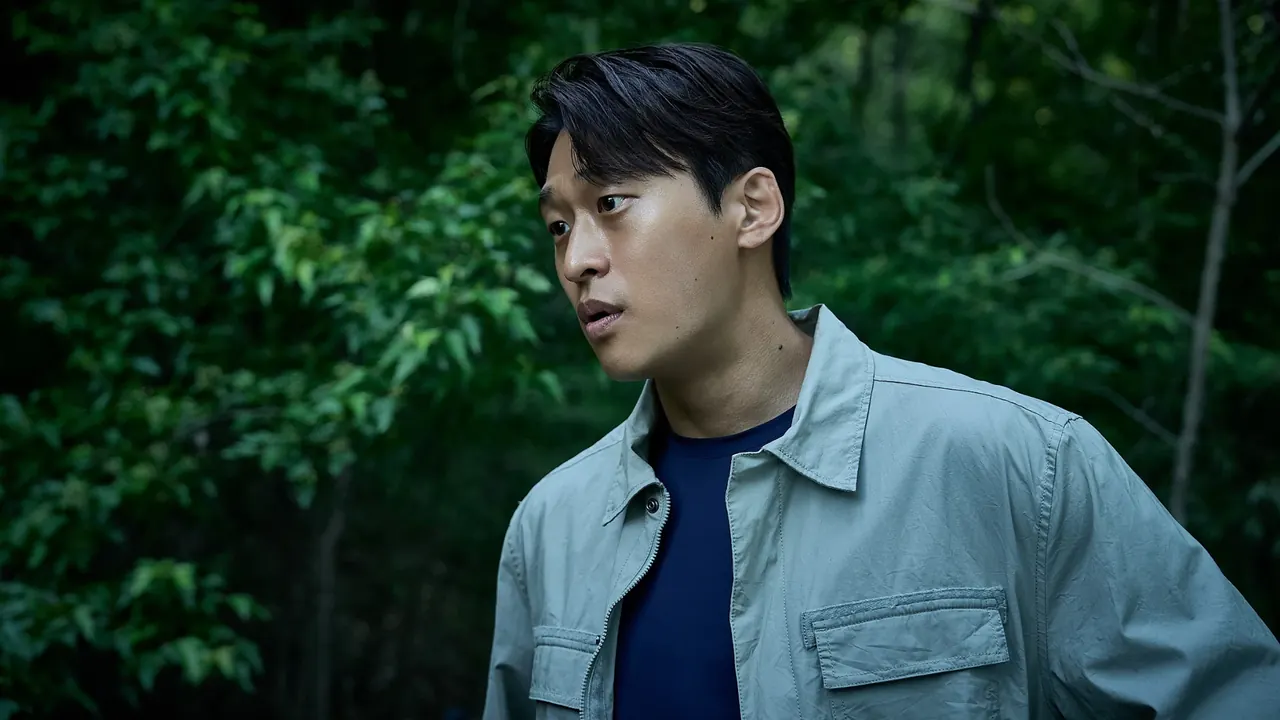
In its final stages, the film increasingly relies on isolating the characters and repeating dangerous encounters.
That is not automatically a flaw. Many horror films build their escalation this way.
The problem is that this film becomes more conventional as it approaches its ending.
The opening gives us digital mapping and a reservoir that lures its victims. Part of the story then shifts toward the familiar pattern of a group entering a haunted location and trying to survive.
Even so, the director deserves credit for using visual surprises and sound design to restore tension when the pacing begins to weaken.
At around ninety five minutes, the film is not seriously overlong.
Some questions about the characters' decisions and the reasons for their behavior do not receive enough dramatic clarification.
I do not think every mystery necessarily needs an answer.
Good ambiguity makes us consider deliberate possibilities. Ambiguity caused by insufficient groundwork makes us wonder whether we missed an important piece of information.
Salmokji: Whispering Water sometimes falls between the two.
Nevertheless, the ending preserves the most important effect the film sought: making the place itself a source of fear even after events have finished.
Strengths and weaknesses
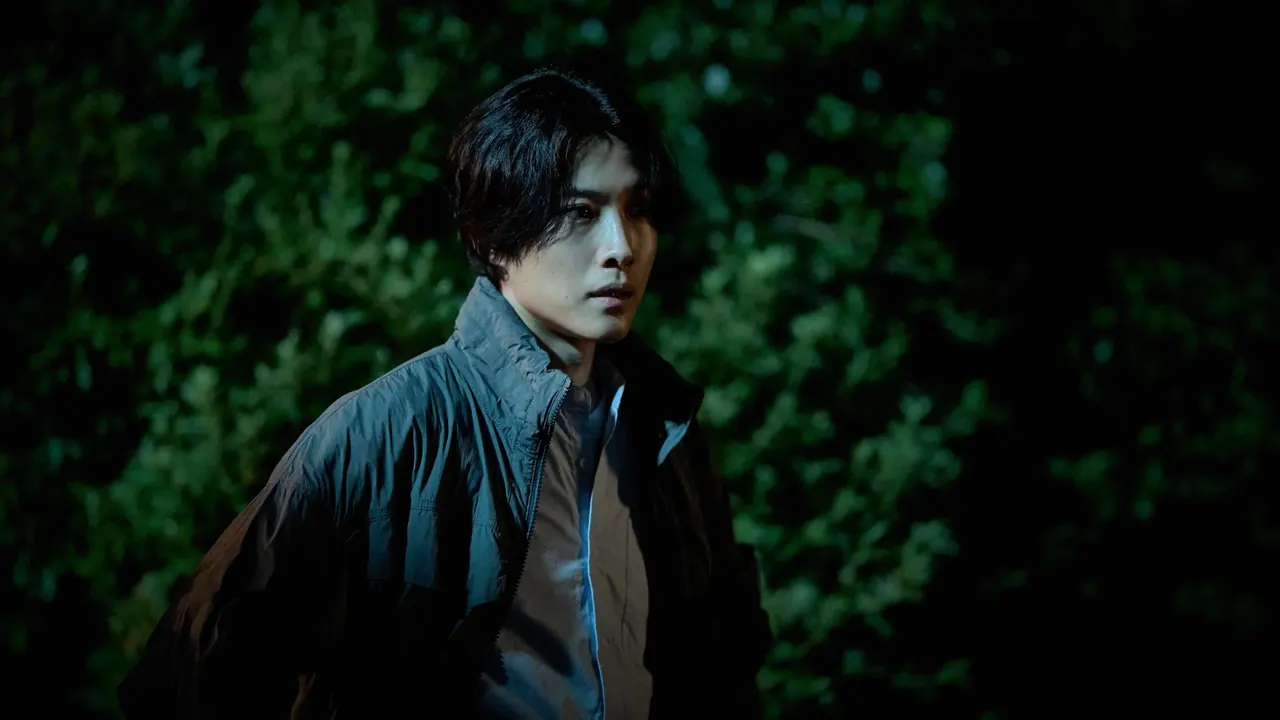
The film is strongest in its excellent sound design, use of a real reservoir to build frightening atmosphere and intelligent use of panoramic cameras. Kim Hye Yoon's performance and the director's ability to build tension from simple details also stand out.
Its main weaknesses are shallow supporting characters, Su In's limited personal background and decisions that are not sufficiently explained. Excessive darkness in some scenes and reliance on familiar horror patterns in the final stretch also weaken the film.
Final verdict
Final verdict
Ultimately, the film succeeds at the main thing I want from this kind of horror: making me feel danger even when I cannot see its source. Director Lee Sang Min offers an experience that knows how to use location, sound and the camera, without depending on bloody violence to leave an impression. The best part is that the horror grows from the reservoir's own nature. These are not simply ghosts that could be moved into any abandoned house with the same result. But the film is not complete in every respect. Its characters do not all have enough depth, some relationships could be stronger, and the story becomes more conventional in its later stages. Even so, I consider it a very suitable experience for Korean horror enthusiasts, particularly those who prefer unsettling atmosphere, gradual tension and sonic surprises to blood and violent scenes. It does not reinvent this kind of cinema, but it has enough ideas and good execution to make it worth watching. I think its real success will become clear when you find yourself standing beside a calm lake and hear a small noise coming from the water. You may know it is only a stone falling in the wrong place. But perhaps you will not want to get closer to check. My rating: 7 out of 10.
Your turn
Do you find horror films built around locations, sounds and mystery more frightening than films that reveal their ghosts and creatures directly? Did Salmokji successfully create that kind of horror for you?
AUDIENCE VOTE
Do you agree with the MB rating?
Choose once from this browser. You can change your answer at any time.