
The review
Screenplay and dialogue
Marguerite and Fred separated more than ten years ago. She is in a stable relationship with Sofiane, with whom she has a teenage daughter, Raphaelle, while Fred is preparing to marry Chloe. Lea, Marguerite and Fred's young adult daughter, accepts the new relationships in her parents' lives. Everyone has moved beyond the separation enough to remain connected.
This opening matters because it gives the characters a problem different from the usual conflicts between former spouses. We do not wait for one to take revenge on the other or try to sabotage the coming wedding. Marguerite truly wants to help Fred, and he approaches her expecting the matter to be solvable.
He wants their earlier marriage annulled by the Church so that he can marry Chloe in church. Within the procedures the film depicts, they must establish that the marriage was flawed from its beginning. What initially seems a request they can work together to complete turns into questions about their lives, why they married, and whether their union rested on sound foundations from the outset.

The tension begins with how differently each sees this step. Fred is occupied with what it will make possible in the future, while Marguerite finds herself defending a past she is being asked to disparage. Both want to complete the process, but they do not bear the same emotional cost.
Respecting the past does not mean wanting it back
The best part of the writing is how clearly it establishes this difference. Marguerite is happy with Sofiane, and reviewing the past does not turn into an attempt to win Fred back. Yet she does not believe that their marriage ending makes its years worthless. She has good memories, a daughter she loves, and a friendly connection with the man who shared that part of her life.
When she needs to exaggerate the reasons for failure until the marriage looks like a complete mistake, she starts feeling that she is insulting something of her own. She knows the words serve a specific purpose, but repeating them before others makes their effect harder to ignore. There is a difference between acknowledging that a relationship did not last and claiming it was never worth starting.
This is an effective human insight because the value of the past is not determined only by how it ended. Someone may have loved sincerely, then changed or become unable to keep living with the other person. Recognizing both things allows us to understand Marguerite without assuming she is dissatisfied with her present.
The film also avoids making Fred a cruel antagonist simply because he is less affected. His focus on the coming wedding explains why he treats the questions as obstacles to overcome. But their difference reveals how something that seems an annoying procedure to one person can feel like a painful judgment on a portion of the other's life.
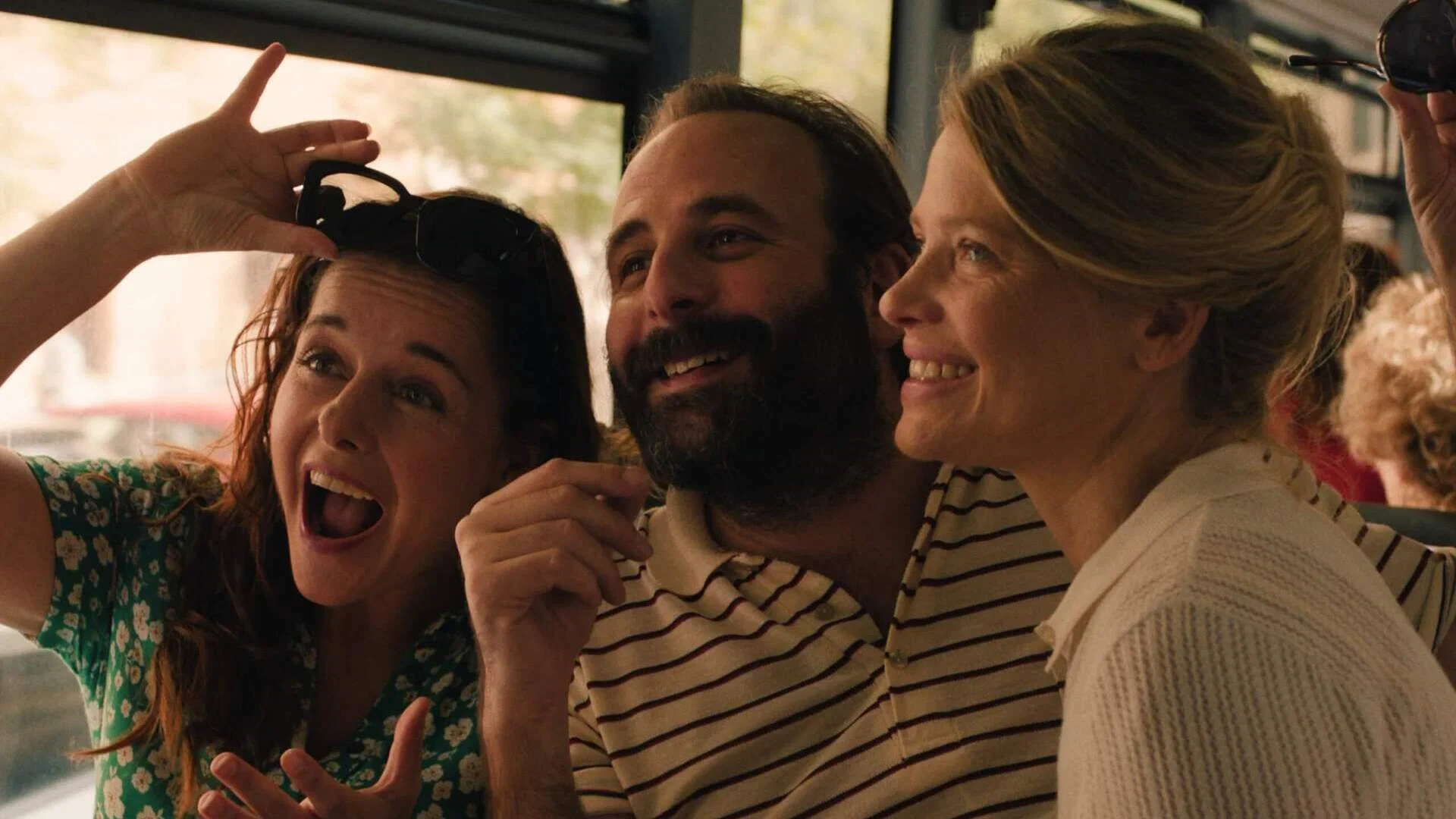
This is where the story gains its strength. The disagreement arises between two cooperative people, each needing time to understand why the other does not feel the same way.
Current partners face the past's questions
Sofiane's presence adds another difficulty. He tries to support Marguerite, but begins wondering whether repeatedly returning to the past is reviving old feelings. His anxiety is understandable, particularly as Marguerite and Fred grow closer through discussing matters they did not resolve when they separated.
The film handles the possibility of this anxiety well without turning it into a renewed romance. Its focus remains on what Marguerite needs to make clear about herself, and what Sofiane needs to understand so that he does not read every emotional response as a wish to return.
Chloe, for her part, sees Fred as the love of her life, and the coming marriage means a great deal to her. The process therefore does not remain a private matter between the former spouses. Every delay or tension reaches the people living with them now, who also have things they anticipate and fear losing.
These relationships let the film discuss empathy in practical terms. Supporting a partner may require tolerating feelings that are not immediately easy to understand while retaining the right to ask questions and worry. Everyone need not agree on how to interpret the past in order to live together in the present.
Comedy and the limits of questioning
The comedy comes from the distance between what the characters came to accomplish and what they are forced to discuss. Marguerite faces intensely private questions, as though cooperation cannot be completed without revealing details she never expected to explain.
The clearest example is a clergyman asking how many people she has had intimate relationships with. The meeting becomes an embarrassing confrontation because the question goes beyond what she was prepared to discuss. The situation is funny because of the mounting awkwardness, but it also makes her irritation understandable.
Here the comedy successfully serves the story. Each question tests the limits of Marguerite's willingness to participate and makes her shift from cooperation to irritation clear. If the joke begins by embarrassing her, the scene's continuation leads us to understand her objection.
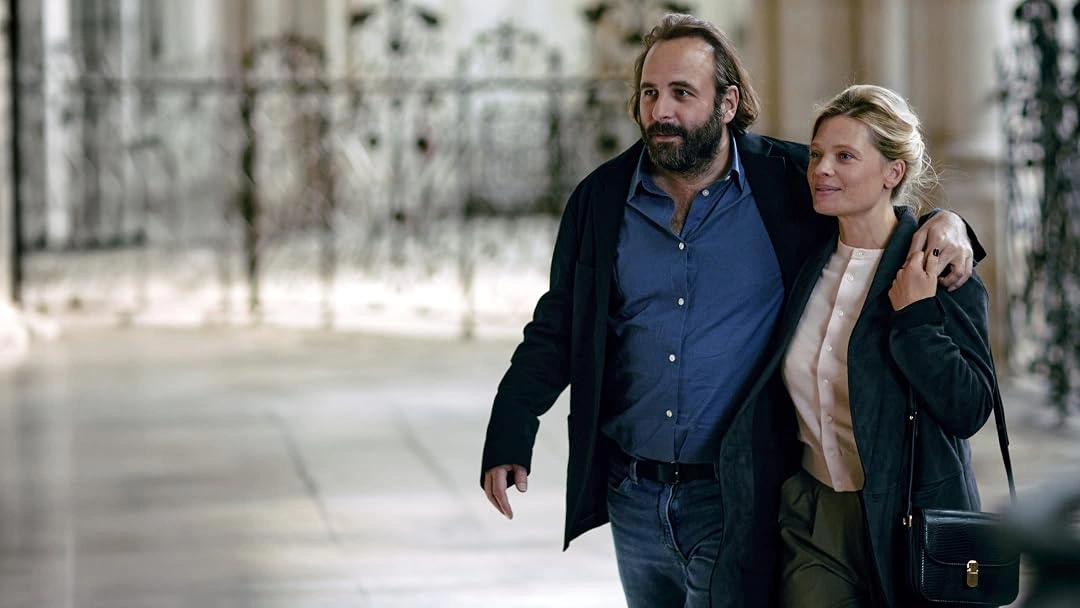
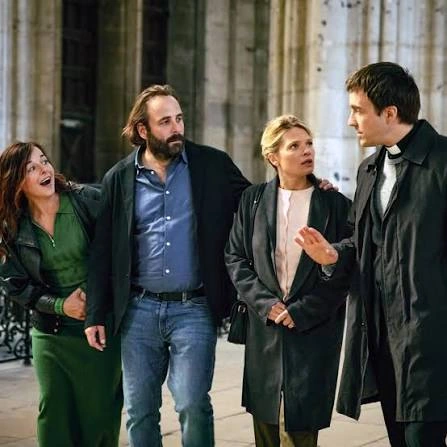
The film stays warm because the relationship between the former spouses can accommodate this tension. Their continuing affection makes their friction more varied than an exchange of accusations. They can help one another, annoy one another, then resume talking, giving the situations a lightness close to relationships we recognize.
Rome and a family that grows
After the first request is rejected, the attempt reaches the Vatican and the characters travel to Rome. The story expands to include both current partners and both daughters. They exaggerate the marriage's failure even further in the hope that the request will be accepted this time. At the same time, the trip allows everyone to spend time together outside their usual lives.
Having them together is one of the film's loveliest ideas. We see that separation has not severed every connection and that new relationships can add people to the family's life. Lea accepts her parents' choices, the partners are there beside them, and the exhausting occasion becomes a chance for the group to grow closer.
Raphaelle, preoccupied with her first love, adds a pleasing contrast between ages. She responds emotionally to restrictions on her romantic relationship while the older people try to describe a relationship that ended over a decade ago. For her, present feelings are intensely urgent. For her parents and Fred, love has also become tied to years of responsibility, memories and change.
This difference broadens the title's meaning through the characters themselves. There is love beginning, love preparing for marriage, a stable relationship, and a relationship that has ended while leaving affection behind. Each has needs that cannot be reduced to one easy answer.

The Rome trip, however, lasts longer than it needs to. Once we understand the process's effects and watch the family grow closer, not every extension adds a comparable amount of understanding or enjoyment. This part retains its charm, but charm alone cannot prevent the feeling that reaching the ending is being delayed.
This stage could have been shortened while preserving what matters most. The film is stronger when a new situation changes our understanding of a character, and less affecting when it continues confirming feelings already made clear.
A happy ending without diminishing the past
The story ends by celebrating Fred and Chloe's wedding, and we join the characters for the occasion they have worked toward. The ending is happy and largely predictable, but its value comes from what has changed in the relationships before they reach it.
Discussing the old marriage allows Marguerite and Fred to address matters left unresolved after their separation. What began as an attempt to obtain approval becomes a chance to understand better what they lived through and what each needs now.
The film remains faithful to its central choice through the ending. Fred moves into his life with Chloe, and Marguerite keeps her life with Sofiane. Growing closer helps the former spouses understand one another and lets their current partners view that connection more calmly.
Not every relationship in reality may end with this degree of understanding, but the film begins with people capable of cooperation. The happy ending therefore feels like an extension of their nature, even if the road to it is longer than necessary. What they achieve is a more comfortable acceptance of what happened and a readiness to continue living without having to distort the years that came before.
Final verdict
In conclusion
The film offers a warm story about love ending while retaining its value. Marguerite works as a character whose pain we understand, and the differences between her needs and those of Fred and Sofiane give the situations a difficulty beyond their comic surface. The daughters and new relationships also help present a family that changes while keeping its connections. The clearest reservation is the length of the Rome section, where some situations continue after their point has been made. This does not dispel the truth of the central idea or the pleasure of following people who try to act generously, only to discover it is harder than they expected. The loveliest thing the film leaves us with is Marguerite's right to respect her earlier life while choosing her present life with complete clarity. That simple feeling is enough to give the comedy an impact that remains after the celebration ends. My rating for the film: 7 out of 10.
Your turn
Which position seemed harder to you: Marguerite defending the value of her previous relationship, or Sofiane trying to understand that without feeling threatened?
AUDIENCE VOTE
Do you agree with the MB rating?
Choose once from this browser. You can change your answer at any time.