The review
Screenplay and dialogue
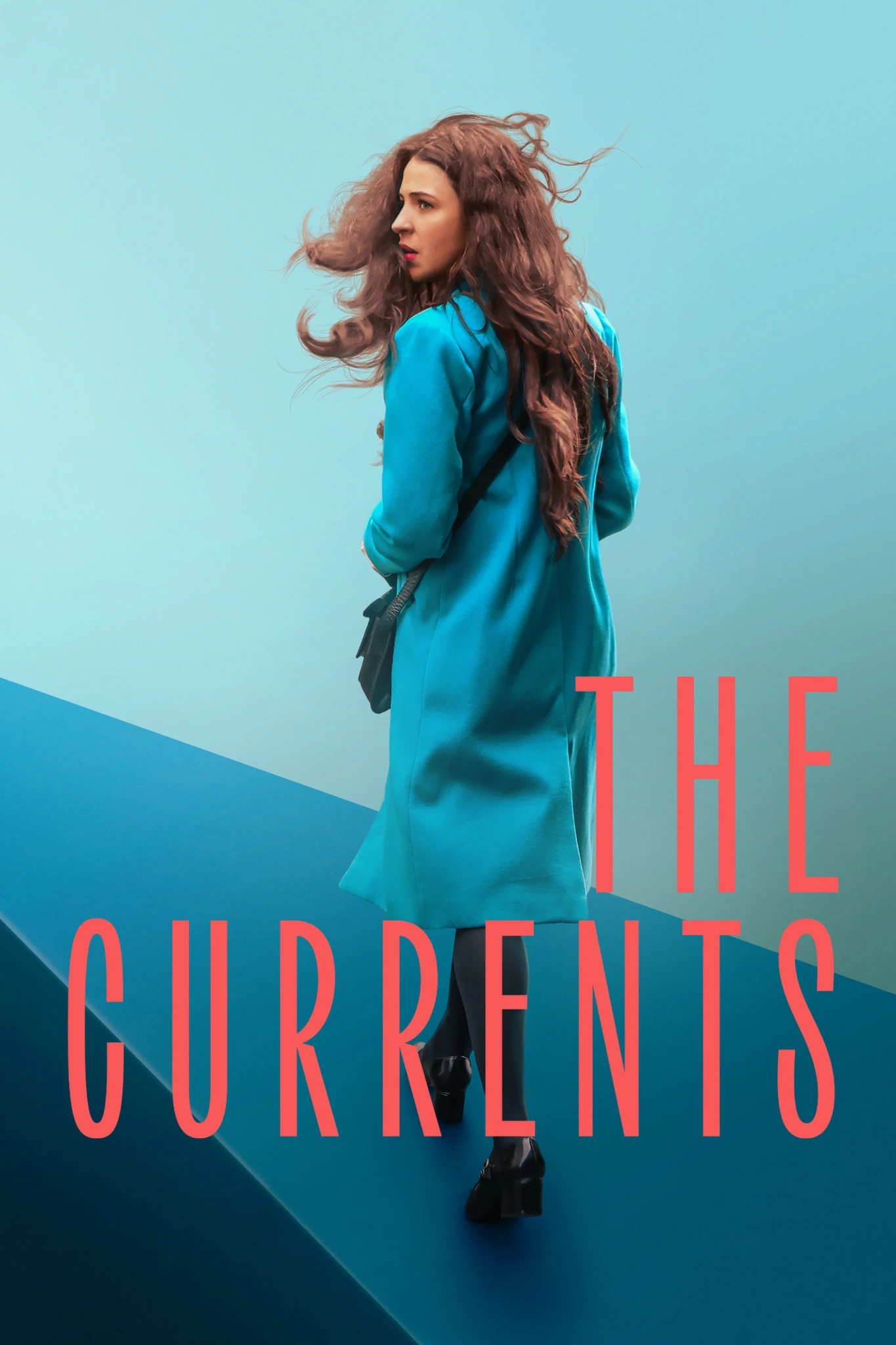
The opening sequence is one of the film's most significant choices. We see Lina receiving an award at a ceremony whose atmosphere suggests success and recognition, then watch her discard it in the bathroom, as though the achievement means nothing to her. She subsequently walks out onto Geneva's streets and crosses a bridge before jumping into the river. The camera does not move close enough for us to read her expression or understand her thoughts. Instead, it leaves her in a distant shot within the setting, her turquoise coat becoming a striking point of color amid the scene's coldness.
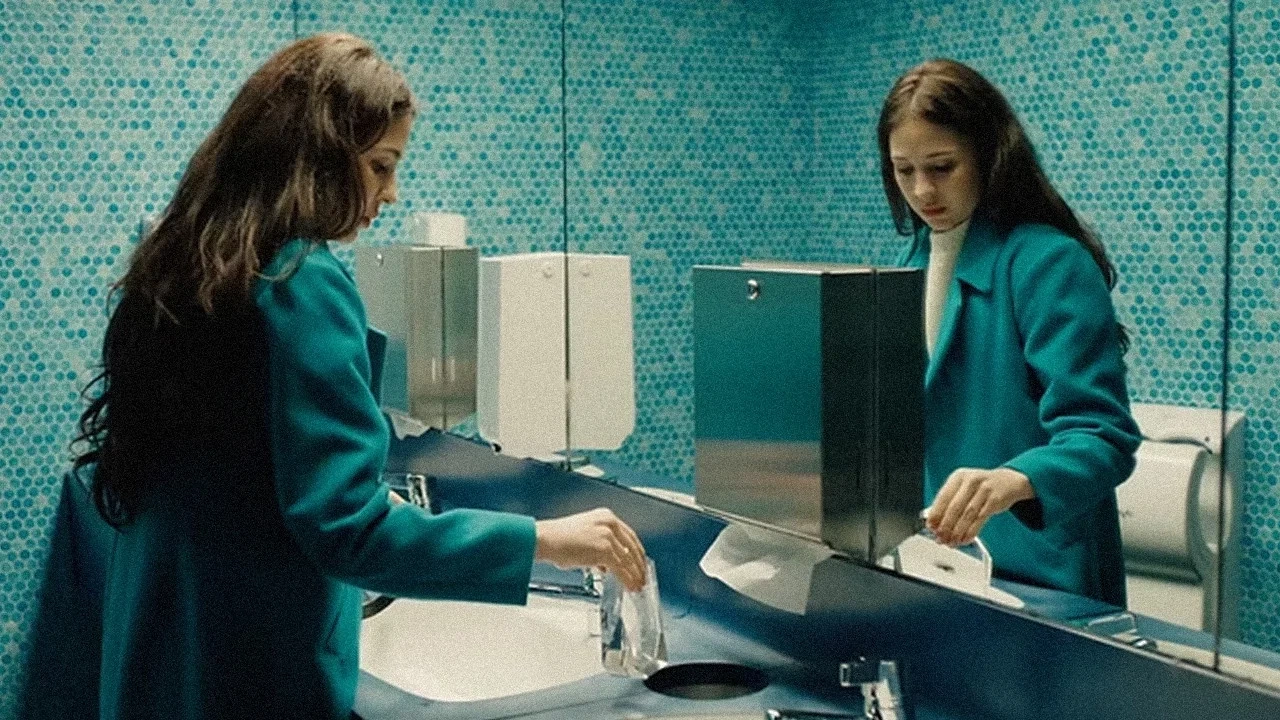
The film presents the jump without spectacle or an emotional scene that explains everything. We do not know whether Lina intended to end her life, or whether it was an impulse she does not understand either. Back at the hotel, she turns on the water but does not step into the shower, then returns to Argentina without telling her husband what happened. The film leaves the gap open, inviting us to experience the incident's aftermath rather than giving us a ready explanation.
When Lina returns home, the outward shape of her life remains unchanged. Her husband Pedro is there, their five year old daughter Sofía greets her naturally, and work awaits. Lina herself, however, seems to have returned to a place where she no longer knows how to belong. This contradiction is the film's foundation: everything around her keeps moving while she remains trapped in a state of disconnection from the world and herself.
Water and a body that refuses routine
The clearest consequence of the jump is Lina's intense fear of water. She stops bathing normally, cleaning only parts of her body with a sponge and washing her hair in a small basin instead of standing beneath running water. Over time, marks appear on her skin and her hair grows thicker and more unruly, spilling across her shoulders and the back of the sofa. Pedro notices the change, as does Sofía, but Lina offers no convincing explanation for what is happening.
At first, this seems like a phobia brought on by her experience of drowning, but the film hints that her fear of water predates it. It is not an isolated physical problem but a sign of a broader crisis: her body refuses to return to routine even as she tries to carry on with her day. The film does not turn the rash or unwashed hair into a display of body horror. It uses them to reveal her disturbance without reducing the character to a single symptom.
This idea becomes clearer when Lina visits her old friend Amalia, a hairdresser. Amalia calls her 'Cata,' suggesting that Lina has severed ties with an earlier part of her life and may even have changed her name. There is a shared history and much left unspoken between the women, while what happens in the salon's back room feels like a ritual they both know well. When Amalia sedates Lina so that she can wash her hair and body, we see an unfamiliar image of her asleep with her face covered by a mask. The scene is strange and unsettling, but matters because it raises the possibility that Lina's fear of water did not begin in Geneva, without explaining everything that happened in her past.
A complete life and exhausting roles
The film does not present Lina as a woman who lacks money, success or relationships. She has a successful career, a seemingly attentive husband, a child who loves her, and a comfortable home. Yet these things give her no sense of balance. The film shows how a seemingly ideal life can become a collection of roles that a person must continually perform, even when they can no longer bear them.
At work and at home, Lina faces small, repeated judgments. A client's granddaughter criticizes her decision to take her husband's surname, while her mother in law brings her healthy food because she thinks she is not eating properly. Sofía compares her mother's food with that of her friends' mothers and asks why she does not prepare meals at home like a friend's mother. These incidents seem minor on the surface, and some come from a child who does not mean to hurt her mother, but they reveal the pressure Lina experiences from those around her.
More significantly, the film does not turn these comments into a direct accusation against any one character. Pedro is an attentive husband, and their relationship never entirely loses its intimacy, but his closeness does not mean he can understand what is happening inside her. The problem is not the absence of family or work, but the inability of these connections alone to fill the emptiness Lina experiences.
The image and the self
A small detail in a conversation between Lina and her assistant Julia offers a key to reading many of the film's images. Lina asks what a romantic act means, and Julia speaks of profound longing mixed with frustration, of the void in which romantic acts emerge, and of how they might be merely a device for filling it. The film never explicitly returns to this idea, but it remains present in its portrayal of Lina and the life that looks complete from the outside.
Lina sometimes appears near a window or reclining on a white chair with her hair flowing around her. These images evoke Pre Raphaelite paintings and their associations between women, hair, water and drowning. They can be read as an extension of Julia's idea: the image of a beautiful woman becomes an artistic form, while her actual life remains far removed from the serenity the image suggests. Beauty itself becomes part of the distance between what we see and what Lina experiences.
That distance also appears when Lina sees her reflection in a shop window, encountering a woman who looks exactly like her. For a moment, she seems to be looking at someone else rather than her familiar image. The moment can be read as a sign of her estrangement from herself, but it may also mean something different: perhaps she needs to see herself from outside in order to understand herself, just as she has begun to notice the other women around her.
Performance and small expressions
The film depends heavily on Isabel Aimé González Sola because Lina does not explain her feelings through words or experience her crisis through constant emotional outbursts. The actress plays a character who seems calm much of the time, yet whose calm offers us no reassurance. There is sadness, watchfulness and caution in her gaze, while her small expressions make us notice changes even when she says nothing.
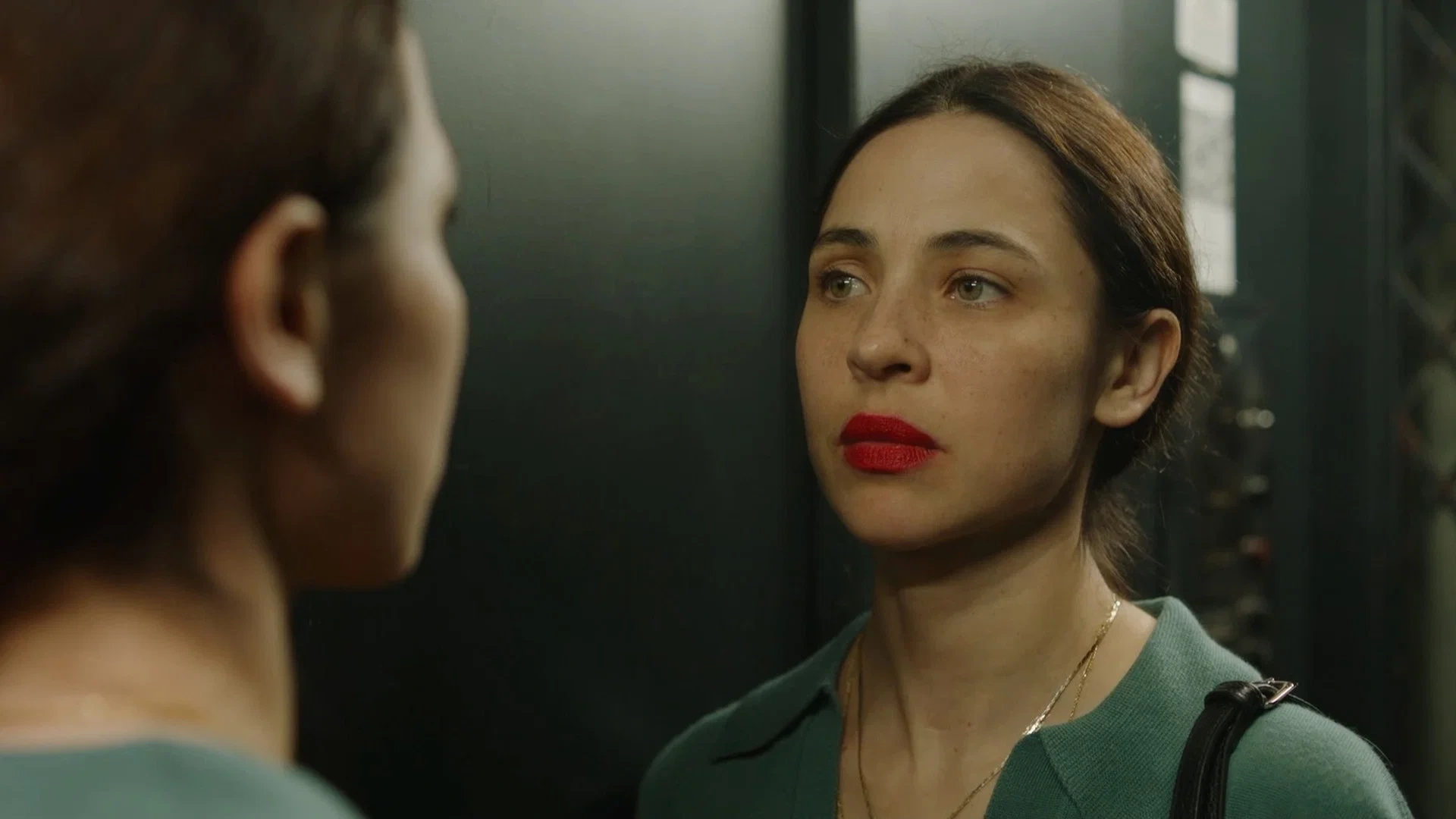
This suits the character. Had the performance relied on screaming and collapse, the film would have lost some of its mystery. González Sola makes us feel that Lina is physically present but not entirely connected to her surroundings. The director knows when to move close to her face and when to leave her within the frame, without repeating the same expression.
When explanation narrows the mystery
The Currents does not sustain the same strength through to its conclusion. As it moves closer to Lina's family history, it begins offering a clearer explanation for the origins of her crisis. The problem is not the possibility that the past shapes the present, something already prepared by her visit to Amalia and the references to an old name. It is that the late explanation becomes more specific than the story needs.
The film was more affecting when it left us with a series of signs, images and incomplete relationships, making us feel what Lina experiences without claiming a definitive answer about her. When it starts arranging her past and directly explaining her condition, it slightly weakens that balance between mystery and understanding. Not every disturbance needs an explanatory revelation, and not every question a film raises requires a clear answer.
This does not cancel the value of the ending or what precedes it, but it limits their impact. The film's finest quality is its ability to bring us close to Lina without letting us possess her completely, allowing us to see her contradictions without turning her into a case that can be summarized by a single cause.
Direction, cinematography, editing and sound
Milagros Mumenthaler successfully makes the film's style an extension of its protagonist's condition. The camera does not constantly pursue Lina with heightened emotion or intrude on every moment to explain it. In the jumping scene, it places her in a distant shot. Elsewhere, it quietly moves closer and lets certain images last longer than expected. One of the clearest examples is the shot of her hair spilling over the back of the sofa: it lingers until the hair changes from an ordinary detail into a strange image, as though Lina's own body has become unfamiliar to her.
Gabriel Sandru's cinematography reinforces this feeling through the image's texture, colors and composition, and through quiet shifts between wide spaces and close shots. The images are not beautiful merely for decoration. They reveal the distance between Lina and the places she moves through, so that even familiar streets sometimes feel empty and remote. The editing complements this effect with fluid transitions and a measured pace, bringing us close to Lina's disturbance without forcing us into it or leaving us entirely outside it.
Sound is one of the film's most affecting elements. Street drilling, a hairdryer, a sewing machine and video game sounds do not remain quietly in the background. At times, they rise and become more prominent than we expect. This amplification makes us feel the world pressing on Lina from every direction, and how simple everyday sounds can become a source of irritation when a person's senses are burdened by what they cannot understand. Classical music enters at selected moments, offering a different space that does not remove the anxiety but opens the possibility of reflection.
This is evident in the passages where Lina imagines the lives of women she knows: a client visiting a museum, Julia approaching a neighbor, and an elderly seamstress attending singing practice and meeting her friends. Music by Gustav Holst accompanies these images, giving them a strange calm. Instead of remaining imprisoned by other people's gazes, Lina begins imagining their lives from within, perhaps realizing that each has a space she knows nothing about.
Final verdict
Final thoughts
A quiet, unsettling film that turns the crisis of a woman whose life seems complete into a cinematic experience about the distance between outward image and inner truth. Its strength lies in Isabel Aimé González Sola's performance and direction that knows how to use silence, shots and everyday sounds to create a tangible psychological state that needs no constant explanation. The film may not suit viewers expecting a straightforward plot or quick answers, and its late explanation of Lina's past slightly diminishes the beauty of the mystery it has built. It nevertheless remains cohesive and affecting. Above all, it does not treat its protagonist's disturbance as a device for shock, but tries to approach her and understand how she sees the world. Lina's journey feels less like a simple search for one cause than an attempt to see herself and the lives of the women around her more clearly. The question the film leaves us with is not only 'What happened to Lina?' but also 'Can a person begin again after discovering that the image they have inhabited no longer resembles them?'
AUDIENCE VOTE
Do you agree with the MB rating?
Choose once from this browser. You can change your answer at any time.