The review
Task Force M replaces disposable humans
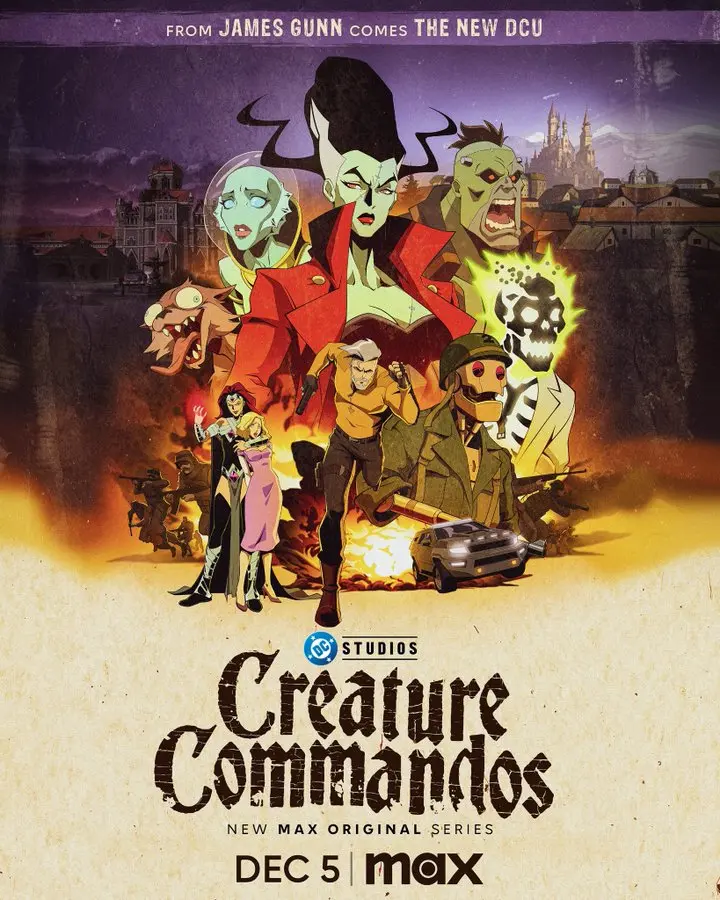
Set after The Suicide Squad and Peacemaker, the story begins when Task Force X is closed and Waller finds a new legal loophole. Rick Flag Sr. leads the Bride, Eric Frankenstein, Nina Mazursky, G.I. Robot, Weasel and Doctor Phosphorus into Pokolistan.
The mission to protect Princess Ilana from Circe gives the season a clean external goal. More importantly, it creates a space in which each creature's history can complicate the official story of who deserves protection and who is considered expendable.
Flashbacks turn a squad into wounded people
Each episode connects the present mission to a personal past. The structure gives motive to violent behavior without pretending that suffering automatically makes every action noble. Memory becomes the bridge between spectacle and empathy.
The Bride and Eric Frankenstein embody the tragedy of love treated as ownership. Nina's gentleness, G.I. Robot's singular programming and Weasel's misunderstood history reveal different forms of exclusion beneath the team's grotesque comedy.
Who is the hero and who is the monster?
The series repeatedly overturns visual judgment. Frightening bodies can contain loyalty and tenderness, while respectable institutions use people as tools. Heroism is presented less as appearance or legal status than as the decision to protect someone when no reward is guaranteed.
The political material works best when it remains attached to this idea. Rules, borders and official labels create the hierarchy that calls some beings citizens and others weapons, even when their capacity for feeling is equally real.
Dialogue built from sarcasm and confession
Gunn's dialogue uses insults, absurdity and sudden emotional exposure. Characters often hide pain inside jokes until a confrontation forces the joke to collapse. The tonal change can be abrupt, but at its best it makes confession feel earned rather than sentimental.
The voice cast gives every creature a distinct rhythm. Humor, menace and vulnerability remain audible even when the animation holds on an unreadable or inhuman face.
A violent, expressive animated world
Bold angles, strong silhouettes and detailed color design give the action clarity. Two-dimensional character work and selective three-dimensional elements combine effectively, particularly when movement must feel heavy, grotesque or unexpectedly graceful.
The editing maintains a fast pulse while moving between comedy, battle and memory. European musical textures mixed with contemporary energy support Pokolistan's identity and prevent the score from sounding like generic superhero accompaniment.
A first chapter with a clear new attitude
The season balances personal histories and current action with impressive efficiency. Not every political twist carries equal weight, and the mixture of cruelty and sentiment may divide viewers, but the characters leave a stronger impression than the machinery of the shared universe around them.
As an opening statement for the new DCU, it promises a world willing to be strange, bloody and emotionally direct. Its best achievement is proving that continuity matters less than a character whose loneliness feels true.
Final verdict
Final verdict
Creature Commandos is not simply an animated prologue. It is a bold, expressive story that challenges the line between hero and monster while finding tenderness inside a violent team. James Gunn begins his new universe with misfits and gives them enough humanity to carry it.
AUDIENCE VOTE
Do you agree with the MB rating?
Choose once from this browser. You can change your answer at any time.