The review
Vegeta understands the danger
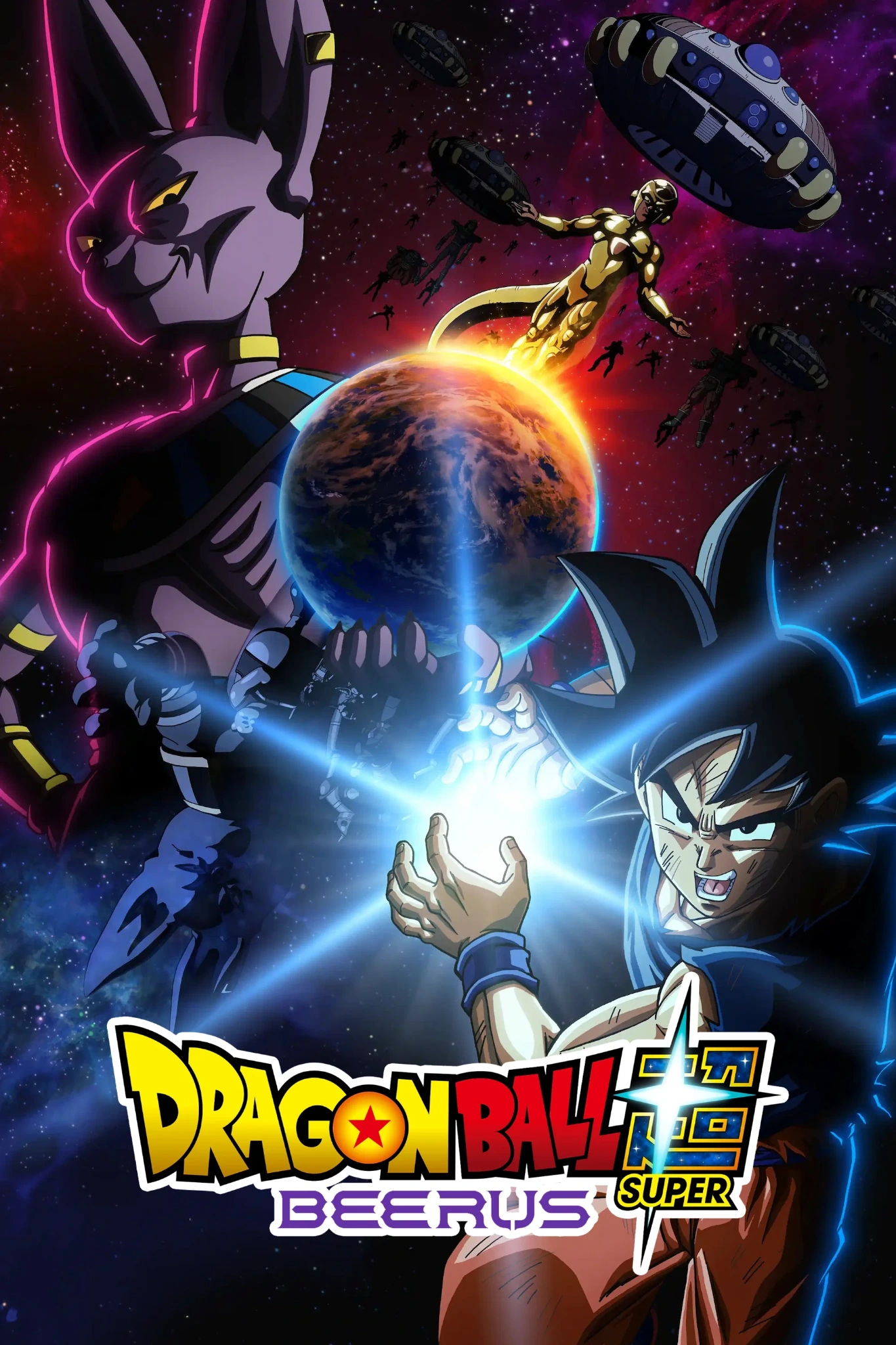
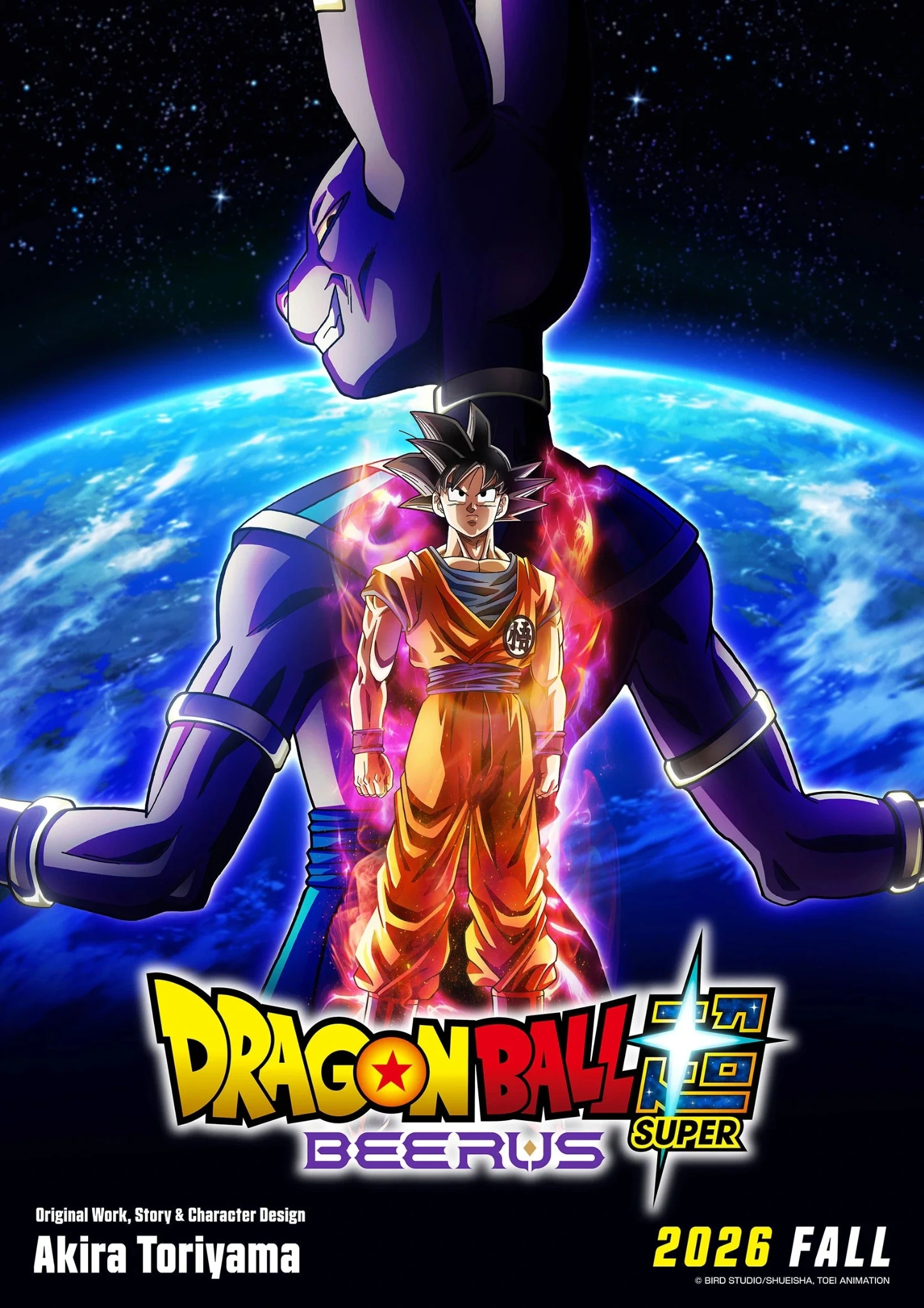
Beerus and Whis arrive on Earth in search of the Super Saiyan God after Beerus has easily defeated Goku. King Kai has warned Vegeta against angering the visitor on his way. When Beerus appears at Bulma's party, Vegeta therefore understands that a direct confrontation offers no guaranteed solution, even before the memory of their earlier encounter returns.
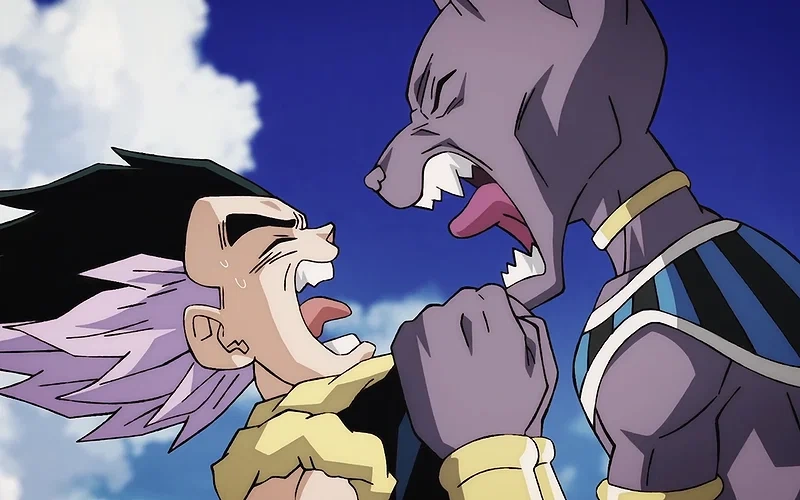
The flashback takes us to Vegeta's childhood, when he saw his father helpless before Beerus. The child tries to intervene, but a single look stops him. The scene makes his present fear understandable: the man standing before him has already humiliated his father and is still capable of defeating the strongest fighters with ease. Vegeta's years of training have not erased that memory.
The new version benefits from treating this encounter more seriously. Focusing on Beerus's cruelty and the child's helplessness gives Vegeta's fear a clear cause, beyond the comic incongruity of watching an arrogant character tremble before someone stronger.
The episode does not always maintain that approach, however. Some moments of confusion are played so lightly that we laugh at his fear itself. There is an unevenness here worth noticing: his flattery of Beerus can be funny while the memory of his father's humiliation remains painful. The more clearly the episode distinguishes between the two, the closer we feel to Vegeta. He is trying to protect everyone present, even when his methods seem embarrassing beside the image he usually projects.
A party that could end in disaster
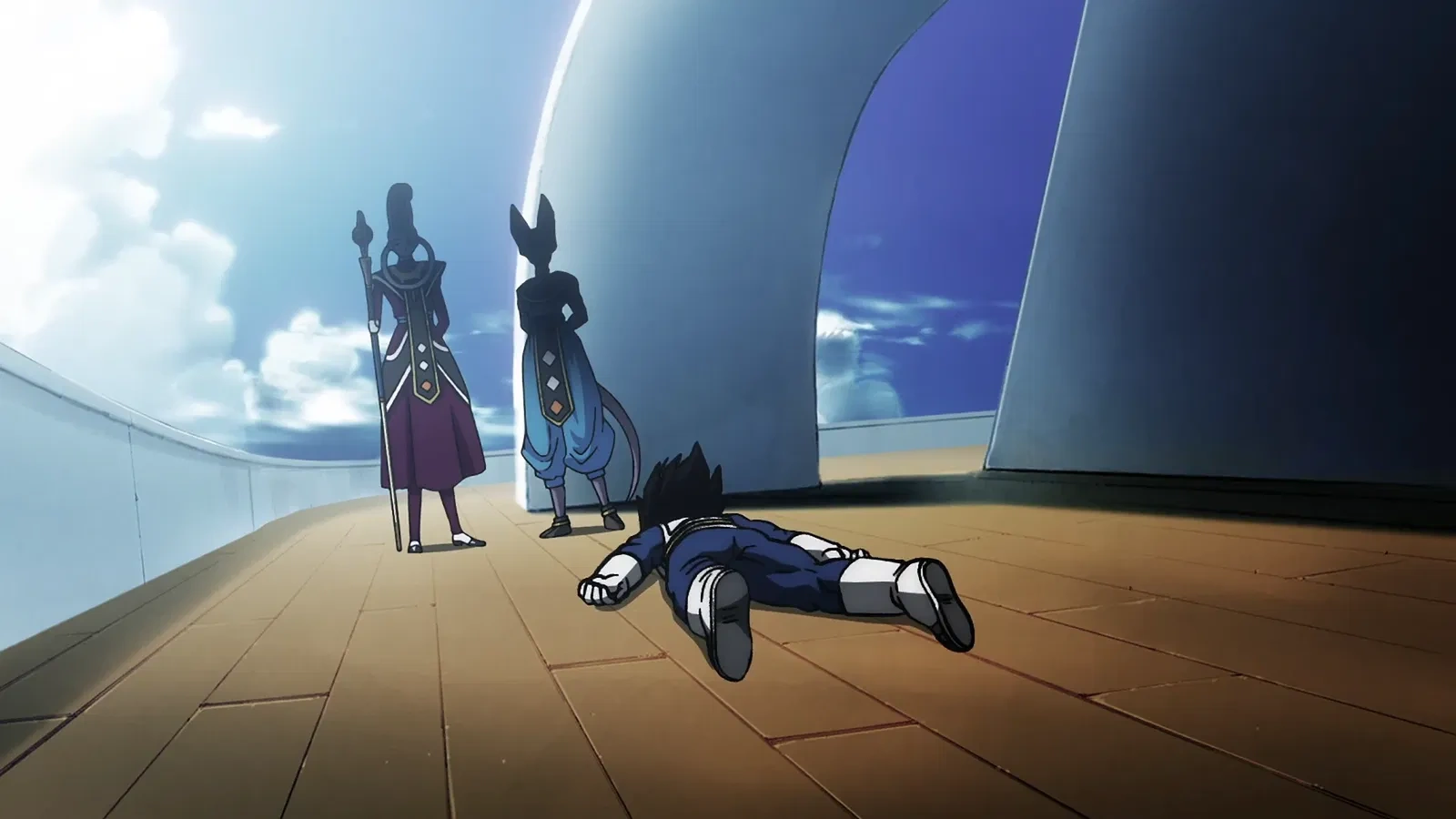
The party works because its tension begins before the first blow. Beerus and Whis sample the food, the celebration continues, and Vegeta watches for anything that could annoy his guest. We know why he is worried, while not everyone understands the danger in the same way. Waiting for the mistake that will ruin the occasion becomes part of the fun.
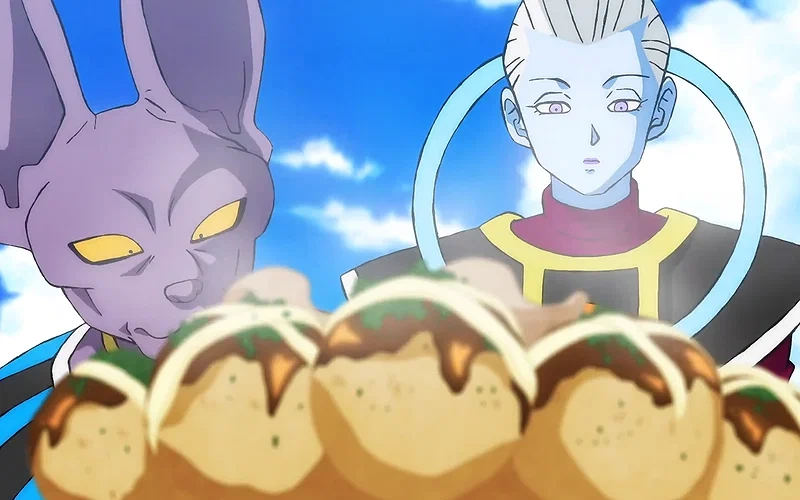
That mistake comes from Majin Buu, who refuses to share the pudding and licks the cups to make sure he keeps it. This is one of the episode's most successful jokes, because Buu's behavior makes perfect sense for his character. The situation needs little explanation, and Beerus's excessive reaction is enough to turn a trivial argument over dessert into a crisis threatening everyone.
Beerus's scream helps the scene work. His anger is wildly disproportionate to its cause, especially after such an imposing introduction. We laugh at the contrast, then remember that nobody present has the power to force him to behave reasonably.
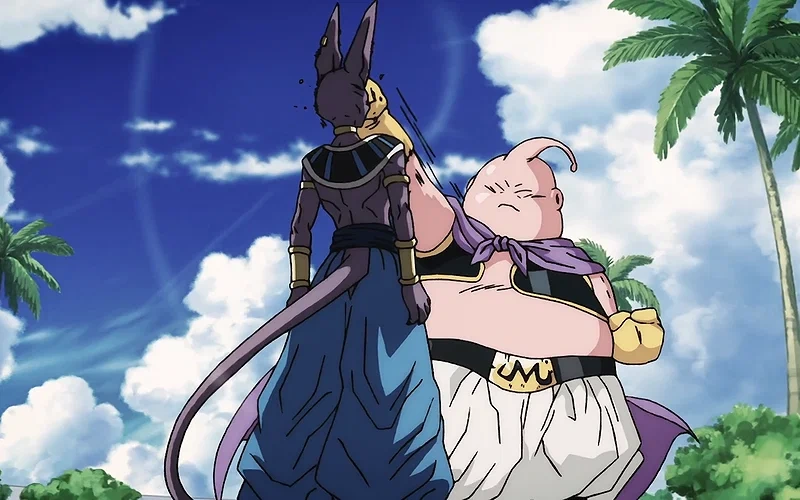
These changes of mood make his presence entertaining and unsettling at once. Food can distract him from his mission, and being denied it can drive him to destruction. Vegeta's efforts to calm him therefore make sense within the situation, however much they conflict with his pride. The problem is that the episode does not give everything at the party the same care it gives the pudding scene.
When does cutting become a problem?
The episode cuts many of the party details found in the 2015 version, moving quickly to Beerus's arrival and the clash with him. This has a clear benefit: events keep moving, and attempts to please him do not drag on at the expense of the anticipated confrontation. The transitions between the characters' attacks also become more energetic.
Removing scenes is not enough to improve an episode on its own, though. Some details reach us through dialogue, and some characters pass by quickly before events move to the next step. Pilaf's gang feels closer to a passing appearance that adds little to what is happening. Their presence makes sense to anyone who knows the story, but the space given to them does not make them necessary to this episode.
Removing the sequence in which Vegeta prepares food for Beerus is not a problem in itself. There is no requirement to keep every old joke. What we miss is the time to enjoy the party and watch it change gradually. When the battle arrives quickly, there is less chance to feel that a happy occasion has turned into a disaster.
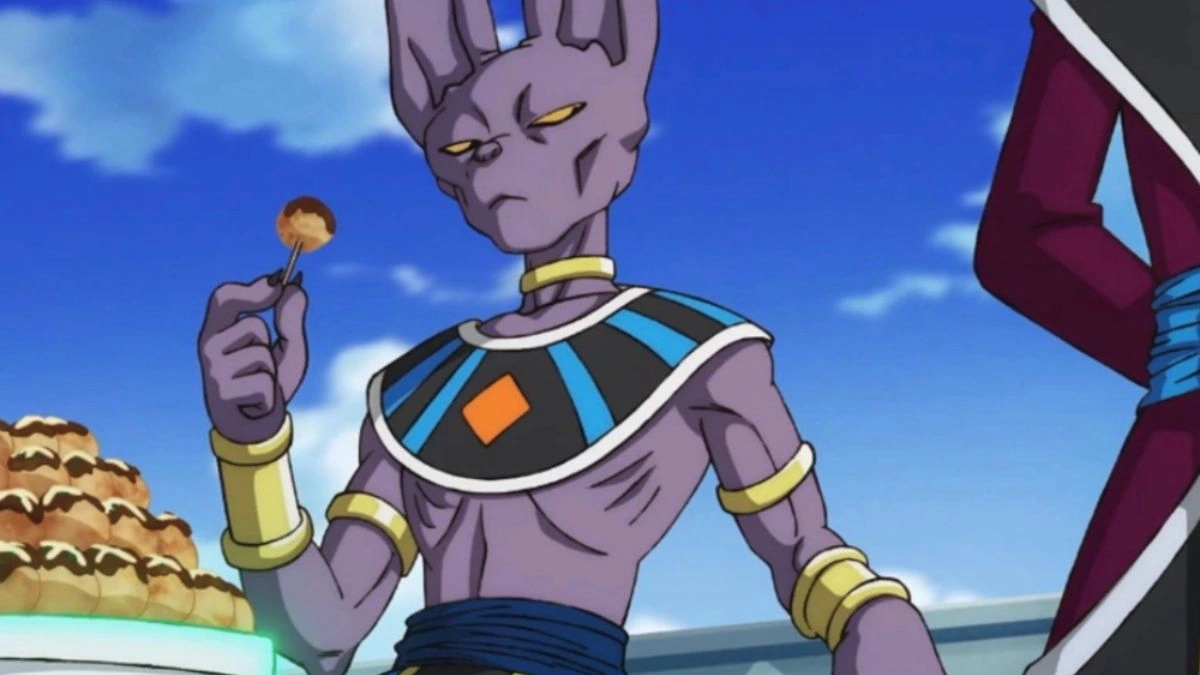
A viewer familiar with the events may cross these gaps easily because they remember what has been cut. Someone following the story for the first time, however, may feel that the episode is chasing the important moments without always connecting them smoothly.
For us, the cutting helps when it reduces the wait between confrontations, and is less successful when it compresses the characters' interactions. The time we spend with them before the fighting is what makes their later exposure to danger matter.
When Vegeta stops backing down
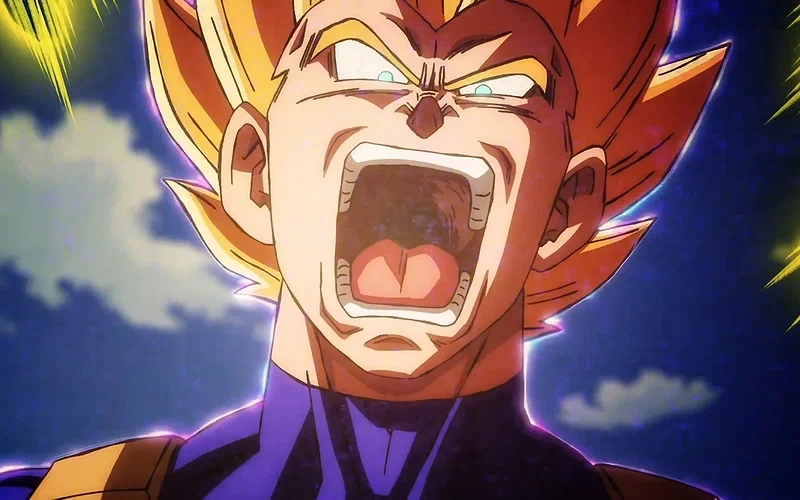
The episode reaches its best moment when Vegeta attacks Beerus in Bulma's defense. Until then, he has tried to avoid any confrontation, knowing that Beerus can defeat him. But Beerus's assault on his wife ends the attempts at appeasement and drives him to attack despite his awareness of the immense gap between them.
The moment succeeds because his motives change clearly before us. He has spent most of the episode calculating consequences and trying to stop others from acting recklessly. Now he does what he has been trying to avoid because someone he loves has been hurt. The scene needs no lengthy speech about his relationship with Bulma for us to understand why he acts.
Bulma, meanwhile, steps in to object to Beerus's behavior despite the danger. This gives us a moment expressing her courage before attention turns to Vegeta's reaction. It would have been better to give her more time, especially since what happens to her is what drives the confrontation to escalate.
The moment also recalls his attempt to protect his father as a child. Once again, he sees someone close to him hurt by Beerus. This time, though, Vegeta can fight, even if his strength is not enough to win.
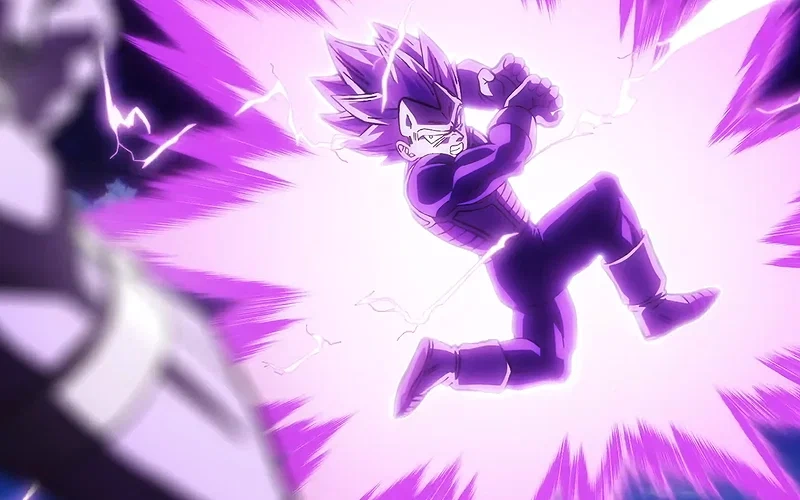
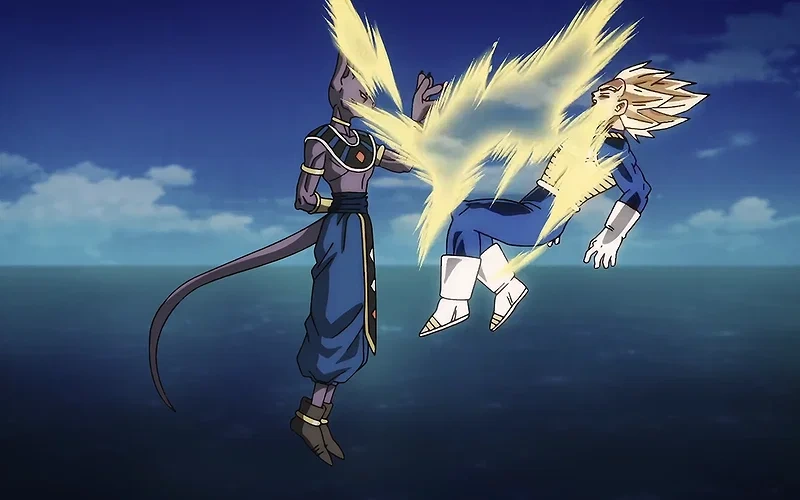
Having his attack end in defeat also keeps the confrontation true to the story's logic. His anger drives him to fight with everything he has, but it does not suddenly cancel out everything we know about his opponent's power. We get a strong character moment, and Earth remains in danger afterward.
The improvements to the fighting and their limits
The confrontations offer noticeable visual improvements in some explosions and effects, and Vegeta's attack feels more dynamic. The development here is less clear than the improvement in Goku and Beerus's fight in the previous episode, however. It is therefore difficult to treat the fighting alone as sufficient reason to declare this episode better than its older version in every respect.
Majin Buu, Gotenks and Piccolo's attempts serve a clear purpose: each defeat confirms that the usual solutions are not enough against Beerus. The characters we are used to relying on cannot stop him, making the search for another way to survive essential.
Not every confrontation leaves the same impression, though. When attacks and defeats follow one another quickly, some characters can become additional attempts to establish something we already understand: Beerus's superiority.
This is why Vegeta's fight remains stronger than the other clashes. We know what drove him to attack, and we remember his earlier attempts to avoid combat. The action completes what we know about the character. Improving explosions and the speed of the blows adds visual enjoyment, but cannot by itself make up for the absence of a similar reason to care about every confrontation.
Earth's fate rests on a game
After force fails, food returns to give Earth another chance, and Beerus then places its fate in a game of rock, paper, scissors against Oolong. The episode ends before the result, leaving the characters unable to guarantee their survival even after giving everything they have in battle.
The idea fits Beerus as the episode presents him. His interests change quickly, and he can treat a planet's fate as casually as a passing amusement. Choosing Oolong also shifts responsibility to a character who cannot settle matters through force in the first place.
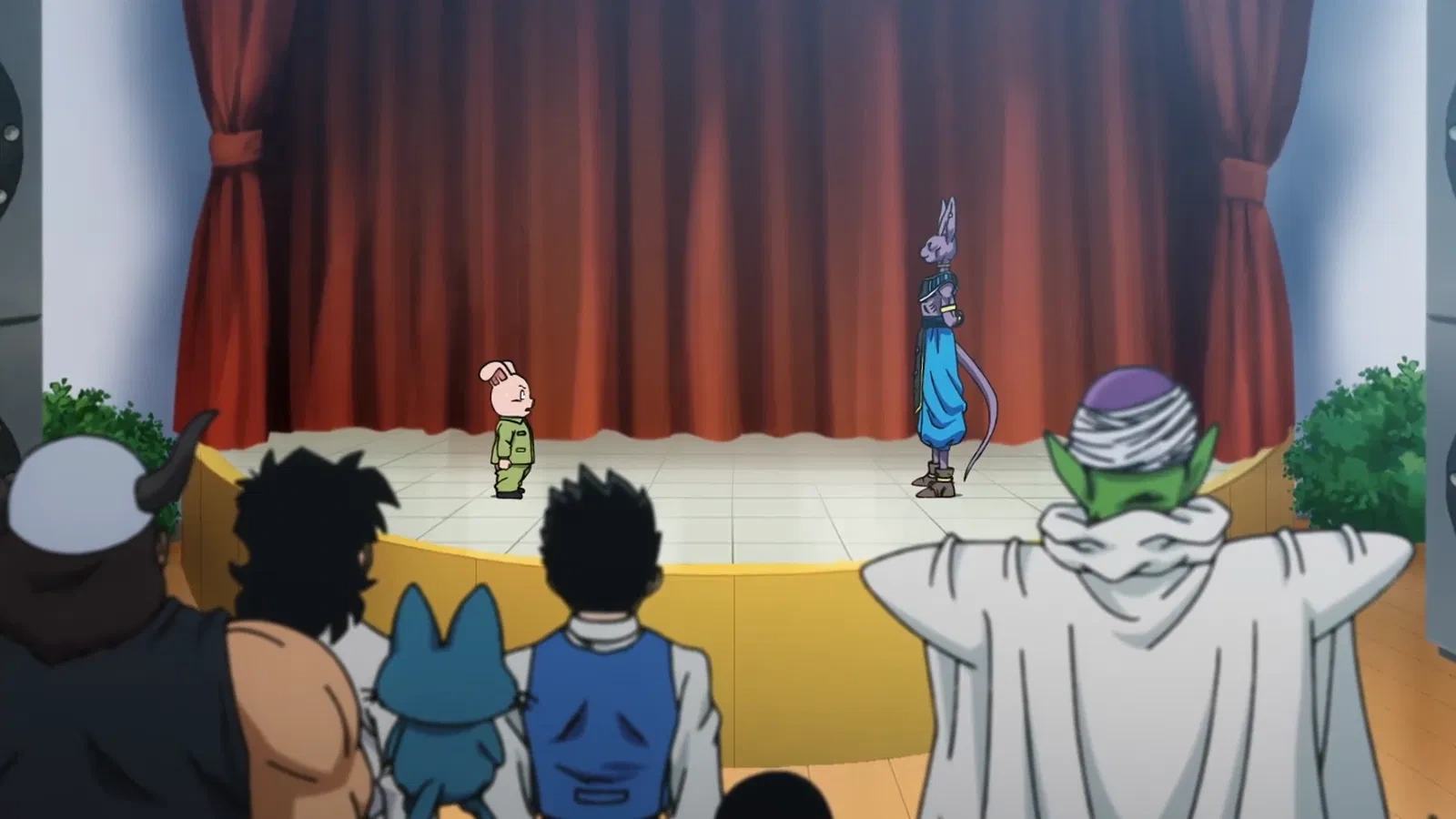
Yet the move from Vegeta's anger to this game quickly softens the confrontation's impact. We were watching a husband try to defend his wife despite his fear; then we are facing an absurd test that could decide everyone's fate. Both situations can be enjoyable, but the transition needs more room so that one does not overwhelm the other.
The ending remains suspenseful because it leaves the question of survival open. It also reminds us, however, that the episode moves between fear and laughter before giving some situations the time they need.
Final verdict
Episode verdict
Episode three is enjoyable, and Vegeta provides its best material. His fear makes sense, his attempts to calm Beerus produce successful comedy, and defending Bulma gives the confrontation a clear personal reason. The pudding scene and improvements to some fighting details add enough to make revisiting these events worthwhile. On the other hand, the episode rushes between its moments and sometimes compresses the characters' interactions more than it should. Joking about Vegeta's fear also does not always sit comfortably with the seriousness of his memory, and some appearances seem to be there because the original story includes them, without adding much here. We leave with a good episode containing strong, enjoyable scenes, but its compression has not produced equal improvements across all its parts. It deserves praise for what it does with Vegeta and criticism for hurrying through what surrounds him. Our rating for episode three: 7.5 out of 10.
Your turn
Did cutting down the party make the episode more enjoyable, or weaken the impact of the confrontation that followed?
AUDIENCE VOTE
Do you agree with the MB rating?
Choose once from this browser. You can change your answer at any time.