
The review
A finale that redefines the season
The series does not rely on a single surprise. It builds its ending around a series of discoveries that reframe Alice's relationship with Katherine throughout the season.
Katherine arrives at Jay Easton's house determined to kill him, convinced that he is responsible for the death of her friend Isabel. Meanwhile, Emma tries to dispose of the evidence that could incriminate her father.
The confrontation takes a different turn when Emma shoots Katherine, and Alice then arrives at the house.
Here the series is at its best. Instead of reducing the scene to a confrontation between the police and a killer, it uses it to reveal the profound resemblance between the two women.
Alice and Katherine: parallel wounds, different choices
From the beginning, it was clear that Alice and Katherine were moving along parallel paths.
Both were harmed, and both have lived with the effects of traumas that did not disappear when the events causing them ended.
The key difference is how they respond to those experiences.
Katherine chooses direct revenge. To her, the world is simply divided into bad people and good people, and anyone who hurts others must pay.
Alice, however, tries to hold on to the law and the idea that some boundaries must not be crossed, even when she is angry and knows the law may not give her the justice she wants.
That is what makes Alice more complicated.
She does not reject revenge because she does not want it, but because she knows exactly where it can lead.
The finale confronts her directly with this hidden part of her character.

Isabel's death and Katherine's incomplete memory
One of the most important discoveries concerns Isabel's death.
Katherine initially believes Emma played a part in killing her friend, but her memory begins to return as she recalls Isabel's final moments.
Isabel was bleeding after giving birth. Jay assaulted her, and she was then beaten when she tried to ask for help.
In those moments, she asked Katherine to put an end to her pain.
Katherine then remembers the truth: she was the one who gave Isabel the drug that caused her death.
This revelation matters because it changes the meaning of Katherine's entire journey.
She did not know the full truth. Her revenge was built on an incomplete memory and a trauma buried in her mind.
The series does not use this to excuse everything or erase her responsibility. It shows that her motives were tied to a much deeper trauma than they first appeared to be.

Alice crosses the line
If this is the end of Katherine's story, it also becomes the beginning of Alice's.
After Katherine is arrested, Alice goes upstairs to Jay Easton's room.
She finds him asleep, but he recognizes her and refers to the video she appeared in at fourteen, a recording tied to one of the cruelest experiences of her life.
This is the moment when the real change occurs.
Alice strangles Jay with his oxygen tube, then cuts off his air with her hand.
Afterward, she calls for medical help and tries to make it look like an accident.
The scene is powerful because the series does not suddenly present Alice as a professional killer.
Throughout the season, she hesitates, resists her anger and tries to act within the law.
But when she stands before the man responsible for so much of her pain, the boundaries she has maintained collapse.
Most importantly, she feels something Katherine had previously described to her: a sense of power.
Emmy Rossum and Alice's fragile composure
Emmy Rossum's performance is one of the main reasons the series succeeds.
Alice is not an easy character, because her pain does not always emerge through dialogue or obvious emotional reactions.
In many scenes, we see a woman trying to seem normal and professional while something inside her is clearly falling apart.
The series successfully conveys this contradiction, and Rossum makes good use of it.
We see her lose control completely, then return to her practical persona as though she is trying to put herself back together.
That is why Alice's decision to kill Jay at the end does not feel disconnected from the character we have watched throughout the season.
It is a direct result of the anger, trauma and humiliation she has carried for years.

Lola Petticrew and the power Katherine seeks
On the other side, Lola Petticrew creates an entirely different character.
At first, Katherine seems small, quiet and easy for the person in front of her to underestimate.
That outward appearance serves the character well, making her ability to manipulate others more convincing.
As her past is revealed, it becomes clear that her strength is more than a willingness to kill.
She has found in revenge a way to recover a sense of power that was missing throughout her life.
That makes her position opposite Alice even more important.
Katherine is more than an adversary who must be arrested. She represents what Alice could become if she completely abandoned the boundaries she has tried to maintain.
Nora and Danny: the people around Alice
The series also benefits from the characters around Alice.
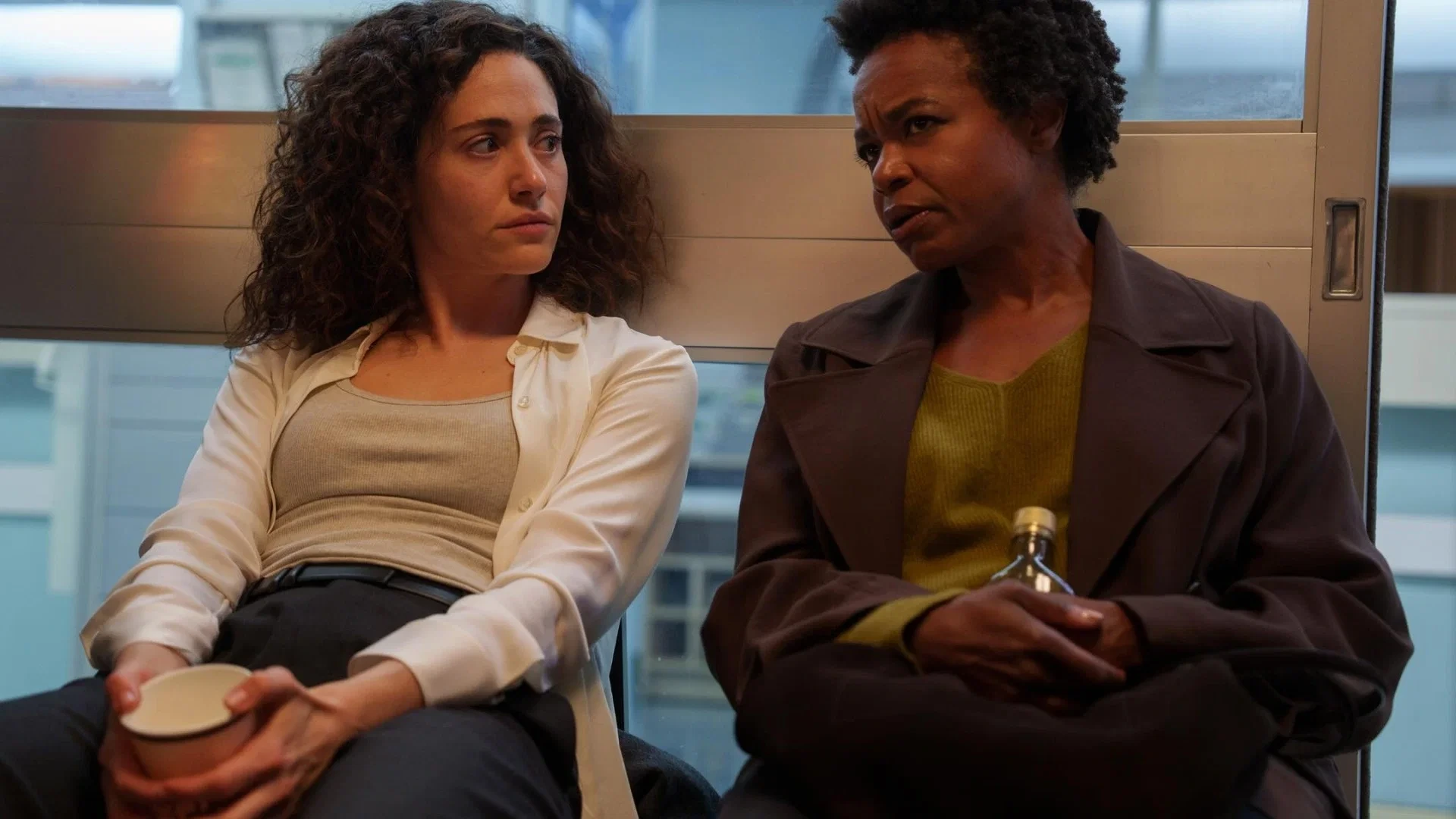
Nora Washington is a strong character because she does not fit the conventional investigator's mold.
She carries the exhaustion of her work and what she sees every day, but her sardonic humor distinguishes her and brings balance to some scenes amid the heavy atmosphere.
As Danny Kelly, Scoot McNairy gives a quieter, more sensitive performance.
His relationship with Alice is one of the story's best human elements. Danny does not try to fix or change her; he simply wants to be there for her.
That makes their future together more complicated after the ending.
Danny loves Alice, but the real question is whether he can stand by her when he discovers what she has begun to do.

Alice's smile and a new list of potential targets
The final scene between Alice and Katherine is one of the season's most important moments.
Katherine tells Alice she knows her secret and suspects that Alice played a part in Jay's death.
She then asks whether Alice enjoyed the feeling killing gave her.
Alice does not deny it.
She smiles instead.
That smile matters more than a lengthy speech, confirming that something inside her has changed.
But the series does not stop there.
Nora gives Alice the access code to the room containing sensitive material and asks her to look for her video.
Alice does so.
She watches it, briefly breaks down, then starts looking at the usernames of the people who uploaded it.
Her perspective changes.
She no longer sees herself only as a victim of the past. She begins to see the people who participated in her exploitation as potential targets.
This opens the ending to a clear possibility: Alice may begin a new path of revenge.
Nora and the flash drive
Another unresolved thread concerns Nora and the evidence against Ed.
After the hard drives are destroyed, the flash drive becomes the most important remaining evidence against Jay and others connected to the case.
But Nora's behavior opens up another possibility.
She knows how important this evidence is, and she also knows that possessing it gives her influence over Ed.
She may therefore have decided to keep it instead of handing it over in the expected way.
That fits a series whose characters are not always morally straightforward.
Even those working inside the system have their own interests and calculations.
Crime as a way into trauma
Furious draws its main strength from more than a conventional pursuit.
The series uses investigation and crime as a way to study its characters and the traumas that shaped them.
That is why quiet moments and psychological breakdowns can matter more than the chases themselves.
The atmosphere supports this approach. Alice and Katherine's world seems filled with powerful people who can exploit their influence and conceal their crimes for long periods.
The show succeeds when it makes us feel that the problem is not one crime, but an entire network of exploitation, silence and fear.

An important strength and a clear problem
The strongest element in the series is the relationship between Alice and Katherine.
The idea is not entirely new, but the execution gives it additional value because the show cares about more than who killed and who will be caught.
The more important question is: what can pain do to a person?
The series leaves viewers facing difficult moral questions without offering an easy answer.
It does, however, have a clear problem in the way it sometimes handles sex work, trafficking and exploitation.
The series successfully examines how powerful people exploit the vulnerable, but at times it treats sex work and coercive exploitation as the same thing, weakening the precision of the idea it wants to explore.
That is difficult to ignore, despite the strength of the other elements.
Understanding Alice without endorsing her choices
The ending succeeds because it redefines Alice's story instead of closing it.
At the beginning of the series, Alice was trying to live despite her past.
By the end, she is prepared to face that past in a completely different way.
But there is an important difference between sympathizing with Alice and agreeing with what she does.
The series encourages us to understand how she reached this point, but it does not make killing other people a sound solution to her problems.
That is precisely what makes the ending interesting.
We understand Alice and may sympathize with her, while also knowing that she has begun heading somewhere very dangerous.

Season 2: where could the story go?
With the series renewed for a second season, several questions now matter more than the original case.
Will Alice really become a killer?
Will Danny discover the truth, and will he stay by her side?
Will Nora learn what Alice is doing? If she does, will she stop her or respond in a different way?
Katherine, meanwhile, could turn from an adversary into someone Alice turns to, because she is almost the only person who can understand this dark side of her.
Their relationship could then become more complicated than that of an investigator and a killer.
All of this remains a possibility, not an established fact from the events of the current season.
Final verdict
Final verdict
The best thing about the series is not the mystery of the crimes, but the two characters at its heart. It begins as a pursuit and gradually becomes a study of trauma, anger and the desire to regain power after years of helplessness. Emmy Rossum gives a strong, affecting performance, and Lola Petticrew gives Katherine a presence that stays with us, while the rest of the cast adds depth to the world around them. At the same time, there are problems in the treatment of sex work and exploitation, and the ending leaves some threads open instead of answering everything clearly. For me, though, that very ending is what makes the season compelling. The question is no longer who the monster is, but what can happen when the victim becomes someone prepared to take revenge.
Your turn
After what Alice did to Jay Easton, do you think she will become a killer in Season 2, or was this a single act of revenge that will not happen again?
AUDIENCE VOTE
Do you agree with the MB rating?
Choose once from this browser. You can change your answer at any time.