02 / The review
11 CHAPTERSA familiar world without the same impact
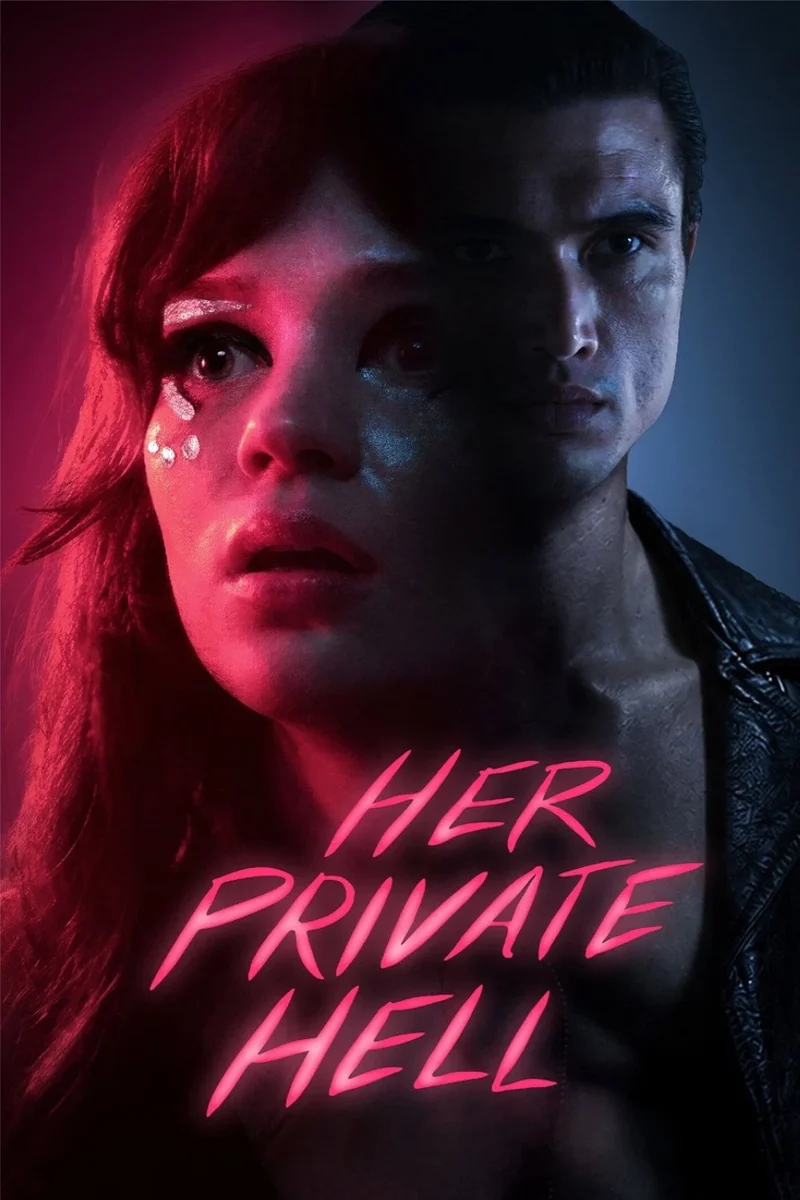
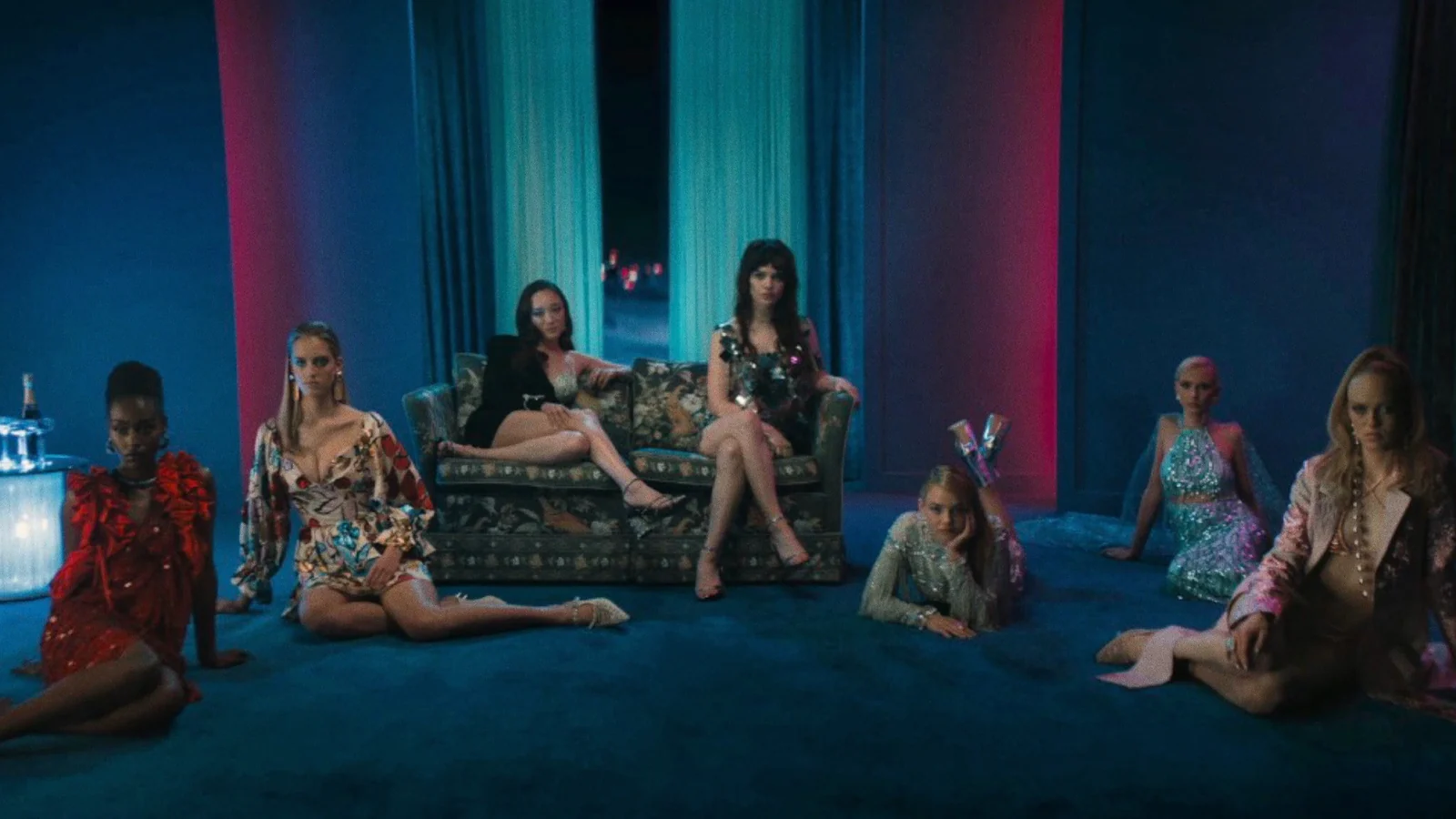
After a long absence from feature filmmaking, Nicolas Refn returns with Her Private Hell. From the opening minutes, we are clearly in a world bearing his familiar signature: a futuristic city covered in fog, neon lights saturated in red, blue and purple, beautiful and mysterious characters, extreme violence, men resembling samurai warriors and women presented more like fashion models.
The problem is that these elements were once part of Refn's cinematic language, whereas here they frequently become little more than repetitions of it. At times, the film feels as though the director is reassembling ideas he has used before instead of discovering something new through them.
This makes for a strange experience: you can see the director who made Drive, Only God Forgives and The Neon Demon, but you do not always feel that you are seeing that same director at his best.
A narrative that moves like an unsettled dream
The film's biggest decision is to abandon traditional storytelling almost entirely. The story moves like an unsettled dream, shifting between several strands without always giving viewers a clear connection between them.
There is Elle, who arrives at Tower Hotel and enters a tense relationship with her wealthy father, Johnny Thunders, and his wife, Dominique, who has a past relationship with Elle. Elsewhere, Private K is a soldier searching for his missing daughter, while Leather Man appears as a mysterious killer who stalks women and adds another layer of violence and menace.
These strands do not come together in the conventional way we expect from a film with a clear plot. That is not a flaw in itself. The problem is that the film does not offer a sufficiently strong narrative alternative. When you abandon conventional plotting, you need to compensate with deeply developed characters, powerful ideas or a cinematic language capable of carrying the film on its own. Her Private Hell does not always succeed at that.
Elle… the film's human center
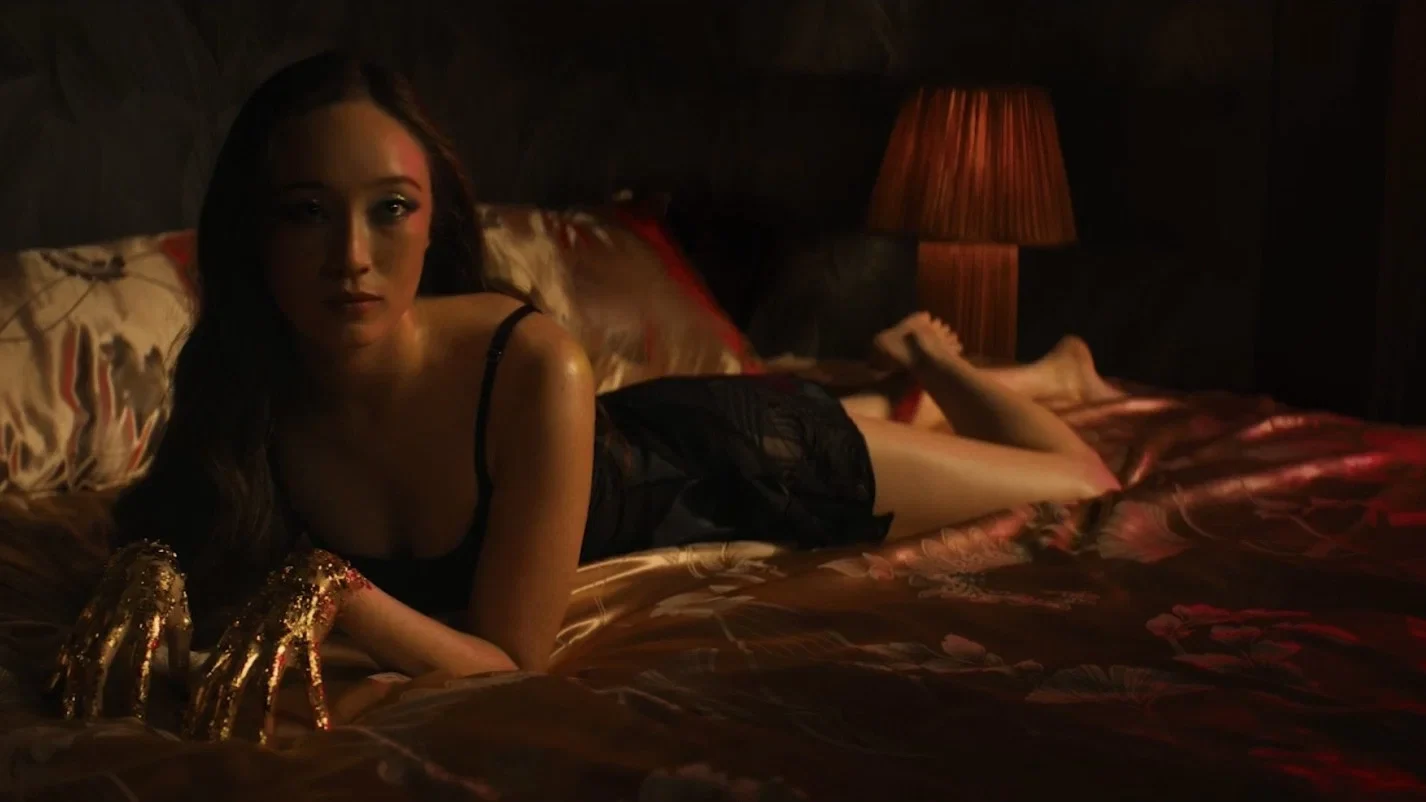
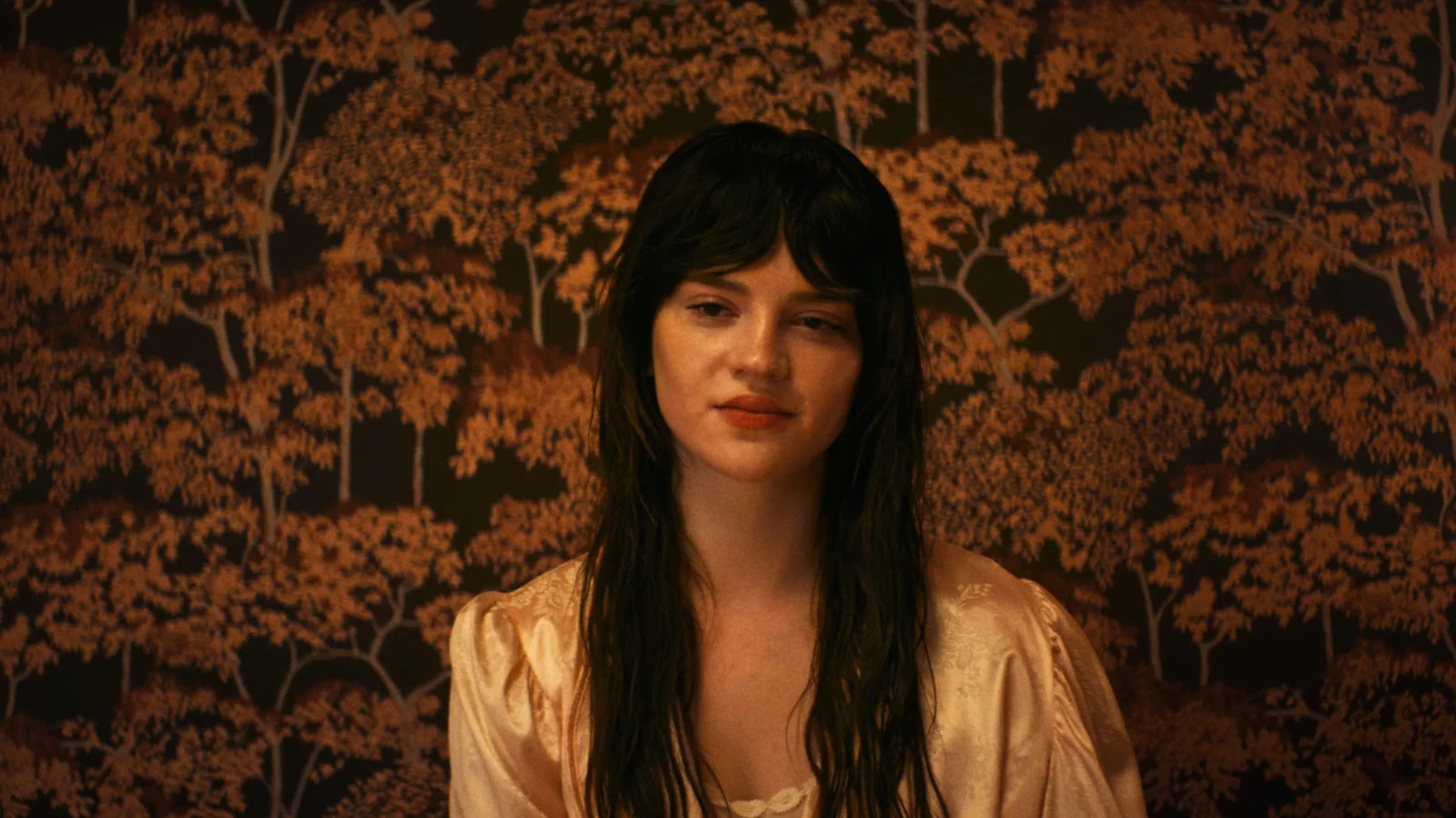
Amid all this abstraction, Elle emerges as the clearest character. Sophie Thatcher gives a very strong performance and, most importantly, supplies something the film desperately needs: a real sense of pain.
Elle is not merely a beautiful figure moving through luxurious sets and neon lights. There is a clear emotional wound in her relationship with her father, and constant tension in her relationship with Dominique. This makes her presence more important than that of many other characters.
Thatcher does not rely solely on dialogue, especially since the dialogue itself is written in a slow, theatrical manner. She depends heavily on looks, movement and physical presence. In many scenes, she seems to be trying to bring the film back to a human world while the film keeps trying to turn everything into an image or a symbol.
Private K… a character or an idea?
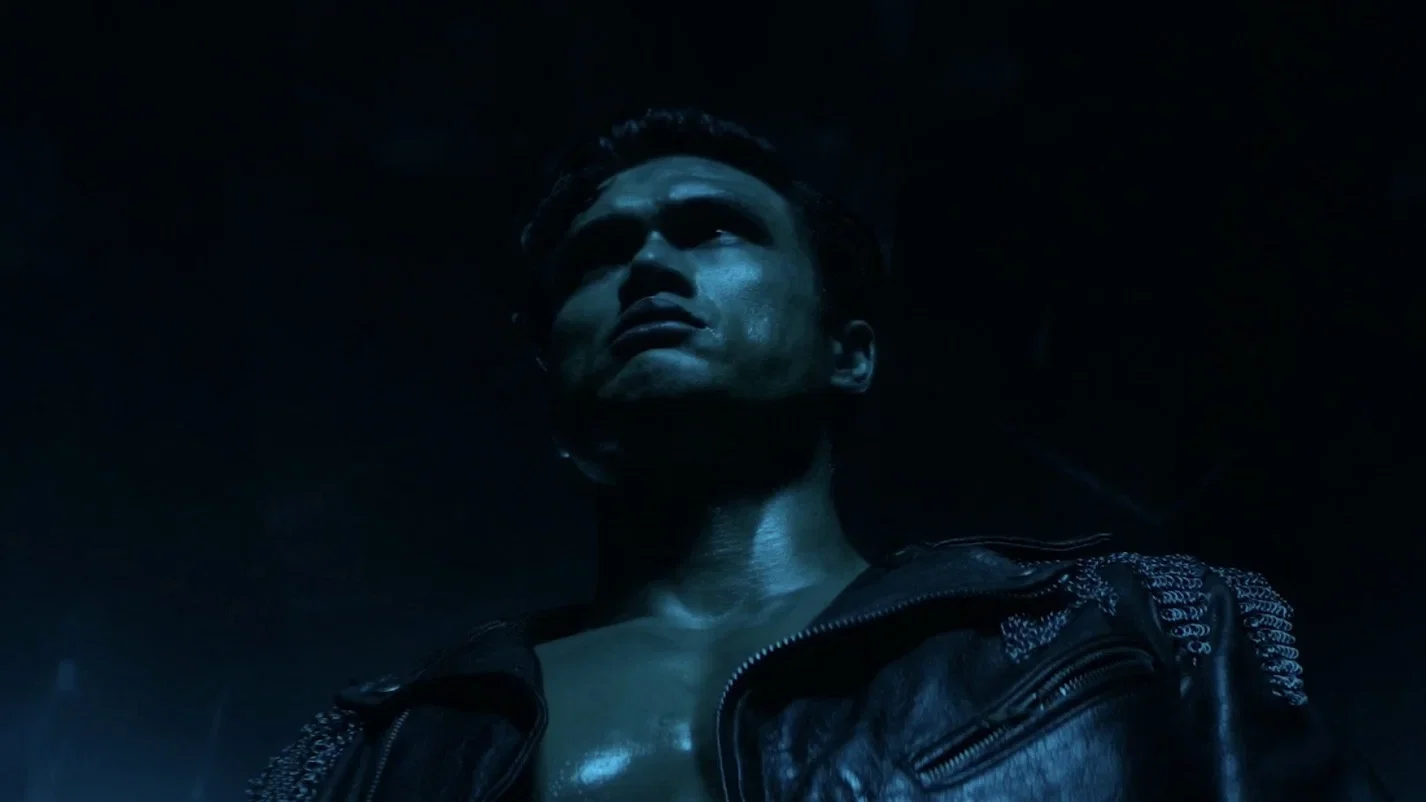
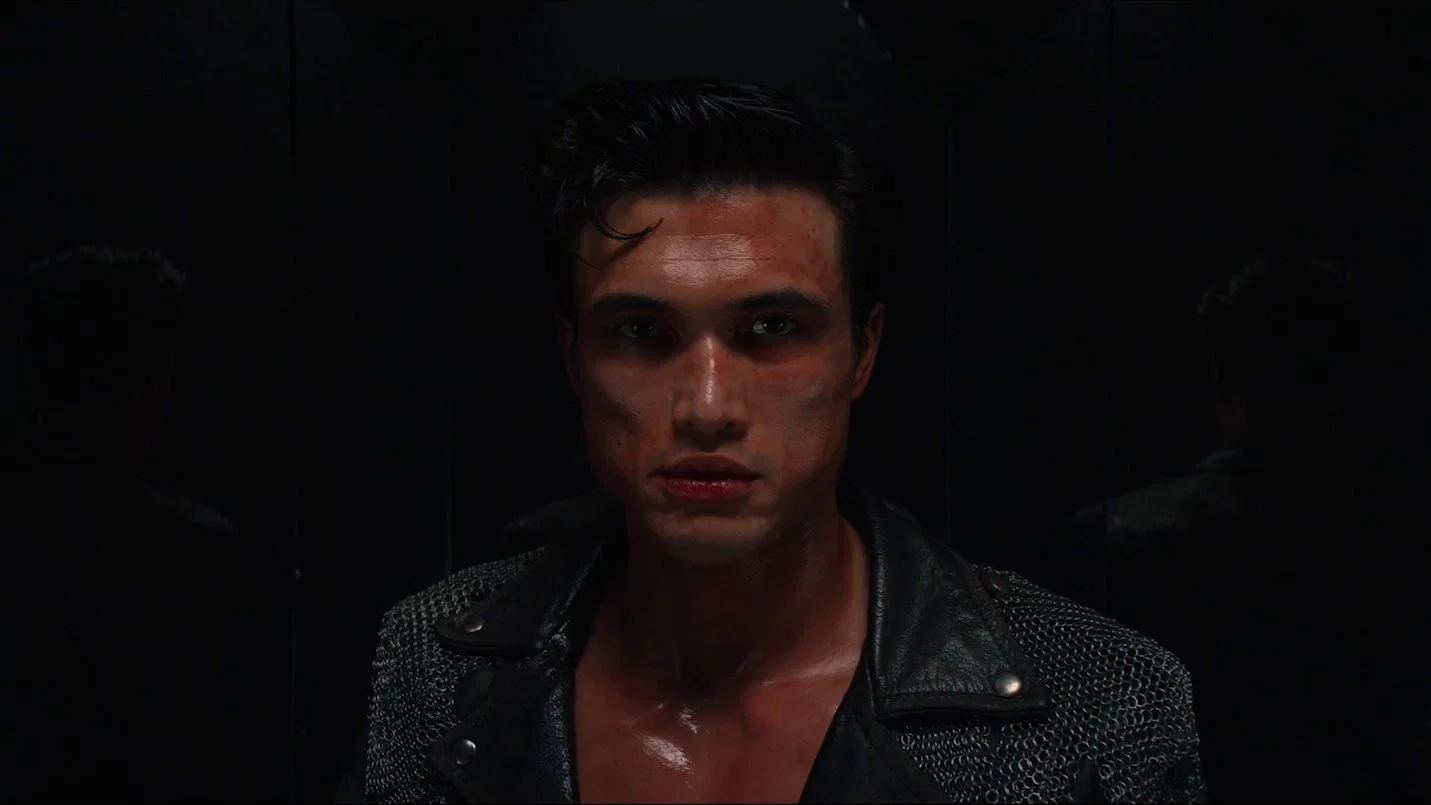
Charles Melton approaches Private K very differently. He is an almost silent soldier searching for his daughter, and his performance relies more on physical presence than speech. The character can be read in several ways, but the film never clearly resolves his relationship to the other events.
Even the idea that Private K might be a projection or a mental image connected to Elle's family trauma remains a possibility, not a fact the film directly establishes. For me, the problem is not ambiguity, but the way the film sometimes uses ambiguity in place of real character development.
Melton has a very strong presence, but the character feels closer to a type Refn knows well: the silent, mysterious man who moves through a violent world and says only what is necessary. The idea was more affecting in earlier works.
Leather Man… an image stronger than the drama
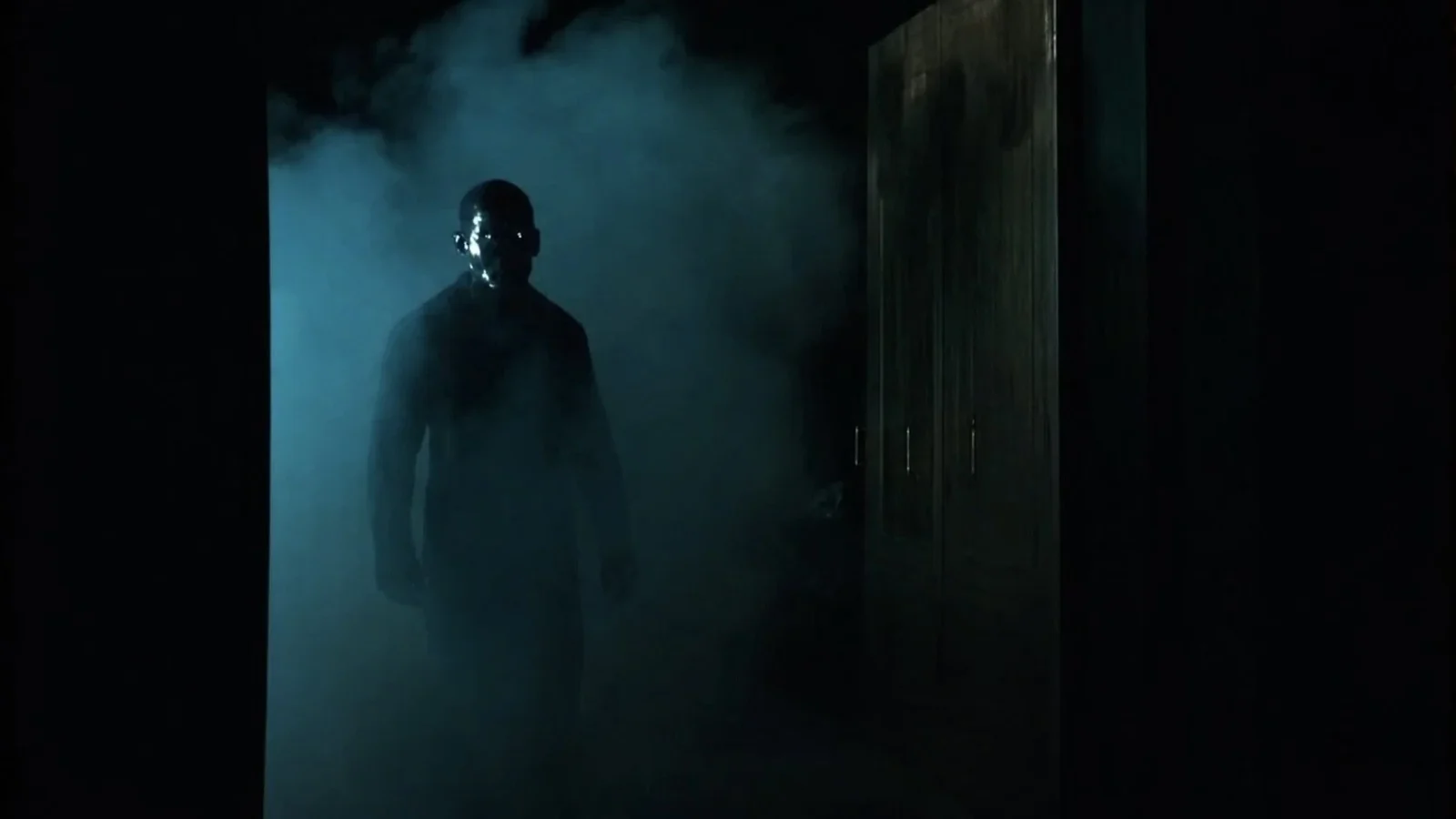
Leather Man is one of the film's strangest elements. He is not simply a conventional serial killer, but a frightening, mythic figure who gradually becomes part of the film's overall nightmare. The problem is that the film gives him no real depth.
His presence works well on a formal level: the character design, clothing and the way the violence is filmed all give him a strong presence. Dramatically, though, I do not feel the film gives us enough reason to care about him as a character.
He works better as a visual symbol within the film's world than as a real dramatic antagonist. This almost sums up the entire problem with Her Private Hell: the image is usually stronger than the idea behind it.
Slow dialogue and silence without enough purpose
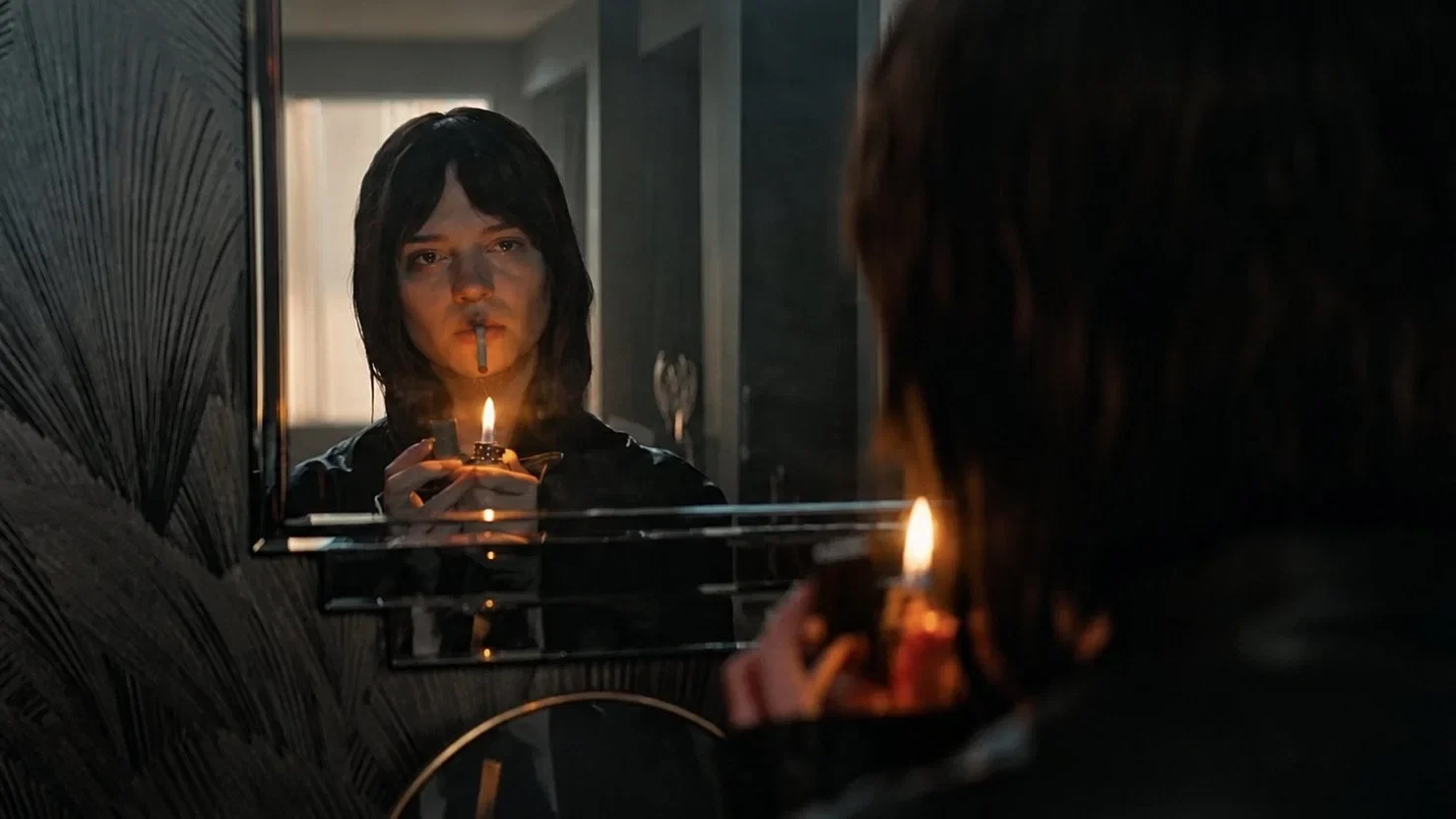
The film is written at an extremely slow pace. Sentences arrive noticeably slowly, and the dialogue sometimes makes it seem as though the characters are speaking from within a dream or under sedation. At certain moments, this creates a strange, distinctive atmosphere. At others, it becomes exhausting.
The film knows how to create silence, but not always what to do with it. There is a difference between a film being slow because it wants to build tension and being slow because the scene itself has little to offer. Her Private Hell falls into the second category more than once.
Even strange dialogue filled with illogical lines can be enjoyable if it has a clear purpose, but the film repeats this approach until it loses its impact.
Candy Floss… a film within the film
Candy Floss, a neon space film within the film itself, adds another layer to the viewing experience. On paper, the idea fits Refn's world very well. It lets him play with imagery, advertising, fame, beauty, consumption and the transformation of pain into beautiful visual material. This is indeed one of the film's most important ideas.
Once again, however, the execution does not always match the idea. Sometimes it feels as though the film wants to say that modern culture turns pain, violence and desire into a beautiful visual product, while doing exactly the same thing in front of us. That is an interesting irony, but it would be stronger if the film were more disciplined in expressing it.
Violence designed as a painting
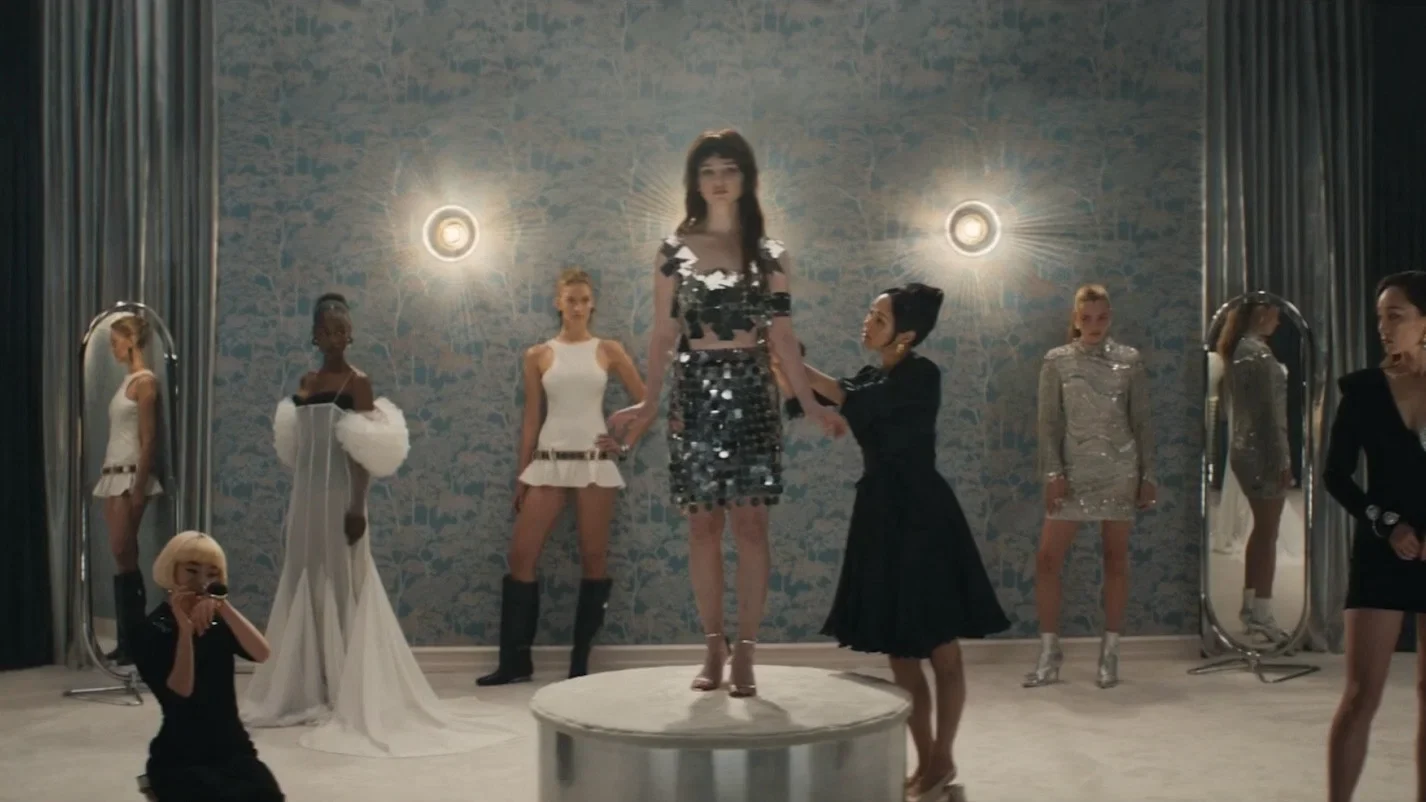
The violence is designed with extraordinary care. Blows, swords and killings are presented in slow motion, with choreography that approaches dance. This is a familiar Refn technique, but here it loses some of its power because the film uses it so often.
The violence seems less interested in exciting the viewer than in becoming a painting. In some scenes, that works. After a while, though, the pattern becomes predictable: beautiful characters, melancholy music, neon colors, then extreme violence. Again, the problem is not how the style is executed, but how predictable it has become.
Performances within a tightly controlled world
All the actors work within a very clearly defined directorial system. The characters do not always behave like ordinary people; they seem more like types or symbols within a carefully designed world. This makes the performances complicated to assess.
Sophie Thatcher is the most successful because she can bring human feeling into this cold environment. Charles Melton is good as Private K, but the role itself asks him to remain silent more than it asks him to express himself. Dougray Scott treats Johnny Thunders as a distorted, exaggerated figure, which suits the way the film wants to present him very well.
Diego Calva, meanwhile, brings something we often miss, despite his limited screen time: energy and vitality. His presence makes some scenes feel more alive because he does not seem entirely trapped by the film's rigidity.

Direction… Refn repeats himself
This brings me to what I consider the film's biggest weakness. Refn has an unmistakable visual language, evident in almost every scene. The problem is that Her Private Hell does not make that language evolve. At certain moments, you watch a scene and think, 'Yes, this is Refn.' Then you ask yourself, 'What has he added this time?'
The film revisits elements from his earlier work: polished beauty, sudden violence, silent characters, colored lighting, women filmed as visual icons and men moving as though they belong to a mythical world. But assembling these elements does not necessarily make a new film.
For me, this makes the experience feel more like Refn revisiting his personal archive than Refn discovering new territory.
Production design… the hotel is better than the city
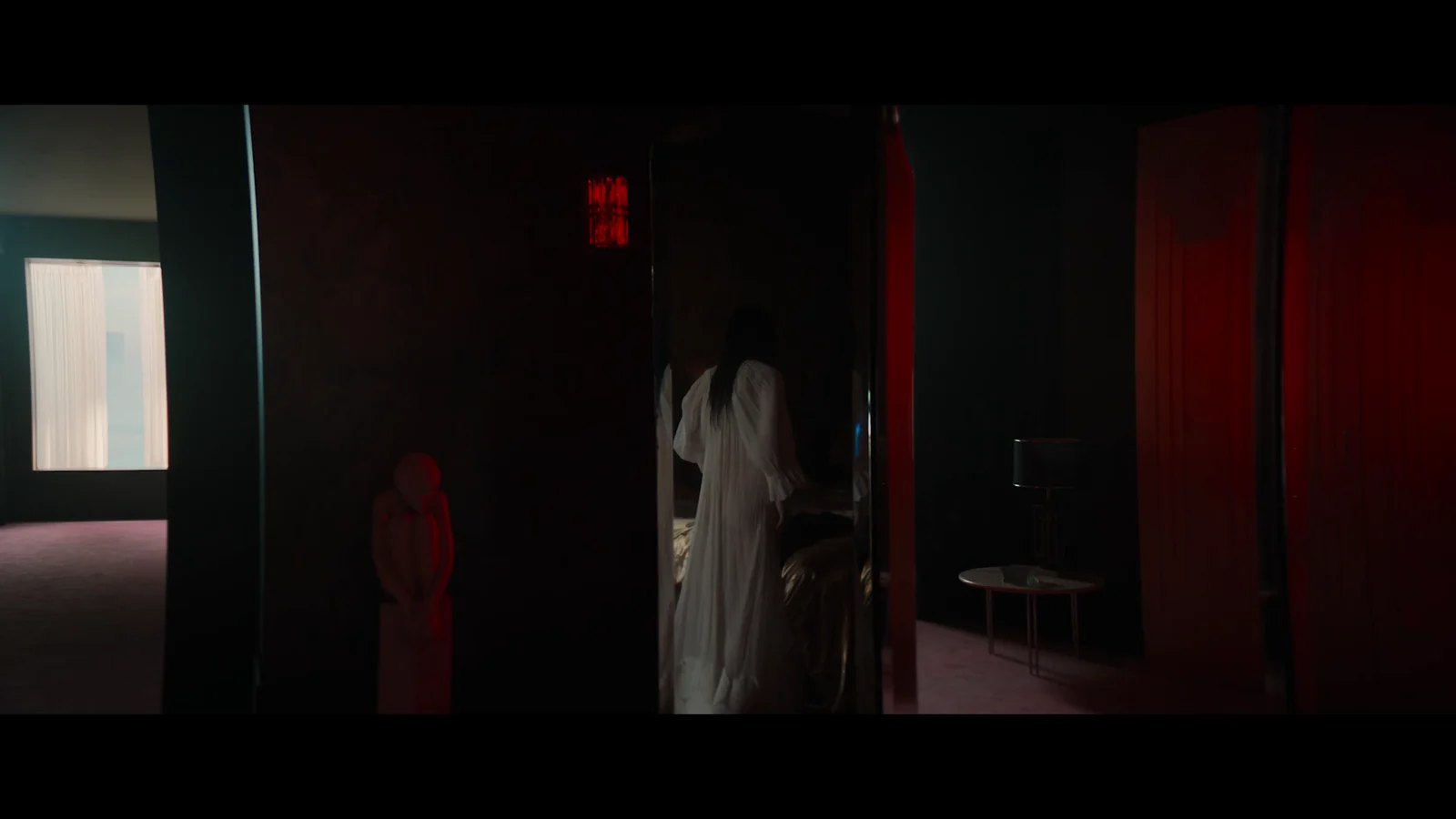
Tower Hotel's design is one of the elements I consider successful. The hotel feels luxurious, enormous and frightening at once. Everything is beautiful, but behind that beauty lies a sense of corruption and collapse. This serves the family relationships within the space very well.
The hotel becomes a kind of gilded cage: a place that looks grand from the outside but is full of problems within. By contrast, the city streets seem more abstract and less affecting. They are visually beautiful, but sometimes feel more like a backdrop than a living world.
03 / Final verdict
Final verdict
This is not a film without value. On the contrary, it has interesting ideas, a strong performance from Sophie Thatcher, excellent music by Pino Donaggio and some visual moments worth pausing over. But these elements are not enough to save a film that often seems to be trying to recapture the magic of an earlier period in Nicolas Winding Refn's career. My biggest problem is that it seems more interested in being a Refn film than in being a new film by Refn. That is a significant difference. In Drive, the style served the character and the story. Here, you frequently feel that the story and characters exist only to give the style another opportunity to show off. So, despite some truly powerful moments, I came away feeling that the film was far less affecting than it could have been.
Your turn
Now I would like to hear your thoughts: do you see Her Private Hell as a true return for Nicolas Winding Refn, or is it simply a repetition of a style that worked for him in the past but no longer carries the same power?
AUDIENCE VOTE
Do you agree with the MB rating?
Choose once from this browser. You can change your answer at any time.