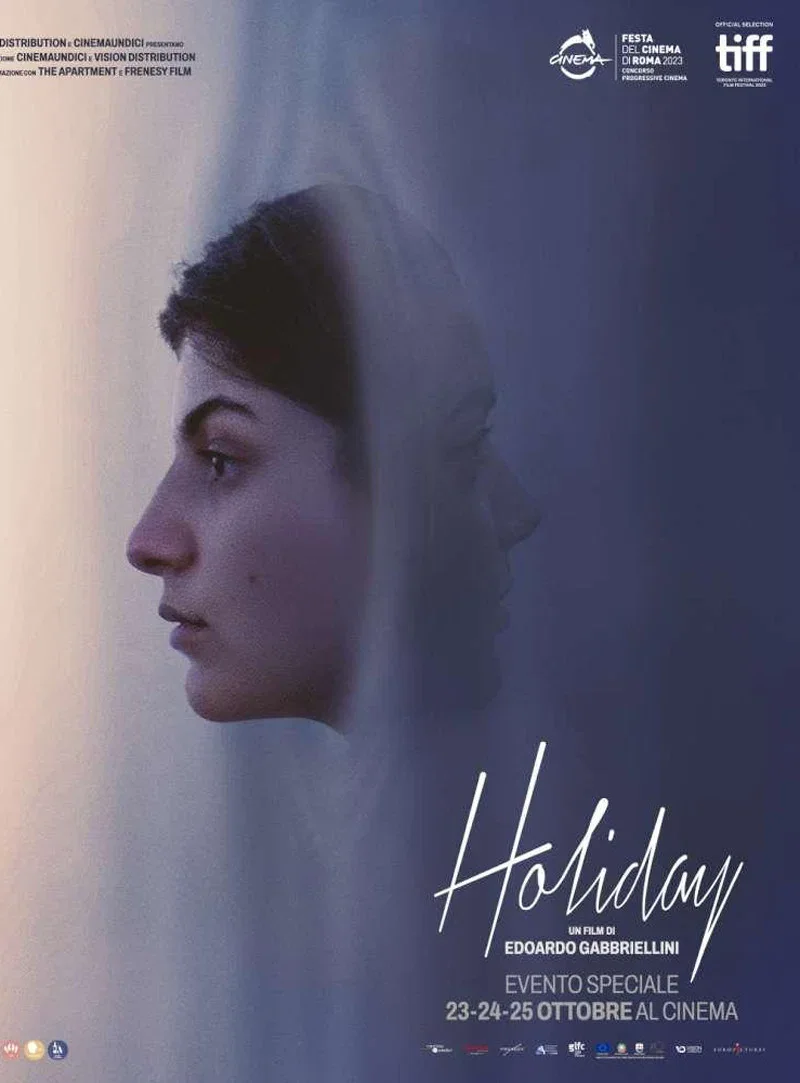
The review
Screenplay and dialogue: an acquittal that cannot end the accusation
Veronica returns to her life after being accused of killing her mother and her mother's lover, spending roughly two years in prison before her acquittal. She is now approaching twenty, but other people treat her as though the court's decision has left a crime unpunished.
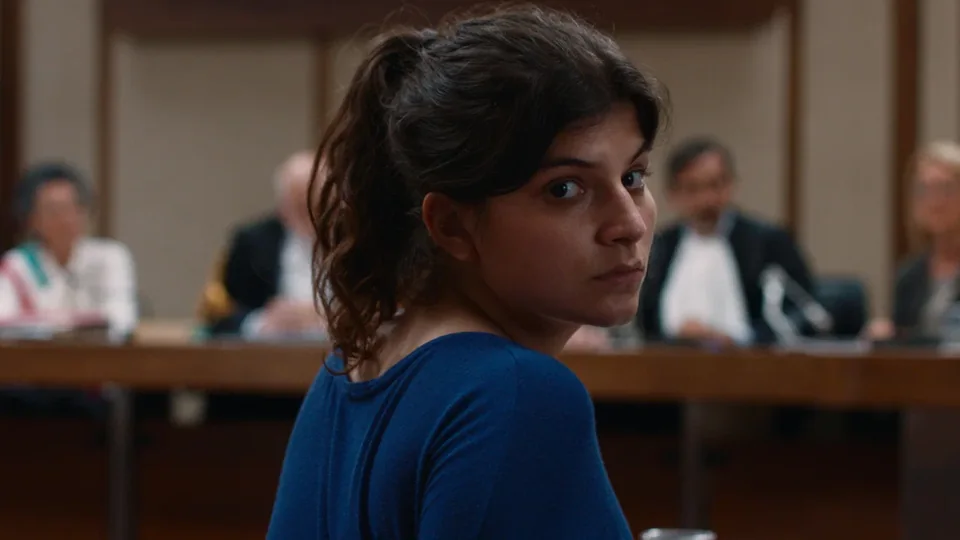
The strongest aspect of the premise is the way the accusation persists through everyday details. Going out to enjoy herself becomes something to film and circulate, and her attempt to reclaim some of her youth is read as proof of her cruelty. Society seems to expect a particular performance of grief from her, treating any departure from it as an indirect confession.
From the opening, as she scrolls through mockery connected to her trial, we understand that her case no longer belongs to her. Some people turn her into images and comments, while others consume this image without feeling any need to know her.
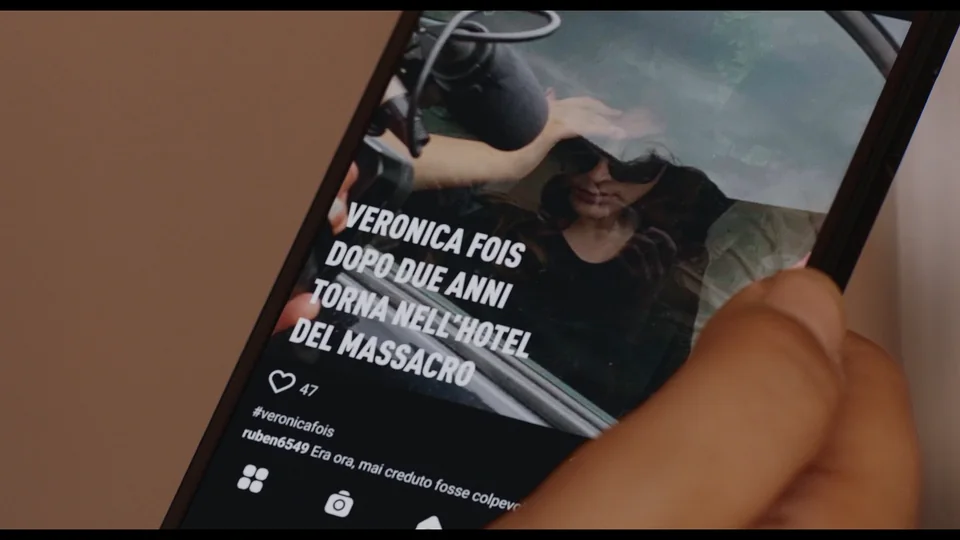
We see this as a good way into examining the effects of public vilification. Punishment enters her relationship with herself and with her surroundings: she has to consider how an ordinary action will be interpreted before taking it, while those watching her can simply move on to another subject.
The film is most convincing when it turns this idea into direct encounters between her and other people. We then feel what innocence means to someone who still has to defend her right to appear outside her own home, and returning to a normal life becomes an exhausting task in itself.
The mother's image, and beauty turned into a moral judgment
There is another layer to the judgment passed on Veronica, connected to the way other people remember her mother.
The public image of a beautiful, elegant mother helps construct a ready-made explanation for the crime: a daughter envies her mother's beauty and turns that envy into violence. This explanation gives people an easy story, reducing an entire relationship to a comparison between two women's appearances.
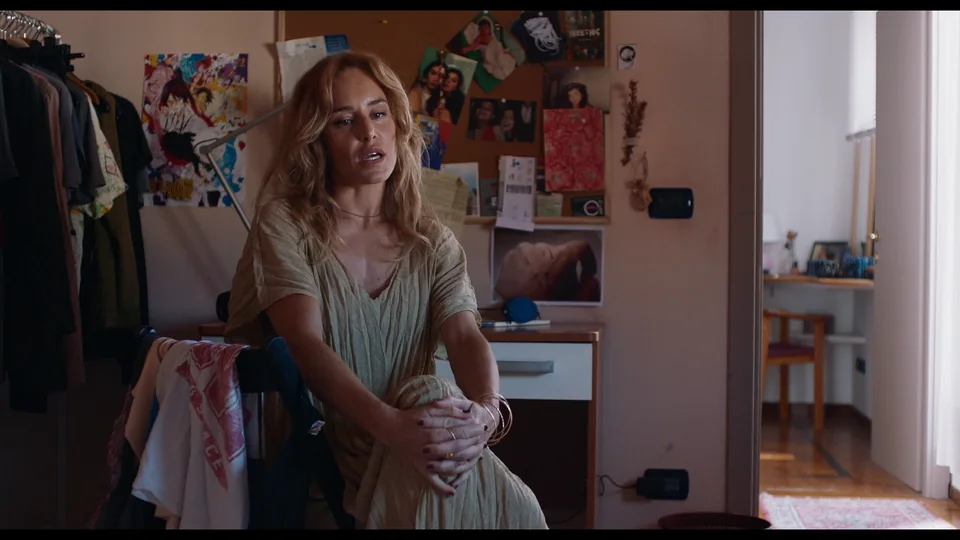
Scenes from the past, however, reveal the mother's cruelty toward her daughter and the tension within the family. As these details emerge, the distance grows between the woman society imagines and the relationship Veronica actually experienced with her.
For us, the value of this aspect lies in exposing how easily moral qualities are assigned on the basis of appearance. In the eyes of those around her, the mother's beauty becomes evidence of her gentleness, while her daughter's difference is used to explain her as jealous or resentful.
The film places Veronica in a particularly cruel position: her memories of her mother do not fit the image others want to preserve. Even her feelings become suspect, because she does not have the simple, uncomplicated relationship they expect her to have.
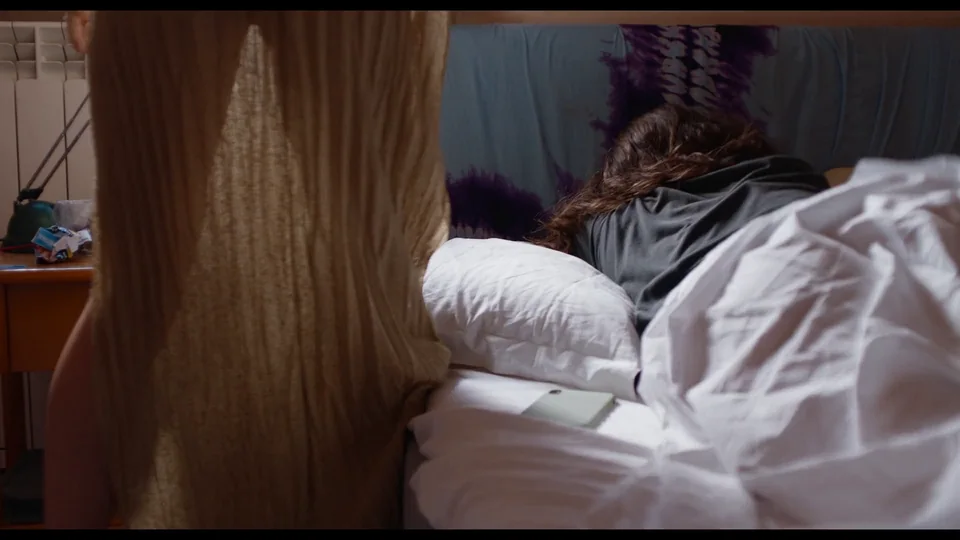
Still, this strand needed greater depth. Showing the mother's cruelty explains part of the daughter's pain, but it is not enough on its own to give the relationship all its contradictions. Some of the background remains closer to an explanation of the problem, when we need time to understand how this experience has settled inside Veronica and shaped the way she sees herself.
The performances and Veronica's right to keep her distance
Margherita Corradi's performance is what keeps us interested in Veronica when the structure around her falters.
The character initially appears somewhat cold and distant. We can sympathize with what she is subjected to, but getting emotionally close to her remains difficult. That is appropriate for a story about people who believe they have understood a woman from her appearance and behavior.
Corradi does not make Veronica easy to read, while giving her something beyond mere mystery. As she tries to rejoin life outside and encounters people connected to the trial, her responses begin to acquire meaning. We see a young woman trying to deal with the world after an experience that has consumed an important part of her youth.
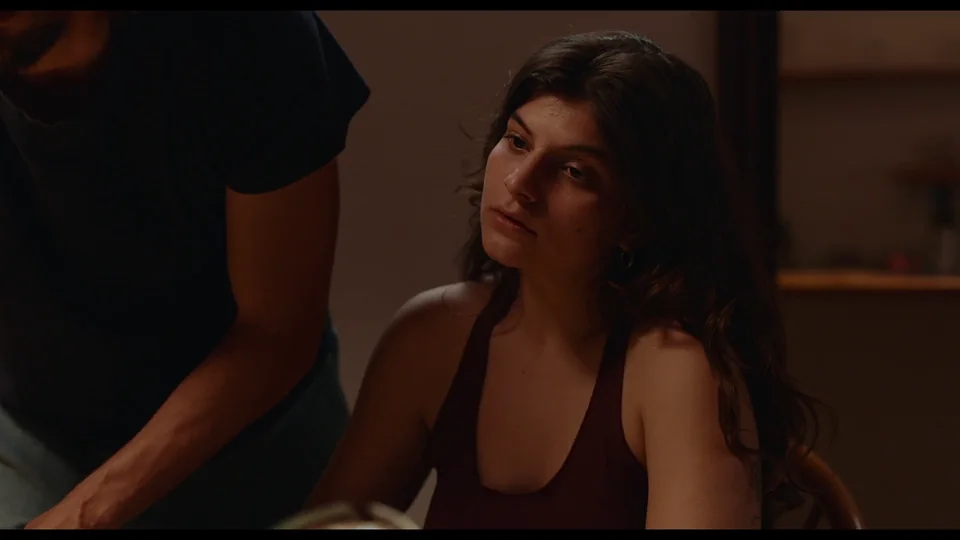
What we appreciate in the performance is its refusal to reduce her to a meek victim who must reassure everyone. Veronica retains a distance of her own, and the right not to present her feelings in a form that is comfortable for those watching her.
The presence of her father and her friend Giada also gives the film some warmth. Alessandro Tedeschi and Giorgia Frank establish convincing relationships with Corradi, and their chemistry helps emotional moments work even when the writing itself is fairly simple.
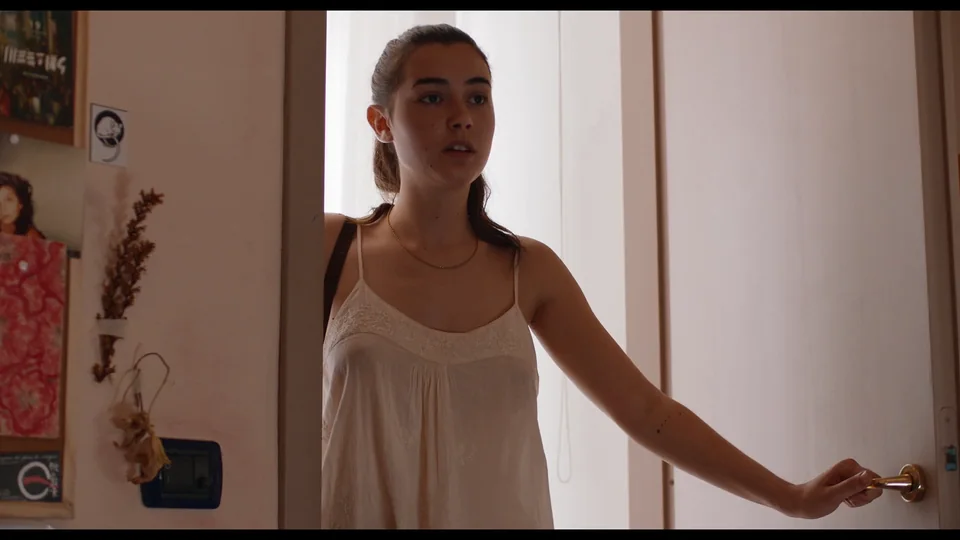
The supporting characters do not receive the same depth, though. We understand the support offered by her father and Giada, and feel its value, while their scope outside that function remains relatively limited. This reveals the difference between performances that give a relationship life and a screenplay that does not always develop the people within it sufficiently.
A temporal structure that does not always deepen our understanding
The film divides its story between Veronica's life after her release, testimony from the trial and her memories of the period before the crime.
This structure allows the character to be discovered gradually. We get to know her present self, then receive pieces of the past that can change our understanding of her. The courtroom scenes also let us compare what she experienced with what other people said about her.
The idea suits the subject, because Veronica is surrounded by competing interpretations. Each shift in time can add a perspective, reveal the reason for a response that previously seemed obscure, or set a piece of testimony against a personal experience.
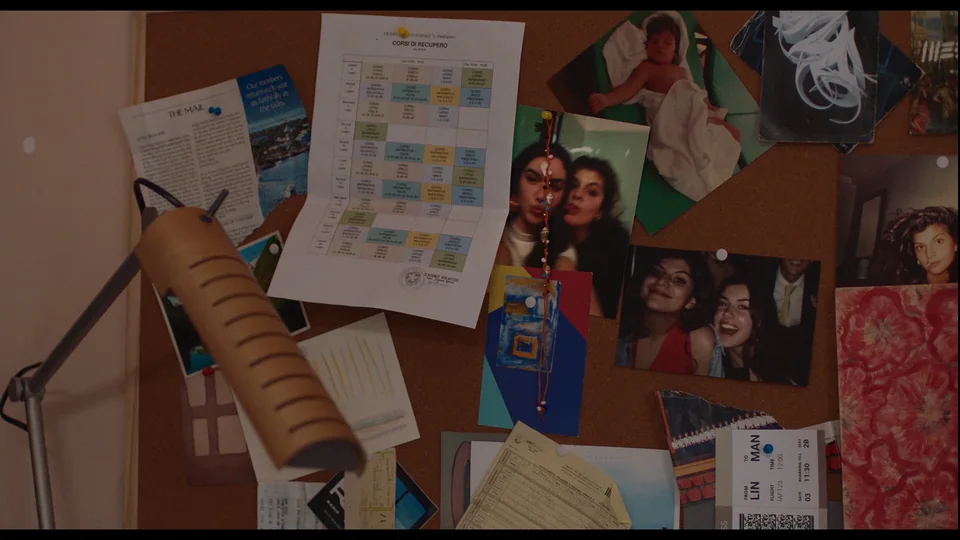
The execution does not consistently achieve that, however. Some transitions scatter our attention more than they deepen our understanding, and parts of the story remain insufficiently developed to connect emotionally with the material beside them.
We see the central problem as one of cumulative impact. Learning something new should change our relationship with an earlier scene or with the character. When passages sit beside one another without a clear consequence, we become more occupied with arranging them than with what they leave inside the heroine.
The film therefore needs a clearer distinction between ambiguity that serves her experience and omissions that limit our understanding of her. Questions can remain open while we are still given a psychological journey whose movement we can feel.
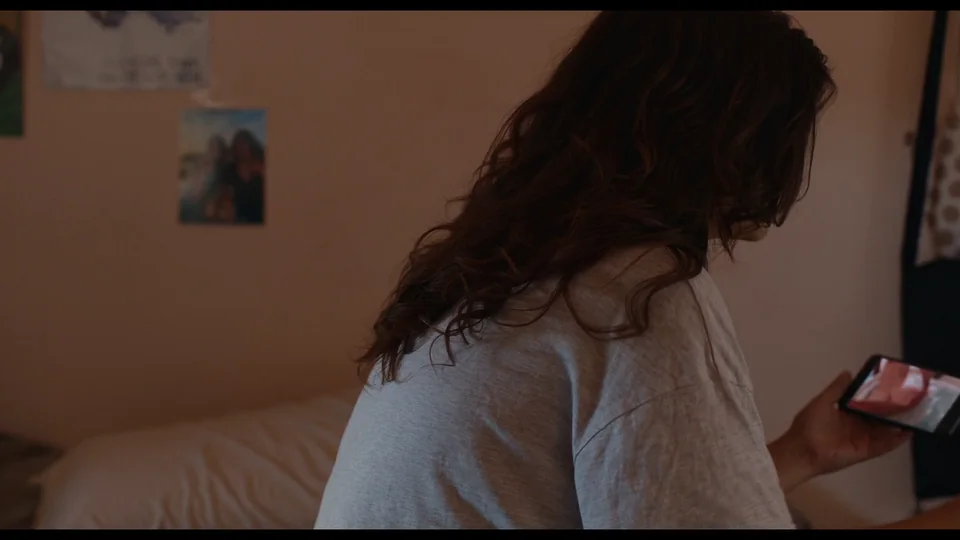
The performance helps fill some gaps, but cannot connect every strand by itself. There are still moments when we see Veronica's suffering without the structure giving us enough time to absorb her transition from one state to another.
Direction and a coastline that leaves its heroine little room
In its direction, Holiday has moments when it knows how to make a place part of the character's experience.
Setting the story on an Italian coast usually associated with relaxation gives the title an ironic meaning. Veronica inhabits surroundings that might seem ideal for enjoying life, yet struggles to move through them without someone bringing her back to her case.

The cinematography succeeds in conveying a sense of confinement beyond the physical limits of the setting. It is about what a space means to Veronica: it may be open to everyone, while for her it remains enclosed by the possibility of being recognized and judged.
One effective scene is her encounter with a familiar, unwelcome face at the market. It is a simple situation, but it brings her past and present together within an everyday moment, making her attempt to go out into the world vulnerable to sudden interruption.
Here we come closer to her perspective. The film does not need to explain the full impact of the trial, because the appearance of one particular person is enough to change her relationship with the place where she stands.
We think these scenes offer the best evidence of the direction's ability. They give social pressure a tangible presence and help us understand the heroine through a situation. Their strength remains scattered, however, rather than becoming a sustained level of emotional connection throughout the film.
Reclaiming desire, and strands that need stronger connections
The film also tries to follow Veronica's discovery of her private life and desires, particularly when she meets a young man at a nightclub and gradually begins to feel more comfortable outside prison.
This is an important strand, because she has spent a sensitive part of her youth under accusation. Trying to get close to someone else gives the story an opportunity to explore her relationship with trust and with herself after that experience.
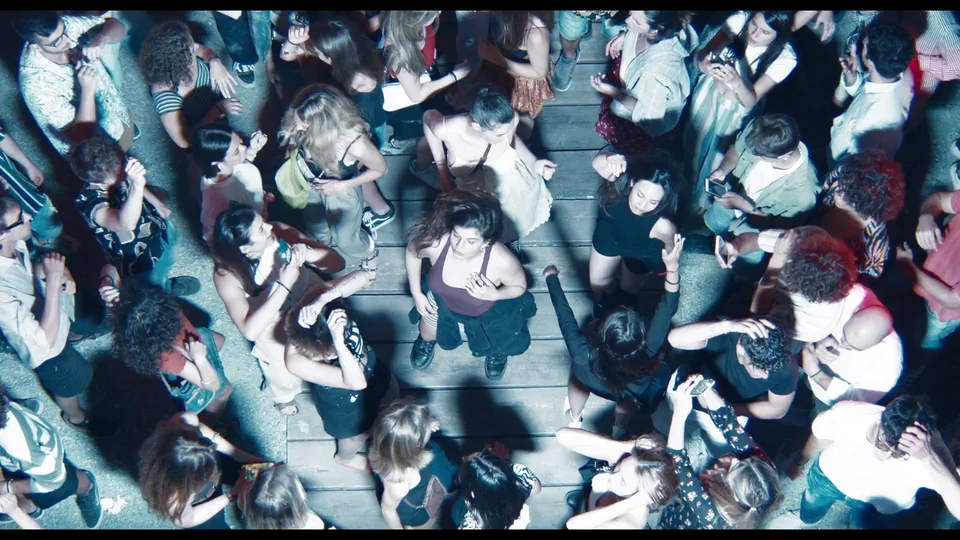
This path also allows Veronica to exist beyond being defined by the case. She has curiosity, hesitation and a wish to connect, and has the right to explore them even while carrying complicated feelings about her past.
The screenplay does not develop this aspect enough to make it a substantial part of her journey. At times, the film seems to open a new subject, then move on before its effects on her choices or relationships become clear.
This is where the sense of haste comes from. There is a crime drama, a story about public vilification, a painful relationship with a mother and an attempt to reclaim youth. These elements could complement one another, but some remain closer to ideas being raised than to experiences whose development we follow.
Gabbriellini succeeds in moving between an anxious tone and quieter, more intimate moments, but tonal control alone does not address the structural shortcomings. We need stronger connections, so that each aspect leaves a clear mark on what follows and the story reaches a result proportionate to the weight of its subject.
Final verdict
Final verdict
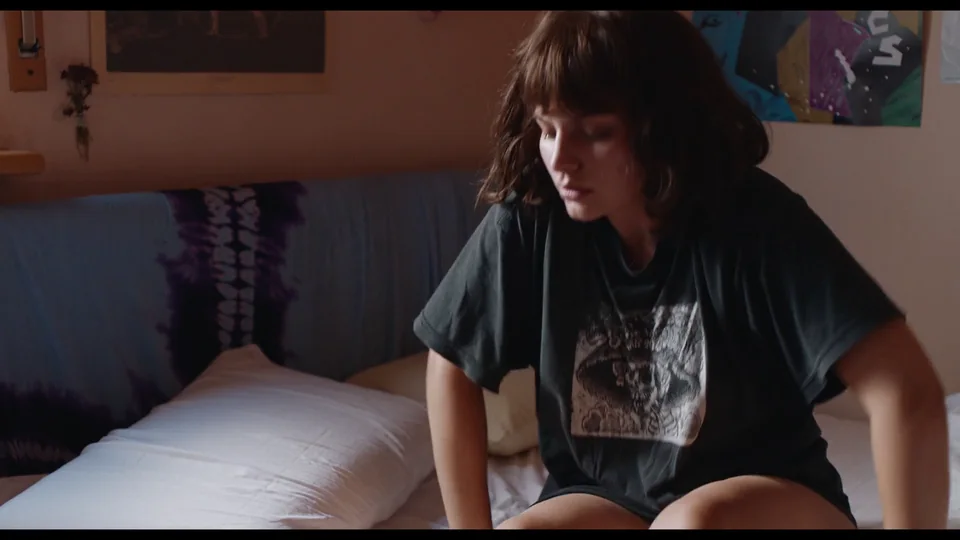
In the end, the film has a premise worth our attention: a young woman is acquitted, while other people continue to interpret everything she does as an extension of the accusation. Its main strengths are Margherita Corradi's performance, her chemistry with the two characters closest to Veronica, and certain directorial choices that convey her sense of confinement within everyday life. It also offers a moving perspective on judgments based on appearance and public image. On the other hand, the scattered narrative weakens our connection with the heroine, and key characters and strands remain less developed than they need to be. The film raises several subjects without giving all of them the space and connections that would help them form a coherent story. The result is an experience with good moments and a strong performance, but one that leaves an impression of greater potential than the screenplay realizes. We can understand the importance of what it wants to discuss without always feeling its depth as fully as we should.
Your turn
Did the way Veronica is presented make you reconsider other people's judgments of her, or did the scattered narrative keep you at a distance?
AUDIENCE VOTE
Do you agree with the MB rating?
Choose once from this browser. You can change your answer at any time.