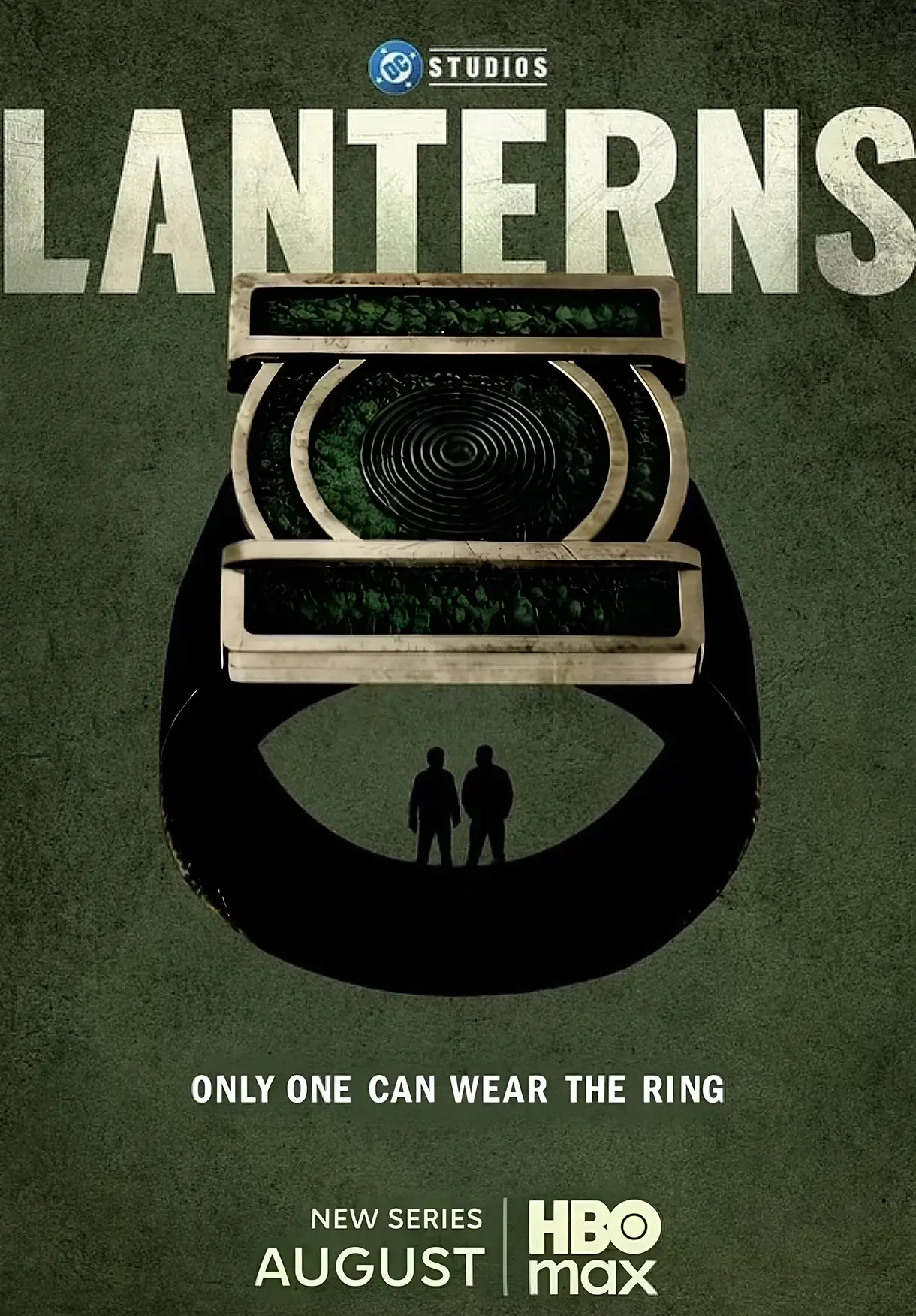
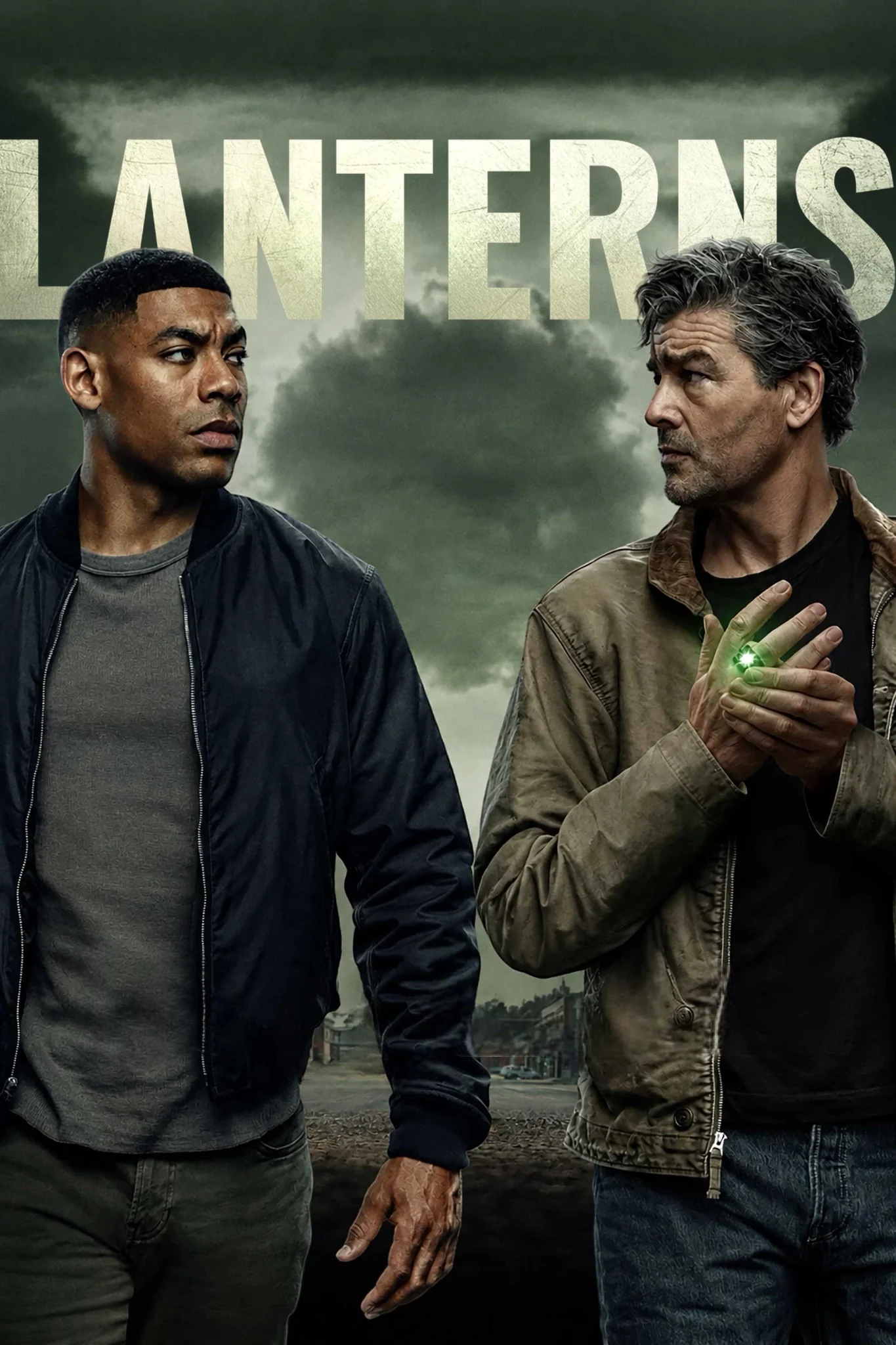
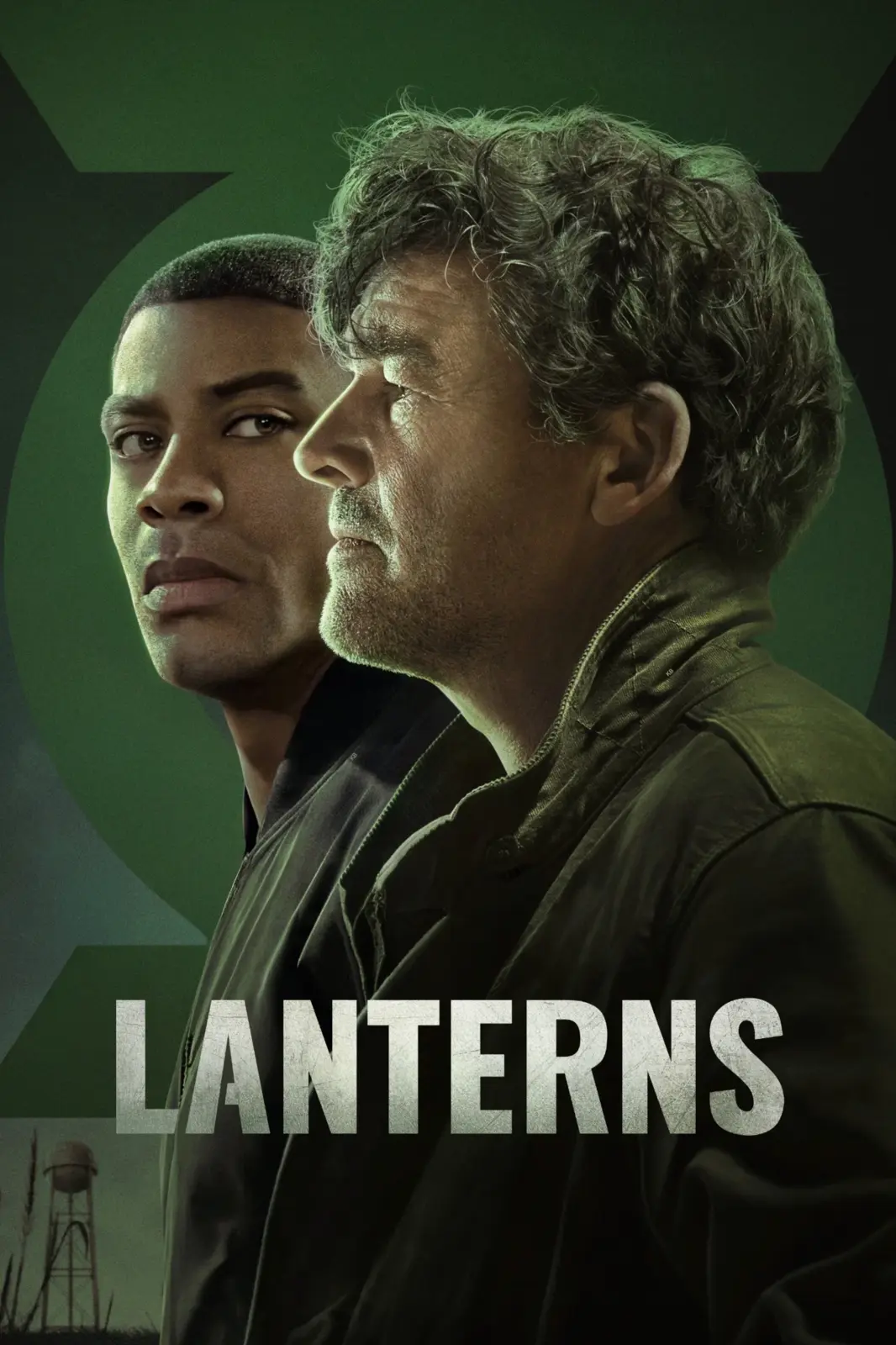
The review
The central idea: a superhero detective series
What I liked most about Lanterns' opening is that the series does not rush to introduce its supernatural world. We know from the beginning that Hal Jordan is Green Lantern and that John Stewart has been selected as his successor, yet the series treats this information as part of a larger background rather than the story itself.
The real story concerns Rushville, the stadium shooting and a seemingly simple question: Were the victims human in the first place? The series begins building an atmosphere closer to a criminal investigation, where every answer opens a new question. This is an effective choice because placing Hal and John inside that environment makes the events feel different from a conventional superhero story.
Hal possesses a ring capable of extraordinary things, but he faces a crime he cannot simply solve with power. John, meanwhile, is still learning, so his connection to the case passes through observation and analysis more than strength. That makes their partnership the most important element of the three episodes.
Hal Jordan: a hero who has lost faith in himself
Hal is the most interesting character in this opening, not because he is Green Lantern, but because he looks like a man tired of being Green Lantern. He is famous, people know his identity and he appears publicly as someone confident and fearless. The closer we get, however, the more we discover the opposite.
Hal stopped uploading his consciousness to the ring years ago. He no longer approaches his duty as he once did, and he makes no genuine effort to train John properly. Even when John asks to be taught how to fly, he receives no real instruction; he is simply thrown into danger and told to act.
I think the series deliberately makes Hal frustrating. He is not an ideal hero who has come to shape his successor, but a man who knows he has reached the end of the road and refuses to admit it. This also explains his strange insistence on keeping the ring even though everything in his behavior suggests he does not want to continue.
John Stewart: courage is not the problem
If Hal represents someone who has lost his drive, John represents the exact opposite. John has had a clear goal since childhood: to become Green Lantern. But the series gradually reveals that his understanding of courage is not healthy. He was raised to fear fear itself.
His parents did not merely teach him how to be brave; they tried to remove fear from his personality altogether. The apple test above his head summarizes the idea perfectly. John does not learn courage by confronting danger. He learns that he must not feel fear at all.
That is where the character's real tragedy begins. A person who never permits himself to feel fear may become brave, but he may also lose the ability to know when to retreat. This explains much of John's behavior after he becomes a soldier and a sniper.
The relationship between Hal and John
The relationship between the two men is, in my opinion, the best thing in the first three episodes. Hal sees John as an irritating young man who wants to learn too quickly, while John sees Hal as the man he has admired since childhood. The problem is that John begins to discover that his hero is not remotely perfect.
Hal does not trust him, does not train him properly, hides information and refuses even to let him use the ring naturally. John, in return, is not an obedient trainee; he begins to question Hal himself. Their dynamic gradually changes from master and student into two men trying to expose each other's flaws.
The series wisely avoids making either man right all the time. Hal is reckless and stubborn, but genuinely experienced. John is disciplined and intelligent, but carries psychological conditioning that has made him unable to perceive danger naturally.
The Rushville mystery
The case starts with the stadium shooting, but the series deliberately makes the truth larger than a murder. The four victims were nonhuman beings, Waylon was also an alien and, more dangerously, their presence is connected to a wider conspiracy.
The discovery that the stadium detectors are not metal detectors but devices capable of identifying aliens is one of the opening's best moments because it reinterprets everything that happened. The shooting was not random. Someone was searching for aliens inside the city. This is where William Macon enters the picture.
William Macon: an enemy not yet defined
William is important because the series does not present him as an obvious villain. He believes aliens are a danger to Earth, so he builds an armed force and prepares for what he sees as a possible invasion. The problem lies not only in his view of aliens, but also in the power he possesses.
He has armed men, advanced technology and devices that can detect alien beings. Most importantly, another person is financing the facility, yet William refuses to reveal that person's identity. The series therefore keeps him between two possibilities: Is he a human extremist preparing for war with aliens, or is he hiding something larger? The three episodes do not answer, and that is a strength because the mystery grows from information the series has actually supplied rather than artificial obscurity.
The Manhunters change everything
The story expands significantly in the second episode with Antaan's arrival and his information about the Manhunters. Suddenly, the case is no longer merely about aliens hiding in Rushville. There are artificial beings able to change shape, a history of extermination and survivors who want revenge.
More dangerously, Antaan does not want to kill John; he wants to use him. This matters enormously to John's development. For the first time, John faces a situation that cannot be solved by simply following orders. Antaan gives him a deadline and an ethical choice: if John fails to find the Manhunter, the city will pay the price.
John's personal story now intersects with the main case. He has spent his entire life receiving orders and executing them; now he must decide for himself whom to believe.
Episode two also exposes Hal's problem
The second episode does more than expand the mystery; it reveals that Hal himself is hiding a great deal. We see this when he returns to the crime scene, discovers the truth about the detectors and then goes to William despite Kerry's warnings. One of Hal's defining traits becomes clear: stubbornness.
He knows his energy is limited and that he lacks the legal authority to act, yet insists on confronting William. The natural result is that he gets shot. The scene matters because it does not frame Hal as an innocent victim. He created the situation himself, which makes him more human.
Hal is not stupid, but he believes his experience always makes him the person who knows more than everyone else. In Rushville, that belief begins to collapse.
Kerry Kane: more than a police officer
Kerry is a character the series handles intelligently. At first she appears to be merely the officer standing in Hal's way, but as the events unfold, we discover that she knows more than she says. She knows about the alien-detection devices, understands William's nature and realizes that Hal's behavior could throw the city into chaos.
Kerry becomes the voice of reason against two men who are extreme in different ways: Hal wants the truth at any cost, while John wants to complete his mission whatever the price. Kerry tries to stop both from setting the city ablaze. Her presence is essential because she brings the story down from the superhero realm to reality.
Episode three: the best part of John's development
If the first two episodes focus more on the case, the third part of the story centers on the crucial question: Why John Stewart? The series returns to his childhood and reveals that his selection did not result from a random moment.
His father was among the first people approached by the ring, but failed because he felt fear. Lianna then intervened, and the family received a promise that John would have a genuine opportunity to become a Lantern. The problem is that John's parents turned that promise into an entire life project: training, tests, lies, psychological pressure and the transformation of a child into someone who believes fear is a defect to be removed. This makes John's character far more complicated.
John was trained to hide his fear
This is, in my opinion, the most important idea in the three episodes. John thinks he is brave because he does not feel fear, but the series asks a more intelligent question: What if the inability to feel fear is a problem rather than an advantage?
John does not know how to retreat or ask for help, and he does not regard loneliness as something negative. He openly says he enjoys isolation. That explains why he became a sniper and spent most of his life apart from others.
Even when he had the chance to save himself during his military mission, he refused to press the emergency button, not necessarily because he could succeed, but because he viewed retreat as failure. John is therefore much more tragic than he first appears.
The Gray Wolf mission reveals the truth
John's mission in Kamchatka matters because it exposes how incomplete his self-image is. He waited nine months for the chance to kill Gray Wolf. At the instant he was ready, Hal appeared, intervened and took the man alive instead. John returned home and carried all the consequences of the operation.
We later discover that John was not dismissed from the army simply because he failed. He chose to accept responsibility in order to protect the institution he served. This reveals something vital: John does not seek heroism; he seeks proof that he deserves to be useful. That is a significant difference.
Hal and John: two different images of courage
The three episodes arrive here at their best shared idea. Hal says he is not afraid, and John was raised not to be afraid, yet the series suggests that neither man understands courage correctly. Hal has lost his will; John has lost the ability to retreat. Hal runs from responsibility, while John runs toward responsibility so he never has to confront himself.
That is why bringing these two men together is no coincidence. Each represents the other's problem. Hal needs someone to restore the meaning of responsibility, while John needs someone to teach him that strength does not mean following orders without thought.
Direction and atmosphere
The direction benefits greatly from the nature of the story. There is a clear distinction between the space sequences and the scenes in Rushville. With Hal in the Green Lantern world, we feel the scale of that universe and its possibilities. Back in the town, the images become calmer and tighter. This supports the idea that the case is not merely a cosmic adventure, but an investigation inside a small community full of secrets.
Even the scenes with Hal and John in the car or the bar matter because they allow the characters to collide away from the action. That is a very good decision.
Performances, music and editing
The performances of Hal and John depend heavily on the contrast between them. Hal projects confidence that conceals visible exhaustion. John is calmer and more disciplined, but that calm hides a more troubled personality than we initially realize.
The editing is at its best when moving between present and past without reducing flashbacks to extra information. The past reinterprets the present, especially in John's story. Once we understand the way he was raised, his current behavior becomes far more comprehensible.
The music also avoids imposing itself. It helps create the sensation of investigation and mystery instead of turning every moment into a heroic display.
Final verdict
Final verdict
After the first three episodes, I think Lanterns is at its strongest when it treats Green Lantern as a human being before a superhero. The Rushville case is intriguing, but Hal and John are the real reason I want to continue. Hal knows he has lost something inside himself but refuses to name it. John has spent his entire life proving that he is not afraid, while his real problem may be that he never learned how to live like an ordinary human being. Their conflict is therefore more important than any confrontation with a Manhunter. The series has not yet offered complete answers, but at least its questions arise from the characters themselves rather than functioning as empty mysteries designed only to keep the audience waiting.
Your turn
Do you think Hal Jordan is hiding a dangerous secret that explains why he refuses to hand the ring to John, or is he simply not ready to admit that his era as Green Lantern is over?
AUDIENCE VOTE
Do you agree with the MB rating?
Choose once from this browser. You can change your answer at any time.