The review
The opening plants the episode's central idea
In 1975, young Hal refuses to let go of the ball during a baseball game and gets into a fight. His father Martin steps in with an impulsiveness not very different from his son's. Later, Martin gives Hal the key to his safe and speaks of the Jordan men's legacy. His warning about the exhausting effort of holding onto the ball becomes a quiet description of everyone in the episode.
Hal carries his father's image, John carries his anger toward Hal, and Kerry carries a relationship with a man who is gone. Even the case asks what Hal was still holding onto when he died. I like this opening because it is not a flashback placed there merely to explain later events; it gives their emotional shape from the start.
The Halogram meets a future he never lived
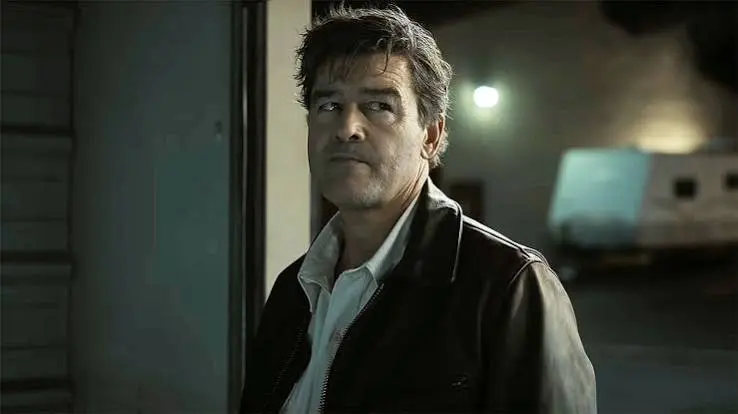
Bringing Kyle Chandler back as the Halogram could have felt like a convenient way to undo Hal's death. The episode gives the idea a sharper purpose: this copy comes from an earlier point in Hal's life. Learning that he went to prison, fell in love and died means he is investigating his own future as much as the crime.
The copy does not automatically trust John and even wonders whether John might be responsible for his death. John knew the man at the end of that life, while the Halogram remembers an earlier John. Each is trying to speak to a version of the other who no longer quite exists. That mismatch gives their scenes more weight than a simple reunion would have had.
John and Hal find honesty through awkward humour
The exchanges between Aaron Pierre and Chandler are the episode's centre. Beneath the old disputes and sarcasm is respect neither man knows how to express. John's absurd claim that even Mogo attended Hal's funeral, and Hal's reminder that Mogo is a planet, makes the joke an expression of grief: John cannot tell this younger copy what he really feels, so he hides behind comedy.
Then the Halogram notices that John's power keeps him present even after the ring comes off and tells him he is impressed. John seems genuinely surprised by praise Hal rarely offered him while alive. For an instant, the digital construct gives him something the real partnership left unfinished.
A safe opens the story beyond Earth
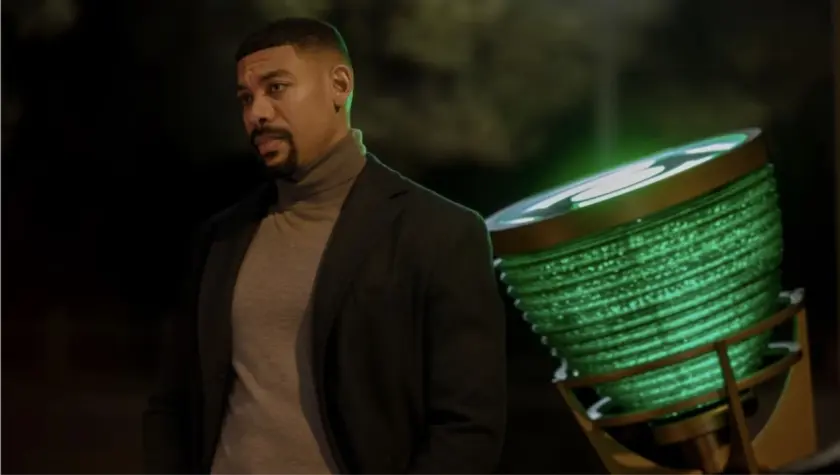
The Halogram refuses to open Hal's safe until he has met Kerry. That condition keeps the evidence tied to people and their unfinished relationships. When the safe is finally opened, a bag of survival equipment, a gun and a black sphere await them. The sphere functions as a portal and pushes a small-town murder investigation toward something cosmic.
The important question is still personal: why did Hal keep the portal hidden, and what did he know about where it leads? The episode earns its change in scale because it brings John's questions about Hal through the door with him rather than leaving them behind.
Kerry sees a person, not a recording
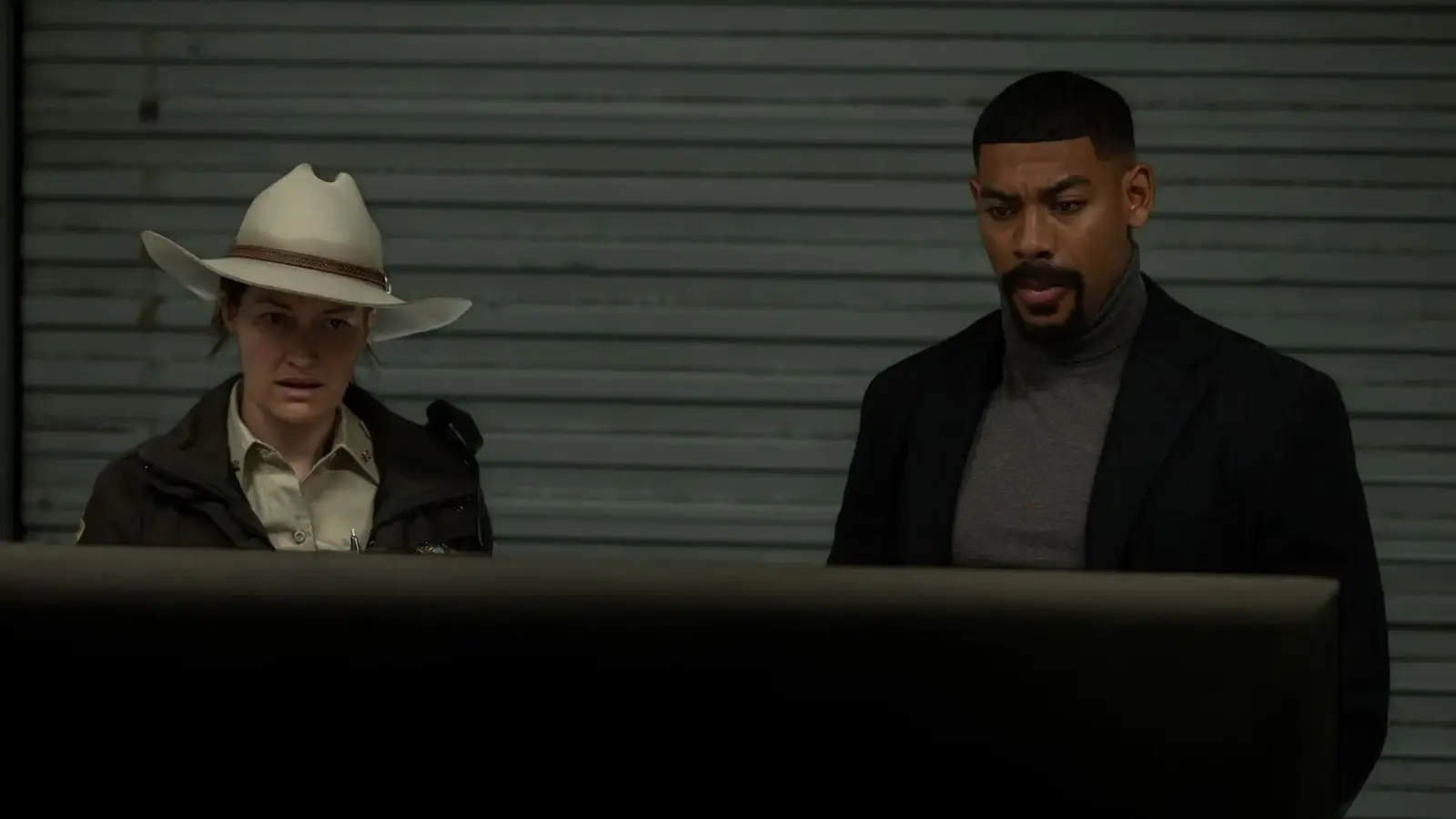
Kerry can speak to the Halogram and even touch him. Her grief makes their meeting affecting, but his reaction is less simple: because she knew a future Hal whom this copy never met, he begins to mistrust her and reads a gesture of affection as possible guilt. I do not find that enough to incriminate Kerry; it tells us more about the shock and incompleteness of the copy making the accusation.
Kerry's connection to Hal cannot be reduced to a clue in his case. The episode is better when it allows her response to remain human rather than treating every expression of grief as suspicious. That emotional uncertainty is also why the investigation cannot advance through the safe alone.
The Jordan legacy changes the meaning of fearlessness
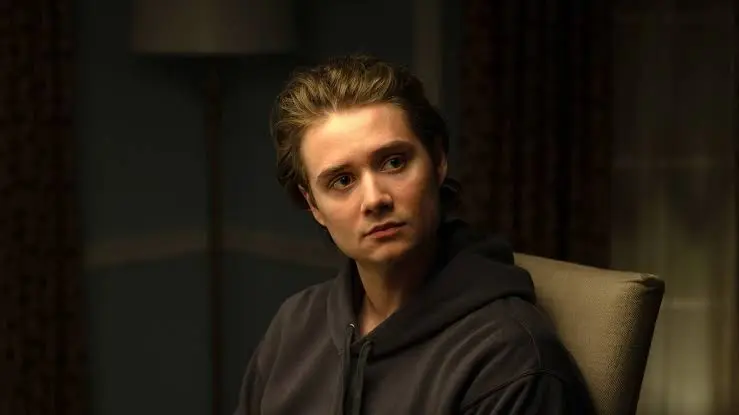
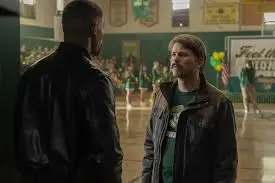
Hal's account of his father is the episode's most consequential revelation. After Martin died, Hal found money, photographs and a note in his safe, along with evidence of pain that had stretched across the men in his family. The fearless image attached to Hal can now be read another way: perhaps his apparent courage was also shaped by an inner hurt he never learned to name.
That reading does not diminish what he achieved. It gives his choices a tragic underside and asks whether failing to feel fear is always a virtue. Sometimes fear protects us; sometimes proving that we feel none leads us toward the worst decision. I admire the episode for treating this as a question about a person rather than a neat explanation of his heroism.
A theory about Hal's death, not an answer
John wonders whether Hal might have ended his own life and whether Kerry could have hidden the weapon to protect his memory, as Hal once protected his father's. The episode raises the possibility; it does not establish it. Presenting it as a solved case now would empty the mystery of exactly the uncertainty this revelation creates.
If the theory is true, the investigation changes from asking only who killed Hal to asking what he was facing and who felt the need to conceal it. Even if it proves false, the question has already forced John to look past the simpler image he carried of his former partner.
John meets his own inheritance on a ruined planet
The portal takes John to a world devastated by the Manhunters. Skulls cover the ground, and fear-inducing gas brings its people's violence and memories into the present. When the gas affects John, his father and a younger version of himself appear before him. His perception turns dangerous, and the ordeal comes close to making him hurt himself.
The gas is more than an obstacle to survive. It makes John confront something he thought he could keep under control. He and Hal each carry the mark of a father, and both have tried to prove they are unafraid. That parallel gives the journey its emotional force instead of leaving the alien world as an unrelated spectacle.
Why this world feels strangely familiar
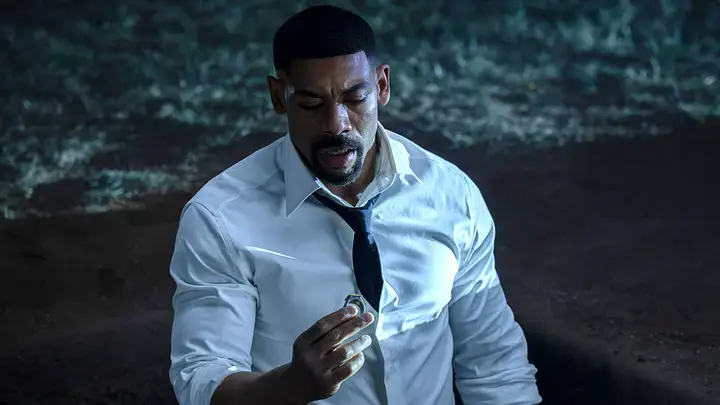
John feels that he knows this place despite never visiting it. The episode suggests that the experiences of its people have been placed within him, allowing him to sense what happened there. At the same time, the Halogram remains present after John removes the ring, something the copy says should not be possible.
The series gathers these anomalies without fully explaining what John is becoming. That uncertainty is productive for one episode; the finale now needs to show whether these strange capabilities belong to the same larger change or merely sit beside one another as separate mysteries.
The crossing is the episode's strongest image
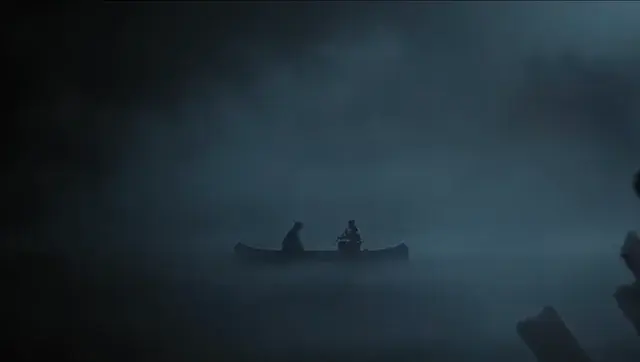
A boat, dark water, mist, rain and a distant structure give the other world a visual identity that feels almost mythic. The crossing suggests a journey toward the underworld as much as an excursion through space. Because Hal's account of his father arrives amid this landscape of death and memory, the setting becomes part of the revelation rather than scenery around it.
The episode shifts from the familiar streets of its small-town investigation to an environment that resists easy orientation. This is the best visual expression of the story's turn: John is no longer simply following the signs left by Hal; he is entering a space that presses on his own history.
Sinestro returns at exactly the wrong time
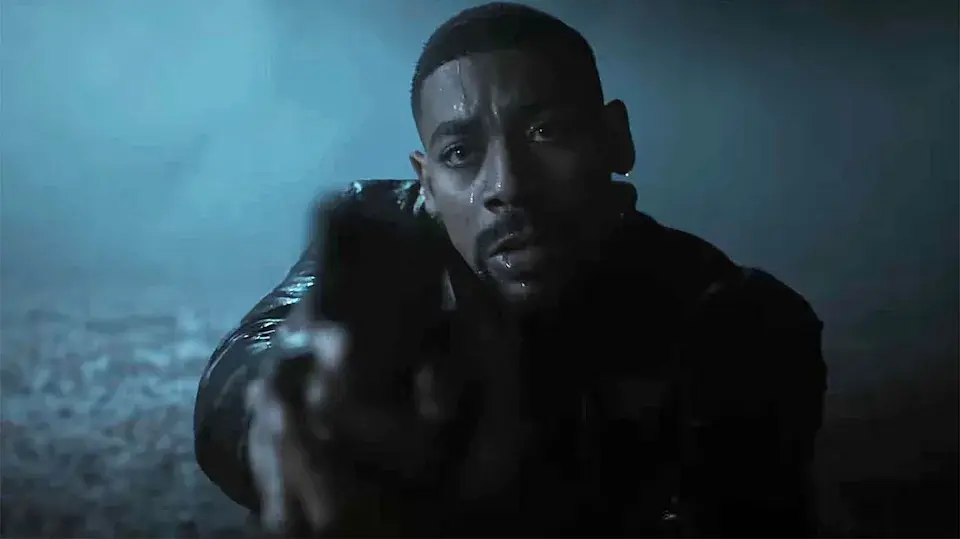
We know Sinestro has escaped, so his return is expected. The timing makes it effective anyway. As John enters an unfamiliar structure and the Halogram disappears, an attack turns the search for Hal's truth into a confrontation with Sinestro. The final reveal opens questions about why he is there and what, if anything, he knew about Hal's secret portal.
The episode wisely does not claim that his presence solves the murder. It ends by raising the stakes while preserving the difference between a dangerous returning figure and an established answer to the central mystery.
A circle between fathers and sons
The return to young Hal and the ball he once let go gives the episode an emotional rhyme rather than another piece of exposition. The relationship between John and the Halogram also starts to resemble a difficult father-son exchange: the older figure offers a brief approval the younger man has waited for, while neither can undo the years they missed.
Kyle Chandler plays this earlier Hal with more curiosity and lightness, yet enough familiar impatience to make him recognisable. Aaron Pierre answers with sarcasm, anger and finally visible fear. Their chemistry lets the humour lighten the hour without turning Kerry's grief or the Jordan family story into a joke.
What works, and what the finale must answer
The strongest elements are John and the Halogram, the rethinking of the Jordan family legacy, and the way the ruined world's atmosphere turns fear into something physical. The episode makes Hal's death a doorway into understanding him, not merely a puzzle with a name at the end.
Its weakness is the amount it leaves unresolved: Hal's death, Kerry's role, Sinestro's purpose, the history of the Manhunters and John's changing abilities. One episode remains. This much mystery can make the finale exciting, but hurried answers could flatten threads that have earned more patient treatment.
Final verdict
Final verdict
The Jordan Boys Legacy begins with a murder investigation and leaves me thinking more about the person who died than the name of his possible killer. Hal's inherited pain complicates the old picture of courage, while the Halogram gives John a surprising chance to hear what their real partnership rarely allowed them to say. The journey to the ruined world deepens both characters and brings Sinestro back at a tense moment. I admire the episode's emotional design and performances, though it gives the finale a heavy burden of unanswered questions. My rating for episode seven: 8/10.
Your turn
After learning about the Jordan family legacy, do you think someone else killed Hal, or is the episode pointing toward another truth about his death?
AUDIENCE VOTE
Do you agree with the MB rating?
Choose once from this browser. You can change your answer at any time.