The review
Ten years have completely changed John Stewart
The episode's first move is to redefine John.
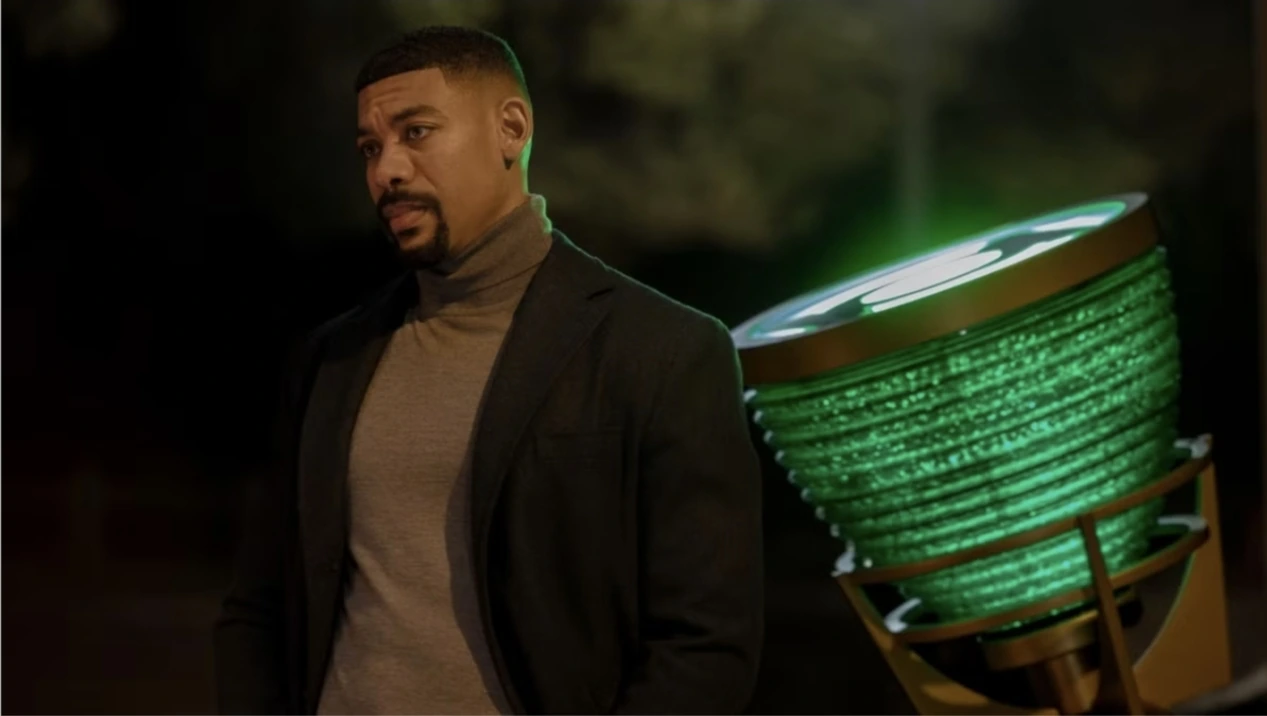
In 2026, he is no longer the man standing on the edge of the Green Lantern world, unsure whether he wants to enter it.
John has become a successful engineer alongside his brother. In a strange way, he has turned the Rushville experience into part of his professional life: his firsthand knowledge of the disaster even helps him sell safe rooms and defensive projects.
On the surface, he is the one who has moved beyond the past.
He has built a life.
He has a job.
And he no longer needs the ring.
But the episode quickly makes clear that this is less about moving on than burying things.
John has not made peace with what happened.
He has simply built an entire life on top of it.
Whenever Hal or Rushville comes back into his life, the supposedly more stable man immediately seems to return to the same old anger.
Hal has done the exact opposite
What I liked most was the contrast between John and Hal.
John left Rushville behind entirely.
Hal went back.
He went to prison, spent years paying for what happened, then returned to the place he destroyed and tried to help its people, even if nobody wanted to help or forgive him.
That does not make Hal innocent.
The episode is not suggesting that ten years erase his mistakes.
It makes a more important point:
At least Hal tried to confront his failure.
John did not.
This rearranges the relationship between them very effectively.
John used to see Hal as an irresponsible man who caused a disaster.
Now he begins to see something more troubling: perhaps the man he hates was braver than he was when it came to facing the past.
John and Hal’s final meeting
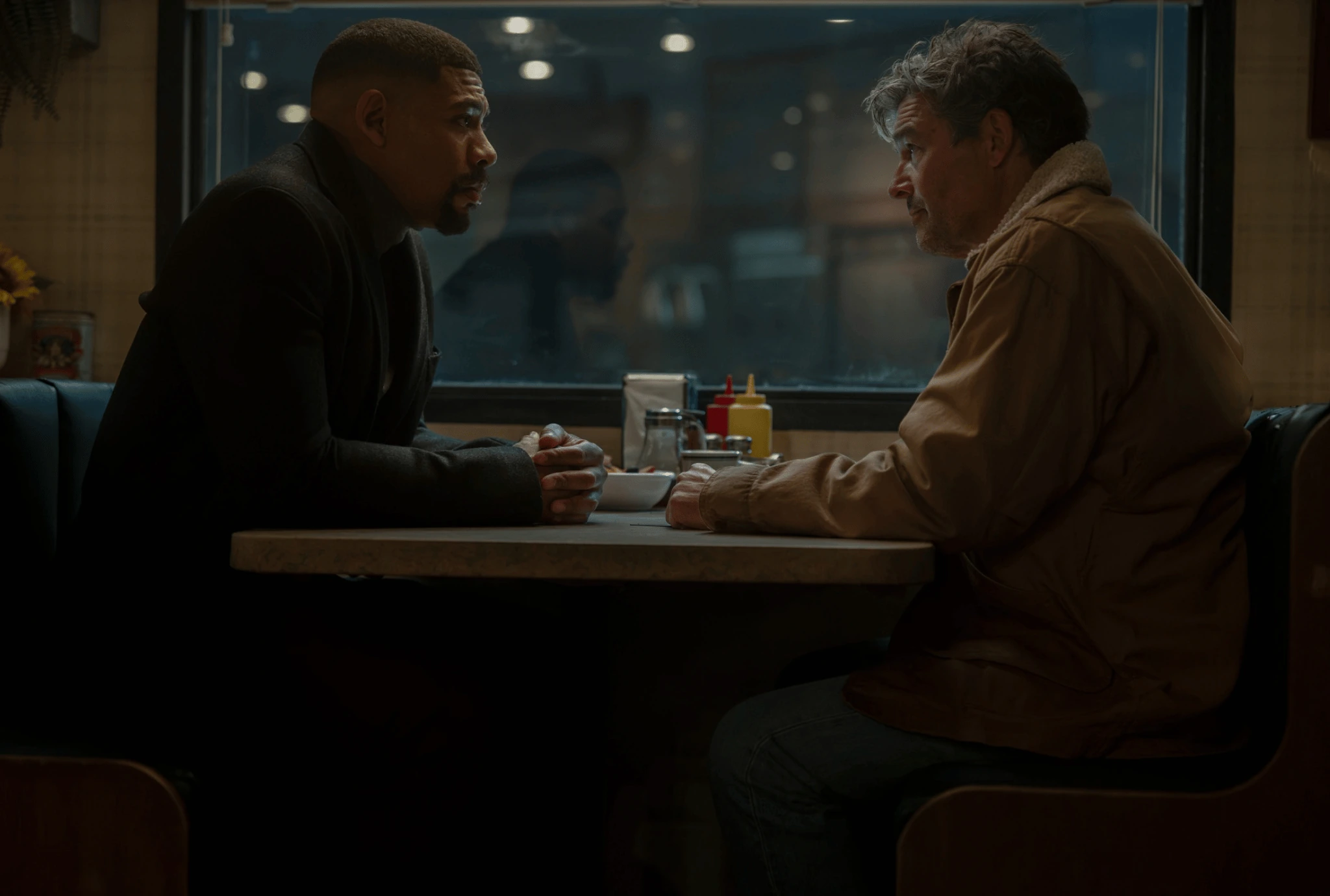
For me, the episode's best scene is their meeting before Hal's death.
There is no superpowered battle.
No display of abilities.
Just two men who have resolved nothing between them in ten years.
Hal says he has paid the price.
John rejects the idea that prison has made him a martyr or someone who sacrificed himself for everyone.
When Hal tells him that John himself was afraid, the conversation reaches the point that really hurts.
John hits him and breaks his nose.
The scene is excellent because it does not restore their friendship through an easy emotional reconciliation.
Quite the opposite.
John's last real memory of Hal is anger.
Rejection.
And violence.
Only hours later, he learns that Hal is dead.
That makes everything that follows much heavier.
Kyle Chandler needs only one scene
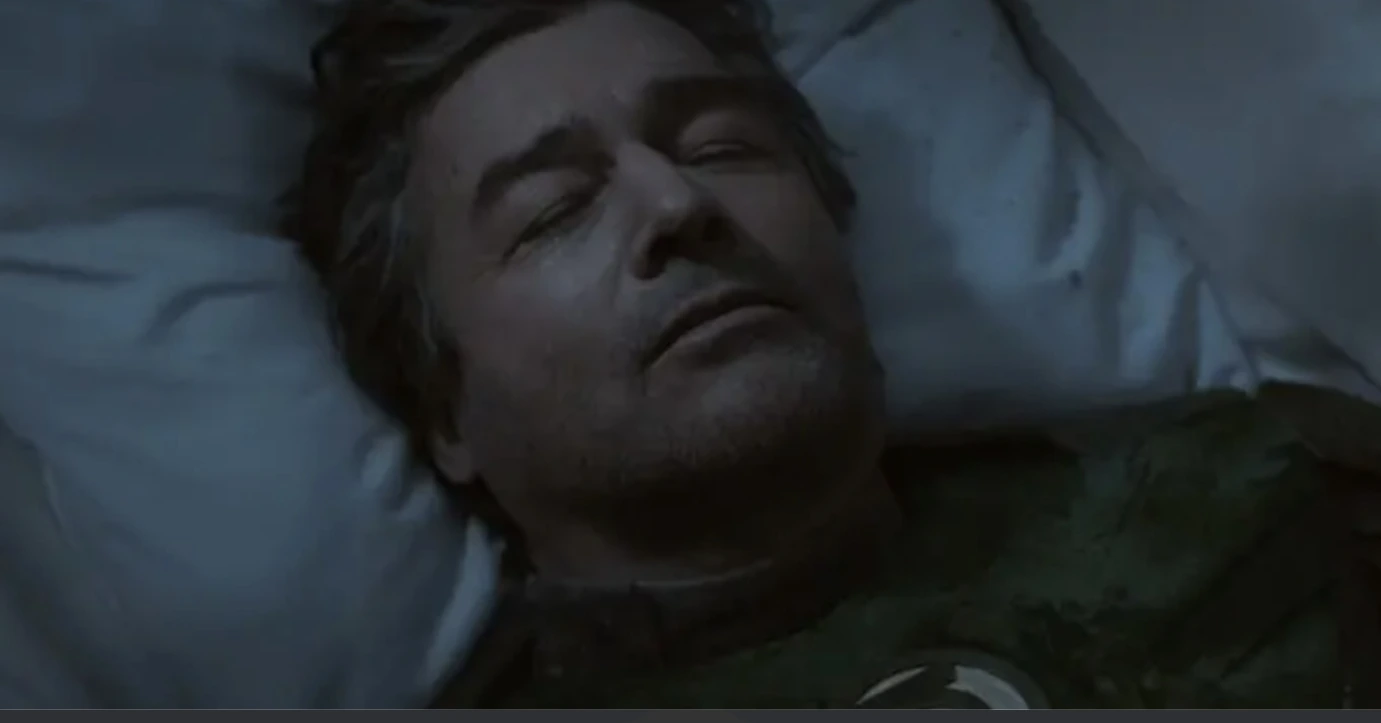
Kyle Chandler's appearance is very brief, but his presence continues to dominate the episode.
That demonstrates how successfully the earlier episodes established the character.
In this encounter, Hal is still sarcastic.
Still provocative.
Still capable of making John want to hit him.
But there is something new.
Regret.
Exhaustion.
And fear.
Chandler makes us feel that those ten years have genuinely happened to this man.
The Hal who once acted as though he had an answer for everything has become someone who knows certain mistakes cannot be repaired.
Although I wished he had more room in the episode, that single scene is enough to give his death considerable emotional weight.
Hal’s murder brings John back to the place he escaped
After Hal's death, John returns to Rushville.
The episode becomes closer to a murder mystery, but it is not yet as interested in asking who the killer is as it is in what returning does to John.
The town has not forgotten what happened.
The hotel has not been rebuilt.
The residents do not want the Green Lantern symbol.
Hal himself lived as if he expected someone to come and kill him, even setting an armed trap at his front door.
These details tell John that the past he abandoned did not stop after he left.
He simply was not there to see it.
This is one of the episode's best ideas.
Heroes may leave after a disaster.
Ordinary people stay and live with the consequences.
Aaron Pierre’s performance is the episode’s strongest element
For me, Aaron Pierre delivers his best performance of the season so far.
John depends heavily on denial in this episode.
He acts as though his new life is excellent.
He jokes.
He speaks with confidence.
He treats his work as if it were everything he needs.
But Pierre reveals a man using energy and confidence to hide something else.
That is especially evident when he returns to Rushville.
Anger surfaces quickly.
Tension emerges in small details.
Whenever the ring or Hal comes up, those ten years seem to vanish immediately.
This is not a person who has healed.
He has only become better at hiding the wound.
Hal’s funeral is the episode’s true heart
For me, the emotional high point is not the investigation into his death.
It is the funeral.
Hal wrote his own eulogy as though he expected a grand farewell.
Important figures.
Representatives of different worlds.
A tribute worthy of a man who was a Green Lantern.
In the end, very few people attend.
That is painful because it sums up Hal's fall.
A man once carried one of the most powerful weapons in the universe, then died with almost nobody there to say goodbye.
John, however, is the surprise.
Despite all his anger, he rejects the idea of cremating Hal's body as though he were worthless.
He wants a burial.
He wants the suit.
He wants the ring.
For the first time in the episode, John acknowledges through actions rather than words that Hal meant something to him.
Carol Ferris: an important but very brief appearance
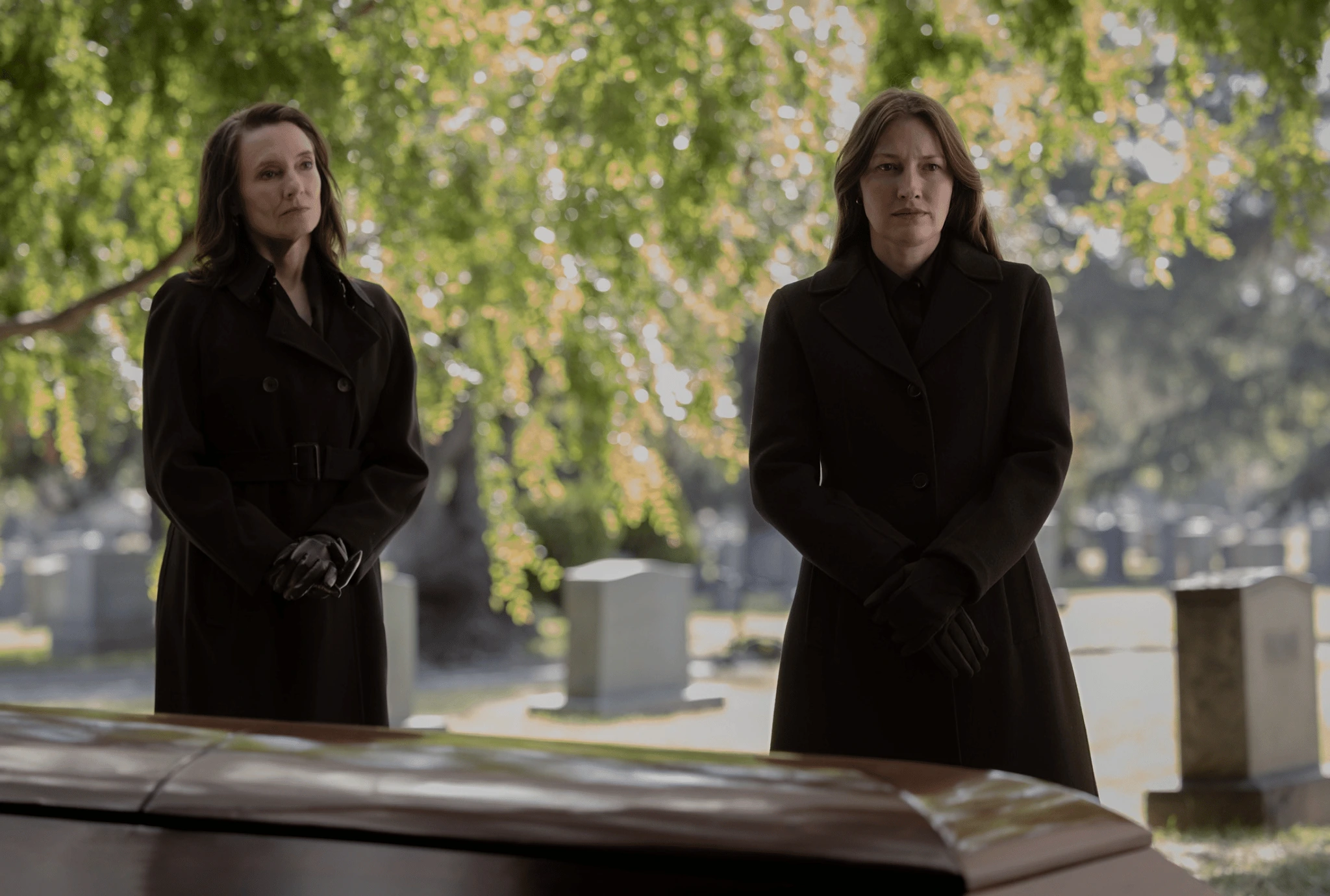
Carol Ferris's appearance works because it broadens Hal's history beyond the relationship with John that we know.
Her presence at the funeral reminds us that this man had a life and relationships before everything we have seen.
But I felt her appearance was too brief.
The episode introduces a very important figure in the Green Lantern world, then gives her limited room.
Perhaps that will pay off later. Within this episode, though, she feels more like a reference to a larger world than a character given a proper introduction.
Guy Gardner makes exactly the right entrance
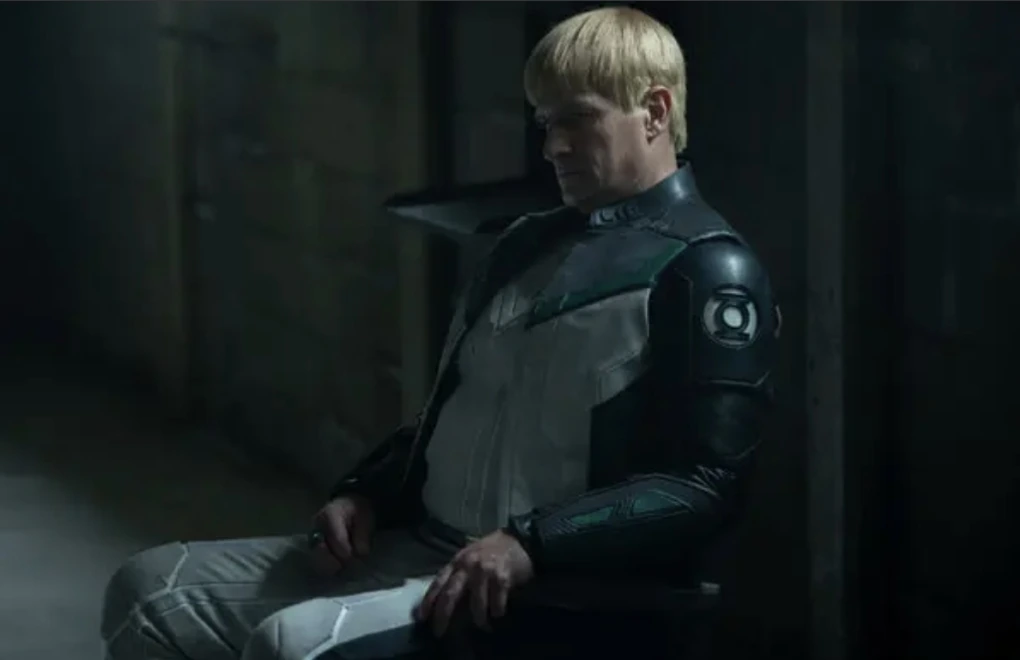
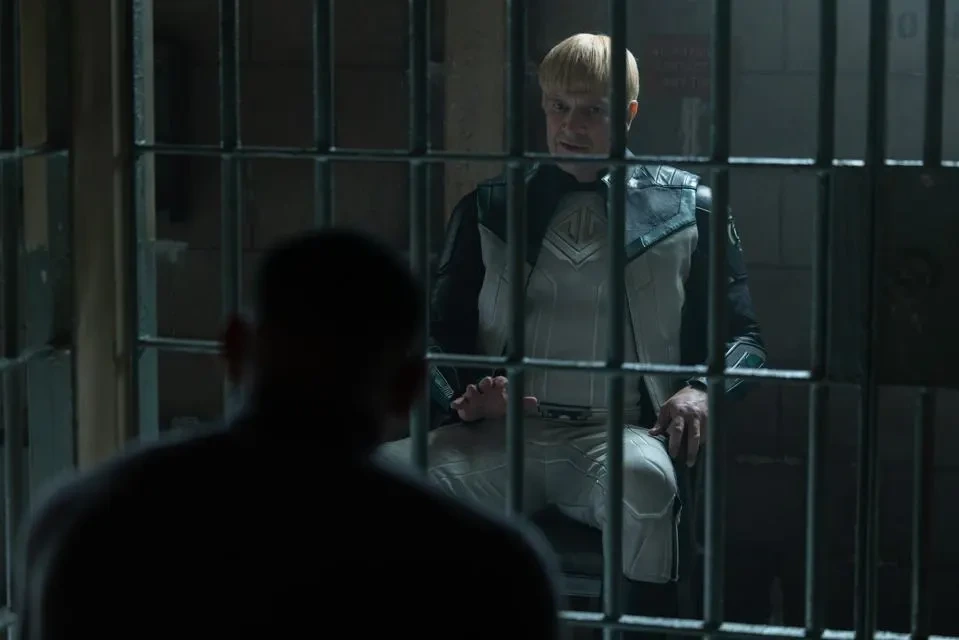
Guy Gardner's presence is more effective.
Nathan Fillion brings him in with exactly the energy we expect.
Arrogant.
Annoying.
And funny without even trying to be funny.
More importantly, he does not feel like a cameo included solely to connect the show to the DC universe.
He serves the story.
John needs someone who can access what remains of Hal's life as a Green Lantern.
Guy is that bridge.
But even Guy initially wants to avoid involvement.
The reason is very simple:
Bad optics.
Being drawn into the funeral and murder of a controversial former Green Lantern is not something anyone close to the institution wants.
The episode's title earns its meaning here.
Green Lantern has become an institution, too
I liked this aspect.
For John and Hal, the ring was deeply personal.
A responsibility.
A burden.
An identity.
For the institution, there is also reputation and public image to consider.
Hal's ring has been deactivated.
There is anxiety about becoming involved.
Hal himself has become a problem to keep at a distance.
John, who rejected the ring in the first place, becomes the only person treating Hal as a human being rather than a public-relations crisis.
That is a compelling irony.
The man who did not want to be a Green Lantern is the one most determined to respect what that symbol meant to Hal.
Avoiding responsibility is the episode’s central theme
Almost the entire episode revolves around this question:
How does a person deal with failure?
Hal confronted his failure in a painful, perhaps inadequate way, but he did confront it.
He returned to Rushville.
He tried to help people.
John did the opposite.
He left.
He cut ties with the place, the ring and even some members of his family.
In a smaller way, Guy is also afraid of entering the crisis because of how it will look to other people.
That is why I think the episode succeeds most when it explores this idea, rather than simply Hal's murder mystery.
The killer will eventually be revealed.
The more important question is what happens to John when he finally has to acknowledge that he was part of the problem too.
Maggie’s storyline: the weakest element
This brings me to the part I liked least.
Maggie and her blackmail of John.
She knows he met Hal before his death and demands money in exchange for her silence.
I understand the dramatic function.
The past returns to haunt John in a literal way.
The girl who witnessed something ten years ago has become someone who uses what she knows against him.
But the storyline feels more contrived than the rest of the episode.
We already have a murder.
Sinestro has escaped.
Hal is dead.
The ring.
John's relationship with his family.
Guy.
Carol.
All of these things are interesting.
Then a considerable amount of time goes to financial blackmail.
For me, this slows down the main storyline more than it adds to it.
John’s family relationships also bear the marks of the past
The episode does not stop with Hal.
Even John's relationship with his family has changed.
His mother is distant from him.
His siblings are not as close to him as they should be.
As we learn more about his current life, we understand that professional success has not solved everything.
This fits the episode's central idea very well.
He built a company.
He succeeded financially.
On a human level, though, he let many relationships erode.
Rushville was not merely an incident in his life.
It was the moment after which he began shutting himself away.
The investigation into Hal’s murder remains slow
If you are watching solely to find out who killed Hal, you will leave with less information than you expect.
That may frustrate some viewers.
We have suspects.
We have Hal's fear before his death.
We have the fortified house.
And we have a few new details.
But the murder mystery itself barely moves forward.
The episode is more interested in John than in the killer.
Personally, I do not mind that, because the character's journey works.
After a long wait to return to the 2026 storyline, though, I wanted a little more progress on the crime itself.
The problem with the time jump
There is a structural problem here with the season as a whole.
Episode five was a huge climax.
Episode six then jumps forward ten years and becomes very quiet.
It is natural to feel as though you have entered a slightly different series.
The transition from the scale of episode five to this quieter investigation makes the season's overall rhythm feel strange.
I partly agree with that criticism.
The episode itself is good.
But its position within the season makes it feel slower than it actually is.
If the 2016 and 2026 storylines had been distributed differently from the start, the transition might have been smoother.
The time jump also has a major advantage
Still, ten years give the story something it could not have gained if only one year had passed.
Regret needs time.
Hal needs time to pay the price.
John needs time to build a new life and convince himself that he is finished with the past.
Rushville needs time to become a town living with the aftermath of the disaster.
In that respect, the jump succeeds.
We do not see the wound immediately after it is inflicted.
We see the scar.
Then we discover that it never really healed.
Sinestro’s escape opens the door to the cosmic side
One particularly important piece of information concerns Sinestro.
Someone has broken him out of prison.
This is the first strong reminder that Hal's story is not merely a murder in a small town.
Something bigger is involved.
As the series progresses, it appears we will gradually move from the local investigation to the broader cosmic side of the Green Lantern world.
That is exactly the balance I want from the show.
I do not want it to become entirely about space and battles.
But I also do not want us to forget that these characters belong to a much larger world.
The ending: John finally accepts the ring
Then comes the episode's best moment.
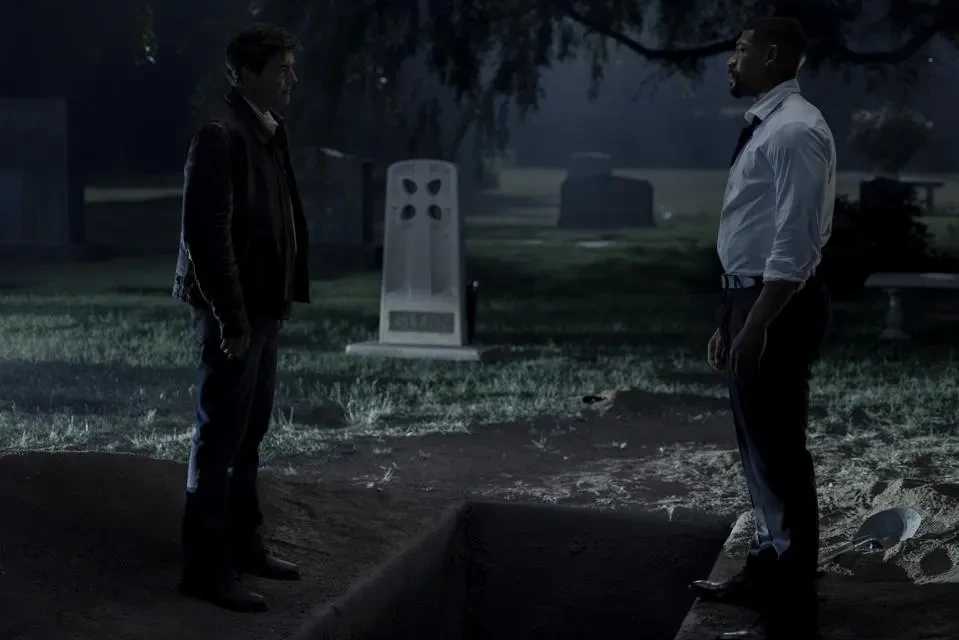
After Hal's burial, John returns at night.
He digs up the grave.
Opens the coffin.
And takes the ring.
This could easily have become a conventional heroic moment:
John finally accepts his destiny and becomes a Green Lantern.
But the show does something smarter.
John does not take the ring because he wants to become a hero.
He takes it because he wants to learn the truth.
That is a very important distinction.
John has not yet fully accepted the idea he rejected ten years earlier.
He has simply reached the point where he realizes that running away is no longer a solution.
The Halogram returns
When John uses the ring's remaining energy to bring back Hal's image, the episode closes its circle beautifully.
In 2016:
Hal was the experienced investigator.
John was the man Hal was pulling into a world he did not understand.
Now:
John is the investigator.
Hal is the case.
And the ring has become the investigative tool.
It is also an excellent way to bring Kyle Chandler back into the series without undoing Hal's death.
We get John and Hal's chemistry again.
But their relationship has changed completely.
Direction and atmosphere
The direction is much quieter than in the previous episode.
There is no need for spectacle.
Rushville itself is enough.
Places that existed ten years earlier now carry the memory of what happened.
The houses.
The square.
The sign.
The cemetery.
They keep the past present within the image, even when nobody is talking about it.
That serves the episode's tone very well.
Strengths and weaknesses
For me, Aaron Pierre and Kyle Chandler are the greatest strengths.
Their scene together is excellent, and the impression Hal leaves after his death carries through the episode.
Exploring the heroes' failures rather than just their victories also gives Lanterns something different from most superhero stories.
The funeral is very good.
Guy Gardner is an entertaining addition.
The excellent ending intelligently brings the series back to the mystery of Hal and the ring.
The main weakness is Maggie's storyline, which did not engage me much.
The murder mystery itself also moves slowly.
And the time jump after episode five makes the season's overall pacing slightly uneven.
Those problems do not erase how effectively the episode puts John back at the center of the story.
Final verdict
Final verdict
Episode six, Bad Optics, is much quieter than its predecessor, and I think that will be the main reason it divides viewers. Anyone wanting a direct continuation of the major events in Rushville may feel the show has suddenly hit the brakes. For me, the episode's greatest strength is that, for the first time, it lets the characters live with the consequences of failure instead of immediately moving on to the next threat. Hal tried to face the past and failed to earn forgiveness. John tried to escape it and discovered that escape solved nothing. Now Hal's death finally forces him back to the ring he rejected ten years earlier. The episode is not perfect. Some subplots are less important, and the murder mystery needs to move faster. But the ending, the funeral, and Aaron Pierre and Kyle Chandler's performances make this a very good episode that prepares the season's final stretch.
Your turn
Do you think John took Hal's ring solely to solve his murder, or is this the moment he finally began to accept that he was meant to become a Green Lantern from the start?
AUDIENCE VOTE
Do you agree with the MB rating?
Choose once from this browser. You can change your answer at any time.