The review
A fascinating world introduced at full speed
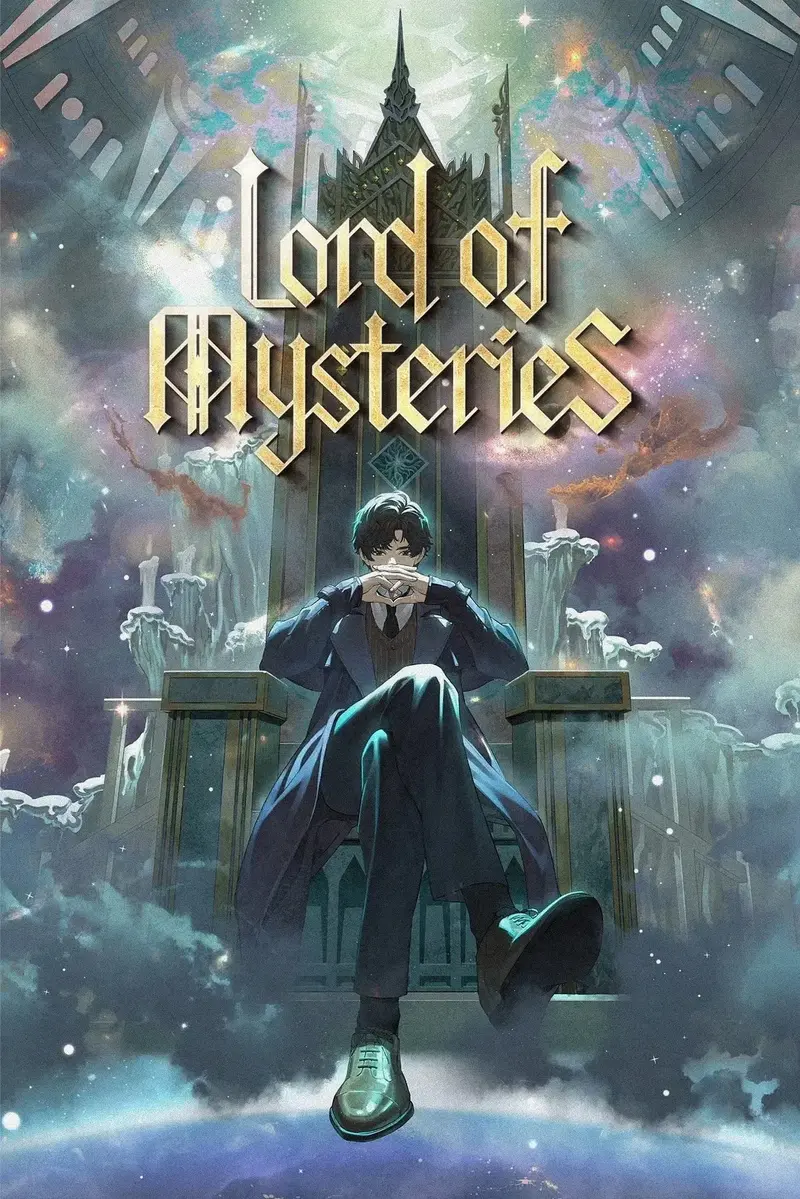
From the first episode, the series throws us directly into an unfamiliar reality. Klein appears in a shocking situation and awakens in another body inside a world whose powers belong to Beyonders. People gain abilities through specific potions and advance along different paths until the highest sequences approach godhood. The premise is excellent.
The issue is not the complexity of the world but the way it is delivered. The show rapidly introduces terminology, ideas, organizations and conflicts while also placing Klein in the fog realm and explaining religious politics, secret groups, investigations and supernatural incidents. We want to understand what is happening, yet the series does not always provide enough information to make understanding possible.
Klein begins as our guide, then outruns us
Klein is one of the elements that keeps the story watchable. Initially, he is an ordinary person trapped inside a reality he does not understand, making identification immediate. The problem appears when he starts understanding this world faster than the audience. That gap matters.
He could have been the perfect instrument for explaining the rules: we discover each fact when he does and build a shared understanding step by step. From around the fourth episode, that balance begins to break. Klein acts on knowledge the audience does not feel it has properly received. The character advances while the viewer remains behind.
Even so, his development has value. Klein gradually grows from somebody focused on survival into somebody who cares about protecting others. His double identity also gives the story humor and humanity. The mysterious figure he performs inside the fog differs sharply from the internal voice that often admits he has little idea what he is doing and is improvising the aura of control.
The supporting characters need room to become people
Characters such as Old Neil, Dunn Smith and Melissa Moretti have clear presence, but most of the cast receives too little time to become real people in the viewer's mind. Too often a character exists to explain information or move a plot mechanism.
That weakens the emotional side. In a world this complicated, characters are the most important means of making the experience accessible. We need not only rules but people who make the consequences of those rules matter. Old Neil's development becomes one of the most affecting passages precisely because the story gives him enough space to display his humanity. What happens to him therefore carries weight.
Mystery is not the same as missing information
This is the series' most important issue. Lord of Mysteries wants to be mysterious, and mystery is not a flaw. In horror and fantasy it can be one of the strongest tools, encouraging the audience to ask questions and connect details independently.
There is, however, a difference between giving the viewer a puzzle to solve and withholding enough pieces that no puzzle can be assembled. The show sometimes does the latter. It does not provide the information required to build a coherent question, so mystery becomes confusion. Instead of asking what will happen, we begin asking what happened at all.
The speed intensifies the problem. A supernatural event is followed by explanation, a sudden relocation, another piece of terminology and a new conflict before the earlier information can settle. At times, it feels as though we are watching a compilation of the story's most important moments instead of complete episodes with enough time to make those moments meaningful.
A visual identity powerful enough to sustain attention
If the writing is the central weakness, visual direction is the great strength. Lord of Mysteries looks remarkable. Its blend of Victorian design, steampunk, fantasy and horror gives the world a recognizable identity, and these components never feel like disconnected decorations.
Costumes, architecture, backgrounds, lighting and character design work together. Small details sometimes receive almost excessive attention, but the excess reveals the scale of production effort. A few shots exist mainly to display craftsmanship, yet the final visual result remains exceptionally strong.
Animation becomes part of the storytelling
Certain scenes explain why many viewers continue despite the storytelling problems. The sequence in which Klein uses enhanced senses to search for a missing child is a major example. Slow motion and suspended water droplets turn a simple supernatural ability into a complete sensory experience.
The animation is not merely decoration there; it performs the act of narration. Combat works similarly. The fights are powerful, rapid, violent and visually inventive. Even when the exact ability is unclear, the image communicates force. Yet that advantage contains the same weakness: rules can become so complicated that the viewer spends the encounter decoding what is happening instead of fully experiencing it.
CGI used as part of the world rather than a separate layer
The production relies visibly on CGI, which will bother some viewers. In my view, its use is far better than in many comparable works. Three-dimensional elements do not always look like a separate layer pasted over animation; they support movement, environments and scene construction.
After several episodes, the style becomes easier to accept. Even viewers initially resistant to this technique may struggle to deny that the series uses it effectively and integrates it into its larger visual system.
Music fixes the show's identity in memory
The score succeeds to a major degree. It gives the world scale and mystery and actively builds atmosphere instead of merely accompanying events. Music helps bridge some of the information gaps by telling us the emotional size of what the writing has not always made clear.
Dark Dream is especially memorable and matches the series' general identity. The song is not simply attractive on its own; it reinforces the atmosphere and helps keep Lord of Mysteries distinct in the viewer's memory.
Horror grows from losing control of power
Although the series is built around fantasy and mystery, its horror deserves praise. The possibility that Beyonders may lose control of their abilities becomes a genuine source of fear, and some bodily designs for creatures and corrupted people are appropriately disturbing.
This horror does not depend only on sudden shocks. It comes from the awareness that something larger and stranger exists beyond the characters' ability to understand. In these moments, the series finally uses uncertainty in the right way: not to conceal missing exposition, but to create a scale of terror.
Pacing damages the series more than complexity itself
Fast pacing is useful when it prevents boredom, but harmful when it prevents comprehension. Lord of Mysteries contains many ideas worthy of pause and treats them as if the audience already knows the rules. Transitions become abrupt, and information arrives before a sufficient foundation has been built.
Ironically, the series improves when it slows down in later episodes. Earlier details begin connecting, and events become more exciting because the viewer finally possesses a clearer picture. This demonstrates that the problem was never intelligence or density by themselves; it was the lack of time needed to convert density into meaningful discovery.
Final verdict
Final verdict
Lord of Mysteries is difficult to call bad because it contains too much remarkable work. It is equally difficult to ignore its fundamental problem. The series seems to contain a huge, coherent story, but the way it presents that story does not always give the audience the tools required to understand it. Whenever the picture becomes clear, the work becomes more exciting. Whenever the thread is lost, watching turns into an effort to catch up rather than an opportunity to enjoy the journey. The issue is not that the story is complex, but that it does not consistently convert complexity into enjoyable mystery. More time for characters, slower delivery and better guidance through the world could have produced something much stronger. Animation, music and atmosphere elevate the season considerably, while weak clarity, rushed storytelling and underdeveloped characters keep it below the level promised by its extraordinary potential.
Your turn
Is Lord of Mysteries' opacity part of its appeal, or has the series made itself so complicated that watching becomes harder than it should be?
AUDIENCE VOTE
Do you agree with the MB rating?
Choose once from this browser. You can change your answer at any time.