The review
A familiar survival loop
The first three episodes rely heavily on a repeated pattern: arrive, encounter a threat, suffer a loss and escape. The movement keeps the world expanding, but repetition weakens suspense because each location begins to feel like another station on the same journey.
The delayed payoff comes in the final episode, where survival becomes a battle for the fate of the universe. The scale recalls Marvel's largest ensemble climaxes, but the blood, irreversible loss and absence of guaranteed rescue give it a harsher identity.
A new generation inherits the ruins
The decision to foreground Kamala Khan, Riri Williams, Kate Bishop and Shang-Chi is both artistically smart and dramatically necessary. The old legends cannot remain the emotional center once many have become monsters; hope must come from characters still defining what heroism means.
Their relationships receive enough space for several deaths to matter. Even Blade Knight feels connected to a wider history rather than inserted as a decorative cameo, helping the ruined universe seem inhabited instead of merely referenced.
Kamala and Red Guardian give the horror a heart
Kamala's need to preserve hope meets Red Guardian's bruised humor and exhausted loyalty. Their bond provides warmth without denying the brutality surrounding them, and turns the younger hero's optimism from a personality trait into a difficult moral choice.
The best emotional moments arise when survival demands that characters abandon someone they love. The series understands that zombie horror becomes meaningful only when the infected face still carries a recognizable relationship.
Wanda, Queen of the Dead
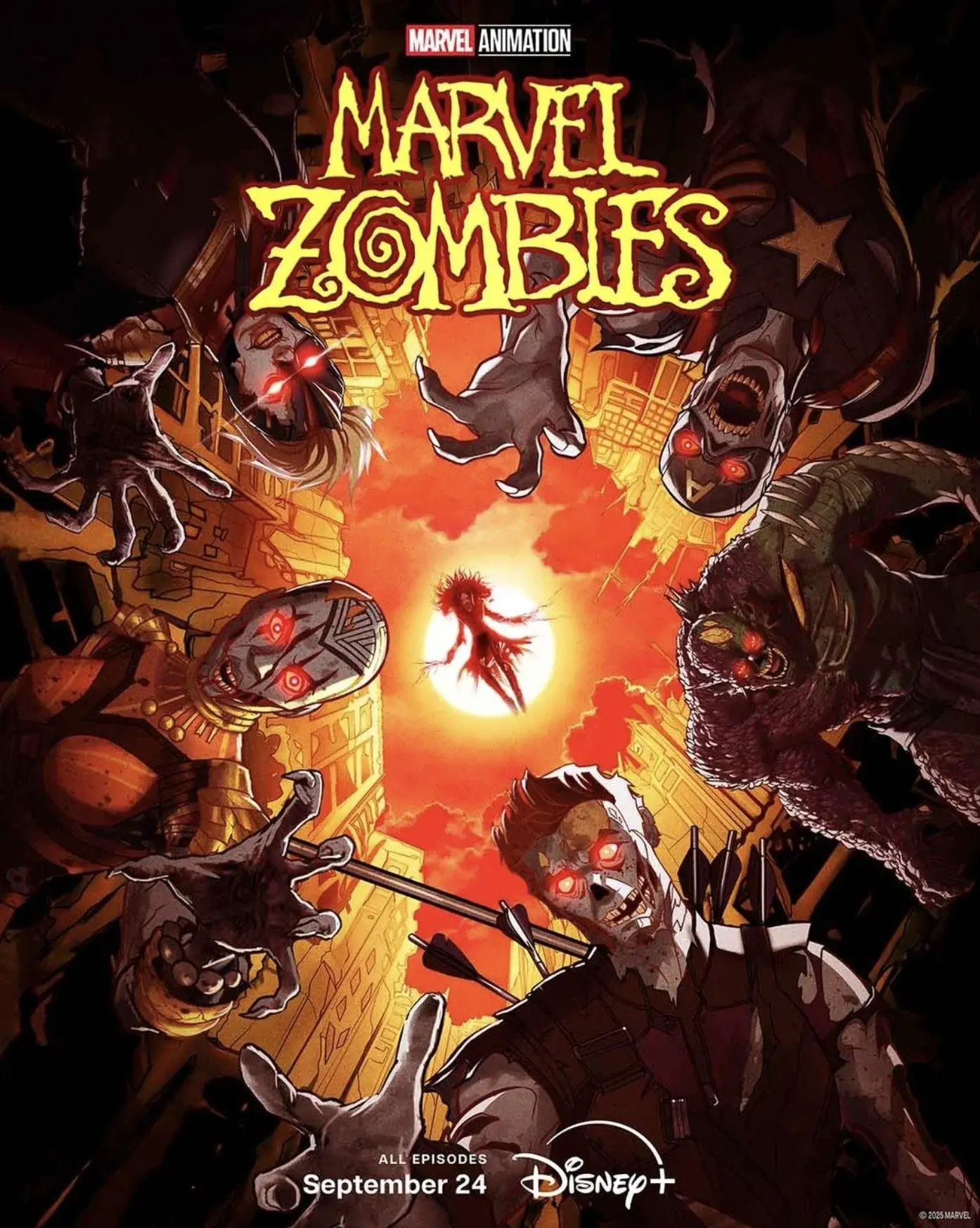
Wanda is a striking antagonist whose power and grief fit a world ruled by corrupted heroes. Her image gives the series an instantly recognizable center of menace and transforms familiar magical language into necrotic spectacle.
The logic is less convincing. Her retained awareness, strategy and control after infection sit uneasily beside the rules applied to other zombies. Ambiguity can strengthen horror, but here it occasionally resembles a rule exception created because the plot needs an ultimate villain.
A dead universe reflecting franchise fatigue
The apocalypse can be read as a reflection of collective exhaustion with Marvel itself. Familiar legends have collapsed, repetition has consumed wonder and new bonds must be built from the remains. The series recovers danger by accepting that even beloved characters may not be protected.
It also asks whether heroism remains possible without a functioning moral order. Power no longer guarantees responsibility, and sacrifice may fail to save anyone. The bleak ending follows that philosophy: a dead world does not offer complete redemption simply because heroes still desire it.
Strengths and weaknesses
A detailed world, effective emotion, confident use of younger heroes, a genuinely large final episode and well-placed references give the series energy. Its willingness to allow violence and loss restores uncertainty that the wider franchise often lacks.
The repeated early rhythm, inconsistent zombie awareness, animation below the expected Disney standard and the absence of some original voices weaken continuity and polish. The boldness of the concept is sometimes greater than the quality of its execution.
Final verdict
Final verdict
Marvel Zombies is a daring experiment that returns some missing vitality to the franchise by breaking the moral and visual restraints of the Multiverse era. It is not only a zombie series, but an image of a superhero universe that has lost its balance and must rediscover danger. Uneven yet memorable, it proves that dead heroes can sometimes make Marvel feel alive again.
AUDIENCE VOTE
Do you agree with the MB rating?
Choose once from this browser. You can change your answer at any time.