The review
A guardian across the eras
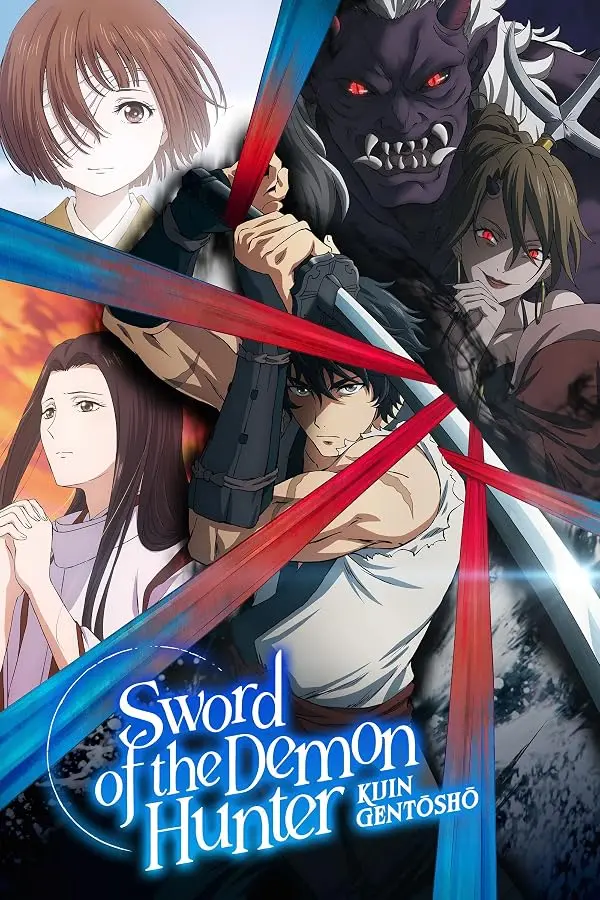
Jinta is raised in the isolated village of Kadono to protect the shrine, its priestess and Suzune. He does not grow up to become a hero by choice; he grows up to guard. When a demon warns him of a far greater evil in the distant future, a small village tale opens into a legend spanning Meiji, Taisho, Showa and Heisei.
Time is therefore not background but punishment. Jinta watches Japan, its people and even the shape of evil change while he remains tied to an approaching demon god. The curse is not simply fighting demons. It is living long enough to lose everything more than once.
Jinta fights because he must
Jinta is no loud prodigy seeking status. He fights because duty leaves him no clean exit. The sword is not the centre of his character; pain is. He knows that strength does not guarantee rescue and that an obligation to protect can slowly become a prison.
His bond with Suzune contains his childhood helplessness and adult rage. He once heard her suffering without possessing the strength to stop it. Every later strike seems to carry the memory of that powerless child. He is compelling not because he longs to be legendary, but because he would rather the burden had never chosen him.
Suzune and the fear of the red eye
Suzune first appears to be a clear victim: a child marked by a demonic red eye and punished for something she never chose. The series soon refuses to leave her in that simple category. The eye is not cosmetic but a door into an older force and a future already shadowed by prophecy.
Is she dangerous because of what she carries, or because human fear may force danger upon her? Is the curse inside the girl, or inside the community that decides she is cursed before knowing her? Her presence unsettles every easy boundary between innocence and catastrophe.
Shirayuki, the shrine and lives owned by duty
Shirayuki, the priestess's daughter, represents the shrine's world of sanctity, responsibility and distance from ordinary life. She is not merely a childhood companion. Like Jinta, she carries a role larger than personal desire, making every relationship a negotiation between love and obligation.
The shrine protects, but it also isolates. Those who belong to it do not fully own their lives. This tension gives the early village material an unease deeper than simple monster attacks: even safety can demand the surrender of self.
Demons with histories, humans without innocence
The demons are not disposable combat targets. Some grieve, some reason and some appear to be consequences of a broken world rather than pure evil. The strongest dark fantasy does not ask only how to kill a monster; it asks who made the monster and whether those claiming to defend humanity remain clean themselves.
Across time, evil changes its clothing. Spirits once hidden in forests gradually take more psychological and existential forms. The series suggests that darkness does not disappear with modernity; it adapts to the fears of each age.
Not another Demon Slayer
The surface similarities are obvious: brother and sister, blades, demons and historical Japan. Their goals are different. Demon Slayer is emotionally direct and built around spectacular motion. Kijin Gentosho is quieter, more patient and less interested in instant reward. It does not ask us to admire the fight so much as examine what remains after it.
The pace can be both virtue and obstacle. The long premiere announces a drama that wants atmosphere, relationships and internal anxiety before action. Viewers waiting for continuous battles may experience weight rather than depth. Those receptive to slowly constructed historical fantasy will find a voice of its own.
Atmosphere before spectacle
The forest, shrine and village feel watched by something ancient. Muted colour, stillness and environmental detail create an old tale carried beside a fire. Battles arrive as ruptures inside a quiet world, giving them force without making combat the permanent visual centre.
The violence is bloody and sometimes disturbing, but at its best it is not empty provocation. Injury communicates the cost of guarding the innocent. The risk is exhaustion: if darkness keeps accumulating without human warmth, tragedy could become monotony. The first season mostly preserves the balance through tenderness and moral ambiguity.
A prophecy that makes time the enemy
The distant demon god turns prophecy into a temporal threat. Jinta is not training for one nearby confrontation; he must endure centuries while a catastrophe approaches. That design opens questions richer than simple victory: is his long life part of the protection or part of the curse? Is Suzune victim, key or both?
The promise of season two lies in sustaining that scale without losing focus. A story crossing many eras can deepen Jinta through accumulated grief, or fragment itself into disconnected stops. Its success will depend on making every historical change alter the character, not merely the scenery.
Final verdict
Final verdict
Sword of the Demon Hunter: Kijin Gentosho is a promising and distinct first season. It may look like another demon-hunting anime, but its core is a long tragedy about time, memory and duty. I admire its restraint, moral greyness and hero who carries obligation rather than glory. Its slowness and severity will not suit everyone, and the multi-era design must remain disciplined, but viewers drawn to mature historical fantasy may find something memorable here: a story that prefers silent grief to shouting and asks not how spectacularly a sword can strike, but what the person holding it must live with afterward.
AUDIENCE VOTE
Do you agree with the MB rating?
Choose once from this browser. You can change your answer at any time.