The review
Declared Unity and Shifting Loyalties
Conrad demands that the family put its differences aside and unite against Kat and Frankie. The meeting is followed by concrete moves to contact allies, while Bella and Seraphina try to use lawyers to find information that can be deployed against Kat. This gives the family more than one avenue of confrontation and moves it beyond simply waiting for the next blow.
The declared solidarity, however, does not erase what is happening behind it. Seraphina asks Charlton to invest ten million euros in her and tells Bella that she wants to break away from the venture Conrad leads. What matters here is that we are seeing a request for funding and a declared direction; there is no evidence yet that the funding has been secured or an independent operation established.
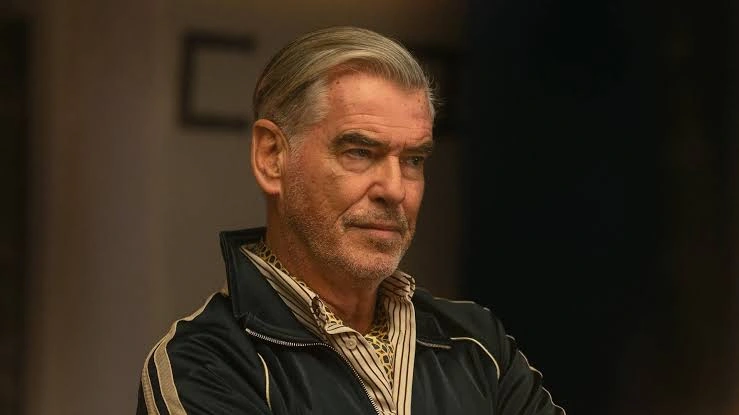
This step makes her disagreement with Conrad a matter of the right to make decisions. She is doing more than objecting to his methods: she is seeking a resource that would allow her to escape his authority. Her reliance on Charlton nevertheless leaves a question hanging over her independence: will she truly control her own decisions, or will she have to negotiate for that control within a new relationship of power?
Bella gains a useful presence in this storyline. Her stated commitment to recovery is tied to her desire to focus and help manage the family’s interests. She then moves beyond the role of listener when she confronts Seraphina about her attachment to Conrad. The conversation develops their relationship and reveals how emotional loyalty can delay a decision its maker believes is necessary.
Maeve Turns Kinship into a Test of Obedience
While Conrad calls for the family to close ranks, Maeve works to remove the very person whose ability to resolve crises it needs. She asks Gina to hurt herself so that Harry will be occupied with caring for her and withdraw from Harrigan affairs. The idea’s cruelty comes from reducing the daughter to a means of controlling the father and treating his love for her as a vulnerability to exploit.
Gina’s apparent agreement does not settle what she will do. After her earlier reconciliation with Harry, temporary compliance remains a possible reading, particularly in his absence. The episode gives us no basis, however, for concluding either that she is deceiving Maeve or that she will carry out her request. This uncertainty places the tension within the relationship itself and makes Gina’s position matter beyond simply responding to what she is told.
Another side of Maeve emerges through Eddie. As he watches the news of Medusa’s death and the grief of those close to him, his picture of the man he was sent to target broadens. The presence of people who miss him confronts Eddie with the mission’s consequences and gives his hesitation a basis beyond fear of committing violence.
It becomes important here to connect this scene with the opening mourning for Conrad and Maeve’s animals. The family knows what loss means, yet Maeve demands that Eddie disregard its effect when it happens to others. She then makes his enjoyment of Harrigan privileges conditional on submitting to her tests, turning belonging into an obligation to obey regardless of the cost.


This is one of the episode’s strongest storylines, but it also carries a significant reservation: why Maeve insists on sidelining Harry at this particular moment remains less clear than the cruelty of her methods. Her desire for control is understandable from her behavior; her calculation of gains and losses under external pressure needs a more convincing explanation.
Harry Reads the Details, but Does Not Know Everything
Conrad’s notebook, containing information he extracted from Jojo, leads Harry to Donnie’s apartment. There he finds the body and the gun he gave Jan. Information connected to the conflict with their enemies becomes a discovery that directly affects his own home.
The strength of this turn is that it exposes the limits of Harry’s position as the man who fixes everything. He can begin containing the consequences of what he has discovered, but he cannot reach Jan or get an explanation from her. The family crisis moves beyond the limits of his knowledge, leaving him to face the effects of a decision he had no part in making.
The storyline succeeds in putting pressure on him, although Jan herself receives limited space in this episode compared with the seriousness of what the evidence suggests. We follow the effect of her absence on Harry more than we approach her experience after the confrontation with Donnie.
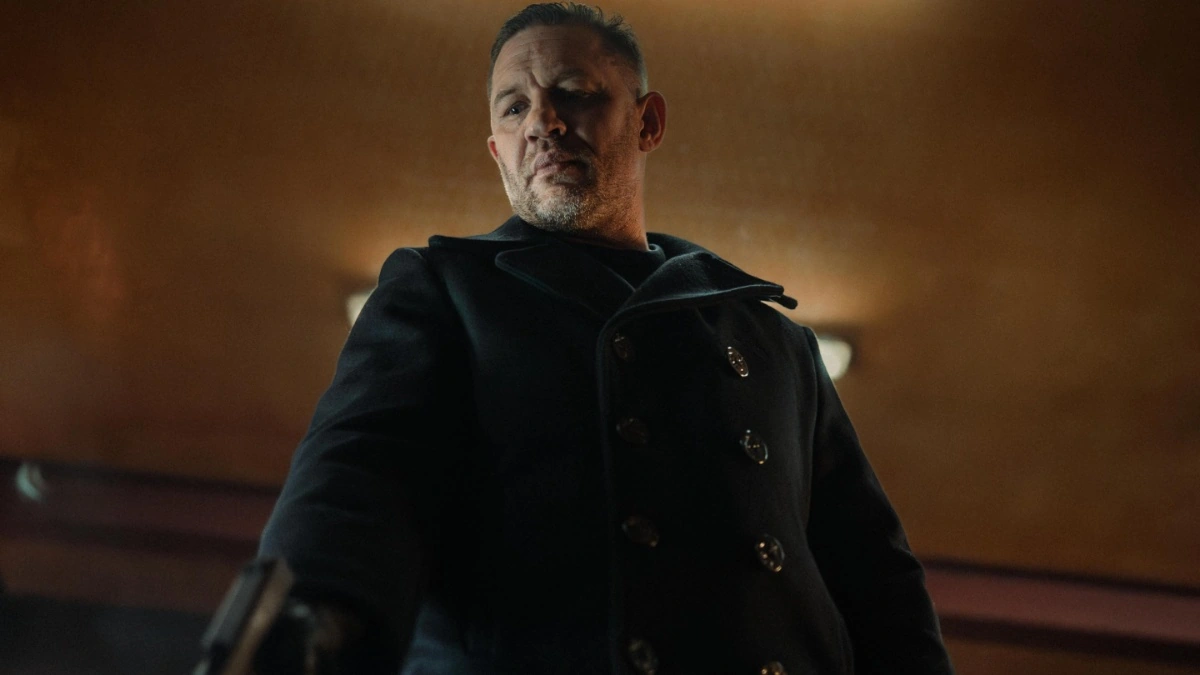
Paul’s storyline, meanwhile, gives personal knowledge a different function. After splitting from Conrad and being lured in through Cecily, he is forced to call Harry with a story designed to lead him into the trap. But he uses the word ‘bro,’ despite knowing Harry’s dislike of it, turning an inappropriate word into a distress signal.
This is an effective detail because its meaning comes not only from the call’s content but from how well the speaker and listener know one another. Frankie hears the words he wants to hear, while Harry detects what is wrong with the way they are said. Even in captivity, Paul retains some initiative: he contributes to his own rescue by undermining the story he is forced to tell.
Frankie Commands Violence but Cannot Set the Pace
Frankie’s meeting with Kat offers an important key to understanding him. He objects to being kept waiting and wants to bypass the intermediary and deal with her directly, but she redefines his position by giving him a week to prove his worth. His ambition is evident, yet the standing he seeks remains conditional on someone else’s decision.
This imbalance makes his subsequent display of force more revealing. In front of Kat he needs recognition of his importance; in front of Paul and Cecily he tries to impose that importance through fear. His movement between these positions can be read as a search for control whenever he is reminded of the limits of his influence.
Johnny Flynn’s performance helps convey this tension between swagger and unease. Frankie’s appeal does not require us to regard him as a genius who stays ahead of everyone. It is enough that he can inflict real harm while remaining clearly prone to agitation and misjudging those he faces.
His killing of Cecily inside the casino confirms that his threat goes beyond verbal posturing. The encounter’s cost becomes tangible, and it is difficult to feel confident that the maneuvering will remain under control. Yet killing an unarmed person does not solve his basic problem with Harry: the ability to cause harm does not necessarily give him a better understanding of the confrontation.
This distinction keeps the danger from depending solely on a body count. Frankie is frightening because of what he can do, and exposed at the same time by his constant need to prove that he is the stronger party.
The Casino and Changing the Terms of the Confrontation
Harry enters the casino knowing the invitation is a trap, so the question becomes how to get Paul out and survive alongside him. This advance knowledge improves the construction of tension: we watch two men each trying to control the scene, instead of waiting for the protagonist to discover a trick we recognized before he did.
The decisive information is that Michael, Frankie’s son, is in Newgate Prison. By bringing the son into the calculation, Harry moves the confrontation beyond the confines of the table. Frankie now has something to lose outside the place he believes he controls.
The confrontation does not end simply because Michael is mentioned, however. Frankie tries to deny that his son matters to him, then imposes a game of Russian roulette. This resistance is necessary to the scene: it prevents the information from becoming an easy solution that ends the conflict the moment it appears.
Harry refuses to continue on the game’s terms, snatches the gun, and points it at Frankie before managing to leave with Paul. Frankie’s retreat therefore comes under the combined pressure of the threat to his son and the immediate danger to his own life. Reducing the outcome to Harry frightening him by saying a name discards the part in which his ability to act is tested.
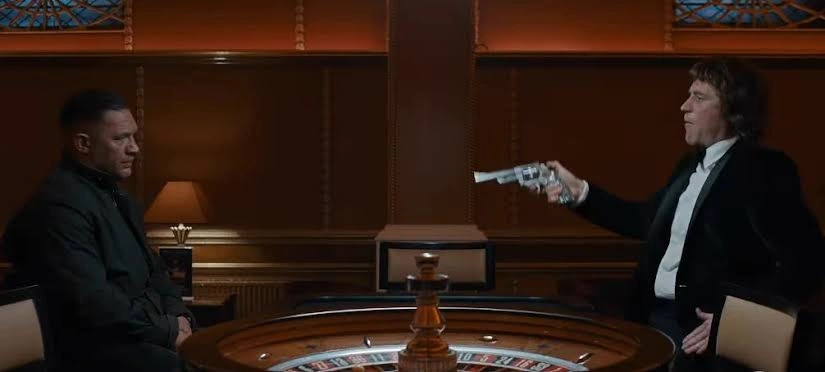
Harry’s statement that he does not gamble acquires its meaning through this behavior. He enters an extremely dangerous situation, but tries to change its terms instead of surrendering the outcome entirely to chance or his opponent’s wishes. The scene tests the difference between calculated risk and the claim to control everything.
The episode’s pacing serves this escalation. It begins with moves on several fronts, then Paul’s abduction focuses our attention on an urgent danger before the casino brings threat, information, and decision together in one confrontation. Not every storyline needs to end for us to feel that the episode has achieved a clear climax.
A Phone Call with More Than One Possible Meaning
After Harry and Paul leave, Harry calls Michael and tells him that his life will be in danger at three in the morning. This is the event the ending establishes. Whether a killing will be carried out, who would carry it out, and the call’s ultimate purpose all remain unresolved.
The call can be read as the announcement of a strike through which Harry intends to prove that his threat is serious. Telling Michael the time can also be understood as a warning that would allow him to avoid the danger. Giving the information to the intended target makes the second reading possible, but does not establish rescue as the true intention.
Likewise, telling Paul that he has a busy night ahead is not enough on its own to establish the nature of his assignment. The ending connects events in a way that invites prediction, but leaves a distance between what we know and what we infer.
What matters most dramatically is that Harry is now using the same parental bond that made Gina a means of pressuring him. He protects his own people, but expands the threat to include his opponent’s son. The idea of family thus returns in a more troubling form, and Harry’s effectiveness at rescuing people becomes separate from the moral judgment of every means he might use.
A contrast involving time also comes together: Kat gives Frankie a week to prove himself, and the episode ends with Harry specifying the hour of danger for Michael. Between those deadlines, Frankie tries to seize control through violence, while others possess forms of leverage that reach beyond the place he controls.
Final verdict
Final Verdict
Episode 7 succeeds in bringing together the movement of the external conflict and the fractures within the Harrigans’ relationships. It gives Seraphina a step that changes her position, grounds Eddie’s hesitation, and uses Harry’s knowledge of Paul in a detail that serves both plot and character. It then delivers a casino confrontation in which the balance of power shifts more than once. Maeve’s calculation in sidelining Harry still needs greater clarity, while Jan remains present primarily through the effects of her absence. These reservations do not undo the coherent escalation or the episode’s ability to produce an open ending from within its central conflict. A strong episode that makes family belonging a source of protection and threat at once, leaving Harry with a question about the limits of what he will do after successfully rescuing Paul. My rating for Episode 7: 8 out of 10.
Your turn
How did you read Harry’s call to Michael: as the announcement of a decision to kill him, or a warning that might give him a chance to survive?
AUDIENCE VOTE
Do you agree with the MB rating?
Choose once from this browser. You can change your answer at any time.