The review
The screenplay and dialogue
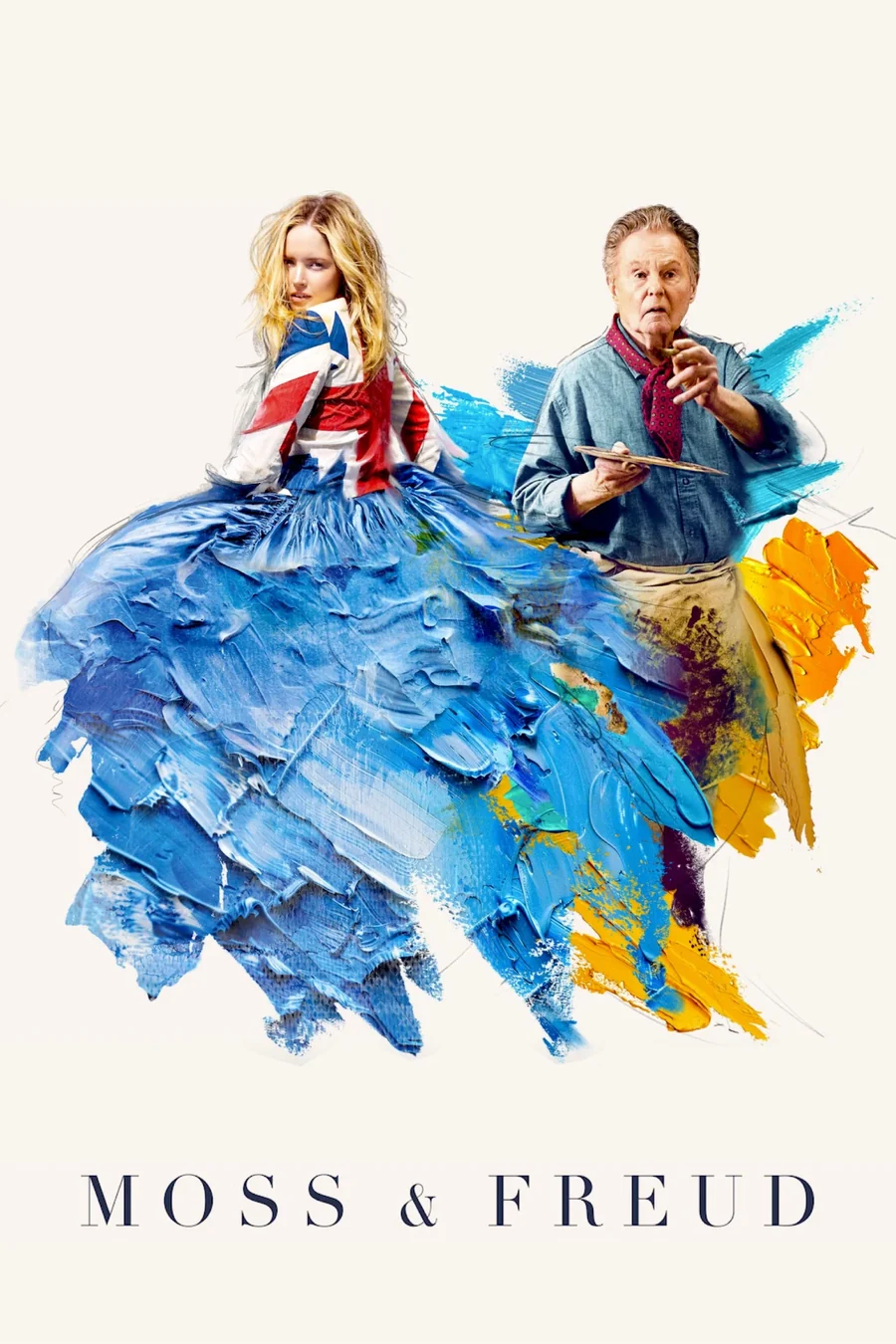
The most striking aspect of the premise is the contrast between the worlds to which its two central figures belong.
On one side is Kate Moss, one of the most famous models, whose image became associated with beauty, fashion, parties and celebrity life, making her an emblem of an entire phase of British culture.
On the other is Lucian Freud, a painter renowned for bold portraits and a concern with showing the human body beyond the idealised images people are used to seeing.
When the two meet, their relationship seems a perfect opportunity to examine an important idea: what is the difference between the image a person presents to the world and the image another artist can discover in them?
Moss is accustomed to photographers’ cameras and to having her image participate in an industry based on attraction and control over appearance.
Sitting for Freud places her in a completely different experience.
This is not about selling a product or creating an image suitable for a fashion magazine. It is an attempt to paint a person as the artist sees her, with details that do not necessarily conform to conventional standards of beauty.
More interestingly, Moss was pregnant when she sat for Naked Portrait 2002, giving the experience a different human and physical dimension.
The artist is not merely painting a famous woman. He is painting a body undergoing real change.
I think this idea could have given the film exceptional depth, opening questions about beauty, identity and how a person sees their own body and image.
The problem is that the film sometimes only gestures towards these ideas without exploring the psychological conflict they could produce.
We understand that the experience matters to both people, but we do not always feel the scale of the change it is supposed to bring about in them.
This is the difference between possessing a powerful cinematic premise and turning it into equally powerful drama.
Ellie Bamber gives Kate Moss emotional presence
The film’s strongest element is Ellie Bamber’s performance as Kate Moss.
Portraying a famous figure of this stature is not easy.
The actress needs to convey familiar features, a recognisable manner of speaking and behaviour associated with the real person, without becoming merely an external imitation.
I think Bamber largely achieves that balance.
She captures Moss’s manner of speaking and aspects of her quiet, reserved personality, presenting a woman who appears confident before others while maintaining a distance between herself and the world.
This aspect is particularly important.
Moss built a significant part of her fame on mystery and a strong presence that did not constantly need to explain what she felt or thought.
The film tries to explore what lies behind that image.

We watch a woman living amid parties, photography and media attention who also searches for something that gives her a different sense of worth beyond being a famous face.
This is where her relationship with Freud becomes important.
He treats her as more than a fashion icon, seeing a person who can become the subject of an artwork carrying a different meaning.
Despite Bamber’s good performance, however, the screenplay does not always give the character enough room to reveal her complexities.
The film suggests that Moss begins to reassess her life and relationship with fame, but does not present every stage of that transformation convincingly.
Sometimes it seems as if Freud’s presence in her life alone is enough to bring greater maturity, without a genuine internal struggle that would justify the change.
Nevertheless, Bamber gives the film most of its emotional presence, expressing things the screenplay cannot find enough words to explain.
Lucian Freud: a character made too safe
This is one of my biggest problems with the film.
Derek Jacobi is an actor of immense experience. He plays Lucian Freud with a quiet presence and clear attention to appearance and manner of speaking.
The physical resemblance helps us accept the character, while Jacobi sometimes successfully conveys the dry humour and unusual behaviour associated with Freud.
The problem is that the character appears kinder and quieter than I expected.
Freud was known for his severity and his ability to impose his presence on the people sitting for him.
His paintings offered a direct view of the human body, without necessarily seeking to please the sitter or show them as beautiful.
The film softens much of that sharpness.
Freud sometimes seems closer to a kindly older man giving Moss advice and sharing quiet moments than a profoundly complicated artist whose relationships could be full of tension and contradiction.
This choice weakens one of the story’s most important elements.
A relationship between two people with this degree of fame and such different ages and ideas could have produced a strong clash between two views of life and art.
Moss lives in a fast world of constant change and new images. Freud needs time, patience and prolonged observation to complete his painting.
The distance between these worlds deserved a bolder treatment.
I do not think the problem belongs entirely to Jacobi’s performance. He delivers what the role permits well.
The writing and direction make Freud a safer, less abrasive character than he could have been.
For me, this softening weakens the central relationship and makes one of its participants seem simpler than his supposed reality.
A friendship that needed more contradictions
The nature of the relationship itself is one aspect that could have made Moss & Freud more interesting.
We are talking about a model aged twenty eight and an artist approaching eighty, belonging to entirely different generations.
Despite that difference, each discovers something attractive in the other.
Moss admires Freud’s artistic standing; he sees in her a presence worth turning into a painting.
The film frames their relationship as a human friendship, clearly seeking to distance it from the rumours that surrounded it in the press.
That is understandable. Closeness between two people does not necessarily mean a romantic relationship.
The problem is that the film seems excessively eager to protect this friendship from any complication.
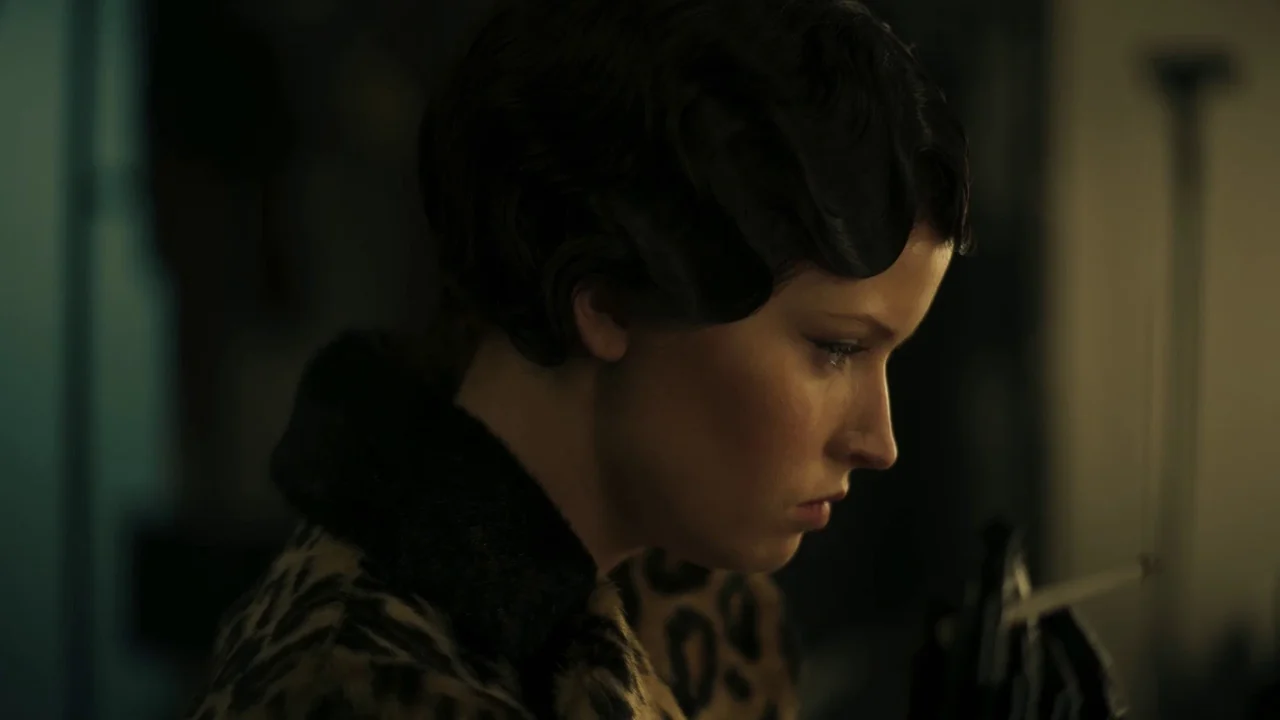
Human relationships become dramatically interesting through differences, competing interests and selfish behaviour as well as moments of understanding.
One scene illustrates this well: Freud attends Moss’s birthday party, and the two become so absorbed in each other that they disregard the feelings of Bella, Freud’s daughter.
The scene matters because it shows that the relationship is not entirely ideal. Their attraction to each other can make them less attentive to the people around them.
There is also room to ask what each receives from the other.
Moss gets the chance to appear in an artwork unlike fashion photography. Freud gets a sitter with extraordinary fame.
This does not mean their relationship is merely a matter of self interest. It means that human connection and personal interest can overlap in complicated ways.
I think the film would be stronger if it gave these contradictions more room, rather than mostly presenting an agreeable friendship dominated by understanding.

Images between celebrity noise and studio quiet
Visually, the film has effective elements that help recreate London during this period.
Director James Lucas draws on the contrast between Kate Moss’s noisy life and Lucian Freud’s quieter, more isolated world.
Scenes of parties, fashion and photography have a different energy from those inside Freud’s studio.
The difference concerns not just the location but each person’s way of living.
Everything in Moss’s world moves quickly, from lights and music to constantly changing images.
Inside the studio, time moves more slowly. A single painting may require long sessions of observation and work.
Clothing details, archival material and some London landmarks help reconstruct the period’s identity.
Close views of painting and mixing colours also allow us to observe the practical side of making the portrait.
These are among the moments when I felt the film really approached its central subject.
Despite successfully establishing the characters’ surroundings, however, visual beauty does not always become affecting drama.
Some scenes seem designed to recover the atmosphere of a period rather than develop the relationship or reveal another aspect of the characters.
The film recreates its world effectively without always using it as fully as the drama requires.
Many conversations, too little conflict
One of the clearest problems in Moss & Freud is its heavy dependence on dialogue.
Most of the action revolves around meetings between Moss and Freud and conversations about art, life, fame, memories and personal experiences.
This approach is not a flaw in itself.
Excellent films can rely on two characters and long conversations, provided those conversations carry genuine tension or reveal something that changes our understanding of the relationship.
That does not always happen here.
Some exchanges are agreeable and appropriate to the film’s atmosphere but add little to the central conflict.
Sometimes it feels like a quiet play about two famous people rather than a film using cinema’s capacity to express itself through images and movement.
The screenplay also lacks confrontations strong enough to matter.
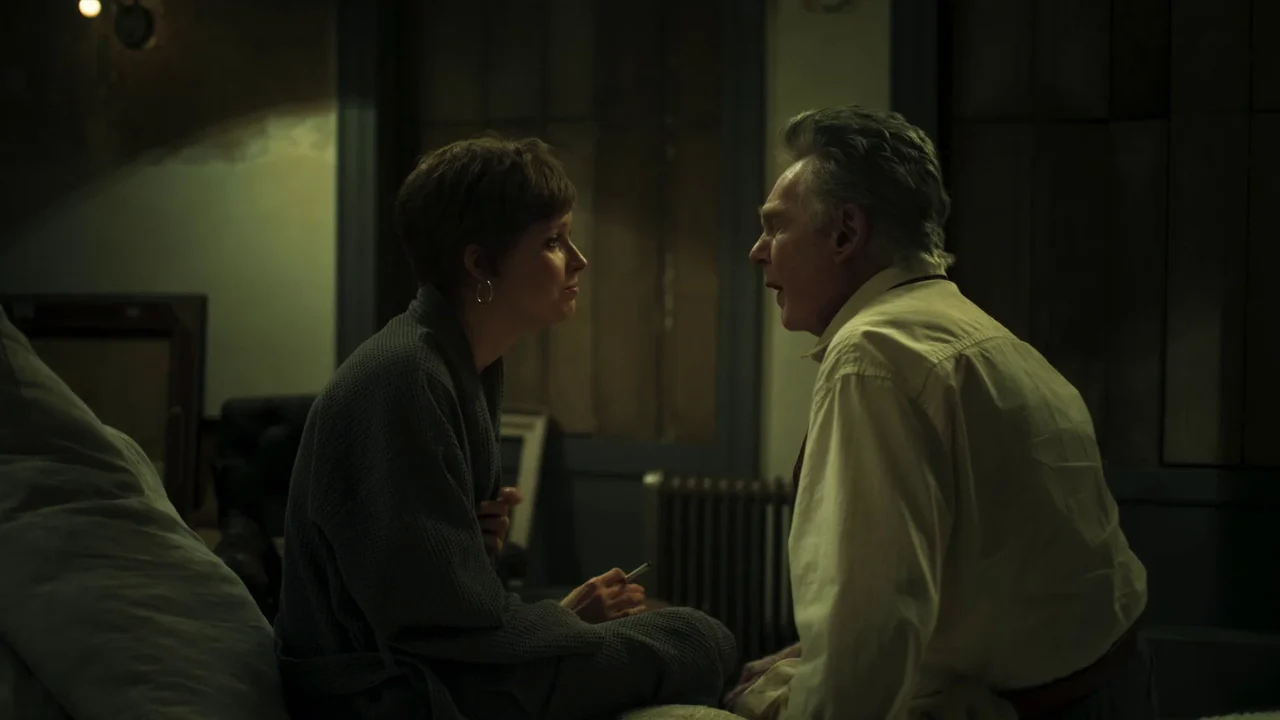
When Moss and Freud disagree, those disagreements often end without leaving a substantial dramatic mark on their relationship.
The resulting pace may suit some viewers, but it reduces the interest of those waiting to discover more complicated aspects of the two people.
I think the film needed bolder writing that allowed contradictions to emerge rather than quickly settling them.
The story does not necessarily need many events. It does need every confrontation or conversation to have a clear effect.
That is what parts of the film lack.
The painting is bolder than the film
The most genuinely meaningful moment in Moss & Freud concerns Moss confronting the portrait Freud has painted.
It does not resemble the images she is used to seeing of herself.
This is neither an advertising image nor an attempt to present a famous woman looking her best.
It is an artwork showing the body directly and presenting Moss through the eyes of an artist who does not obey the fashion world’s standards.
Here the central idea finds its strongest expression.
A woman accustomed to being seen through carefully calculated images confronts a different image made by somebody else’s eye.

This raises a question about our relationship with our own image and our readiness to see ourselves apart from how we want others to see us.
The paradox is that the painting itself seems bolder than the film telling the story of its creation.
Freud’s artwork does not necessarily try to present a comfortable image of Moss, whereas the film presents the two people and their relationship with less sharpness.
This is my biggest problem.
The film concerns an artist brave enough to offer a different view of one of the world’s most famous women, but it does not always possess the same courage in its cinematic portrayal of its central figures.
The painting therefore remains more thought provoking than the story surrounding it.
Strengths and weaknesses
The main strengths are Ellie Bamber’s performance, her quiet chemistry with Derek Jacobi, the recreation of London and the worlds of fashion and painting, and an appealing premise that brings together two different people.
The main weaknesses are the excessive softening of the characters’ complexities, heavy reliance on conversation, weak dramatic conflict and a determination to present a relationship safer than the story’s possibilities allow.
Final verdict
Final verdict
this is an acceptable film with an interesting premise and some lovely moments, but it does not fulfil its possibilities as I had hoped. The real story brings together two exceptional people, two different worlds and a painting offering a bold view of the body, identity and beauty. For most of its running time, however, the film prefers a quiet story about friendship and art over exploring the contradictions that could have made the relationship more cinematically compelling. This does not mean the experience has no value. I think it may suit viewers interested in art history or Kate Moss who want to see an aspect of her relationship with Lucian Freud, particularly given the good performances and distinctive visual atmosphere. If you want a powerful drama exposing the more difficult aspects of these two people’s lives, however, you may feel it delivers less than its premise promises. For me, the essential problem is not that the film is quiet. It is that its characters and themes could support greater depth and daring, yet it chooses to approach them with extreme caution.
Your turn
My final question: do you prefer films based on real people to offer a quiet picture that protects their reputations, or does their value lie in the courage to reveal contradictions and more complicated aspects, even when those are uncomfortable to watch?
AUDIENCE VOTE
Do you agree with the MB rating?
Choose once from this browser. You can change your answer at any time.