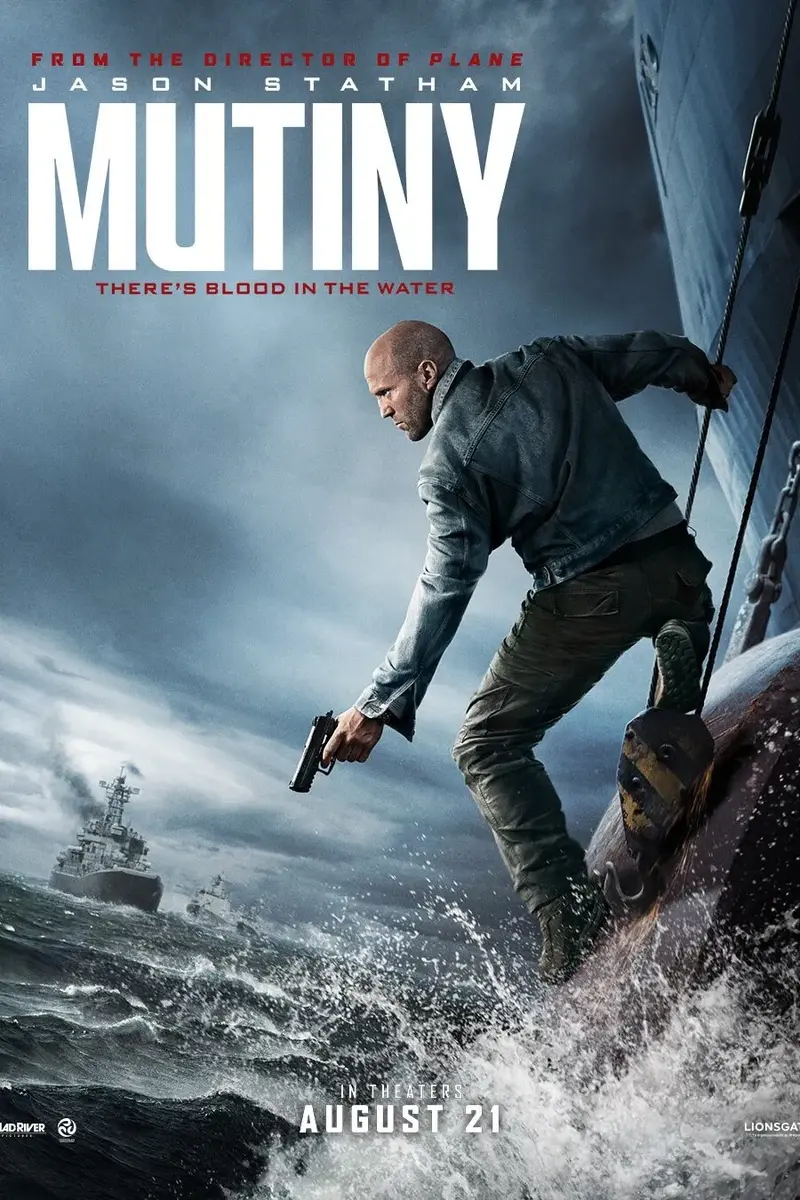
The review
A simple motive built on a thin relationship
Cole Reed is a former soldier and police officer working as bodyguard to businessman Tibu Campallo. Their connection is presented as more than employment. Tibu treats Cole like family, and his death becomes the engine behind everything Cole does. The film makes the right choice by refusing to make Cole more psychologically complicated than necessary. He is damaged, carries guilt connected to his father's death and needs a clear reason for revenge. That reason exists.
The weakness is that Cole and Tibu do not receive enough shared time for the bond to become truly deep. Cole's grief therefore depends heavily on Statham's presence and on small details such as their chess game and the watch Tibu gives him. Those details do useful work, but they are asked to carry more emotion than the screenplay has built.
Jason Statham does exactly what the role needs
If there is one thing Jason Statham can perform effortlessly, it is the quiet man who says little and becomes extremely dangerous when events collapse. Cole is not built around jokes or a light sarcastic persona. He is silent, practical and approaches almost every problem through the same process: identify the threat, find the shortest route and remove it. The role fits Statham perfectly.
The performance never asks us to believe an ordinary man suddenly became an invincible fighter. Cole's military and police history establishes his ability from the beginning, making even the exaggerated confrontations acceptable within the movie's world. The film also uses Statham's age rather than trying to hide it. The camera does not constantly escape his body during combat, and the fights depend on force and contact more than flashy speed. That makes the action feel closer to the films of the 1990s than to modern sequences sometimes buried under frantic editing.
The Artemis becomes the best weapon
The most important directorial decision is placing most of the story aboard the Artemis. The ship is not just a location; it determines how the action works. Corridors are narrow, stairways overlap, containers block sightlines, equipment rooms create hiding places and ventilation shafts offer escape routes.
Director Jean-François Richet succeeds at making the geography understandable. We know where Cole is, where his enemies are approaching from, where he can hide and where he can be trapped. That sounds simple, but it is essential to action: without spatial clarity, danger has no weight. In the strongest scenes, the ship itself becomes a weapon. Cole uses doors, pipes, tools, corridors and small objects around him to reverse the situation. Mutiny is at its best whenever environment and combat become the same thing.
Die Hard at sea, but without a memorable villain
The Die Hard influence is unmistakable: one man is trapped in a contained location, facing a much larger force while innocent people remain in danger. The use of tools, hiding, repositioning and counterattack openly carries the spirit of that older action model. The ship also invites comparison with Under Siege.
That comparison exposes a weakness. Under Siege had antagonists with character and presence. Mutiny has the right location, hero and action machinery but lacks a villain capable of making the confrontation memorable. Familiarity is not fatal when the opposing force feels dangerous and specific. Here, it often feels like a collection of bodies waiting for Statham.
Madsen and Daniles are functions, not characters
Ship captain Marko Madsen appears positioned as Cole's formidable opposite. Roland Møller brings obvious physical presence, but the writing gives him too little. He issues orders, hunts Cole, sends men after him and waits for the final fight. We learn so little that defeating him never feels like a major victory, which is a serious problem in a film built almost entirely around hero-versus-villain conflict.
Most of Madsen's men are moving targets: they appear, shoot, chase Cole and die. Their number increases without making them more dangerous. Jaran Daniles, the man behind the operation, has a slightly stronger function in the plot but remains a device rather than a complete antagonist. As a result, the revelation that connects him to Tibu's murder lands with less force than it should.
Angie is useful without becoming essential
Annabelle Wallis plays Angie Ellis well, and the film wisely avoids turning her into a second Cole. She knows the ship and its routes and tries to contact the navy once she understands what is happening. Just as importantly, the screenplay does not force a romance between them. Their relationship is practical: Cole brings fighting skill and Angie brings knowledge of the environment.
Even so, the character remains limited. She has enough material to function as an ally but not enough to become irreplaceable. Once her main purpose is complete, the film quickly moves away from her. Mutiny understands how to avoid one familiar cliché without investing enough to make that choice dramatically rich.
A serious crime used as background motivation
The discovery of men, women and children held inside containers gives Cole a moral motive beyond revenge. He is no longer searching only for Tibu's killer; people need to be freed. This should expand the emotional and ethical scale of the story.
The problem is that the captives never become people to the audience. They exist to make Madsen and his partners unmistakably evil, then fade when the fighting begins. The screenplay invokes a very serious issue but does not invest in it dramatically, reducing human trafficking to a higher-stakes sign attached to an otherwise straightforward revenge film.
The Rolex is the cleanest piece of visual writing
Before his death, Tibu gives Cole a Rolex. Later, trapped inside the ship, Cole dismantles part of the watch and uses it to open an escape route. It is one of the film's cleanest ideas. A gift that initially symbolizes Cole's bond with Tibu becomes a tool that helps him continue the mission.
The film does not explain the symbolism in a speech. There is no line describing what the watch means. The image is enough. That restraint shows how effective Mutiny can be when it trusts visual detail instead of assigning dialogue to explain every emotional connection.
A short film that still finds room to slow down
It may sound strange for a film running roughly ninety-five minutes to suffer from sluggishness, yet some passages do. Cole spends a relatively long time hiding, moving through corridors, watching crew members, searching for evidence and connecting Tibu's death to the ship. These scenes are not bad, but they are not the film's strongest material.
An audience watching Statham in an action vehicle is waiting for him to weaponize the environment, not conduct an extended investigation. Mutiny improves decisively when Cole turns the ship into a playground for pursuit and combat. In simple terms, it becomes better when it stops trying to be a mystery and returns to being a Jason Statham film.
The ending fulfills the contract and little more
The final confrontation with Madsen delivers what the genre requires: an axe, knife, hook and a violent harpoon finish. The sequence fits the film but offers no major surprise. The navy arrives, Angie helps protect Cole and the captives are released while Cole escapes. It works, but it happens too quickly, and the supporting characters have not received enough time for their fates to feel important.
The confrontation with Daniles is clearer in purpose. Daniles offers negotiation; Cole wants neither money nor a deal, only revenge, and kills him. That conclusion is entirely consistent with the character established at the start. It also reveals the script's limitation: Cole has not changed very much. He begins as an avenger and ends as one, while the journey mainly removes the people standing between him and his target.
Final verdict
Final verdict
Mutiny will not redefine action cinema and does not rank among Jason Statham's best films, but it is not a bad movie. It knows its audience and offers exactly what that audience expects: a formidable hero, many enemies, narrow ship corridors, violent confrontations and a simple revenge story that demands little thought. Its main problem is familiarity. The premise has been seen before, the characters are predictable, the villains lack presence and the ending leaves little impact. Yet whenever Cole starts fighting through the ship and turning nearby objects into weapons, the movie becomes genuinely entertaining. Mutiny is a traditional action film made with competence but without the identity needed to become memorable. Statham remains the best reason to watch it, elevating material that could have been ordinary and restoring the old nineties sensation of one man facing an army while the audience leaves logic aside and enjoys the fight.
Your turn
Did Mutiny successfully bring back the atmosphere of old-school action films, or did it rely too heavily on Jason Statham without giving him a story worthy of him?
AUDIENCE VOTE
Do you agree with the MB rating?
Choose once from this browser. You can change your answer at any time.