The review
A finale that begins at full pressure
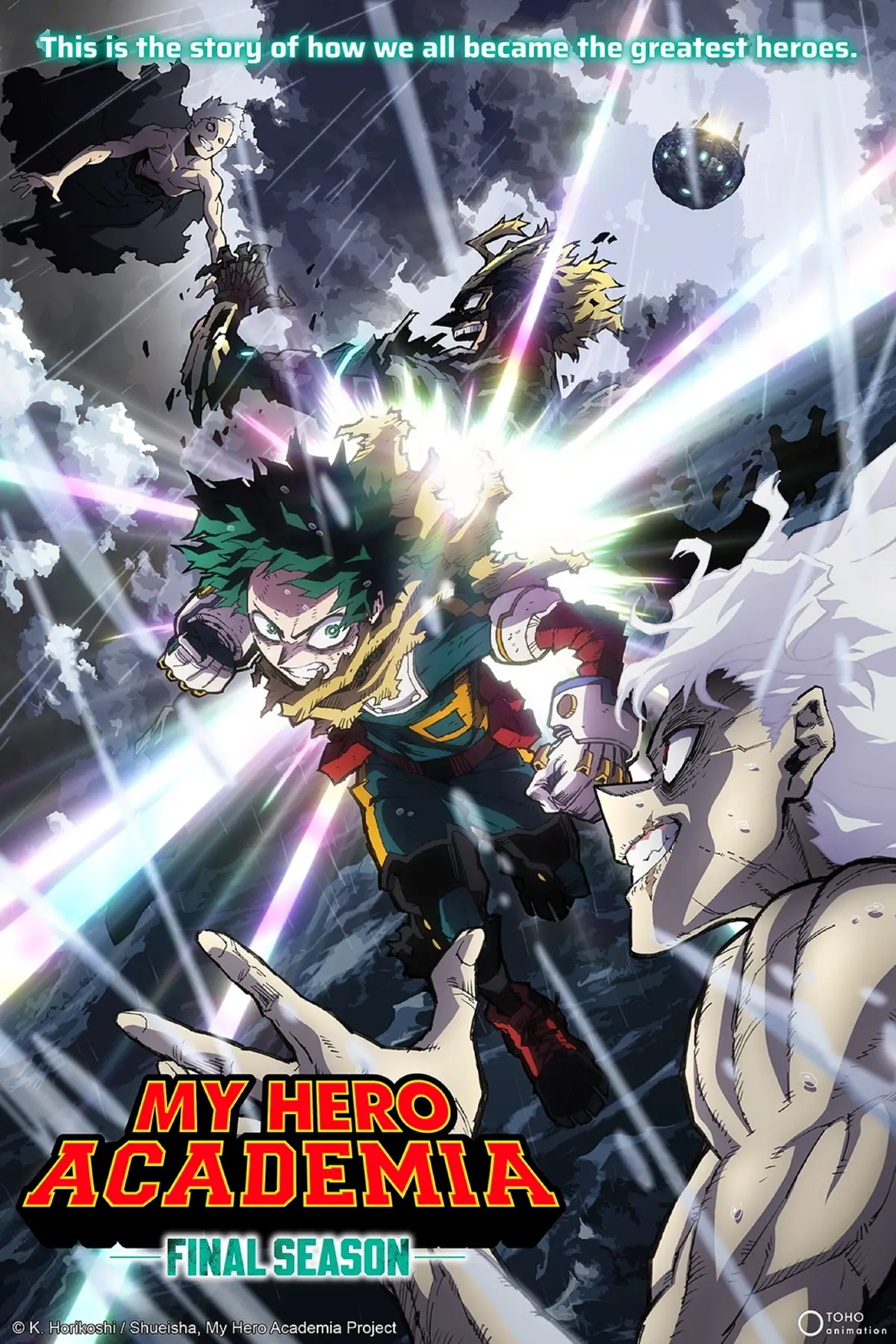
Opening in the middle of the final conflict is bold but initially slow. All Might's struggle to buy time feels like a held breath until Bakugo's return at the end of the second episode detonates the season. From his confrontation with All For One through Deku's victory, the run reaches some of the franchise's most exhilarating dramatic and visual peaks.
The familiar weaknesses remain: pacing slower than some modern action productions, extensive flashbacks and a tendency to explain attacks and feelings that the image has already communicated. The emotional peaks are high enough to survive the repetition, but the season rarely trusts momentum without commentary.
Shigaraki and the cost of explaining everything
Shigaraki remains one of the genre's most affecting villains: a damaged child produced by a society that failed to extend a hand. His meeting with Deku in their childlike inner forms returns the story to its emotional origin. Yet revealing that All For One engineered nearly every detail of his life weakens the tragedy's social meaning and reduces Shigaraki's own agency.
Deku's last gift is not power
The most controversial choice (Deku surrendering his power) is also faithful to who he has always been. His heroism preceded One For All; weakness made his empathy visible, and he shows no regret because the act matters more than the ability. Bakugo learning the truth in the hospital is one of the series' most painfully sincere scenes.
The final episode's new child on the edge of becoming another Shigaraki receives the hand the earlier boy never did. That small intervention expresses the real victory: society changes, not merely the scoreboard. Deku becoming a teacher and receiving a support suit from his classmates complete the idea that heroism is collective. Only the unresolved romantic thread with Uraraka feels conspicuously absent.
A studio at its emotional and visual peak
Direction moves intelligently between All For One's monumental scale and the intimate childhood spaces inside Shigaraki's mind. After Bakugo returns, animation becomes exceptionally fluid and forceful; the stretch of final-war episodes combines wide compositions, powerful effects and clear action while leaving room for quieter psychological passages.
The voice performances make the finale land. Deku is played through vulnerability rather than triumph, Bakugo's hospital breakdown avoids exaggeration, and Shigaraki's voice carries the fracture between the adult destroyer and abandoned child. Sound turns the theme into feeling: these figures are human before they are superhuman.
Final verdict
Final verdict
My Hero Academia ends, but its central promise continues: heroism does not require a superpower, only the courage to act when someone needs a hand. Deku's farewell is not a defeat; it is proof that the world's greatest inheritance can be an ordinary human gesture repeated by everyone who watched him.
AUDIENCE VOTE
Do you agree with the MB rating?
Choose once from this browser. You can change your answer at any time.