
The review
Screenplay and dialogue: justice in the service of ratings
The story takes place in Los Angeles in 2006 and centers on Chris Hansen, played by Robert Pattinson, the host of To Catch a Predator. The program uses people posing as teenagers to lure men suspected of attempting to have sexual relationships with minors. These men are then confronted on camera before the police intervene to arrest them.
At first, the idea seems straightforward: expose people who target children and reveal their behavior to the public. But the film looks beyond the program's stated purpose, focusing on how this mission became a television enterprise governed by competition, profit, and audience figures.

This is the central problem on which the film builds its critique. The question is not how much these men deserve moral condemnation, but how far a media institution might go when it grants itself the authority to lure, investigate, confront, and pass judgment before millions of viewers.
Some of the program's targets may have dangerous inclinations or have committed previous offenses. Yet the absence of criminal records and evidence sufficient to support major charges makes the legal situation more complicated. The program therefore risks destroying people's lives before courts have ruled on their cases, as well as exposing itself to legal consequences.
More troublingly, these complications do not seem to be a priority for the network's management. When executives decide to move the program into primetime, their principal motive is not to improve the handling of these crimes, but to compete with Lost and secure higher ratings.


Here, the film successfully lays out its contradiction: a program that claims to fight evil has become part of an industry that sells public outrage and scandal, constantly demanding more sensational cases to sustain its success.
The film does not ask us to sympathize with the program's targets. Instead, it makes us consider the danger of turning justice into entertainment, and the point at which exposing a crime becomes less important than the image presented to viewers.
Chris Hansen: a noble mission and compromised methods
Chris Hansen is one of the most interesting characters, because the film does not present him as someone who acknowledges the contradictions in his work or tries to reconcile his professional mission with its impact on others.
On the contrary, he seems entirely convinced that what he is doing is right.
We see him insist on repeating scenes until he gets the perfect shot, memorize the words of the men being lured in, and confront them on camera by reciting what they wrote in their conversations. For him, a successful encounter is not only about catching a suspect; it is also about how that suspect is presented to the audience.
Hansen's performance thus becomes a central part of the film's media critique. He appears not merely as a journalist seeking the truth, but as someone who enjoys standing before a bewildered guest once he has all the information he needs to humiliate him.
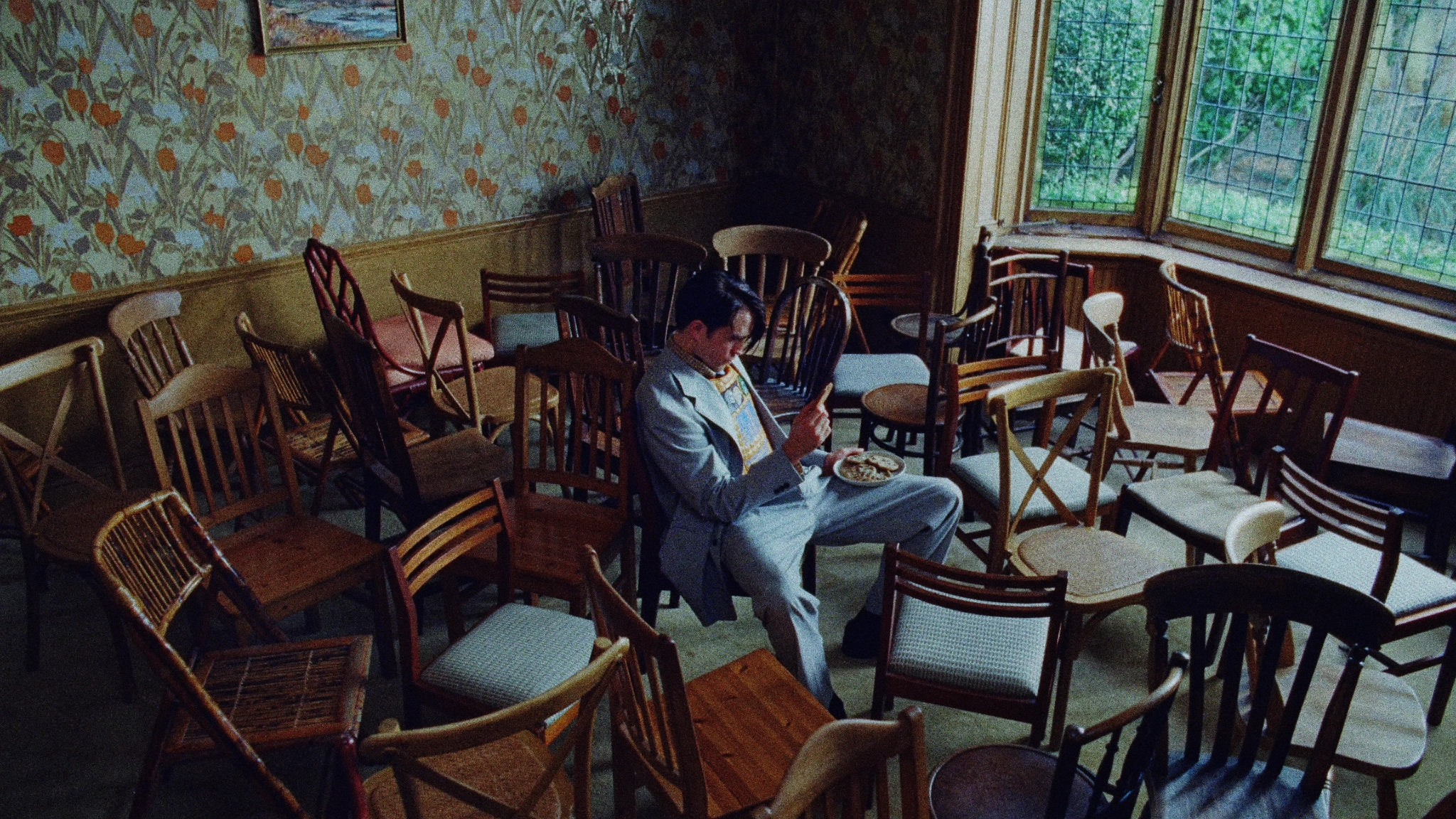
Ironically, Hansen does not believe he is caught in a moral problem. Instead, he draws on an earlier experience from his reporting work in India, when he dealt with a case involving missing children, and connects his current work to the idea of cleansing the world of an ancient evil.
This story offers an important way into the character. He does not regard his work simply as a television job, but invests it with a larger meaning, sometimes reaching an absolute conviction that he has an essential mission that must not be questioned.
The film subjects this conviction to a succession of tests, revealing that a sense of noble purpose does not necessarily guarantee sound methods.
The picture becomes more complicated when we learn that Hansen's private life is full of contradictions, and that his distance from his family and his extramarital relationship are affecting his family life.
This aspect could have added an important layer to the character, but it does not always fit convincingly into the central conflict. The issue is not that Hansen's contradictions are exposed, but that the film never quite makes his romantic life feel essential to the story it wants to tell.
Nor can marital infidelity be placed on the same level as the serious crimes the program confronts. The attempt to use this aspect as equivalent evidence of the character's corruption therefore does not entirely work.


Nevertheless, Hansen remains one of the film's strongest elements, particularly with the emergence of the mysterious image connected to his earlier story in India, which begins appearing around him as events approach collapse.
The film does not directly settle the nature of this image. Its presence, however, suggests that the evil Hansen speaks of is no longer merely something he pursues outside himself; it is also something drawing closer to him.
Dan Bloom: the opportunity and its human cost
On the other side, the film introduces Dan Bloom, played by Skyler Gisondo, a young actor trying to get a real opportunity in film and television.
Dan is not a professional journalist, nor does he have experience handling the dangerous situations the program creates. All he wants is to work, appear on camera, and fulfill his longstanding dream of joining the actors' union.
An invitation to work with Hansen and Andy Bender therefore looks like an opportunity that would be difficult to turn down.
Initially, Dan treats the job as an unusual acting experience and tries to use it to improve his performance. The trouble begins when he discovers that the role he is playing is unlike any ordinary acting assignment.
He must inhabit the character of a teenager, welcome men who arrive at the house believing they will meet someone underage, and become part of the confrontation the program stages.

As the experiences accumulate, Dan grows accustomed to the work, and his fear and sense of strangeness begin to fade. He becomes more concerned with his opportunities to appear before the audience and with what he can gain professionally from the experience.
Here, the film develops one of its most important dramatic threads: how can a person surrender part of his principles without feeling that he has made a major decision?
Dan does not suddenly become a different person. The change happens gradually, through his desire to prove himself, his need to please those in charge, and his conviction that this is merely a job that will help him achieve his dream.
His relationship with Hansen becomes particularly affecting when the latter tries to encourage him by saying that Dan reminds him of his son.
This moment exposes a dangerous aspect of their relationship. Hansen knows how to use words that make Dan feel valued and included, yet seems far less concerned with the experience's real effect on the young man.
Crueler still, Dan begins losing his moral hesitation as he feels increasingly accepted within the team.

Everything changes when events lead to the confrontation with Bill Conradt, the Texas district attorney whom the group considers its biggest and most important target.
When Hansen decides to take the operation directly to Conradt's home, instead of waiting for him to arrive at the prepared location, the pursuit turns into a tragedy. As the police approach, Conradt shoots himself before he can be arrested.
This moment is the real turning point for Dan.
He could treat the earlier confrontations as strange television situations. Now, however, he faces a devastating consequence that cannot be reduced to a successful scene or a sensational episode.
He leaves in a state of shock, while the others try to deal with what has happened, each in their own way.

A year later, we see him finally receive his actors' union membership card, the goal he has worked toward all along.
Yet this ending does not feel like a genuine victory. Dan has obtained what he wanted professionally, but emerged from the experience burdened by what he witnessed and participated in.
For me, this is where the film delivers its strongest irony: getting the opportunity you dreamed of does not necessarily mean emerging from the experience a better person.
An institution sustained by individual justifications
The film does not confine the problem to Hansen alone. It widens responsibility to include the people who help him keep the program running.
Andy Bender, played by Merritt Wever, is the producer managing the operation. She knows exactly how to turn confrontations into television capable of succeeding.
She is practical and intelligent, but judges decisions through the results they can deliver. She may talk about professional principles, yet when a choice affects her future, the program's success and her position within it become more important.
This contradiction emerges when she receives an offer to work on another program at a rival network and considers leaving Hansen because of his increasingly erratic behavior, before ultimately deciding to stay with him.

Her presence matters because the film does not portray corruption as the result of one man controlling everyone. It presents a system in which different people participate, each finding a personal justification for allowing it to continue.
There is also Xavier von Erck, who works with the program through a group that lures suspected offenders through online conversations.
Xavier strongly believes these people must be pursued and punished, but represents another face of the same problem: the desire for justice can become a reckless drive that makes a person feel above the safeguards that should govern his actions.
The three characters intersect in this way: Hansen wants success and validation for his mission, Andy wants to produce a successful program, and Xavier wants to pursue anyone he believes deserves punishment.
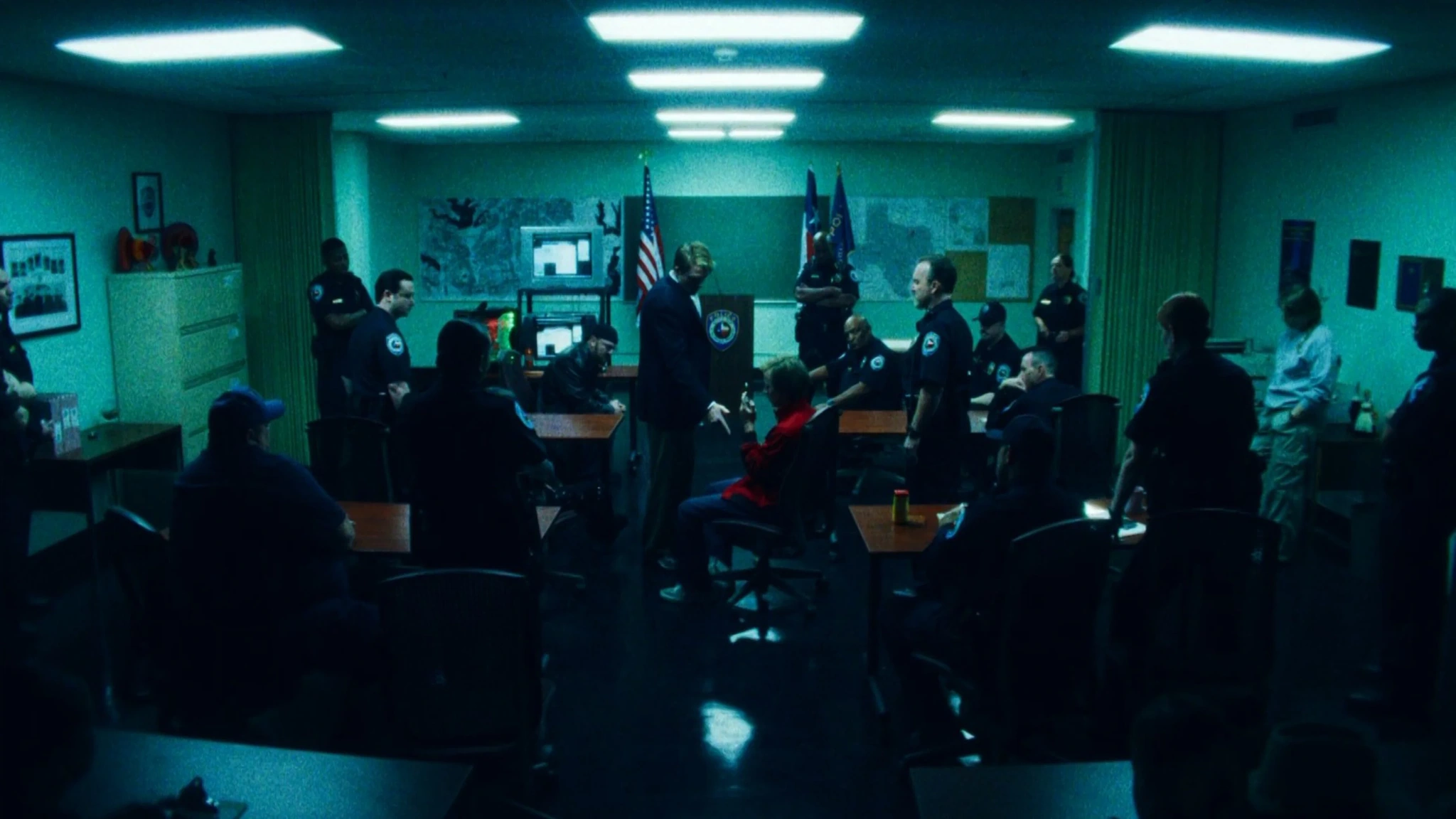
Dan, meanwhile, represents the person who enters this system without fully understanding its nature, only to discover too late the price that remaining within it can demand.
The performances: unease and gradual transformation
Robert Pattinson gives a striking performance as Chris Hansen, particularly in his ability to combine calm with strangeness.
There is something uncomfortable in the way he moves and speaks, and in the expectant looks that cross his face before he enters the confrontation site.
He knows how to present himself to the camera, yet seems less capable of behaving naturally in his private life. This contrast makes the character more convincing: we are not simply watching an arrogant television host, but a man beginning to confuse his media persona with a sincere belief in his moral authority over others.
Pattinson makes this character disturbing and frightening, with touches of black comedy that lend some of his behavior an oddness that is difficult to ignore.

The greater surprise for me, however, is Skyler Gisondo.
He gives Dan an essential human presence and makes the character's transformation clear without relying on exaggerated displays of emotion.
At first we see a young man eager for an opportunity, then follow the changes in his expression and behavior as he grows accustomed to the work. Silent moments reveal the hesitation he tries to conceal so that he will not lose his place within the team.

Merritt Wever plays Andy with a strong blend of professional confidence and coldness, successfully conveying the contradiction between the image she tries to project and the decisions she actually makes.
Matthew Maher adds a degree of intensity to Xavier, while Bokeem Woodbine makes a distinctive impression as the police chief.
Overall, the performances are among the main reasons the film communicates its ideas successfully. The characters are not all evil in the same way; each has a different way of justifying their participation.
Direction and image: the camera becomes implicated
The choice of director Lance Oppenheim, making his first narrative feature after working in documentary, gives the film a distinctive visual identity.
The image does not look clean or stable in the usual sense, despite the use of high-resolution digital cameras. Colors mingle and bleed, and details sometimes seem to come from a damaged old videotape.
This choice serves the story. We are watching a world in which the camera has become part of the process of surveillance, condemnation, and exploitation, until the image itself seems marked by the corruption surrounding it.

The cinematography also uses blue light in different settings, from device screens, swimming pools, and television sets to lightning during the storm.
The result makes these spaces feel strange and uncomfortable, as though the characters cannot escape the world of surveillance they have built for themselves.

Another striking choice is the emphasis on close-ups, allowing us to study the characters' expressions and reactions and feel the suffocation that accompanies their existence within this world.
Above all, the camera is not simply a means of recording events; it becomes implicated in the conflict itself. It is the instrument that gives Hansen his power and, at the same time, the means by which Dan feels that everything he does is turned into material for viewing and judgment.


This visual identity reaches its peak during the storm accompanying the final confrontation. Here, the film moves unmistakably toward Gothic horror, intertwining darkness, rain, and the threat that follows Hansen.
Some viewers may find this approach excessive or off-putting. It nonetheless gives the film a clear visual personality and distinguishes it from a straightforward reenactment of events from a television program.
Strengths and weaknesses
Primetime succeeds most in combining media criticism with a psychological story, rather than settling for a direct trial of its characters.
The film has a clear central idea: a system begins by claiming to fight evil, then allows its participants to justify their behavior because they believe the ends justify the means.
The performances of Robert Pattinson and Skyler Gisondo give the story its human strength, while the imagery and lighting create an unsettling atmosphere suited to the subject.

There are, however, real reservations.
First, Hansen's romantic storyline is not strongly connected to the rest of the film. At times, it feels like a side plot added to expose his contradictions without contributing much to the development of the central conflict.
Second, the film could have explored the legal and ethical risks of these sting operations more deeply. This question lies at the heart of the problem it raises and could have given the story an additional layer of depth.
The highly particular visual style and the film's heavy, disturbing subject may also make the experience difficult for some audiences, especially those looking for a conventional thriller built on direct suspense.
It is also important to approach the story as a dramatization inspired by real events, rather than a precise documentary reconstruction of everything that happened. The film omits, adds, and changes material to serve its vision, which may create inaccurate impressions of certain historical details.
Final verdict
Final thoughts
The film succeeds in its concept, treatment, and performances. Above all, it has a critical perspective that goes beyond merely exposing a television program or presenting a controversial figure. It is a film about corruption passing from one person to another, and about how institutions can lead individuals to surrender their principles gradually, as long as everyone believes they are working toward a greater goal. What I liked most was Dan Bloom's storyline. It gives the idea a clear human dimension, showing how the opportunity a person has awaited his whole life can become an experience that leaves an indelible mark within him. Robert Pattinson, meanwhile, provides one of the film's main attractions, and his uncomfortable, contradictory performance deserves attention. Some aspects could certainly have been integrated more effectively, and the legal dimension did not receive enough attention. Yet this does not erase the experience's distinctive qualities or diminish the power of its visual style. I do not consider it a film for every viewer, but it is worth watching for those who enjoy films that criticize the media and examine the complicated relationship between power, morality, and the desire for fame. My rating for the film: 8 out of 10.
Your turn
Now, a question for you: can crossing ethical and legal boundaries be justified when the goal is to fight people who have committed serious acts, or has justice already lost its meaning the moment it becomes a television show?
AUDIENCE VOTE
Do you agree with the MB rating?
Choose once from this browser. You can change your answer at any time.