The review
Silo 1: the heart of the system
The episode's greatest strength is the way it reveals the nature of Silo 1. We had treated the Algorithm as a mysterious force with enormous knowledge and control, but the truth is both simpler and more frightening: human beings stand behind the system.
More disturbingly, those people do not live like the inhabitants of the other Silos. Silo 1 has elevators, advanced technology and, most importantly, cryogenic rooms that allow certain people to continue for centuries while everyone else lives in comparatively primitive conditions.
That disparity is not merely visual or technical detail. It is central to the episode's idea: one class controls everyone while the rest of humanity lives inside a structure designed to stop them from learning the truth. Silo 1 is therefore more than a control center; it is the very heart of the system.

Troy was Daniel all along
One of the finale's best decisions is that the truth about Troy is not treated as a shallow twist. We discover that Troy is really Daniel and that his memory was erased, just as Charlotte became Susan. The important question is not the name, but what happened to the person Daniel used to be.
The man we see in Silo 1 has become cold enough to order the deaths of thousands without hesitation. That makes Troy one of the episode's most interesting characters because he is not a conventional villain who understands himself as evil. He is a person who has been completely rewritten to serve the system.
His memory was erased, his identity changed and he was assigned a role built around crushing rebellions with maximum violence. The episode therefore asks one of its strongest questions: What happens to a human being when his past is removed and he is redefined according to what a system needs him to be?
The Silo 17 massacre
The Silo 17 sequence is unquestionably the finale's cruelest passage. Troy treats the killing of thousands as a routine task to be executed with the greatest possible efficiency, and that banality is precisely what makes the scene so disturbing. The direction does not need him to scream or behave hysterically; his calm is far more frightening.
The thermal image through which we witness the operation increases the distance between the person issuing the order and those dying because of it. Troy does not see people; he sees numbers, a target and a problem to be eliminated.
The crucial contrast is Charlotte (or Susan) who hesitates to carry out the massacre while working under his command. She sees what is happening more humanely, proving that the memory-washing process has not made everyone identical. Something of the old person can still rise beneath the layers manufactured by the system.
Camille defeats the system through deception
By contrast, the episode gives Camille her best character development. She does not win with force; she wins through deception. She makes the Algorithm believe that the Raiders are carrying toxic material toward the mines when they are actually moving oxygen.
The moment proves that however advanced the system may be, it can fail when challenged from within. Camille exploits a clear weakness: its assumption that the people operating inside it will remain obedient.
Camille no longer believes, and her change feels logical because the finale does not abruptly make her a perfect hero. She reaches this point through the accumulated effect of what she has learned about the system and of Juliette and Bernard's influence on her.
The truth behind the Algorithm
Revealing the Algorithm's nature is one of the entire season's most important moments. Bernard suspected that a real person stood behind the curtain, and the finale confirms him. That is more interesting than the idea of an all-powerful artificial intelligence: the system was not governing people by itself; people were using its image to subjugate other people.
The altered voice, official language and authority to order death combine to create the impression of an entity greater than any human being. Once Camille discovers the truth, however, the system becomes something she can question, argue with and deceive, which is exactly what she does.
The episode therefore makes an essential point: sometimes a system's power does not come from being stronger than you, but from convincing you that it is stronger than you.
Victor's death
Victor's death will be one of the finale's most divisive choices. He has lost control: he failed to activate the Safeguard against Silo 18, learned that Camille had deceived him and then found Troy asking questions about the woman in his memories.
Personally, I did not feel much sympathy for Victor. The finale attempts a human moment as he looks at photographs of his family and a copy of Moby-Dick before ending his life, but that moment does not erase what he did. He was an essential part of a system that killed vast numbers, erased memories and controlled entire communities.
His end might have been stronger had he faced the consequences of his actions before those he harmed. Even so, his death performs an important dramatic function: it leaves Silo 1 in turmoil and opens the door for Daniel's return.
Juliette's deal and her new objective
The finale succeeds in giving Juliette a new purpose without forcing her to act illogically. When Troy offers a clear deal (do not contact the other Silos and the Safeguard will not be activated against you) Juliette agrees. But she does not agree because she has surrendered. She is lying.
She wants Silo 1 to believe that Silo 18 will stop resisting while secretly planning an attack on the source of the system itself. Juliette is no longer trying only to survive; she understands that the problem will not end while Silo 1 exists.
Even if Silo 18 survives today, the system may decide to eliminate it tomorrow. Bringing down Silo 1 therefore becomes her real objective and gives the fourth season a very strong starting point.

The Forward Vault door
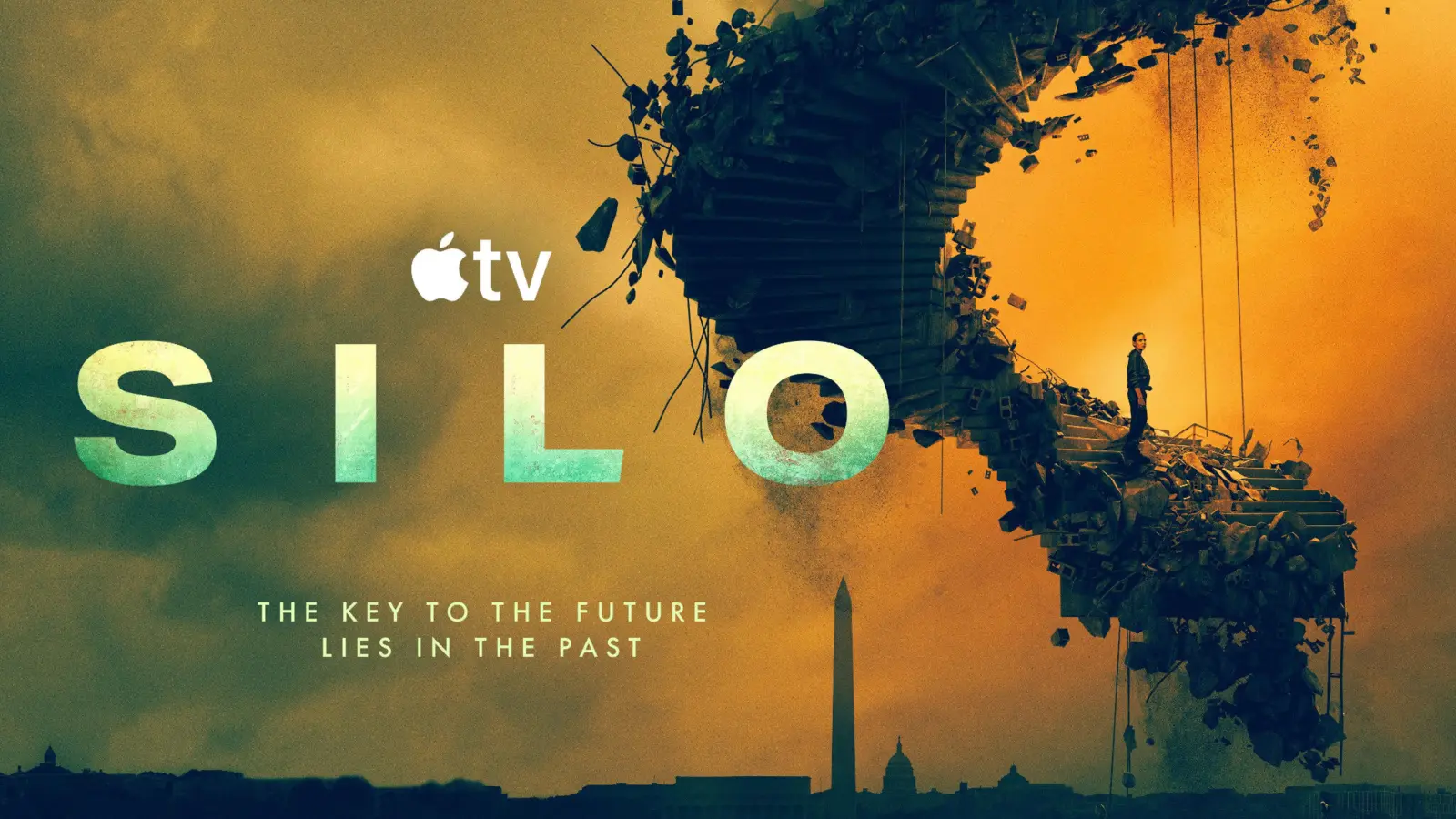
The finale leaves one of its largest questions for the last season: What lies behind the Forward Vault door? One possibility is a network of tunnels connecting the Silos to one another or leading toward Silo 1, but the episode wisely refuses to confirm it.
The show does not force an easy answer merely to close the episode. At the same time, the door creates enormous room for season four. If a route to other places exists, then the boundaries imposed on the inhabitants may never have been impossible; they were manufactured.
Reaching the door will not make the journey easy. Silo 1 controls technology, weapons and surveillance, so any attempt to reach it could turn into a genuine war.
Daniel remembers Helen
The finale's best closing beat is the moment Daniel remembers Helen's name. We have watched something inside him resist the memory wipe throughout the episode. He does not know the woman appearing in his dreams, yet he keeps asking about her, and Victor reveals that the same question has returned countless times over the years.
Daniel's memory becomes the system's weakness. They can remove information from his mind, but they cannot erase everything. When he learns that the woman is Helen, something inside him begins to return. Troy may be ending, and Daniel may be beginning again.
Importantly, the episode does not promise that he will suddenly become a good man. Daniel committed immense crimes during the years he lived as Troy. Even if he regains his memory, that past will not disappear.
Direction and quiet tension
Directorially, the finale depends more on quiet tension than constant action, which suits Silo perfectly. Silo 1 feels distinctly different from Silo 18: a more advanced place that is simultaneously colder and less human. It feels as though we have entered another level of the world.
The thermal imagery in the Silo 17 massacre is particularly effective because it reduces the people on screen to military targets, mirroring Troy's own gaze. The music also avoids dictating emotion. Tension comes from the situation, the waiting and the knowledge that the Safeguard counter is approaching zero.
That restraint makes Knox and Shirley's success more effective because the danger remains clear and immediate without exaggeration.
Pacing and the road to season four
The pacing will be one of the episode's most debated qualities. It contains major events but does not handle them like a conventional finale. The principal developments take time to begin, and some answers arrive quietly rather than as a barrage of shocks.
For me, that works because the episode is not designed to finish the story, but to change its direction. The only problem is that some questions remain so open that viewers may feel they were not given enough answers. Still, those questions are not random; all of them point directly toward the fourth season.
Final verdict
Final verdict
Episode ten succeeds at its most important task: making season three feel like the preparation for a much larger war. It is not the season's most eventful hour and it does not answer every question, but it completely rearranges the board. Silo 18 is beyond the system's control, Camille has joined the resistance, Victor is dead, Juliette has decided to target Silo 1 and, most importantly, Daniel has begun to recover his memory. The fourth season will not begin where the third began; the rules have changed. The question is no longer how Juliette will survive, but whether she and her allies can overthrow the system that has ruled the Silos for centuries. It is not a perfect ending, and its open questions are numerous, but it delivers a vital reveal, strong character development and a final season that now has the chance to be broader and more dangerous than everything before it.
Your turn
Will Daniel stand with Juliette and help bring down Silo 1, or is Troy still stronger? And will season four finally reveal the truth about the project and the Silos?
AUDIENCE VOTE
Do you agree with the MB rating?
Choose once from this browser. You can change your answer at any time.