
The review
Laurel and a Fear with a History
The appearance of an injured Jason and Amanda inside Laurel's house gives her an immediate test. She does not want to welcome anyone, but her nursing experience pushes her to save them before trying to explain their arrival. We begin to understand her through this action: someone who refuses to open her home can still take responsibility for a person who needs help.
As her past emerges, her isolation becomes more deeply understandable. The attack on Chicago began a political and social transformation that made dissent dangerous and turned suspicion of others into a means of survival. Rory's arrest, and his death before he even learned the specific charge against him, then made that danger part of her personal life.
The cruelest part of this background is the absence of clear boundaries. Laurel does not know what Rory possessed that made him a target, so she cannot feel reassured that her home contains nothing that could be used against her. When the rule is unclear, fear spreads to everything.
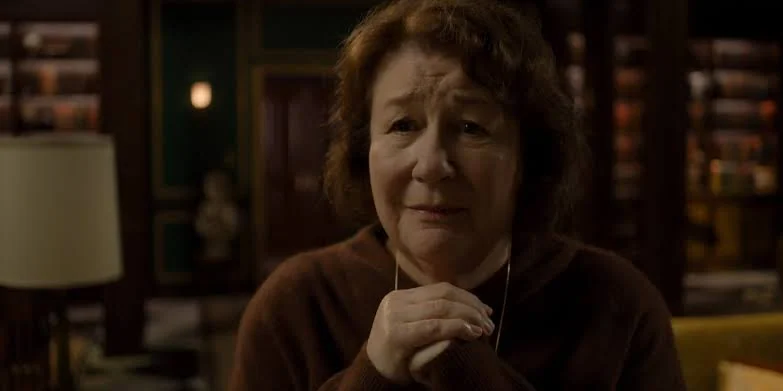
This gives the house its dramatic function: it is the space she tries to control after losing trust in the world outside. Even the calm Amanda sees outdoors cannot change Laurel's feelings, because what seems reassuring to a passing visitor carries a different memory for her.
The episode succeeds in presenting this history through its connection to her current behavior, keeping the political story tied to a woman in whom we can see its impact.
The House Changes through Its Guests
The best thing about Laurel's transformation is that it does not come from a sudden decision to leave the past behind. It begins with an exception forced by Amanda's injury, then expands as people enter the house, each carrying their own needs and losses.
Domestic details acquire a clear significance here. Replacing the couch and rug seems to Jason and Amanda like an expression of gratitude, but it requires strangers to enter the house, crossing the boundaries Laurel holds on to. The gift reveals that wanting to make someone happy does not necessarily mean understanding what makes them feel safe.
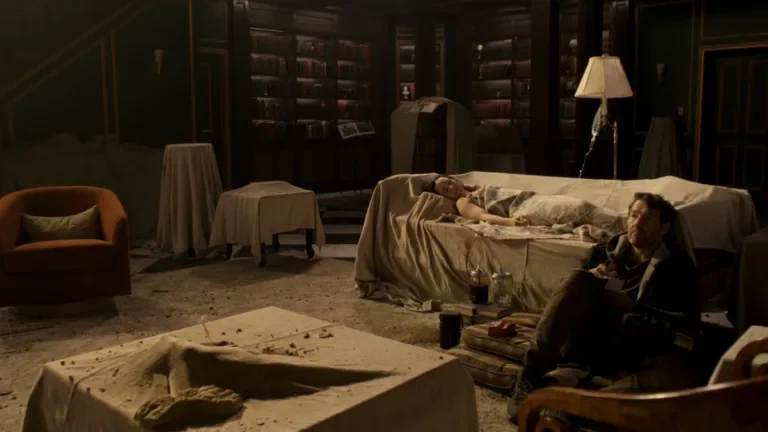
Then comes the frame Blair makes around the opening created by the Box. The damage remains, but its relationship to the space changes. This detail can be read as a concentrated image of what happens to Laurel herself: the disruption that invaded her life becomes something she can find a place for within it.
As the visits continue, the house becomes a meeting point. Laurel gives the travelers shelter, and they give her new reasons to move, care and wait for someone. Her walk around the neighborhood therefore feels like a small but meaningful development, following accumulated steps toward reconnecting with the world.

Margo Martindale's performance gives this arc its human center. The character holds fear and the capacity to care together, gradually allowing warmth to emerge without making her history seem as though it has disappeared. This coexistence of the wound and a new life makes the transformation convincing.
Jason and Amanda: Care Tests the Meaning of Choice
It is important to remember that we are following other versions of Jason and Amanda here. Their relationship forms under particular circumstances, and the time Amanda takes to recover becomes essential to understanding where they end up.
Jason wants to return to Daniela and Charlie, but refuses to leave Amanda when she cannot continue the journey. This moment confronts his desire with an ethical question: how far can reaching his family justify abandoning a person who has depended on him?
Connecting this choice to the kind of person he wants to be gives the multiple versions an important purpose. Sharing a name and a past does not prevent different responses. The version who takes over someone else's life and the version who delays his goal to stay beside an injured person reveal two ethical paths within the same premise.
But staying has a cost. The passage of time and missing his son's birthday prevent the sacrifice from becoming a comfortable decision without losses. He helps Amanda while feeling his old life slipping further away.
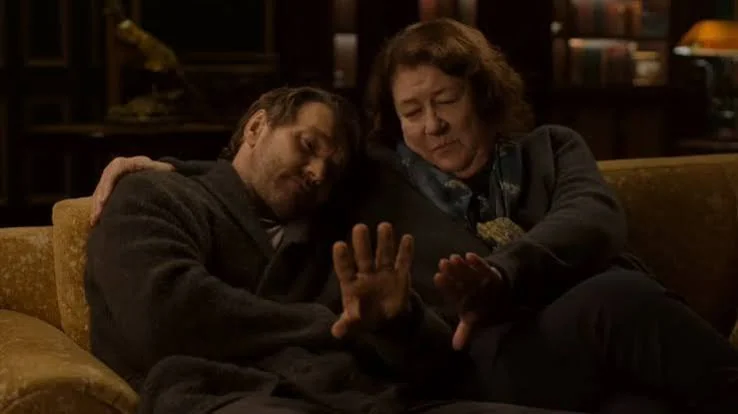
The relationship grows out of this tension. The episode gives it weeks and months of closeness and mutual dependence, allowing love to result from a shared experience. This matters because his emotional shift needs a foundation strong enough to match the bond still pulling him toward his family.
What works here is that care begins as a responsibility, then changes the person carrying it and what he wants from his life.
When the Destination He Wants Differs from the One Drawing Him In
The episode connects using the Box to the traveler's inner state and uses this rule to explain Jason's difficulty. He can declare his desire to return while his thoughts and feelings continue to gravitate toward Amanda.
Finding the right world therefore becomes connected to his ability to understand himself. The irony is that Amanda distancing herself in the hope of letting him focus on his family only strengthens her presence in his mind. Absence reveals the value of the relationship formed during the journey.
Amanda's decision to stay, meanwhile, gives her room to define what she wants. She chooses the possibility of building a life and leaves Jason free to continue his search. This keeps her from being confined to the role of a companion waiting for someone else's mission to end.
His final return, however, carries a complexity worth considering. Love draws him toward her, but there is also an exhausting journey and a supply of ampules running low. Settling down can therefore be understood as an emotional choice partly shaped by the limits of the reality available to him.
This complexity serves the story better than reducing it to a simple triumph of love. Jason has not reached everything he wanted, but has found a relationship that gives meaning to his future life. Some loss remains within the decision even as it opens a door to contentment.
The world they choose also retains its repressive history. The safety they find inside this house remains personal and local, giving their stability a degree of fragility instead of turning it into the promise of a perfect world.
An Episode That Gives Time a Purpose
The episode goes back almost two years and spends most of its running time catching up to the moment where the previous episode ended. This structure gives it a clear challenge: making the wait to discover whom Laurel will introduce to Charlie a journey worth its time in its own right.
It succeeds because the past changes our understanding of the character and the place. Every guest gives Laurel's knowledge of the travelers a clearer foundation, and the house we eventually enter becomes the result of a history of encounters.
The passing weeks and months also give recovery and the romantic relationship room to grow. If these changes were compressed into one explanatory scene, we would know what happened but lose the sense of the time and patience it required.
In terms of spatial construction, the house carries much of the story. Medical care, furniture, an old photograph and the opening in the wall become ways of showing change. Staying close to this place gives the relationships an opportunity to occupy the center of attention.
This pause has a cost for the season's pacing because it postpones returning to storylines left under pressure. Viewers waiting for them to continue may feel that the episode has moved away from their urgent questions. I find the pause worth its time, however, because the story deepens our understanding of the central idea and gives the final meeting its weight.

Charlie Meets a Father Who Lived Another Possibility
When we return to Charlie entering Laurel's house, we meet a version of Jason who could not recover his family. This difference gives the meeting its meaning: the embrace brings together two people who each recognize something they miss in the other, while the distance between their lives remains.
For Jason, it is a chance to see a version of the son he has been absent from. For Charlie, there is a familiar face who can speak to him about his journey. The scene therefore depends on more than the surprise of identity: it depends on the need each person brings to this moment.

Jason's response to the search for Max fits his experience. He knows what it means to hold on to someone absent, so he encourages Charlie to keep looking, while clearly asking him to return home afterward.
This advice preserves the tension rather than offering easy wisdom. His own experience led him to settle in another life, but he gives Charlie room to pursue his journey while reminding him that there is a life he should return to.
As for Jason's words to Amanda about going home after Charlie leaves, the context suggests that he means the home they have chosen in Laurel's world. The word changes its meaning here: the place that began as a stop for treatment has become the center of a new life.
Charlie's fate remains open. The meeting gives him an emotional boost, but guarantees neither finding Max nor returning safely. That distinction lets the ending retain both curiosity and anxiety.
Strengths and Reservations
The episode's greatest strengths are Laurel's characterization and Margo Martindale's performance, giving Jason and Amanda's relationship enough time to justify its development, then using that history to strengthen Charlie's meeting. The main reservation concerns where this pause falls within the season and its postponement of storylines viewers are waiting to see continued.
Final verdict
Final verdict
Episode eight offers a mature and moving treatment of the series' premise, succeeding because its journey changes the meaning of the characters' choices. It gives home, care and waiting enough dramatic value to sustain a full hour, and will resonate with viewers who find in this science fiction a question about the life we can build when we cannot recover what we have lost. What remains is the sense that finding somewhere to stay may be easy compared with deciding to call it home.
Your turn
Did Jason choose Amanda because she had become his home, or did his diminishing chances of returning help him make peace with an alternative life?
AUDIENCE VOTE
Do you agree with the MB rating?
Choose once from this browser. You can change your answer at any time.