The review
A retired hero who buried more than a suit
Ben Reilly is not searching for glory. He replaces heroism with a cold office and minor cases, burying his suit as though he were burying the emotional part of himself capable of answering another person's need. The pain is not decorative backstory; it determines every decision.
The retired-hero premise is familiar, but the emotional sincerity gives it weight. The opening episodes are slow and occasionally hesitant, yet that hesitation lets us understand why returning is not an exciting opportunity for Ben but a reopening of a wound.
A web of cases, crime and experiments
The missing-man case, Cat Hardy's history, Silvermane's ascent and the appearance of super-powered victims gradually connect inside one web. This layered structure creates continual curiosity because seemingly separate stories acquire meaning as they approach one another.
The middle of the season suffers from accumulation without enough movement. More threads are introduced while few reach a decisive turn, creating the sense that the circle is widening instead of approaching its center. When the pieces finally meet, the slow preparation gains value, but the route remains uneven.
Ben Reilly and the burden of choice
Ben is the season's most mature character because his conflict is not between courage and fear but between escape and responsibility. His decisions feel human before they feel heroic, giving the mask credibility it would not possess through action alone.
His final decision not to use the cure on himself is the clearest expression of that identity. He knows the choice may condemn him to loneliness, but gives other people the possibility of ordinary life. The moment is quiet rather than triumphant, and that restraint makes it emotionally persuasive.
Cat Hardy seeks freedom on her own terms
Cat is not reduced to a seductive accessory. Her history with Silvermane gives her a powerful need for autonomy and makes even her harsh choices emotionally legible. She operates as a parallel to Ben: both are trying to escape identities other people imposed on them.
Silvermane's death at her hands supplies a satisfying piece of poetic justice. The villain himself, however, remains comparatively conventional: powerful and threatening, yet without the psychological depth that would make him equal to the wounded characters around him.
Power is treated as a curse
Sandman, Tombstone and Megawatt are presented as victims as much as antagonists. Their abilities are not fantasies of liberation; they are conditions the characters would surrender for the chance to become ordinary again.
This reversal is one of the show's best philosophical ideas. It pulls the superhero material toward human drama and asks whether power has any value when it isolates its owner from the possibility of a normal life. Not every character receives equal development, with Megawatt in particular feeling less complete than the others.
Noir direction that whispers instead of shouting
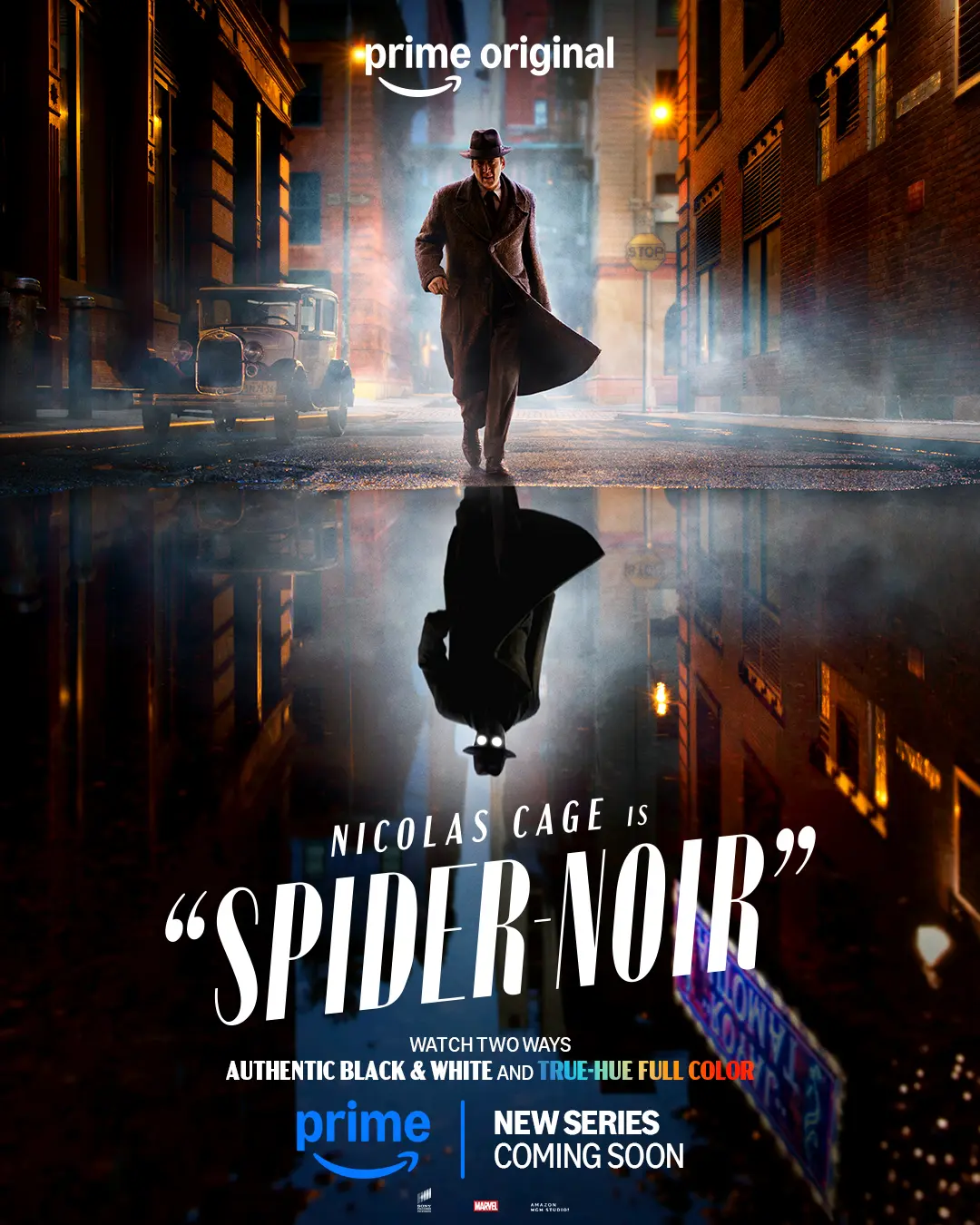
The direction favors controlled atmosphere over spectacle. It wraps the superhero premise in psychological noir, allowing heavy moments to arrive quietly and remain rather than exploding into constant action. That artistic confidence gives the season a distinctive soul.
The same commitment sometimes burdens the pace. Several scenes hold the mood beyond the point where tension continues to grow, as though the direction loves the feeling too much to cut away. Depth and delay become difficult to separate.
Cold light, narrow frames and wet streets
The camera uses close, compressed angles that trap characters inside their crises. Low light, cold color and deep shadow describe emotional states before they describe locations, producing a coherent visual identity across offices, alleys and interiors.
Occasionally the darkness becomes too literal and practical clarity is lost. The image hides more than the drama requires. Still, the offices, narrow rooms and wet streets work as extensions of isolation rather than generic noir decoration.
Performance and editing survive the uneven middle
The lead performance communicates conflict through looks and silence before dialogue, while Cat balances strength and vulnerability convincingly. Several supporting roles are more conventional, creating occasional gaps in the credibility of the world.
The editing alternates between elegant restraint and indecision. Quiet sequences flow effectively, but the middle contains scenes that continue too long and others that end before their emotional beat lands. The final stretch recovers enough control to guide the climax with confidence.
Final verdict
Final verdict
Spider-Noir is not perfect, but it is sincere and willing to treat superhero mythology as human tragedy rather than pure spectacle. Its tangled structure and slow middle occasionally weaken momentum, Silvermane is a conventional villain and some powered characters remain underdeveloped. Yet Ben's emotional conflict, Cat's pursuit of freedom, the noir direction and the idea of power as isolation leave a genuine mark. This is a story about a man who does not seek heroism but cannot stop heroism from demanding him, a city too exhausted to dream and a gift that postpones pain rather than curing it.
Your turn
Did the slow noir approach give Ben Reilly the depth superhero stories usually miss, or did it hold the season back?
AUDIENCE VOTE
Do you agree with the MB rating?
Choose once from this browser. You can change your answer at any time.