The review
Screenplay and dialogue: a dream rooted in childhood
One of the most valuable aspects of Tenzing's story is that it does not begin when he is already a professional climber. It returns to his childhood, when he stands on a high ledge in the Tibetan mountains, gazing at Everest and dreaming of one day reaching its summit.
This opening establishes the meaning of the journey. We are following more than a man who decides to embark on a new adventure: this is someone who has carried a dream since childhood and spent years trying to approach it despite the circumstances standing in his way.
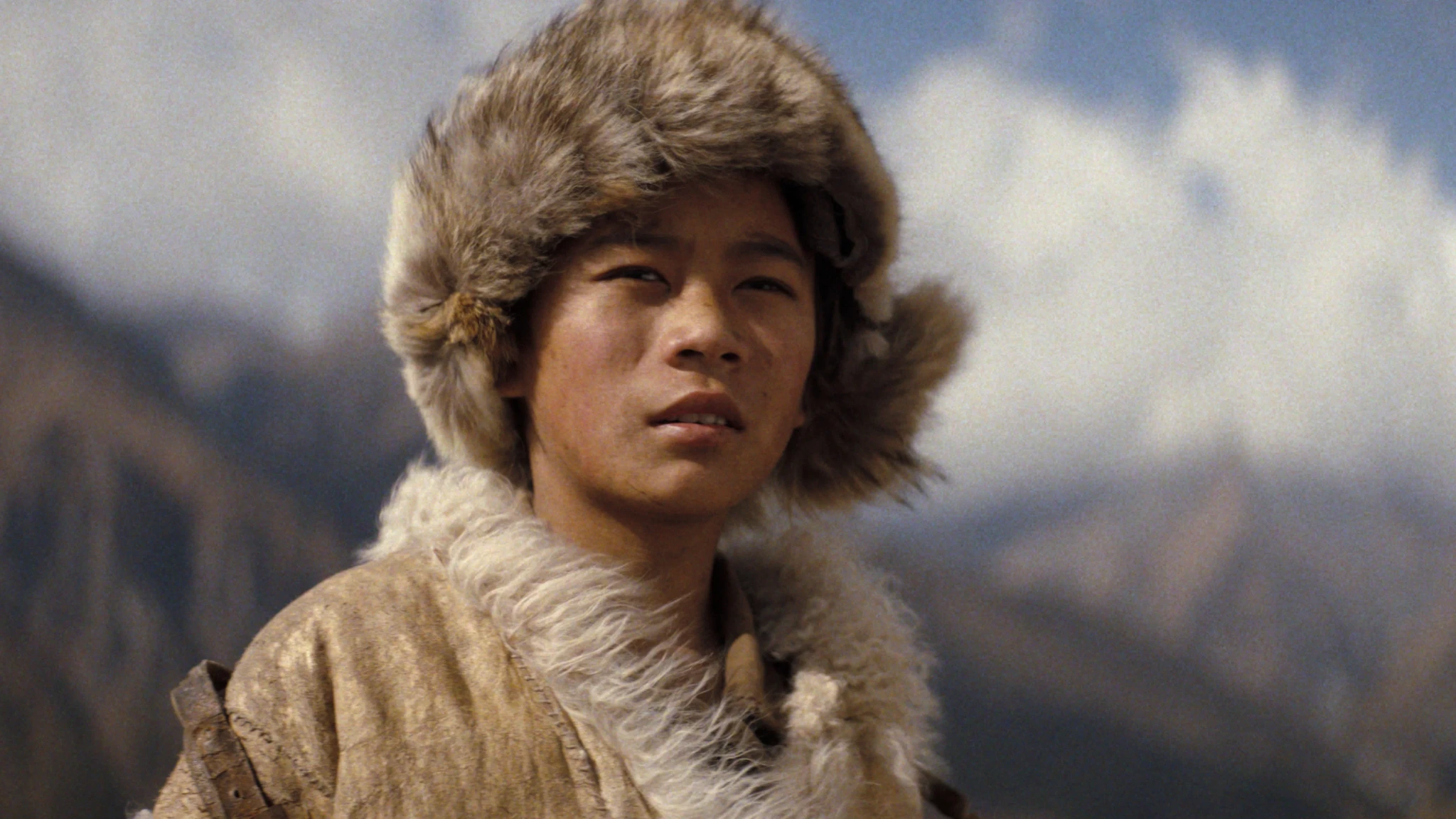
The path towards that dream is far from easy. Tenzing faces family difficulties as a child, grows up away from his parents and works in a farmer's household before moving to Darjeeling as a young man in search of an opportunity to join climbing expeditions.
Here lies one of the character's most important dimensions. Tenzing wants more than to reach the summit. He also needs to find a place in a world that does not readily acknowledge his abilities or always give him the opportunities he deserves.
The film could nevertheless have devoted more time to this period and its effect on his character. The transition from a child dreaming of the mountain to a man confronting the world in order to reach it offers considerable dramatic potential. Passing through important stages of his life, however, does not always give us enough time to understand the changes that have made him the person we see on the expedition.
Instead of becoming an integral part of the character's development, his childhood and early experiences sometimes feel like information needed to explain his motives, rather than a human experience whose details we inhabit and whose impact we feel.
This does not diminish the importance of the story itself, but it exposes a problem with its presentation. The material is rich, yet the film does not draw out everything it could offer dramatically.
Identity and recognition of expertise
Tenzing's obstacles go beyond the difficulty of climbing Everest: his struggle begins before he reaches the mountain, when he seeks a real opportunity to take part in climbing expeditions.
He encounters doubts about his identity and his membership of the Sherpa community because of his upbringing in Nepal and his lack of documents establishing his background. While Western climbers seek people with the right experience, Tenzing finds himself having to prove that he deserves even to enter the competition.
He tries to improve his chances through simple measures, learning a few English phrases so he can communicate with those making the selections and cutting his hair after noticing that long hair does not help applicants gain acceptance. Eventually he obtains a place on a British expedition, but as a porter rather than as a climber on equal terms with the rest of the team.
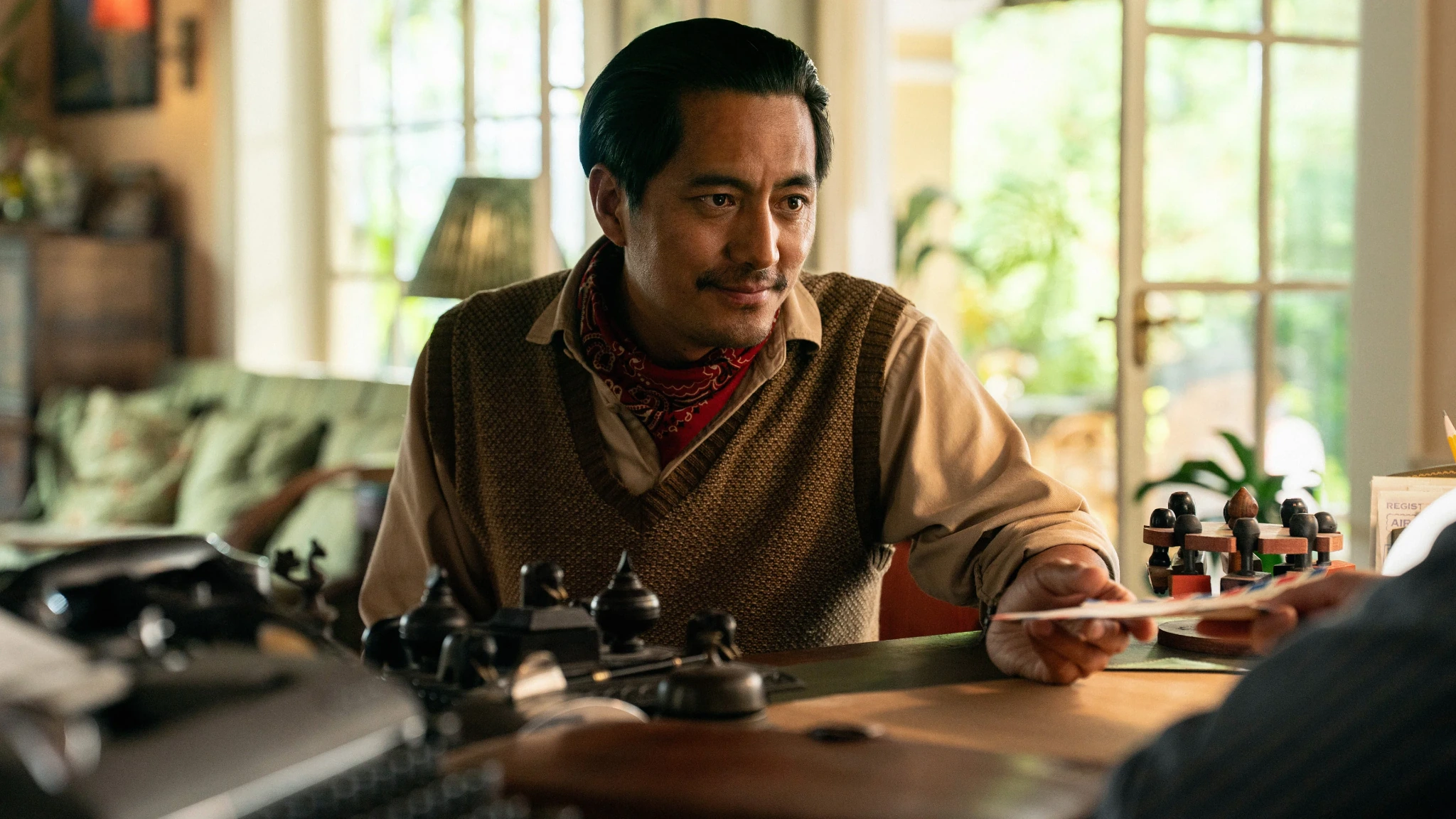
These details matter because they reveal the difference between possessing ability and receiving recognition for it. Tenzing has real mountain experience, but that does not guarantee that he will be treated as a climber entitled to help make decisions about the ascent.
The situation becomes more complicated because rejection comes from more than one direction. Western climbers question him, while he also struggles to belong within his own community, which sometimes regards him as someone attempting to distance himself from his roots.
I consider this one of the story's strongest elements, because it connects reaching Everest with a struggle broader than overcoming nature alone. Tenzing is trying to do more than reach a high place: he seeks recognition for the value of his experience in an environment that does not readily grant him equality.
The film needs to deepen this conflict by developing the relationships and situations around him, so that repeated obstacles do not become a predictable means of pushing the plot forward. Each new rejection has little dramatic value unless it reveals a different side of the character or changes the way he deals with the world.
Dawa and the life waiting beyond the mountain
The film attempts to connect Tenzing's journey with his personal life by returning to his relationship with Dawa, who shares his concerns about the future and his uncertainty over whether he can realise his dream.
When he proposes moving to Darjeeling to find work on climbing expeditions, Dawa does not embrace the idea as a guaranteed adventure. She understands that life requires an income, and that desire alone will not provide what they need if his plan fails.
She nevertheless gives him her support, and the two move in search of a new opportunity.
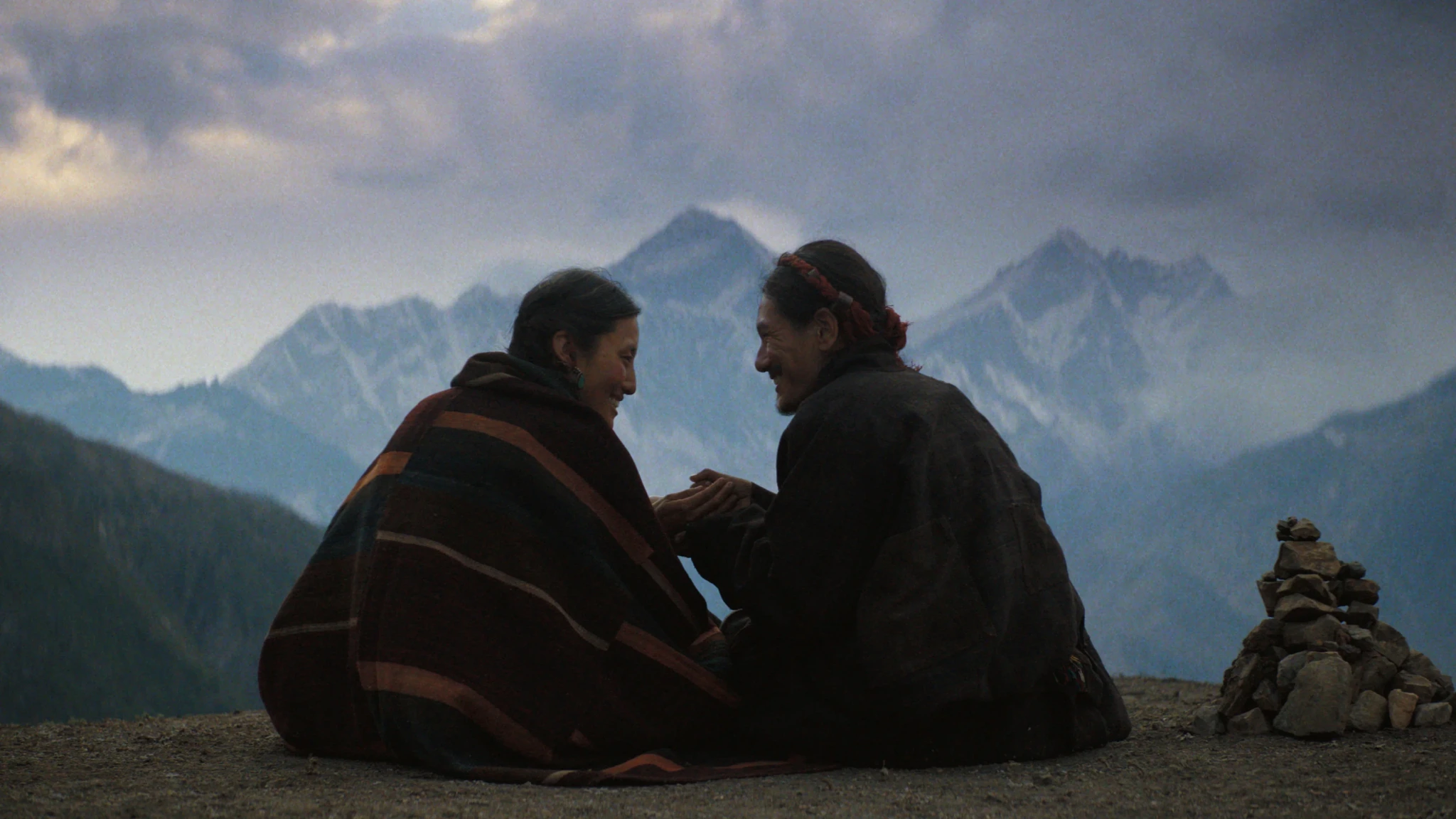
This relationship should have given the mountain expedition a deeper human dimension. Tenzing is risking more than his own life: his undertaking is also tied to the people waiting for his return and the future he hopes to build with them.
The problem is that the film does not give the relationship enough time to become a strong emotional foundation. There are understandable motives and a shared past that ought to be affecting, but the available dialogue and details do not provide the depth the relationship needs.
As a result, its impact does not always reach the necessary level when Tenzing faces difficulties during the ascent. We understand that Dawa is an important part of his motivation, but understanding a relationship's importance is not necessarily the same as feeling its strength.

This is a fundamental distinction in dramatic treatment. It is not enough for a film to tell us that someone matters to its protagonist. It needs to construct situations that allow us to feel the nature of their bond and what the protagonist might lose if he does not return.
This part of the story deserved a quieter, more detailed treatment, instead of leaving the relationship in the background and expecting it to give moments of danger great emotional weight on its own.
Tenzing and Hillary: friendship and performance
During the expedition, Tenzing's relationship with New Zealand mountaineer Edmund Hillary develops as they climb towards the summit together. As events progress, their cooperation becomes a friendship that continues beyond their achievement.
This relationship is one of the film's main pillars. It brings together two people with different backgrounds and circumstances who need to work together in the face of danger.
It is also an opportunity to show the change that can take place when two people must rely on one another in conditions that leave no room to dispense with the other's expertise or underestimate its importance.
The film, however, does not give the friendship enough dialogue and shared situations to make its movement from cooperation to a deeper bond feel natural and affecting.
We know that the men grow close and understand that the expedition brings them together against shared difficulties. Yet the relationship itself does not always receive the details that would make viewers feel they have actually witnessed its development, instead of inferring it from the course of events.
Here I see the problem as one of execution rather than of the underlying idea. Tenzing and Hillary's friendship has a strong foundation and could have become one of the film's greatest strengths if it had received more space to reveal their differences and the ways they deal with danger and responsibility.
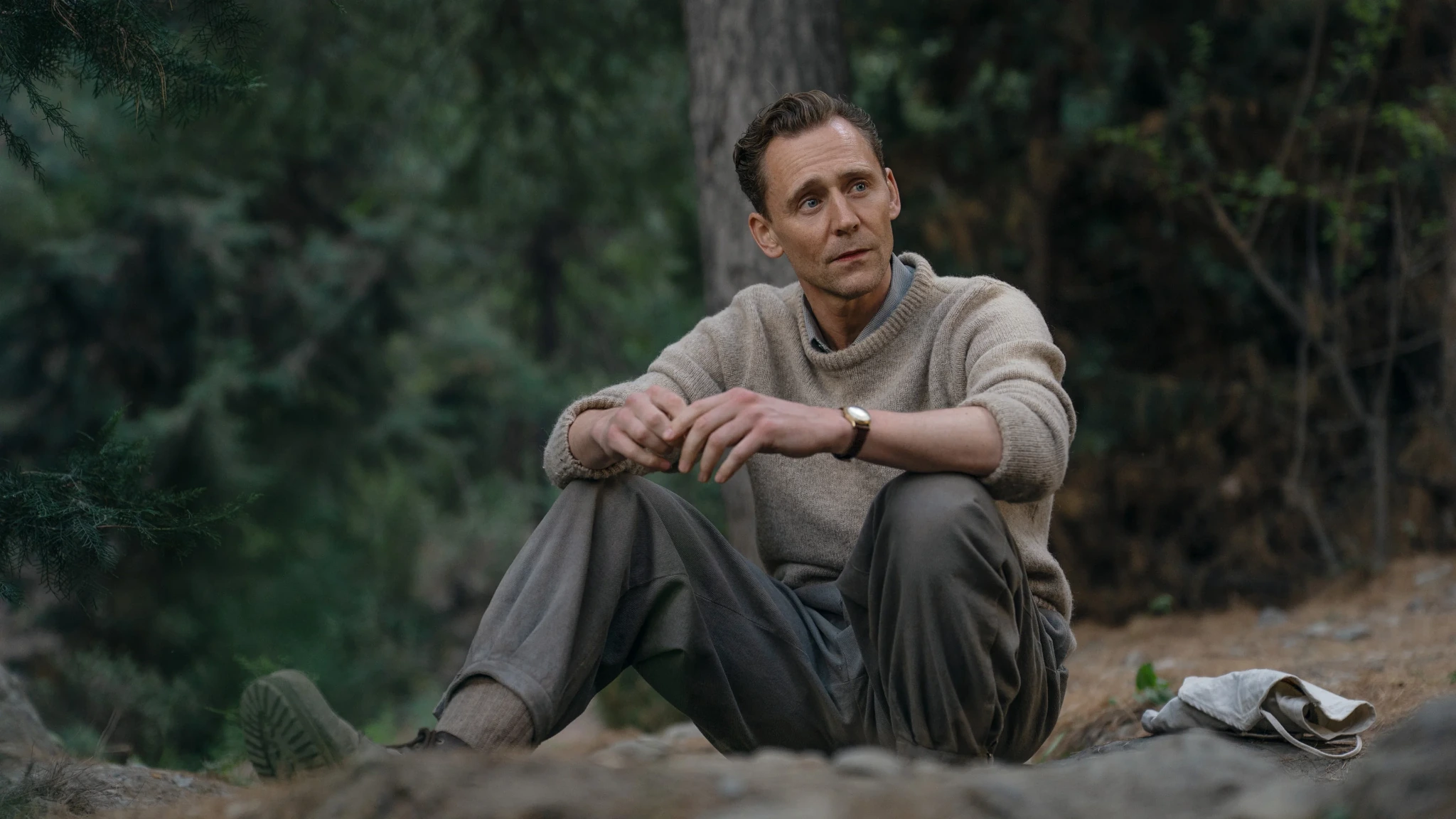
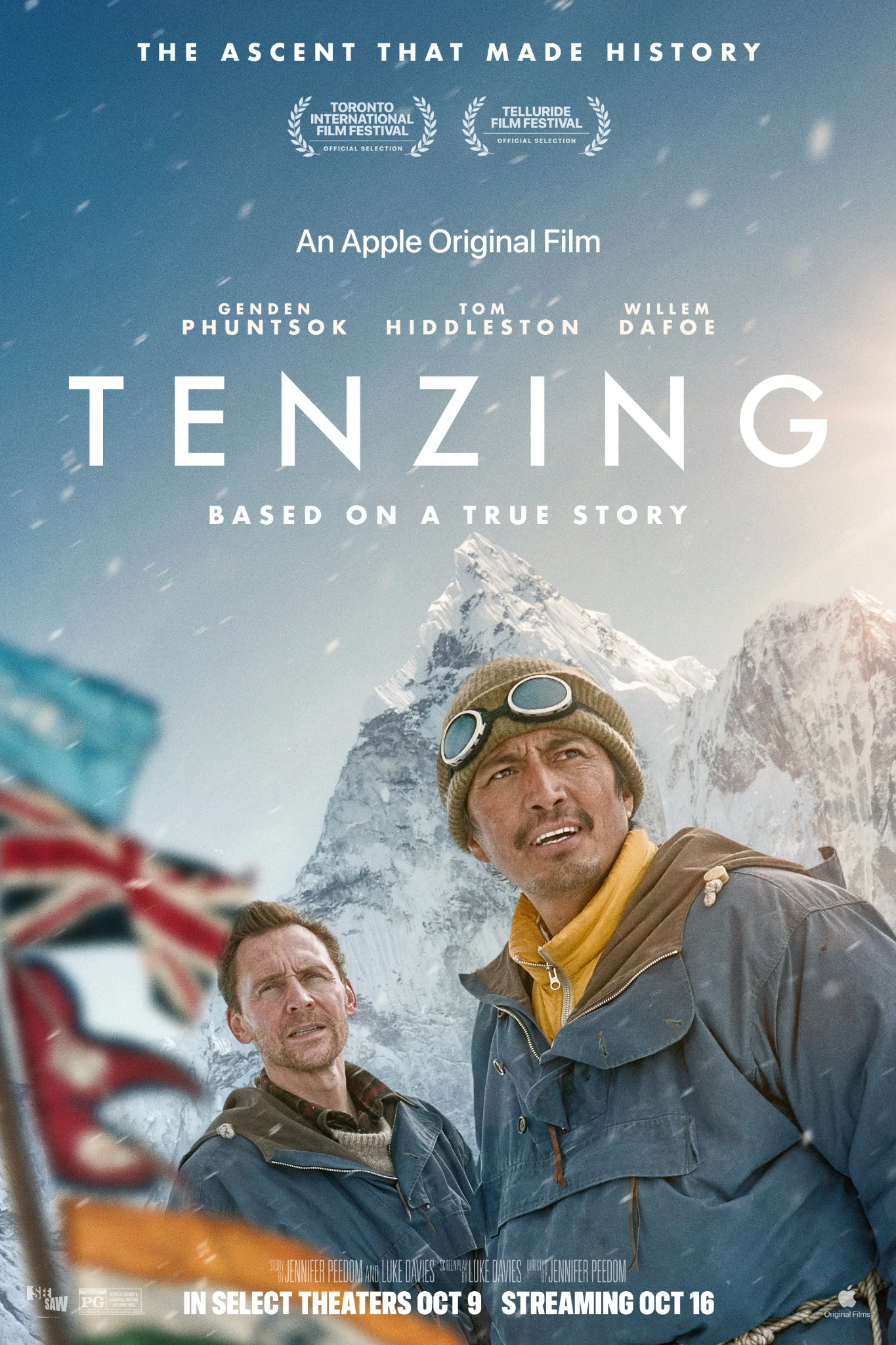
The performances nevertheless compensate for part of this shortcoming. Genden Phuntsok plays Tenzing with warmth and restraint, giving him a human presence that encourages our attachment, while Tom Hiddleston relies heavily on expressions and glances to convey the development of Hillary's feelings towards his companion.
Both actors perform well, particularly given that the writing does not always supply enough dialogue to develop the relationship. Yet no matter how expressive they are, they cannot compensate for everything missing from the dramatic construction. A performance can deepen a well-written moment, but it cannot always create an entire history of growing closeness that the screenplay has not made room for.
John Hunt: leadership, opportunity and national ambition
The expedition gains another source of conflict through John Hunt, the leader of the British team, who treats climbing Everest as a mission requiring discipline, organisation and the ability to overcome obstacles.
A leader with this outlook gives the team a clear direction, but also exposes a problem with the expedition's priorities. Reaching the summit is more than a test of the climbers' abilities: it also depends on the leadership's decisions and on how opportunities and responsibilities are distributed.
This becomes clear when Tom Bourdillon and Charles Evans receive the opportunity to attempt the summit before Tenzing and Hillary, even though the latter pair possess the experience and ability that would make their selection logical.
The decision reveals the influence of national considerations on an achievement that should have rested on the climbers' competence and readiness. The leader who needs Tenzing's expertise does not necessarily grant him the same standing he grants the British participants.
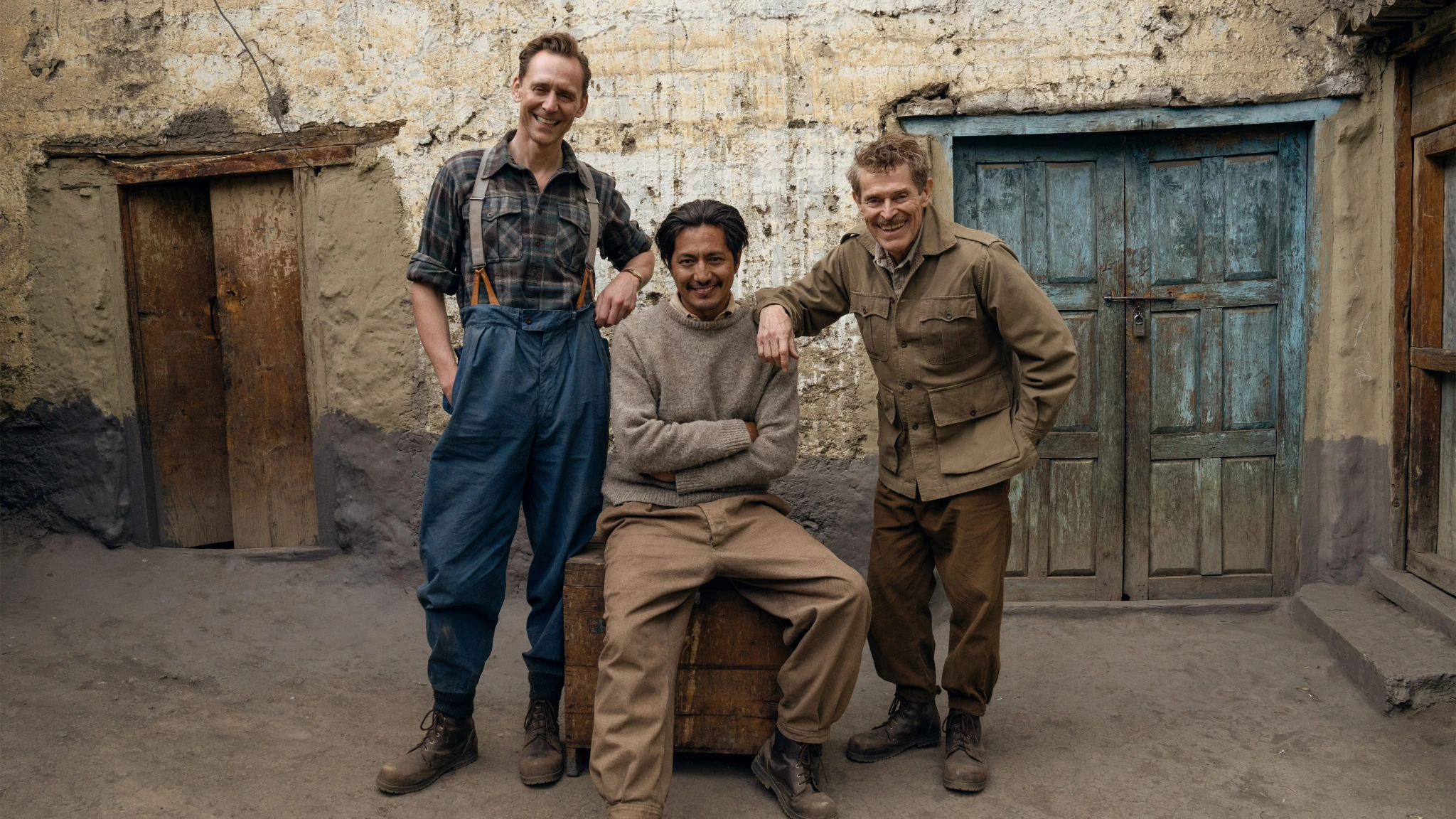
This gives the story an important conflict. A character who needs to prove his worth faces more than the mountain: he also confronts human decisions that may determine who gets the chance to achieve the goal.
The conflict could nevertheless have been stronger if the film had explored the characters' motives and the consequences of their decisions in greater depth. Discrimination in selection is an affecting dramatic element, but it requires development that lets us feel its impact on Tenzing and the nature of his predicament.
John Hunt functions as a leader focused on completing the mission, but the treatment does not always give him enough complexity to go beyond the role of the stern commander driving the team towards its objective.
The struggle between expertise, authority and national ambition therefore remains promising, but the film does not make full use of its potential.
Direction between familiar adventure and emotional impact
The direction follows a familiar pattern for sporting adventure films: a team faces disagreements, seemingly impossible obstacles and a relationship developing under pressure, followed by repeated attempts to reach the goal.
There is nothing inherently wrong with this structure, particularly when the story lends itself to it. The problem arises when events become predictable and the direction adds little that makes the situations different or more affecting.
The film knows which ingredients it needs to generate tension, but it does not always turn them into a coherent dramatic experience. Moving between the ascent, memories of Tenzing's childhood and his relationship with his wife should connect the immediate danger with his personal motives. Yet this parallel structure does not give every storyline equal emotional weight.
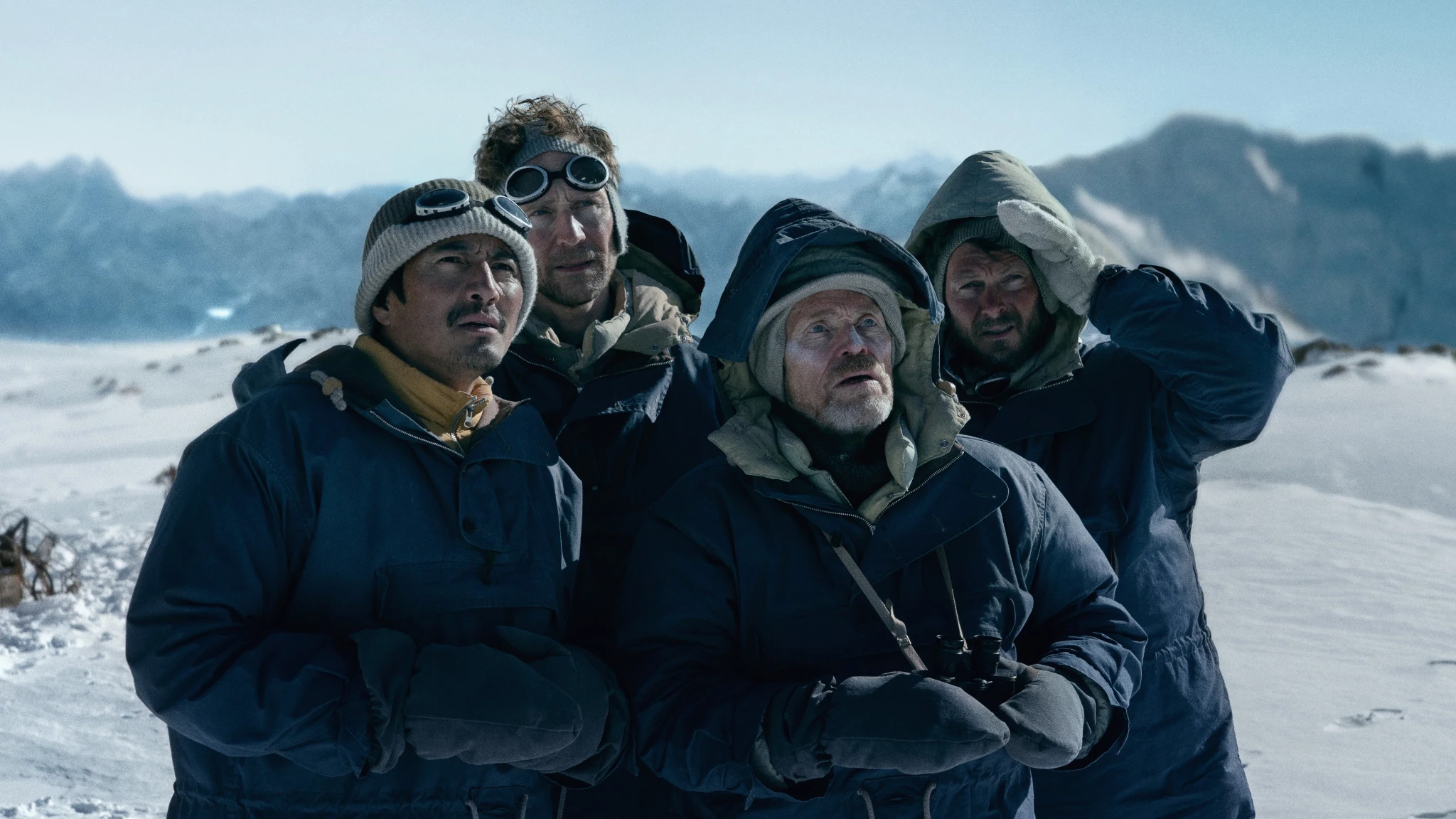
At times, the film seems to rely on the magnitude of the event to produce emotion instead of gradually building that emotion through the characters and their relationships.
This matters because viewers may understand the difficulty of reaching the summit without feeling equally close to the people risking their lives to get there.
Its reliance on familiar adventure-film elements also makes the story easy to follow, but limits its ability to offer a treatment with a distinct personality. An exceptional story needs a narrative approach capable of bringing out what makes it particular, rather than simply passing through the expected stages on the way to its ending.
Cinematography: the scale of Everest and the human figure
If the film struggles to develop some of its relationships, its photography of the natural world is an unmistakable strength.
Stefan Duscio's camera gives us expansive images of sheer slopes and uses angles that emphasise the mountain's height and the vastness surrounding the climbers. Avalanches and other dangerous moments also give the expedition a visual presence that helps us understand the scale of the team's challenge.
The cinematography does more here than offer beautiful scenery. When the climbers appear within these immense spaces, their small size in relation to the mountain becomes part of our sense of danger.
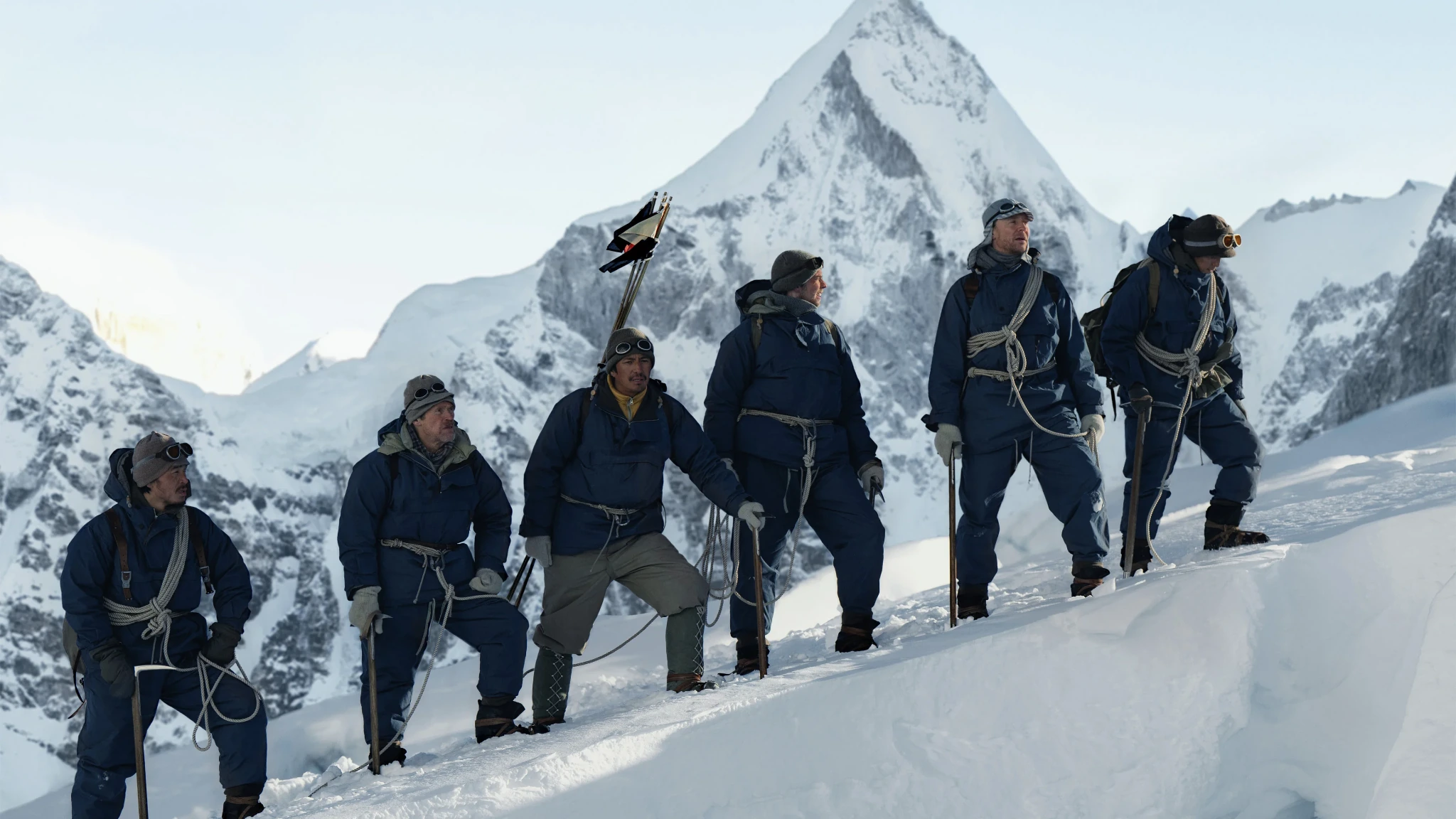
The disorienting angles in certain moments and the breadth of the landscapes also help convey the difficulty of moving through an environment that offers the characters few safe options.
The film's energy becomes especially clear when the group encounters problems during the ascent. In these moments, danger becomes tangible and the journey acquires a degree of tension that the scenes built around dialogue and relationships do not always achieve.
Visual accomplishment, however, does not solve the central problem. An image can make the mountain frightening and majestic, but it cannot, on its own, make every human relationship within it moving.
The contrast is consequently clear between nature's powerful visual presence and a dramatic structure that delivers less emotional impact than we expect.
Reaching the summit: fulfilment and its emotional limits
After Bourdillon and Evans fail to reach the summit, Tenzing and Hillary receive their opportunity to continue the ascent when the weather improves.
The two encounter natural obstacles along the way until they reach the rocky section that had appeared difficult for the previous team to overcome. They manage to get past it and continue towards the summit.
At this moment, Tenzing reaches the dream he has carried since childhood. The boy who once stood at a distance gazing at the mountain becomes a man who has reached the place he always wanted to reach.
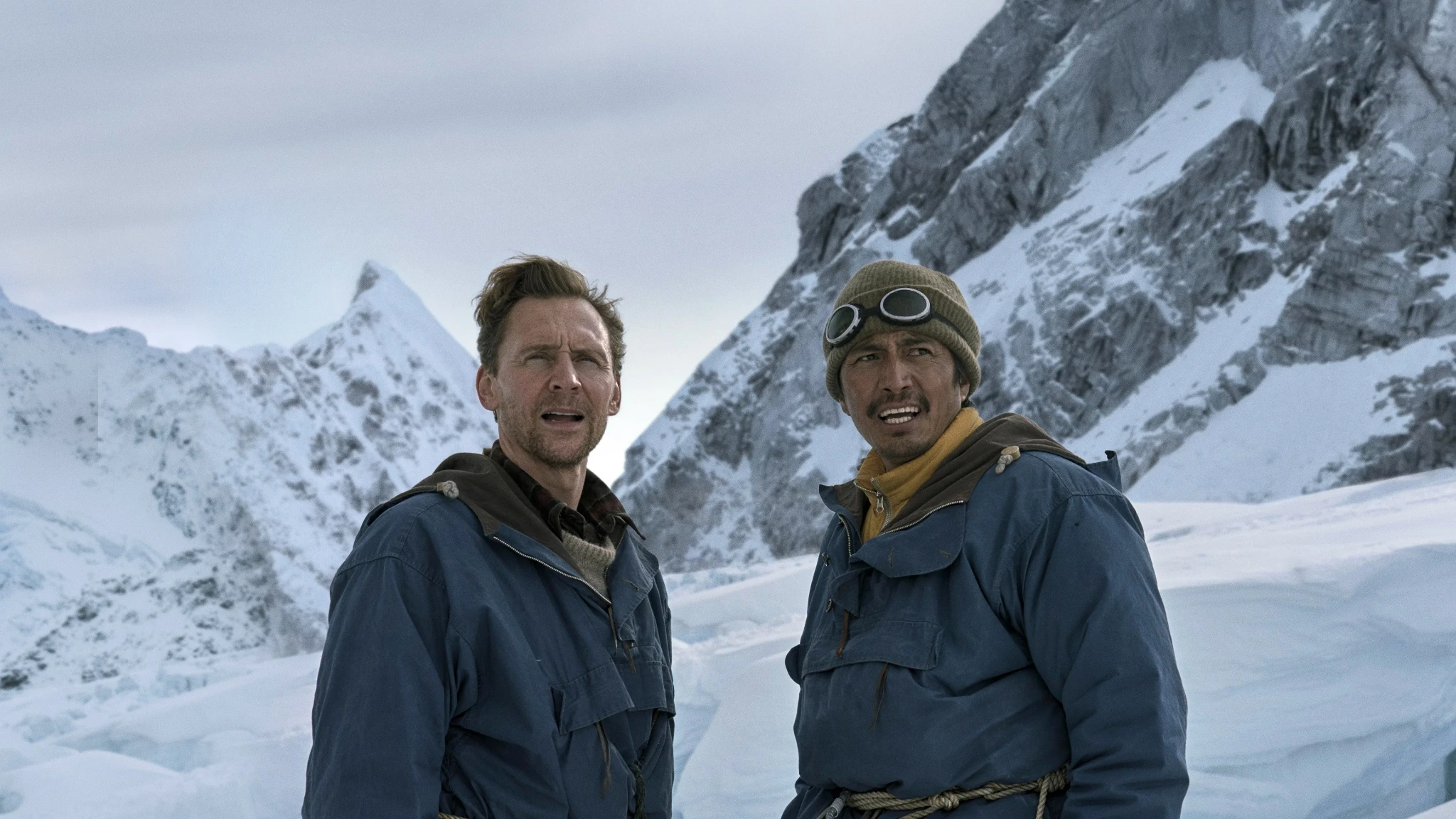
Tenzing's vision of himself as a child looking at the distant summit gives this ending a direct connection to the beginning of his story. The old dream becomes real, and reaching the top crowns years of attempts and obstacles.
Even this ending, with its inherent emotional potential, does not erase the earlier shortcomings. The achievement is clear, the journey arduous and the outcome worth celebrating. Its impact, however, also depends on how successfully the film has allowed us to live the human experience behind that achievement.
This is what the film does not sufficiently accomplish. The ending gives the story its basic completion, but does not make every preceding relationship as affecting as it could have been.
Strengths and shortcomings
Tenzing's clearest successes are its cinematography, which makes Everest immense and frightening, the good performances from Genden Phuntsok and Tom Hiddleston, and its ability to present a human journey concerned with persistence and proving one's worth.
On the other hand, the film suffers from limited emotional treatment of some central relationships, and from direction that does not give either the friendship or the marriage sufficient depth. Its reliance on familiar adventure-film steps also makes parts of the journey predictable, despite the importance of the achievement at its centre.
Final verdict
Final verdict
The film is visually accomplished and offers convincing performances within the limits of the material, but does not achieve the emotional impact its story deserves. The problem is not the choice of story, but a treatment that does not give its characters and relationships enough depth to turn the historical achievement into a more enduring human experience. We watch a difficult journey and understand its importance, but do not always feel everything it could have offered in emotion and conflict. I therefore consider the film an acceptable viewing experience with strong moments, but one less distinctive than the story on which it is based.
Your turn
Is it enough for the film to convey the danger of climbing Everest visually, or does its real success depend on making us feel the strength of the relationships and sacrifices that accompanied the ascent?
AUDIENCE VOTE
Do you agree with the MB rating?
Choose once from this browser. You can change your answer at any time.