The review
Screenplay and dialogue
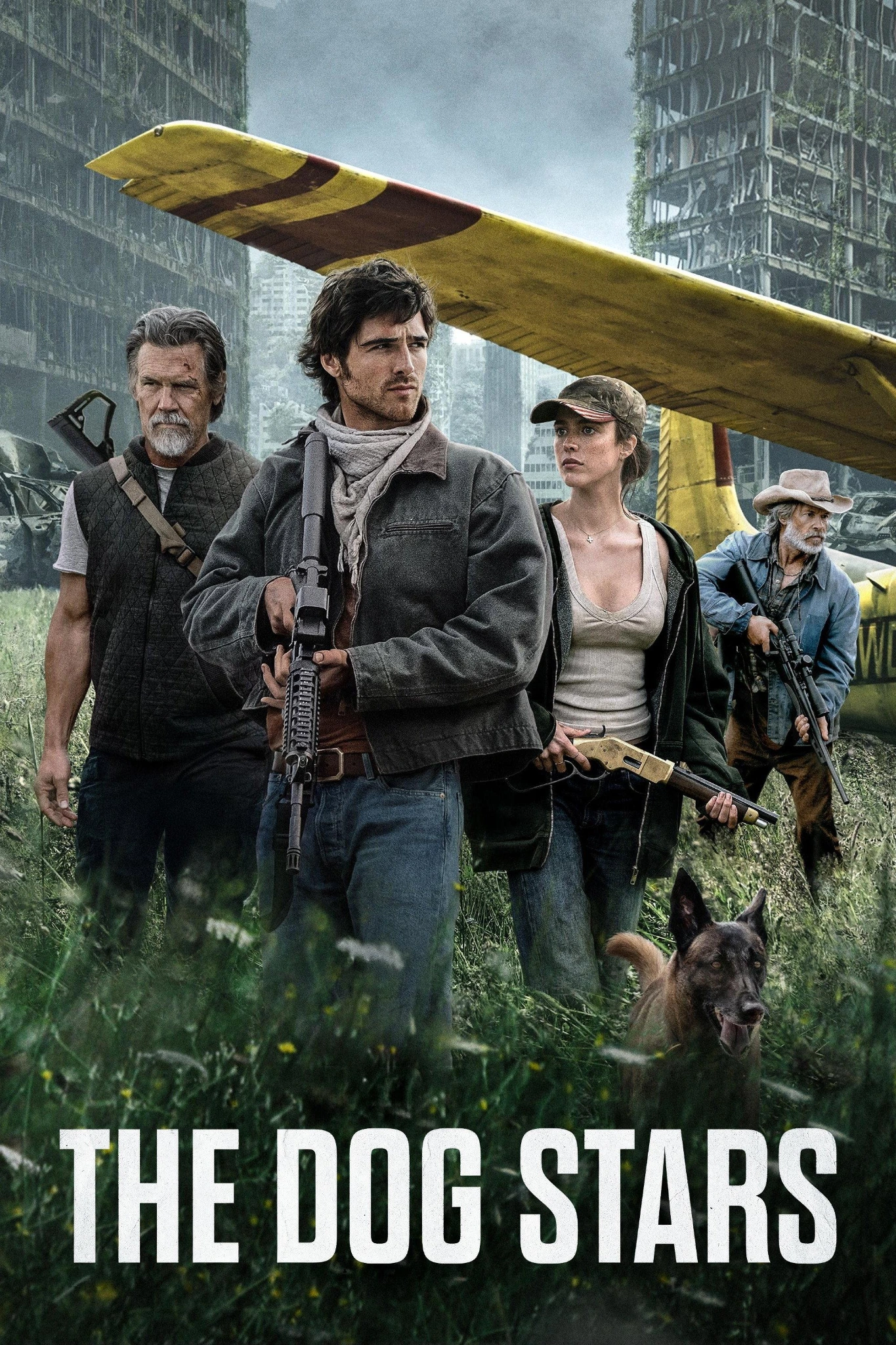
The story takes place in 2035, after a pandemic has killed most of the population. Hig, played by Jacob Elordi, lives at an almost abandoned airfield with his dog Jasper and Bangley, the veteran played by Josh Brolin. The first tries to maintain a connection with other people; the second builds his life around keeping them away.
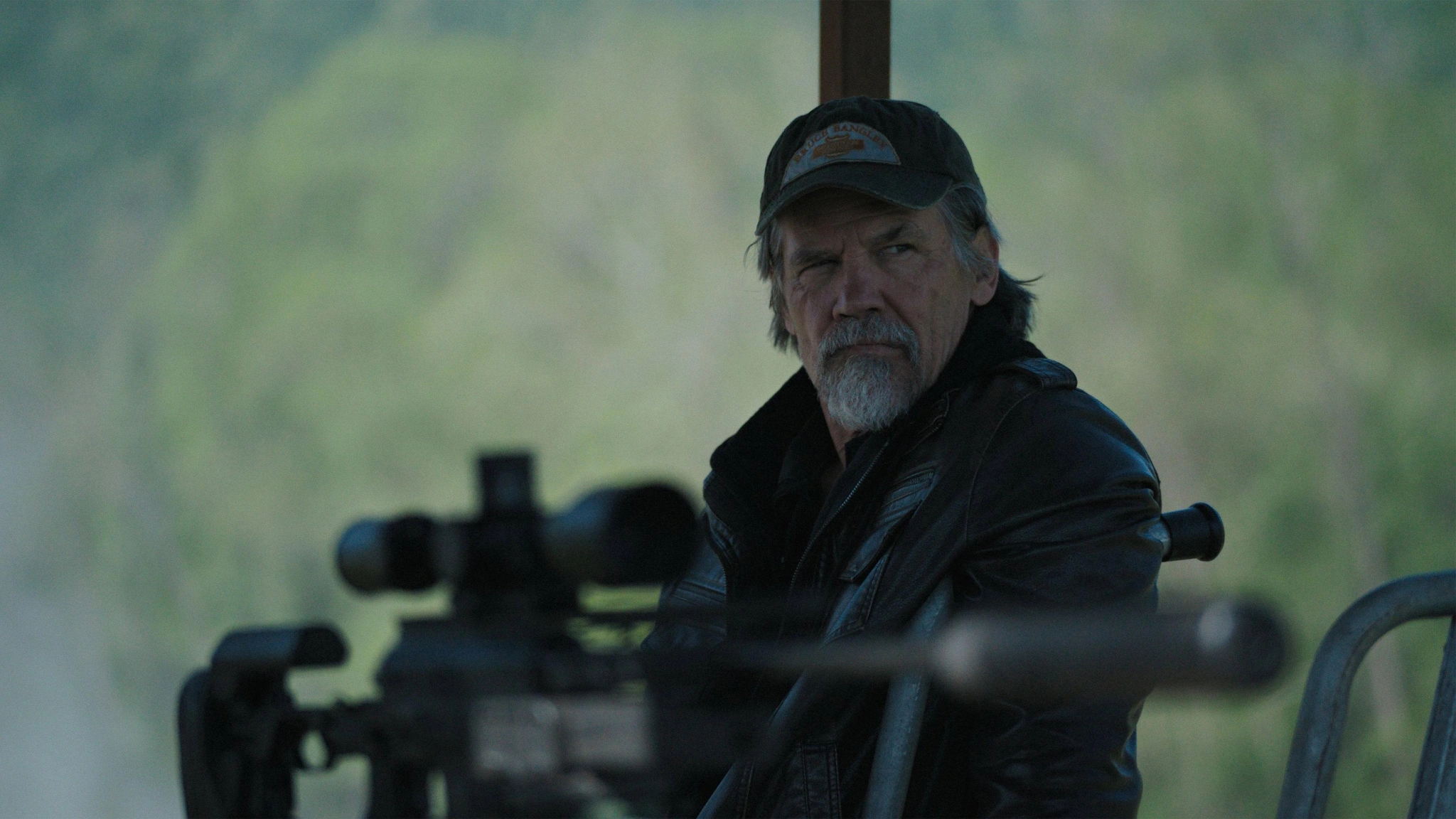
Brolin gives this contrast its initial force. Bangley is preoccupied with weapons, surveillance and fortification, treating danger as the rule around which the day must be organised. His sharpness carries the confidence of someone who believes events have proved his outlook right. His presence consequently becomes reassuring and disturbing at once. You can depend on him for protection, but living by his logic means reducing life to waiting for the next attack.
Hig, by contrast, delivers medicine to a community led by Aaron, played by Benedict Wong, preserving a space for contact beyond the airfield. These actions matter because they expose him to risk for people who cannot guarantee him any direct benefit.
The screenplay weakens this conflict, however, by making most strangers approaching fortified locations a definite threat. The flaw is especially clear in the raider groups: it gives them aggressive appearances while almost entirely withholding individuality or any motive beyond attacking.
One could defend this by arguing that trust becomes meaningful when it is costly. The film does indeed offer people who deserve it. But testing trust also requires room to distinguish between human beings. When whole groups of strangers are reduced to armed bodies, viewers are trained to fear them before being asked to overcome that fear. The film’s humanist argument falters here in the way it distributes sympathy and information.
Loss between memory and everyday life
Hig knows very well what he has lost. His wife Melissa died during the pandemic, and he still visits their old home. The problem is that the film gives us the reasons for his grief more clearly than it gives us a knowledge of the woman he mourns.
Melissa appears affectionate and close to him in the memories, but we receive too few details to distinguish this relationship. How did they talk? What made them argue or laugh? A small detail could have made the absence more specific. Without it, the memories explain the wound more than they make us feel its particular character.
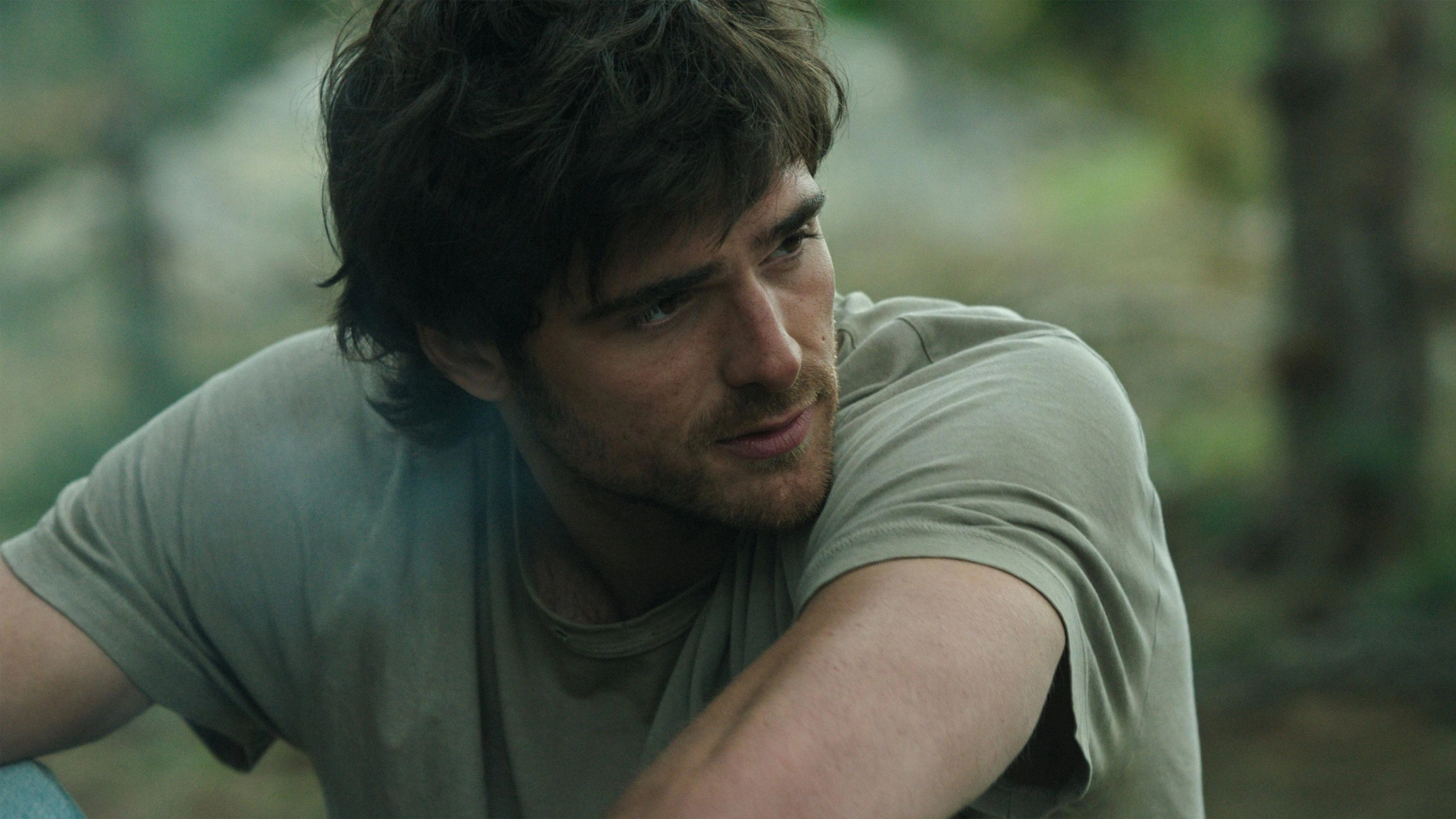
Elordi relies on withdrawal, limited speech and avoidance of emotional confrontation. The choice suits someone accustomed to living within his loss, but it cannot alone compensate for the writing’s limitations. When the condition repeats without changing, it becomes difficult to distinguish between a quiet performance and a character remaining in the same place.
With Jasper, the result changes. We see him accompany Hig in the plane, respond to him and help him sense danger. The relationship forms before us through familiarity and interaction, so his death carries an effect stronger than simply calling on sympathy for an animal.
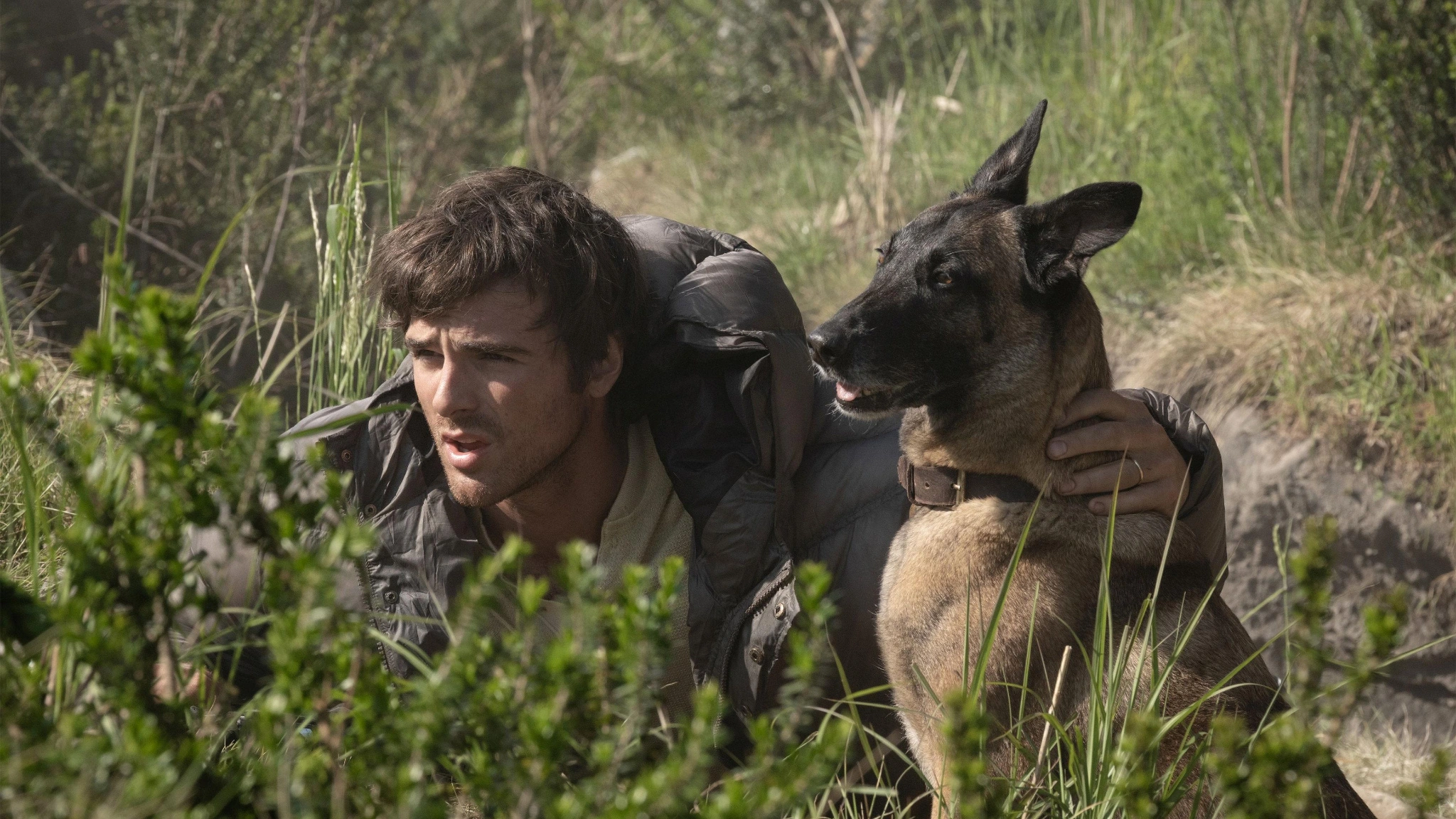
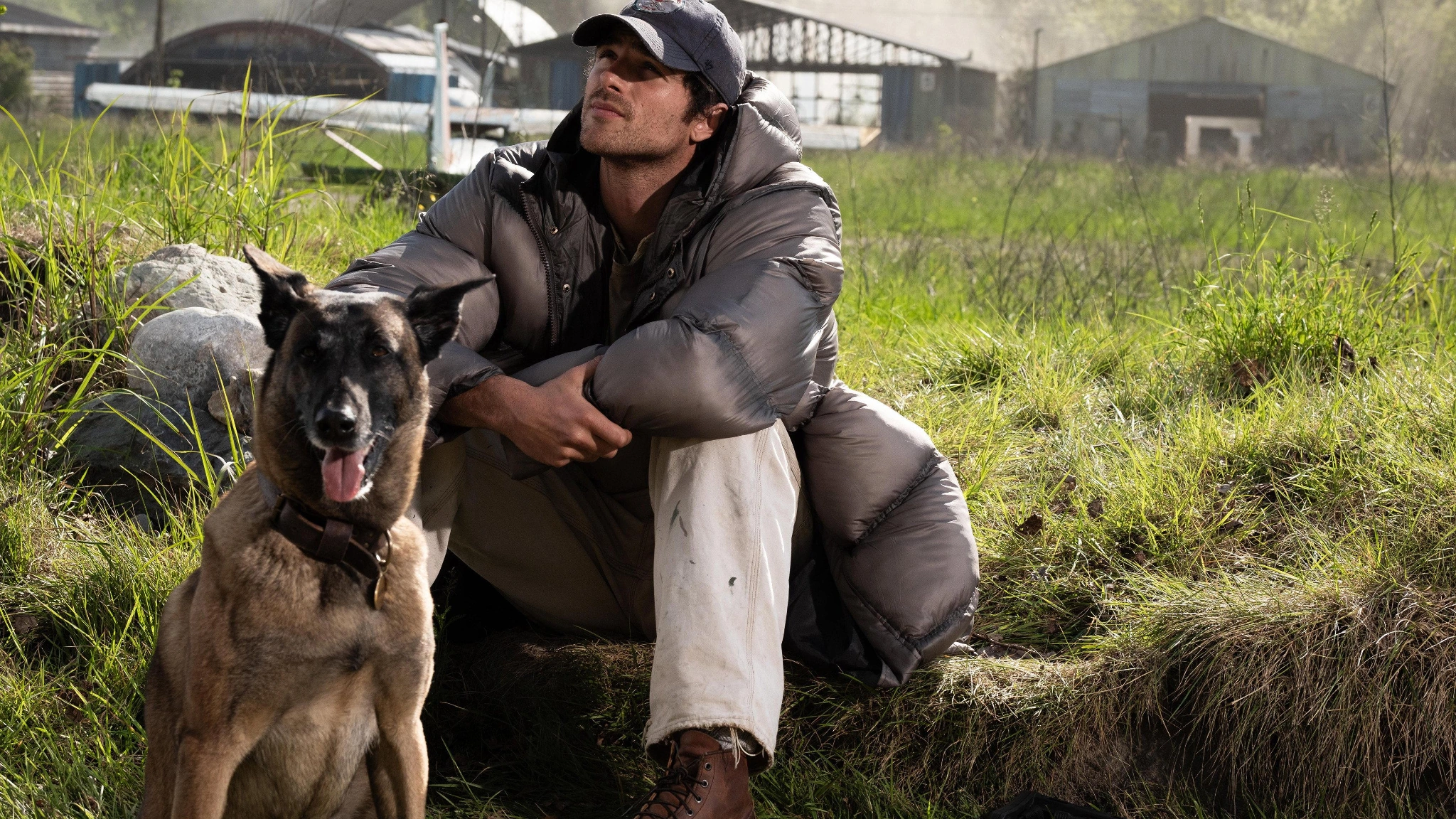
The effect also comes from Hig losing part of his present day. After Jasper’s death, returning to the routine becomes less likely, and the radio call from Grand Junction acquires the force to make him leave. Here the film succeeds in turning loss into a decision that changes the character’s course.
Trust and romance on the farm
A plane malfunction leads Hig to a farm where Pops and his daughter Cima live, played by Guy Pearce and Margaret Qualley. Pops carries a familiar caution, but his daughter’s presence gives it a clear relationship he is trying to protect. Pearce helps make the man more than an obstacle waiting for the protagonist to overcome him.
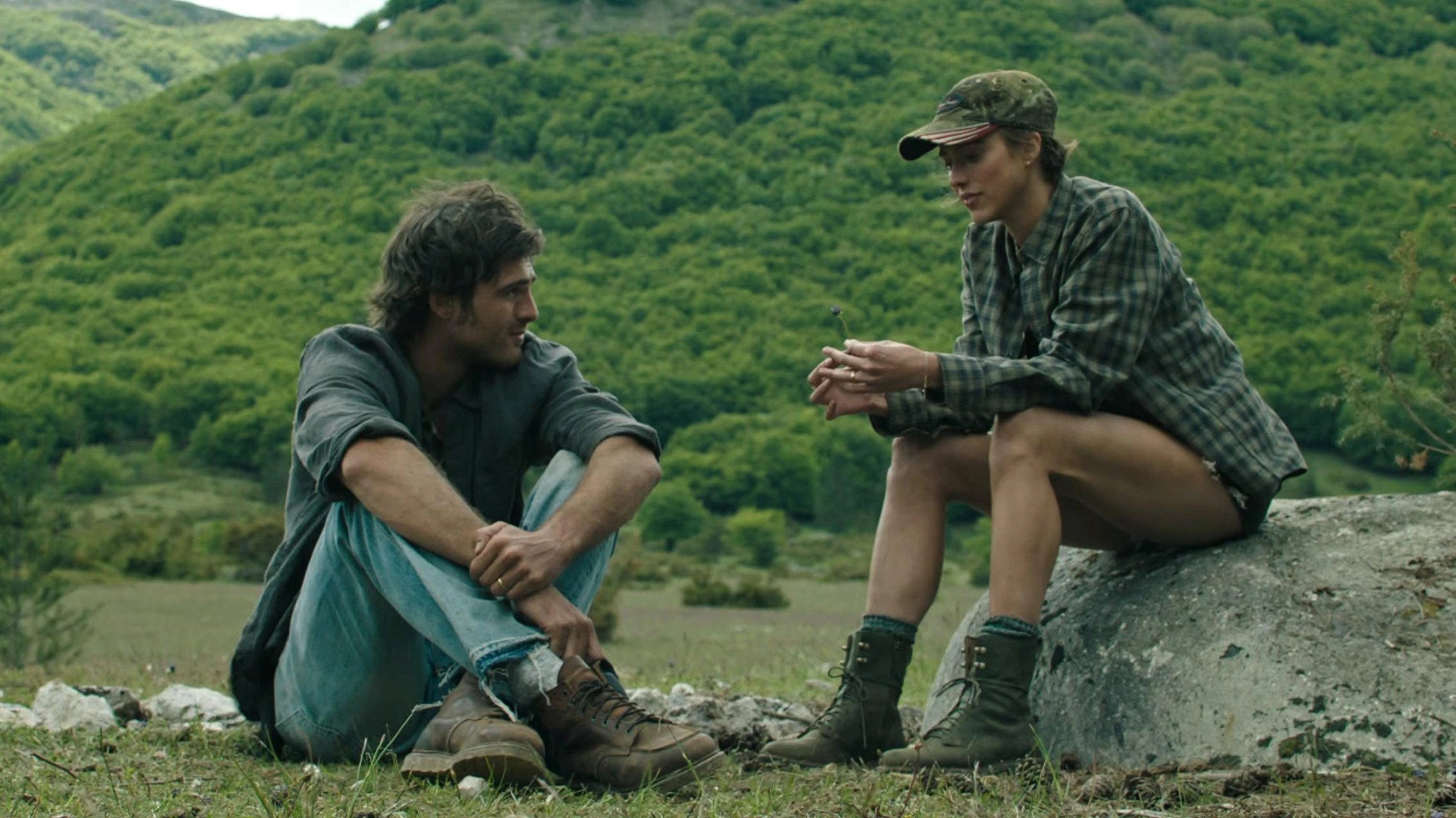
Cima enters with a lightness and impatience that change the scenes’ rhythm. She has also lost her husband, but will not let Hig monopolise grief or treat his pain as an experience others cannot understand. Qualley gives her a vitality the film needs after long stretches of withdrawal and guarded conversation.
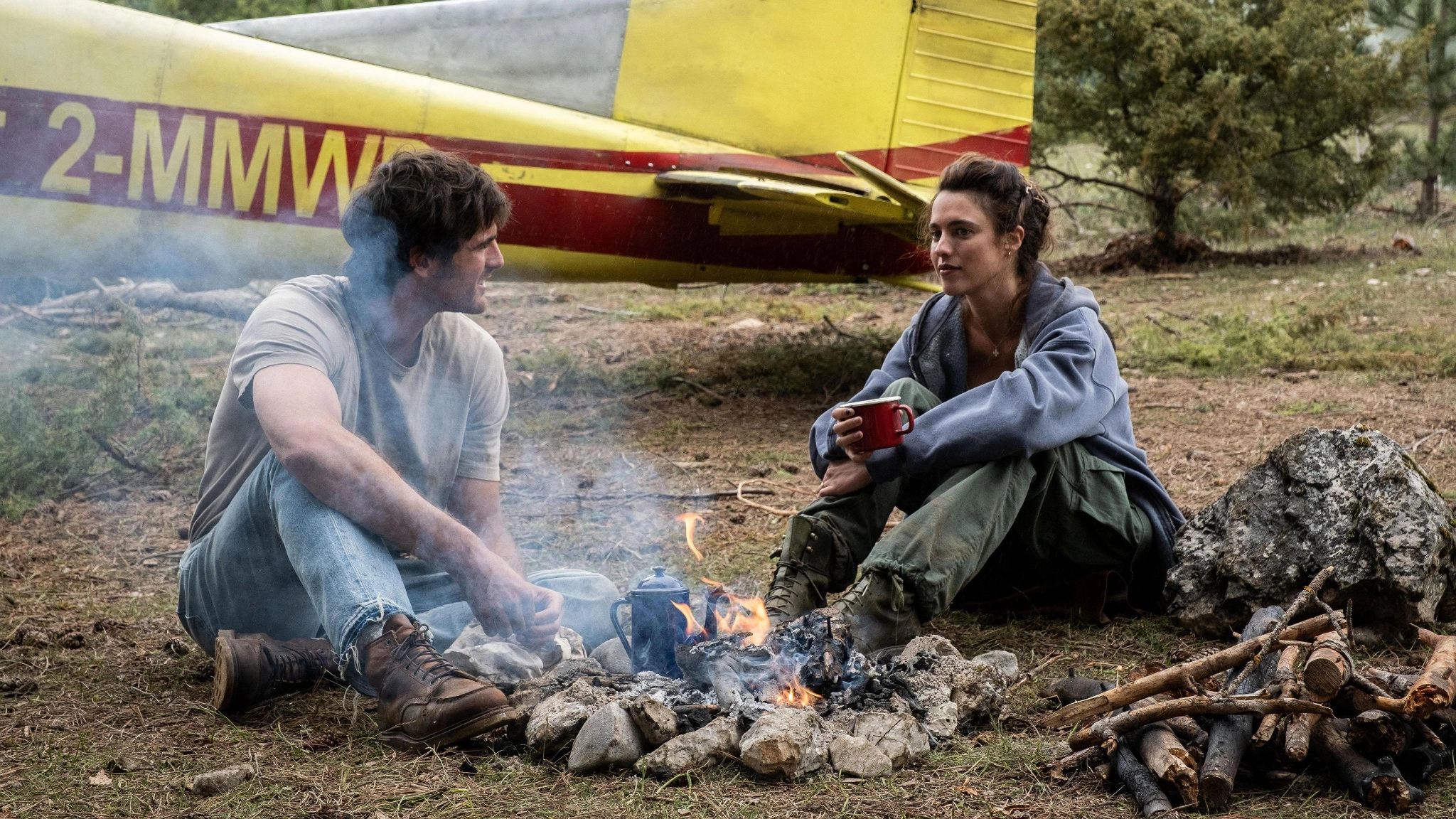
What best builds their closeness is shared work: repairing the plane, clearing trees and preparing a space for takeoff. In these actions, trust develops through mutual dependence, and the other person’s presence becomes part of a tangible task. The plane that gives Hig his independence now requires a joint effort to return to the sky. This is an effective dramatic paradox: his ability to leave is renewed through a relationship, so he discovers other people’s value through his actual need for them.
The problem emerges when the dialogue tries to shorten the distance. Talking about missing music and traffic identifies things they share, but does not sufficiently reveal their differences or the particular nature of their attraction. The scene with the player and headphones prepares an intimate moment more than it completes a relationship that has matured before us.

Their shared widowhood explains their ability to understand pain, but is not enough to explain love. Cima’s past also remains short on detail, making some steps towards intimacy seem faster than our knowledge of them allows, despite the appeal Qualley brings.
Grand Junction and nostalgia for the past
When the journey reaches Grand Junction, the film offers its most interesting turn. Darlene, played by Allison Janney, runs a community inside an airport governed by displays of hospitality and elegance recovered from an earlier age. Clothes, drinks and daily rituals give the place a reassuring appearance of order before the restrictions hidden behind it become clear.
The place can be read as a distorted extension of Hig’s difficulty with memories. He returns home to recover his connection with a life that has ended, while this community tries to force people to inhabit a selected image of the past. The desire to preserve what has been lost becomes harmful when it prevents the possibility of building a different present.
This connection gives nostalgia a function beyond decoration. It also raises a question about the things the film chooses to remember. Familiar restaurant names, drinks and products can concisely convey the characters’ feeling for a vanished world, but they recur while details of certain human relationships remain scarce. We consequently sometimes know more about the consumer habits people miss than the people they miss.
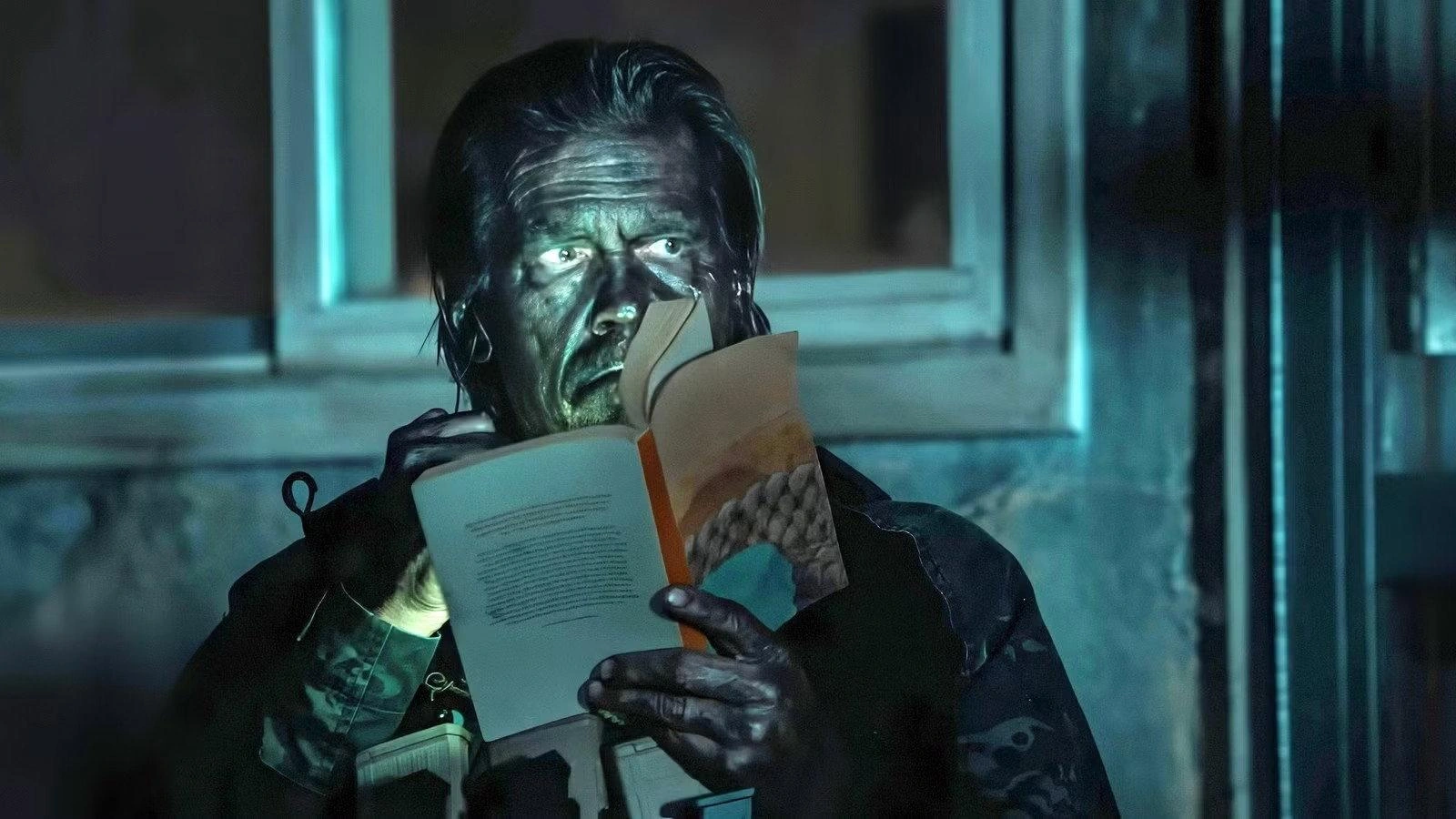
The irony is that the farm’s work scenes had already offered a more convincing route towards reclaiming life: creating a new experience with someone else. Comparing them with the airport clarifies the difference between sharing the present and forcing people to perform yesterday.
Yet the film does not give Darlene and her system the space these possibilities deserve. The discovery quickly becomes a threat requiring escape, leaving the questions the place raises broader than their dramatic treatment.
Direction, cinematography and music
Scott has a clear ability to make a place tell part of the story. Abandoned roads, overturned vehicles, medical equipment and animals approaching human spaces give the collapse visible traces, reducing the need for a lengthy explanation of the pandemic.
Cinematographer Erik Messerschmidt’s flying images stand out. The expanse of mountains and empty space opens a field of movement before Hig that contrasts with the confined life inside fortified locations. The plane thus acquires dramatic value alongside the beauty of the shots. Its movement keeps the possibility of leaving isolation before us, even when its owner hesitates to take it.
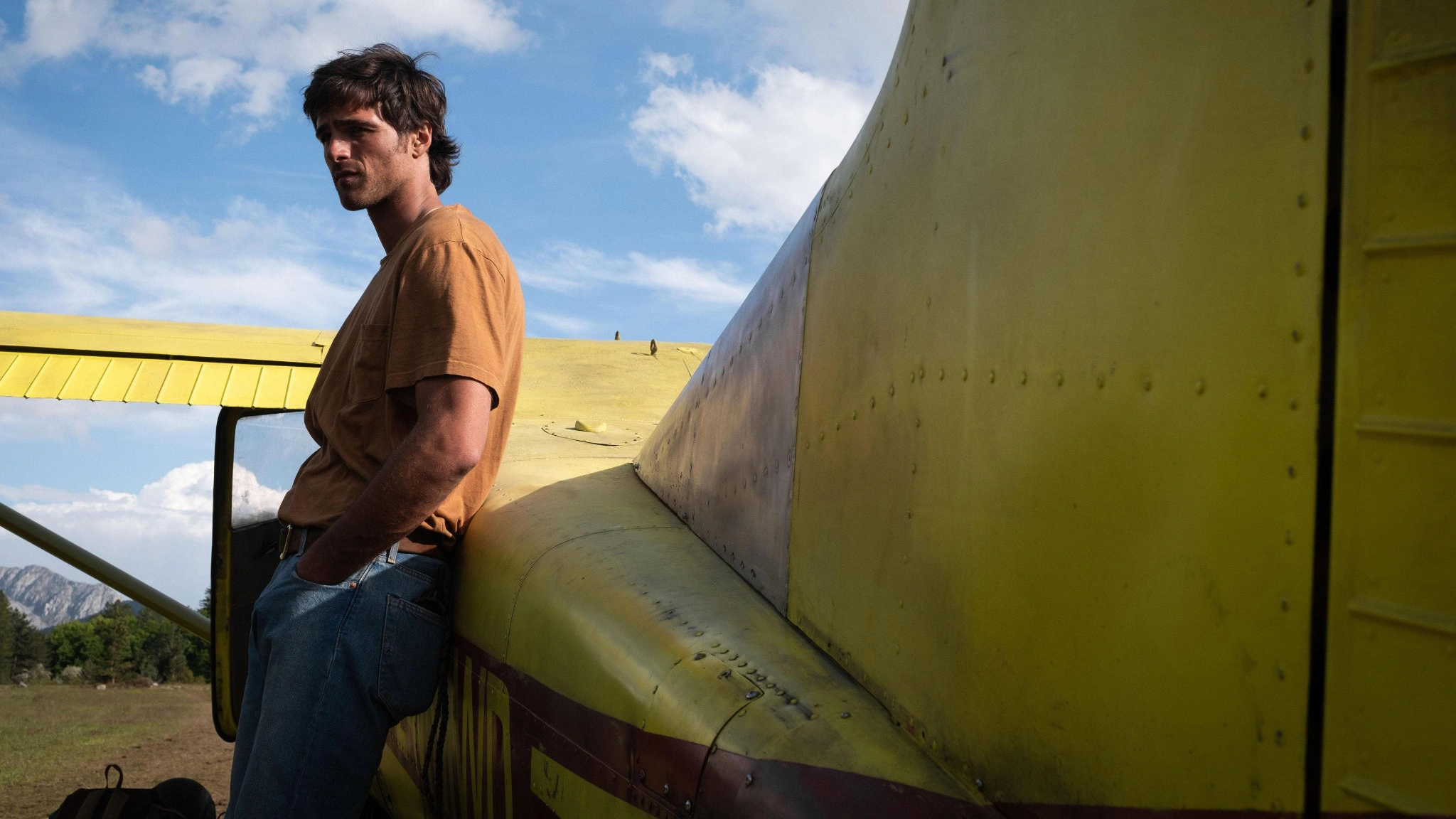
The environment’s visual success does not mean it is socially complete, however. The film does not need to name the virus and explain its spread to convince us. What it needs more is to clarify the nature of life afterwards, and how communities form, persist and differ. We see the consequences of collapse clearly, while some communities remain closer to ready functions in the protagonist’s journey.
In the action, Scott maintains clear geography and a clear direction of threat. We can understand the value of a defensive position and the effects of movement within it, allowing confrontations to retain physical weight. This is a success in execution, although its emotional return remains limited by the writing of the antagonists discussed earlier.
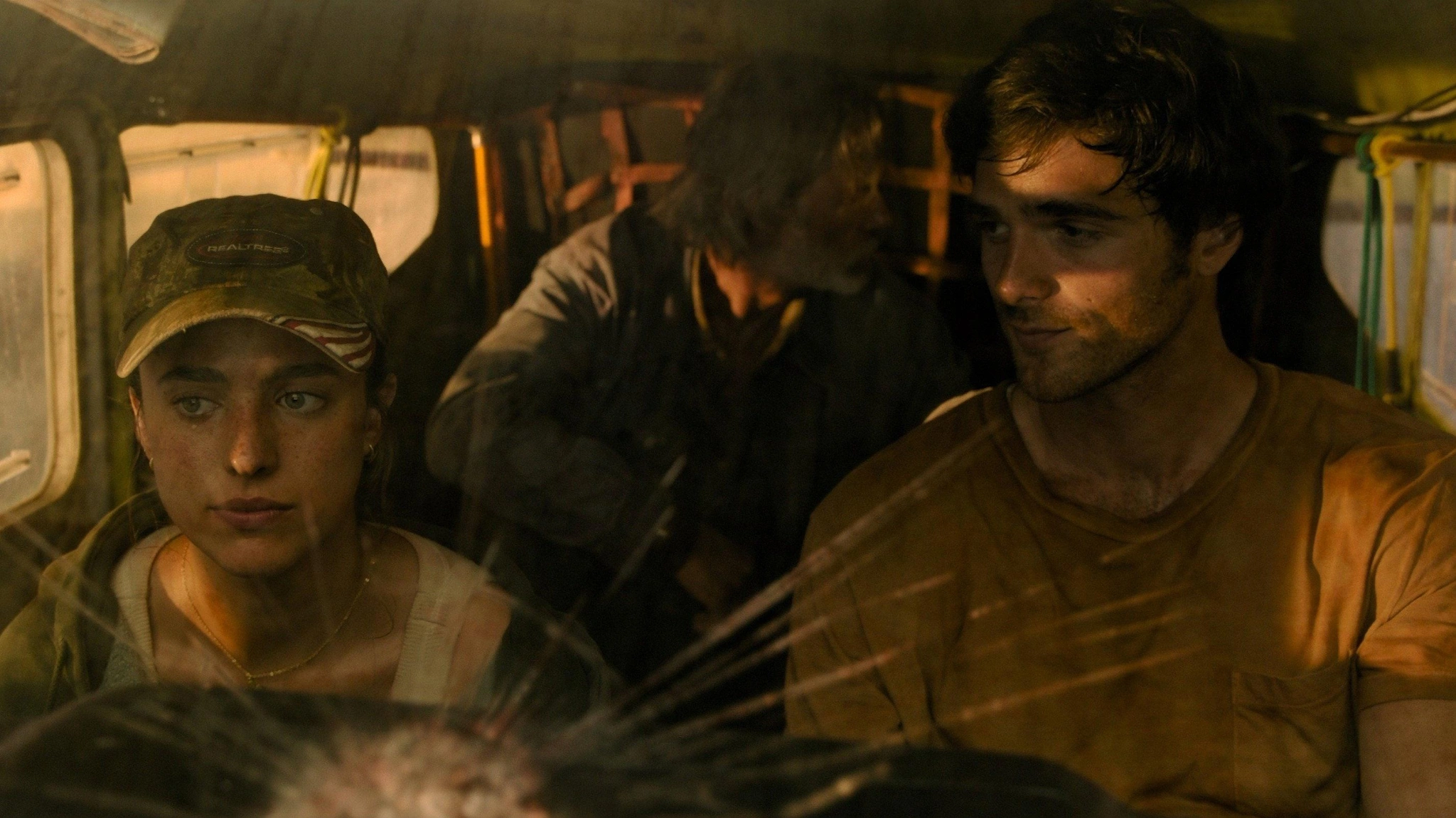
The quality of some explosions and visual transitions varies, occasionally weakening the unity of the tangible world. Harry Gregson Williams’s score, with its guitars, strings and folk colours, supports the contemplative side. But it cannot alone connect moments of warmth with sudden violence when the dramatic transitions themselves are weak.
Pacing and the distribution of time
The slow opening is understandable in terms of function. We need to grasp the routine Hig will decide to leave. Repeated trips, returns home and conversations with Bangley establish a life that is outwardly stable and emotionally closed.
But repetition’s value depends on what changes within it. When successive scenes reaffirm loneliness and grief without adding enough, the sense of inertia becomes inertia in the viewing experience itself. The same space could have given the earlier marriage more specificity, or allowed Hig and Bangley’s differences to develop rather than leaving both positions unchanged.
The later events then accelerate, particularly around Grand Junction, bringing discoveries, threats and decisions at shorter intervals. A clear imbalance emerges: the film gives ample time to establishing the protagonist’s initial condition while compressing the stages supposed to change his understanding of life.
This also makes the turn towards strangeness and body horror more abrupt. A change of tone can reveal a new face of the world, but needs preparation and space to absorb its effect. Here it arouses curiosity, then the film moves on before making enough of it.
Final verdict
In conclusion
The film’s strengths lie in its overall sense of place, Brolin’s presence, the vitality Qualley brings to her scenes, and the relationships arising from actions we actually see. These elements give the journey moments deserving attention and reveal the possibility of a more affecting film within its material. The writing, however, does not give loss, romance and the antagonists the same degree of specificity. The distribution of time compounds this weakness, leaving important ideas at the level of suggestion while lingering within states we already understand. The images alone consequently struggle to compensate for the limited connection with the characters. The result may attract viewers who favour contemplation of empty places and the atmosphere of survival, but it offers an emotional and intellectual journey less complete than its central conflict promises. We can understand Hig’s desire to approach other people and feel its value in some relationships, but the film does not build a world diverse enough to test that desire deeply. My rating for the film: 6.5 out of 10.
Your turn
Now the question is yours: did you find Hig’s decisions convincing as an attempt to reclaim life, or did the way the film portrayed strangers make Bangley’s caution seem closer to being right?
AUDIENCE VOTE
Do you agree with the MB rating?
Choose once from this browser. You can change your answer at any time.