The review
Screenplay and Dialogue: A Show That Knows How to Hide Disaster
The film begins with a familiar format: a children's show called It's Buddy, hosted by a huge orange unicorn and filled with songs and simple lessons. This framework supplies a reassuring explanation for everything in advance. A child's disappearance can be covered up with a story about a trip to Diamond City, and the start of a new episode allows the show to continue as though nothing happened.
The detail that breaks this reassurance is Freddy finding the missing child's book with traces of blood on it. Its importance comes from the contradiction between the explanation the show provides and the evidence it leaves behind. There is an official story everyone is expected to believe, and a small piece of evidence that makes a girl begin to doubt it. Knowledge itself becomes a source of danger.
The film makes use of the repeated episode structure: a song, a lesson, an ending, and another beginning. Over time, this format becomes a sign of the world's ability to absorb disaster and conceal it. Even replacing the children gives the program a terrifying continuity: an empty seat is filled, and the show keeps presenting its happy image.
This is an effective opening because it ties the discovery of violence to an understanding of the place. As the rules reveal what they conceal, our feelings about things that initially seemed ordinary begin to change.
Buddy and Love Turned into Control
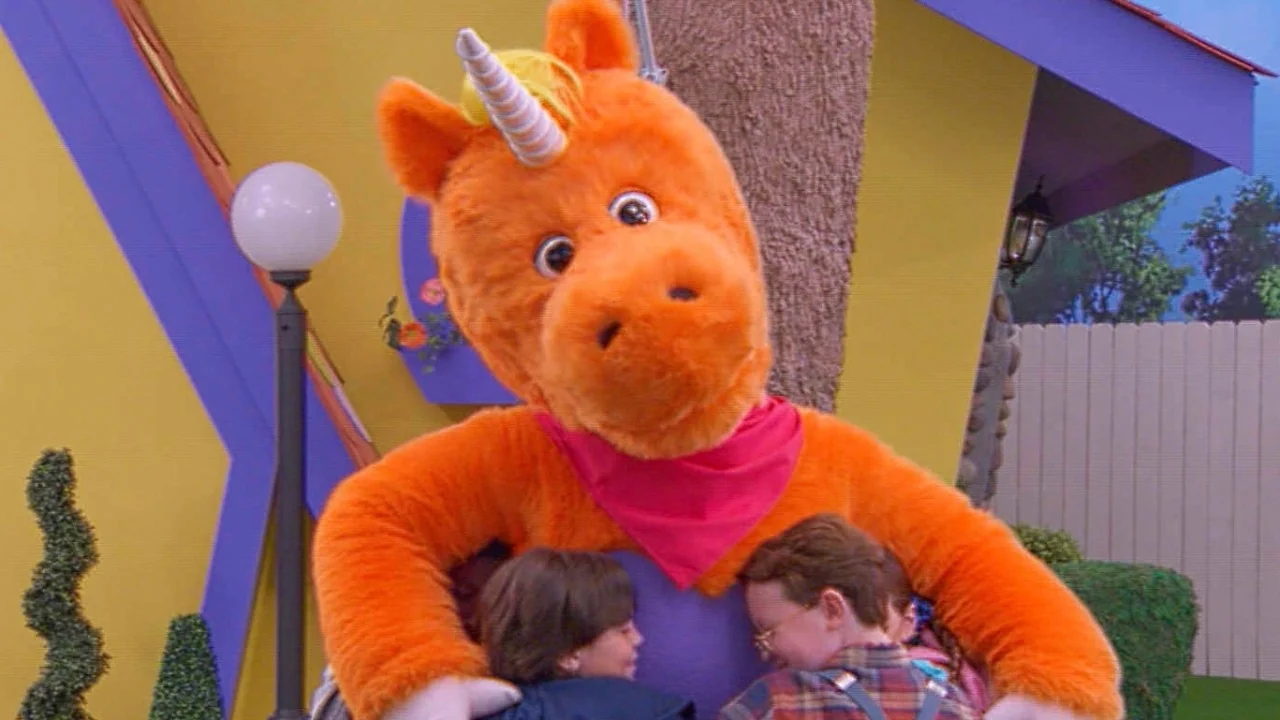
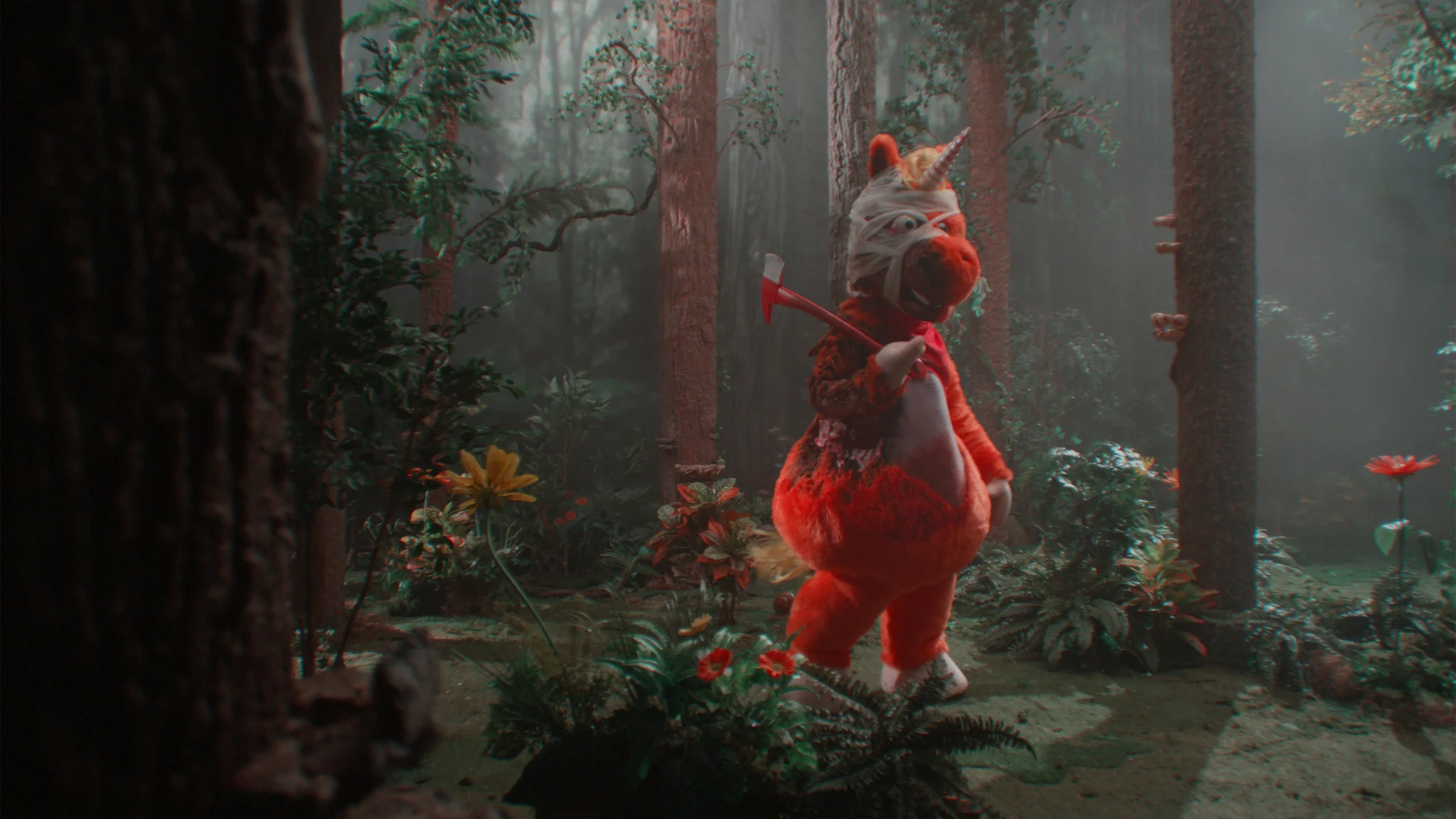
Buddy's greatest strength as an antagonist is the connection between his aggression and his constant need for reassurance that he is loved. He wants the children to sing for him, celebrate him, and take part in his lessons. When one of them refuses, he treats that refusal as a threat to eliminate. His kindness becomes part of his control over the place.
Hugs and songs take on a deeply disturbing function here. What should express closeness becomes a means of control, reaching its cruelest form when he embraces a child with lethal force. The scene sums up a character who cannot imagine a relationship that allows the other person to choose.
Keegan Michael Key's voice performance grounds this contradiction. The shift between friendliness and menace allows the character to change the feeling of a scene quickly while retaining the image of a children's television host. We hear the same voice, but its meaning changes once we understand what its owner can do.
Even his transformation into his monstrous form fits this construction: the children's rejection of the image he imposes exposes the anger beneath it. This is what distinguishes the antagonist. His brutality is tied to his understanding of love and his inability to tolerate the independence of those around him.
Freddy and the Meaning of Courage
Freddy's storyline carries the film's central transformation. She begins as a child who follows the show's rules, then notices what others cannot see or prefer to ignore. Doubt becomes an attempt to understand, and understanding becomes a decision to resist.
The film ties her progress to her ability to reassess what she has learned. Buddy repeats lessons about courage, but her real test comes when she has to face him. A seemingly simple value from a children's show becomes a struggle over who has the right to define correct behavior.
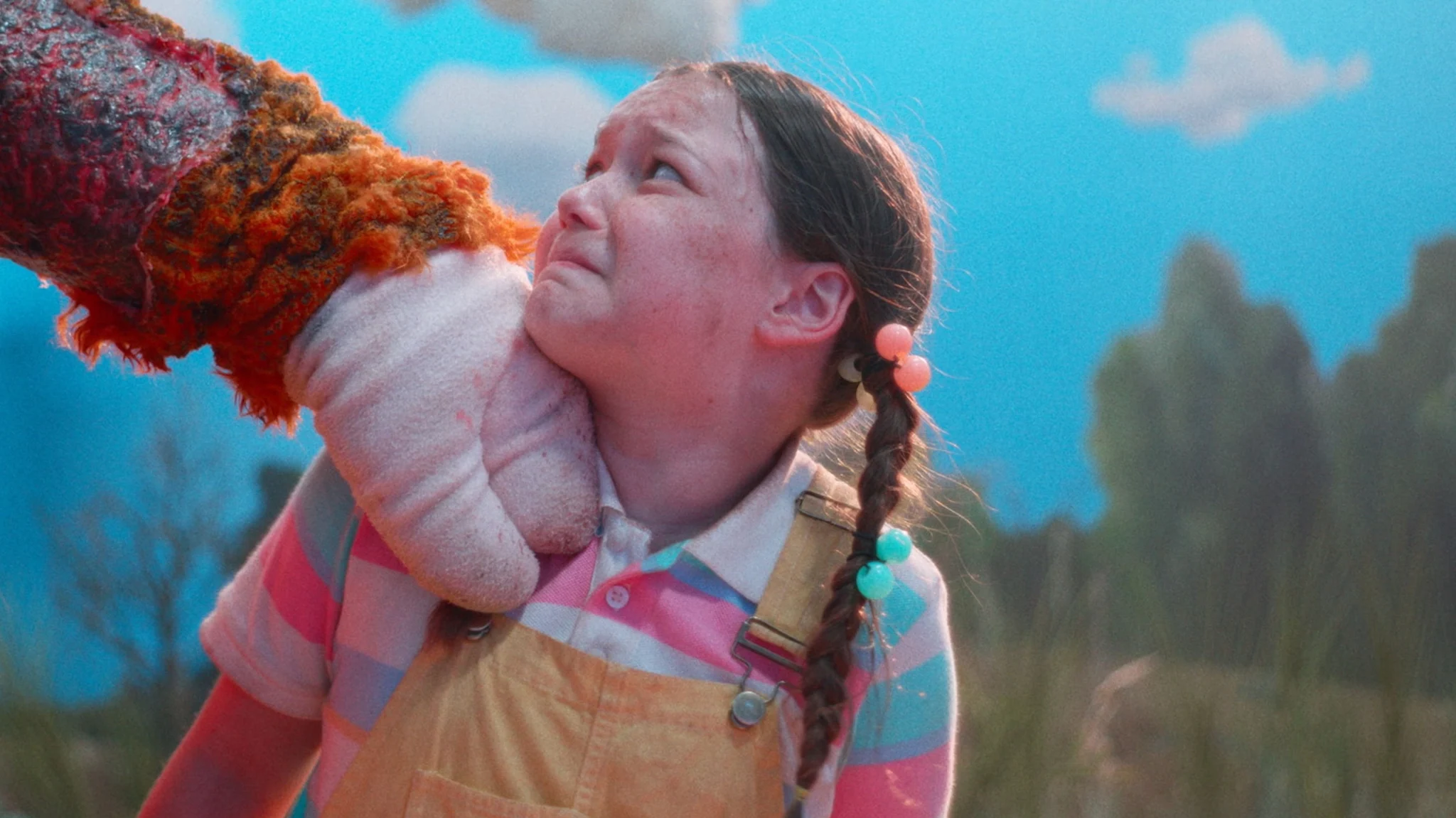
Delaney Quinn successfully carries the transition between the cheerfulness of this setting and the fear imposed by escape. The character must remain a child whose vulnerability we can understand while also becoming the heroine who leads us through an increasingly hostile world. This transformation gives the film an anchor amid its strange characters and situations.
Her agency takes shape in the final confrontation, when she uses the backpack and mailbox to overcome him. In her hands, this world's tools become ways out of it. This is a fitting result for her arc: understanding the place gives her an opportunity to act rather than leaving her waiting for someone else to provide an escape.
Her resistance also does not erase the group's losses. Giving escape a price keeps the danger serious even when the film moves into deeply absurd black comedy. Freddy's courage becomes a matter of continuing despite what she has lost and making her decision without any guarantee that the next path will be safe.
Grace and a Mother's Memory
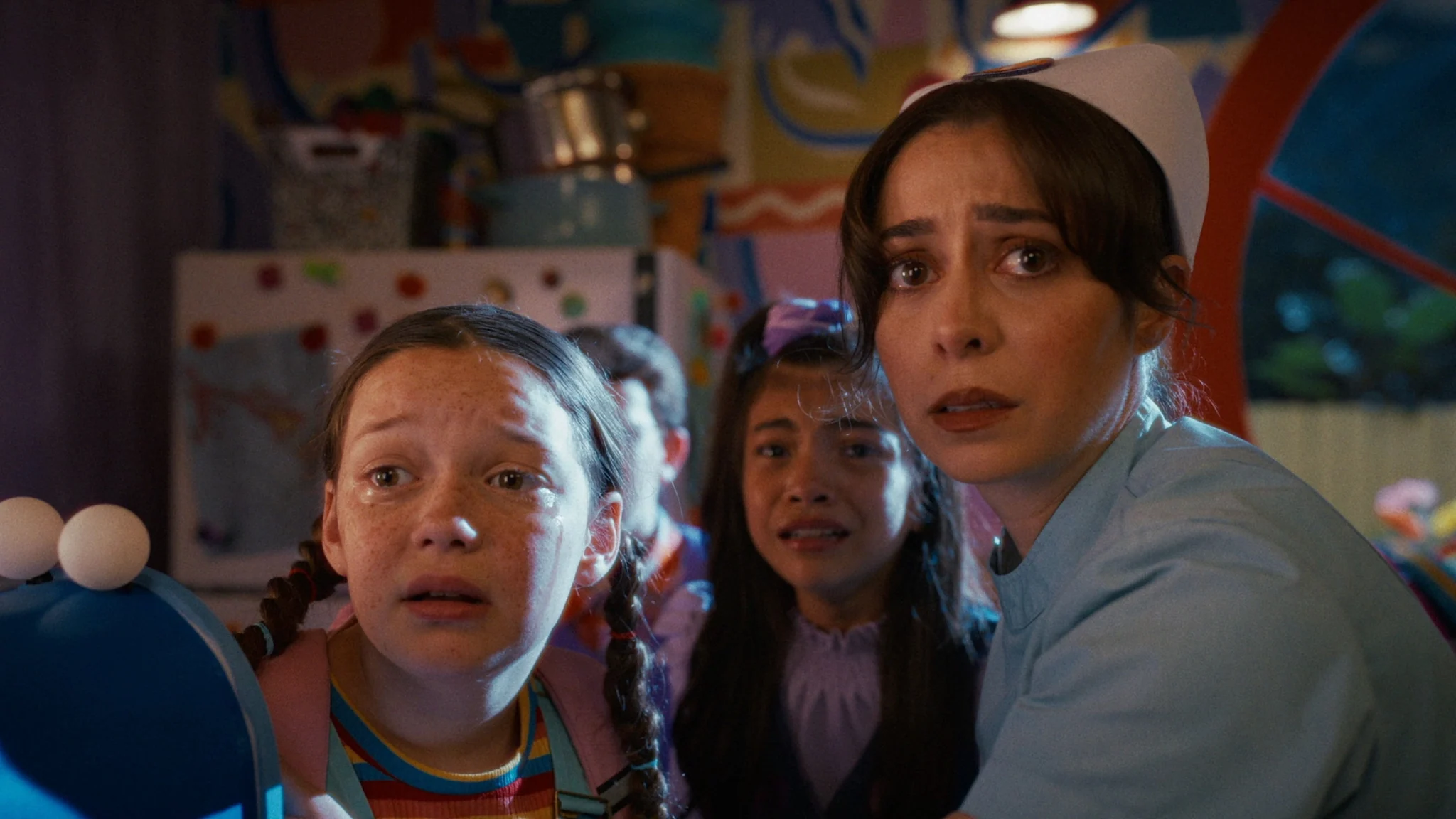
Grace's arrival expands the film emotionally by carrying the impact of disappearance into the home a child has left behind. Her sense that a family member is missing collides with a world that does not acknowledge that person's existence at all. The empty chair at the dining table gives this disturbance a direct image: a place seems complete to everyone else while she feels what is absent.
What makes this storyline moving is that Grace faces a loss she can barely even name. Her husband does not share her certainty, and the memory she clings to finds no confirmation in her daily life. The power of Buddy's world extends into relationships outside the screen, and erasing a person from their loved ones' memories becomes part of the horror.
Cristin Milioti's performance gives this side of the story its weight. Her presence grounds the pain in the narrative and connects the strange premise to an understandable need: a mother wanting to confirm that her daughter existed and to reach her.
When Grace and Freddy recognize each other, the conflict acquires a clear personal goal. But their reunion does not erase the danger, and the mother's sacrifice gives survival an emotional cost. This matters to the ending's impact, because Freddy's escape will remain marked by what happened in that world and by the relationship she briefly recovered before losing it again.
Direction and the Surreal World
The director builds the journey around movement between the children's show, the anxiety of family life, and an escape story through a fantasy world. Each space has its own character, and the transitions work by changing how we experience danger within them.
Inside the program, the threat hides behind familiarity and the rules of the show. At home, it appears as a feeling that reality is incomplete. On the road to Diamond City, it moves into the promise of reaching a place that will end the crisis. This variety extends the premise and lets the film renew its questions rather than relying solely on the image of a violent mascot.
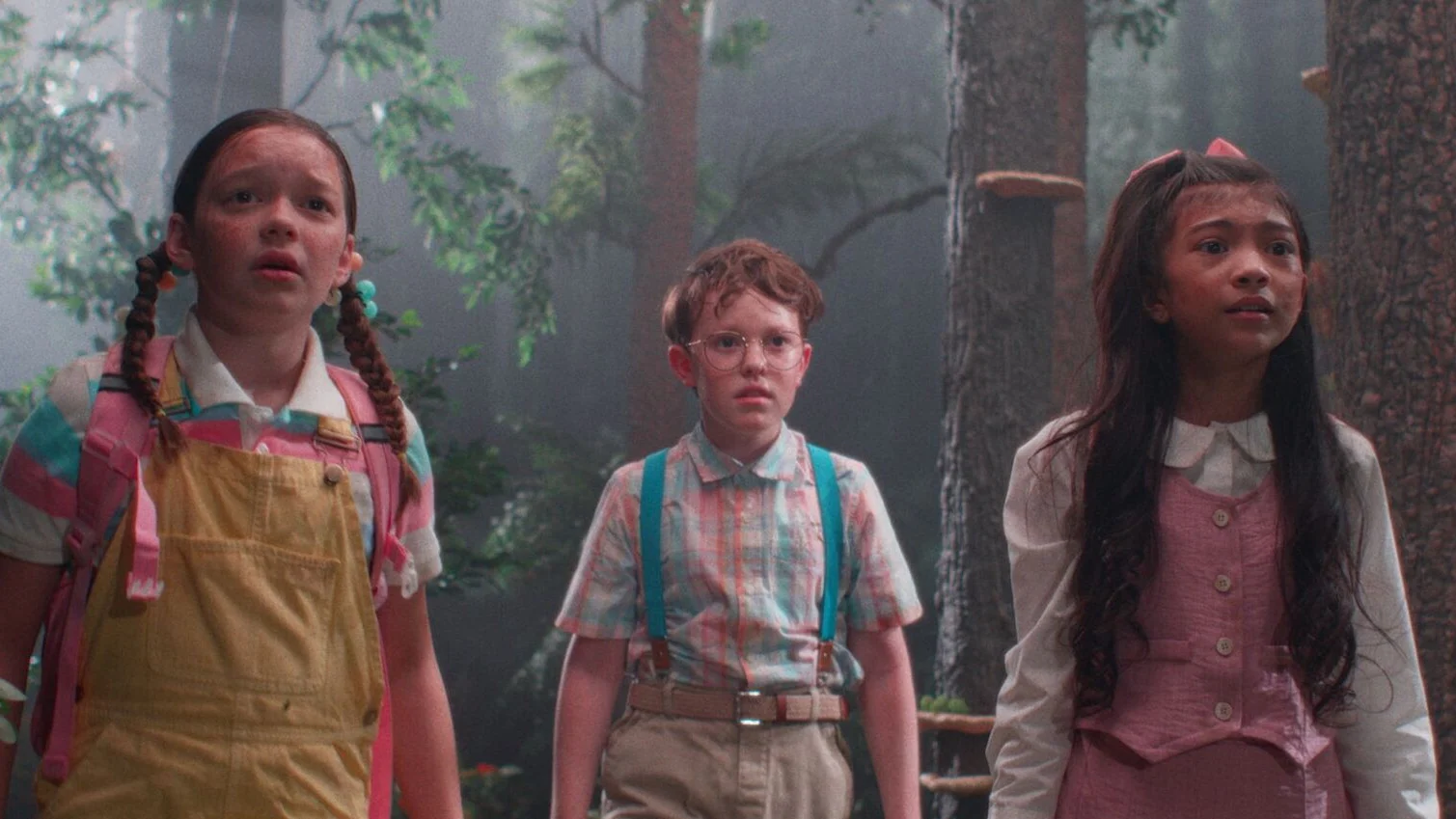
The screenplay, written with Jamie King, makes use of the way children's television elements can be repurposed: a talking backpack, a mailbox, a train, a well, and songs that play roles within the story. The same elements become part of fear, assistance, and escape, keeping the world's strangeness connected to what happens to the characters.
Patton Oswalt, voicing the backpack Strappy, adds to the comedy. Having a companion in this form during the escape preserves the world's strangeness and gives the show's tools a role in the relationships between characters. These characters work because they take part in the journey, making their later disappearance or transformation matter.
The blend of black comedy and violence works best when it leaves us uncertain about the tone a situation will settle into. An idea may look funny before its consequences turn cruel. The children's presence and the mother's storyline give this mixture weight, so that behind the irony there are still lives whose fates matter to us.
Diamond City and the Meaning of Escape
Reaching Diamond City reveals that it is a small plastic model. This revelation has value beyond surprise: the place that promised salvation was an image to look at, but it could not accommodate the life the children imagined. When that promise collapses, they must find a path that does not depend on the prewritten story placed before them.
The multiple screens near the end expand the scale of the problem. We discover that the lure reaches other homes and children, and that Freddy's experience is part of a larger mechanism. This revelation extends the world and leaves questions about its scope and nature instead of confining everything to a chase in one location.
The most affecting detail of the escape, however, is the backpack and mailbox turning into lifeless objects. The tools that shared Freddy's journey lose their life when they reach another reality. This can be read as another loss: she has survived, but she cannot keep everything that helped her survive.
Her arrival at another family's home leaves the emotional closure understandably incomplete. The immediate danger ends, while questions of home, belonging, and what can be recovered remain open. The film retains some of its bitterness after the confrontation is over.
The Premise's Limits and the Final Stretch
For all this, there are clear limits to the film's ability to keep renewing its surprises. Once we know Buddy's true nature, the shift from kindness to aggression loses some of its initial impact. Each confrontation then needs to add character development or an understanding of the world so that it does not become another repetition of a monster whose behavior we already know.
The film sometimes approaches this problem in its final stretch. Escalating the strangeness and violence gives it energy, but more variations do not necessarily mean that every one adds something equally strong. Its compact pace helps it finish the journey before exhausting the premise entirely, although it does not prevent a degree of fatigue near the end.
Leaving questions open can also shape the experience in two ways. It may increase curiosity about the world, or leave the feeling that some answers have been deferred to another story. The critical question is how much closure this particular story needs on its own, especially after broadening the scope of what happens behind the screens.
For that reason, I find the film strongest in Freddy's journey and her relationship with her mother, while some aspects of the wider world remain less satisfying in their resolution.
Strengths and Reservations
The main strengths are Buddy as a character and the voice performance behind him, the two leads' ability to give the strangeness human weight, and the variety of forms the fear takes. The main reservations concern some confrontations coming close to wearing out the premise, along with questions that some viewers may feel have been left unresolved for too long.
Final verdict
Final verdict
Ultimately, the film succeeds in creating a dark horror experience with a clear identity, giving its premise an emotional dimension that lingers after the shock of its initial image has faded. It will suit viewers who enjoy surrealism, cruel comedy, and the corruption of familiar things, bearing in mind that its children's television facade conceals explicit violence. The film leaves a sense that survival may begin with rejecting a reassuring promise, and that courage may cost someone losses a happy ending cannot restore.
Your turn
Does Freddy's survival at the end truly give her freedom, or does it leave her facing another form of displacement?
AUDIENCE VOTE
Do you agree with the MB rating?
Choose once from this browser. You can change your answer at any time.