The review
Screenplay and dialogue
The screenplay begins with a striking premise and a clear social critique: people are reduced to their ability to work, as though their value were measured only by what they produce rather than by what they feel or experience. This powerful opening gives the film intellectual momentum and opens the door to interpretation, but that momentum does not retain the same force until the end.
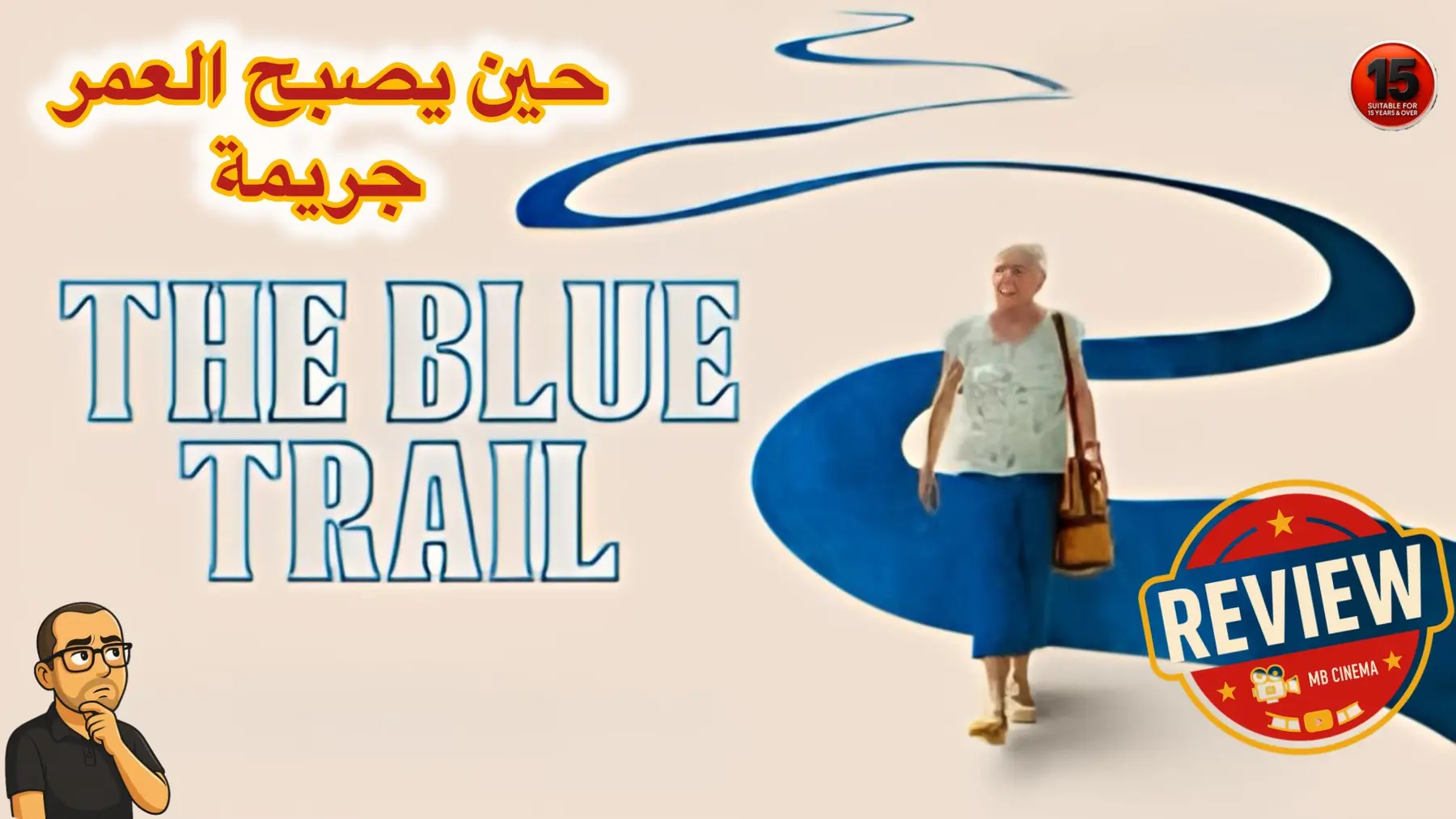
At the center stands Tereza, a carefully drawn character who combines strength and fragility, dignity and fear, rebellion and surrender. She is not a conventional heroine, but an ordinary woman confronting an unjust system. Her journey gradually changes from an external struggle into an inner discovery. With every step, the screenplay seems to whisper rather than shout, asking questions without forcing answers.
The journey begins with a clear objective (escape and liberation) but the narrative gradually drifts into a more scattered path. Events become separate episodes that feel more like passing experiences than parts of a tightly constructed dramatic arc. This gives the film a free, poetic quality, but also weakens the plot and pushes the central idea further into the background than it should be.
The screenplay's world is suffocating, covered in bright slogans that conceal a cold brutality. Power does not always appear directly; it slips into laws and procedures, into children who become guardians over their parents, and into a society that accepts the arrangement as destiny. This intelligent construction lends the film depth and makes its criticism more powerful because it is indirect.
The supporting characters vary in impact. Some operate as symbols of an idea, such as the daughter who represents submission to the system, while others accompany Tereza and open new windows in her life. The problem is that several are introduced and then quickly abandoned, leaving their presence incomplete, as if the screenplay opens dramatic lines without finishing them.
Symbolically, the film is rich in evocative elements, including the blue snail and its effect, and the river journey that resembles the current of life itself. These symbols add beauty and intellectual texture, though at times they come at the expense of clarity and deepen the sense of fragmentation rather than the central idea.
The pacing is a double-edged sword. It is slow and contemplative, inviting the viewer to inhabit the journey rather than merely follow it. That gives the film a special beauty, but may also create boredom or a loss of direction, especially when the second half lacks a clear dramatic escalation.
The ending carries a painful idea: a person may ultimately be forced to become part of the very system they resisted. It is circular, returning us to the beginning and suggesting that the journey was less about salvation than understanding. Yet it also arrives rather quickly, as though the screenplay chooses to stop before saying everything it has to say.
Cinematography and lighting
The cinematography and lighting are among the film's strongest elements. Nature appears as a living canvas filled with color, light and shadow. The camera is in love with place, lingering over detail and giving the viewer room to breathe inside the image. The mostly natural lighting favors simplicity and honesty, serving the realism while deepening both isolation and freedom. At times, however, the visual beauty can overpower the narrative, making the image more eloquent than the story itself.
Acting
The central performance is the backbone of the film. The lead actress is sincere, warm and full of small details that make a difference. She is strong when the moment demands strength and fragile when vulnerability takes over, embodying that human contradiction without affectation. The supporting cast varies in impact: some leave a clear impression, while others pass too quickly because the screenplay does not give them enough room to become complete characters.
Final verdict
Final verdict
The Blue Trail is daring in its idea and honest in its emotions, but hesitant in its construction. It begins with striking force and promises a profound journey, then loses itself somewhat in the middle and settles for contemplation when confrontation seems necessary. Even so, it retains a distinctive spirit and leaves an impression that is not easily erased, despite lacking full dramatic cohesion. It is a blue road that begins as a dream of freedom and ends as a truth about constraint: a journey we wish were stronger, yet one that remains honest in its weakness and beautiful in its confusion. Finally, the film leaves us with a simple and painful question: Are we free, or are we merely postponing the moment when our freedom will be taken away?
AUDIENCE VOTE
Do you agree with the MB rating?
Choose once from this browser. You can change your answer at any time.